
DM أُعيد تغريده
DM
971 posts

DM
@DM892827
"As someone who once supported Trump, I now feel ashamed of him."
Taiwan انضم Şubat 2025
243 يتبع16 المتابعون
DM أُعيد تغريده

DM أُعيد تغريده

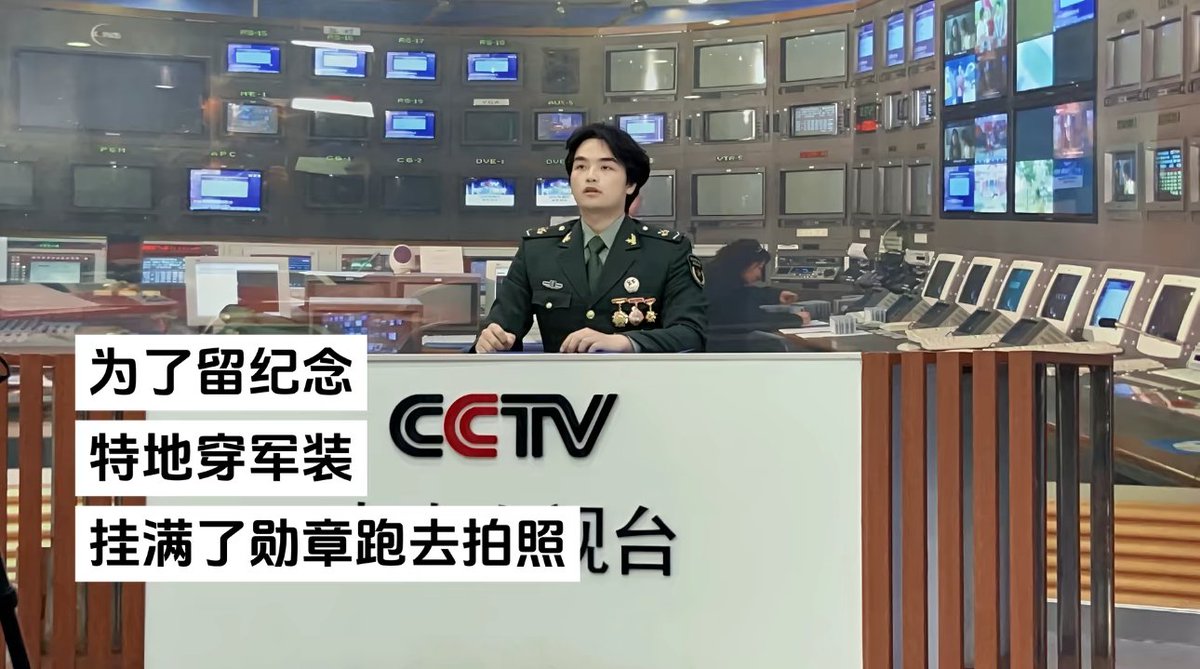
4月12日,一名男子称,他退伍回来后,政府给他安排了一个县城事业编工作,月薪仅有3000元(人民币) 疫情期间,工作不顺,就连房子也被拆了。于是他只身来到澳洲工地打工。
男子说上个月工资13840澳币(约66,609人民币)。由于他比较节省,每个月生活费只要花800澳元左右,以前在小县城工作,每个月只能攒下1500元(人民币) 自己在澳洲干一天,等于小县城干41天,干一年,等于在小县城干41年。“在澳洲干两年,等于在小县城干了一辈子”
男子还表示,虽然在这里很累,非常辛苦,还要忍受孤独的煎熬,并且还放弃了每天都很闲的事业编,但自己一点都不后悔。

中文
DM أُعيد تغريده
DM أُعيد تغريده

Taiwan’s outward investment tells a very clear story of Taiwan's economic decoupling from China.
Back in 2010, investment into China made up 83.8% of Taiwan’s total outbound investment. By last year, that number had collapsed to just 3.75%.
That’s a shocking drop in just 15 years!
In 2025, the number of investment cases going into China fell to just 241, and total investment has dropped to below $1.5 billion. For many years, Taiwanese people and capital kept flowing into China, contributing to China's economic advancement. Now, that momentum is rapidly reversing.
Capital is leaving China.
And yet at this exact moment, when politicians like KMT's Zheng Liwen are trying to push for a so-called “second westward movement” of Taiwanese businesses into China, we’re seeing strong pushback.
First, Taiwanese listed companies investing in China are pulling back. The cumulative investment that once surged is now seeing a major reversal.
Second, across major sectors, there’s a broad retreat. In Beijing, Taiwanese business presence has reportedly shrunk to just 1%. Companies are actively looking for ways to withdraw capital from China.

English
DM أُعيد تغريده
China’s AI Bubble Is Worse Than You Think — DeepSeek EXPOSED.
In this video, we expose the truth behind China's so-called AI revolution.
We break down why DeepSeek isn’t the breakthrough it’s claimed to be, how Chinese companies are fueling a dangerous AI bubble, and what this means for investors, the tech world, and the global economy.
English
DM أُعيد تغريده
The failure of this round of U.S.–Iran negotiations was largely due to miscalculations on Iran’s side.
First, Iran misjudged Vice President J.D. Vance as being anti-war. Because he was leading the negotiations, Iran assumed it had room to demand a higher price. If someone else had been in charge, Iran likely wouldn’t have opened with such aggressive terms.
Second, Iran misread the level of patience on the U.S. side. It assumed there would be time to start with a high offer and then gradually negotiate downward. After all, you don’t begin negotiations by pricing too low.
What Iran didn’t expect was that the U.S. had virtually no patience this time. There was only one day for talks. Iranian media even signaled that negotiations might be extended by another day, suggesting Iran wanted more time. But the U.S. refused. No deal meant walking away.
These two miscalculations proved critical.
The lack of U.S. patience completely undermined Iran’s bargaining strategy. By the time Iran realized this, it was already too late and they’re likely regretting it now.
Nick Sortor@nicksortor
🚨 BREAKING: JD Vance says the US delegation will return to America WITHOUT a deal with Iran, but that this outcome is MUCH worse for Iran than the US “We've been at it for 21 HOURS. We've had substantive discussions...but the bad news is, we have NOT reached an agreement.” “That's bad news for Iran MUCH more than it is bad news for the USA.”
English
DM أُعيد تغريده
If Iran refuses to yield, America's most powerful lever may be a counter-blockade of Hormuz.
A parallel example is with Nicolás Maduro’s Venezuela, where U.S. pressure on oil exports, effectively a maritime chokehold, pushed the economy into deep crisis. Applied to Iran, the same playbook would target its core lifeline: oil.
If Tehran rejects Washington’s final terms, President Trump has two options he has openly referenced. One is direct military escalation. The other, more strategic path, is a blockade centered on the Strait of Hormuz, which is the artery through which Iran’s oil exports flow.
The logic is straightforward. By sealing off access to the strait, the U.S. could prevent Iran from exporting oil, cutting off its primary source of foreign currency. At the same time, it would increase pressure on major buyers like China and Europe, forcing them to confront supply disruptions and diplomatic consequences.
Several key elements define this strategy.
First, Iran’s refusal to compromise on nuclear issues remains a hard red line for Washington. That sets the stage for escalation if negotiations fail.
Second, the blockade would not require U.S. forces to enter the strait itself. A perimeter blockade outside the waterway would be enough, intercepting vessels attempting to enter or exit.
Third, enforcement would be strict. Any ship paying transit fees to Iran would be subject to seizure, effectively eliminating Iran’s ability to monetize passage through the strait.
This leads to the critical shift in dynamics.
Under Iran’s own blockade, it retains an advantage: its ships and those of "friendly nations" can still pass. Iran even floated the idea of charging transit fees, potentially earning millions per tanker. In that scenario, Iran exerts pressure on others without fully hurting itself.
A U.S. counter-blockade flips that equation completely.
Once enforced, Iranian tankers would also be unable to pass. "Friendly nations" would face the same restrictions. And with the added threat of U.S. seizure, no ship would risk paying Iran’s transit fees. What was once a source of leverage becomes a dead asset overnight.
In other words, this is a “mirror strategy”, neutralizing Iran’s move by applying the same constraint, but with greater reach and enforcement capability.
Technologically, the U.S. holds the advantage. With advanced satellite surveillance and tracking systems, virtually every vessel moving through the region can be monitored in real time. Avoiding detection would be nearly impossible, making enforcement credible.
Some argue that such a blockade would drive global oil prices even higher. But the counterargument is that prices have already risen due to instability in the strait. Additional restrictions may not materially change that trajectory.
What does change, however, is who bears the cost.
Under Iran’s blockade, others suffer more than Iran itself. Under a U.S. blockade, Iran becomes the primary victim. Its economy, already fragile, depends heavily on oil exports through the Strait of Hormuz. Remove that channel, and the financial system begins to suffocate.
Layer on top of that the standing threat of U.S. strikes against critical infrastructure—power plants, logistics hubs, and military assets, and the pressure intensifies further.
By deploying a counter-blockade, the U.S. could effectively strip Iran of its strongest bargaining chip. What once looked like leverage becomes a liability.
From this perspective, failing to reach an agreement will prove costly for Tehran, as its most powerful card, the ability to disrupt the Strait of Hormuz, can be neutralized by the same tactic turned against it.

English
DM أُعيد تغريده

Thank you @elonmusk! And thanks also @newstart_2024.
More here on why lefties can't cope with dissent: x.com/JohnAndersonAC…
and more here about this turning point for our world: melaniephillips.substack.com
Elon Musk@elonmusk
Good explanation of nihilist philosophy
English
DM أُعيد تغريده

我很久前就有一个论断,“白左(left-liberalism)是万恶之源”。下面这段英国保守派女记者Melanie Philips @MelanieLatest 的阐述,是最好的注解
“为什么西方白左们觉得哈马斯奸淫掳掠,残杀平民,甚至虐杀婴儿,是一种合理合法的抵抗?”
“因为他们单一而脆弱的世界观,无法承受自己可能是恶人的现实”
中文
DM أُعيد تغريده

歐洲(愛爾蘭)連和平示威的權利都沒有了?
阻塞行為可能會被逮捕、面臨最高1,000歐元罰款,或最高6個月監禁?「Just Stop Oil」那幫阻塞交通的廢柴有沒有逮捕過? 🤔
中文
DM أُعيد تغريده

DM أُعيد تغريده

DM أُعيد تغريده

DM أُعيد تغريده
DM أُعيد تغريده
DM أُعيد تغريده

DM أُعيد تغريده
DM أُعيد تغريده
DM أُعيد تغريده
