Loopscale

1K posts

Loopscale banner
Loopscale

Loopscale

@Loopscale

Order book-based credit markets. A new standard for borrowing and lending onchain.

انضم Şubat 2021
111 يتبع37.7K المتابعون
تغريدة مثبتة
Loopscale
Loopscale@Loopscale·
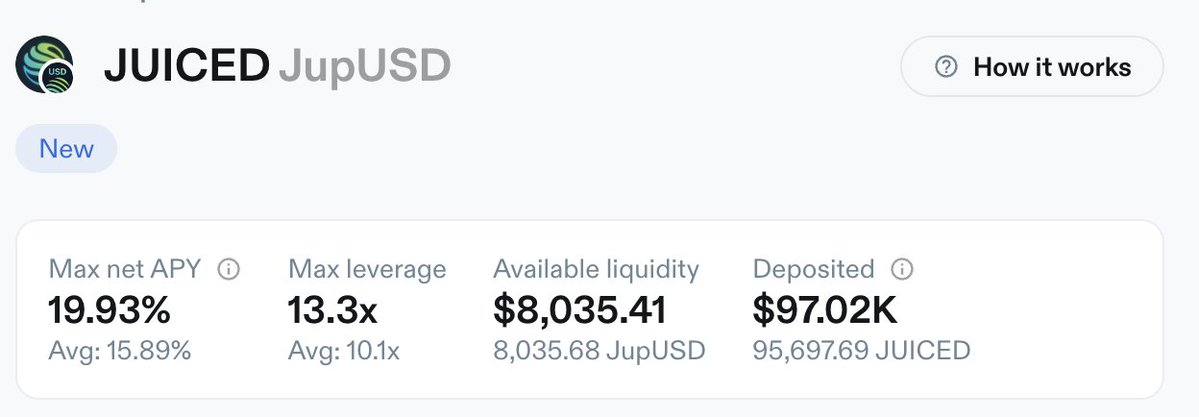
DeFi's most advanced money market 🤝 DeFi's most advanced credit market. Deposit-Backed Lending is live on Loopscale with @JupiterExchange lending positions as collateral. Deposit JUICED to Loop for leveraged lending yield, borrow against JUICED and jlWSOL, or lend your jupUSD.
English
29
74
240
40.7K
Loopscale
Loopscale@Loopscale·
DeFi's most advanced money market 🤝 DeFi's most advanced credit market. Deposit-Backed Lending is live on Loopscale with @JupiterExchange lending positions as collateral. Deposit JUICED to Loop for leveraged lending yield, borrow against JUICED and jlWSOL, or lend your jupUSD.
English
29
74
240
40.7K
Loopscale
Loopscale@Loopscale·
@jup_lend positions are now available as collateral on Loopscale. Live today: • Jupiter Lend JupUSD Deposits (JUICED) as collateral to borrow USDC and jupUSD • Jupiter Lend SOL Deposits (jlWSOL) as collateral to borrow SOL • jupUSD Vault and lending market app.loopscale.com
English
2
1
29
1.5K
Loopscale أُعيد تغريده
Hastra
Hastra@HastraFi·
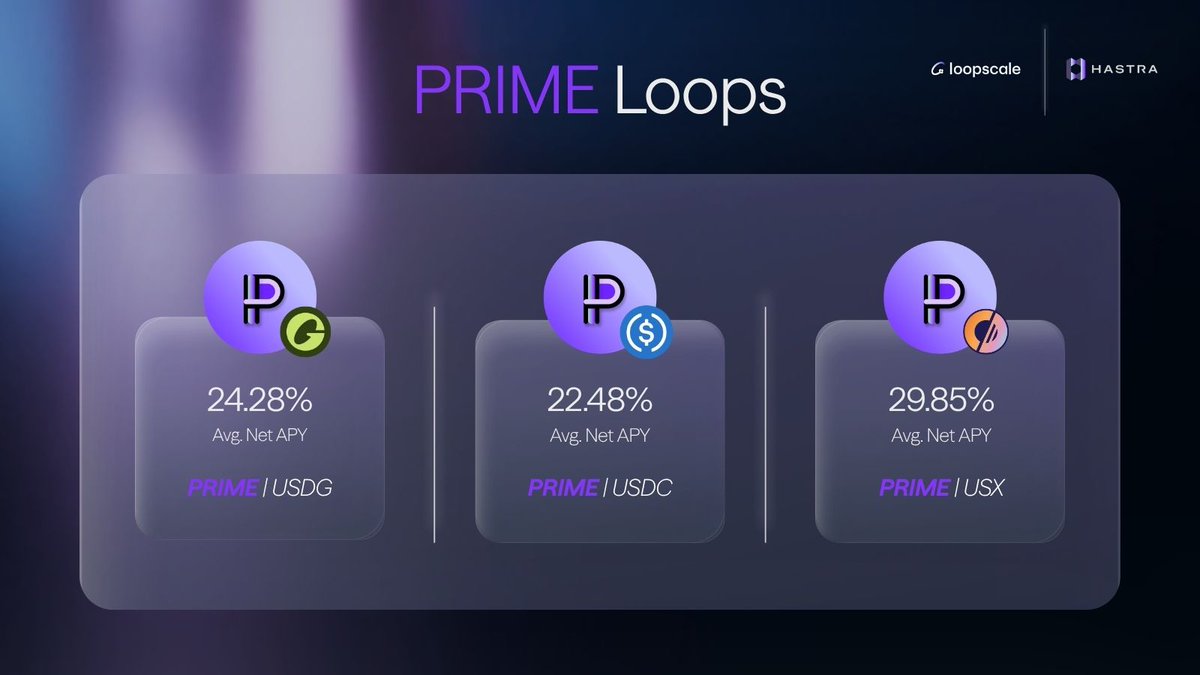
Choppy markets tanking your usual yield farm? All @Loopscale pairs are still delivering 22%+ net APY ▸ Credit demand that doesn't rely on crypto cycles ▸ Rates discovered through supply & demand ▸ Real cash flow, real borrowers Designed to be durable, not cyclical.
Hastra tweet media
English
6
5
25
1.8K
Loopscale
Loopscale@Loopscale·
Loopscale is scaling the credit layer across DeFi-native and RWA assets. That growth requires lending infrastructure that users and allocators can deploy into with confidence. Loopscale's order book-based lending was built around these principles. Security sits at the protocol level. Collateral is never auto-rehypothecated, deposits are never co-mingled across vaults, and no single parameter change can cascade across the system. Your position is your position.
Mary Gooneratne@marygooneratne

To fulfill the vision of onchain finance, we don't need higher yields or more composability. We need to eliminate the spectre of "full loss of funds" hanging over the heads of everyone participating. It's an impossible risk to price in and makes the "cost" of DeFi far too high to be worth the endgame. In light of recent events, I wanted to share more on how Loopscale's architecture itself introduces structural security advantages over the pool model for onchain lending in addition to the robust technical and operational security processes we've implemented over the past year. It starts with understanding the constraints of the current model. Pool-based lending (e.g. Drift, Aave, Morpho, Fluid, Kamino) relies on shared state: global oracles, global LTVs, and co-mingled deposits. With one bad parameter change or one bad asset, everyone, lenders *and* borrowers alike, are exposed. Loopscale meaningfully addresses this at a primitives level: 1. Collateral isolation: No collateral on Loopscale is auto-rehypothecated. Your collateral for each loan or loop sits in a standalone PDA. If anything happens to the vault you're borrowing from, borrowers have zero risk of their collateral being compromised as a result. In the recent exploit, much of what was taken was idle collateral sitting in shared pools, assets like JLP and jitoSOL that no one was borrowing. Markdowns on bad debt also impacted borrowers directly, which cannot occur with segregated, non-rehypothecated collateral accounts. If bad debt occurs elsewhere on the platform, borrowers and loopers cannot be impacted. Your position is your position. 2. Deposit isolation: Unlike Morpho or Fluid, deposits into one USDC vault are never co-mingled with deposits from other vaults into shared sub-markets. All deposits remain in their own isolated accounts, with liquidity unified on the Creditbook. If one market has issues, you're not competing for withdrawals with other vaults, and you're not subject to parameter changes lobbied for by curators you never deposited with. 3. Lender control: There is no concept of a global oracle, global LTVs, or a universal approved asset list. Lenders can create positions and control the specific oracles, terms, and assets at all times. There is no scenario where we, or anyone attempting to compromise us, could change your positions. 4. Vault guardrails: Even where depositors delegate to vault curators, multiple layers of protection exist independently of trust in the curator: • New asset-oracle combinations require approval from our administrative multisig before a curator can add them. • All risk-increasing decisions (LTV/LQT increases, cap increases, new assets, oracle changes) are automatically timelocked. • Each vault has customized caps on individual asset allocations and all asset flows, limiting exposure to any single collateral issue or curator-level compromise. All of this follows from the architecture itself. We believe order book-based lending is the only model that can support the scale and seriousness of capital that DeFi needs to fulfill its promise.


English
11
3
51
4.1K
Loopscale أُعيد تغريده
loop truitt
loop truitt@Luketruitt·
The next 10x in onchain user and capital growth comes from making downside risk easier to underwrite. On Loopscale every lender strategy is isolated and self-administered, loans are bilateral and fixed-term, and collateral is fully segregated. This is the way digital credit scales and it's only available on @solana.
Mary Gooneratne@marygooneratne

To fulfill the vision of onchain finance, we don't need higher yields or more composability. We need to eliminate the spectre of "full loss of funds" hanging over the heads of everyone participating. It's an impossible risk to price in and makes the "cost" of DeFi far too high to be worth the endgame. In light of recent events, I wanted to share more on how Loopscale's architecture itself introduces structural security advantages over the pool model for onchain lending in addition to the robust technical and operational security processes we've implemented over the past year. It starts with understanding the constraints of the current model. Pool-based lending (e.g. Drift, Aave, Morpho, Fluid, Kamino) relies on shared state: global oracles, global LTVs, and co-mingled deposits. With one bad parameter change or one bad asset, everyone, lenders *and* borrowers alike, are exposed. Loopscale meaningfully addresses this at a primitives level: 1. Collateral isolation: No collateral on Loopscale is auto-rehypothecated. Your collateral for each loan or loop sits in a standalone PDA. If anything happens to the vault you're borrowing from, borrowers have zero risk of their collateral being compromised as a result. In the recent exploit, much of what was taken was idle collateral sitting in shared pools, assets like JLP and jitoSOL that no one was borrowing. Markdowns on bad debt also impacted borrowers directly, which cannot occur with segregated, non-rehypothecated collateral accounts. If bad debt occurs elsewhere on the platform, borrowers and loopers cannot be impacted. Your position is your position. 2. Deposit isolation: Unlike Morpho or Fluid, deposits into one USDC vault are never co-mingled with deposits from other vaults into shared sub-markets. All deposits remain in their own isolated accounts, with liquidity unified on the Creditbook. If one market has issues, you're not competing for withdrawals with other vaults, and you're not subject to parameter changes lobbied for by curators you never deposited with. 3. Lender control: There is no concept of a global oracle, global LTVs, or a universal approved asset list. Lenders can create positions and control the specific oracles, terms, and assets at all times. There is no scenario where we, or anyone attempting to compromise us, could change your positions. 4. Vault guardrails: Even where depositors delegate to vault curators, multiple layers of protection exist independently of trust in the curator: • New asset-oracle combinations require approval from our administrative multisig before a curator can add them. • All risk-increasing decisions (LTV/LQT increases, cap increases, new assets, oracle changes) are automatically timelocked. • Each vault has customized caps on individual asset allocations and all asset flows, limiting exposure to any single collateral issue or curator-level compromise. All of this follows from the architecture itself. We believe order book-based lending is the only model that can support the scale and seriousness of capital that DeFi needs to fulfill its promise.

English
3
4
21
2.3K
Loopscale أُعيد تغريده
Mary Gooneratne
Mary Gooneratne@marygooneratne·
To fulfill the vision of onchain finance, we don't need higher yields or more composability. We need to eliminate the spectre of "full loss of funds" hanging over the heads of everyone participating. It's an impossible risk to price in and makes the "cost" of DeFi far too high to be worth the endgame. In light of recent events, I wanted to share more on how Loopscale's architecture itself introduces structural security advantages over the pool model for onchain lending in addition to the robust technical and operational security processes we've implemented over the past year. It starts with understanding the constraints of the current model. Pool-based lending (e.g. Drift, Aave, Morpho, Fluid, Kamino) relies on shared state: global oracles, global LTVs, and co-mingled deposits. With one bad parameter change or one bad asset, everyone, lenders *and* borrowers alike, are exposed. Loopscale meaningfully addresses this at a primitives level: 1. Collateral isolation: No collateral on Loopscale is auto-rehypothecated. Your collateral for each loan or loop sits in a standalone PDA. If anything happens to the vault you're borrowing from, borrowers have zero risk of their collateral being compromised as a result. In the recent exploit, much of what was taken was idle collateral sitting in shared pools, assets like JLP and jitoSOL that no one was borrowing. Markdowns on bad debt also impacted borrowers directly, which cannot occur with segregated, non-rehypothecated collateral accounts. If bad debt occurs elsewhere on the platform, borrowers and loopers cannot be impacted. Your position is your position. 2. Deposit isolation: Unlike Morpho or Fluid, deposits into one USDC vault are never co-mingled with deposits from other vaults into shared sub-markets. All deposits remain in their own isolated accounts, with liquidity unified on the Creditbook. If one market has issues, you're not competing for withdrawals with other vaults, and you're not subject to parameter changes lobbied for by curators you never deposited with. 3. Lender control: There is no concept of a global oracle, global LTVs, or a universal approved asset list. Lenders can create positions and control the specific oracles, terms, and assets at all times. There is no scenario where we, or anyone attempting to compromise us, could change your positions. 4. Vault guardrails: Even where depositors delegate to vault curators, multiple layers of protection exist independently of trust in the curator: • New asset-oracle combinations require approval from our administrative multisig before a curator can add them. • All risk-increasing decisions (LTV/LQT increases, cap increases, new assets, oracle changes) are automatically timelocked. • Each vault has customized caps on individual asset allocations and all asset flows, limiting exposure to any single collateral issue or curator-level compromise. All of this follows from the architecture itself. We believe order book-based lending is the only model that can support the scale and seriousness of capital that DeFi needs to fulfill its promise.
English
15
6
76
11.1K
Loopscale
Loopscale@Loopscale·
The potential impact of P0 markdowns to the SOL Genesis Vault was $2,669 (0.04%). This has been reimbursed via an automatic distribution reflected in the vault NAV. No action is needed on users’ end. We appreciate users' patience during the temporary disruption.
English
1
1
19
1.4K
Loopscale
Loopscale@Loopscale·
Withdrawals and deposits for the SOL Genesis, JitoSOL ONE, and wETH ONE Vaults are temporarily disabled as MarginFi has paused its protocol functions. We will re-enable these as soon as MarginFi resumes normal operations and will keep users updated.
English
6
0
18
2.8K
Loopscale
Loopscale@Loopscale·
Loopscale has no direct exposure to the ongoing situation with Drift protocol and funds in the majority of Loopscale products, including the USDC Genesis and USDC OnRe Vaults, are safe. A small share of the SOL Genesis Vault deposits (~$170K) is allocated to MarginFi, a fraction of which may have indirect exposure through Project0 borrowers collateralized by Drift positions. Should any losses materialize, Loopscale will make affected users whole. We take the technical and operational security of our infrastructure seriously. Our thoughts are with the Drift team and all users affected.
English
23
12
153
22K
Loopscale
Loopscale@Loopscale·
Multiliquid is live for ACRED, with support for more permissioned assets on Loopscale soon. PRISM — Loopscale's aggregator for instant settlement for permissioned RWAs — is taking shape.
English
0
0
5
841
Loopscale
Loopscale@Loopscale·
Multiliquid is an institutional liquidity platform aggregating capital across a range of partners and deploying it across DeFi, CeFi, fintech and TradFi venues. It executes NAV-based conversions between tokenized assets like ACRED and stablecoins, on-chain, 24/7.
English
1
1
6
914
Loopscale
Loopscale@Loopscale·
Looping a quarterly-redemption asset at 4x leverage means your position opens within one transaction, but exiting can take months. Secondary markets solve for this. Last week, Loopscale integrated @multiliquid_xyz to provide secondary liquidity for ACRED on Solana. ↓
Loopscale@Loopscale

Today, Loopscale is introducing PRISM, an aggregator unifying @multiliquid_xyz, @FissionXYZ, and @Securitize into one router powering instant settlement for permissioned RWAs on Solana. RWAs are a $25B market with almost zero secondary liquidity. Leading tokenized funds hold billions in AUM but record fewer than 100 monthly transfers. Daily trading volume across most permissioned tokens is effectively nonexistent.

English
15
8
43
4.4K