
ramsac أُعيد تغريده

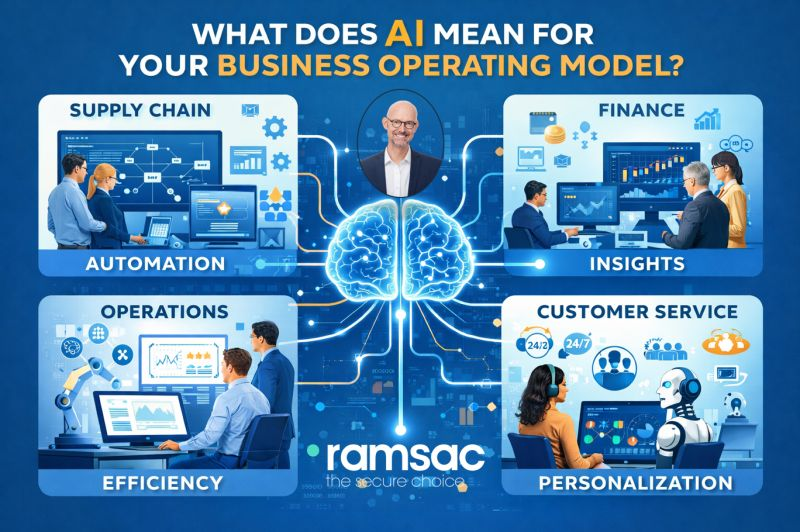
⭕ Everyone now agrees that AI is a game changer, and in most of the conversations I’m having with senior leaders there’s genuine belief behind that. There’s investment, there are initiatives underway, and there’s no shortage of intent to do something meaningful with it.
What I’m finding more interesting is what happens when you take the conversation one step further. When I ask what that actually means for their operating model, the confidence often starts to soften. The discussion shifts quite quickly into tools, pilots, and use cases, all of which matter, but none of which really answer the question.
What’s often missing is a clear view of how AI is going to change the way the business is structured, how decisions are made, how work flows through teams, and how roles are likely to evolve. There’s activity, but not always alignment around what it adds up to.
There’s a reason for that. It’s relatively straightforward to layer AI onto existing processes and make them faster or cheaper. It’s much harder to step back and ask whether those processes should exist in their current form at all, or whether the balance between human effort and machine capability needs to be fundamentally rethought.
In a conversation this week, a CEO told me she felt they were making strong progress with AI. When we explored what had actually changed in how their teams operated day to day, the honest answer was very little. The tools were there, but the system around them hadn’t really shifted.
That gap feels like where a lot of organisations are right now. There’s momentum around adoption, but less clarity around transformation. If AI is only being used to improve the speed of what already exists, then there’s a risk that its impact is being contained rather than realised.
The harder questions are the ones that tend to get deferred. What work no longer needs to exist in its current form, where does human judgement genuinely add value, how should decision-making change when information and capability are available in real time, and what does that mean for roles, structure, and accountability.
Those are operating model questions, and they’re not easy ones to answer. They require trade-offs, they create uncertainty, and they often challenge established ways of working that have been in place for years.
But they’re also the questions that determine whether AI becomes a genuine enabler of change or just another layer of optimisation.
I’d be interested to hear how others are approaching this, particularly where you’re seeing real shifts in how organisations operate rather than just how they experiment.
English