ENRI Indonesia retweetet
ENRI Indonesia
90.3K posts

ENRI Indonesia
@DodiJusra
Energy and Natural Resources Institute of Indonesia
Jakarta Capital Region Beigetreten Ağustos 2014
4.9K Folgt1.2K Follower
ENRI Indonesia retweetet
Sebelumnya, market hanya melihat krisis Selat Hormuz (hilangnya 75% supply elemental sulphur dari Timur Tengah). Strategi mitigasi paling logis bagi smelter HPAL di Indonesia dalam kondisi darurat kelangkaan sulfur mentah adalah mengimpor langsung asam sulfat jadi (direct sulphuric acid).
Data historis jelas menunjukkan China adalah backbone impor asam sulfat langsung ke Indonesia, menyumbang lebih dari 50% (sekitar 0,6 hingga 0,7 mtpa pada 2025).
Dengan China menutup ekspor asam sulfat, kemungkinan besar untuk memprioritaskan industri pupuk dan kimia domestik mereka di tengah ketidakpastian global, Indonesa benar benar terisolasi. Sisa supplier seperti Korea Selatan, Jepang, dan Filipina tidak memiliki kapasitas berlebih untuk menutupi kekurangan dari Timur Tengah (sulfur mentah) dan China (asam sulfat jadi).
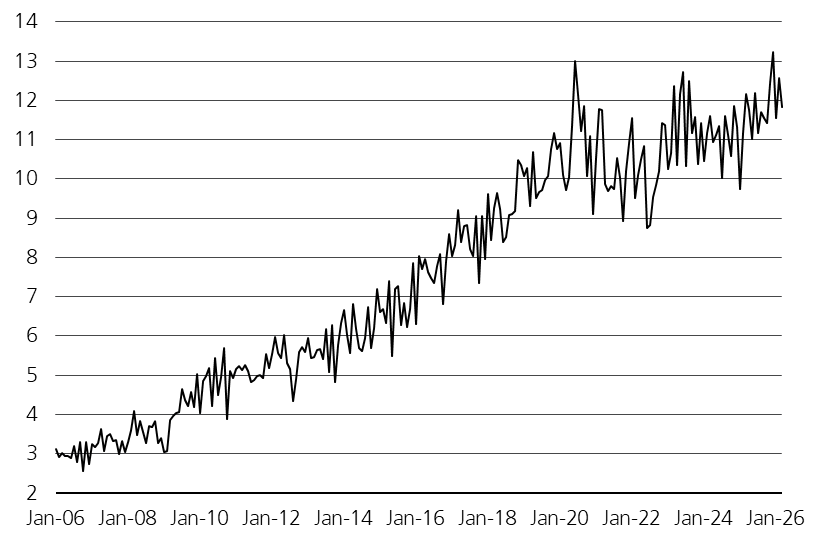
Jika kita melihat grafik harga sulfur (CRU Source) yang ada, harga CFR Indonesia Spot sudah bergerak parabolik menembus level $600-$700/t pada awal 2026. Dengan adanya China ban ini, dinamikanya berubah total.
Produsen HPAL Indonesia masih bisa berproduksi namun dengan cash cost yang tinggi, mengurangi margin secara masif.
Ini bukan lagi soal "berapa harga beli asam sulfat", melainkan "barangnya tidak ada". Tanpa asam sulfat, reaksi leaching bijih limonit tidak bisa terjadi. Kita berada di ambang risiko force majeure besar besaran dan shutdown operasional di smelter smelter besar.
Di sinilah letak peluang sesunggugnya bagi investor yang mencari aset premium dengan momentum kuat. Selama 3-4 tahun terakhir, nikel Ex-Indo seperti tambang di Australia, Kanada, dan Kaledonia Baru hancur lebur ditekan oleh banjirnya supply MHP murah dari Indonesia. Banyak tambang Barat yang ditutup sementara (care and maintenance) karena kalah saing di cost curve.
Jika produksi MHP Indonesia yang menyumbang porsi besar dari pertumbuhan supply global terhenti, market nikel global akan langsung masuk ke jurang defisit struktural. Harga nikel di London Metal Exchange (LME) sangat berpotensi mengalami short squeeze.
Mayoritas produsen nikel Ex-Indo menambang bijih tipe sulfida, bukan laterit. Proses metalurgi bijih sulfida tidak membutuhkan asam sulfat dari luat. Ironisnya, proses smelting nikel sulfida justru menghasilkan asam sulfat sebagai produk sampingan (by product).
Tambang Ex-Indo yang tadinya mempunyai biaya termahal secara tiba tiba akan terlihat sangat atraktif dan profitable, sementara HPAL Indonesia terlempar ke posisi biaya tak terhingga karena ketiadaan bahan baku.
Ketika impor sulfur Timur Tengah tertutup dan China melarang ekspor asam sulfat, perusahaan domestik yang memproduksi asam sulfat akan mendapatkan windfall profit yang besar.


Indonesia
ENRI Indonesia retweetet

Kiamat Asam Sulfat: Bagaimana pemblokiran di Timur Tengah dan larangan ekspor China bisa memicu lumpuhnya smelter smelter raksasa nikel di Indonesia (dan siapa emiten yang akan diuntungkan).
Sejak akhir Februari 2026, konflik yang memanas di Timur Tengah menyebabkan penutupan efektif dan pembatasan navigasi yang ekstrem di Selat Hormuz. Jalur ini bukan cuma urat nadi minyak dan LNG global, tetapi juga rute utama pengiriman sulfur dan produk petrokimia. Mengingat negara negara Teluk terutama Arab Saudi, Qatar, dan UEA memproduksi sulfur sebagai produk sampingan dari banyaknya industri penyulingan minyak dan gas mereka, pemblokiran ini langsung memberhentikan supply sulfur lintas laut.
Produksi MHP Indonesia memang diproyeksikan menembus angka 700 kt hingga lebih dari 800 kt pada tahun 2026-2027.
Berdasarkan data terbaru dari Forum Industri Nikel Indonesia (FINI) dan laporan perdagangan awal tahun ini, lebih dari 75% impor sulfur Indonesia berasal dari Timur Tengah terutama Arab Saudi dan Qatar. Pada tahun 2025 saja, Indonesia mengimpor lebih dari 5,3 juta ton sulfur, dan angka ini terus bertambah seiring beroperasinya smelter HPAL baru.
Perhitungan data ini sudah tepat. Proses HPAL untuk mengekstraksi nikel dari bijih limonit kadar rendah sangat butuh banyak asam. Rata rata industri membutuhkan 8 hingga 10 ton sulfur elemental atau sekitar 25-30 ton asam sulfat untuk memproduksi 1 ton ekuivalen logam nikel dalam bentuk MHP.
Dengan target produksi 600-800 kt MHP, industri domestik Indonesia membutuhkan sekitar 6 hingga 8 juta ton sulfur per tahun. Mengingat supply dari Selat Hormuz sekarang hilang, market domestik menghadapi supply shock yang sangat masif.
Asam sulfat adalah komponen biaya operasional terbesar dalam proses HPAL, seringkali memakan porsi 30% hingga 50% dari total biaya produksi (tergantung harga bahan baku saat itu).
Selama beberapa tahun terakhir, MHP Indonesia menikmati posisi di ujung kiri (biaya terendah) dari kurva biaya nikel global. Namun, dengan naiknya harga sulfur akibat kelangkaan, ditambah biaya premi asuransi pengiriman (war risk premium) dan perubahan rute logistik melewati Cape of Good Hope yang memakan waktu dan biaya ekstra, cost curve produsen HPAL Indonesia akan bergeser tajam ke kanan (naik).
Jika harga sulfur di spot market naik sementara harga nikel di LME (London Metal Exchange) tidak naik secara proporsional untuk mengompensasinya, margin produsen HPAL akan tergerus habis.
Cadangan pabrik rata rata hanya bertahan sekitar 2 bulan. Karena krisis Selat Hormuz mulai eskalasi secara drastis di akhir Februari hingga Maret 2026, kita saat ini berada tepat di ujung batas ketersediaan stok tersebut. Jika kargo sulfur alternatif misalnya dari Amerika Utara, Rusia, atau wilayah Asia lain tidak segera tiba untuk menutupi defisit bulanan sebesar 500.000 ton, kita mungkin akan mulai melihat pengumuman operasi, force majeure, atau penurunan tingkat utilisasi pabrik secara paksa di smelter smelter HPAL Morowali, Obi, dan Weda Bay dalam beberapa minggu ke depan.

Indonesia
ENRI Indonesia retweetet

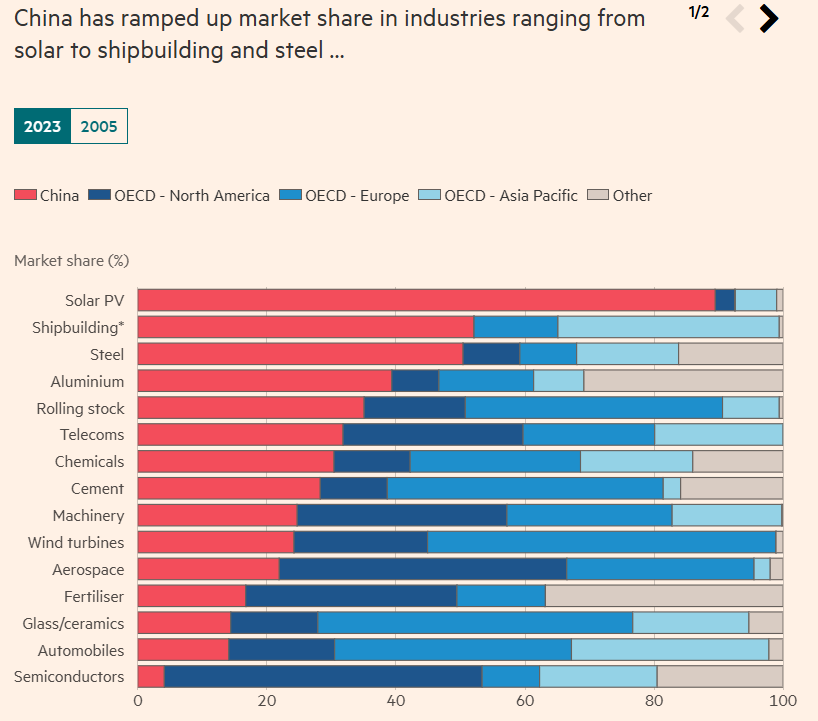
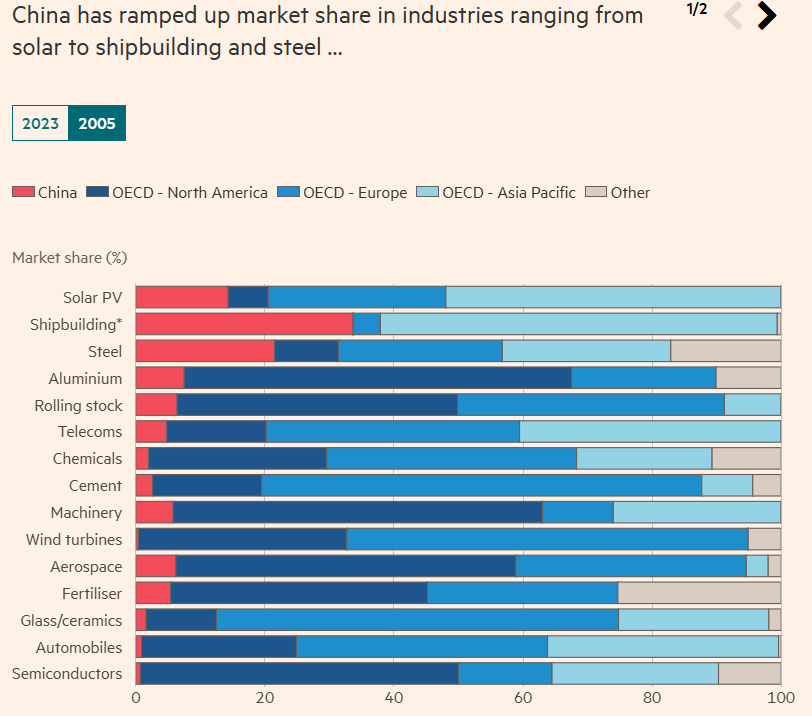
Is China 🇨🇳unstoppable? Change in the share of Chinese companies in the global markets for selected industries between 2005 and 2023👇:
ft.com/content/7d51a6…


English
ENRI Indonesia retweetet

Szef włoskiego giganta Eni podzielił się wczoraj kilkoma spostrzeżeniami:
1⃣"W tej chwili problemem nie są ceny, ale wolumeny [dostępnego surowca]"
2⃣„W miniony weekend mieliśmy 600 stacji paliw, na których zabrakło diesla: to nasza wina, bo utrzymywaliśmy zbyt niskie ceny."
3⃣"Uważam, że konieczne jest zawieszenie zakazu, który wejdzie w życie 1 stycznia 2027 r., dotyczącego 20 miliardów metrów sześciennych gazu płynącego z Rosji do Europy. W mojej opinii kwestię gazu należy zweryfikować, inaczej kto wyprodukuje te dodatkowe 20 miliardów? [...] Potrzebujemy gazu, bo to on zapewnia elastyczność sieci."
5⃣"Nie mamy nie tylko własnych rafinerii*, ale i wydobycia. Dzisiaj płacimy za wszystkie niekonsekwencje ostatnich 20 lat, które bezlitośnie obnażyły obecne testy warunków skrajnych."
6⃣"Nie można być radykalnym i dogmatycznym, w sytuacjach nadzwyczajnych trzeba kierować się zdrowym rozsądkiem."
7⃣"Jeśli sektor przemysłowy, który już płaci krocie za energię, zostanie dodatkowo obciążony podatkami [ETS], ryzykujemy stabilność naszego systemu społecznego."
8⃣"Paliwo lotnicze to najbardziej krytyczny element: Europa ma lukę i musi importować 35% paliwa lotniczego; musimy zrozumieć, jak je znaleźć i za jaką cenę."
Oczywiście to komentarz dotyczący włoskiego rynku. W ostatnich latach wygaszono/przekształcono działalność wielu krajowych rafinerii w biorafinerie/centra magazynowe. Szacuje się, że na przestrzeni ostatnich 20 lat, moce przerobowe spadły o ~20%.

Polski
ENRI Indonesia retweetet

A coalition of energy companies, chemical makers and trade associations are asking the European Union to urgently consider changes to the bloc’s upcoming regulations on methane emissions bloomberg.com/news/articles/…
English
ENRI Indonesia retweetet

🇵🇰 Gwador-to-Central Asia route opens as Pakistan mediates US-Iran talks
Pakistan just opened a new trade route to Central Asia through Iran
The first shipment, frozen beef, left Gwadar Port for Tashkent on Monday
Here's what you need to know👇
Route:
The corridor starts at Gwadar Port in southern Pakistan, crosses into Iran via the Gabd–Rimdan border point, and proceeds to Central Asia
Framework:
It operates under the UN‑based TIR customs transit system. This UN-backed system allows sealed trucks to cross multiple borders with minimal inspections, turning a complicated detour through Iran into a fast, practical trade route
Key Benefits:
🔸 Reduced transit times and lower logistics costs
🔸 Direct access between South Asian and Central Asian markets (combined population of ~70 million)
🔸 Increased cargo throughput at Karachi and Gwadar ports
🔸 An alternative to Afghan routes: Following border clashes with Taliban forces in October 2025, Pakistan closed the Torkham and Chaman crossings, disrupting trade and cutting off access to landlocked Central Asian markets
Geopolitical Context:
The corridor's launch coincides with Pakistan's role as a mediator in US‑Iran peace talks
It is also linked to the China–Pakistan Economic Corridor (CPEC), as China seeks to connect the route with Central Asian markets

English
ENRI Indonesia retweetet

The real nuclear race isn’t about reactors.
France revealed the real playbook. If you want to understand why nuclear is returning to the policy agenda, look at France. During its nuclear expansion, France built 43 reactors in roughly two decades.
The result:
• GDP per capita surged
• CO₂ emissions per person declined
That combination is rare in energy systems. Economic growth and deep decarbonisation. As countries electrify transport, industry, and AI infrastructure, the need for large-scale firm power becomes unavoidable.
Which brings us to the next phase. The countries that succeed won’t only build reactors. They will build fully integrated nuclear ecosystems.
• Reactor construction at scale
• Domestic supply chains
• Fuel cycle capability
• Export ambitions
That’s industrial strategy - not only energy policy. The real question is no longer whether nuclear works. It’s who can build it repeatedly, at scale, and fast enough.
Credit David William Scot

English
ENRI Indonesia retweetet

Electric trucks “can’t handle heavy freight”… until one quietly does a 480 km round trip fully loaded in NSW and makes diesel look outdated.
36 tonnes. Real route. No shortcuts.
600 kWh used.
~$50 energy cost.
Diesel?
~$300 (prewar)
~$600 today.
That’s not merely incremental. This is a massive system shift!
~1400 hp vs 500–700 hp diesel. It was overtaking trucks up Mount White.
Held speed the whole way → ~40 mins faster.
Less breaks. More flow.
• Faster
• Stronger
• ~80–90% cheaper energy
• Lower total cost over time
High capex, low opex wins.
This is already happening on Australian roads.
The economics have flipped.
Now it’s just adoption curves. ⚡📈
#Bettrification

English
ENRI Indonesia retweetet

Petrobras has made a new deepwater discovery in Brazil’s Campos Basin, strengthening its reserve growth strategy. With pre-salt output costs below $40/bbl and stock up 83%, the firm is doubling down on exploration. #Oil #Petrobras #Energy
oilprice.com/Latest-Energy-…
English
ENRI Indonesia retweetet

Petrobras approves a $1bn investment to secure fertilizer supply 🇧🇷 with the restart of its Três Lagoas plant in Mato Grosso do Sul — as Brazil turns an oil shock into a push for agribusiness independence.
brazilstockguide.com/insights/petro…
English
ENRI Indonesia retweetet

Exclusive: Congo copper and cobalt miners cut chemical use as Iran war disrupts supplies, sources say - reuters.com/world/africa/c…
English
ENRI Indonesia retweetet

📍Strike impact map: Assets attacked
A visual breakdown of key sites hit across the region-spanning energy infrastructure, military assets, and critical #maritime routes. As tensions escalate, the concentration of strikes highlights growing risks to global supply chains and energy security.

English
ENRI Indonesia retweetet

Energy transition and the green economy cannot be the solution to this crisis.
First and foremost, the upward pressure on input costs for the lithium mining industry is immediate. In the OPEX structure of any mining operation, energy costs—alongside labor—are the most critical components.
In typical metal and mineral mining, energy accounts for anywhere from 15% to as much as 40% of total operating costs. The power required for crushing, grinding, and ventilation is immense, and the fuel consumption for logistics, such as hauling and loading, is beyond imagination.
In open-pit mines specifically, the share of diesel fuel costs rises exponentially as hauling distances increase.
Lithium is indispensable for EV batteries, and Australia—which accounts for nearly half of global lithium production—is currently facing fuel shortages and price hikes. Their lithium mines are highly likely to begin struggling. We have already seen countless headlines regarding fuel shortages in Australia.
Another essential mineral for the green economy is copper. Some copper ores exist as oxide ores, which lack sulfur. Extracting copper from these oxides requires a hydrometallurgical process known as SX-EW.
This involves leaching, where sulfuric acid is sprayed onto oxide ore heaps to dissolve the copper. In short, without sulfur, it is virtually impossible to extract copper from oxide ores economically.
While China and the US lead in production volume, we must not forget that the fertilizer industry also consumes massive amounts of sulfur.
China’s domestic demand for fertilizer and industrial use is so vast that it consumes far more than it produces, acting as a global black hole for sulfur despite being a top producer. The US also consumes most of its production in domestic phosphate fertilizer plants, sourcing any deficit from Canada.
The GCC nations—Saudi Arabia, UAE, and Qatar—are different. They produce massive quantities of sulfur as a byproduct of oil and gas refining but have very low domestic consumption. GCC countries account for approximately 45% of the world's seaborne sulfur trade (roughly 30-40 million tons).
The hardest-hit region in this crisis will be the African Copperbelt, spanning the DRC and Zambia. Copper mines in this region use enormous amounts of sulfuric acid to process oxide ores and have relied on Middle Eastern imports for over 90% of their sulfur.
Currently, the price of sulfur reaching mine sites like Kolwezi via logistics hubs like Dar es Salaam is nearing $900/t. This has pushed sulfuric acid production costs toward $300/t, threatening the economic viability of copper production.
As C1 cash costs for copper surge, smaller mines will face refinery shutdowns, leading to a decline in global copper supply. While smelters in Northeast Asia produce sulfuric as a byproduct, they are physically and logistically too far to fill the void left by Middle Eastern supply.
So I ask you: both the price and supply of the essential elements for the green economy, such as lithium and copper, are facing a crisis. Can you build an energy transition and a green economy without the molecules?
#oott #copper #iran

English
ENRI Indonesia retweetet

By analyzing satellite observations of Java Island, Indonesia, researchers found that sinking land will drive up to 85% of relative sea-level rise along Java's coast by 2050, outpacing the effects of global ocean rise. @Leonardgeol @UCIPhysSci @uciess scim.ag/4bYPYum

English
ENRI Indonesia retweetet

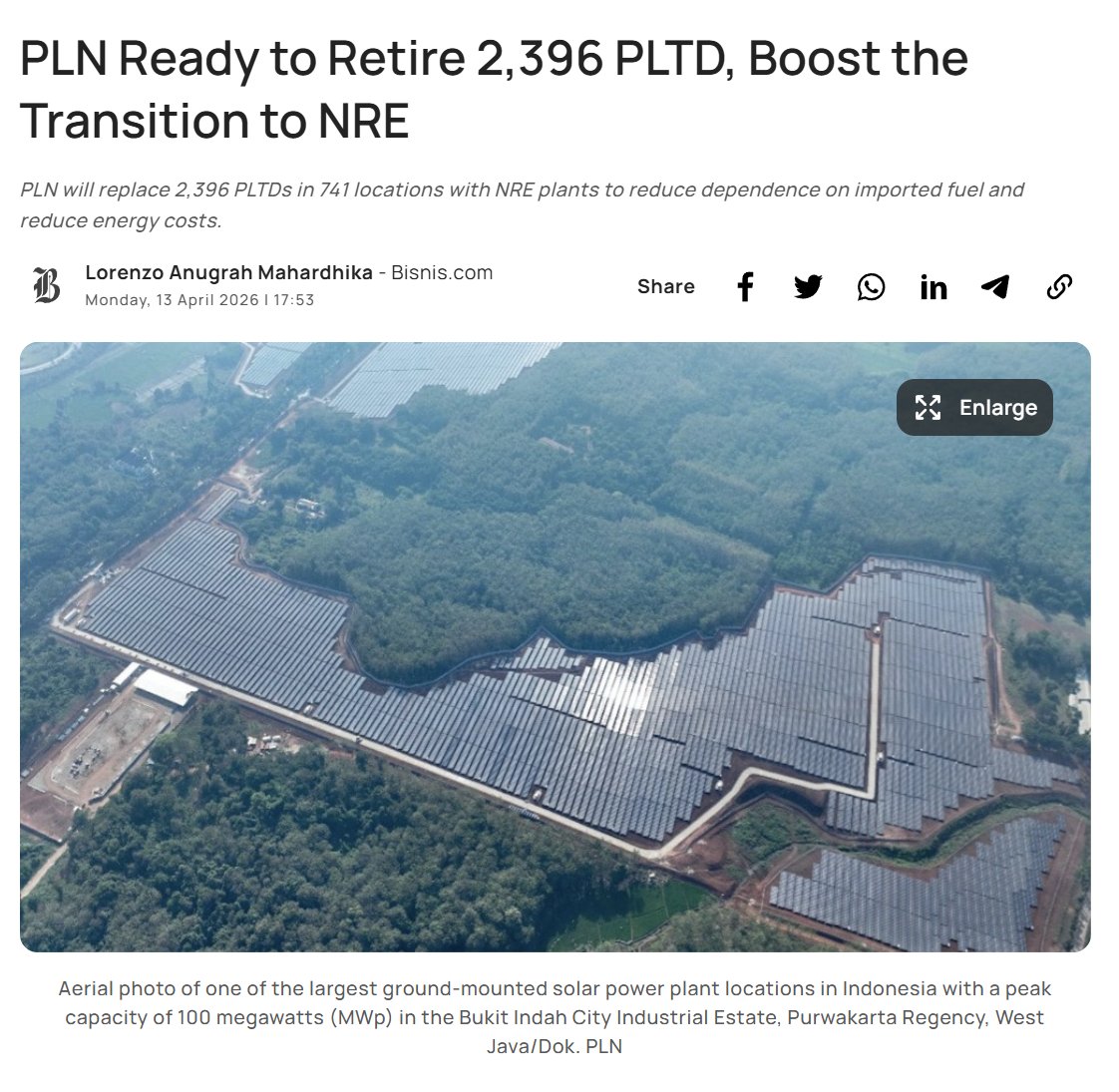
Indonesia on the move: Its electricity monopoly moves to retire 2,396 diesel generators across 741 locations
> Will replace them with solar + storage and micro-hydro, slashing 200,000 barrels of oil imports/ day
> Saves $2b in avoided oil imports every single year
Burning expensive, imported oil to provide power to islands is a national security suicide note. Indonesia is finally starting to read the manual: The sun is free, local, and doesn't require a carrier strike group to protect its "supply chain"
If your energy arrives on a boat, you aren’t a sovereign state. Indonesia, Pakistan, India are showing the way out
#goog_rewarded" target="_blank" rel="nofollow noopener">hijau.bisnis.com/read/20260413/…

English