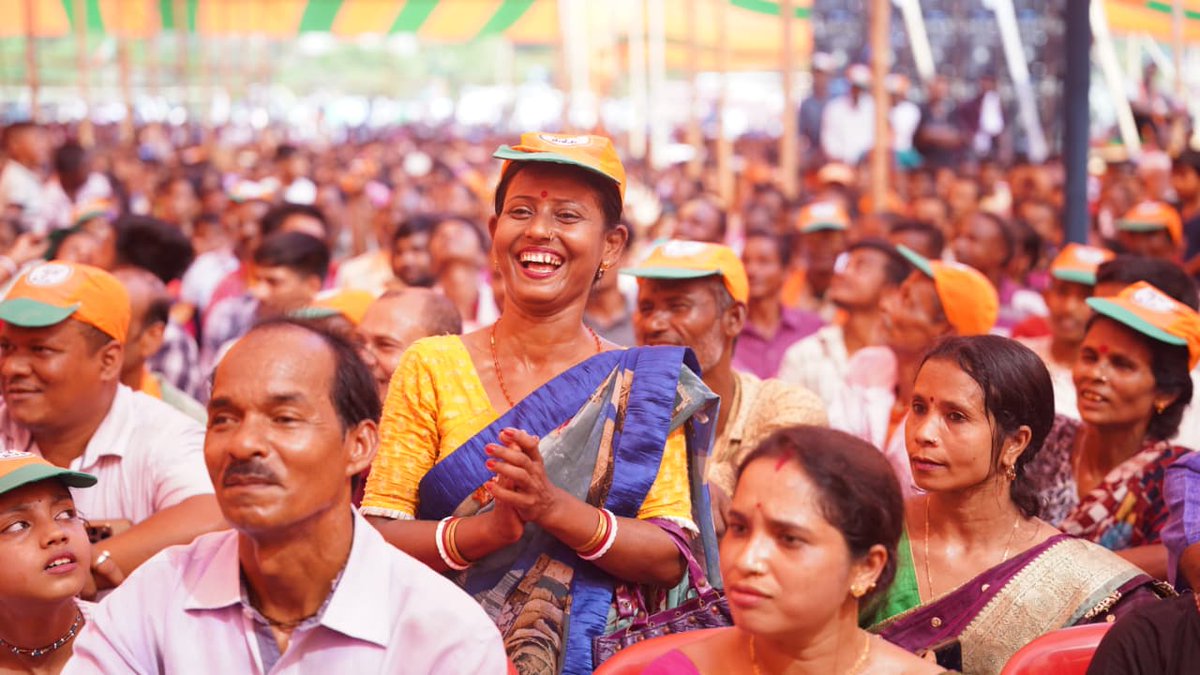
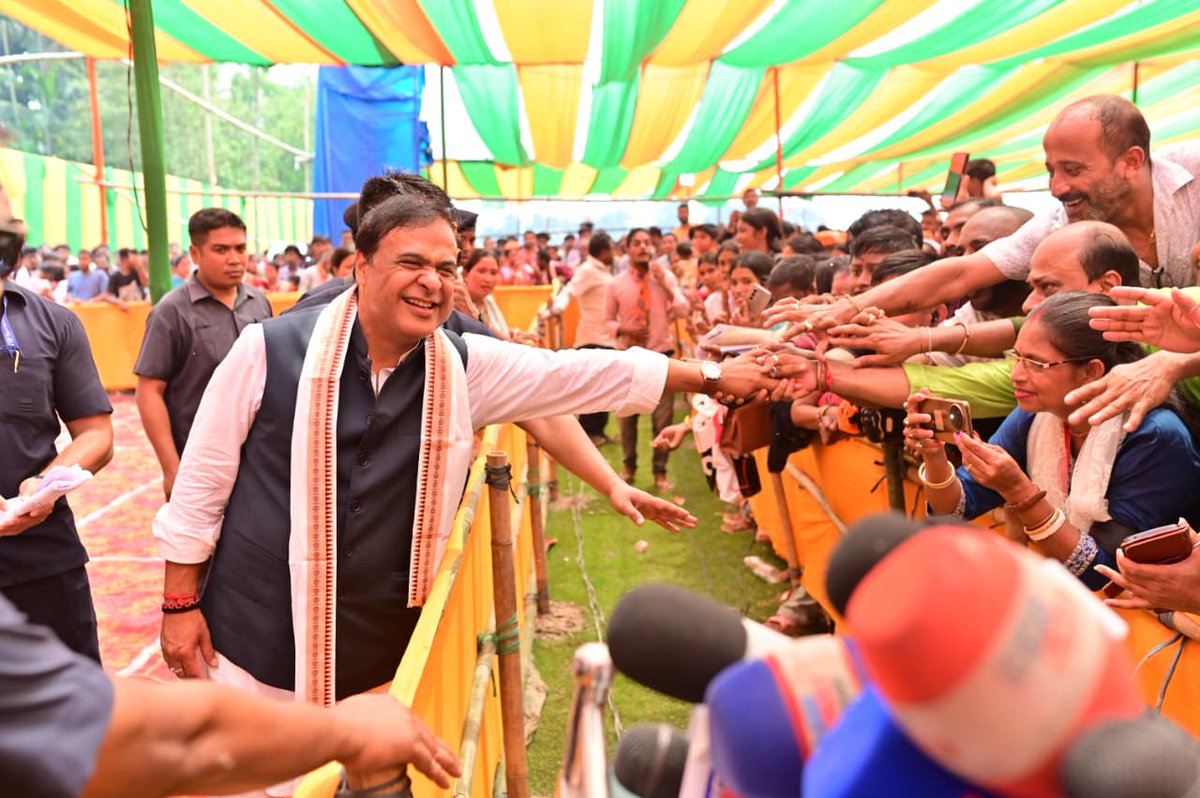
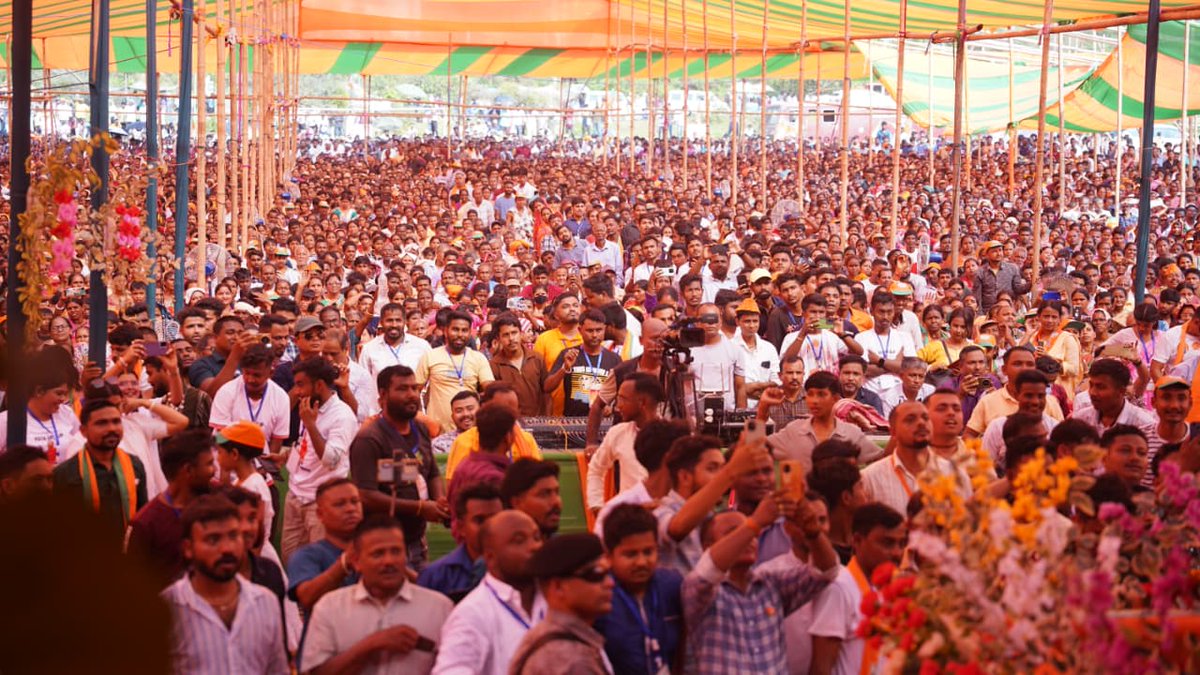
Silchar, you have my heart!
If anyone wants to understand which way the wind is blowing in Assam, these visuals tell you the real story.
Thank you ❤️
English
Himanta Biswa Sarma
59.8K posts
@himantabiswa
Chief Minister of Assam, BHARAT

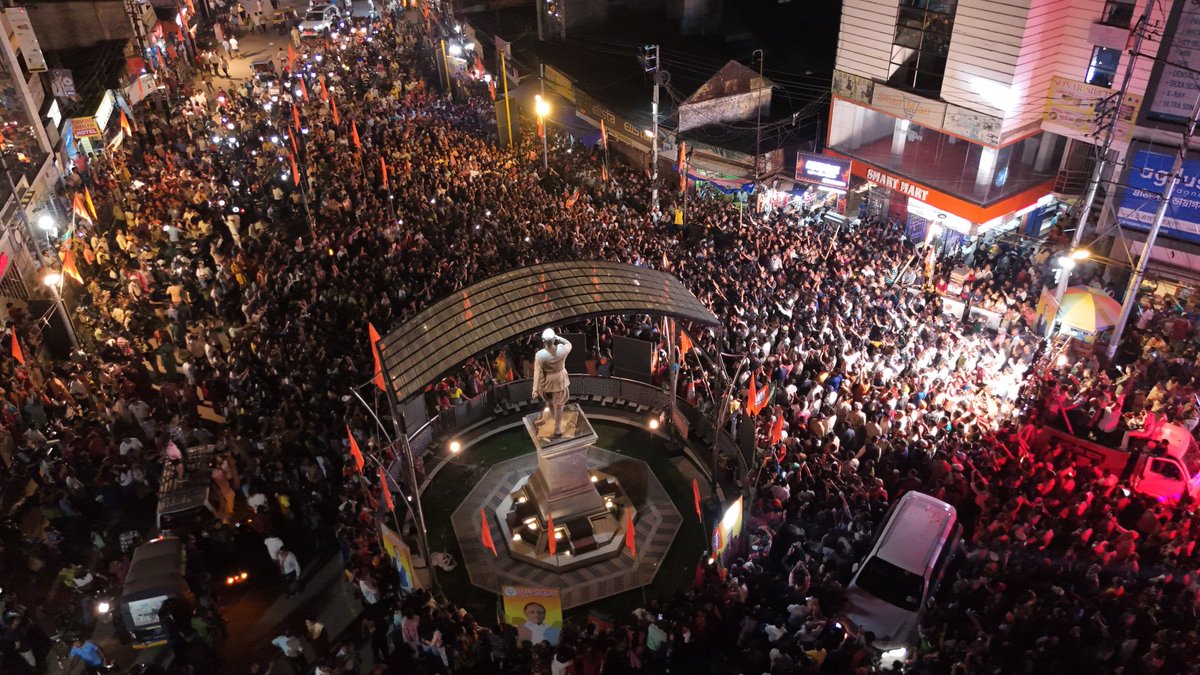


Today, Assam CM @himantabiswa campaigned in Barak Valley for the upcoming elections. I found it very intriguing how the valley, a dominantly Bengali speaking region is receiving equal and unprecedented development efforts. For decades, the people of Barak Valley were told that they mattered. But beyond speeches and symbolic politics, little changed on the ground. Roads remained broken, connectivity remained weak, healthcare infrastructure lagged behind, and opportunities for youth were limited. The region, predominantly Bengali-speaking, often felt politically acknowledged but developmentally ignored. That narrative began to change in 2016. When the BJP formed the government in Assam, it signaled a shift in governance philosophy. Development would not be selective. It would not depend on language, ethnicity or political convenience. It would reach every corner of the state, including Barak Valley. Connectivity has been one of the biggest focus areas. For years, traveling between Silchar and Guwahati meant long and uncertain journeys through difficult terrain. Today, the upcoming Silchar–Guwahati Expressway is set to rewrite that story. This is the most expensive infrastructure project ever undertaken in the Barak Valley region. Once completed, it will reduce travel time between Silchar and Guwahati to around five hours. This is not just a road. It is an economic corridor that will boost trade, tourism, investment and employment across Cachar, Karimganj and Hailakandi. Healthcare is another sector where the difference is stark. The BJP government prioritized strengthening medical infrastructure in Barak Valley so that people no longer need to travel far for quality treatment. The development of Silchar Medical College has been accelerated with modern facilities and expansion. At the same time, new medical colleges in the broader region have improved access to healthcare and medical education, creating both health security and opportunities for local youth. Road infrastructure across the valley has also seen steady upgrades. National highways have been widened, rural roads improved under multiple schemes and key bridges constructed to ensure year-round connectivity. These projects may not always make headlines, but they fundamentally change everyday life for farmers, students, traders and workers. Education and institutional development have also received attention. From strengthening schools to expanding higher education opportunities, the aim has been to ensure that youth in Barak Valley do not have to migrate out for every opportunity. Skill development initiatives and employment-oriented programs have further empowered the region. Under the leadership of Himanta Biswa Sarma, the pace of development has accelerated even more. His governance model focuses on execution, monitoring and time-bound delivery. Projects that once remained stuck in files are now moving on the ground. The emphasis has been on balanced regional development, ensuring that Barak Valley grows alongside Brahmaputra Valley. What stands out most is the approach. The BJP government has consistently demonstrated that governance is not about vote-bank appeasement. It is about inclusive growth. Barak Valley, despite being linguistically distinct, has received focused attention. This sends a strong message that development under the BJP is for all, irrespective of language, community or geography. Barak Valley’s journey since 2016 reflects a larger truth. When governance is guided by intent and executed with commitment, every region moves forward together.