Lav Jain

235 posts

Lav Jain

Lav Jain

@JainLav

Nation-first 🇮🇳 Anti-liberalism | Infrastructure • Education • Power | Jainism | Śāstra-bhakti | Shraman Sanskriti |

Kolkata , India Beigetreten Ağustos 2025
49 Folgt12 Follower
Angehefteter Tweet
Lav Jain
Lav Jain@JainLav·
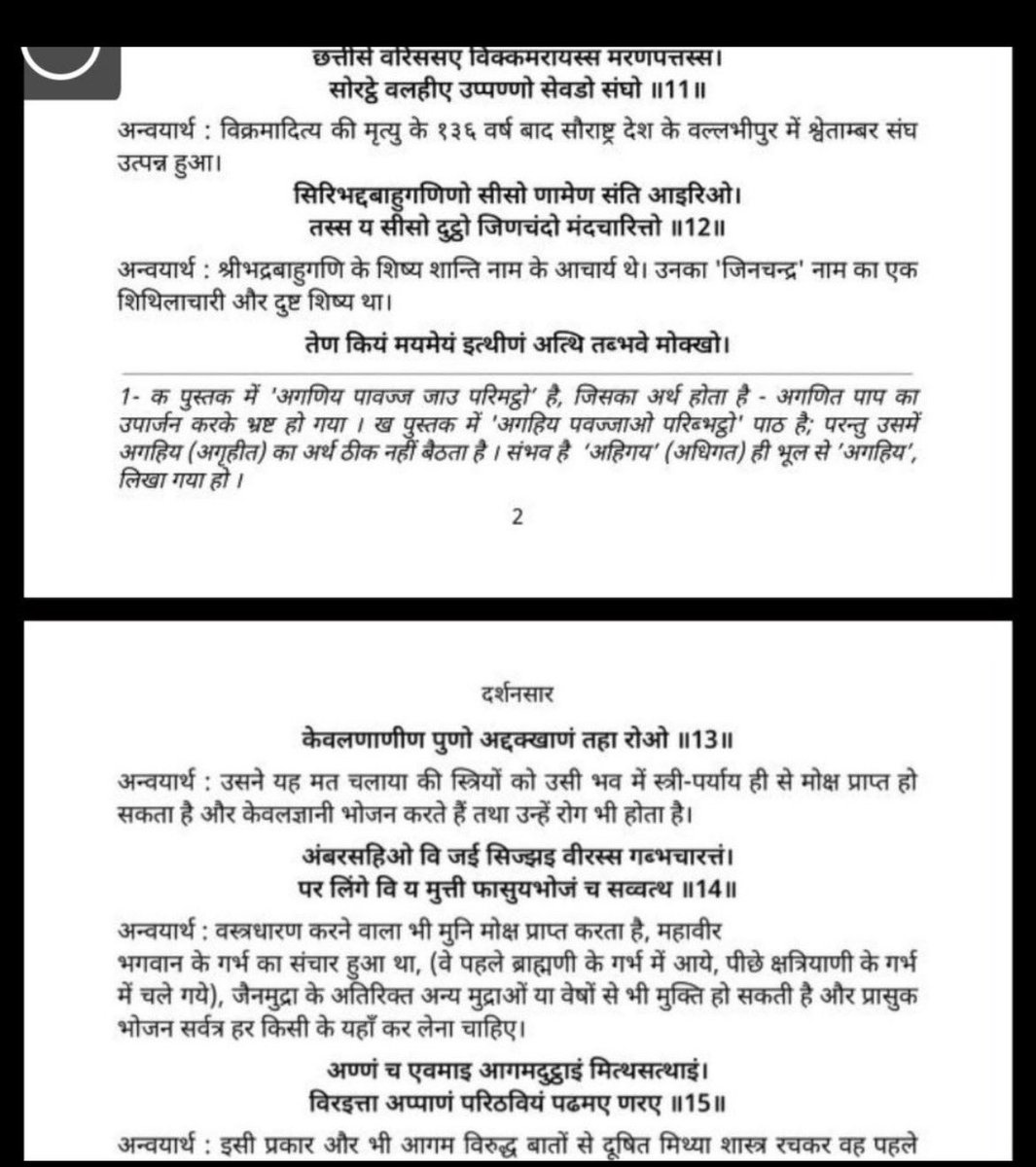
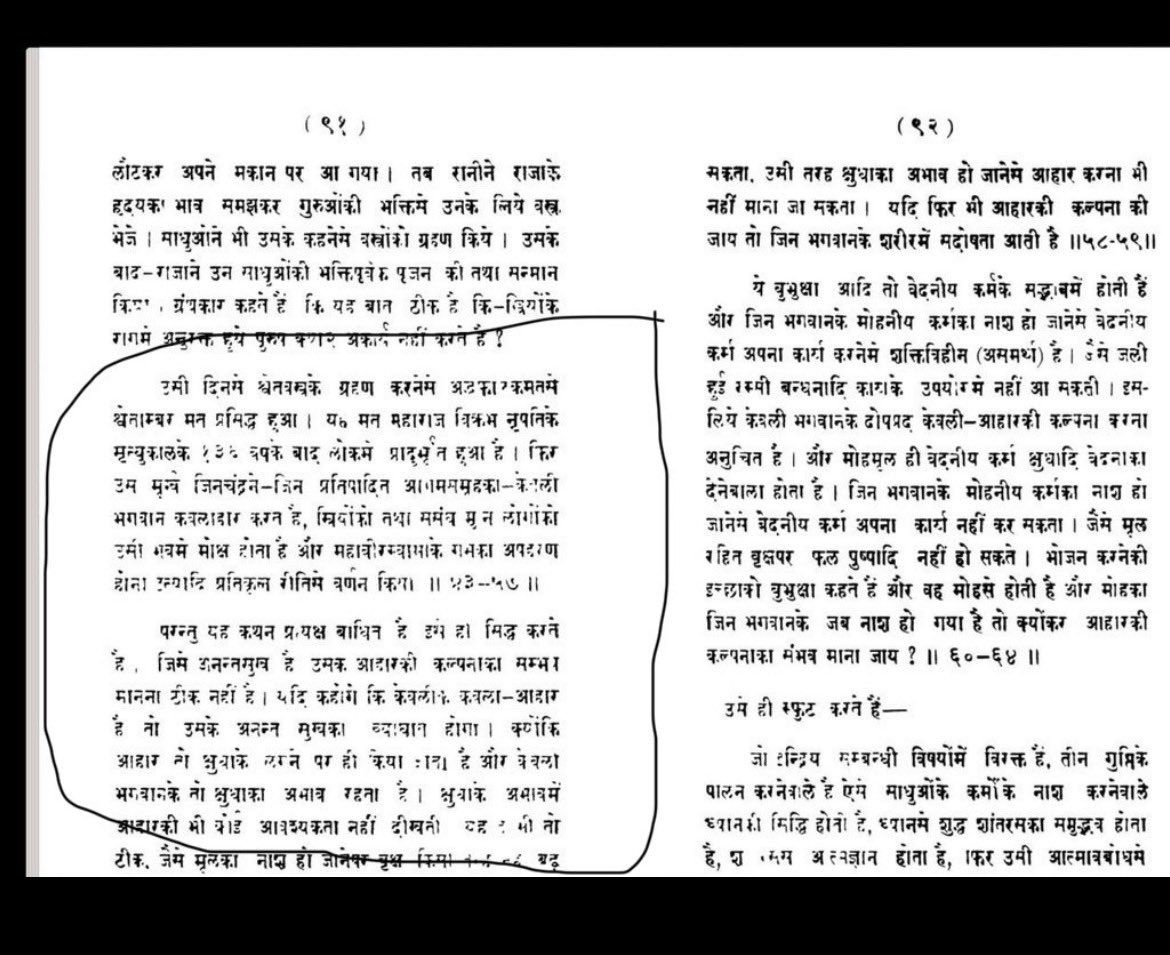
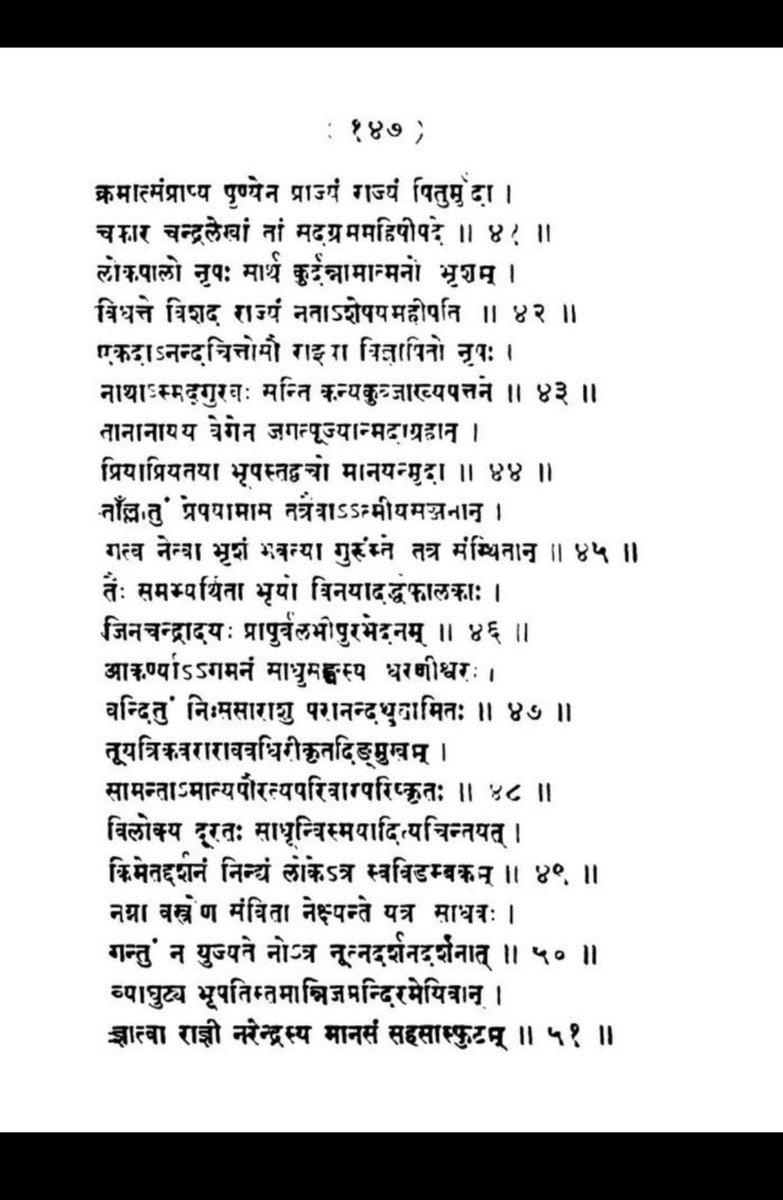
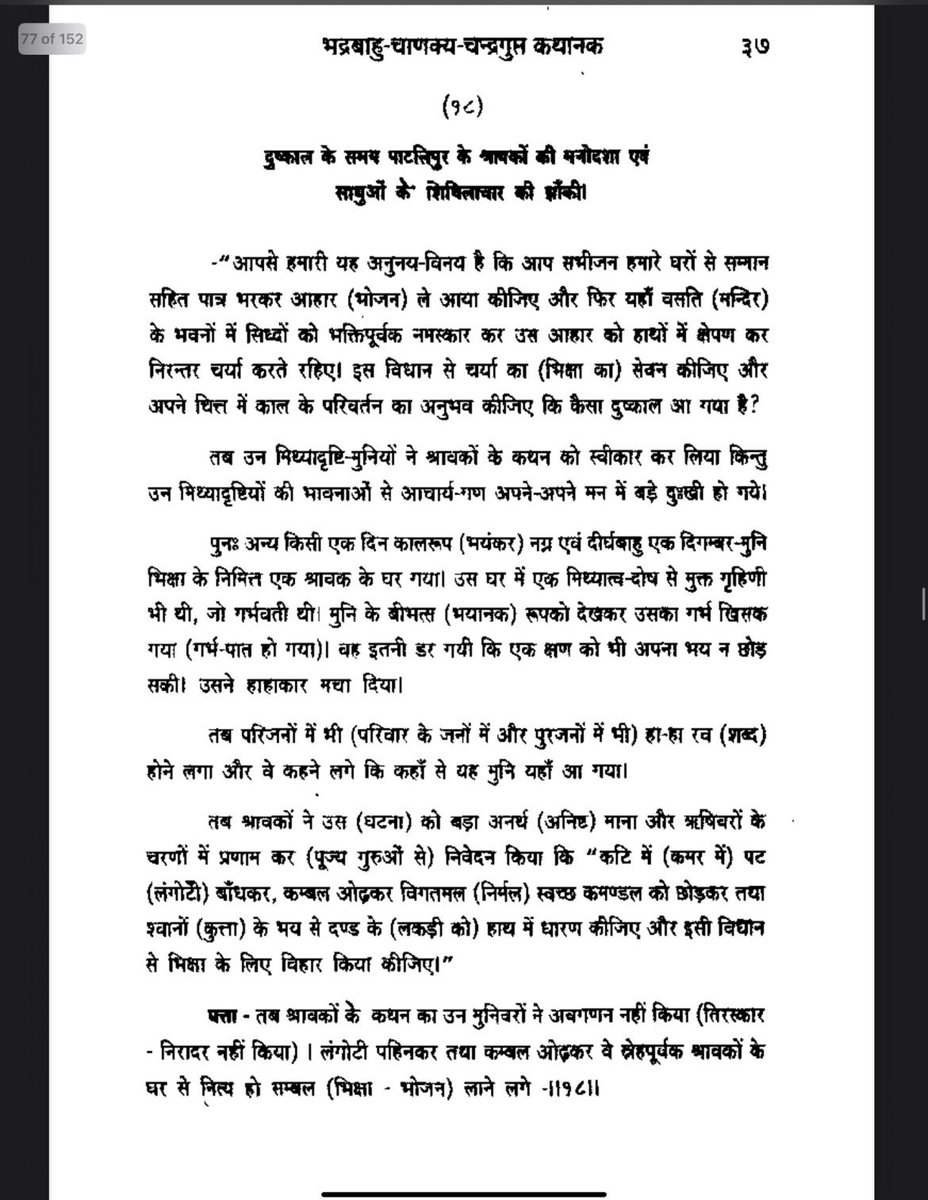
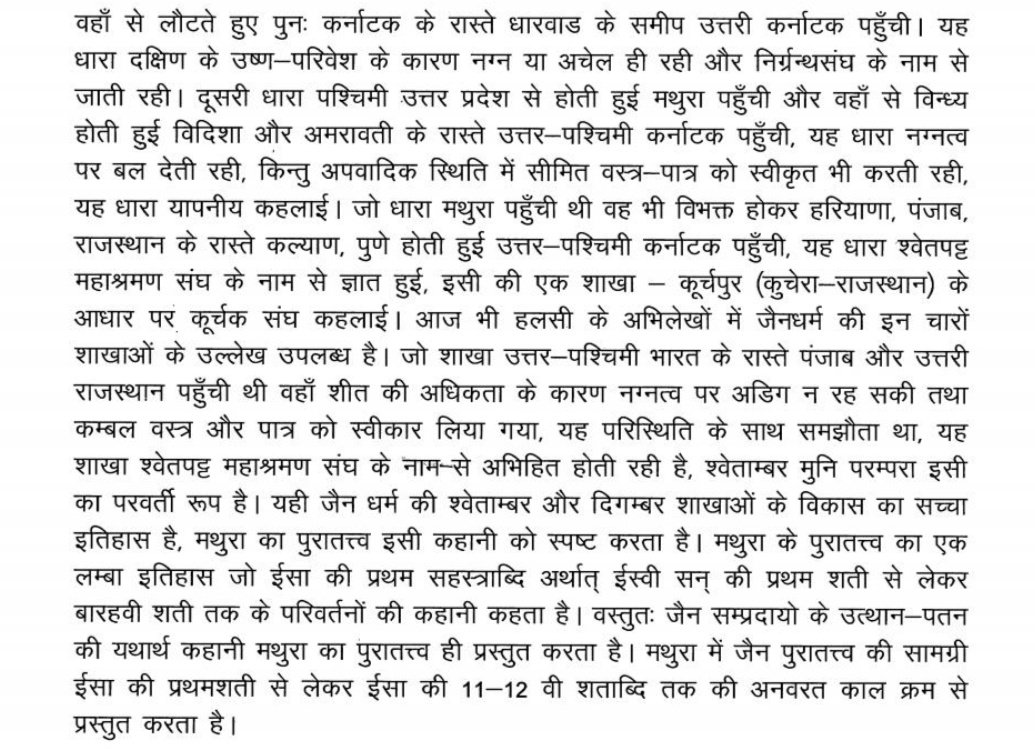
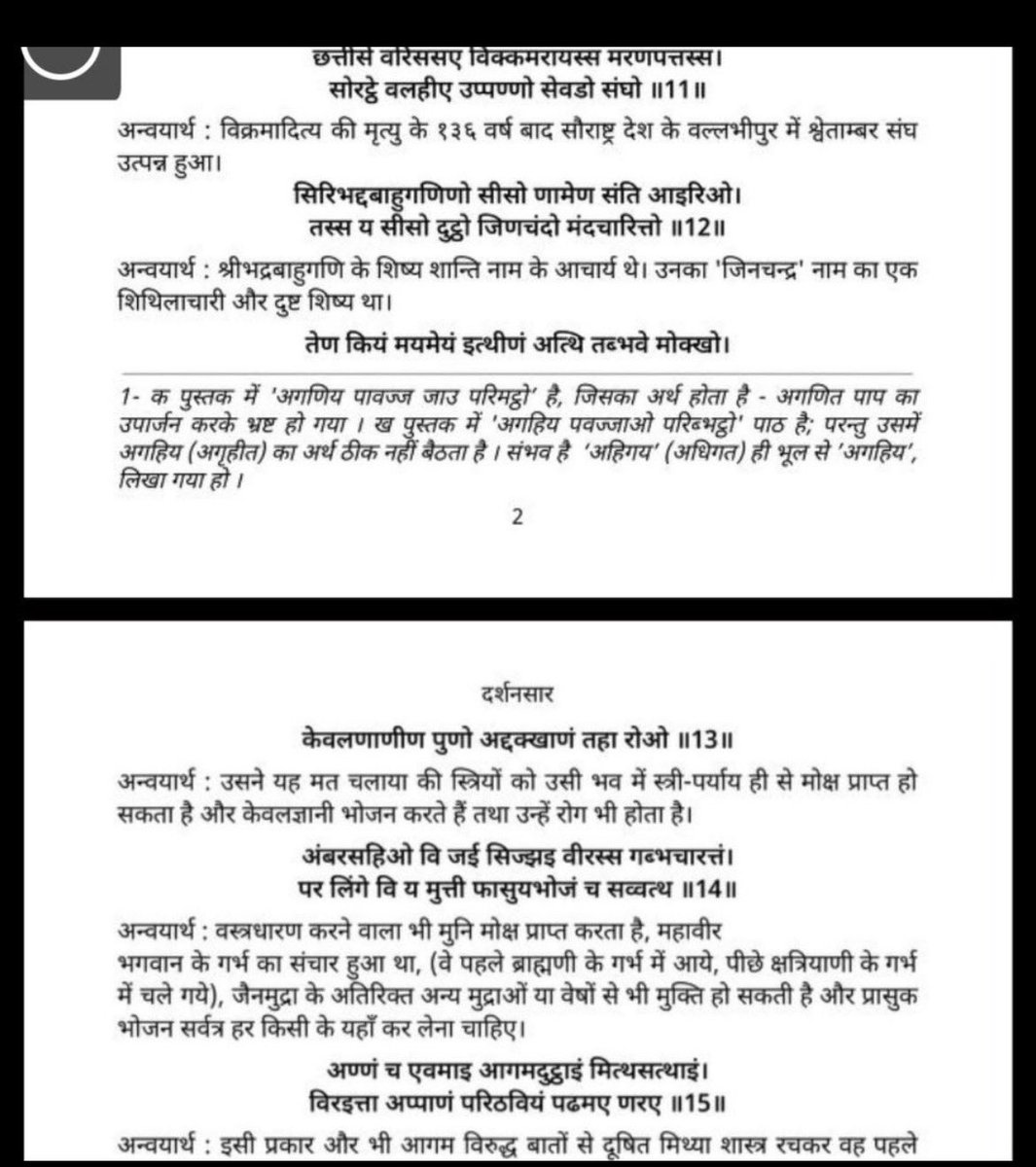
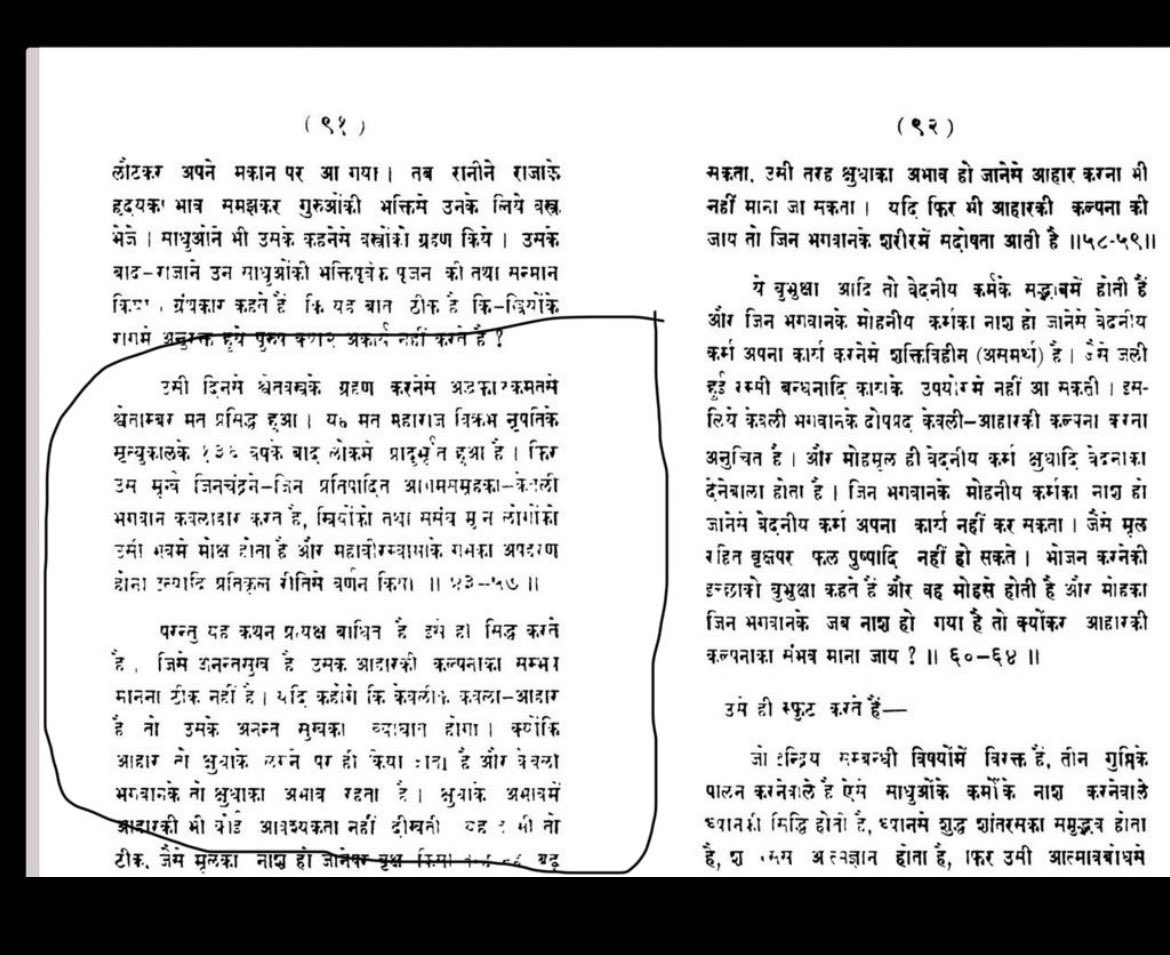
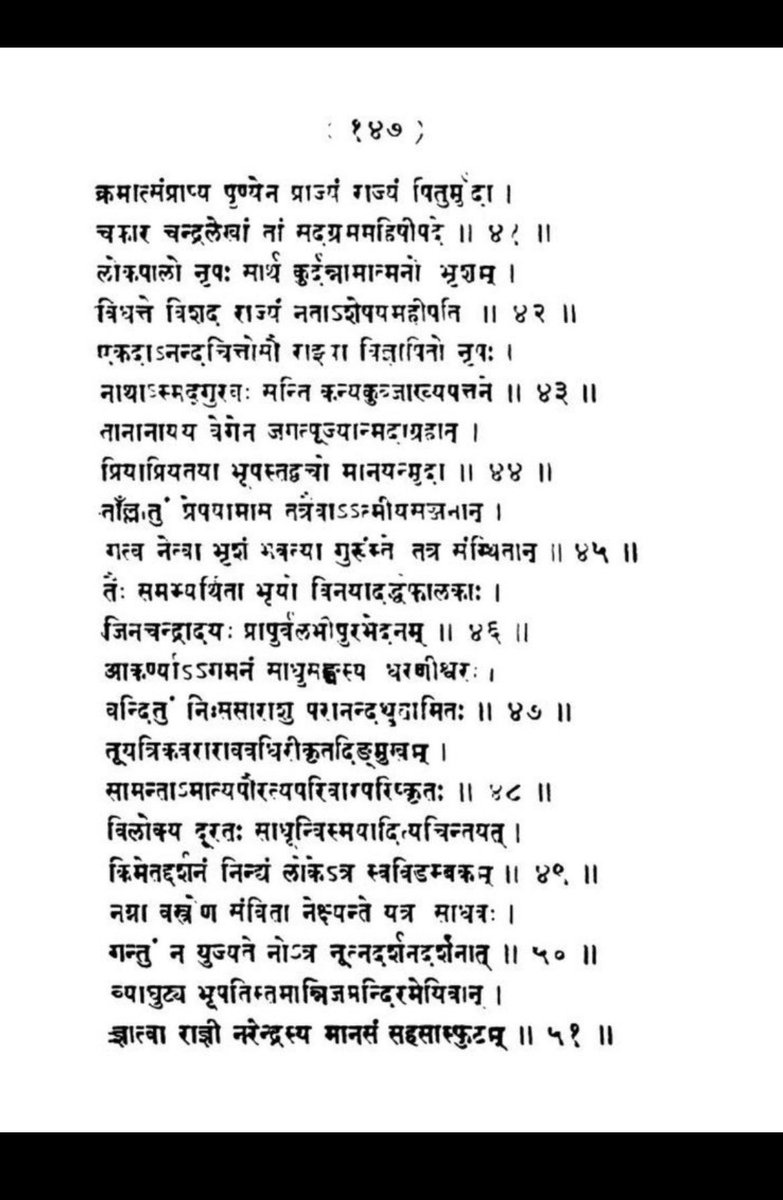
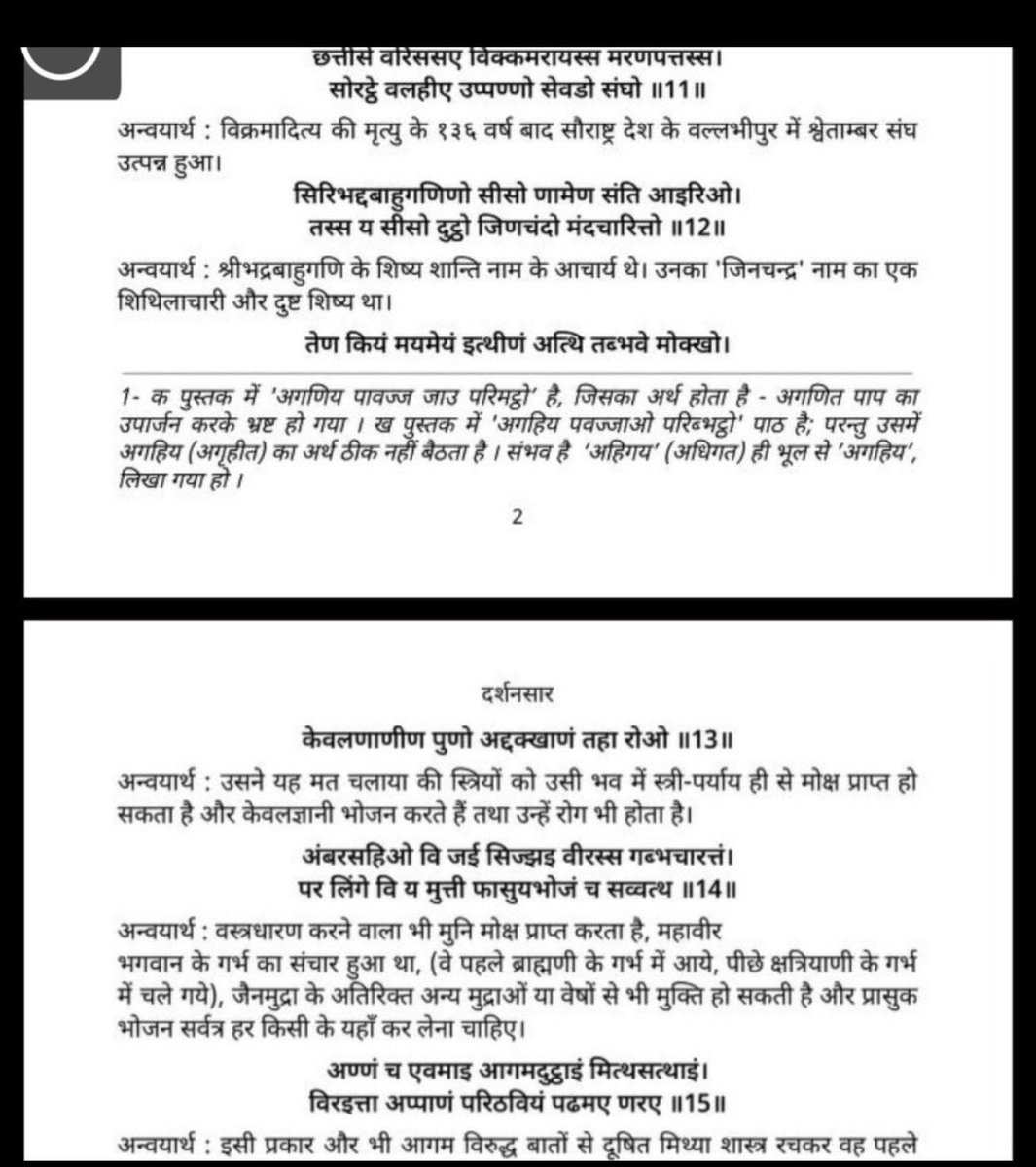
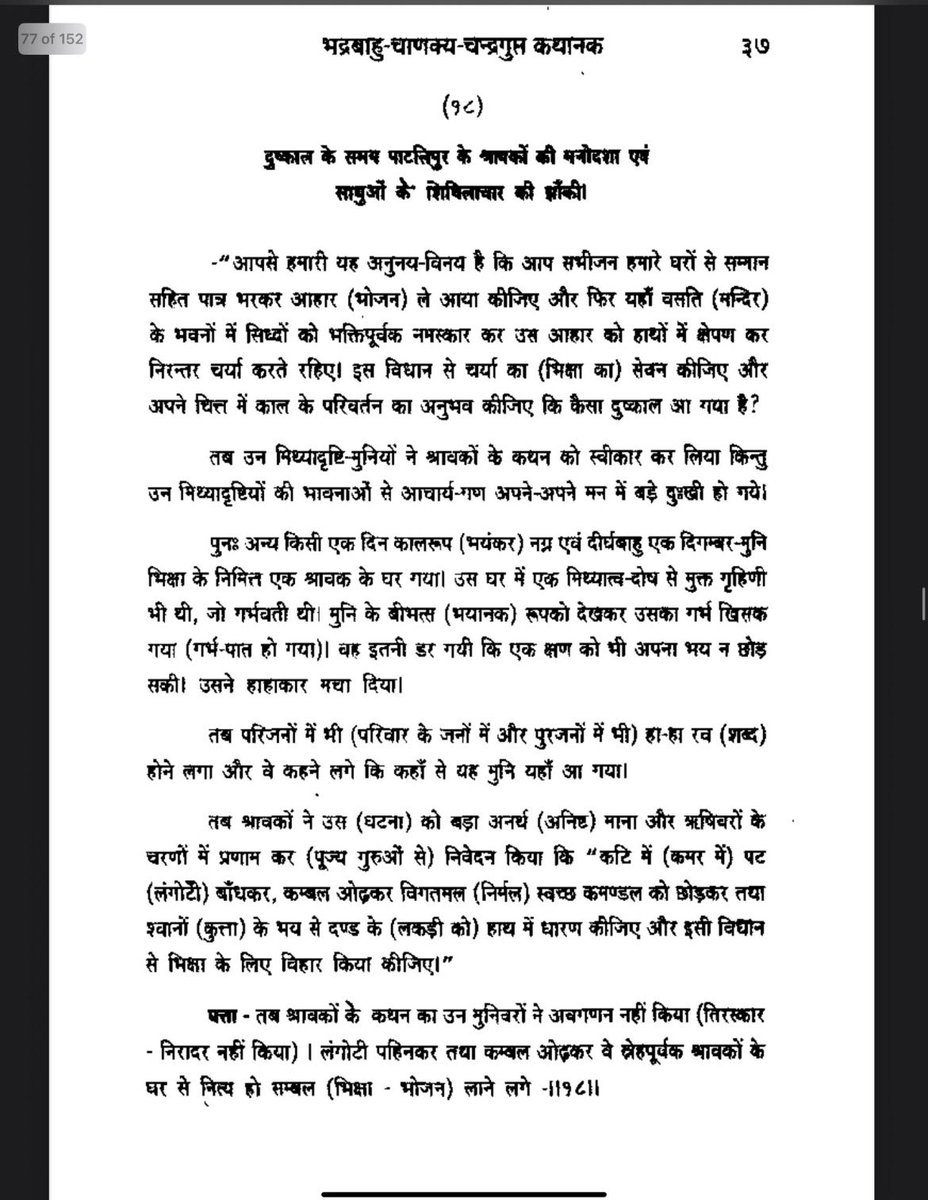
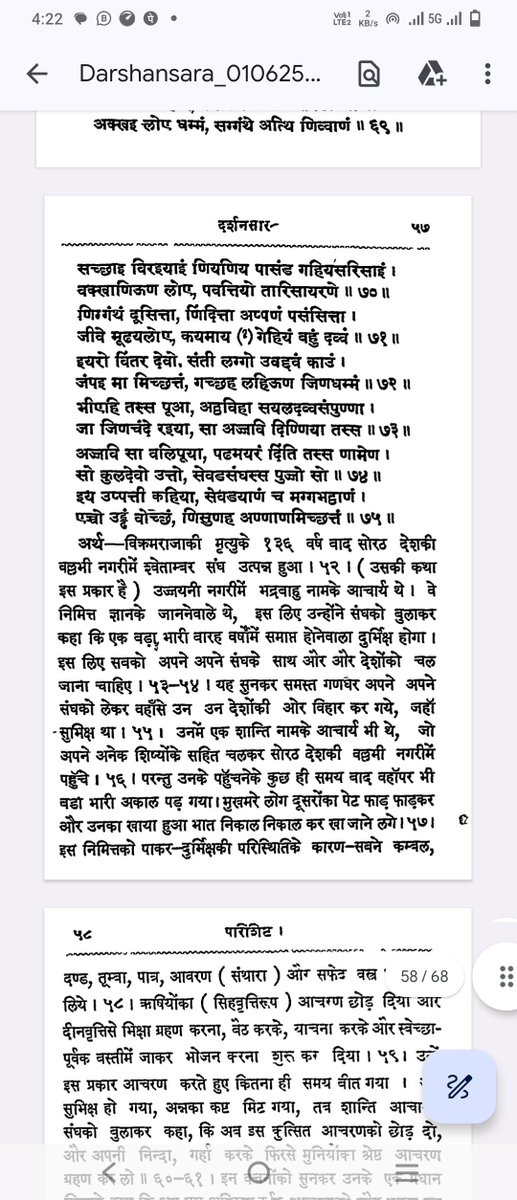
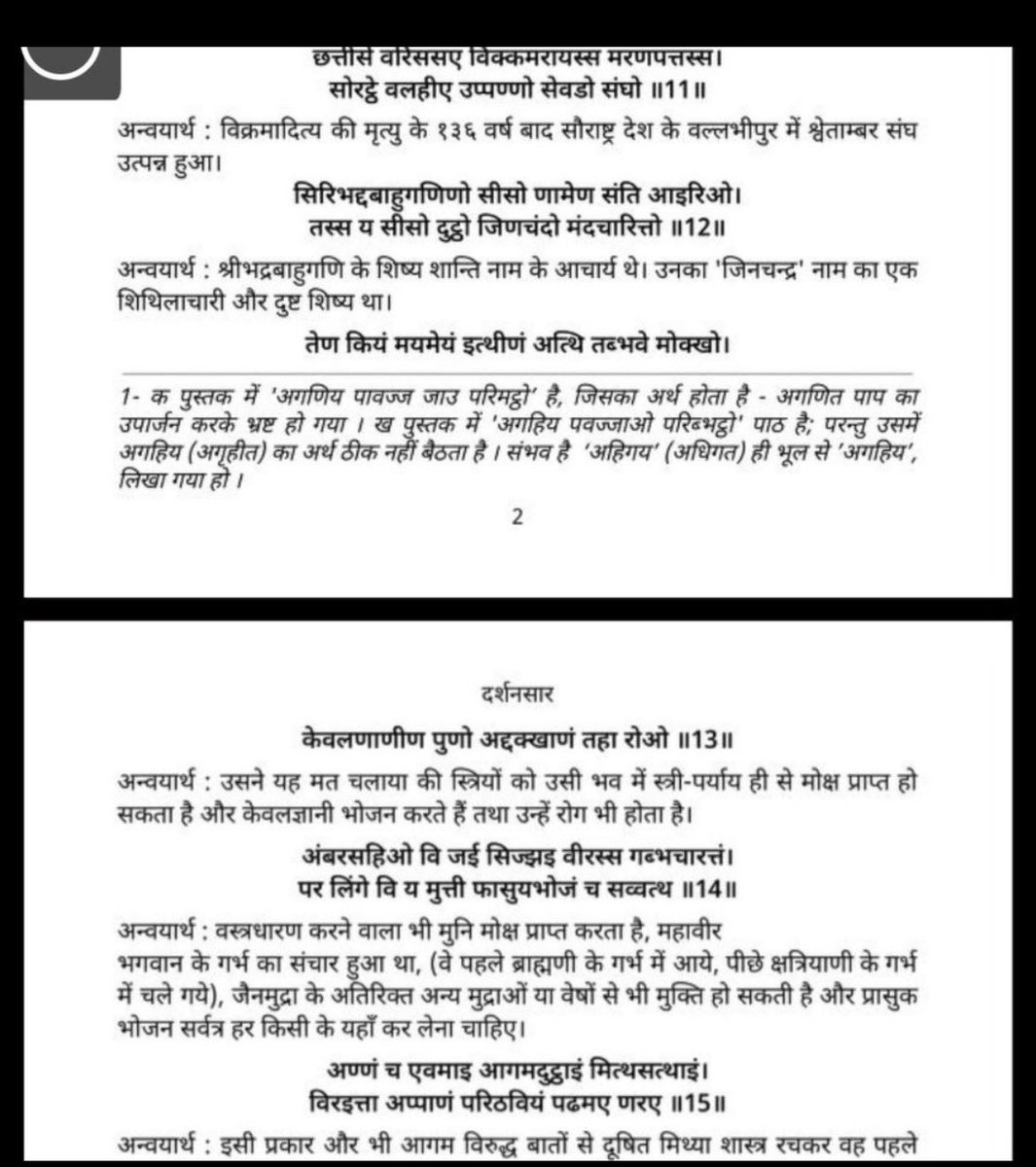
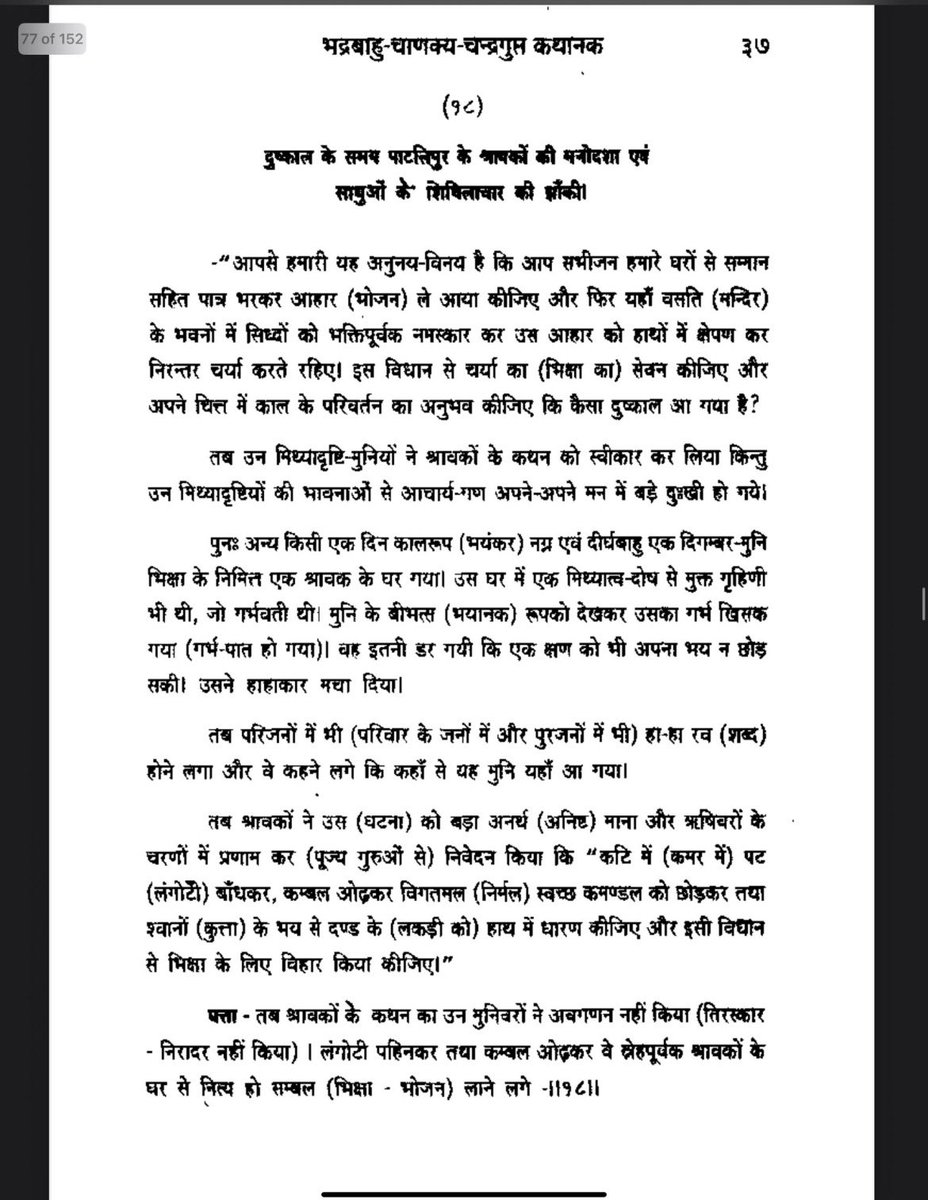
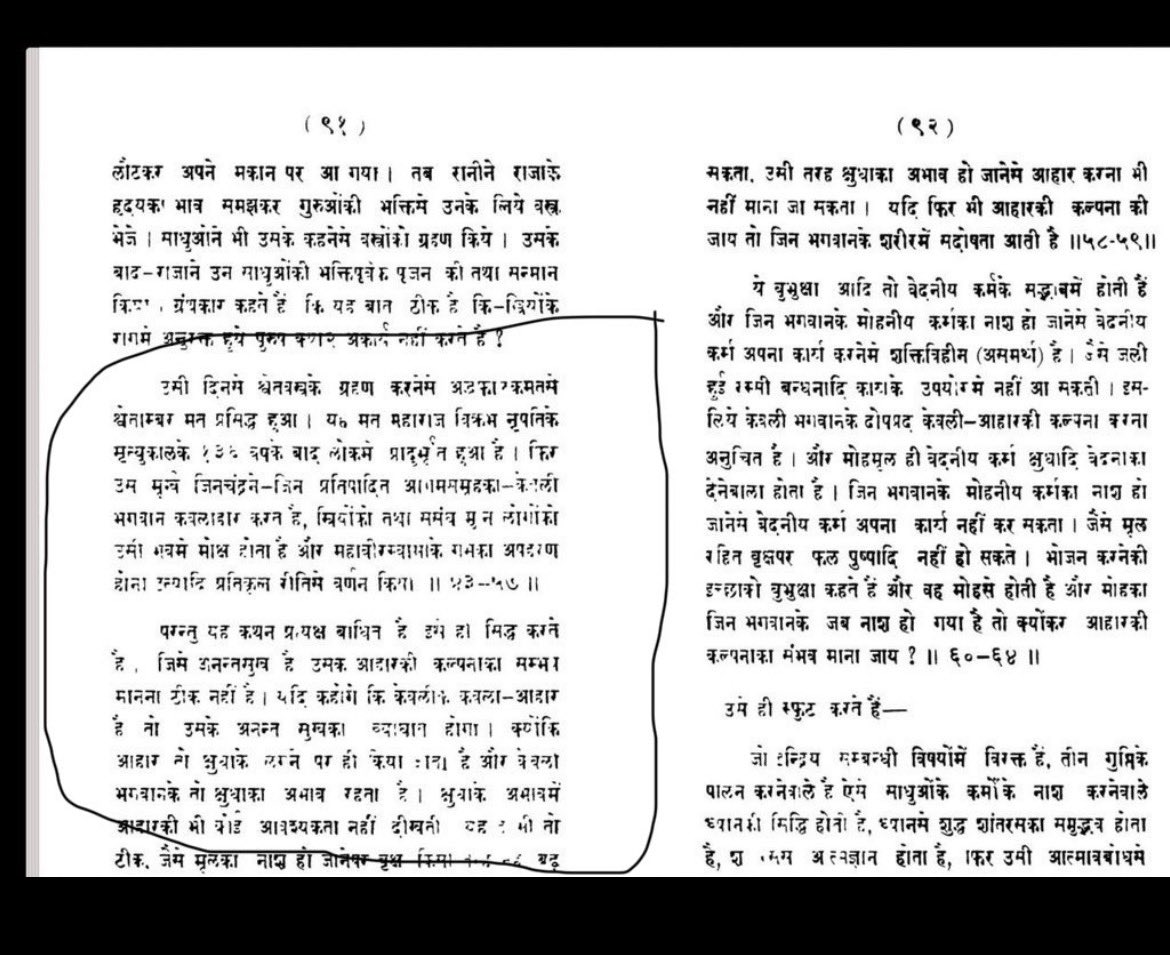
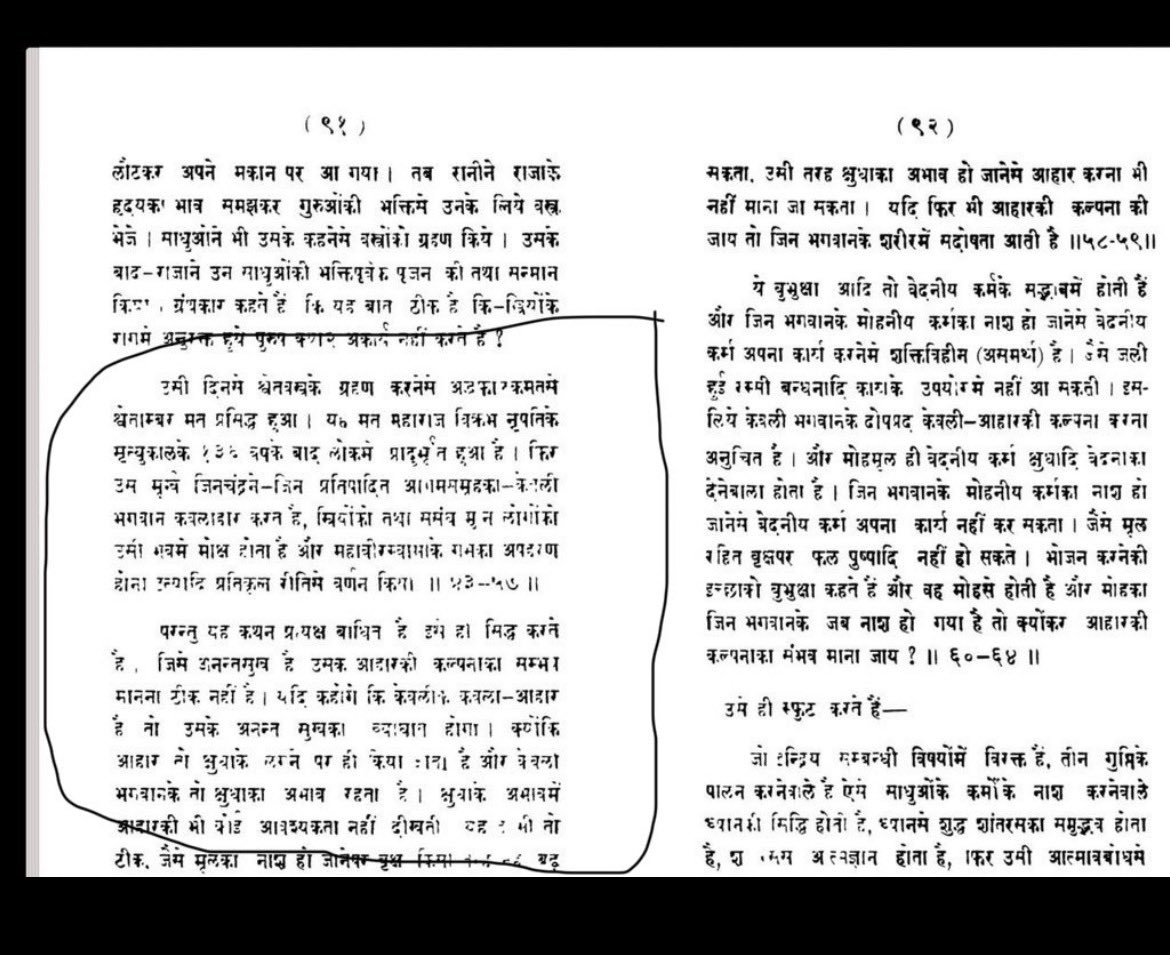
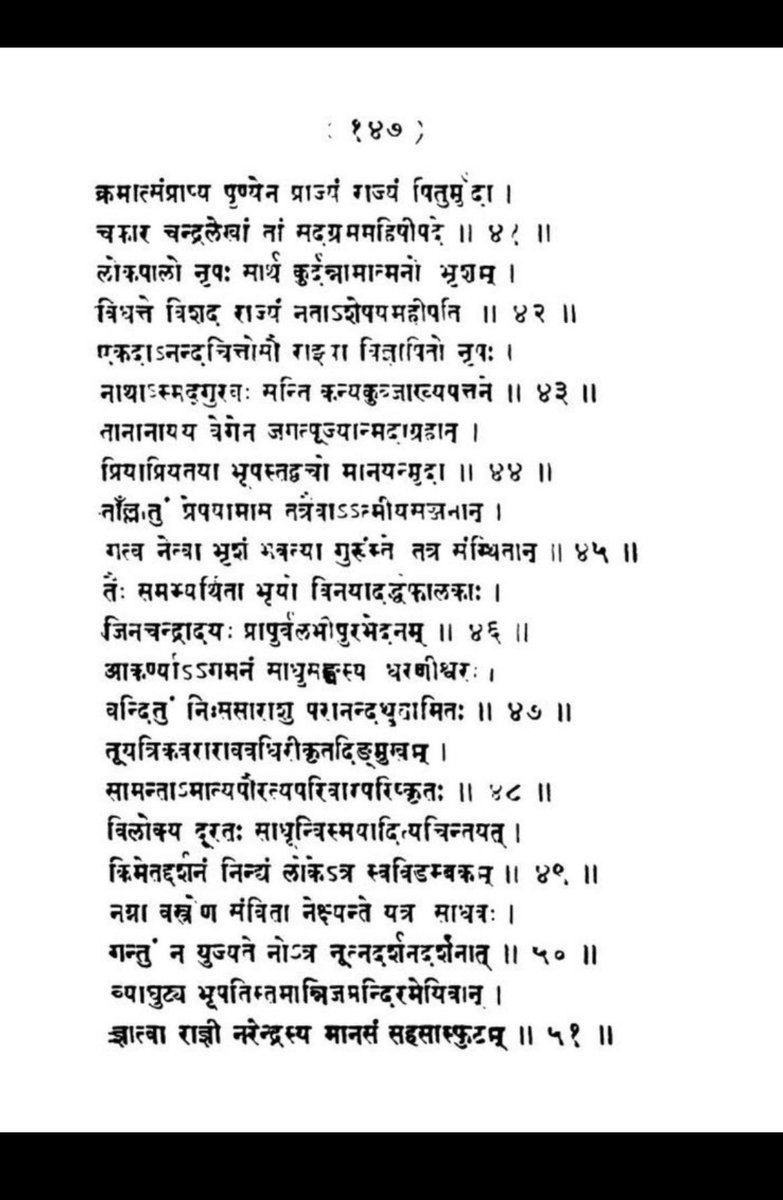
Hi everyone, I wish to respectfully place before this forum certain historical and textual facts that, unfortunately, have often been presented in a distorted or misleading manner within sections of the Shvetambar Jain discourse. It is a well-established historical reality—acknowledged even within Shvetambar scholarly conscience—that the sectarian divergence arose in the aftermath of the twelve-year famine during the era of Chandragupta Maurya. However, this fact is frequently projected as a fabrication attributed to Digambara tradition, which is historically incorrect. Archaeological and historical evidence, including findings acknowledged by the Archaeological Survey of India (ASI), clearly attest to this famine period and confirm that thousands of Digambara Jain munis migrated to South India under the leadership of Aacharya Bhadrabahu. Let me state this unambiguously at the outset: this is not a confrontation against any community. Lord Mahavira never taught conflict. Yet, धर्म-संस्थापनार्थं—सत्य-वक्तव्यं हि प्रथमं कर्तव्यम् — when the establishment of Dharma is at stake, truthful articulation becomes a sacred duty. As a humble and sincere follower of Lord Mahaveer, I remain firmly committed to this principle, with complete humility and reverence. Certain individuals, including @Shasanraagi and others, have claimed that Digambara aacharyas themselves were confused or inconsistent regarding the emergence of the Svetambar community. Today, I wish to address and factually refute this claim through original Digambara textual sources. I request all readers not to accept my words blindly. Please examine the sources independently; truth never fears scrutiny. The allegation commonly made is as follows: •That आचार्य देवसेन स्वामी in दर्शनसार , identifies जिनचन्द्र आचार्य as the founder of the श्वेताम्बर sect; • While रत्नानंदी स्वामी , in भद्रबाहु चरित्र , supposedly identifies स्थूलभद्र as the founder—thereby suggesting contradiction within Digambara tradition. This claim is entirely incorrect. Both texts refer to the same historical personality, using different appellations, and the time-period of emergence described in both works is identical. The so-called contradiction is not present in the original texts; it is a constructed narrative. Further corroboration comes from रायुडू कवि , who, in Chandragupta Maurya-Charitra, records the same historical account, reinforcing the Digambara position. I have provided the relevant evidences accordingly: •First image: Extract from Darśanasāra •Second and third images: Extracts from Bhadrabāhu-Charitra •Final image (in अप्रभंश language): Extract from Chandragupta Maurya-Charitra This presentation is not intended to demean any individual or community. Its sole purpose is to safeguard the integrity of Digambara scriptural tradition and to protect the Sanātana Śramaṇa Sanskriti from historical misrepresentation. Jai Jinendra 🙏
Lav Jain tweet mediaLav Jain tweet mediaLav Jain tweet mediaLav Jain tweet media
English
1
1
2
169
Lav Jain
Lav Jain@JainLav·
A thread on how @IndiGo6E destroys your travel plans and then laughs in your face. 🧵 Here's what ₹25,000 buys you with IndiGo: ✈️ Flight 6E899: Kolkata → Delhi — ARRIVED LATE (their fault) ✈️ Flight 6E6454: Delhi → Gwalior — MISSED (because of their delay) ⏳ 4–5 hours: Harassed counter to counter, gate to gate like a beggar 🏨 Hotel offered: ZERO 💰 Refund given: ZERO 🎫 Alternate flight: ZERO 🤝 Basic human decency: ZERO 3 family members. Stranded. Alone. In an unfamiliar city. This is not a delay complaint. This is a passenger rights VIOLATION. DGCA law is clear — when YOUR delay causes a missed connection, YOU owe us rebooking, hotel & refund. No excuses. And here's the REAL problem 👇 IndiGo controls 60%+ of Indian aviation. They KNOW you have no choice. They KNOW most passengers won't fight back. That's exactly WHY they treat passengers like this — because MONOPOLY gives them the confidence to violate laws openly. This is not one bad experience. This is a PATTERN. Has IndiGo done this to you too? ✋ Reply below. Let the world see how many of us they've harassed. Together we are NOT silent. @DGCAIndia @MoCA_GoI @ConsumerForum Flight 6E899 + 6E6454 | 30 Apr 2026 | PNR: FBI3MQ Formal complaints filed. Legal action next. Media informed. This does NOT end here. #IndiGoComplaint #AirlineAccountability #CivilAviation #TravelJustice #CustomerRights #IndiGoIssues #IndiGoMonopoly #BreakTheMonopoly #TravelRights #IndiGoResponse #IndianAviation #PassengerRights #DGCA #PMOIndia #JM_Scindia
English
0
0
0
60
Lav Jain retweetet
Narendra Modi
Narendra Modi@narendramodi·
In the upcoming West Bengal elections, fear will disappear from the state and BJP’s resounding victory will restore trust.
English
601
2.8K
13.1K
1.4M
Lav Jain retweetet
P.N.Rai
P.N.Rai@PNRai1·
यह है कैप्टन आशुतोष। IIT और NDA में एक साथ सिलेक्शन हुआ था। आशुतोष ने NDA चुना था। कश्मीर के मच्छल सेक्टर में आतंकियों के खिलाफ लड़ते हुए वीरगति को प्राप्त हो गए। ऐसे वीर योद्धा बिरले ही पैदा होते हैं। एक सैल्यूट तो बनता है। जय हिन्द, जय हिन्द की सेना।
P.N.Rai tweet media
हिन्दी
476
1.7K
6.7K
46.2K
Lav Jain retweetet
Arun Govil
Arun Govil@arungovil12·
जैन धर्म के 24वें तीर्थंकर भगवान महावीर की पावन जयंती पर सभी श्रद्धालुओं एवं प्रदेशवासियों को हार्दिक शुभकामनाएं। सत्य, अहिंसा, अस्तेय, अपरिग्रह और करुणा के उनके शाश्वत सिद्धांत आज भी मानवता को मार्गदर्शन देते हैं। आइए, हम उनके आदर्शों को अपनाकर एक समरस और शांतिपूर्ण समाज के निर्माण में योगदान दें। #MahavirJayanti #Jainism #Ahimsa #Truth
Arun Govil tweet media
हिन्दी
26
63
429
2.9K
Lav Jain retweetet
Singapore in India
Singapore in India@SGinIndia·
Very happy to visit Digambar Jain Temple in Patna, Bihar, ahead of #MahavirJayanti tomorrow. Wishing all Jains a festive celebration tomorrow! Singapore has had a significant Jain community for over 100 years 🙏🙏 HC Wong. #Jainism #Jain #Bihar #Patna #महावीरजयंती #LordMahavira
Singapore in India tweet mediaSingapore in India tweet mediaSingapore in India tweet mediaSingapore in India tweet media
English
9
127
881
20.3K
Lav Jain retweetet
BJP Delhi
BJP Delhi@BJP4Delhi·
समस्त देशवासियों को भगवान महावीर जयंती की हार्दिक शुभकामनाएं।
BJP Delhi tweet media
हिन्दी
18
48
175
1.5K
Lav Jain
Lav Jain@JainLav·
@shasanraagi, I will address you directly, but with the same restraint our tradition teaches. Disagreement is natural; contempt is a choice. The language you have used does not strengthen your position—it only reflects the spirit from which it arises. Bhagavan Mahavira did not establish the path of Śramaṇa Dharma for us to fracture it through ridicule, but to elevate it through सत्य, अहिंसा, and विनय. If you believe there are contradictions, present them—textually, precisely, and with reasoning. I have already placed evidence from inscriptions (Mahasthana, Sohgaura), the continuous ShravanaBeḷagoḷa records, literary traditions, and even external Greek accounts. These are open to examination, not immune to it. But reducing an entire paramparā to labels does not challenge it—it diminishes the dignity of the discussion itself. We both stand, ultimately, in the legacy of the same Tīrthaṅkara. The Digambara and Svetambars traditions are not enemies to be ridiculed, but inheritances to be understood with responsibility. To weaken that bridge through harshness is far easier than to preserve it with maturity. If you wish to engage, I am fully open—on the level of प्रमाण and युक्ति. But let us not allow inherited reverence to be overshadowed by momentary reactions. Because in the end, how we speak to one another reflects not just our knowledge—but our alignment with the very Dharma we claim to defend.
English
0
0
1
14
✨
@Shasanraagi·
@TanviSolanki_ @JainLav He's literally making a fool of himself and laughing stock of his bigot D uplicate cuIt,both Acharyas have clearly mentioned different people,places and times of origination in their stories,we dont need to reply to his foolish rants,even D scholars like Premi know the fallacy
English
3
0
4
132
Lav Jain
Lav Jain@JainLav·
Hi everyone, I wish to respectfully place before this forum certain historical and textual facts that, unfortunately, have often been presented in a distorted or misleading manner within sections of the Shvetambar Jain discourse. It is a well-established historical reality—acknowledged even within Shvetambar scholarly conscience—that the sectarian divergence arose in the aftermath of the twelve-year famine during the era of Chandragupta Maurya. However, this fact is frequently projected as a fabrication attributed to Digambara tradition, which is historically incorrect. Archaeological and historical evidence, including findings acknowledged by the Archaeological Survey of India (ASI), clearly attest to this famine period and confirm that thousands of Digambara Jain munis migrated to South India under the leadership of Aacharya Bhadrabahu. Let me state this unambiguously at the outset: this is not a confrontation against any community. Lord Mahavira never taught conflict. Yet, धर्म-संस्थापनार्थं—सत्य-वक्तव्यं हि प्रथमं कर्तव्यम् — when the establishment of Dharma is at stake, truthful articulation becomes a sacred duty. As a humble and sincere follower of Lord Mahaveer, I remain firmly committed to this principle, with complete humility and reverence. Certain individuals, including @Shasanraagi and others, have claimed that Digambara aacharyas themselves were confused or inconsistent regarding the emergence of the Svetambar community. Today, I wish to address and factually refute this claim through original Digambara textual sources. I request all readers not to accept my words blindly. Please examine the sources independently; truth never fears scrutiny. The allegation commonly made is as follows: •That आचार्य देवसेन स्वामी in दर्शनसार , identifies जिनचन्द्र आचार्य as the founder of the श्वेताम्बर sect; • While रत्नानंदी स्वामी , in भद्रबाहु चरित्र , supposedly identifies स्थूलभद्र as the founder—thereby suggesting contradiction within Digambara tradition. This claim is entirely incorrect. Both texts refer to the same historical personality, using different appellations, and the time-period of emergence described in both works is identical. The so-called contradiction is not present in the original texts; it is a constructed narrative. Further corroboration comes from रायुडू कवि , who, in Chandragupta Maurya-Charitra, records the same historical account, reinforcing the Digambara position. I have provided the relevant evidences accordingly: •First image: Extract from Darśanasāra •Second and third images: Extracts from Bhadrabāhu-Charitra •Final image (in अप्रभंश language): Extract from Chandragupta Maurya-Charitra This presentation is not intended to demean any individual or community. Its sole purpose is to safeguard the integrity of Digambara scriptural tradition and to protect the Sanātana Śramaṇa Sanskriti from historical misrepresentation. Jai Jinendra 🙏
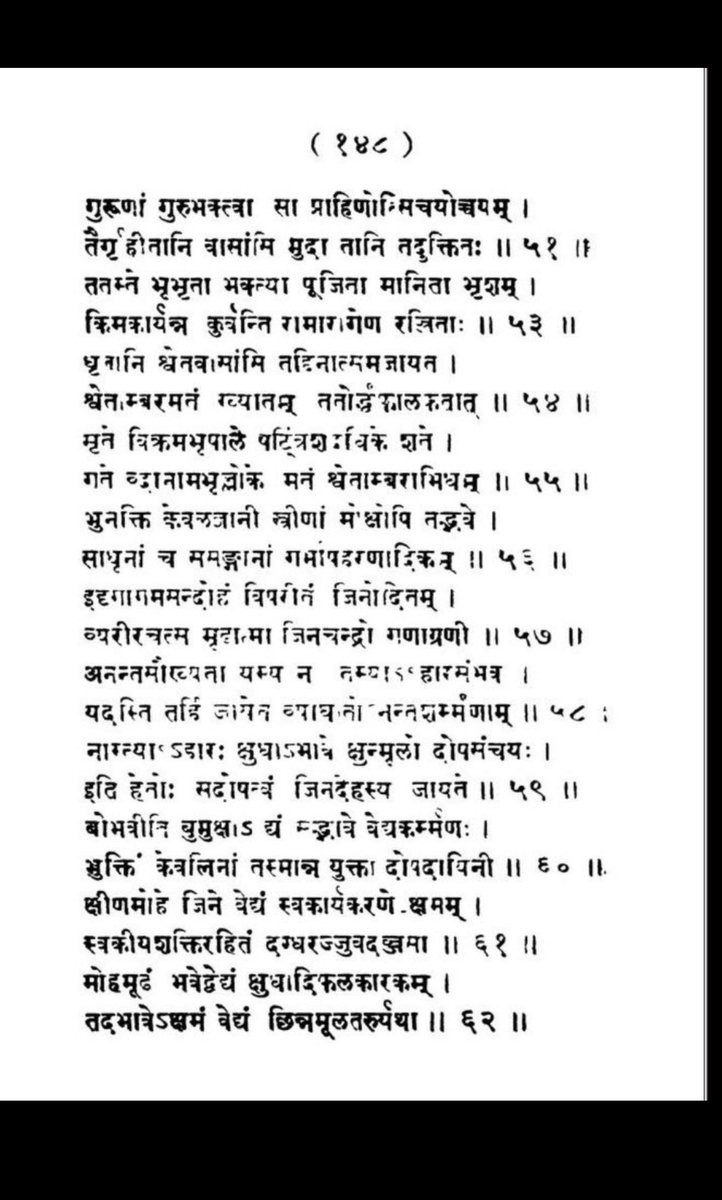
Lav Jain tweet mediaLav Jain tweet mediaLav Jain tweet mediaLav Jain tweet media
English
1
1
2
169
Lav Jain
Lav Jain@JainLav·
I will respond once—calmly, and strictly on substance. Personal remarks do not strengthen an argument; evidence does. If there is a claim of “different people, places, and times,” then it must be demonstrated with precise textual citation, linguistic analysis, and historical context—not assertion. My position has been clearly laid out and remains unchanged: the passages in Darśanasāra and Bhadrabāhu Charitra can be reconciled when read philologically and contextually; the alleged contradiction arises not from the texts themselves, but from a fragmented reading of them. Beyond this, the discussion does not stand on a single textual point. The historical framework I presented rests on convergence: the epigraphic evidence of famine (Mahasthana, Sohgaura), the long-standing tradition of migration under Ācārya Bhadrabāhu with Chandragupta Maurya, the continuous inscriptional record at Śravaṇa Beḷagoḷa from ~600 CE onward, the literary continuity across centuries, and even external corroboration from Greek accounts noting nude ascetics prior to the Mauryan period. When multiple independent strands—inscriptions, texts, geography, and external observations—align in one direction, dismissing them requires equally rigorous counter-evidence, not dismissal through rhetoric. If any scholar—Premi or otherwise—has demonstrated a “fallacy,” I would genuinely welcome the exact reference and argument. Serious discussion proceeds through pramāṇa (evidence) and yukti (reason), not through labels. I have no interest in conflict, nor in diminishing any tradition. But I will not accept that a long-standing, evidence-supported Digambara position be reduced to caricature without examination. If the discussion is to continue, let it remain at the level of sources, reasoning, and clarity. That alone does justice to the legacy we all claim to represent. Jai Jinendra 🙏.
English
0
0
1
18
Lav Jain
Lav Jain@JainLav·
Respected, I truly appreciate your emphasis on openness and unbiased inquiry—that spirit itself reflects the essence of sincere study 😊 However, with equal humility, I would submit that the phrase “oldest inscription proves one sect as oldest” may need careful reconsideration. Inscriptions, by their very nature, record presence, patronage, or practices—but rarely do they make explicit, systematic claims about sectarian origin in the way later interpretations sometimes attribute to them. My intention is not to negate your understanding, but to gently point out that historical conclusions require correlation across multiple domains—epigraphy, textual continuity, geography, and comparative accounts. When all these are examined together, the picture often becomes more layered than a single inscriptional reading might suggest. I remain fully open to learning, and if there are specific inscriptions that explicitly and unambiguously establish this claim, I would sincerely welcome studying them in detail. For me, this dialogue is not about holding onto a position, but about approaching truth with both intellectual honesty and mutual respect—so that, even in difference, the dignity of all traditions within the Jain Sangha remains preserved. Jai Jinendra 🙏.
English
0
0
1
25
Tanvi Jain 🇮🇳
Tanvi Jain 🇮🇳@TanviSolanki_·
@JainLav Any question or argument doesn't arise when the oldest inscription says that shwetambar is the oldest tradition. It may be difficult for you to accept this after years of studying from other perspectives. But we have to be Open minded and research more by being unbiased 😊
English
1
0
1
74
Lav Jain
Lav Jain@JainLav·
Pranam🙏, Your point regarding Kankali Tila and the Hathigumpha inscriptions is received with full seriousness and respect. They indeed stand as among the earliest archaeological affirmations of the Jain presence in Bharatvarsha, and no sincere student of history would deny their importance. However, the issue here is different: antiquity of the tradition and the emergence of sectarian differentiation are not the same question. These inscriptions testify to presence, but they do not describe how internal distinctions within the Sangha developed, and hence cannot be used to negate later historical processes. On the famine, this is not a sectarian assertion but an epigraphic reality. The Mahasthana stone inscription (Bogra) and the Sohgaura copper plate (Gorakhpur) independently record conditions of scarcity and relief measures. These are neutral records, and together they firmly establish that such a famine was real and deeply felt. On migration, the account of Acharya Bhadrabahu and Chandragupta Maurya moving south is not based on isolated tradition. It emerges from a convergence of literary continuity (बृहद कथाकोश , भद्रबाहु चरित्र , later works), inscriptions at Shravanabelagola from ~600 CE onward, and enduring geographical associations like Chandragiri hill, Bhadrabahu cave, and Chandragupta Basti. Consider the strength of this continuity: • An inscription as early as ~600 CE • Further inscriptions (~900 CE) marking the hill with the footprints of Bhadrabahu and Chandragupta • Records from 1128 CE and 1169 CE explicitly naming them • A 1433 CE inscription continuing the same narrative Across nearly a millennium, the narrative remains consistent—this continuity itself carries historical weight. Scholars such as Lewis Rice, Narasimhachar, Edward Thomas, and Hoernle have examined these materials and accepted this migration as historically credible. Greek accounts add another dimension: Plutarch’s “Gymnosophists” and the figure of Calanos show that nude, austere asceticism existed in India even before the Mauryan period, placing the Digambara-like ideal firmly in early antiquity. The Mathura findings (1st BCE–1st CE) are often presented as evidence against early differentiation. However, they show: • Variation in attire • Diversity in representation But diversity does not negate prior distinction. Rather, it may indicate: • Regional adaptations • Transitional phases • Coexistence of stricter and more accommodative practices. In fact, one may reasonably infer that: the stricter ascetic ideal represents the earlier core, while moderated forms emerge gradually under changing conditions. Therefore, the position is simple and evidence-based: famine is attested, migration is supported by multiple independent sources, continuity is preserved across centuries, and early ascetic practices are externally corroborated. When such convergence exists, dismissal requires stronger counter-evidence, not assertion alone. In the end, this need not be a question of whose narrative prevails, but of how truth reveals itself when approached with sincerity. Our traditions, though expressed differently, arise from the same sacred quest for restraint, purity, and liberation taught by Bhagavan Mahavira. If, in this dialogue, we can preserve both intellectual honesty and mutual reverence, then we uphold not just our positions—but the very spirit of the Sramana path. With that भावना, I offer this not in opposition, but in shared respect. Jai Jinendra🙏🙏.
English
1
0
1
63
Tanvi Jain 🇮🇳
Tanvi Jain 🇮🇳@TanviSolanki_·
Famine occurred in a few parts of India, is true. But shwetambar became shwetambar due to this drought is absolutely false, because the oldest jain tradition is found in the kankali tila and hathigumpha inscriptions. Will you call it a lie when the archeologists have presented the truth?
English
2
2
5
212
Lav Jain
Lav Jain@JainLav·
With due respect, I fully agree that learned Aacharyas—whether Svetambar or Digambara—deserve the highest regard, and their interpretations should certainly be heard with seriousness. However, I would like to submit one important principle that applies universally in any serious intellectual or Sastric discussion: प्रमाण (evidence) must precede authority—not the other way around. If a claim is made that a text is “misinterpreted” or “recent,” then: •The specific textual portion must be identified •The philological or historical basis for calling it “recent” must be demonstrated •And an alternative reading, grounded in grammar, context, and manuscript tradition, must be presented Simply appealing to “our Acharyas know better” does not, by itself, resolve a textual question—because even Acharyas base their conclusions on Agam , yukti (reason), and praman (evidence). ⸻ On the Core Issue My submission is very limited and precise: •The passages from Darshanasaar and Bhadrabahu Charitra •Refer to the same historical figure under different names •And describe the same time period and sequence of events Therefore, the allegation of contradiction within Digambara tradition does not stand when the texts are read carefully and comparatively. If there is an alternative interpretation, I sincerely welcome it—but I would request that it be presented with: •Exact textual references •Linguistic justification •Historical consistency ⸻ On “Original vs Recent Scriptures” This is a serious claim and should be handled carefully. If any of the cited works are being labeled as “recent” or “non-authentic,” then I would respectfully ask: •On what manuscript evidence is this conclusion based? •Which critical editions or scholarly studies establish this? •And how do we reconcile that with their long-standing acceptance in traditional Digambara literature? Without such substantiation, dismissing texts risks becoming an assumption rather than a demonstrated conclusion. ⸻ Closing Position Let me reiterate: •My intention is not to challenge any tradition or Acharyas •Nor to create sectarian friction •But only to ensure that historical and textual discussions remain evidence-based If we are all seekers of truth—as Bhagavan Mahavira taught—then: सत्य is strengthened not by authority alone, but by transparent examination I remain fully open to correction—provided it is supported by textual, logical, and historical clarity. Jai Jinendra 🙏
English
0
0
1
39
Lav Jain
Lav Jain@JainLav·
Hi everyone, I wish to respectfully place before this forum certain historical and textual facts that, unfortunately, have often been presented in a distorted or misleading manner within sections of the Shvetambar Jain discourse. It is a well-established historical reality—acknowledged even within Shvetambar scholarly conscience—that the sectarian divergence arose in the aftermath of the twelve-year famine during the era of Chandragupta Maurya. However, this fact is frequently projected as a fabrication attributed to Digambara tradition, which is historically incorrect. Archaeological and historical evidence, including findings acknowledged by the Archaeological Survey of India (ASI), clearly attest to this famine period and confirm that thousands of Digambara Jain munis migrated to South India under the leadership of Aacharya Bhadrabahu. Let me state this unambiguously at the outset: this is not a confrontation against any community. Lord Mahavira never taught conflict. Yet, धर्म-संस्थापनार्थं—सत्य-वक्तव्यं हि प्रथमं कर्तव्यम् — when the establishment of Dharma is at stake, truthful articulation becomes a sacred duty. As a humble and sincere follower of Lord Mahaveer, I remain firmly committed to this principle, with complete humility and reverence. Certain individuals, including @Shasanraagi and others, have claimed that Digambara aacharyas themselves were confused or inconsistent regarding the emergence of the Svetambar community. Today, I wish to address and factually refute this claim through original Digambara textual sources. I request all readers not to accept my words blindly. Please examine the sources independently; truth never fears scrutiny. The allegation commonly made is as follows: •That आचार्य देवसेन स्वामी in दर्शनसार , identifies जिनचन्द्र आचार्य as the founder of the श्वेताम्बर sect; • While रत्नानंदी स्वामी , in भद्रबाहु चरित्र , supposedly identifies स्थूलभद्र as the founder—thereby suggesting contradiction within Digambara tradition. This claim is entirely incorrect. Both texts refer to the same historical personality, using different appellations, and the time-period of emergence described in both works is identical. The so-called contradiction is not present in the original texts; it is a constructed narrative. Further corroboration comes from रायुडू कवि , who, in Chandragupta Maurya-Charitra, records the same historical account, reinforcing the Digambara position. I have provided the relevant evidences accordingly: •First image: Extract from Darśanasāra •Second and third images: Extracts from Bhadrabāhu-Charitra •Final image (in अप्रभंश language): Extract from Chandragupta Maurya-Charitra This presentation is not intended to demean any individual or community. Its sole purpose is to safeguard the integrity of Digambara scriptural tradition and to protect the Sanātana Śramaṇa Sanskriti from historical misrepresentation. Jai Jinendra 🙏
Lav Jain tweet mediaLav Jain tweet mediaLav Jain tweet mediaLav Jain tweet media
English
0
0
1
9
Lav Jain
Lav Jain@JainLav·
Hi everyone, I wish to respectfully place before this forum certain historical and textual facts that, unfortunately, have often been presented in a distorted or misleading manner within sections of the Shvetambar Jain discourse. It is a well-established historical reality—acknowledged even within Shvetambar scholarly conscience—that the sectarian divergence arose in the aftermath of the twelve-year famine during the era of Chandragupta Maurya. However, this fact is frequently projected as a fabrication attributed to Digambara tradition, which is historically incorrect. Archaeological and historical evidence, including findings acknowledged by the Archaeological Survey of India (ASI), clearly attest to this famine period and confirm that thousands of Digambara Jain munis migrated to South India under the leadership of Aacharya Bhadrabahu. Let me state this unambiguously at the outset: this is not a confrontation against any community. Lord Mahavira never taught conflict. Yet, धर्म-संस्थापनार्थं—सत्य-वक्तव्यं हि प्रथमं कर्तव्यम् — when the establishment of Dharma is at stake, truthful articulation becomes a sacred duty. As a humble and sincere follower of Lord Mahaveer, I remain firmly committed to this principle, with complete humility and reverence. Certain individuals, including @Shasanraagi and others, have claimed that Digambara aacharyas themselves were confused or inconsistent regarding the emergence of the Svetambar community. Today, I wish to address and factually refute this claim through original Digambara textual sources. I request all readers not to accept my words blindly. Please examine the sources independently; truth never fears scrutiny. The allegation commonly made is as follows: •That आचार्य देवसेन स्वामी in दर्शनसार , identifies जिनचन्द्र आचार्य as the founder of the श्वेताम्बर sect; • While रत्नानंदी स्वामी , in भद्रबाहु चरित्र , supposedly identifies स्थूलभद्र as the founder—thereby suggesting contradiction within Digambara tradition. This claim is entirely incorrect. Both texts refer to the same historical personality, using different appellations, and the time-period of emergence described in both works is identical. The so-called contradiction is not present in the original texts; it is a constructed narrative. Further corroboration comes from रायुडू कवि , who, in Chandragupta Maurya-Charitra, records the same historical account, reinforcing the Digambara position. I have provided the relevant evidences accordingly: •First image: Extract from Darśanasāra •Second and third images: Extracts from Bhadrabāhu-Charitra •Final image (in अप्रभंश language): Extract from Chandragupta Maurya-Charitra This presentation is not intended to demean any individual or community. Its sole purpose is to safeguard the integrity of Digambara scriptural tradition and to protect the Sanātana Śramaṇa Sanskriti from historical misrepresentation. Jai Jinendra 🙏
Lav Jain tweet mediaLav Jain tweet mediaLav Jain tweet mediaLav Jain tweet media
English
1
0
1
27
Lav Jain
Lav Jain@JainLav·
Hi everyone, I wish to respectfully place before this forum certain historical and textual facts that, unfortunately, have often been presented in a distorted or misleading manner within sections of the Shvetambar Jain discourse. It is a well-established historical reality—acknowledged even within Shvetambar scholarly conscience—that the sectarian divergence arose in the aftermath of the twelve-year famine during the era of Chandragupta Maurya. However, this fact is frequently projected as a fabrication attributed to Digambara tradition, which is historically incorrect. Archaeological and historical evidence, including findings acknowledged by the Archaeological Survey of India (ASI), clearly attest to this famine period and confirm that thousands of Digambara Jain munis migrated to South India under the leadership of Aacharya Bhadrabahu. Let me state this unambiguously at the outset: this is not a confrontation against any community. Lord Mahavira never taught conflict. Yet, धर्म-संस्थापनार्थं—सत्य-वक्तव्यं हि प्रथमं कर्तव्यम् — when the establishment of Dharma is at stake, truthful articulation becomes a sacred duty. As a humble and sincere follower of Lord Mahaveer, I remain firmly committed to this principle, with complete humility and reverence. Certain individuals, including @Shasanraagi and others, have claimed that Digambara aacharyas themselves were confused or inconsistent regarding the emergence of the Svetambar community. Today, I wish to address and factually refute this claim through original Digambara textual sources. I request all readers not to accept my words blindly. Please examine the sources independently; truth never fears scrutiny. The allegation commonly made is as follows: •That आचार्य देवसेन स्वामी in दर्शनसार , identifies जिनचन्द्र आचार्य as the founder of the श्वेताम्बर sect; • While रत्नानंदी स्वामी , in भद्रबाहु चरित्र , supposedly identifies स्थूलभद्र as the founder—thereby suggesting contradiction within Digambara tradition. This claim is entirely incorrect. Both texts refer to the same historical personality, using different appellations, and the time-period of emergence described in both works is identical. The so-called contradiction is not present in the original texts; it is a constructed narrative. Further corroboration comes from रायुडू कवि , who, in Chandragupta Maurya-Charitra, records the same historical account, reinforcing the Digambara position. I have provided the relevant evidences accordingly: •First image: Extract from Darśanasāra •Second and third images: Extracts from Bhadrabāhu-Charitra •Final image (in अप्रभंश language): Extract from Chandragupta Maurya-Charitra This presentation is not intended to demean any individual or community. Its sole purpose is to safeguard the integrity of Digambara scriptural tradition and to protect the Sanātana Śramaṇa Sanskriti from historical misrepresentation. Jai Jinendra 🙏
Lav Jain tweet mediaLav Jain tweet mediaLav Jain tweet mediaLav Jain tweet media
English
0
0
0
5
✨
@Shasanraagi·
D fooIs give such BS arguments,hence sharing exact words frm Darshansar,bcs possibly they didnt get time to read themselves🤡(they were busy abusing Jain Dharm) Whole story is copied,Magadh changed to Valabhipur Everytime I think one cant lie more than this,D cuIt surprises me
✨ tweet media
jain_itihaas@Jain_Itihaas

@TanviSolanki_ @Shasanraagi @satunda_jainam @piyushspamsss दीदी श्वेतांबर रूप पहली बार भद्रबाहु स्वामी के समय आया था लेकिन तब नाम अलग होके पंत नही बना था उसके बाद सालों तक साथ रहे फिर विवाद होने लगे तब बाद मे अलग पंत हुआ नाम पड़ा श्वेत महा श्रमण करके जो inscription मे मिला नाम थोड़ा बुद्धि काम मे लिया करो नाम बहुत बाद मे पड़ा अलग

English
5
6
11
520
Lav Jain
Lav Jain@JainLav·
Hi everyone, I wish to respectfully place before this forum certain historical and textual facts that, unfortunately, have often been presented in a distorted or misleading manner within sections of the Shvetambar Jain discourse. It is a well-established historical reality—acknowledged even within Shvetambar scholarly conscience—that the sectarian divergence arose in the aftermath of the twelve-year famine during the era of Chandragupta Maurya. However, this fact is frequently projected as a fabrication attributed to Digambara tradition, which is historically incorrect. Archaeological and historical evidence, including findings acknowledged by the Archaeological Survey of India (ASI), clearly attest to this famine period and confirm that thousands of Digambara Jain munis migrated to South India under the leadership of Aacharya Bhadrabahu. Let me state this unambiguously at the outset: this is not a confrontation against any community. Lord Mahavira never taught conflict. Yet, धर्म-संस्थापनार्थं—सत्य-वक्तव्यं हि प्रथमं कर्तव्यम् — when the establishment of Dharma is at stake, truthful articulation becomes a sacred duty. As a humble and sincere follower of Lord Mahaveer, I remain firmly committed to this principle, with complete humility and reverence. Certain individuals, including @Shasanraagi and others, have claimed that Digambara aacharyas themselves were confused or inconsistent regarding the emergence of the Svetambar community. Today, I wish to address and factually refute this claim through original Digambara textual sources. I request all readers not to accept my words blindly. Please examine the sources independently; truth never fears scrutiny. The allegation commonly made is as follows: •That आचार्य देवसेन स्वामी in दर्शनसार , identifies जिनचन्द्र आचार्य as the founder of the श्वेताम्बर sect; • While रत्नानंदी स्वामी , in भद्रबाहु चरित्र , supposedly identifies स्थूलभद्र as the founder—thereby suggesting contradiction within Digambara tradition. This claim is entirely incorrect. Both texts refer to the same historical personality, using different appellations, and the time-period of emergence described in both works is identical. The so-called contradiction is not present in the original texts; it is a constructed narrative. Further corroboration comes from रायुडू कवि , who, in Chandragupta Maurya-Charitra, records the same historical account, reinforcing the Digambara position. I have provided the relevant evidences accordingly: •First image: Extract from Darśanasāra •Second and third images: Extracts from Bhadrabāhu-Charitra •Final image (in अप्रभंश language): Extract from Chandragupta Maurya-Charitra This presentation is not intended to demean any individual or community. Its sole purpose is to safeguard the integrity of Digambara scriptural tradition and to protect the Sanātana Śramaṇa Sanskriti from historical misrepresentation. Jai Jinendra 🙏
Lav Jain tweet mediaLav Jain tweet mediaLav Jain tweet mediaLav Jain tweet media
English
0
0
0
5
Shakthi R Gandhi 🇮🇳
Shakthi R Gandhi 🇮🇳@ShakthiRGandhi·
@Shasanraagi Problem is with the diggu ppl... Ek chimtiye ansh ne Jain itihaas naam se profile bana di, and every diggu thinks usne jo tweet aa rahe hain woh sab sahi hi hain... What abt the genuineness or worthiness of that person, kisi ne nahi socha...
English
2
1
5
26
Lav Jain
Lav Jain@JainLav·
2nd message. 7. Final Methodological Reflection You rightly say: history requires evidence. I agree. But evidence in ancient India is rarely: •single-point •contemporaneous •explicit It is instead: •layered •cumulative •tradition-preserving When famine evidence, migration tradition, inscriptional continuity, and Greek testimony are read together, they do not prove in isolation—but they converge powerfully. ⸻ Conclusion So the position is not that: “Digambara sect is proven in Mauryan inscriptions” Rather, it is that: the Digambara mode of asceticism reflects an older, more primitive stratum of the Jain tradition, while Śvetāmbara forms emerge through later historical accommodation. That is not dogma—it is a historically reasoned inference. ⸻ This exchange, I believe, is not about victory—but about sharpening understanding through respectful dialogue. Jai Jinendra 🙏🏻
English
1
0
0
48
Kushal Mehta
Kushal Mehta@kushal_s_mehta·
Pranam 🙏🏻 1. On Mahasthana & Sohgaura inscriptions (famine evidence) Yes, these inscriptions indicate famine or scarcity conditions. However: • They do not mention Jain monks, Bhadrabahu Swami, Chandragupta Maurya, or migration • They are administrative relief records, not sectarian narratives. Therefore, they prove famine in some regions, not a Jain migration or sectarian split. Linking them directly to Digambara history is interpretive, not evidentiary. 2. On Bhadrabahu Swami–Chandragupta migration This is an accepted traditional account, but: • It is not recorded in any contemporaneous Mauryan inscription • It appears in texts written centuries later In historiography, such accounts are treated as tradition (itihasa-smriti), not primary evidence. 3. On Shravanabelagola inscriptions You correctly cited multiple inscriptions, but chronology is decisive: • Earliest inscription: ~600 CE • Others: 900 CE, 1100 CE, 1400 CE These are 600–1500 years after the alleged event (4th century BCE). They show continuity of belief, not contemporaneous proof. 4. On literary sources (Harishena, Ratnanandi, etc.) All cited texts are late compositions: • Brihat Kathakosha – 10th century CE • Bhadrabahu Charitra – 15th century CE • Later Kannada and narrative texts even later Consistency among late texts shows strong tradition, but not independent historical verification of early events. 5. On scholarly acceptance (Rice, Narasimhachar, Hoernle, Edward Thomas) These scholars worked with limited data available at the time and often accepted traditions cautiously. Modern historians (Paul Dundas, Padmanabh Jaini, Upinder Singh) treat this narrative as: - a sectarian memory explaining divergence, not a firmly proven historical event. 6. Even if famine & migration are accepted This is the most important point: It still does NOT prove: • existence of a fully developed Digambara sect in Mauryan period • or that Śvetāmbara emerged later There is no contemporaneous evidence showing such a sectarian split at that time. 7. What earliest positive evidence shows The earliest datable Jain evidence (Mathura, 1st BCE–1st CE) shows: • clothed and partially clothed ascetics • no clear Digambara identity This indicates early Jainism was non-sectarian or fluid, and sectarian identities formed later. 8. Core methodological issue Your argument relies on: • famine (general evidence) • migration (later tradition) • inscriptions (centuries later) But historical conclusions require: direct, contemporaneous, and independently corroborated evidence. Your sources establish: ✔ famine occurred ✔ migration tradition existed ✔ later communities preserved this memory But they do NOT establish: ✖ early Digambara sect priority ✖ Mauryan-era sectarian split ✖ Śvetāmbara as later development Respectfully, tradition deserves reverence - but history requires chronology and evidence. Pranam.
English
4
0
0
250
jain_itihaas
jain_itihaas@Jain_Itihaas·
certain Wikipedia pages on Jain history are being influenced by members of the Śvetāmbara community to promote their perspective. They feel this creates an imbalance, where one viewpoint appears more dominant while others such as the Digambara perspective are not equally represented. Śivabhūti was not the founder of the Digambara tradition, as is sometimes incorrectly claimed. Historically, he is associated with the Yāpanīya sect, a later Jain tradition that developed as a bridge between Digambara and Śvetāmbara practices, incorporating elements of both. The Digambara sect itself originated much earlier, tracing its lineage to early Jain monastic divisions following the time of Bhadrabahu and the southern migration. Additionally, the presence of names like Sivadinna and Sivaraksita in Mathura Jain inscriptions does not indicate a connection to Shaivism; the prefix “Śiva” was commonly used in ancient Indian names in the sense of “auspicious,” and appears across different religious communities, including Jainism. In Jainism, the word “Śiva” (शिव) is not used as a primary technical term for moksha, but it can be used in a descriptive sense #jainism
Kesavan@marthandavelan

Sivabhuthi was the founder of Digambara tradition, arguably the most influential sect of Jainism. Plenty of names with siva prefix in Mathura records pertaining to Jaina , sivadinna, sivaraksita ..

English
2
8
19
421
Lav Jain
Lav Jain@JainLav·
Pranam 🙏🏻 I appreciate the clarity and structure of your reply. Allow me to respond—not in contradiction for its own sake, but to refine the methodological ground on which we are both standing. ⸻ 1. On the Nature of Evidence: “Direct vs Convergent” You emphasize the absence of direct contemporaneous evidence. That standard, while ideal, is rarely met in early Indian historiography. What we instead rely upon—across almost all ancient Indian traditions—is convergent evidence: •Epigraphy •Literary continuity •Foreign accounts •Archaeological memory The famine inscriptions (Mahasthana & Sohgaura) may not name Bhadrabahu—but they establish a historical condition (severe famine in the Gangetic region). When this is placed alongside: •the consistent Jain tradition of migration •the southern epigraphic memory •and the absence of contradictory early traditions …it moves from “interpretive” to historically plausible with cumulative weight. ⸻ 2. On “Late Sources” and Historical Memory You correctly note that many Jain texts are later. But this raises an important question: If these were merely sectarian inventions, why is there no competing early narrative denying the migration? Instead, we find: •remarkable consistency across centuries •agreement on key figures (Bhadrabahu, Chandragupta) •agreement on geography (Magadha → Karnataka) In historiography, such stability of narrative—without divergence—suggests preservation, not fabrication. ⸻ 3. On Shravanabelagola Inscriptions Yes, the inscriptions are later—but their significance is often understated. They are not casual mentions. They: •repeatedly associate Bhadrabahu and Chandragupta together •identify specific स्थल (Chandragiri) •preserve ritual memory (footprints, समाधि tradition) When inscriptions across centuries converge on the same memory, they function not as isolated claims—but as institutionalized historical consciousness. ⸻ 4. On Greek Accounts — A Crucial Dimension Often Overlooked This is where the discussion becomes particularly important. Plutarch, in his accounts of Alexander’s campaigns, refers to Indian ascetics as “Gymnosophists” (naked philosophers). This is not a minor detail. It establishes that: •nudity as an ascetic ideal existed in India before Chandragupta Maurya •this predates any supposed later “Digambara development” Further, the figure of Calanos (Kalyana Muni)—an Indian ascetic who accompanied Alexander—demonstrates: •the presence of renunciants practicing extreme austerity •likely belonging to Sramana traditions closely aligned with early Jain ideals This pushes the Digambara-like ascetic model firmly into the pre-Mauryan period. ⸻ 5. On the Mathura Evidence The Mathura findings (1st BCE–1st CE) are often interpreted as “non-sectarian,” but that conclusion is not definitive. They show: •variation in clothing practices •diversity in ascetic representation But diversity does not imply absence of earlier distinction—it may reflect: •regional adaptation •transitional phases •coexistence of stricter and more accommodative practices In fact, one could equally argue: the stricter (Digambara) ideal is older, and relaxed forms ( Swetamabar) emerge as adaptations. ⸻ 6. On the Question of Priority The core issue is not whether a fully formalized “sect” existed in Mauryan times—but: Which form of asceticism is closer to the earliest sraman ideal? From cumulative evidence: •Greek “gymnosophists” → nude ascetics •Jain emphasis on complete non-possession → naturally aligns with nudity •Later need for accommodation → explains clothed traditions This suggests: 👉 Digambara practice is more archaic in character 👉 Swetambaras represents a later institutional and practical evolution. Next message , providing you with methodological reflection and conclusion .
English
0
0
0
42
Lav Jain retweetet
Sandeep Parswanath
Sandeep Parswanath@sarpame·
Jagannath was Kalinga Jina Ancient Jain texts and the Hathigumpha inscription (carved at Udayagiri hills near Bhubaneswar) mention that Mahapadma Nanda of Magadha conquered Kalinga and took away a sacred Jain image known as the "Kalinga Jina" as war booty (possibly in the 4th century BCE). Kharavela later defeated the Nandas/Maurayas and restored this image to Kalinga with great pomp. Proponents identify this restored Jina with an early form of Jagannath (or the "Nila Madhava" wooden deity legend), suggesting it was later absorbed into Vaishnava worship. 22 steps leading to the temple) is seen as homage to the first 22 Tirthankaras. Terms like Kaivalya (used for Jagannath's mahaprasad) echo Jain concepts of liberation/moksha. Jainism had a strong presence in ancient Kalinga (visits by Parshvanatha and Mahavira are traditionally noted; Kharavela was a major Jain patron who renovated caves at Udayagiri/Khandagiri). Some argue the cult syncretized Jain elements with tribal (Savara) worship and later Vaishnava traditions under rulers like the Eastern Gangas (12th century onward, when the current temple was built/expanded by Anantavarman Chodaganga Deva). Lot of prominent persons like Nilakantha Das (a scholar and Padma Bhushan recipient), Kedar Nath Mohapatra (a historian), Benimadhab Padhi and Annirudh Das posits it a Jain connection to the origins of Lord Jagannath, linking the deity to the ancient "Kalinga Jina"
English
5
30
93
2.4K
Lav Jain
Lav Jain@JainLav·
If you have a point to make, then make it with clarity and intent. As of now, what you’ve said lacks direction and doesn’t quite hold its ground. Your DP photo , whether you intended it or not, does invite certain assumptions about the influences behind your perspective, and your community —but I won’t dwell on that. What matters is substance, and at present, your words seem to support my argument more than your own. So take a moment, think it through, and come back with something worth engaging with.
English
1
0
1
17
Lav Jain
Lav Jain@JainLav·
It’s ok brother .. I said it earlier too , I respect you for your deep knowledge about Jain dharm 🕉️, but this was not the apt podium . Here , historical evidences are taken into consideration..because , the other sect are not willing to accept if we don’t provide any evidences.. Such a shame , that because of them , we have to drift our samaj ..Sorry , if my comments hurted you . Jai jinendra🙏
English
2
0
1
23
chirag navin mehta
chirag navin mehta@chirag_mehta1·
@JainLav @Jain_Itihaas Ok man, it's an only answer for all the wrong beleifs a one single answer my friend , of u wish will end but then that's the only answer , discussion ends when I prove someone wrong with the doctorie and perception they hold Abt Jainism and tirthankars preaching
English
1
0
0
40