NASA Community
47.9K posts

NASA Community
@NASA_Community
We develop, demonstrate, and infuse transformational technologies that enhance NASA’s efforts to explore the unknown in space and benefit life on Earth.
Washington, D.C. Beigetreten Mart 2018
671 Folgt2.6M Follower
NASA Community retweetet

As NASA prepares to send humans on a mission around the Moon, we're also setting the table for missions to Mars! On April 16, tune into the next webinar for NASA's Deep Space Food Challenge: Mars to Table. NASA and other experts will discuss the past, present, and future of space food while answering your questions. Register here: go.nasa.gov/marstotable
English
NASA Community retweetet

Researchers continue using NASA's Innovative Advanced Concepts program to "change the possible" by seeking ways to make novel scientific concepts a reality. Meet the team advancing research that could enable technologies to help us locate and explore Earth-like exoplanets far beyond our solar system: go.nasa.gov/4suXeUx

English
NASA Community retweetet

NASA researchers have developed a new technology that could enable future space observatories to pick out very faint habitable exoplanets from the far brighter glare of their stellar hosts. go.nasa.gov/3NsFwBY

English
NASA Community retweetet

We're flying around the Moon. Come watch with us.
Live coverage of Artemis II prelaunch activities begins Friday, March 27, when the crew arrives at @NASAKennedy. Here's the full Artemis II event schedule — keep checking back for the latest updates: go.nasa.gov/4s0lHjB
English
NASA Community retweetet

NASA Community retweetet

LIVE: Agency leaders are providing a recap of the day’s announcements and discussing our progress toward implementing the National Space Policy. twitter.com/i/broadcasts/1…
English
NASA Community retweetet

From Apollo to Artemis, the mission endures.
What we begin today will define the next era of human exploration.
NASA Administrator Jared Isaacman@NASAAdmin
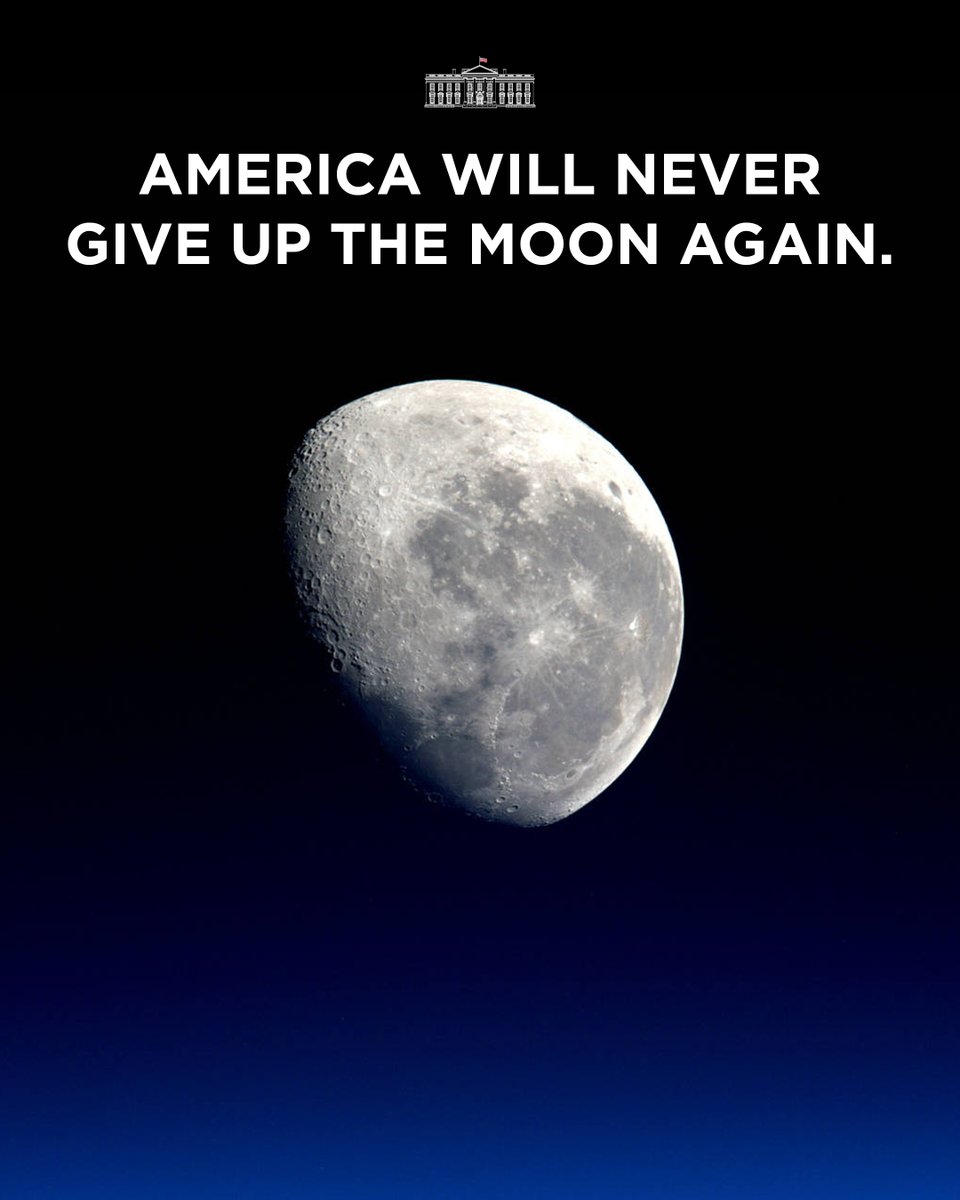
To return Americans to the Moon, NASA is shifting to an iterative, execution-focused approach – just as we did during Apollo. We are standardizing rocket architecture, embedding NASA expertise across industry, and increasing launch cadence to support sustained lunar operations. We are sending a demand signal for crewed missions beyond Artemis V, with at least two providers capable of bringing astronauts to the surface every 6 months. The goal is not just to reach the Moon, but to stay. America will never give up the Moon again.
English
NASA Community retweetet

LIVE: After two days in flight, the Progress 94 cargo spacecraft is arriving at the @Space_Station with food, fuel, and other supplies. Docking is scheduled for 9:34am ET (1334 UTC). twitter.com/i/broadcasts/1…
English
NASA Community retweetet

We'll host a live event Tuesday, March 24, at 9am ET (1300 UTC) to provide an update on implementation of the National Space Policy and preparation for returning to the Moon's surface by 2028. A press conference will follow. How to watch: go.nasa.gov/4bGQv2q

English
NASA Community retweetet

LIVE: A Roscosmos cargo spacecraft carrying food, fuel, and supplies is about to launch to the @Space_Station. The uncrewed Progress 94 craft is scheduled to lift off at 7:59am ET (1159 UTC). twitter.com/i/broadcasts/1…
English
NASA Community retweetet

Following launch, one of the Progress spacecraft’s antennas used for automatic docking did not deploy as planned. All other systems are operating as designed, and Progress will continue toward its planned docking at 9:34 a.m. EDT on Tuesday, March 22. Troubleshooting will continue and if the antenna cannot be deployed, Roscosmos cosmonaut Sergey Kud-Sverchkov will manually pilot the spacecraft through a backup system for rendezvous and docking at the space station.
English
NASA Community retweetet

#MeteorSighting: Eyewitnesses in Texas observed a bright fireball today, March 21, at 4:40 p.m. CDT. Current data indicates that the meteor became visible at 49 miles above Stagecoach, northwest of Houston. It moved southeast at 35,000 mph, breaking apart 29 miles above Bammel, just west of Cypress Station. The fragmentation of the meteor - which weighed about a ton with a diameter of 3 feet - created a pressure wave that caused booms heard by some in the area. Doppler weather radar also showed meteorites produced between Willowbrook and Northgate Crossing.
🔗 go.nasa.gov/47c9wbR
Eyewitness accounts supplied by the American Meteor Society

English
NASA Community retweetet

As major missions draw closer, momentum is building across @NASA
🌕 Artemis II rolls back to the launchpad ahead of April launch window
🔭 Roman telescope clears key tests
🧑🚀 First spacewalk of 2026
✈️ X-59 prepares for flight
Here’s your NASA Minute!
English
NASA Community retweetet

LIVE: After the X-59's successful second flight, NASA experts discuss our plans for upcoming tests of the experimental quiet supersonic aircraft. Listen in: youtube.com/live/GFaQxUjkh…

YouTube
English
NASA Community retweetet

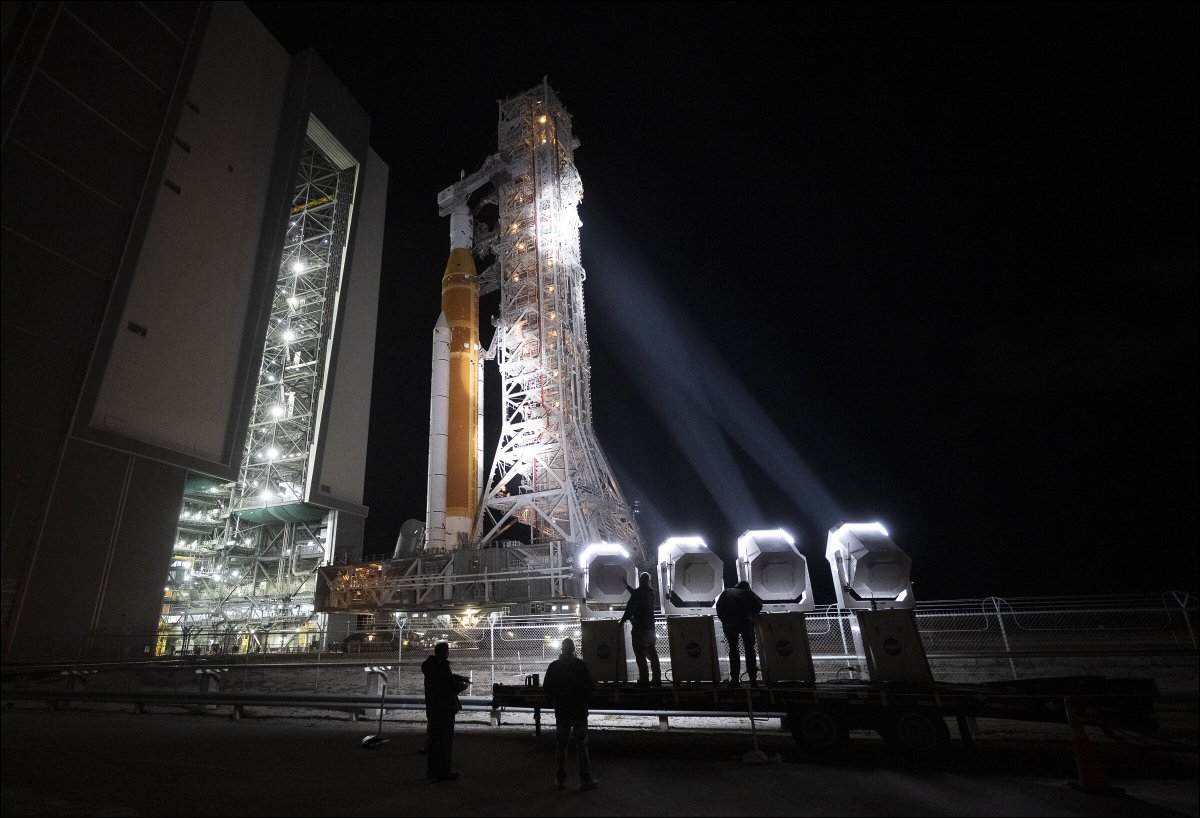
SLS and Orion are on their way to Pad 39B! Check out photos as they were rolled out of the Vehicle Assembly Building atop the mobile launcher. 📷: flic.kr/s/aHBqjCNur8

English
NASA Community retweetet

Let's roll! 🚀
NASA’s SLS rocket and Orion spacecraft for the @NASAArtemis II mission are making their way to Launch Pad 39B. The overnight journey is expected to take up to 12 hours.
go.nasa.gov/4sYnaaZ
English