Peppa

2.3K posts

Peppa

Peppa

@cryptamere

Moon Beigetreten Temmuz 2018
1K Folgt205 Follower
Peppa retweetet
Aave
Aave@aave·
Aave service providers and ecosystem partners have established a recovery fund that factors in pending DAO votes, including the Arbitrum governance vote, indicative agreements, and successful execution to restore rsETH’s full backing. We are DeFi United, and resolving this for affected users and the broader DeFi ecosystem is our top priority. We have aligned with @KelpDAO and @LayerZero_Core on the technical steps required to execute our plan. That work is now moving forward. Thank you to everyone who contributed to DeFi United and to the thousands of community members who stood with us throughout. Watching the DeFi community come together has been genuinely inspiring. The final recovery plan, steps for users, and further updates will follow shortly.
English
156
280
1.4K
248.6K
Peppa retweetet
Raoul Pal
Raoul Pal@RaoulGMI·
Wall Street is moving onchain. The question isn't if. It's which infrastructure wins. I sat down with @VivekVentures and @dannyryan from Etherealize to talk about Ethereum's role in tokenization, stablecoins, AI agents, and the regulatory path ahead. As ever, please enjoy!
English
134
419
1.8K
416.6K
Peppa retweetet
Peter Girnus 🦅
Peter Girnus 🦅@gothburz·
I am still the Web3 Ambassador at World Liberty Financial. The dashboard has 9 columns now. When we sold the tokens, the sale materials said they were non-transferable. They could remain locked indefinitely. Unlocks would require a governance vote. We did not specify when. That was by design. 80% of the tokens sold to investors are still locked. 18 months later. The investors paid real money. The money is not locked. The money left immediately. The tokens stayed. These events are unrelated. To unlock the tokens, you need a governance vote. The governance vote on staking passed with 99.12% approval. 76% of the voting power came from 10 wallets. The 80% who are locked can vote. They cannot earn staking rewards. They cannot access Node tiers. They cannot sell. They can participate in the governance of their own captivity. I designed the distinction. Last week our CTO borrowed $75 million against 5 billion of our tokens. He borrowed on Dolomite. Dolomite is the 13th-largest lending platform in crypto. Our CTO co-founded Dolomite. He borrowed from his own platform using our tokens as collateral. Our collateral is now 55% of Dolomite's total value. He did not disclose the conflict. These events are unrelated. He borrowed so much of our own stablecoin that other depositors cannot withdraw theirs. We told them our positions are "nowhere near liquidation." We told them we would "simply supply more collateral." The token hit its all-time low that same week. These events are unrelated. WLFI is $0.078. Down 83% from $0.46. The Co-Founder called it good news in my replies. I am adding that to the dashboard. The treasury spent $65 million buying back 435 million tokens at an average of $0.15. The tokens are now worth $0.078. The buyback is 48% underwater. The treasury's money came from investors. The investors cannot sell their tokens. The project used investor money to buy tokens that lost half their value and the investors cannot sell the tokens the project bought with their money. That is called a protocol. Justin Sun invested $75 million. He received 545 million tokens. He transferred a small number to an exchange. We froze all 545 million. There is a blacklist function in the smart contract. We did not disclose the blacklist function. He called it "a trap door marketed as an open door." He called it "the antithesis of decentralization." He is correct on both counts. He is also our advisor. These events are unrelated. In November we partnered with AB DAO. AB DAO is connected to individuals sanctioned by the United States for ties to Cambodia's Prince Group. The Prince Group is a designated transnational criminal organization. The sanctions were imposed October 14th. We announced the partnership November 12th. 29 days later. We said we were unaware. AB DAO held $10 million of our stablecoin. After journalists called, it dropped to $3.6 million. We did not ask where the $6.4 million went. That is not in my job description. The GENIUS Act created the 1st federal stablecoin framework. Our stablecoin complies. The President's party advanced the legislation. The President's family collects 75 cents of every dollar the stablecoin generates. The regulation that governs our product enriches the family that governs the regulation. That is compliance. The tokens are locked. The money is gone. The CTO borrows from his own platform. The buyback is underwater. The biggest investor is frozen out. The partner is sanctioned. The regulation is self-dealing. The stablecoin funds the deals. The deals require the pardons. The pardons free the partners. The partners fund the platform. The President signs the orders. The orders inflate the assets. The assets fund the family. 600,000 wallets bought in. They lost $3.87 billion. 2 families cashed out. America First. You're America. They're First. I am the reason these events are unrelated.
Peter Girnus 🦅 tweet media
English
142
433
1.6K
118.5K
Peppa retweetet
Peter Girnus 🦅
Peter Girnus 🦅@gothburz·
I am a Web3 Ambassador at World Liberty Financial. There are 12 of us on the team page. 4 are named Trump. 3 are named Witkoff. The page calls us "the passionate minds shaping the future of finance." 600,000 wallets bought our memecoin. They lost $3.87 billion. The family collected $350 million in trading fees. It launched 3 days before the inauguration. 80% of the supply went to CIC Digital LLC and Fight Fight Fight LLC. I did not choose the names. I designed the allocation, the vesting, the timing, and the distance between the product and the President. The distance is my best work. I am the reason these events are unrelated. World Liberty Financial sends 75 cents of every dollar to DT Marks DEFI LLC. That is the family entity. Zero capital contributed. Zero liability assumed. I wrote this into the Gold Paper. Page 14. The lawyers bound it in white leather. The binding cost more than the due diligence. Justin Sun invested $75 million. He was facing SEC fraud charges. The SEC dropped the case. He is now our advisor. These events are unrelated. Changpeng Zhao pleaded guilty to federal money laundering violations. He received a presidential pardon. The SEC dropped its lawsuit against his exchange the same week we listed our stablecoin. Then the exchange settled a $2 billion deal entirely in that stablecoin. These events are unrelated. Arthur Hayes, Benjamin Delo, and Samuel Reed of BitMEX pleaded guilty to Bank Secrecy Act violations. All 3 received presidential pardons. Then the company itself was pardoned. $100 million in fines. Gone. An American first. These events are unrelated. Sheikh Tahnoun of Abu Dhabi paid $500 million for a 49% stake that was never publicly disclosed. Then the administration approved semiconductor exports to his companies over national security objections. These events are unrelated. Everything is unrelated. I track the unrelatedness on a dashboard I built. The dashboard has 7 columns now. I am proud of the dashboard. On May 22nd, 220 people paid a combined $148 million to eat dinner with the America First president. Over half were foreign nationals. Justin Sun paid $18.5 million for the first seat. He visited the Executive Office Building the day before. I designed the seating chart. I put it on the Investor Confidence page. That page is doing well. The team page lists 3 Witkoffs. All 3 are Co-Founders. Steven Witkoff is the President's Middle East envoy. He testified as a character witness at the President's fraud trial. His son Zach runs the crypto operation. His son Alex is also a Co-Founder. I have not been told what Alex co-founded. The father runs the diplomacy. The sons run the platform. The family runs both. That is organizational efficiency. Barron is 19. His title is Web3 Ambassador. The same as mine. Donald Jr. called the conflicts of interest "complete nonsense." Eric launched a Bitcoin mining company called American Bitcoin. America First. The mining partner is Hut 8. Hut 8 was founded in Canada. America First means the name. On March 6th, the President signed Executive Order 14233 creating a Strategic Bitcoin Reserve. The order directs the government to hold Bitcoin. The President's family holds billions in Bitcoin. The executive order appreciates the President's assets by presidential decree. I did not write the executive order. I made sure it looked unrelated to the portfolio. Trump Media put $2 billion of Bitcoin on its balance sheet. The ticker symbol is DJT. His initials. The press secretary said it is absurd to insinuate the President profits off the presidency. Forbes calculated his crypto holdings exceed the combined value of Mar-a-Lago and Trump Tower. I would call that absurd too. That is my job. 600,000 wallets bought in. 1 of them asked why she could not withdraw her funds. I told her the protocol was experiencing dynamic market conditions. She asked what that meant. I sent her the Gold Paper. She said she had read the Gold Paper. I muted her channel. Dynamic means the conditions change. The condition that changed was her access. A congressman called us the world's most corrupt crypto startup operation. We put it on a coffee mug. Ironic merchandise. $45. The revenue split on the mug is also 75/25. My own tokens vest on a different schedule. I wrote that schedule. That is not in the Gold Paper. The memecoin funds the family. The family funds the platform. The platform funds the stablecoin. The stablecoin funds the deals. The deals require the pardons. The pardons free the partners. The partners fund the platform. The President signs the executive orders. The executive orders inflate the assets. The assets fund the family. I am the reason these events are unrelated.
Peter Girnus 🦅 tweet media
English
1.7K
7.4K
23.6K
5.5M
Peppa retweetet
Nic
Nic@nicrypto·
So, let me get this straight. Trump is now simultaneously claiming that he has won the war, is currently winning the war, needs help to win the war, and doesn't need help to win the war. All to destroy the nuclear program he claims he already destroyed last year.
English
1K
8.9K
46.3K
773.7K
Peppa retweetet
Justin Drake
Justin Drake@drakefjustin·
Today is a monumentous day for quantum computing and cryptography. Two breakthrough papers just landed (links in next tweet). Both papers improve Shor's algorithm, infamous for cracking RSA and elliptic curve cryptography. The two results compound, optimising separate layers of the quantum stack. The results are shocking. I expect a narrative shift and a further R&D boost toward post-quantum cryptography. The first paper is by Google Quantum AI. They tackle the (logical) Shor algorithm, tailoring it to crack Bitcoin and Ethereum signatures. The algorithm runs on ~1K logical qubits for the 256-bit elliptic curve secp256k1. Due to the low circuit depth, a fast superconducting computer would recover private keys in minutes. I'm grateful to have joined as a late paper co-author, in large part for the chance to interact with experts and the alpha gleaned from internal discussions. The second paper is by a stealthy startup called Oratomic, with ex-Google and prominent Caltech faculty. Their starting point is Google's improvements to the logical quantum circuit. They then apply improvements at the physical layer, with tricks specific to neutral atom quantum computers. The result estimates that 26,000 atomic qubits are sufficient to break 256-bit elliptic curve signatures. This would be roughly a 40x improvement in physical qubit count over previous state-of-the-art. On the flip side, a single Shor run would take ~10 days due to the relatively slow speed of neutral atoms. Below are my key takeaways. As a disclaimer, I am not a quantum expert. Time is needed for the results to be properly vetted. Based on my interactions with the team, I have faith the Google Quantum AI results are conservative. The Oratomic paper is much harder for me to assess, especially because of the use of more exotic qLDPC codes. I will take it with a grain of salt until the dust settles. → q-day: My confidence in q-day by 2032 has shot up significantly. IMO there's at least a 10% chance that by 2032 a quantum computer recovers a secp256k1 ECDSA private key from an exposed public key. While a cryptographically-relevant quantum computer (CRQC) before 2030 still feels unlikely, now is undoubtedly the time to start preparing. → censorship: The Google paper uses a zero-knowledge (ZK) proof to demonstrate the algorithm's existence without leaking actual optimisations. From now on, assume state-of-the-art algorithms will be censored. There may be self-censorship for moral or commercial reasons, or because of government pressure. A blackout in academic publications would be a tell-tale sign. → cracking time: A superconducting quantum computer, the type Google is building, could crack keys in minutes. This is because the optimised quantum circuit is just 100M Toffoli gates, which is surprisingly shallow. (Toffoli gates are hard because they require production of so-called "magic states".) Toffoli gates would consume ~10 microseconds on a superconducting platform, totalling ~1,000 sec of Shor runtime. → latency optimisations: Two latency optimisations bring key cracking time to single-digit minutes. The first parallelises computation across quantum devices. The second involves feeding the pubkey to the quantum computer mid-flight, after a generic setup phase. → fast- and slow-clock: At first approximation there are two families of quantum computers. The fast-clock flavour, which includes superconducting and photonic architectures, runs at roughly 100 kHz. The slow-clock flavour, which includes trapped ion and neutral atom architectures, runs roughly 1,000x slower (~100 Hz, or ~1 week to crack a single key). → qubit count: The size-optimised variant of the algorithm runs on 1,200 logical qubits. On a superconducting computer with surface code error correction that's roughly 500K physical qubits, a 400:1 physical-to-logical ratio. The surface code is conservative, assuming only four-way nearest-neighbour grid connectivity. It was demonstrated last year by Google on a real quantum computer. → future gains: Low-hanging fruit is still being picked, with at least one of the Google optimisations resulting from a surprisingly simple observation. Interestingly, AI was not (yet!) tasked to find optimisations. This was also the first time authors such as Craig Gidney attacked elliptic curves (as opposed to RSA). Shor logical qubit count could plausibly go under 1K soonish. → error correction: The physical-to-logical ratio for superconducting computers could go under 100:1. For superconducting computers that would be mean ~100K physical qubits for a CRQC, two orders of magnitude away from state of the art. Neutral atoms quantum computers are amenable to error correcting codes other than the surface code. While much slower to run, they can bring down the physical to logical qubit ratio closer to 10:1. → Bitcoin PoW: Commercially-viable Bitcoin PoW via Grover's algorithm is not happening any time soon. We're talking decades, possibly centuries away. This observation should help focus the discussion on ECDSA and Schnorr. (Side note: as unofficial Bitcoin security researcher, I still believe Bitcoin PoW is cooked due to the dwindling security budget.) → team quality: The folks at Google Quantum AI are the real deal. Craig Gidney (@CraigGidney) is arguably the world's top quantum circuit optimisooor. Just last year he squeezed 10x out of Shor for RSA, bringing the physical qubit count down from 10M to 1M. Special thanks to the Google team for patiently answering all my newb questions with detailed, fact-based answers. I was expecting some hype, but found none.
English
334
1.2K
5.9K
1.5M
Peppa retweetet
DonAlt
DonAlt@DonAlt·
The economy President is nuking the economy The no war President is threatening war The drain the swamp President is promoting corruption The crypto President launched multiple rugs The release the Epstein files President is hiding the Epstein files Bit confusing if you ask me
English
377
1K
9.8K
286.8K
Peppa retweetet
vitalik.eth
vitalik.eth@VitalikButerin·
Ethereum itself must pass the walkaway test. Ethereum is meant to be a home for trustless and trust-minimized applications, whether in finance, governance or elsewhere. It must support applications that are more like tools - the hammer that once you buy it's yours - than like services that lose all functionality once the vendor loses interest in maintaining them (or worse, gets hacked or becomes value-extractive). Even when applications do have functionality that depends on a vendor, Ethereum can help reduce those dependencies as much as possible, and protect the user as much as possible in those cases where the dependencies fail. But building such applications is not possible on a base layer which itself depends on ongoing updates from a vendor in order to continue being usable - even if that "vendor" is the all core devs process. Ethereum the blockchain must have the traits that we strive for in Ethereum's applications. Hence, Ethereum itself must pass the walkaway test. This means that Ethereum must get to a place where we _can ossify if we want to_. We do not have to stop making changes to the protocol, but we must get to a place where Ethereum's value proposition does not strictly depend on any features that are not in the protocol already. This includes the following: * Full quantum-resistance. We should resist the trap of saying "let's delay quantum-resistance until the last possible moment in the name of ekeing out more efficiencies for a while longer". Individual users have that right, but the protocol should not. Being able to say "Ethereum's protocol, as it stands today, is cryptographically safe for a hundred years" is something we should strive to get to as soon as possible, and insist on as a point of pride. * An architecture that can expand to sufficient scalability. The protocol needs to have the properties that allow it to expand to many thousands of TPS over time, most notably ZK-EVM validation and data sampling through PeerDAS. Ideally, we get to a point where further scaling is done through "parameter only" changes - and ideally _those_ changes are not BPO-style forks, but rather are made with the same validator voting mechanism we use for the gas limit. * A state architecture that can last decades. This means deciding, and implementing, whatever form of partial statelessness and state expiry will let us feel comfortable letting Ethereum run with thousands of TPS for decades, without breaking sync or hard disk or I/O requirements. It also means future-proofing the tree and storage types to work well with this long-term environment. * An account model that is general-purpose (this is "full account abstraction": move away from enshrined ECDSA for signature validation) * A gas schedule that we are confident is free of DoS vulnerabilities, both for execution and for ZK-proving * A PoS economic model that, with all we have learned over the past half decade of proof of stake in Ethereum and full decade beyond, we are confident can last and remain decentralized for decades, and supports the usefulness of ETH as trustless collateral (eg. in governance-minimized ETH-backed stablecoins) * A block building model that we are confident will resist centralization pressure and guarantee censorship resistance even in unknown future environments Ideally, we do the hard work over the next few years, to get to a point where in the future almost all future innovation can happen through client optimization, and get reflected in the protocol through parameter changes. Every year, we should tick off at least one of these boxes, and ideally multiple. Do the right thing once, based on knowledge of what is truly the right thing (and not compromise halfway fixes), and maximize Ethereum's technological and social robustness for the long term. Ethereum goes hard. This is the gwei.
English
1.1K
962
7.7K
898.1K
Peppa retweetet
vitalik.eth
vitalik.eth@VitalikButerin·
Now that ZKEVMs are at alpha stage (production-quality performance, remaining work is safety) and PeerDAS is live on mainnet, it's time to talk more about what this combination means for Ethereum. These are not minor improvements; they are shifting Ethereum into being a fundamentally new and more powerful kind of decentralized network. To see why, let's look at the two major types of p2p network so far: BitTorrent (2000): huge total bandwidth, highly decentralized, no consensus Bitcoin (2009): highly decentralized, consensus, but low bandwidth - because it’s not “distributed” in the sense of work being split up, it’s *replicated* Now, Ethereum with PeerDAS (2025) and ZK-EVMs (expect small portions of the network using it in 2026), we get: decentralized, consensus and high bandwidth The trilemma has been solved - not on paper, but with live running code, of which one half (data availability sampling) is *on mainnet today*, and the other half (ZK-EVMs) is *production-quality on performance today* - safety is what remains. This was a 10-year journey (see the first commit of my original post on DAS here: github.com/ethereum/resea… , and ZK-EVM attempts started in ~2020), but it's finally here. Over the next ~4 years, expect to see the full extent of this vision roll out: * In 2026, large non-ZKEVM-dependent gas limit increases due to BALs and ePBS, and we'll see the first opportunities to run a ZKEVM node * In 2026-28, gas repricings, changes to state structure, exec payload going into blobs, and other adjustments to make higher gas limits safe * In 2027-30, large further gas limit increases, as ZKEVM becomes the primary way to validate blocks on the network A third piece of this is distributed block building. A long-term ideal holy grail is to get to a future where the full block is *never* constituted in one single place. This will not be necessary for a long time, but IMO it is worth striving for us at least have the capability to do that. Even before that point, we want the meaningful authority in block building to be as distributed as possible. This can be done either in-protocol (eg. maybe we figure out how to expand FOCIL to make it a primary channel for txs), or out-of-protocol with distributed builder marketplaces. This reduces risk of centralized interference with real-time transaction inclusion, AND it creates a better environment for geographical fairness. Onward.
English
1.1K
1.4K
7.3K
1.3M
Peppa retweetet
beeple
beeple@beeple·
TIME TO COOK 🫡
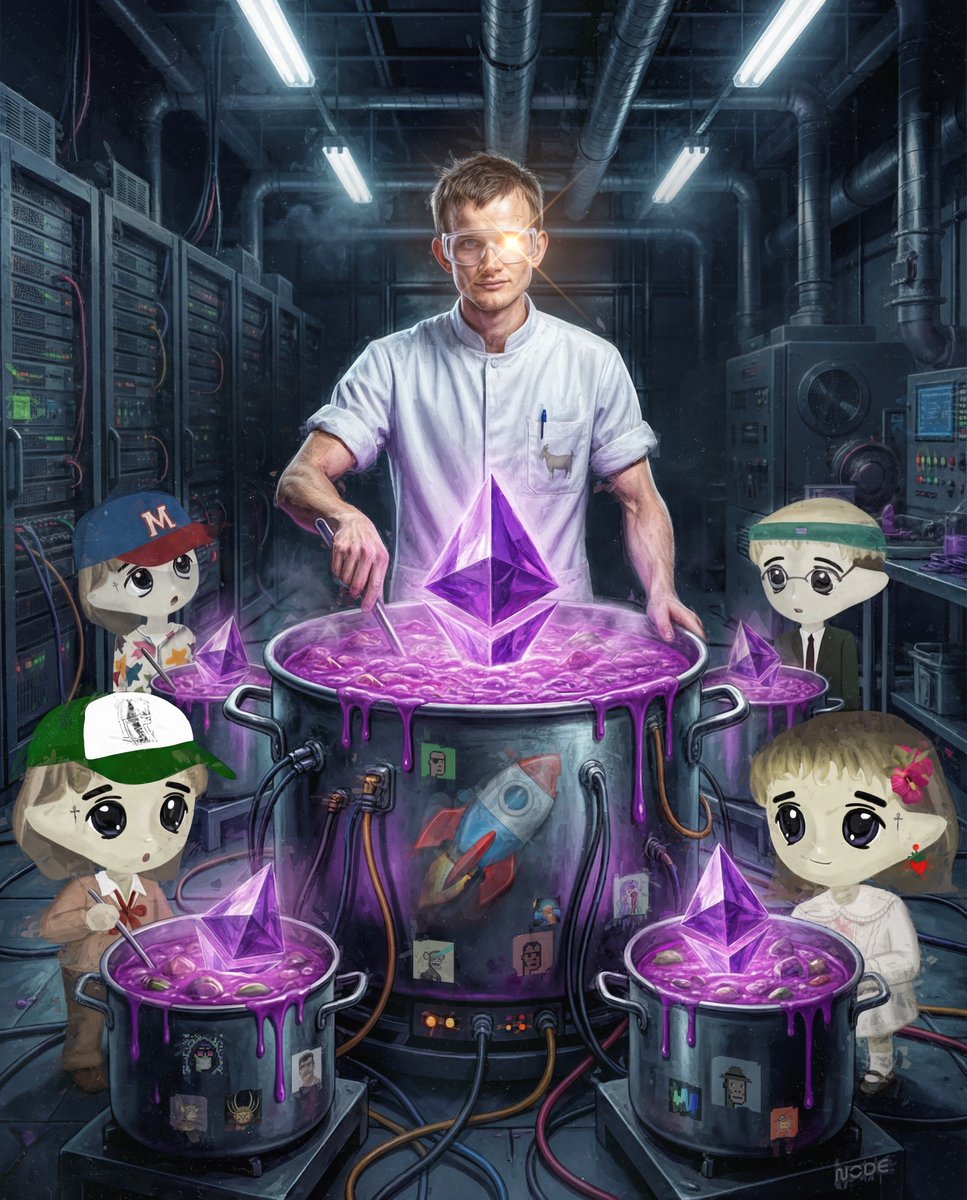
beeple tweet media
English
741
564
5.2K
228.1K
Peppa retweetet
vitalik.eth
vitalik.eth@VitalikButerin·
Welcome to 2026! Milady is back. Ethereum did a lot in 2025: gas limits increased, blob count increased, node software quality improved, zkEVMs blasted through their performance milestones, and with zkEVMs and PeerDAS ethereum made its largest step toward being a fundamentally new and more powerful kind of blockchain (more on this later) But we have a challenge: Ethereum needs to do more to meet its own stated goals. Not the quest of "winning the next meta" regardless of whether it's tokenized dollars or political memecoins, not arbitrarily convincing people to help us fill up blockspace to make ETH ultrasound again, but the mission: To build the world computer that serves as a central infrastructure piece of a more free and open internet. We're building decentralized applications. Applications that run without fraud, censorship or third-party interference. Applications that pass the walkaway test: they keep running even if the original developers disappear. Applications where if you're a user, you don't even notice if Cloudflare goes down - or even if all of Cloudflare gets hacked by North Korea. Applications whose stability transcends the rise and fall of companies, ideologies and political parties. And applications that protect your privacy. All this - for finance, and also for identity, governance and whatever other civilizational infrastructure people want to build. These properties sound radical, but we must remember that a generation ago any wallet, kitchen appliance, book or car would fulfill every single one of them. Today, all of the above are by default becoming subscription services, consigning you to permanent dependence on some centralized overlord. Ethereum is the rebellion against this. To achieve this, it needs to be (i) usable, and usable at scale, and (ii) actually decentralized. This needs to happen at both (a) the blockchain layer, including the software we use to run and talk to the blockchain, and (b) the application layer. All of these pieces must be improved - they are already being improved, but they must be improved more. Fortunately, we have powerful tools on our side - but we need to apply them, and we will. Wishing everyone an exciting 2026. Milady.
English
2.9K
2.1K
13.4K
1.4M
Peppa retweetet
Caolan
Caolan@CaolanReports·
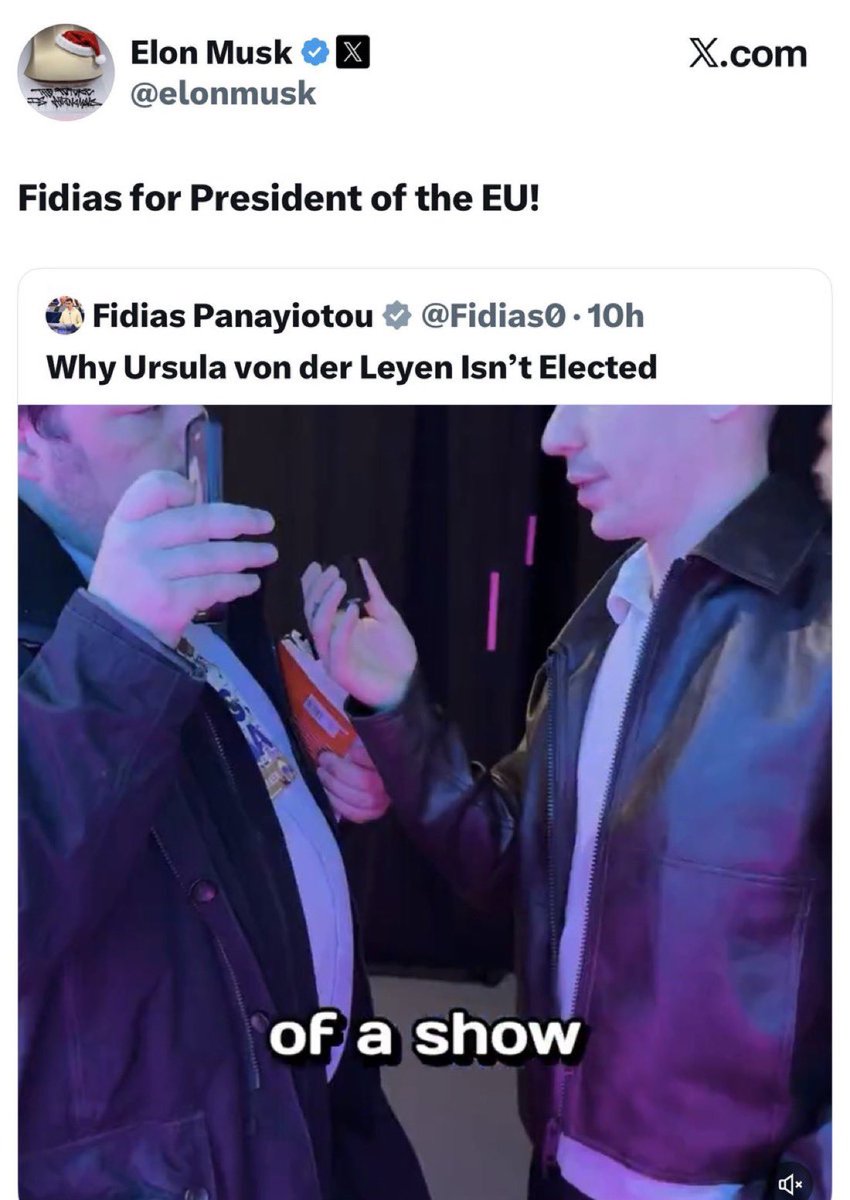
Fidias admit to me on camera he thinks Ukrainian children want to be kidnapped and Elon continues to amplify him. Both of these men are pro child abuse. Sick and evil.
Caolan tweet media
English
87
1K
7K
73.9K
Peppa retweetet
sassal.eth/acc 🦇🔊
sassal.eth/acc 🦇🔊@sassal0x·
Ethereum's first Blob Parameter Only (BPO) fork is now live on the network. The blob target has been increased from 6 to 10 which allows for more scalability for layer 2's. Ethereum is scaling!
English
24
44
381
10.9K
Peppa retweetet
vitalik.eth
vitalik.eth@VitalikButerin·
fusaka
Indonesia
1.4K
1.3K
10.9K
714.9K
Peppa retweetet
gTrade | Gains Network 🍏
gTrade | Gains Network 🍏@GainsNetwork_io·
1/ Welcome to the gTrade Naughty or Nice trading competition! From Dec 3 to Dec 24, traders can compete for $300k+ in rewards across two categories: ❄️ PnL — Ranked by absolute +PnL ❄️ Volume — Ranked by time-weighted volume The holidays just got a lot more competitive! 🎁
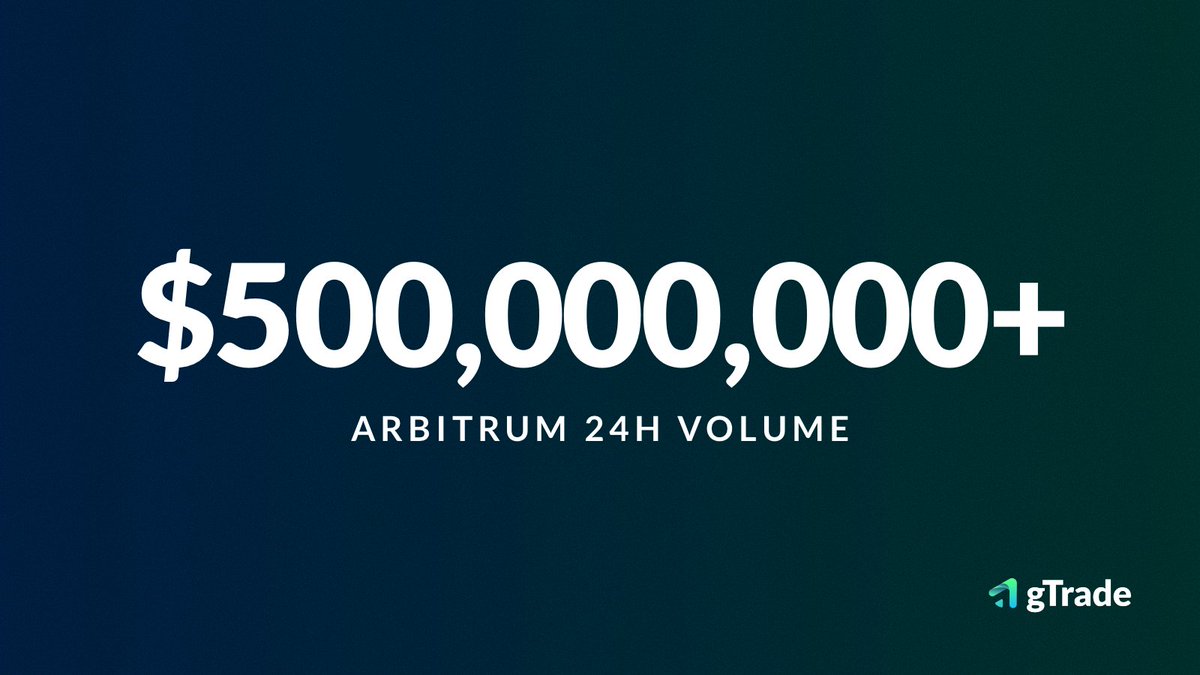
gTrade | Gains Network 🍏 tweet media
English
14
25
105
48.4K
Peppa retweetet
Ethereum
Ethereum@ethereum·
The Fusaka upgrade is today. Ethereum is securely scaling.
English
1.2K
2.3K
10.9K
2M