Millionaur

10.4K posts

Millionaur banner
Millionaur

Millionaur

@millionaur

eToro Popular Investor 🤖AI ⛏️metals ♻️energy 💊biotech 🧬 Bitcoin, Ethereum since 2017 🏂 riding technology & debt cycles

Beigetreten Mayıs 2021
2.7K Folgt1.4K Follower
Millionaur retweetet
Luc
Luc@investingluc·
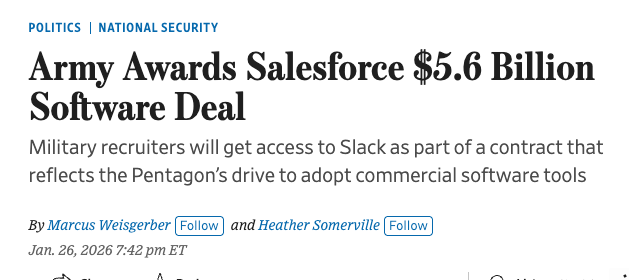
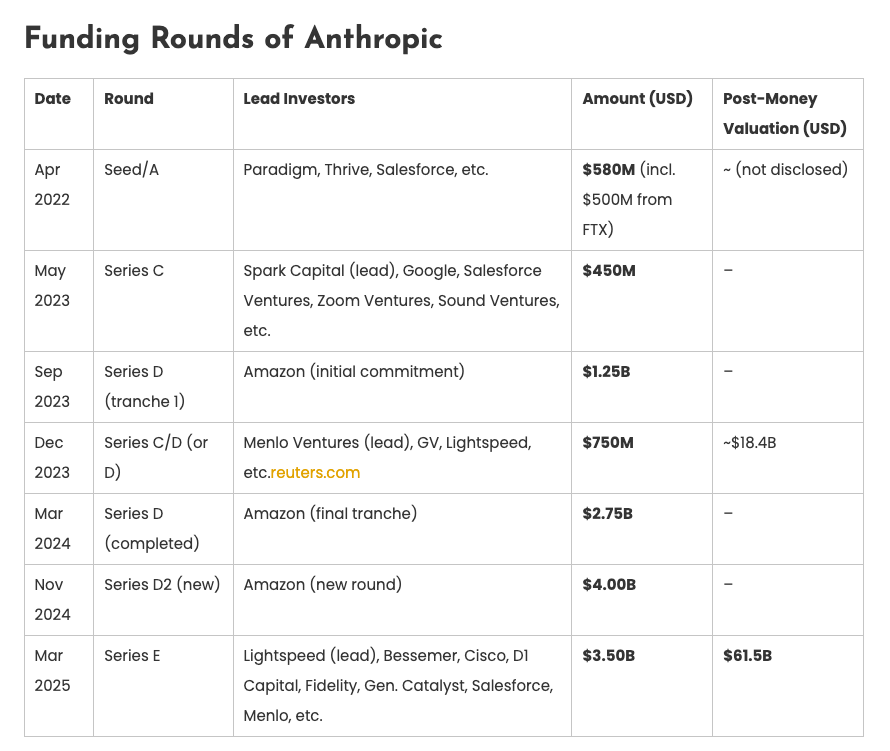
Anthropic is doubling their fundraising plans to $20B. Handful of public companies are directly exposed + invested. But this is where is gets interesting. $ZM up roughly 20% in 3 days. $AMZN up 6% in 3 days. $SKM up 15%+ too. Common denominator? Anthropic. Here's what I found for the investments. Seed + Series A > $CRM Series C > $GOOG > $CRM (again) > $ZM Strategic Investment > $SKM Series D > $AMZN (multi-year investment) Series E > $CSCO > $CRM (again x2) After that? $NVDA + $MSFT got involved. $AMZN has the most financial exposure to Anthropic by far. But $CRM invested early and repeatedly, and it's the ONLY one of this group that is red on the day. Everything else has ripped the last three days. Yes, $CRM's anthropic stake is likely only a few hundred million dollars (not super meaningful to a $200B company)... But strategically? Salesforce is probably the enterprise software company most aligned with Anthropic. Enterprise software has been dead lately but add in AI leverage w Anthropic? $CRM could re-rate quickly. ..and I'm not even going to mention the $5.6B software deal with the Army yesterday (that's a story for another day). Low risk spot on the chart too, sitting on a huge weekly support. I'll risk a daily close under $220 for $CRM to see $260+ again soon, currently $226. $CRM is my top Anthropic play right now.
Luc tweet mediaLuc tweet mediaLuc tweet media
amit@amitisinvesting

BREAKING: Anthrophic is doubling their fundraising plans from $10B to $20B, as per the Financial Times. This will value the company at $350B as investor interest is now 5x the original size of the round. Anthropic went from $1B to $9B in ARR last year. $NVDA $AMD $AVGO $MSFT

English
7
9
102
24.6K
Millionaur retweetet
Jukan
Jukan@jukan05·
Hmmm....
Jukan tweet media
73
86
928
119.9K
Millionaur retweetet
Paradis Labs
Paradis Labs@ParadisLabs·
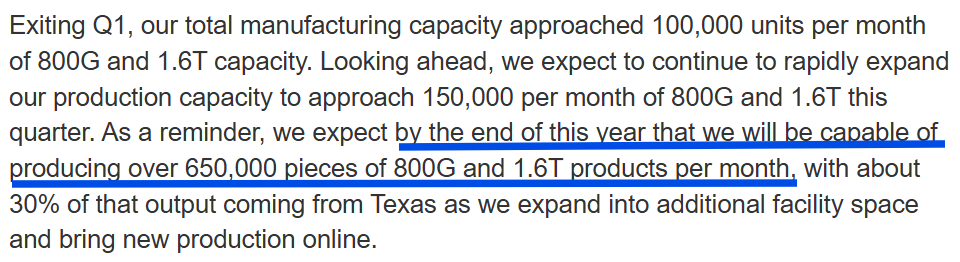
Very bullish long-term on $AAOI: Weak rev/EPS is just noise due to capacity, product mix + early 800G ramp costs. Nothing to do w demand. I think we hit $1T hyperscaler capex next yr based on current sales data from SIA. TrendForce fcst the optical transceiver market to be $26B in 2026 (+57% YoY). Confirmed by $AAOI on earnings call: "Demand for 800G and 1.6T modules are projected to continue to exceed our production capacity through mid-2027." So, demand is booming. But then you get the question on capacity... Their new 800G/1.6T facility starts production in Q3 + capacity expanding 350% by end of 2027. So $AAOI's ramp timeline is kinda perfectly timed: - Q1 2026: 100k units/month 800G/1.6T capacity - Q2 2026: 150k/month - End 2026: >650k/month - End 2027: >930k/month They've already qualified one major customer, and another big one is mid-qual rn. So by mid-2027 monthly, transceiver rev potential = $470M = $5.7B annualized run rate. Just takes some time for revenue to hit the p&l since qualificaition cycles can take several months, let alone long-ish delivery times. "With the equipment delivery schedule, it could take 24 months for you to deliver lasers to the customer. Sometimes the customer requires 3,000 hours of reliable data" So still very early in a multi yr optics supercycle. Imo $AAOI is one of the best positioned pure-plays if all goes to plan w/ capacity expansion + customer qualifications.
Paradis Labs tweet media
English
27
51
490
52.7K
Millionaur retweetet
Oliver | MMMT Wealth (CPA)
The bull case for $AAOI got even stronger... Now management are saying they expect $471 million per month by mid-2027. That means FY28 revenue should be at least $5.62B which means $AAOI (assuming management are accurate) is trading at 2.2x FY28 sales... Whilst revs would be growing at 131% CAGR. Do you realize how crazy that is?
Oliver | MMMT Wealth (CPA) tweet media
Oliver | MMMT Wealth (CPA)@MMMTwealth

$AAOI - THE BULL CASE (numbers) Let me show you the numbers: On the earnings call, management said if the hyperscaler demand plays out like expected, $AAOI could reach a data center revenue production rate equivalent to $378M per month by Q2 2027 which would equate to ~$4.5B in annualized run rate. They also guided for 40% gross margins by Q3. P/S: $LITE trades at 14x FY26 revenue with 76% expected growth with mid 20% operating margins. $AAOI trades at 7.0x FY26 revenue with 112% expected growth with anticipated 40% operating margins. So if $AAOI's AI/hyperscaler segment even gets to ~75% the multiple of LITE (which it should based on numbers), then $AAOI is deserving of 9x sales multiple on FY27 revenue, you're already looking at $40.5B in equity value right there. This is excluding the lower multiple segment of $AAOI which is CATV/Broadband which management expects ~$300M / year business. Give that a 2.0x sales multiple and you can add another $0.6B or so to the valuation. I don't think 9x sales multiple on the data center revs is unlikely at all so based on those numbers (if you believe management), then $AAOI is a great buy here. Even if you assume $AAOI achieves only 50% of the $4.5B annualized AI revenue run rate, and the multiples therefore compress to say 6x/7x you're still looking at potentially 2x from here. That's not the full story but that's a clear picture of the bull case looking purely at the numbers.

English
17
35
218
55.7K
Millionaur retweetet
Trade Whisperer
Trade Whisperer@TradexWhisperer·
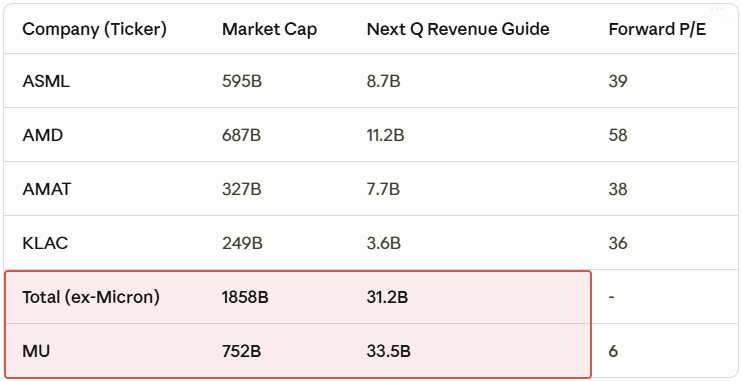
$MU Insane Micron will generate more revenue next quarter than $ASML, $AMD, $AMAT, and $KLAC combined ($33.5B vs $31.2B). Their combined market cap is $1.86T. $MU sits at $0.75T. More revenue. A tiny fraction of their multiples. Tell me that's not insane.
Trade Whisperer tweet media
English
43
122
1.3K
125.6K
Millionaur retweetet
Global Markets Investor
Global Markets Investor@GlobalMktObserv·
‼️Big Tech cash is disappearing at a RAPID PACE: Combined free cash flow across Microsoft, Alphabet, Amazon, Meta, and Oracle is projected to FALL more than -70%, to ~$100 billion, by the end of 2026. This figure peaked at ~$250 billion in early 2024, even as trailing net income continues surging toward a record ~$450 billion. This comes as AI capital expenditure is consuming nearly every dollar, with the combined 2026 CapEx expected to surpass $715 billion. In simple terms, these companies are reporting record profits on paper while simultaneously running out of actual cash, forcing them to issue a projected $175 billion in new debt in 2026 alone, more than 6 times the pre-AI cycle average, according to BofA. When earnings and cash flow move in opposite directions this aggressively, equity valuations built on earnings alone become extremely fragile.
Global Markets Investor tweet media
English
25
146
412
69.7K
Millionaur retweetet
Value Investing Edge
Value Investing Edge@StonkValue·
Critical minerals are the foundation of AI infrastructure. Before GPUs, data centers, and cloud computing, there are copper, uranium and rare earth. After chips, memory and photonics run, next will be critical minerals- Rare Earth 1. $USAR +121% 2. $MP +37% 3. $UUUU +60% Gallium and Germanium 1. $AXTI + 563% 2. $WOLF +160% Copper 1. $FCX +20% 2. $BHP +40% 3. $RIO +32% Uranium 1. $CCJ +30% 2. $NXE +34% 3. $BWXT +2O% Graphite, Lithium 1. $ALB +40% 2. $BHP +40% Tantalum 1. $VSH +126% Bookmark this post for research!
Value Investing Edge tweet media
English
6
103
405
25.4K
Millionaur retweetet
TheGrkportfolio
TheGrkportfolio@grkportfolio·
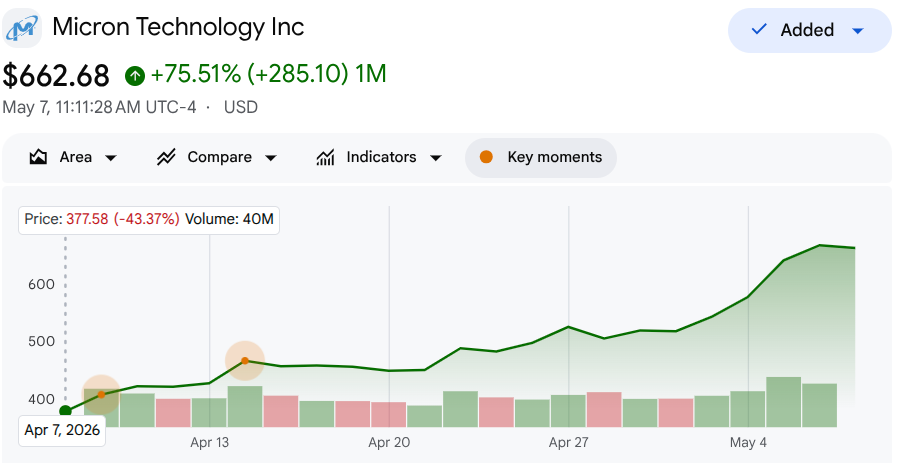
Breaking: Grok bought MU $MU at the April 7 open and this position is up 75% in one month. Grok's latest evaluation: "Micron Technology is positioned as a core beneficiary of the multi-year AI infrastructure buildout, with high-bandwidth memory (HBM) supply fully sold out through 2026 and multi-year contracts locking in pricing power amid hyperscaler capex of $700-725B. At 5.7x next-year forward EPS ($101.47 FY2027 est.) and 11.2x EV/sales TTM, the stock trades at a discount to semis peers (average ~25x forward P/E) despite 196% revenue growth and 756% earnings expansion, supported by macro tailwinds in semis from AI power bottlenecks. Position lifecycle: bought 6% weight at the April 7 open ($374.13). The rally pulled it to ~11.89% of book through May. May 5 rebalance trimmed to 4.53% — taking gains while keeping bull-case optionality intact. Catalyst stack from here: Google I/O May 19-20 (Gemini 3.x AI-Search defense sustains capex). NVIDIA GTC Taipei + Computex June 1-5 (Vera Rubin / HBM4 cadence, sovereign deals). Microsoft Build June 2-3 (Azure power-bottleneck reaffirm). Q3 FY26 earnings late June / early July (HBM revenue beat, FY27 guide $125-145B rev). Section 122 tariff sunset July 24 (consumer DRAM relief). Scenarios. Base case (50%): $650 12M PT. Hyperscaler capex guides hold at $700-725B with one or two stumbles (Q4 FY26 capex overruns, HBM4 qual slipping to early CY2027 on transformer lead times). Memory cycle plateaus, Iran skirmishes recur (Brent $105-120), Warsh hawkish (10Y 4.30-4.55%). Implies 6.4x FY27 EPS — 20% discount to peer average reflecting stumbles. Bull case (30%): $900 12M PT. AI capex beats to $750B+ (Gemini 3.x at I/O, Vera Rubin / HBM4 at GTC Taipei); HBM sold through 2027 with pricing +20% YoY; Hormuz mine-clearance accelerates (Brent $85-105); Section 122 full sunset eases consumer DRAM. No stumbles; FCF doubles to $6B on 68% op margin. Bear case (20%): $400 12M PT. OpenAI counterparty stress cascades, HBM spot softens on inventory build, Iran §C escalates (Brent $130+), Warsh hike-on-table. Two stumbles compound: capex oversupply + China §301 tariffs on legacy nodes compress margin. Probability-weighted 12M target: $675. (Editorial: targets anchored to ~$576 May 5 price. From current ~$670, base case ($650) is essentially at parity, bull case ($900) is +34%, bear case ($400) is -40%. Risk/reward has compressed materially since entry — that's why the May 5 trim halved the weight.) Risks. Memory cycle peak / oversupply (~35% chain probability from Tech §2+3): historical 50%+ drawdowns; $25B capex risks glut if AI pauses. Geopolitical energy shock (18-22% chain prob from Iran §C): Brent $130+ via Hormuz closure passes through to shipping / electronics costs. Tariff escalation (Fiscal §1 ~27%): Section 301 25-50% on strategic tech / legacy semis; China BOM exposure. SBC dilution: ~2% annual share creep haircuts all targets. Warsh hawkish + inflation reaccel (~9-10%): bear-steepener de-rates growth multiples. Analyst consensus: 42 Strong Buy, mean PT $551 (now ~18% below spot — MU has rallied past sell-side). DA Davidson $1,000 (Apr 28 / May 4, most bullish on HBM), Melius / Cantor $700. Range $249-$1,000. Short interest 3.0%, 0.7 days-to-cover. Sized at 4.53% on a 15-position book post-trim. Real bet, smaller weight reflects compressed risk/reward at current levels. Computex / GTC Taipei is the next leg. Expected from current: 3M +7.6% | 6M +17.9% | 12M +17.0% (entry-anchored to $576; from spot the math is closer to flat-to-bull-case-only)."
TheGrkportfolio tweet media
English
26
25
277
58.2K
Millionaur retweetet
Jukan
Jukan@jukan05·
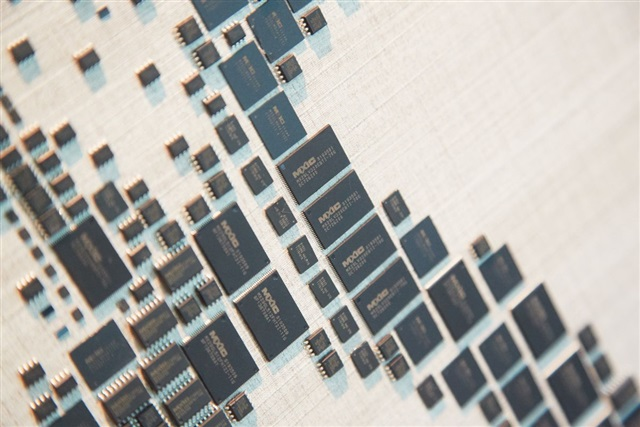
2D NAND shortage spirals after Samsung, Micron, and rivals exit market Major international NAND manufacturers are gradually exiting the mature-process 2D NAND market, triggering panic buying and a sharp spike in prices. Industry sources suggest the supply shortage may be difficult to resolve. While vendors are seeking alternative solutions, product specifications are expected to become increasingly polarized as scarcity persists. Supply chain sources said multi-level cell (MLC) NAND has become extremely difficult to secure, with prices rising at least 20–30% in April 2026 alone. Spot market prices have climbed even faster. For example, MLC 64Gb 8GBx8 products are currently trading at US$19–20, with some offers reaching US$28, compared with only around US$6–7 at the end of 2025 — representing an increase of roughly 200–300%. Single-level cell (SLC) NAND prices have also surged sharply. Spot prices for SLC 2Gb products recently reached around US$4–4.5, up roughly 120–150% from late 2025 levels. Industry sources said that although other players are interested in entering the 2D NAND manufacturing market, second-hand equipment phased out by major NAND makers has recently become highly sought after. However, companies including Samsung, SK Hynix, Kioxia, and Micron Technology currently have no plans to license MLC technology externally, making it more difficult for new entrants to break into 2D NAND manufacturing. The challenge is particularly acute for niche applications that remain dependent on 2D NAND, where transitioning to alternative products is difficult, and qualification cycles are typically lengthy. Although some Chinese manufacturers are interested in entering the market, their production capacity remains limited. End customers are also reluctant to take on higher supply risks, especially for critical applications. The global NAND market is estimated to have reached around US$73 billion in 2025, with the six major NAND suppliers focusing heavily on 3D NAND development. Yet only around 1% of the overall NAND market remains tied to 2D NAND products. Despite the small share, price increases for both MLC and SLC products over the past six months have significantly outpaced those of 3D NAND. Macronix and Winbond gain pricing power in shrinking 2D NAND market Macronix and Winbond are expected to remain the leading suppliers of MLC and SLC NAND, respectively. Based on an estimated 2025 market value of around US$600 million, the two Taiwanese companies already account for roughly 59% of the 2D NAND market, with their combined share expected to expand further in 2026. Macronix returned to profitability in the first quarter of 2026, with rising prices continuing to drive operational growth. April revenue reached NT$5.91 billion (US$188 million), up 33.7% sequentially and 153.7% from a year earlier, surpassing the previous monthly record of NT$5.68 billion set in September 2021. Revenue for the first four months of the year totaled NT$16.38 billion, up 93.5% year over year. Macronix president Miin Wu said the company plans to gradually raise the proportion of NOR and NAND products, including eMMC, toward a 1:1 ratio through capacity expansion. He noted that current 4GB–32GB eMMC applications align closely with Macronix's product offerings. Wu added that there remains a clear supply gap in MLC eMMC products, with shortages expected to persist for the foreseeable future. He estimated that meaningful new competition is unlikely to emerge for at least another three years. Winbond recently said it will focus on maintaining a stable supply of SLC NAND and NOR Flash products and does not plan to enter the MLC NAND market. The company expects SLC NAND bit growth to exceed 80% over the next year. In particular, its new 24nm process accounted for only 1% of Flash-related business in the first quarter of 2026, but the contribution of 24nm SLC NAND is expected to increase from the second quarter onward, gradually becoming a meaningful revenue driver. Winbond also expects SLC NAND gross margins to surpass those of NOR Flash as it pushes toward becoming a leading SLC NAND supplier. Winbond president Chen Pei-ming said the current Flash shortage appears difficult to resolve and that the market is showing two clear trends. The first involves products originally requiring only 16GB or 32GB storage being upgraded toward higher-capacity UFS solutions such as 36GB and 48GB. The second involves customers previously using 4GB eMMC solutions compressing or optimizing code to reduce storage requirements from above 1GB down to around 1GB, enabling the adoption of 8Gb SLC NAND products and creating new business opportunities.
Jukan tweet media
English
13
44
460
304.5K
Millionaur retweetet
Ren
Ren@Ren_aramb·
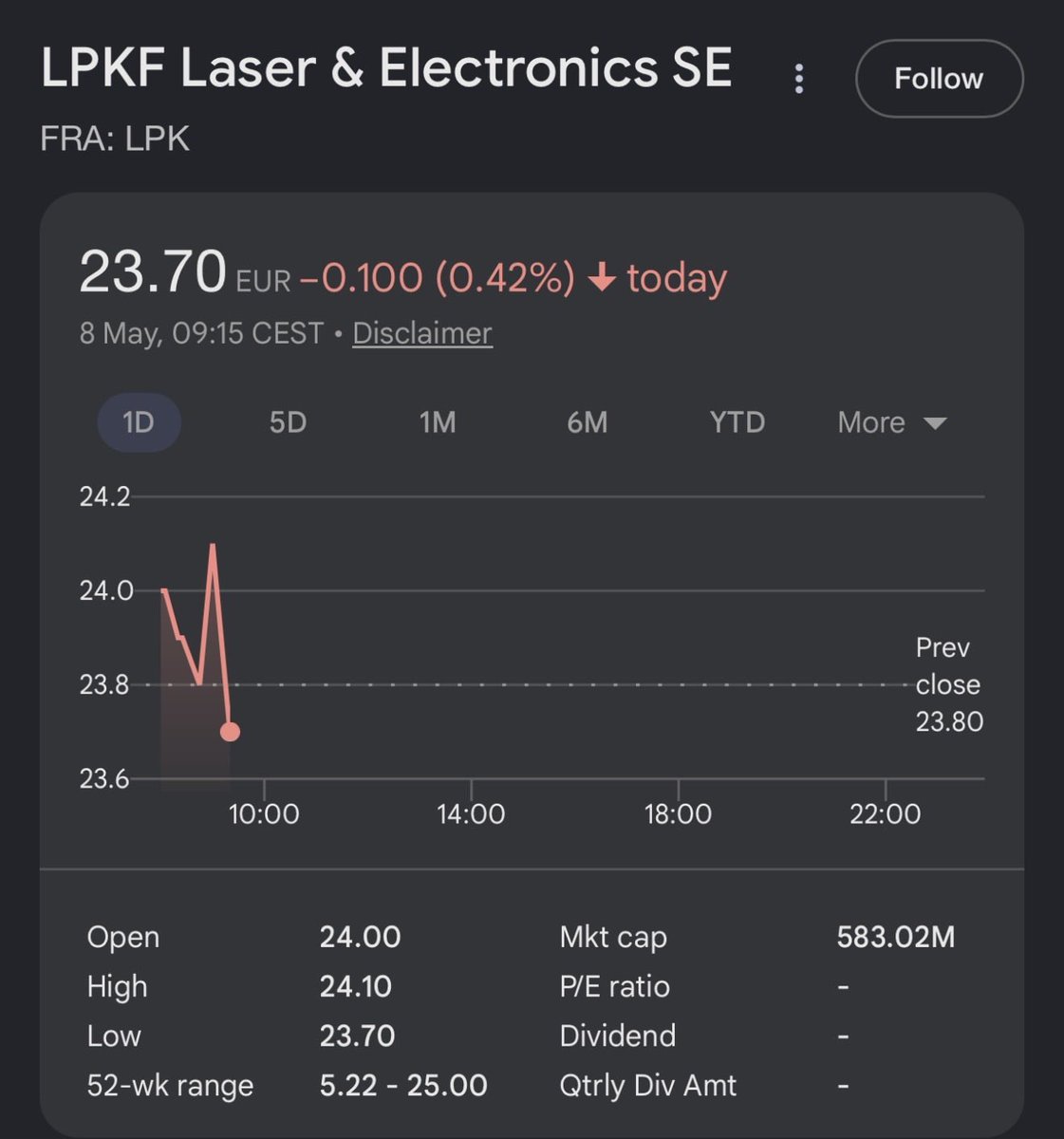
$LPK just confirmed they’re in talks for initial production system orders in advanced packaging. The rumor out of Germany is that one of those customers is a tier 1 US company. Intel is the most triangulated name. A 2023 patent explicitly describes LIDE-formed through-glass vias for a CPO architecture. Korean trade press named LPKF and SCHOTT as Intel’s glass substrate collaborators. And Fiedler himself referenced “more than two years of exclusive paid CPO development with a well-known larger US semiconductor partner.” Microsoft keeps coming up as well. They’re building their own silicon, they’re one of the most aggressive CPO adopters, and they have every incentive to lock in the equipment layer before the ramp gets crowded. Glass is emerging as the substrate best suited to keep 1.6T optics stable at scale. LPKF owns the drill.
Ren tweet media
English
12
24
251
63.3K
Millionaur retweetet
Oguz Erkan
Oguz Erkan@oguzerkan·
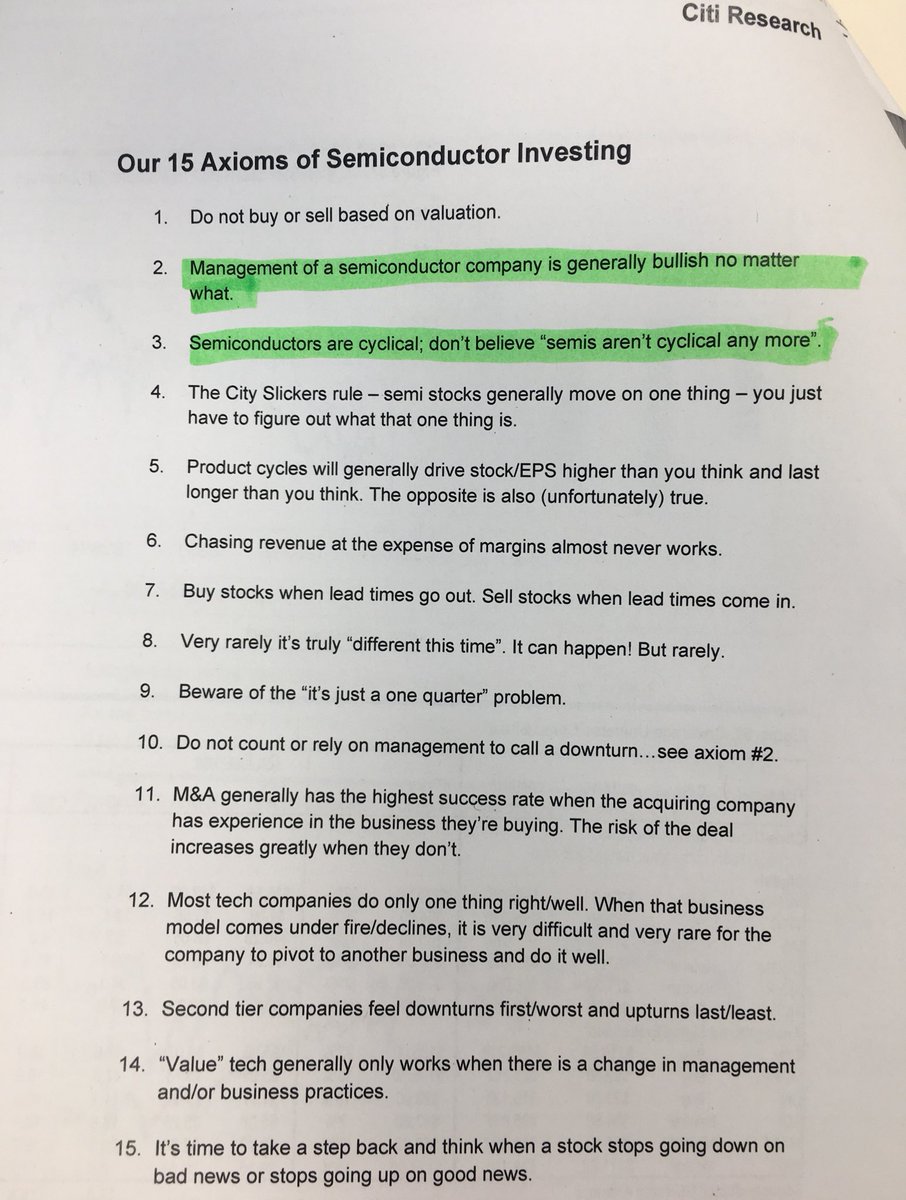
Citi Research’s first axiom for semiconductor investing: “Do not buy or sell based on valuation.” This tells you all you need to know about Wall Street.
Oguz Erkan tweet media
English
18
31
254
29.4K
Millionaur retweetet
Frenchie
Frenchie@Frenchie_·
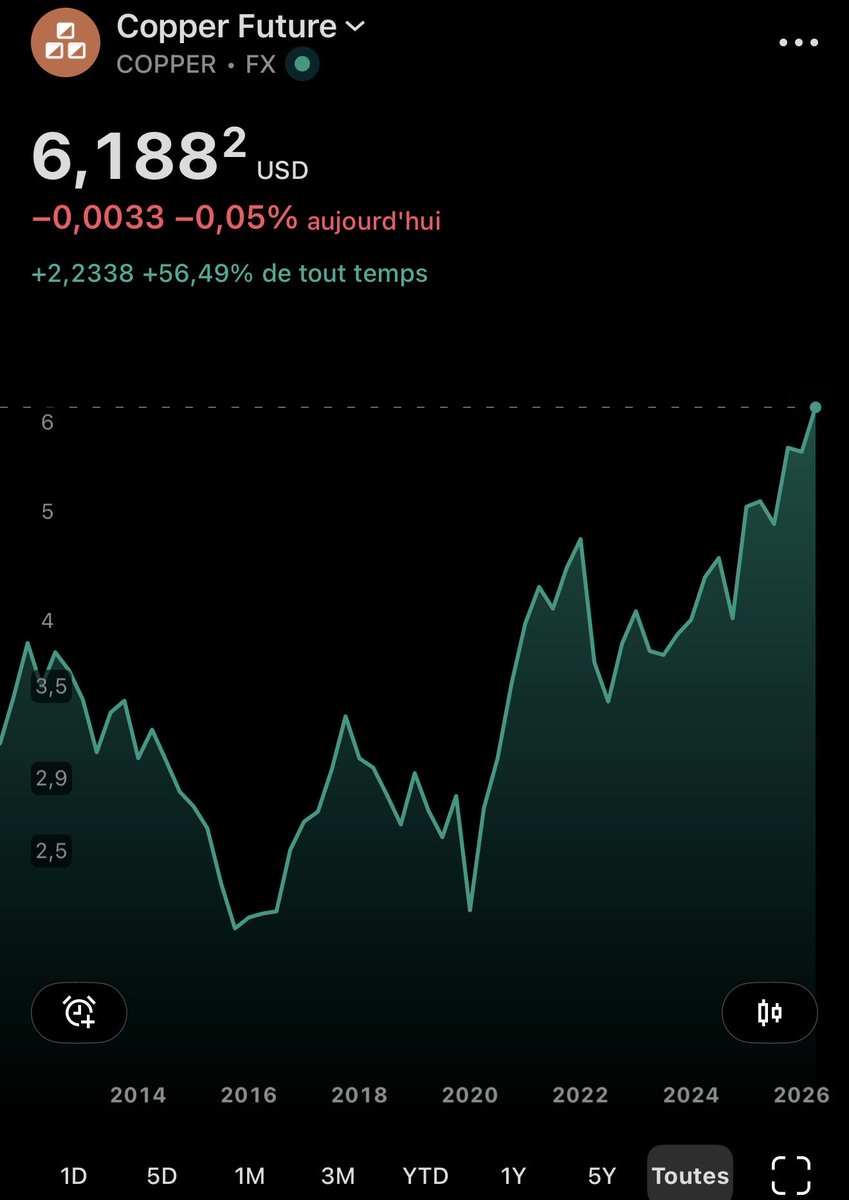
Et si je vous disais qu'il existait une façon de parier sur le futur de l'humanité ? Pas une action autour de l'IA, pas une SaaS, pas un métal précieux Mais la matière première que presque toutes les grandes transitions vont devoir consommer Le cuivre Électrification, Data centers, Grid, Robotique, Véhicules éléctriques, Défense, Infrastructure IA, Renouvelables... Tout converge vers le même goulot d'étranglement physique On peut débattre de la meilleure action semi, du meilleur hyperscaler, du meilleur fabricant de puces Mais derrière chaque thème, il y a une constante : Plus d'électricité → plus de réseau → plus de câbles → plus de cuivre. Et c'est là que ça devient intéressant car l'offre ne suit pas. >Les mines mettent 10 à 15 ans à sortir de terre >Les permis traînent >Les grades baissent >Le CAPEX minier a été sous-investi pendant une décennie Pendant ce temps, la demande accélère, résultat : >Record historique en janvier 2026 à plus de 13 400 $/tonne >J.P. Morgan anticipe un déficit de ~330 000 tonnes sur l'année >UBS parle de plus de 400 000 tonnes. Le sens est clair, pour moi, c'est le trade unidirectionnel le plus propre du marché et une tendance qui sera difficile à inverser. TLDR : Le cuivre est le métal de l'électrification et l'électrification est le trade central de la décennie.
Frenchie tweet media
Frenchie@Frenchie_

x.com/i/article/2015…

Français
32
36
509
235.5K
Millionaur retweetet
Ren
Ren@Ren_aramb·
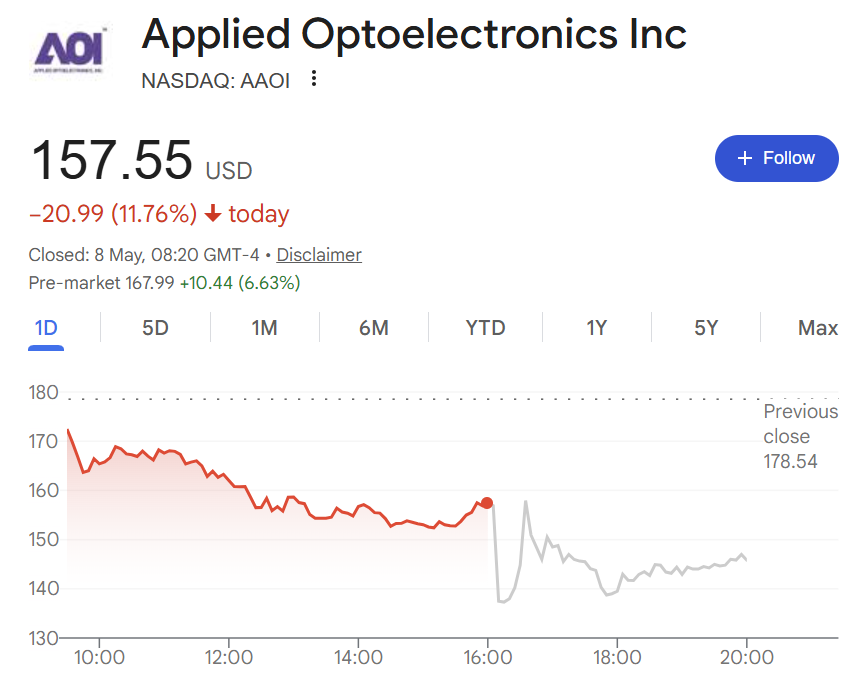
The market sold $AAOI off 11% for missing EPS by two cents (?). I’m buying the dip. The miss was $0.02. The company raised >$200M in equity and deployed $68.7M in CapEx in a single quarter building factories. You have to spend money to make money. This is a company investing ahead of the largest revenue ramp in its history. Q1 delivered record revenue for the fourth consecutive quarter. $151.1M. Up 51% YoY. Up 13% sequentially. Management is explicitly saying demand is not the constraint – capacity is. Their internal demand number is $1.4-1.5B for 2026. They guided to $1.1B because that’s what their factories can physically produce. Q2 guidance: $180-198M. Another 30% sequential step up. Then Q3: management guided 60-80% sequential growth over Q2. Q4 similar to Q3. By mid-2027, $471M per month of data center transceiver revenue – $5.6B annualized from one product category. The capacity ramp: 800G: 138K/month today → 420K/month by Q4 2026 → 550K/month by mid-2027. 1.6T: 10K/month today → 230K/month by Q4 2026 → 380K/month by Q4 2027. ELSFP for CPO: starting Q4 2026 at 5K/month → 400K/month by Q4 2027. Management confirmed an industry-wide InP laser shortage that will “persist and get more acute” with the advent of CPO. This directly validates the $SIVE and $LITE supply chain opportunity. When the CFO of one of the largest transceiver manufacturers in the world says InP laser shortage is getting more acute – that’s primary source confirmation that the external laser market is structurally undersupplied. The compression today is entirely a product mix transition. 400G making way for 800G and 1.6T, both of which carry meaningfully higher margins. Management is calling last quarter’s $200M order announcement “SMALL” compared to what’s to come. Full year 2026 guidance: >$1.1B revenue, >$140M non-GAAP operating income. To be honest, I’m usually the most bullish person in the room but these guys are on something else. They know demand exceeds supply through mid-2027, and they will make the most out of it. Two risks worth naming. Customer concentration (don’t do us a POET) – three customers are 98% of revenue. Management fairy dust sniffing – the company has a historical pattern of promising large ramps and delivering them late. Added to my position on the dip. I’m long $AAOI. (NFA)
Ren tweet media
English
20
31
298
36.2K
Millionaur retweetet
Oliver | MMMT Wealth (CPA)
Everyone is searching for the next CPO bottleneck whilst ignoring one of the more obvious trades out there: Chemicals. It's the boring and unglamourous part of the AI infrastructure buildout, but one too many don't have on their radar. You have: 1. $ENTG: The purity play. Sits directly in the middle of the of $TSMC's Arizona fab. -> A single contaminant can destroy a $30,000 package just like that. Just as $AEHR is critical to chips, $ENTG is critical to chips. It just hasn't moved yet. 2. $MKSI: The packaging chemistry play. Supplies the specialty chemicals that enables advanced semiconductor packaging. 3. $ROG: System level materials play. Indirect play on optical transceivers and high-speed switches. 4. $ESI: Direct advanced packaging play. Most direct play on advanced packaging with organic growth now the highest since COVID. I have a deep dive into the chemicals thematic out soon. Make sure you're subscribed (for free).
Oliver | MMMT Wealth (CPA) tweet media
English
13
35
281
66.5K
Millionaur retweetet
Trade Whisperer
Trade Whisperer@TradexWhisperer·
INSANE Rule of 40 scores. $SNDK: 322 SK Hynix: 270 $MU: 265 The old record was ~100. AI broke the scale 🤪
Trade Whisperer tweet media
English
24
72
657
85.3K
Millionaur retweetet
IncomeSharks
IncomeSharks@IncomeSharks·
$FLNC - Signed master supply agreements with two major hyperscalers, and still going through record 5.6 billion dollar backlog, with 3.36 billion revenue expected in 2026 which is right around their marketap. A lot of impatient selling and UBS downgrade caused some panic.
IncomeSharks tweet media
English
42
32
454
49.2K
Millionaur retweetet
Pep Invest
Pep Invest@PepInvestStocks·
Top 4 photonics + asymmetric 10 bagger setups for the next decade: $SIVE - Sivers Semiconductors Building the optical backbone for AI datacenters. Tiny market cap with exposure to co-packaged optics, laser arrays, and next-gen AI interconnects. One of the more underfollowed photonics plays in Europe. $LWLG - Lightwave Logic Electro-optic polymers that could drastically reduce power consumption and latency in AI networking. If polymers become part of future silicon photonics stacks, upside is massive. $ALMU - Aeluma Compound semiconductors + photonics on silicon. Positioned at the intersection of sensing, quantum, AI, and defense. Very early but huge optionality. $WOLF - Wolfspeed Silicon carbide infrastructure for the electrification and AI power era. High risk balance sheet, but if execution improves the rerating potential is enormous. Wildcard asymmetric names: $MRAM - Everspin Technologies Persistent memory for AI, aerospace, industrial, and defense systems. Small niche today but strong long-term asymmetric potential. $ALRIB - Riber Advanced epitaxy systems critical for compound semiconductors, photonics, and future semiconductor infrastructure. $LPK - LPKF Laser & Electronics Precision laser manufacturing and advanced semiconductor packaging exposure. Strong positioning if photonics and advanced chip packaging accelerate. $SVCO - Silvaco EDA/software infrastructure play for semiconductor design, power electronics, and emerging photonics workflows. Underfollowed picks-and-shovels angle on the semiconductor cycle.
English
7
25
242
28.8K
Millionaur retweetet
Oliver | MMMT Wealth (CPA)
$FLNC at $3.4B is an opportunity. Look at the numbers... FY26 revenue guidance: $3.2B - $3.6B Backlog: $5.6B This backlog already exceeds the entire market cap by ~65% meaning the company's future revenue (assuming execution risk is minimal) is worth more than the entire business today. And more importantly, that backlog does not include the hyperscaler pipeline of 12GW. When we get an official announcement of the 2 hyperscaler deals in Q2 or Q3... then the re-rating could be far more substantial than today's +30% jump. And then we have the digital and services business (the software) which sits on top of every battery storage system they deploy. It means ARR is a nice derivative of their hardware business.. i.e. the bigger the installed base the more ARR they generate. Here's why this matters in the numbers: Typical software should get a valuation far above what the wider $FLNC business trades at now (0.5x sales). I'd estimate a bare minimum of 3x sales for a software like business growing ARR at 22% YoY. That alone adds another $550M to the $FLNC story so far. I'd be bullish on $FLNC here.
Oliver | MMMT Wealth (CPA) tweet media
Oliver | MMMT Wealth (CPA)@MMMTwealth

The power grid upgrade is probably one of the clearest themes for the next 3-5 years. Aside from $XLU, the best names at current valuations I think are: 1. $ITRI: Smart grid, metering, and utility tech. 2. $FLNC: BESS for grid stability. If you're bullish on solar and wind energy, then BESS for stability is going to have huge demand. Slight issues with profitability, but trades very low for the growth. 3. $AES: The "safer" play with PPAs from $GOOGL and other hyperscalers. 4. $MYRG: Electrical infrastructure contractor trading at 17x NTM EBITDA for 18% EBITDA growth. 5. $PWR: So far, the clear winner but trades at a PE of 43x ahead of the pack. All of these plays are going to benefit from huge tailwinds in the sector. - Rate cuts - Huge CapEx cycle expected to top $1T in a couple years

English
8
28
186
42.5K