💙PEZI.ttm.base

5.9K posts

💙PEZI.ttm.base banner
💙PEZI.ttm.base

💙PEZI.ttm.base

@supernova1905

🌑 Lives together with Maxi1981 on the moon! 💙

Austria Beigetreten Nisan 2018
260 Folgt144 Follower
💙PEZI.ttm.base retweetet
Erik Zhang
Erik Zhang@erikzhang·
@dahongfei You and NGD are destroying the community, destroying Neo.
English
5
3
24
1.3K
💙PEZI.ttm.base retweetet
Ricardo Prado
Ricardo Prado@ricklock99·
The situation on Neo is simple: Forget the theoretical stuff and the fantasies. There is no "Neo Council." What exists is: two founders with enormous funds at their disposal, a group playing house and getting paid for it, a class of outcasts, and the holders. There are also core developers and NSPCC. Erik controls the addresses holding NEO. Da Hongfei controls non-NEO assets, NGD, and its investments. Each side is sitting on over $200 million. The group playing house, private groups, receives tens of thousands of dollars per month from contracts and consensus nodes. "Community" initiatives received over $430000 per month in 2025 alone. Not all groups are dead weight. Some, like NeoSPCC and the core developers, are genuinely competent and deliver real work. But they're the exception, not the rule, and there's nothing in between. You either have teams doing excellent work or teams delivering virtually nothing. The most competent ones often have to compensate for those who don't deliver, and even with their skill, it's still not enough to carry an entire ecosystem. The rest show up once in a while, work on mostly pointless projects (if they even deliver anything), derail discussions, and disappear. Behind the scenes, they also actively work to sabotage competitors (when they rarely appear). Then there are the outcasts. Community members with no contracts, no node, no seat at the table. People who try to build or contribute but don't see results. When they need funding, they have to beg and humiliate themselves for $300, $500. Many have probably sensed they belong to a different caste, but the arrangement is so absurd that they may not have fully processed it. On one side, people collect five figures a month to deliver nothing. On the other hand, people scrape for pocket change to keep contributing. And this isn't accidental. The first group created the second. The contracted insiders use their influence, amplified by the network's centralization, to ensure that no outside group or project can rise. They gatekeep funding, visibility, and access through their influence over NGD. That's why the outcasts are outcasts. Not because they lack competence, but because allowing them to grow would threaten the arrangement. Now, the founders are pissed at each other and have decided to split, not the network, but the management and funds. DHF has invested in his own preferences without accountability, even to his co-founder and director, Erik Zhang. What changed is that Erik will likely stop directing NEO toward DHF's chosen investments. But that barely matters, since DHF still controls over $200 million in assets, even if you exclude the Binance stake, which nobody knows the size or worth of. The difference is that Erik will now start deploying funds on his side. Before, DHF decided alone. Now, both will. Even if Erik stops sending to the multisig, DHF still has more resources under his control. What happens next? The near-impossible scenario is DHF and Erik reaching an agreement and consolidating funds. What will happen is simpler: if DHF refuses to disclose where and how the money went, Erik stops transferring funds, and each side invests in whatever they want, independently. The conflict doesn't resolve; it just becomes less relevant as both parties shift focus to their own goals. Will DHF use non-NEO assets to cover project expenses? Will Erik start hiring on his own? Very likely. The change is that both founders now have greater autonomy to manage funds. Could that solve Neo's problems? The problem on Neo is the existing cartel. We won't see improvement if the same groups that have failed for a decade continue to do so. Keeping them in place removes all accountability for the current state of things: the lack of adoption, the lack of activity, the lack of everything on this network. The platform is technically capable of far more than what's being built on it today. The failure is not technical; it is the total absence of consequences when these groups steer the network toward expensive and useless projects. Imagine giving nearly 500k per month to grow your project, only to end up smaller year after year. Let's be honest about what's left: a handful of people operating as a cartel, a group that exists to protect itself. The network is in disarray, and some people are earning a lot while delivering very little. Some are proposing that we let the people getting paid handsomely for producing nothing choose who controls the network. Let's give more power to the same caste that has drained the treasury while the outcasts beg for scraps. What do you think happens next? It's not hard to predict. And there's another problem, maybe the worst one. NEO holders will barely show up to any vote. Governance participation is already low, not for the reasons many imagine, but simply because nobody wants to read a wall of text explaining candidate A versus candidate B. Handing decision-making power to a process where almost no one participates is just another dead end. In short, the situation is very problematic. But the fragmentation might actually be an improvement: real decentralization, born out of anger and distrust. One side literally does not trust the other. And that mutual distrust might be exactly the catalyst for building blockchain-based mechanisms that are actually realistic and enforceable, rather than governance theater. As for the future, there are only two paths: one with the same groups, and one without them. We already know where one of those leads: one transaction per minute, on a good day.
English
3
10
25
1.9K
💙PEZI.ttm.base retweetet
Erik Zhang
Erik Zhang@erikzhang·
People who cannot even speak clearly about right and wrong have no future. Those who stay “neutral” in the face of obvious corruption and misconduct cannot be trusted to make the right decisions. As for Neo’s future, some people are not truly thinking about how to make it succeed — they are only thinking about how to get their share of it.
English
4
7
35
1.7K
💙PEZI.ttm.base retweetet
Erik Zhang
Erik Zhang@erikzhang·
Response to Da Hongfei’s Proposal 1. Neo’s legitimacy should be grounded in on-chain verifiability In the blockchain world, addresses are the easiest thing to verify and the most trustworthy. Anything that can be proven by addresses should be proven by addresses first. Assets, control, and transfer paths should be brought back on-chain as much as possible, so the community can verify them directly. Da’s proposal talks about improving transparency, yet it still leaves substantial room for off-chain structures and third-party endorsements. The authority of the restructured Foundation would depend on constitutional documents and bylaws. So-called tokenholder sovereignty would largely be embedded through off-chain governing documents. Significant fund flows could still be justified through “on-chain verification or independent third-party attestation.” My position is very clear: When on-chain addresses can directly prove the facts, addresses should be the default source of trust. The community has no obligation to trust a third party that cannot be directly verified and whose identity may not even be disclosed. That kind of arrangement is absurd in the blockchain world. 2. This proposal keeps the most important governance gate in an artificially filtered off-chain structure The proposal repeatedly uses words like “community,” “independent,” and “tokenholder powers,” but what it actually puts into the rules is a filtered governance entry point. It explicitly states that the initial board will be formed from eight candidates, four nominated by each founder, and then selected by “independent community leaders and core developers.” Community leaders are defined as the heads of established sponsored communities, while core developers are those formally recognized on Neo's website. At the same time, under the formal governance structure, tokenholders may only nominate candidates after reaching certain thresholds, while the board still retains final appointment authority. The Supervisor would also first be nominated by the board and only then submitted to tokenholders for ratification or rejection. The problem with this structure is obvious. The so-called “community” is not an open community. It is a group filtered in advance through an off-chain qualification system, and only then asked to express an opinion. What makes it even more ridiculous is that the proposal writes Neo's website “formal recognition” directly into the logic for determining the initial board. A website is already under the control of a small number of people, and then that same website is used to define who counts as a “formally recognized community leader,” and those people are then allowed to decide the initial board. A design like this cannot seriously be called fair, let alone decentralized. Neo’s existing governance logic is far more open in principle. Any individual or organization should have the opportunity to participate in governance under transparent rules, with token holders expressing their choices on-chain, instead of having some off-chain gateway decide in advance who is qualified to represent the community. 3. A technical founder must be on the board The proposal explicitly states that for the first 24 months after redomiciliation, neither Da nor Erik may serve on the board or as Supervisor. I do not agree with this arrangement. Neo’s future certainly needs narrative, business development, and real-world adoption. Neo has clearly had long-standing weaknesses in these areas, and it absolutely needs more capable people to address them. But the board cannot be composed only of people focused on narrative, business, and market expansion. The board must also include people with a deep understanding of the protocol, the architecture, and the long-term technical direction. Technical expertise is indispensable on Neo’s board. I will serve on the NF board as a technical expert. There is no legitimate reason to exclude me. Neo’s future depends on putting the right people in the right roles. If business development is weak, then someone capable should be brought in to lead BD. If technical direction is fundamental to Neo’s future, then people who truly understand the protocol, the architecture, and the long-term roadmap must take part in governance decisions. Only then does Neo have a real chance to change its current trajectory. At the same time, we also need to face another reality: the person currently responsible for business development is not competent in that role. Since everyone already recognizes that Neo has long-standing weaknesses in narrative, BD, and adoption, that area should be entrusted to someone who is actually capable of solving those problems. The board can absolutely bring in a new and suitable person to take charge of business development and address one of Neo’s clearest long-term weaknesses. Neo only has a real chance to change its current situation when the right people are placed in the right positions. 4. People who remain neutral in the face of obvious corruption and misconduct cannot be trusted This issue is fundamentally about governance. It is about fiduciary duty, transparency, loyalty, and basic moral judgment. If a board director cannot even access the most basic financial transparency, if historical investments, asset ownership, control arrangements, and the relationships among off-chain entities remain unclear for years, then any reasonable person will ask: what exactly is this governance system trying to hide? Why is this kind of governance still being tolerated? More importantly, people who remain neutral in the face of obvious corruption and misconduct simply cannot be trusted. Many people like to present “neutrality” as something noble. But when faced with obvious conflicts of interest, financial opacity, double standards, and misconduct, neutrality means evading judgment, avoiding responsibility, and allowing the problem to continue. Remaining neutral in the face of obvious wrongdoing is an act of enabling it. Anyone unwilling to speak clearly about obvious corruption and misconduct cannot be trusted to defend Neo’s interests when it truly matters. A board requires judgment. It requires responsibility. It requires a clear sense of right and wrong. People who are unwilling to say what is right and what is wrong do not deserve trust. People who pretend not to see obvious problems are not fit to govern Neo’s future. I do not have any personal grudge against Da Hongfei. What I have consistently pointed out are specific actions and concrete governance problems. I made my position clear a long time ago: I would be willing to continue working with him under two conditions. First, the Foundation’s financial matters and historical investment projects must be fully clarified. Second, he must make a clear commitment to stop researching or developing projects that compete with Neo. If those two issues were genuinely resolved, I would have no problem continuing to work with him. But the reality is that neither condition has been met. And this situation was not created by me. It was created by him. The most absurd part is this: I am a director of NF, yet I cannot even see the most basic financial reports. Is that normal? Is that acceptable governance? Does that not make people wonder what exactly is being deliberately hidden? So this has never been a private question of whether one person can sit on the same board as another. It is a question of whether a director is actually fulfilling fiduciary duty, meeting standards of transparency, and showing genuine loyalty to Neo. 5. There is no need to build a new Cayman shell in the name of a “reset” This proposal tries to package a change in legal structure as a “reset.” I do not agree with this path. NF already exists. What needs to be addressed now are governance mechanisms, transparency, accountability boundaries, asset disclosure, and constraints on power. The community needs the facts to be clarified, the rules to be established, and the oversight mechanisms to be made real. Changing the legal shell does not automatically create legitimacy. Moving to a different jurisdiction does not automatically produce better governance. If the underlying problems remain unresolved, then a new Cayman structure will do nothing more than move the same old problems into a new container. The community first needs to see a complete asset inventory, a clear control structure, a full explanation of historical investments, and clearly defined lines of responsibility. Those issues must be addressed before anyone has the standing to talk about institutional restructuring. In addition, placing hundreds of millions of dollars of Foundation assets on Binance is already highly unprofessional. More importantly, isn’t that Binance account controlled by one person? If so, then this is exactly the accusation that has been used against me all along: that I supposedly controlled most of the Foundation’s assets alone. Yet in the end, the person who actually controlled most of the Foundation’s assets alone turns out to be him. That double standard and that blatant hypocrisy are exactly what make this governance problem so unacceptable. 6. I oppose this proposal, and I will put forward one that better serves the entire community The reasons I oppose this proposal are already clear. It grounds Neo’s legitimacy in off-chain structures, hands the governance entry point to a filtered version of the “community,” excludes the technical founder from the board, and attempts to use a newly packaged institutional design to cover up long-standing problems of opacity and poor governance. Neo needs a different path. Neo needs a framework that reanchors legitimacy in on-chain verifiability. Neo needs a framework that clarifies assets, authority, and accountability before discussing governance restructuring. Neo needs a framework with a genuinely open governance entry point, where the community can verify and supervise directly. Neo needs a framework that can strengthen narrative, BD, and adoption while also keeping technical expertise at the center of governance. I will present my own proposal in the coming days. It will be a proposal that better serves the entire Neo community.
English
17
15
50
2.9K
💙PEZI.ttm.base retweetet
Ricardo Prado
Ricardo Prado@ricklock99·
When Neo X was launched, they announced one “partnership“ per week. It had no impact. As someone said on Discord: Neo X is a “humanless blockchain because nobody uses it”. Technically speaking, it’s also bad. It goes offline for long periods frequently. There’s absolutely no reason for a DeFi protocol to deploy on Neo X, even less providing liquidity. It’s simply not safe or even reliable.
Da Hongfei@dahongfei

Quick update on cross-chain progress: We have signed an integration agreement with @LayerZero_Core. Neo X TestNet integration is expected to be completed by the end of this month, with MainNet integration to follow. @ngd_neo will officially announce once MainNet integration is complete. Meanwhile, we will continue negotiating integration for Neo N3.

English
3
3
18
2.4K
💙PEZI.ttm.base retweetet
💙Maxi1981.ttm.base
💙Maxi1981.ttm.base@Maxi__1981·
@ricklock99 $NEO is so f****** dead, as I always said... Noone believed me... 😬
GIF
English
0
2
4
315
💙PEZI.ttm.base retweetet
Ricardo Prado
Ricardo Prado@ricklock99·
Do you remember last year when several people from the Neo ecosystem went on that trip, with expenses fully covered, even paying for their “friends” to join? At the end of it, all they produced was a letter promising to focus exclusively on Neo. Of course, that never materialized. In practice, what we are happened was the opposite. Their priority seems to be building an 'exit' of Neo rather than rebuilding Neo itself. Look at what is publicly visible. COZ is working on integrations with other chains. Flamingo is launching a new project on BSC. The NNT "reporter" barely references Neo. EON and SpoonOS can be added to the mix as well. Meanwhile, core developers and the NSPCC continue to bear the technical burden of maintaining the network, while others continue receiving funding through contracts and consensus nodes, deploying their energy and resources into entirely different ecosystems. Neo has become their funding source and nothing else. What we are witnessing now is the final phase of capital extraction, where remaining treasury and ecosystem flows are used to finance parallel initiatives that have nothing with Neo, but to these groups own survival. Even if individuals like Jimmy or Erik are giving everything they have, effort cannot compensate for a flawed strategic direction. You can push forward with maximum intensity, but there is no meaningful arrival point. For Erik, I sincerely hope he has secured enough outside of Neo to remain financially independent regardless of what happens next. For Jimmy and the other core developers, I hope they begin to evaluate their value beyond this ecosystem. Within Neo, the upside from a financial or intellectual perspective appears largely exhausted. I understand that some people dislike or feel discouraged by posts like this. But as I have said before, I strongly encourage everyone to build their own exit strategy. The vast majority of actors around the ecosystem are extracting value. They are not going to reverse its trajectory. In many cases, they are a major reason why it failed. Take a look at Flamingo. If you had invested one million dollars in Flamingo at its peak, you would be left with roughly 2,500 dollars today. That represents a decline of approximately 99.75%. It is not an exaggeration. And it is entirely plausible that Neo and GAS follow a similar path. I have personally reached out to the founders to see whether meaningful change is possible. However, there are deeper structural issues, particularly around funding allocation and accountability, that are unlikely to be resolved in the near term and may ultimately require formal restructuring or legal clarity. So, while Neo may have some people with good intent and good ideas, nothing can possibly divert the current path from its inevitable catastrophic end.
English
6
6
17
2K
💙PEZI.ttm.base retweetet
Ricardo Prado
Ricardo Prado@ricklock99·
The reason I do not believe things will improve under DHF’s leadership is simple: he appears to keep ingesting nonsense. It is a continuous pattern of bad decisions. And at this point, it no longer looks like an accident. It looks like it's a choice: staying inside a cocoon of yes-people, surrounded by individuals whose only skill is telling him what he wants to hear. What is wrong with Neo? The people. A significant portion of the ecosystem is either incompetent, exploitative, or both. It is the same recycled talking points, the same empty “strategy”, the same low-quality ideas, and the same groups repeatedly shaping the direction of the network. Many of the same individuals who previously pushed plastic rings, plastic dinosaurs, and other embarrassing distractions are still influencing decisions today. Of course, the outcome will be failure. And this is the part that is genuinely impressive: Despite the crisis, the collapse in credibility, and the obvious need for a radical correction, Neo did not move from “abandonment” to “recovery”. It moved from abandonment to returning to the same wrong path. For a brief moment, it looked like the ecosystem might finally wake up. It might stop the nonsense, become serious, and rebuild around competence and accountability. Instead, it feels like Neo is simply resuming the exact same spending patterns and misguided priorities, as if nothing had happened. All of it assembled while the platform itself is visibly collapsing and entering what feels like its final moments. Yes, Neo has made some correct technical decisions over the years. But it lacks self-awareness and discernment. And in a way, that is expected: limited people cannot understand the real problem when the problem is themselves. Worse, many of them know they will never get another opportunity like this anywhere else. They know they will never find another “easy win” of this magnitude. So the incentive becomes obvious: flatter leadership, manufacture optimism, push nonsense, and protect the system that pays them. The fact is: if @erikzhang does not completely change Neo’s direction, this ship will sink. And everyone can see it. NGD under @dahongfei reportedly spent somewhere between $30M and $50M in 2025 alone. Now, combine that with a new bear market environment. If Neo continues spending at that pace, with no measurable return, the network could effectively self-extinguish within 1 to 3 years, even if the Foundation still holds hundreds of millions in non-NEO assets. That is how catastrophic the situation is. And despite Erik's efforts, I find it very unlikely that we will see substantial change, because the CEO continues to follow bad advice and appears completely detached from the reality of the network. Until DHF stops taking advice from the same ecosystem parasites, Neo will keep funding failure while trying to pass it off as progress. And to be clear: this is exactly why Neo cannot depend on DHF to make the right calls, even if he is technically capable of doing so. Not because of a lack of intelligence, but because he is isolated, surrounded by the same voices, the same incentives, and the same delusions that have driven Neo into this state. Neo needs structural independence from that bubble. It needs decision-making that is insulated from the yes-people ecosystem around DHF. Because otherwise, regardless of how much effort Erik puts in, the network will remain trapped in the same cycle: funding failure while calling it progress.
English
1
5
20
1.1K
💙PEZI.ttm.base retweetet
💙Maxi1981.ttm.base
💙Maxi1981.ttm.base@Maxi__1981·
@ricklock99 $FLM #FLM has been a desaster since arrogant Mr. Noodle and team took over... 😬
GIF
English
0
2
3
170
💙PEZI.ttm.base retweetet
Ricardo Prado
Ricardo Prado@ricklock99·
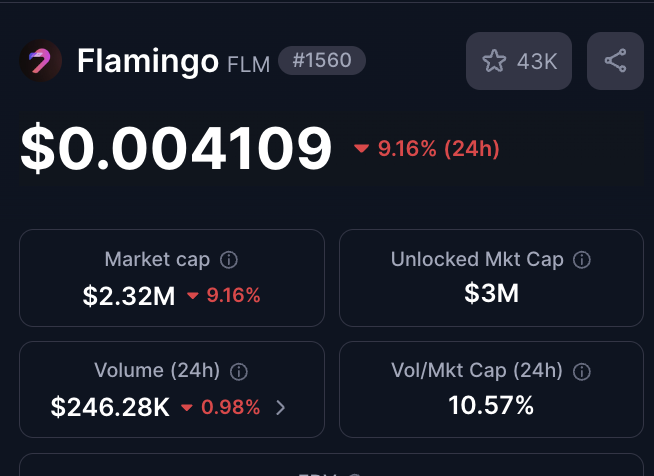
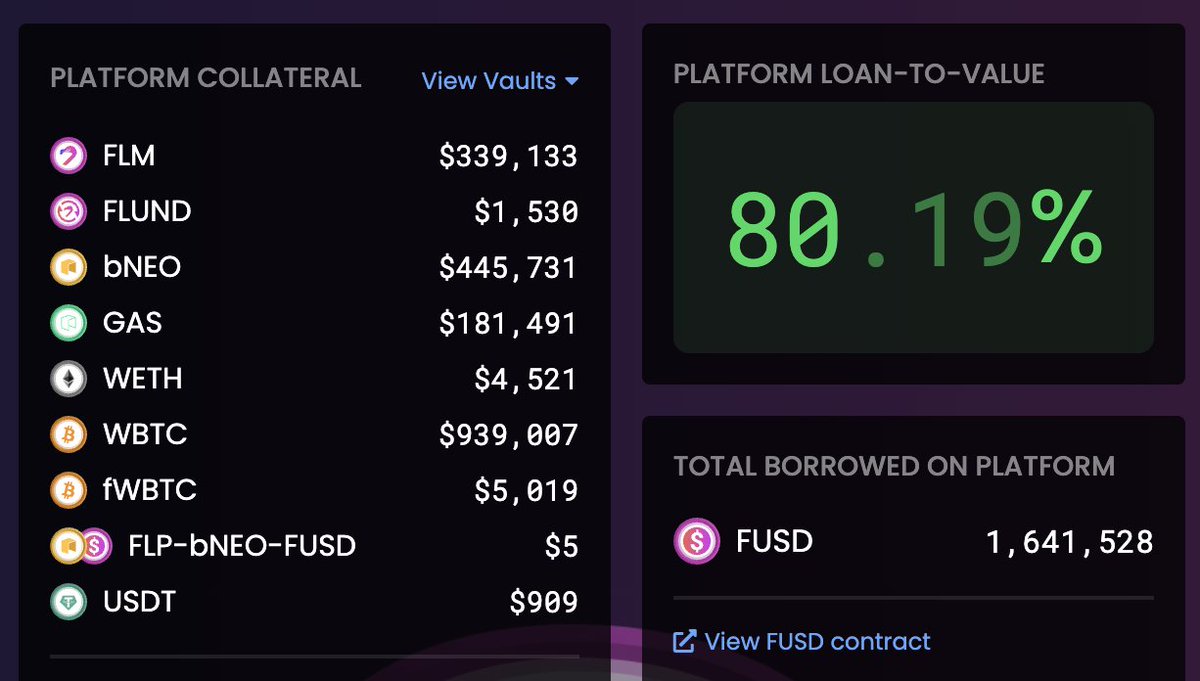
When some people said Neo could become “LUNA 2.0”, at first I didn’t think it made much sense. Now, looking at what is happening with Flamingo, it is becoming increasingly clear. The main issue is the use of the protocol’s own token to issue these stablecoins. That is exactly what made Terra so fragile. When UST lost its peg, the system tried to defend it by minting more LUNA. That inflation collapsed LUNA’s price, making the peg even harder to defend and causing even more selling. The result was a death spiral. And the same type of risk exists when FLM is used as collateral. The situation is even worse because the protocol accepts FLM as collateral at a much higher rate than BTC, around 50-55 percent. It is extremely difficult to believe that the team is unaware of what this implies. fUSD is not fully backed in any practical sense. It may not have depegged yet, but it would if users attempted to withdraw at scale. According to CoinMarketCap, FLM’s reported daily trading volume is around 246k, which is far below the amount being counted as collateral. In other words, there is no market depth to support this. There are no real buyers for that amount of FLM, and if there were, the price would melt even further. Not only that, but the protocol accepts much higher collateralization when it is done with FLM than when it is done with BTC, which is completely backwards from a risk perspective. I also do not know what price feeds they are using for the other collateral assets, but at least from what I am seeing, even the BTC collateral appears to be significantly overvalued. If the pricing assumptions are wrong across multiple assets, then the situation is worse than it looks on paper. The outcome of a collateral collapse like this is unpredictable. It can range from a slow bleed to a sudden depeg to cascading liquidations that permanently damage the protocol. And, as with many things on Neo, there is a very real possibility that this will simply be swept under the rug, leaving users with losses and no meaningful explanation. Look at the image. It shows almost 350k in FLM collateral, but there's no way that FLM can actually be converted to 350k USD.
Ricardo Prado tweet mediaRicardo Prado tweet media
English
3
2
8
1.1K
💙PEZI.ttm.base retweetet
Ricardo Prado
Ricardo Prado@ricklock99·
What should happen next on Neo? Option 1: Disclosure without custody change DHF publishes complete financial disclosures and reporting, while retaining custody and operational responsibility for the funds. Option 2: Consolidation into the Blackbox multisig Erik transfers the funds under his control to the Blackbox multisig address, consolidating custody within that structure. Option 3: Transfer to a new custodian DHF transfers all funds to a new custodian (initially Erik or custodians he designates) while the overall structure is reorganized. Full financial disclosure should be the first step before any decision is made about changing custody. That said, if the allegations regarding fund misuse are substantiated, then disclosure alone would no longer be sufficient. In that scenario, transferring custody to a new, independent structure would be the only credible path forward. For this reason, I do not see Option 2 as appropriate unless full disclosure occurs first and no evidence of mismanagement is identified. Separately, I do not believe transferring additional funds to the "council" is a viable solution at this stage. Based on past results, that structure has not delivered clear, measurable outcomes relative to the resources allocated. Giving these groups more funds would likely only worsen the situation.
English
2
4
25
1.2K
💙PEZI.ttm.base retweetet
Ricardo Prado
Ricardo Prado@ricklock99·
[Calling for the Full Dissolution of the Neo Council] The Neo Council was ostensibly created to help manage the Neo blockchain and to support the Neo Foundation in guiding the network toward long-term success. Implicit in this mandate was an expectation of oversight: strategic direction, ecosystem stewardship, and responsible influence over investments. In practice, the opposite appears to have occurred. To begin with, there is no clear public understanding of who actually comprises the Council. There is no transparent documentation explaining who its members are, how they are appointed, what their responsibilities entail, or how decisions are made. People frequently speak of “the Council” as if it were a concrete, well-defined governance body, yet there is little evidence that such a structured entity actually exists as described. What appears to exist is a de facto elite, an informal “nobility”, that exerts disproportionate influence over ecosystem investments. This concentration of influence has resulted in extensive spending on initiatives that have delivered little to no measurable return for the broader Neo ecosystem. A clear example is the relationship between COZ and AxLabs and their joint venture, Item Systems. Framed as an “offline activation” effort, this initiative has repeatedly relied on Neo-funded events and incentives, primarily to showcase a product rather than to generate sustained ecosystem growth. More broadly, this dynamic helps explain why so few genuinely new projects emerge and stabilize on Neo: incumbent groups actively crowd out or obstruct newcomers. As seen in cases such as Enclave, this opposition is not passive; it is often direct and deliberate. Neo could, at this stage, have significantly stronger tooling, higher developer activity, and a more vibrant ecosystem. Instead, progress has been repeatedly undermined by those positioned closest to power. The incentive structure favors maintaining influence, contracts, consensus nodes, and privileged access over building competitive, forward-looking infrastructure. Innovation stagnates while the ecosystem is effectively milked, and its long-term viability erodes. This is not necessarily a story of malice. In many cases, it is a story of survival. For several of these groups, Neo Foundation funding represents their primary, or only, source of revenue. Losing contracts would likely mean the end of their projects altogether. This creates a strong incentive to preserve the status quo at all costs, even if doing so harms the ecosystem as a whole. It is also important to acknowledge that many individuals involved are highly competent technically. However, technical competence does not automatically translate into sound political judgment or ecosystem-level investment decision-making. Their voices should certainly be heard, but expecting or requiring them to act as stewards of capital allocation and governance is neither fair nor practical. Is dissolving the Council an extreme measure? No. First, there is still no clarity on who “the Council” actually is. Second, dissolving or restructuring a governance body that has failed to reach consensus or deliver results is standard practice in both corporate and decentralized systems. Dissolution does not imply that everyone must be removed permanently; it means that the current structure is no longer fit for purpose. Without meaningful change, the same problems will persist, and Neo will continue to lose ground. Time is not on Neo’s side, and at the current pace, the network risks becoming irreversibly outpaced. Finally, if Council membership is implicitly or explicitly tied to hosting a consensus node, that linkage should be severed. Hosting a consensus node does not inherently qualify an entity to participate in ecosystem governance or funding decisions. Maintaining this coupling makes structural reform extremely difficult, if not impossible, and further entrenches existing power imbalances. Neo still has an opportunity to correct course, but only if it is willing to confront governance failure directly, rather than pretending it does not exist.
English
3
5
26
1.2K
💙PEZI.ttm.base retweetet
⚔️FUSION BATTLE
⚔️FUSION BATTLE@tothemoon_net·
Attention Cryptonauts On December 24th @ 23:59 UTC, the first window for TTM Token Migration from Neo Blockchain to Base Blockchain will be closed! BE SURE TO MIGRATE BEFORE THIS DATE + TIME TO SECURE 100% OF YOUR $TTM SUPPLY
⚔️FUSION BATTLE@tothemoon_net

Attention Cryptonauts TTM Token Migration from Neo Blockchain to Base Blockchain has been initiated! ⚠️ 1 year deadline (Sept 24th, 2026). A 50% decrease in migration allocation after 3 mo. (Dec 24th, 2025). A 75% decrease in migration allocation after 6 mo. (Mar 24, 2026)
English
2
5
5
399
💙PEZI.ttm.base retweetet
Ricardo Prado
Ricardo Prado@ricklock99·
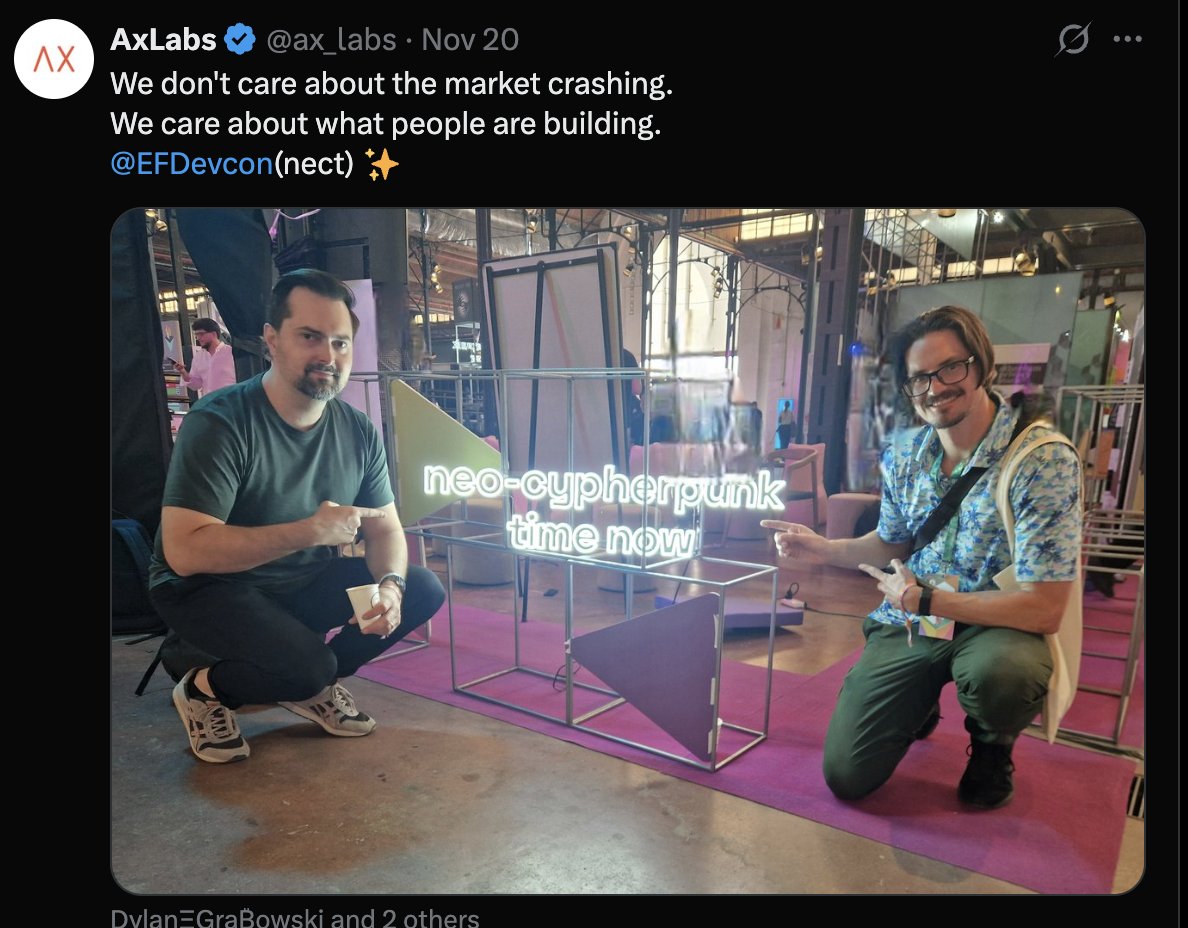
I honestly don’t understand how they don’t see how offensive this type of post is to the people who actually invested in this ecosystem. But the explanation is simple: they are completely shielded from the consequences of their failures. They do not face the scrutiny that everyone else does. They don’t need to go through GrantShares or prove the value of their output. They receive funds automatically, both from the Neo consensus node and from their contracts, regardless of performance, adoption, or results. Their salaries and budgets are benchmarked in USD, not in NEO. So while investors lose money, nothing changes for them. In fact, when the price drops, they receive even more NEO or GAS per payout. Their buffer grows while holders bleed. This is why they can say they “don’t care about the market crash.” Of course they don’t. Nothing in their reality changes. Their compensation is guaranteed, their influence is preserved, and their work is never questioned. The only group that pays the cost is the ecosystem investor they pretend to represent.
Ricardo Prado tweet media
English
1
2
11
1.2K
💙PEZI.ttm.base retweetet
Ricardo Prado
Ricardo Prado@ricklock99·
Neo’s current state is not a coincidence. For years, Dino Boy (Tyler Adams / COZ) worked to consolidate influence and secure his own contracts while the ecosystem collapsed. As holders watched their funds evaporate and Neo fell below 5 USD, his deals persisted, even expanded, through sponsorships and Item Systems. The damage is done, and the platform will likely never recover. He first destroyed COZ itself: none of the original builders remain. Then he destroyed $NEO price, burning millions on initiatives that produced no meaningful results. He crippled the ecosystem by blocking emerging competitors like Neo One and Enclave Wallet, preventing any alternative from growing. And finally, he was caught exploiting GrantShares for his own benefit, showing that even this project has been contaminated by his influence. He is not alone. This is a cartel. But unlike the others, Dino Boy has been by far the most damaging force Neo has ever allowed to exist.
English
0
2
6
1.1K