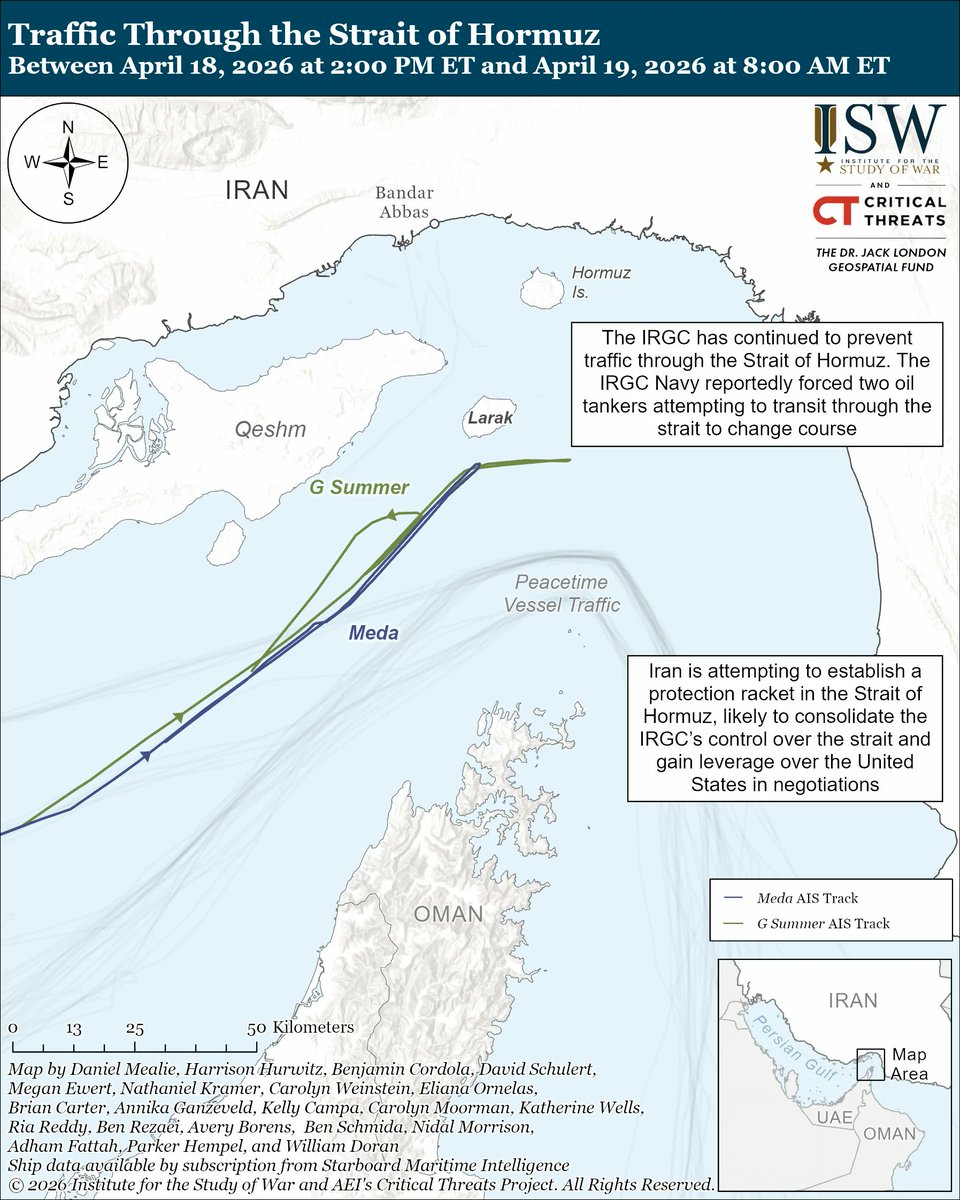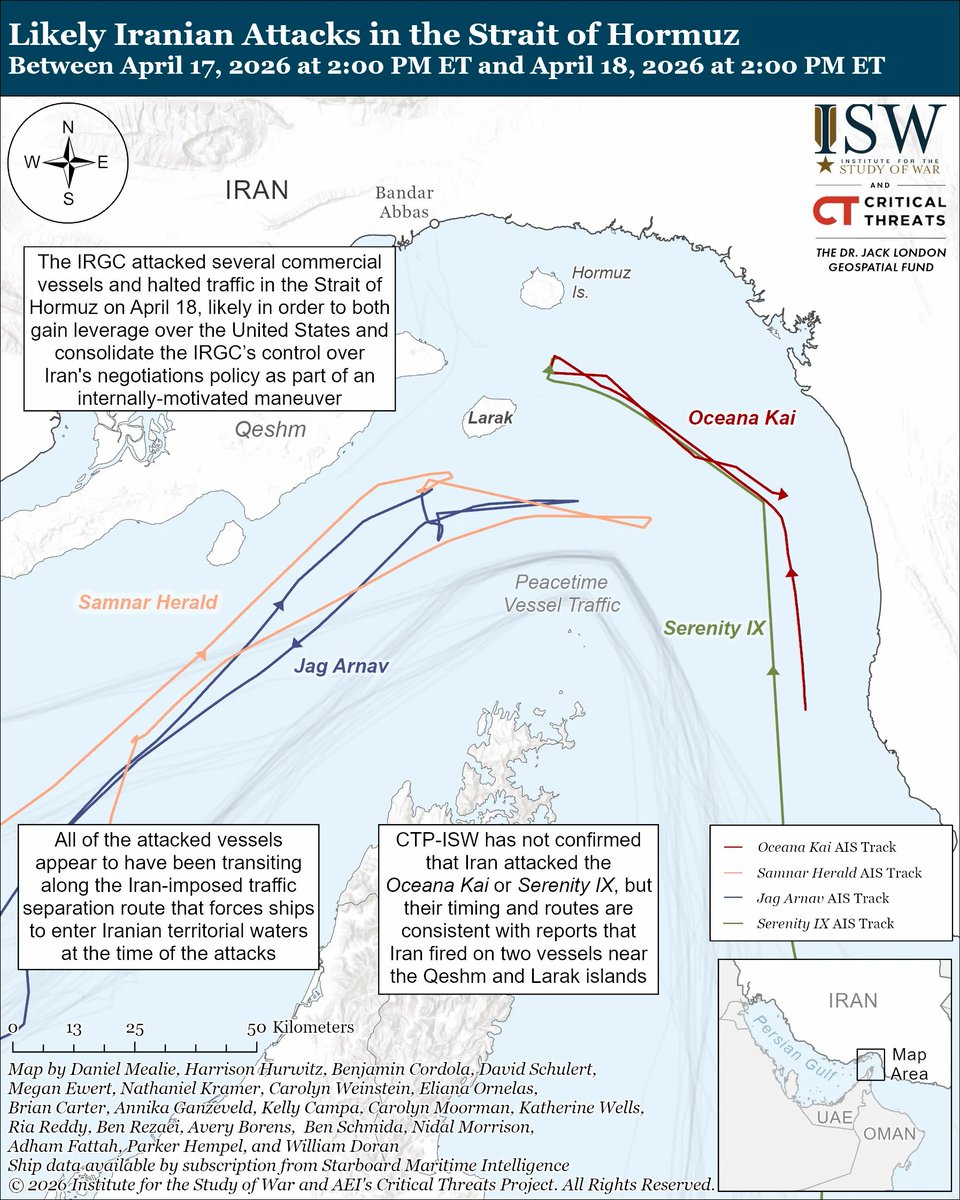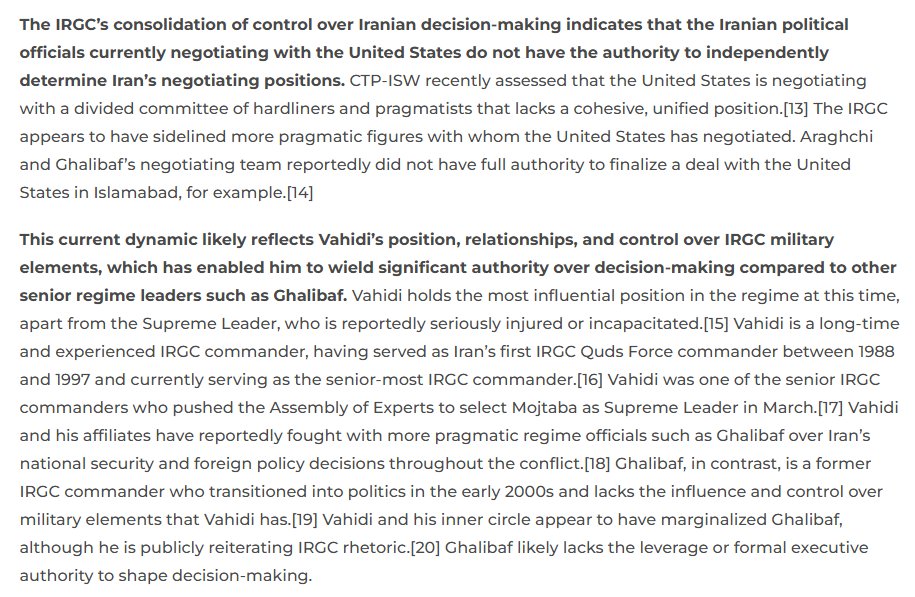


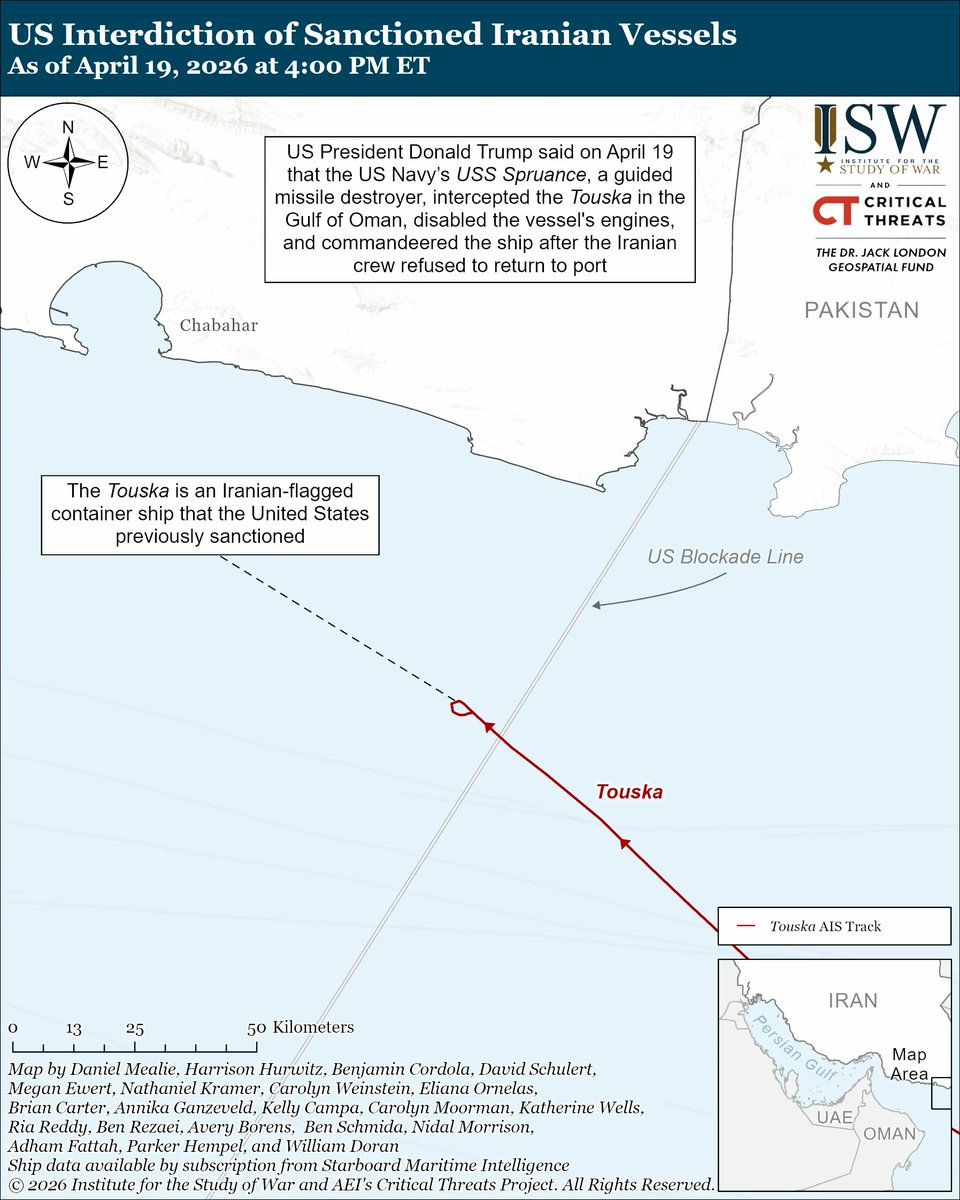
NEW: The Iranian political officials who will reportedly negotiate with the United States in Islamabad, Pakistan, on April 21 neither have the authority to independently determine Iran’s negotiating positions nor are driving decision-making in Tehran. Other Key Takeaways: US Special Envoy to the Middle East Steve Witkoff and Jared Kushner will attend the talks. Iran’s negotiating delegation is expected to include Foreign Minister Abbas Araghchi and Parliament Speaker Mohammad Bagher Ghalibaf. The upcoming talks appear focused on extending the ceasefire, which is set to expire on April 22. Iranian sources familiar with the negotiations stated that Iran expects that the ceasefire will be extended and that additional talks will occur if the negotiations on April 21 go well. The Iranian negotiating team does not have the authority to independently determine Iran’s negotiating positions, however. IRGC Commander Major General Ahmad Vahidi and other senior members of the IRGC have consolidated control and wielded significant influence over the negotiations process thus far. Iran is attempting to establish a protection racket in the Strait of Hormuz, likely to consolidate the IRGC’s control over the strait and gain leverage over the United States in negotiations. Iran has reportedly decided to give vessels that pay a “security” fee and adhere to Iranian protocols priority to transit through the strait. The IRGC has continued to prevent traffic through the Strait of Hormuz. The IRGC Navy reportedly forced two oil tankers attempting to transit through the strait to change course. Many vessels that intended to transit through the strait have turned around.