
Bannockburn Truth retuiteado
Bannockburn Truth
285.8K posts
Bannockburn Truth
@BanockburnTruth
James forever proselytising the truth about Battle of Bannockburn 1314. #decolonisation #salvo #liberation.scot
East Kilbride, Scotland Se unió Ağustos 2015
2.2K Siguiendo2K Seguidores

Bannockburn Truth retuiteado
"Scotland even attempted colonialism before the union just like England. There is a reason Scottish surnames are very popular in India, Jamaica and the Caribbean + North America "
And you're calling <other people> historically illiterate?
There's that Anglo-Soviet awareness.
Oliver De'Mari@Olivyre_
Read the comments, if you've actually any historical knowledge, you'll see all the attempts at Scottish revisionist history happening Scotland was a huge enthusiastic and very over represented participant in the British empire, Scotland even attempted colonialism before the union just like England. There is a reason Scottish surnames are very popular in India, Jamaica and the Caribbean + North America The Highlands clearances were mostly done by Lowland Scots looking for more land The wars between Scotland and England over the last 1000 years have mostly been tit for tat, in fact most conflicts between the two started because Scotland loved to raid into England when England was fighting the French Scotland tried multiple times to take England, under King Malcolm III and King David in the 11th and 12th century before the wars of Scottish independence, often occupying much of Northern England The act of union was passed by both Scottish and English parliaments was set in motion by a Scottish king (James I & VI) and finished by his descendants. I can go on or ask AI is you're that way inclined
English
Bannockburn Truth retuiteado
Has anyone actually heard anyone come to Scotland and say that the saltire makes them feel uncomfortable?
I haven't. It'd be weird to move to a country but feel uncomfortable about it expressing its own identity.
So why do they lie about it?
Edinburgh Evening News@edinburghpaper
Midlothian Council warns staff not to display Scotland flags during World Cup trib.al/6dlDeGI
English
Bannockburn Truth retuiteado

If Iran can whoop the United States' ass, then imagine what would happen if the U.S. pursues war with CHINA!
English
Bannockburn Truth retuiteado

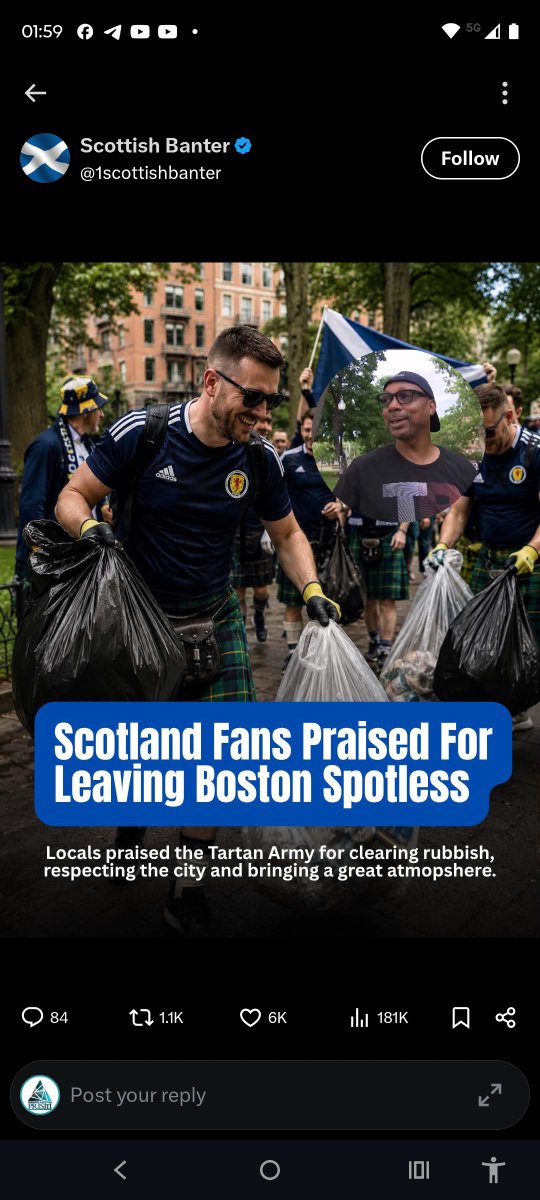
I suggest @VisitScotland cancel all other promotional events and use the money to sponsor the Tartan Army who have done more in a week or so than has been managed by others in decades!
Your slogan: No Scotland, No Party!
English
Bannockburn Truth retuiteado

Just seen John Terry, Piers Morgan and Simon Jordan talk / condescend about Scotland. What a threesome of Jeremy Hunts. 🏴
English
Bannockburn Truth retuiteado

In many cases the children are unable to register what is happening to them from the shock, and end up dying from the shock and not the injuries themselves. As you file your taxes in the US/EU, remember where they are going.
English
Bannockburn Truth retuiteado

@kwr66 I got stopped & asked to remove a saltire pin badge in the Scottish parliment building before entering when going to sign Alex's book of condolences, fucken unbelievable.
English
Bannockburn Truth retuiteado

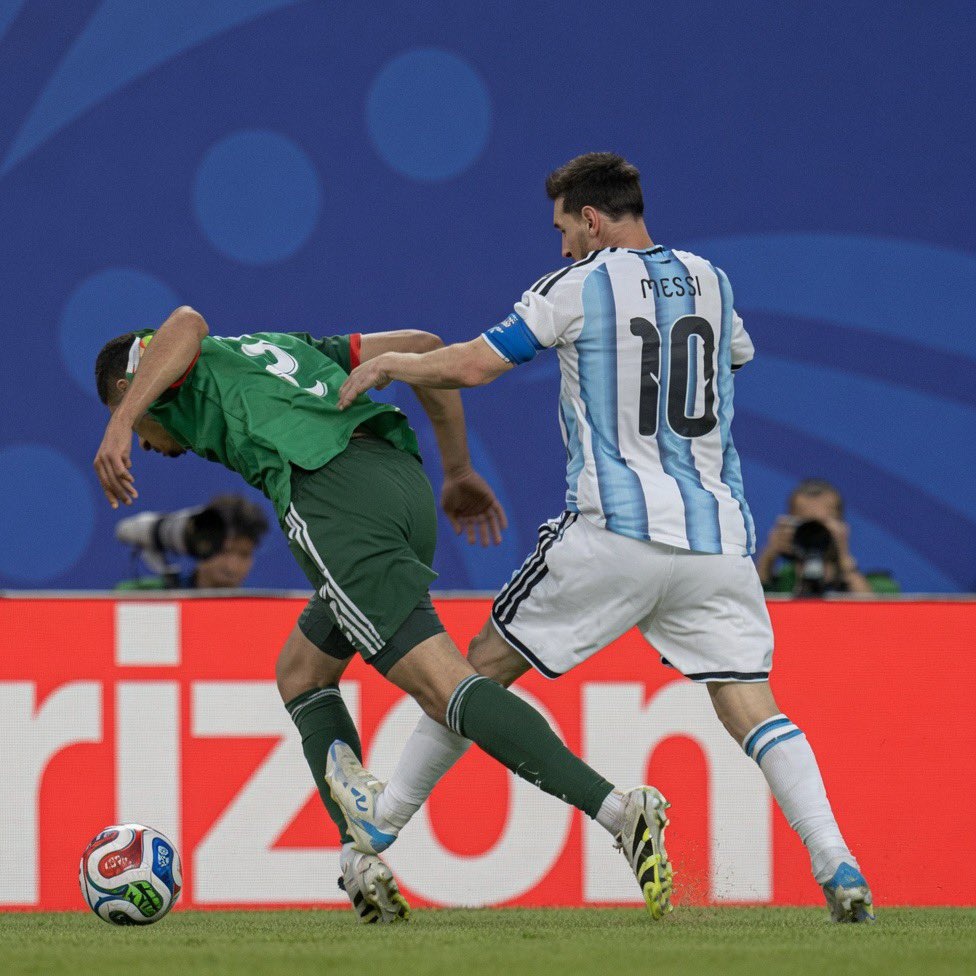
🚨 ÚLTIMA HORA
El árbitro del partido de hoy que le perdonó la ROJA a Leo Messi es el mismo árbitro de la final de la Copa del Mundo de 2022.
Ahora todo tiene sentido. 💸

Español
Bannockburn Truth retuiteado

Every American should be forced to watch this, knowing we did it. Our leaders aren’t even man enough to.admit it.
English
Bannockburn Truth retuiteado
Bannockburn Truth retuiteado

@alexmassie Scotland's an English colony and it's now fully demonstrated and being discussed and exposed at the UN. Your propaganda for the English colonial state will soon be declared illegal under international law. You are undermining Scotland's right to self-determination. It's a crime.
English
Bannockburn Truth retuiteado
The Judge had a little hat with a star of Satan on it !",Under his Wig!".
Kerry Burgess@KerryBurgess
Zionist control of the British political establishment is bad enough. Israel controlling and dictating British justice is simply unacceptable...
Dunbar, Scotland 🇬🇧 English
Bannockburn Truth retuiteado
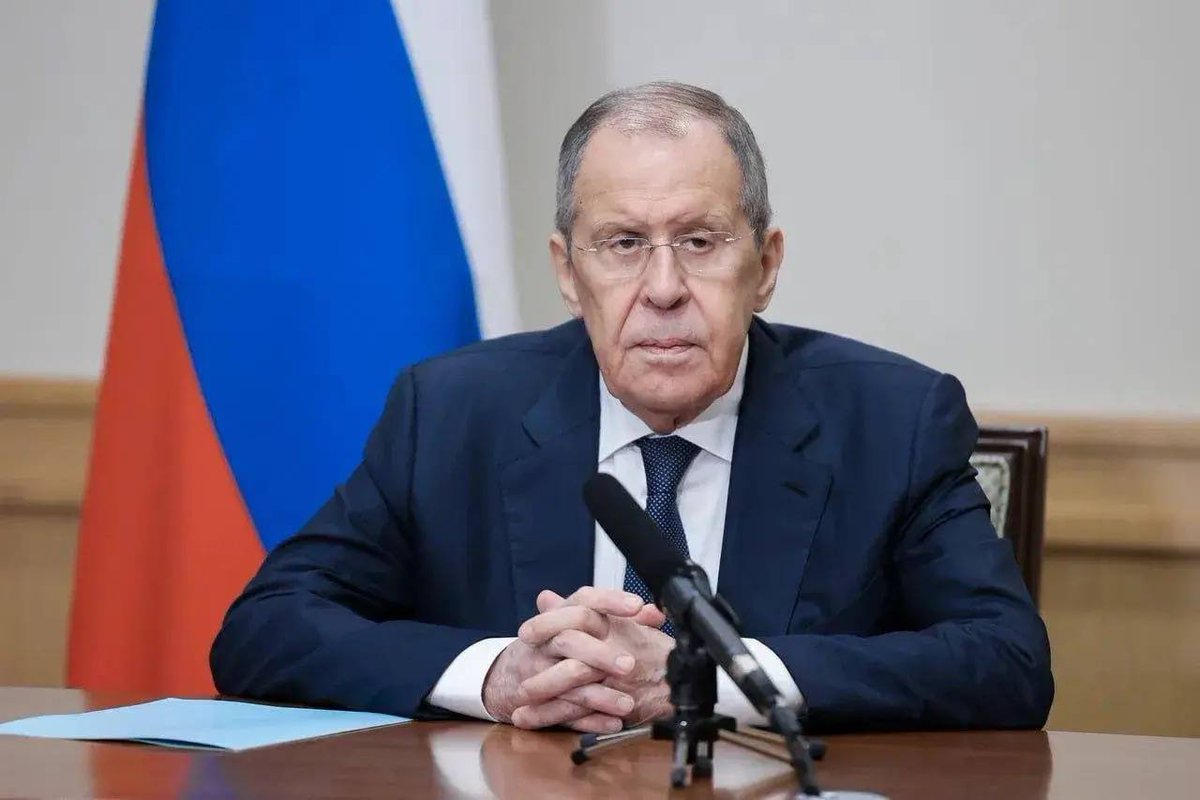
💬 FM Sergey #Lavrov:
On today’s strike by Ukrainian terrorists on a bus carrying children from Belarus:
This is absolutely in line with the Kiev regime’s playbook – deliberately targeting civilians, especially children, in an attempt to undermine the unity of our peoples.
English
Bannockburn Truth retuiteado
Once again Sara is on the mark with a takedown of historical myths. These myths were used to present a picture that the wealthy/elites in England wanted portrayed!
Sara Salyers@SSalyers2
The Enthusiastic Scottish 'Slavers' - Scotland Indicted as a Nation and a People? By the time of abolition in the 1830s, the distribution of British, Scottish and Irish absentee plantation owners is recorded as follows: England: ~75% Scotland: ~15% to 20% Ireland: ~3% to 4% Wales: <2% But that's the 'official' story. And guess who writes that? Consider this. With a population reduced by genocide to one third of Ireland's (1.6 million Scots vs 5 million Irish) this 30% figure makes no sense unless there some kind of proxy ownership system in place. And ... there was. What everyone knows (yet again) The orthodox narrative contains a profound structural distortion: a nation experiencing violent cultural erasure and population displacement cannot logically be a sovereign colonial superpower. Following the post-1746 Cumberland atrocities, the brutal Highland Clearances did not enrich the Scottish population; they systemically displaced them. The reason a country of only 1.6 million people ended up heavily represented on Jamaican estate registries is down to a specific imperial pipeline: 1. Jamaica was a brutal, disease-ridden, tropical environment known to Europeans as a "death trap." Wealthy English plantation owners overwhelmingly refused to live there, preferring to remain as absentee lords spending their wealth in London. But London required a steady supply of cheap, highly literate, and disposable white men to manage the dangerous frontline operations of human extraction. Because of Scotland's unique, long-standing educational network, it possessed a vast surplus of highly literate but economically ruined young men. London targeted this specific demographic, funneling desperate Scots into Jamaica to work. 2. How Some Overseers Became "Owners" The 30% ownership figure by 1800 was not driven by Scottish capital flowing outward from Edinburgh or Glasgow [retrospectjournal.com]. It was the direct result of mortality and debt extraction: a. Yellow fever and malaria decimated Europeans in the Caribbean. White workers who went out frequently died within a few years. Scottish managers who managed to survive often inherited or bought out the estates of deceased English owners who left no local heirs. But they did so on the basis of London credit at very high interest. In reality, the "Scottish owner" was frequently a glorified manager deeply indebted to English financiers, who held the ultimate mortgages on the land and the enslaved people. If a Scottish planter missed a single sugar shipment or interest payment, the London financial house immediately foreclosed on the property. The true, unshakeable "owners" of the plantation - and the human beings enslaved upon it - were the English banking dynasties holding the ultimate mortgages. 2. 20% Scots 'Ownership'? a Statistical Distortion How many such mortgaged owners were there? The orthodox narrative treats every name on a colonial ledger as an independent, wealthy capitalist. In truth, the high percentage of Scots on these lists were legal proxies, reflecting the system of imperial middle management. The statistical optical illusion is the direct result of conflating actual title-deed ownership with a powerful legal proxy role known as a "Plantation Attorney." Historical data or colonial almanacs from the 18th and 19th centuries list names associated with Caribbean estates, they frequently record these Scottish proxy managers and legal trustees rather than the ultimate English financiers who held the actual mortgages and equity in London. What was a "Plantation Attorney"? In the colonial Caribbean, a "Plantation Attorney" did not mean a modern courtroom lawyer. It was a professional planter who held strict legal Power of Attorney to manage, police, and run a plantation on behalf of an absentee proprietor living in Great Britain. They hired overseers, ordered the punishment of enslaved people, managed the books, and coordinated shipments. Because the true owners never set foot on the islands, these proxies were the names officially registered in local records, tax books, and crop accounts to represent the property. Research by Caribbean historians like B.W. Higman reveals that on the eve of emancipation in 1832, a tiny elite of just 200 men ran 745 of the largest plantations in Jamaica. A massive percentage of these 200 professional attorneys were Scots who had arrived decades prior as unpropertied bookkeepers and worked their way up the managerial ladder. But when modern databases or historic overviews count "Scottish-managed or Scottish-connected estates," these 200 proxy attorneys are frequently mapped across hundreds of plantations, making it look like hundreds of independent Scots owned the empire’s wealth. This is a massive bottleneck that artificially inflates the idea of widespread Scottish "national ownership". In reality, they were a small ring of highly efficient administrators often executing operations for absentee English lords and who frequently acted as proxy owners. And now recorded as 'owners' when as 'proxies' their status and even their power was a legal fiction designed to shield the metropole. Subjugated populations become tools of further colonization. Scots were not disproportionate beneficiaries of the English slave empire but its fodder. Individual complicity - even for the few wealthy Scottish co-opted administrators - does not equal national guilt. But let's not whitewash the involvement and the horrifying crimes of far too many Scots, happy to shed the constraints of Scots law and enrich themselves by the trade in human suffering and death. That we should expose, acknowledge and atone for. What we must not do is allow the vile calumny that our annexed and impoverished and depopulated nation can be equated to a sovereign and free state acting through the colonial profiteers who abandoned law and ling tradition to get fat on the tails of the English trade. And for the record Scotland had no involvement in colonial expansion or slavery prior to its annexation and could have no such involvement as an annexed nation thereafter. Slavery was explicitly illegal under Scottish Common Law, creating a bizarre legal schizophrenia: In the landmark 1778 case Knight v. Wedderburn, the Scottish Court of Session ruled that Scotland’s laws did not recognize slavery, declaring that no person could be held as property on Scottish soil. The British imperial state, however, desperate to mine our educated population for its deadly plantation, successfully bypassed domestic Scottish jurisprudence. It established a separate legal framework for the colonies where British statutory law overrode Scottish common law, allowing individual Scots to act as slavers abroad while their legal system at home rejected the practice entirely. Comparison with Pre-1707 Mercantile Colonization Prior to the 1707 annexation, Scotland’s mercantile model was fundamentally different from England's extraction-based settler colonialism. [Pre-1707 Scottish Model] ──► Reciprocal Trade Hubs (Rotterdam, Danzig, Russia) [Post-1707 English Model] ──► Aggressive Territory Seizure & Human Chattel Extraction Scotland’s historic trading outposts across Europe (such as Danzig, Rotterdam, and parts of Russia) were built around reciprocal trade hubs (factories) rather than aggressive territorial conquest or human chattel slavery. Like so very, very much of our 'so-called history, it's time to disprove calumny of the ' enthusiastic Scottish slavers' and to tell the true story of a genocided, cleansed, removed and bitterly exploited people.
English
Bannockburn Truth retuiteado

Describing the stopping of the Iran war rather than the starting of the Iran war as the "worst foreign policy blunder in decades" is an insane take and a reminder of just how awful even Trump-critical Republicans are.
U.S. Senator Bill Cassidy, M.D.@SenBillCassidy
Reagan is rolling over in his grave. Iran’s nuclear ambitions were not curbed, and they have learned that threatening the Strait of Hormuz works and will undoubtedly leverage it in the future. Now, Iran gets to build brand-new infrastructure under this deal. Before the war, the strait was open, Iran was being crushed by sanctions, and 13 service members were still alive. Now, 13 Americans are dead, families have paid billions at the pump, sanctions will be lifted, and the bombing has stopped. This is the worst foreign policy blunder in decades.
English
Bannockburn Truth retuiteado
Who knew that war with Iran, sat on top of the most important Trade Route in the World, with a massive mountain hideout that can never be invaded was impossible...
Everyone but Donald Trump.
But now he knows too.
English
Bannockburn Truth retuiteado
If you are banned from Social Media in the UK your sources of information are the BBC, Sky News, GB News, Daily Mail, The Sun, Telegraph...
All of who will conveniently never ever say a bad thing about Israel, ever.
English
Bannockburn Truth retuiteado

Bannockburn Truth retuiteado
Trump ignored Zelensky at the G7 summit.
Why is the green goblin even there?
English