
Hugo Castelan retweeté
Hugo Castelan
1.3K posts


Hugo Castelan
@CastellHu
PhD Emerging Microorganisms. Viromics, Phylogenomics. Metagenomics, Bacterial Genomics 🇲🇽
Ontario, CA Inscrit le Mayıs 2011
1.5K Abonnements550 Abonnés


Hugo Castelan retweeté
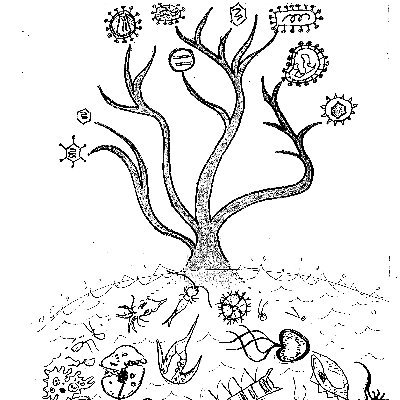
CRESSENT: a bioinformatics toolkit to explore and improve ssDNA virus annotation
microbiologyresearch.org/content/journa…
English
Hugo Castelan retweeté
Reassessing viral origins and evolutionary placement in the tree of life
link.springer.com/article/10.100…
English
Hugo Castelan retweeté

DeepKOALA: A Fast and Accurate Deep Learning Framework for KEGG Orthology Assignment biorxiv.org/content/10.648…

English
Hugo Castelan retweeté

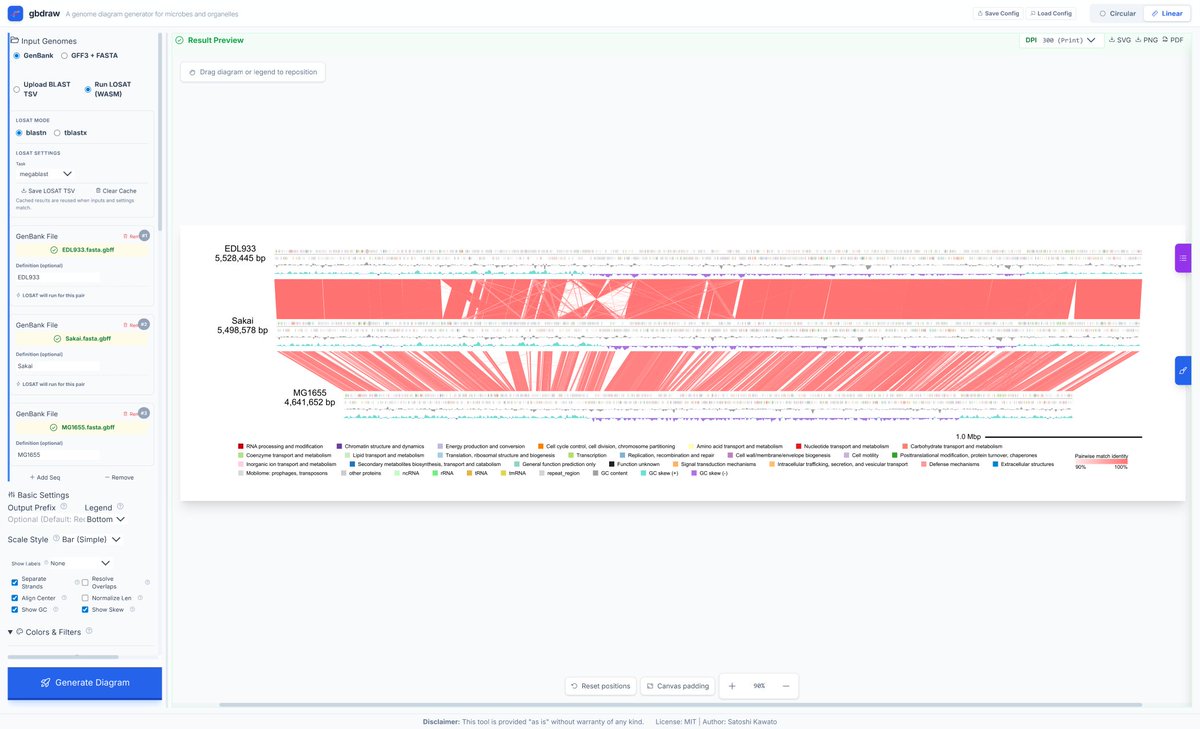
Visualizing pairwise genome comparisons? No need to run BLAST separately anymore! 🧬
#gbdraw has implemented #LOSAT, a WASM-powered Rust reimplementation of BLASTN/TBLASTX.
✅ No local installation
✅ No data transfer (Serverless)
Try it here: gbdraw.app

English
Hugo Castelan retweeté

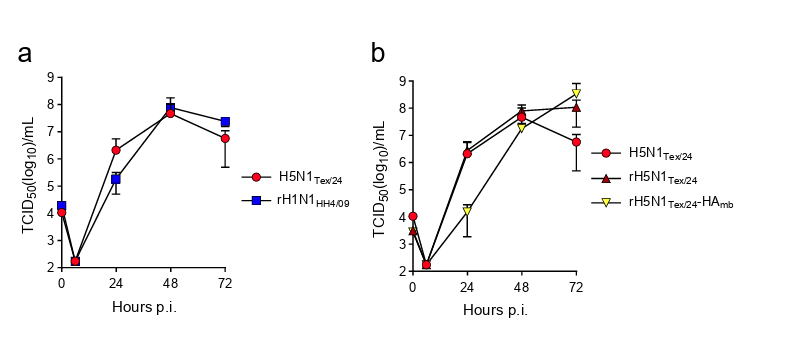
H5N1 virus isolated from bovine milk (H5N1Tex/24) replicates as efficiently as the H1N1 pdm09 in well-differentiated human nasal epithelial cells. H5N1Tex/24 replicates effectively at 33C vs earlier avian H5N1 which require 37C - adaptation to human URT.
👉biorxiv.org/content/10.648…
English
Hugo Castelan retweeté

GenoFig: a user-friendly application for the visualisation and comparison of genomic regions academic.oup.com/bioinformatics…

English
Hugo Castelan retweeté
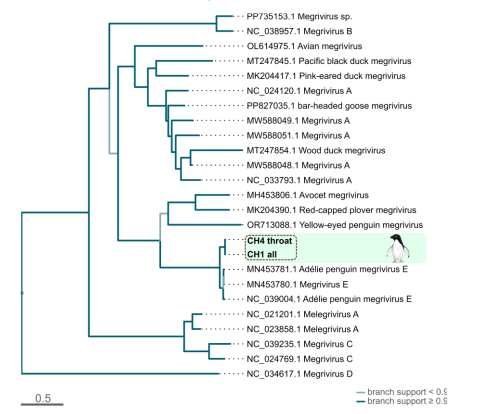
How cool - the detection of picornaviruses and rotaviruses in "mummified" penguins found in Antarctica.
👉biorxiv.org/content/10.648…
English
Hugo Castelan retweeté
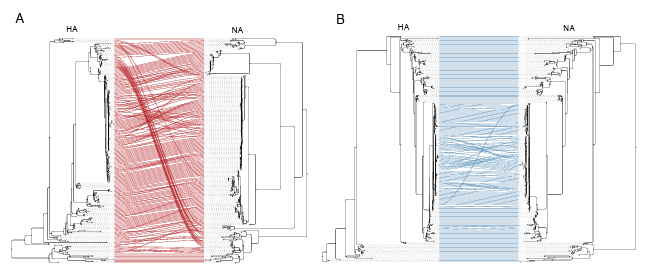
Quantifying reassortment is hard. Lots of recorded genotypes of HPAI suggests its prolific. Here, widespread reassortment as measured by inferred subtree-prune-regraft (SPR) events, BUT measuring reassortment by SPRs may have a high false positive rate.
👉biorxiv.org/content/10.110…
English
Hugo Castelan retweeté

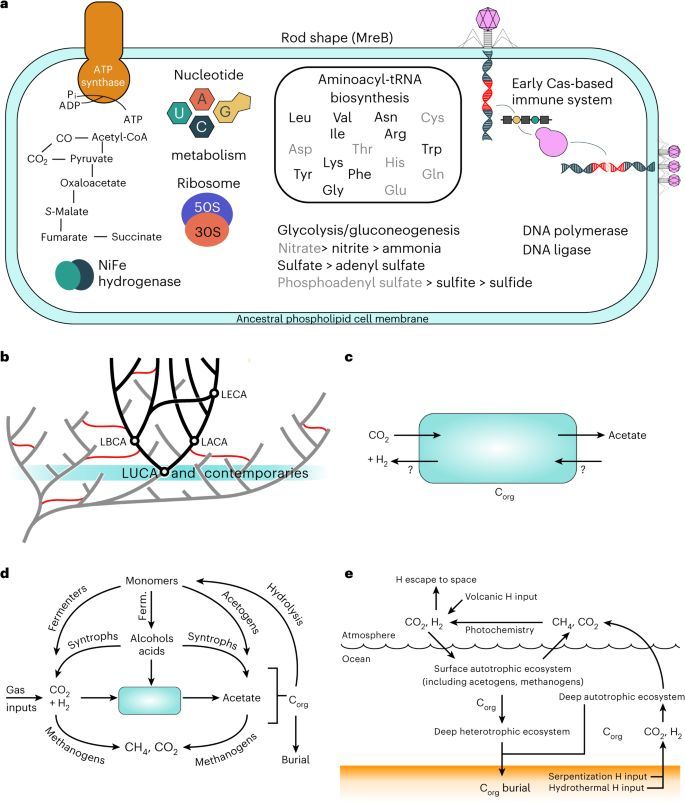
The nature of the last universal common ancestor and its impact on the early Earth system nature.com/articles/s4155… (read free: rdcu.be/dRPdk)


English
Hugo Castelan retweeté

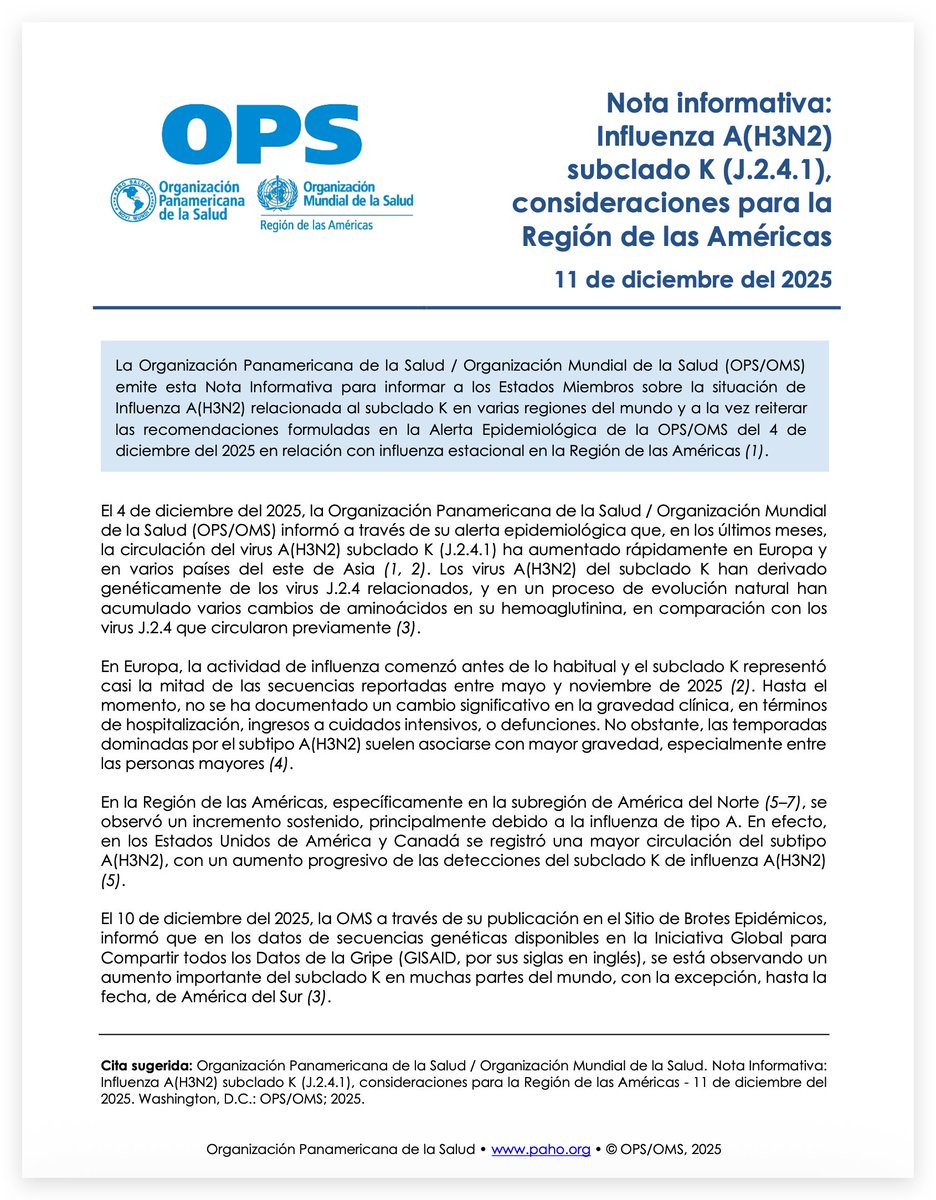
Influenza A(H3N2) subclado K: ¿Qué significa su expansión global para América Latina?
En las últimas semanas, un nuevo linaje del virus influenza A(H3N2), conocido como subclado K (J.2.4.1), se ha expandido rápidamente y hoy domina gran parte de los virus H3N2 secuenciados en Europa, partes de Asia y Norteamérica. Aunque no se trata de un virus nuevo, su velocidad de expansión ha generado preocupación legítima sobre su impacto y la efectividad de la vacuna estacional.
El subclado K acumula varios cambios genéticos (mutaciones) en la hemaglutinina (HA), la principal proteína de superficie del virus y el blanco de la respuesta inmune inducida por la vacunación. Estos cambios lo diferencian del linaje de referencia seleccionado para la vacuna 2025–2026 y explican por qué, en ensayos de laboratorio, los anticuerpos lo reconocen con menor eficiencia. Pero este punto es clave: la deriva antigénica no equivale a la pérdida total de protección.
La evidencia clínica temprana indica que la vacuna actual sigue ofreciendo protección significativa contra enfermedad grave y hospitalización, especialmente en niños y adolescentes (≈70–75%) y una protección moderada pero importante en adultos (30–40%). Como en temporadas previas dominadas por H3N2, la vacunación sigue siendo una herramienta central para el control de la influenza estacional.
¿Y qué significa esto para la región? Sudamérica ha sido la última región en reportar la presencia del subclado K. Esta semana, Brasil ya ha reportado una secuencia genómica de este linaje en la base de datos pública GISAID. Dado su crecimiento sostenido a nivel global, no resulta sorprendente que comiencen a aparecer más casos en nuestra región conforme avance la temporada y aumente la vigilancia.
Este escenario vuelve a evidenciar una brecha estructural: todavía sabemos muy poco sobre cómo se transmiten los virus respiratorios en zonas tropicales y en el hemisferio sur. Las condiciones climáticas, demográficas y sociales difieren marcadamente de las del hemisferio norte, de donde proviene la mayor parte de la evidencia. En Perú y el resto de América Latina, esta limitación se agrava por la escasez de datos de vigilancia epidemiológica y genómica sostenida sobre virus respiratorios.
La recomendación de los expertos: promover la vacunación de adultos mayores y de poblaciones de riesgo (personas con comorbilidades, gestantes y personal de salud). Incluso frente a esta nueva variante del virus de la influenza, la vacunación reduce hospitalizaciones, muertes y la presión sobre los sistemas de salud.
El subclado K nos recuerda que la influenza y todos los virus siguen evolucionando. Nuestra respuesta regional también debería hacerlo.
Fuentes:
paho.org/en/documents/b…
cdc.gov/fluview/survei…
ecdc.europa.eu/en/publication…
#html_fulltext" target="_blank" rel="nofollow noopener">eurosurveillance.org/content/10.280…
Español
Hugo Castelan retweeté

Evolutionary fingerprinting of protein-coding genes in RNA viruses biorxiv.org/content/10.648… #biorxiv_evobio
English
Hugo Castelan retweeté
Meta-virus resource (MetaVR): expanding the frontiers of viral diversity with 24 million uncultivated virus genomes
academic.oup.com/nar/advance-ar…
English
Hugo Castelan retweeté
Excellent work by @CeliaFerriolG and @pilardomingoc. @VLCphagehunters factory.
"The host range of generalist and specialist phages in capsule-diverse Klebsiella hosts is driven by the evolvability of receptor-binding proteins".
journals.plos.org/plosbiology/ar…
English
Hugo Castelan retweeté

We are officially on the market this year with 3⃣ positions! Come work with us in 🇨🇦!
I am happy to talk to anyone about our department, DMs open!
Please share widely and let your students know.
PS: You can visit our department if you are coming to this year CSMG, Nov 14-15!
Western Economics@westernuEcon
🚨We are Hiring🚨 We have 3⃣ tenure-track positions: • 2 Open-Field • 1 linked to our Masters in Financial Economics (open to various fields) Come work with us in 🇨🇦! 📄 Open-Field: uwo.ca/facultyrelatio… 📄 MFE Position: uwo.ca/facultyrelatio…
English
Hugo Castelan retweeté
🧬🦠🎍 Host species and geographic location shape microbial diversity and functional potential in the conifer needle microbiome:
microbiomejournal.biomedcentral.com/articles/10.11…
English
Hugo Castelan retweeté
Uncovering hundreds of exogenous and endogenous RNA viral RdRp sequences amongst uncharacterized sequences in public protein databases:
academic.oup.com/ve/article/11/…
English
Hugo Castelan retweeté

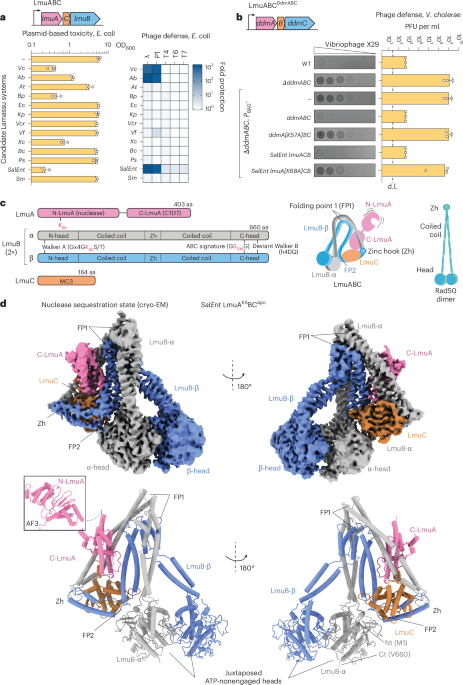
New online! Structure and activation mechanism of a Lamassu phage and plasmid defense system bit.ly/42GKjnH
English
Hugo Castelan retweeté

science.org/doi/10.1126/sc…
No matter where you look and even if you use a database practically devoid of toxin/antitoxin systems (DefenseFinder), the most prevalent system found is a TA related to phage defense.
English
Hugo Castelan retweeté
💻📊🧬ggtaxplot is an R package designed to process and visualize taxonomic data through a taxonomic river plot; by @ClementCoclet & @simroux_virus:
ui.adsabs.harvard.edu/abs/2025doe..s…
English