William (Bill) Kennedy

40.2K posts

William (Bill) Kennedy banner
William (Bill) Kennedy

William (Bill) Kennedy

@goinggodotnet

⌯Go: Walking the line between correctness and comprehension ⦁ [email protected] ⦁ Adv(@predictionguard) ⦁ Wife(@aleintech) ⦁ NPO(@golangbridge) ⦁ GMT-4(MIA)

Miami, FL Inscrit le Ağustos 2013
305 Abonnements25.9K Abonnés
William (Bill) Kennedy
William (Bill) Kennedy@goinggodotnet·
I've also been thinking about why choosing one language over the other when AI is writing the code. I've started to narrow down some thoughts. 1. We can use the best language for the job. 2. Choose the language with the best tooling. The idea that we could use Rust for parts of the system where we can't pay for GC is super interesting. I don't know Rust, but maybe who cares. Maybe what I need to learn is the tooling for a language. Go is powerful because of the testing, profiling, and benchmark tooling. I leverage this heavy with the AI generated code I am writing. I lean on that harder than I do a code review. What if I knew the Rust tooling just as well and I could leverage that the same way. Would I care then that I can't read the code, since I could know it's working and working efficiently?
English
0
0
1
474
William (Bill) Kennedy
William (Bill) Kennedy@goinggodotnet·
When I first had AMP implement IMC (Incremental Message Caching) I didn't really understand the semantics/mechanics of slots/sequences. I also didn't understand the semantics/mechanics of templates and how client manipulate message histories over time. I just told AMP what I wanted to see in terms of behavior and closed my eyes to the implementation. What AMP built worked enough to make me believe life was good. With the experience and understanding I have now, I realize I've been chasing bugs that were impossible to see. The behavior of the model was odd, and I figured the model was misbehaving. NOPE, it was the IMC logic in difference scenarios. Chasing ghosts in the machine. Some sessions with my Agent never hit the bugs and the agent/model look amazing. Then I go an hour with hitting the bugs at random and I'm puzzled by the behavior I am seeing. Now I am simplifying IMC with a full understanding of the semantics/mechanics and things are working better and more consistent. But this took months of learning, testing, and observational understanding. What is my point? This new tool we have where AI helps us code amplifies everything we are doing. If we are doing the "right" things, it amplifies that and it's amazing. If we are doing the "wrong" things, it amplifies that and it's a nightmare. These new AI tools are only as good as we are. They are only as good as we can allow them to be. If we are making mistakes, the tools are amplifying the mistakes. If we are kicking ass, the tools are allowing us to kick ass harder. We all need to be aware of this.
English
0
0
2
320
William (Bill) Kennedy
William (Bill) Kennedy@goinggodotnet·
@ramonmaciasg M5 and the MoE model, Unsloth gemma-4-26B-A4B-it-UD-Q8_K_XL. Kronk is doing a lot of repairing of the json tool calls
English
0
0
1
20
Eron
Eron@ramonmaciasg·
@goinggodotnet uou! which hardware do you have for running the model? and which gemma4 model did you run?
English
1
0
0
24
William (Bill) Kennedy
William (Bill) Kennedy@goinggodotnet·
Using Kronk, Gemma4, and OpenCode. No tool call errors during coding. 82k context window.
English
2
1
11
1.7K
William (Bill) Kennedy
William (Bill) Kennedy@goinggodotnet·
I added this to the system prompt and things improved with Gemma4. I need you to follow these three instructions during this session: - Think efficiently and concisely, prioritizing speed. Use short, direct reasoning steps. - Summarize your reasoning in 50 words or less. - When it comes to making a tool call, double check that you are providing the right arguments.
English
0
0
1
390
William (Bill) Kennedy
William (Bill) Kennedy@goinggodotnet·
Released v1.22.9 of ardanlabs/kronk today. #golang #ai Wrote a json repair package to help with tool calling. The Gemma4 MoE model isn't bad with tool calling, but 20% of the time the JSON needs repair. I also have the new ardanlabs/jinja package on GH. This has been a game changer!
English
2
2
8
1.1K
William (Bill) Kennedy
William (Bill) Kennedy@goinggodotnet·
Kronk does that for you and we can improve our abilities to fix JSON as we see more mistakes. I'm just happy that I'm not the only one experiencing it. No one talks about this when running local models. Now my biggest problem with Gemma4 is overthinking when I ask it to refactor code to fix issues. I haven't found a way to prevent that yet. Qwen3.5/6 unfortunately forget to add arguments on tool calls which can't be fixed. Not sure how to get Qwen to be more reliable.
English
0
0
0
33
Vik
Vik@0xVikk·
@goinggodotnet "20% of the time the JSON needs repair" we see the same with claude tool calls, built a retry layer that catches and fixes about 15% of outputs in prod
English
1
0
1
31
William (Bill) Kennedy retweeté
Dave W Plummer
Dave W Plummer@davepl1968·
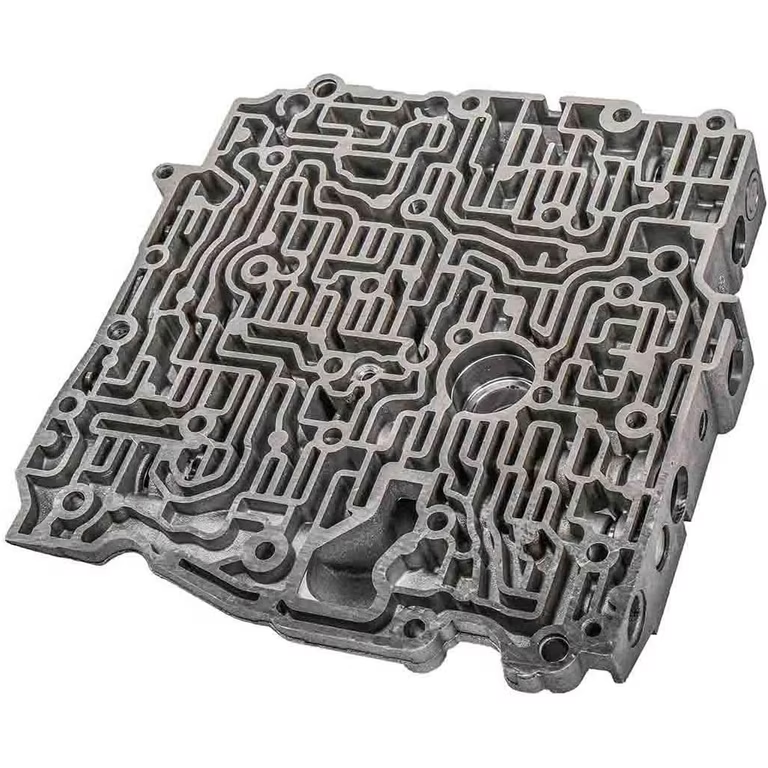
This a computer, and you likely own one. It's a hydraulic analog computer. It’s essentially a machined analog computer that computes with fluid instead of electronics: pump pressure is routed through passages that act like wires, while spool valves, springs, orifices, and check balls perform the equivalents of comparators, logic gates, delays, and one-way elements. What it “calculates” is the machine’s current operating state, whether conditions have crossed a threshold to justify changing state, how strongly to apply each output, and how quickly to make that transition without instability or shock. It does this by continuously balancing forces—pressure on different valve areas against spring preload and feedback pressure—so each valve shifts only when one hydraulic condition outweighs another, while restrictions and chambers add timing and smoothing. In plain English, it is a real-time fluidic state machine that solves “if this pressure is greater than that one, route flow here; otherwise hold, delay, soften, or override” entirely through geometry and oil. They're used in every car with an automatic transmission, where it makes choices like what gear to be in and how hard to apply clutches, etc.... And some dude worked it all out on paper back in the 1960s.
Dave W Plummer tweet media
English
420
1.3K
12K
465.4K
William (Bill) Kennedy retweeté
Gophercon Africa
Gophercon Africa@gophers_africa·
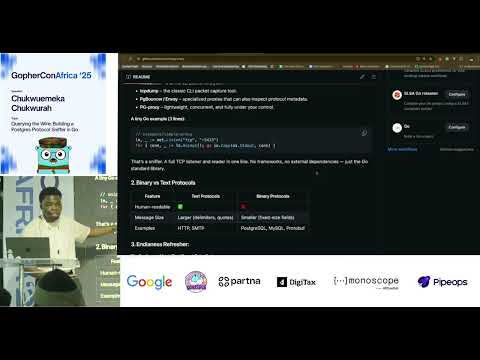
🔥 One of our faves from GopherCon Africa 2025: @chukwurah__ built a Postgres protocol sniffer in Go. At the wire level. 🧵 🎥 Watch: youtube.com/watch?v=zwkomn… He literally wnt 2 d wire level, decoded Postgres messages, n built a tool tht can inspect, log, n analyze db traffic.
YouTube video
YouTube
English
1
4
21
1.4K
William (Bill) Kennedy
William (Bill) Kennedy@goinggodotnet·
Decided to try @opencode again with #kronk over Kilo code. Having a much better experience this time around. My guess is Kronk has matured enough. The lastest changes to repair JSON has improved everything with the Gemma4 model.
English
0
0
3
619
William (Bill) Kennedy retweeté
Anurag Goel
Anurag Goel@anuraggoel·
Our @golang load balancer at @render handles more than 150 billion HTTP requests a month across millions of services. The number of times we've wanted to rewrite it in Rust: zero. Go is the most underrated language in infrastructure. "Boring" is the ultimate feature.
English
128
290
4.7K
499.4K
William (Bill) Kennedy
William (Bill) Kennedy@goinggodotnet·
What is great about the Cline Agent --TUI is that it doesn't need native tool calling to work. The Qwen3.6 MoE model kicks ass with Cline. But if you want to use Kilo, you need excellent native tool calling and only Gemma4 can handle it right now. Cline has always been a more efficient agent for me than Kilo for running local models. Right, Qwen3.5/6 MoE model doesn't produce tags so the thinking comes through in the content. That's a bummer for apps you are writing.
English
0
0
1
72
Qwen
Qwen@Alibaba_Qwen·
⚡ Meet Qwen3.6-35B-A3B:Now Open-Source!🚀🚀 A sparse MoE model, 35B total params, 3B active. Apache 2.0 license. 🔥 Agentic coding on par with models 10x its active size 📷 Strong multimodal perception and reasoning ability 🧠 Multimodal thinking + non-thinking modes Efficient. Powerful. Versatile. Try it now👇 Blog:qwen.ai/blog?id=qwen3.… Qwen Studio:chat.qwen.ai HuggingFace:huggingface.co/Qwen/Qwen3.6-3… ModelScope:modelscope.cn/models/Qwen/Qw… API(‘Qwen3.6-Flash’ on Model Studio):Coming soon~ Stay tuned
Qwen tweet media
English
447
1.7K
11.6K
2.6M
William (Bill) Kennedy
William (Bill) Kennedy@goinggodotnet·
The dense models run too slow on my M4 and M5. The dense Gemma4 model as well. Getting 10-14 TPS (Dense) vs 50-80 TPS (MoE). I have an M3 Ultra I haven't setup yet. Might be worth trying the dense models on that. But I'm very focused on what can run best on the laptop. I find these reports and others odd when I'm not getting the same level of accuracy. But the Gemma4 MoE model is the best I've seen so far. Makes mistakes but they are few and far between.
English
1
0
1
88
William (Bill) Kennedy
William (Bill) Kennedy@goinggodotnet·
@UnslothAI @Alibaba_Qwen On my M5 the Gemma4 is still more accurate than Qwen3.6 with tool calling. Using the UD_Q8_K_XL for both. I'm testing the models using Kilo code which requires highly accurate tool calling. Qwen3.6 will occasionally forget to set tool arguments.
English
1
0
7
782
William (Bill) Kennedy
William (Bill) Kennedy@goinggodotnet·
Don't miss my talk at the Czech Republic conference next week. I will be using the Kronk Model Server, Kilo, and the Gemma4 model to write a simple tic-tac-toe game. Then I will integrate the Kronk SDK into the game so Gemma4 can be player 2. gophercamp.cz
English
0
0
4
531