Tweet épinglé

Max Keiser
163.1K posts

@maxkeiser
Best Legs In Bitcoin 🧡 @stacyherbert @MaxKeiserMedia @LaCajitaKitchen @OrangePillPod @CocomaxCountry @MaxAndStacyGolf @LaCajitaExpress

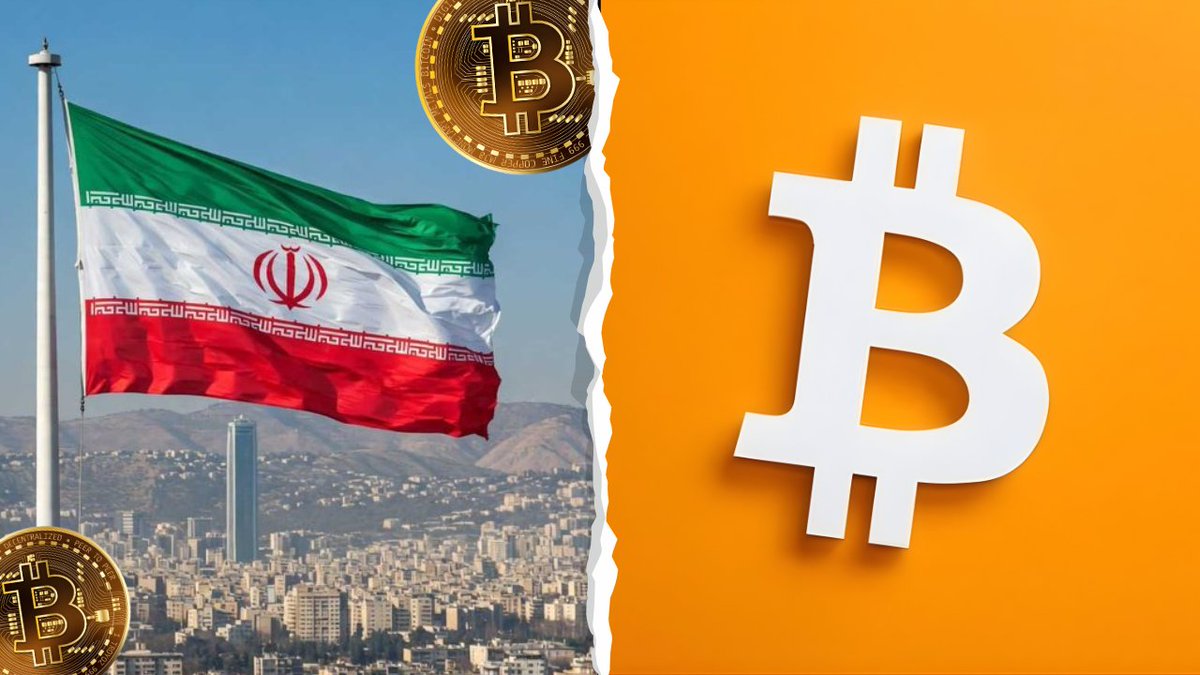



Three things happened on April 8, 2026. The United States and Iran announced a two-week ceasefire. The Financial Times reported that Iran’s IRGC is charging oil tankers approximately one dollar per barrel in cryptocurrency to transit the Strait of Hormuz, with Bitcoin explicitly preferred for its non-freezable properties. And Treasury Secretary Scott Bessent released the GENIUS Act’s proposed stablecoin rules, requiring all permitted stablecoin issuers to run full sanctions compliance programs with the ability to “block, freeze, and reject” illicit transactions. The ceasefire, the toll, and the regulation landed on the same day. This is not coincidence. This is the opening salvo of a financial war that will outlast the kinetic one. Bessent’s GENIUS Act is a precisely calibrated weapon. It treats stablecoin issuers as financial institutions under the Bank Secrecy Act. It mandates that Tether, Circle, and every permitted issuer must screen transactions against OFAC sanctions lists and freeze wallets linked to designated entities. The IRGC has already lost $3.3 billion in frozen USDT through exactly this mechanism. Tether blacklisted $182 million in IRGC-linked wallets in a single enforcement action. The sword is real and it cuts. But it cuts only stablecoins. And the IRGC knows this. The Hormuz toll system, operational since mid-March and codified by Iran’s parliament on March 30, explicitly promotes Bitcoin over stablecoins for one structural reason: Bitcoin has no issuer. There is no company to serve with a subpoena. There is no compliance officer to pressure. There is no “block, freeze, and reject” button. When a laden tanker emails its cargo manifest to the IRGC intermediary, receives a quote in BTC equivalent, and transfers the exact amount to a fresh wallet within seconds, the transaction settles on a network that no Treasury secretary on earth can reverse. The GENIUS Act gave Bessent the sword. The IRGC chose the asset without a throat to cut. This is the regulatory paradox that nobody in Washington or on crypto Twitter is willing to state plainly. The tighter Bessent makes stablecoin compliance, the more he validates the IRGC’s preference for Bitcoin. Every USDT wallet frozen is another data point proving to Tehran that stablecoins are controllable and Bitcoin is not. The regulation designed to stop sanctions evasion is actively teaching the adversary which rail to use. The GENIUS Act does not close the door. It labels which doors are locked and which one remains open. TRM Labs confirmed on April 9 that the IRGC received over $3 billion in crypto inflows in 2025, roughly half of Iran’s entire $7.78 billion ecosystem. Chainalysis confirmed IRGC-linked addresses dominated Q4 2025. The Qeshm Island conversion window, operational since mid-March, routes toll receipts from crypto to rials without touching SWIFT. The infrastructure is not theoretical. It is built, tested, and running. What it lacks is volume, because Hormuz traffic remains below ten percent of its pre-war average, with only a handful of vessels transiting daily and no major oil tankers confirmed as having paid. But here is what the volume skeptics are missing. The system does not need to process twenty million barrels a day to matter. It needs to exist. Its existence is the proof of concept. The moment one verified transaction clears a BTC toll at the world’s most important energy chokepoint, it establishes a precedent that cannot be unestablished: that a sanctioned nation-state can extract sovereign revenue in a currency no government can freeze, at a chokepoint no navy has yet reopened, converting military control into monetary infrastructure in real time. Bessent’s sword is sharp. The IRGC built the maze. And on April 8, they showed the world both at the same time. open.substack.com/pub/shanakaans…

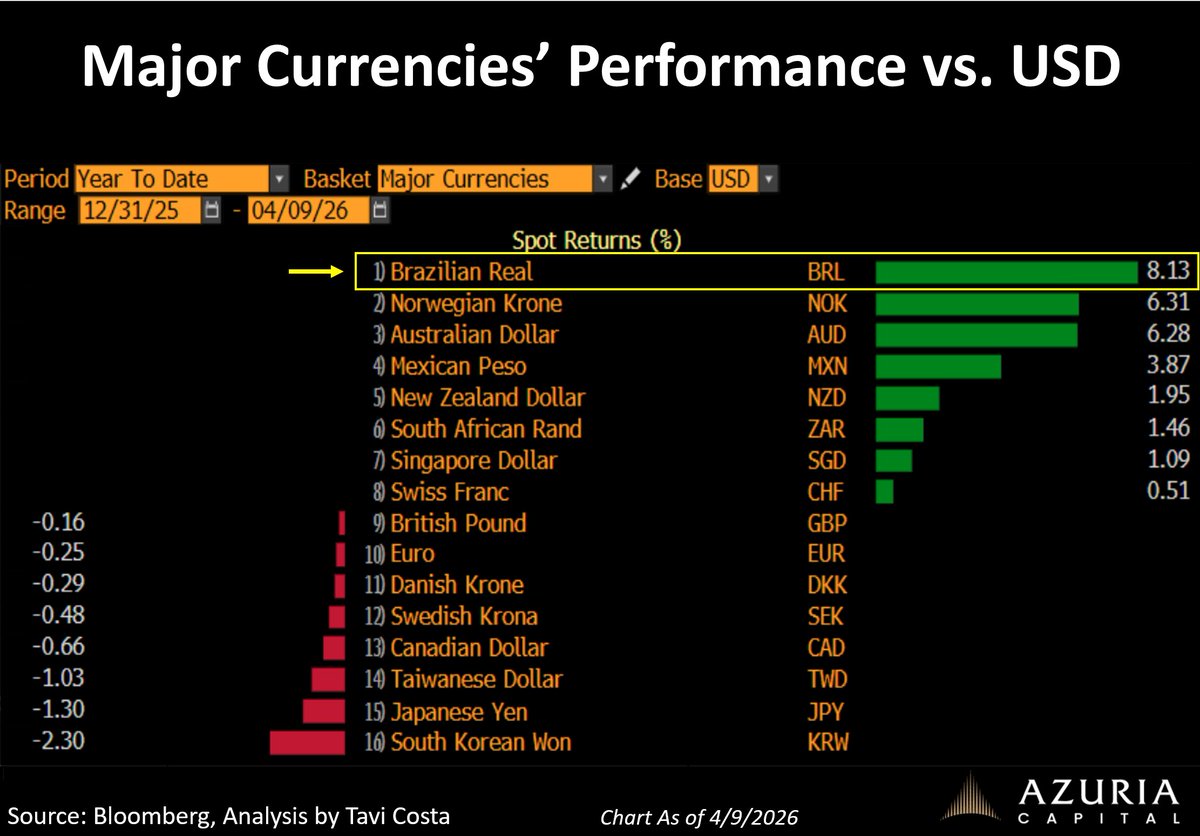


Agricultural commodities continue to move. Don’t underestimate the impact of this shift. It’s arguably even more important than what we’ve seen in energy prices. @tavicosta/p-192156572" target="_blank" rel="nofollow noopener">substack.com/@tavicosta/p-1…


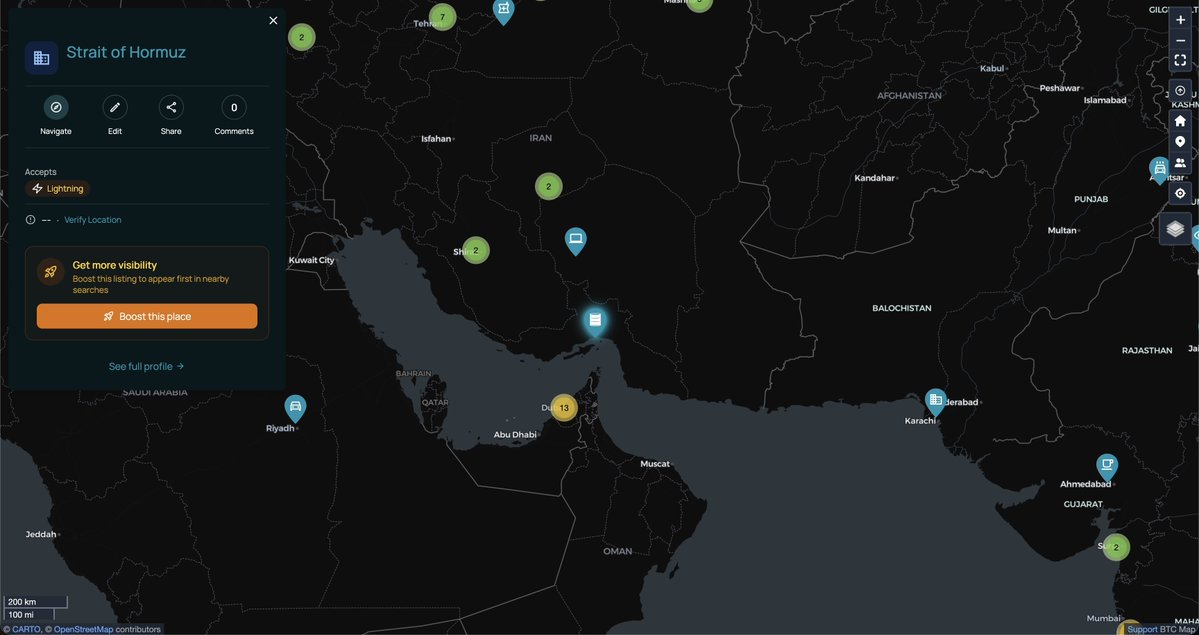
JUST IN: 🇮🇷 Iran to require ships passing through the Strait of Hormuz to pay tolls in Bitcoin, FT reports.

Dr. Anton Dahbura is taking the stage at the SovAI Summit. An IEEE Fellow and Co-Director of the Johns Hopkins Institute for Assured Autonomy, Dr. Dahbura sits at the frontier of a critical geopolitical reality: as AI becomes the backbone of nations, it must be as secure as it is powerful. At the National Palace, he will dive into The Future of Assured Autonomy & Sovereign Technology, showing how high-integrity infrastructure serves as the ultimate launchpad for national innovation. Join us for a masterclass in the future of technology. 🇸🇻 🔗 Link in bio for tickets.
𝐓𝐔𝐑𝐈𝐒𝐌𝐎 (Datos) El aporte del rubro turismo a la economía del país ronda entre el 9-10% del PIB (incluso hasta 14% en algunas estimaciones recientes). En el 2025, generó más de $3.600 millones en divisas (un 7% más que 2024), con proyecciones de superar los $3.700 millones en 2026. Durante Semana Santa, el impacto se traduce en: • Ingresos directos por alojamiento, alimentación, transporte, artesanías y servicios. • Efecto multiplicador: Cada dólar gastado por un turista impulsa sectores relacionados (proveedores locales, comercio, etc.). • Generación de empleo temporal y permanente (el sector ya emplea decenas de miles, con crecimiento en micro y pequeñas empresas). ‼️ 2 millones de visitantes en el 2026 (760 mil, Centro Histórico) y (628 mil, playas públicas)