Alex

207 posts

Alex banner
Alex

Alex

@RealAlex98

Agent Memory + Ontology - also liking Quantum

London Inscrit le Kasım 2022
169 Abonnements10 Abonnés
Alex retweeté
Packy McCormick
Packy McCormick@packyM·
There is a tremendous amount of progress happening in World Models. Multiple labs have raised more than $1B. WMs were the star of GTC. They are a real path to embodied AI. So @PimDeWitte & I wrote a comprehensive 19k word overview of World Models. notboring.co/p/world-models
English
40
95
730
269.5K
Alex retweeté
Sawyer Merritt
Sawyer Merritt@SawyerMerritt·
NEWS: Boston Dynamics has just released a new video of its upgraded next-generation humanoid robot called Atlas. • 4 hour battery. Self-swappable for continuous operation • 6 feet 2 inches tall • Weight: 198 lbs • 56 total degrees of freedom • Now fully electric, ditching older hydraulic systems • New lightweight mix of aluminum and titanium components • 110 lbs weight capacity (66 lbs sustained) • Can reach up to 7.5 ft • Constantly evaluates its surroundings and adjusts its posture, balance, and grip in real time • Hands that can reconfigure as needed. Tactile sensors feed data back into the system, helping apply the right amount of force • Brain is powered by Nvidia chips
English
989
3.1K
20.8K
2.4M
Alex retweeté
karma
karma@karma44921039·
🚨 WATCH: Ex-Google CEO's BANNED Interview LEAKED: "You Have No Idea What's Coming" Ex-Google CEO Eric Schmidt recently made headlines with some controversial comments about AI during an interview conduced at Stanford University. This interview was taken down at his request
English
194
3.2K
9.8K
1.1M
Alex retweeté
Jaynit
Jaynit@jaynitx·
Peter Thiel literally gave a 17-minute masterclass on Zero to One blueprint to escape competition and build a monopoly:
English
57
1.1K
5.8K
354.7K
Alex retweeté
a16z
a16z@a16z·
At fintech's peak, 25% of venture dollars went into the category. In the second half of 2022, that number dropped to almost zero. And now, fintech is building momentum again as AI makes new software solutions possible. Plaid CEO Zach Perret joined a16z's David Haber and Erik Torenberg to cover the wild story of fintech's ups and downs and where the industry is headed, including: - How fintech startups went mainstream - Why AI has caused a significant increase in financial fraud, and how companies like Plaid are building safeguards - How fintech has solved the "access problem," so that many more people can use excellent financial services products - How Plaid uses big data to deliver financial freedom for consumers 00:00 Introduction 01:10 A recent history of fintech 04:43 VC surge and fintech summer 08:25 Solving the access problem 10:41 Is crypto fintech? 13:51 Plaid's evolution and industry impact 17:26 Consumer behavior and adoption 21:48 Global fintech expansion 27:43 2026 predictions: AI and fraud 40:26 Emerging trends in fintech 43:34 Plaid's anti-fraud and credit innovations @zachperret @dhaber @eriktorenberg @Plaid
English
24
13
132
46.4K
Alex retweeté
The Kobeissi Letter
The Kobeissi Letter@KobeissiLetter·
This is BEYOND insane: AI compute demand is now growing at over 2 TIMES the rate of Moore’s Law, creating a massive shortage. Just to meet current demand, $500 billion must be invested in data centers PER YEAR until 2030. What does this mean? Let us explain. (a thread)
The Kobeissi Letter tweet media
English
354
1.3K
6.9K
2.7M
Alex retweeté
Nathan Benaich
Nathan Benaich@nathanbenaich·
🪩The one and only @stateofai 2025 is live! 🪩 It’s been a monumental 12 months for AI. Our 8th annual report is the most comprehensive it's ever been, covering what you *need* to know about research, industry, politics, safety and our new usage data. My highlight reel:
English
61
319
1K
507.3K
Alex retweeté
Simon Willison
Simon Willison@simonw·
This is fantastic: ChatGPT just shipped the exact memory feature I've always wanted - automatic memory that's scoped to a specific project simonwillison.net/2025/Aug/22/pr…
Tibor Blaho@btibor91

ChatGPT now supports Project-only memory where ChatGPT can use other conversations in that project for additional context but won't use saved memories from outside the project #h_fb3ac52750" target="_blank" rel="nofollow noopener">help.openai.com/en/articles/68…

English
34
73
1.1K
107.7K
Alex retweeté
Alex Vacca
Alex Vacca@itsalexvacca·
Meta, Google, and Microsoft all use encryption built by the same 50-person nonprofit. Zero revenue from 2 billion users. The founder uses a fake name. And when the FBI subpoenaed them, they only provided 2 pieces of data. Here's how a non-profit secures the internet🧵
English
144
1.4K
12.7K
1.8M
Andrew Yeung
Andrew Yeung@andruyeung·
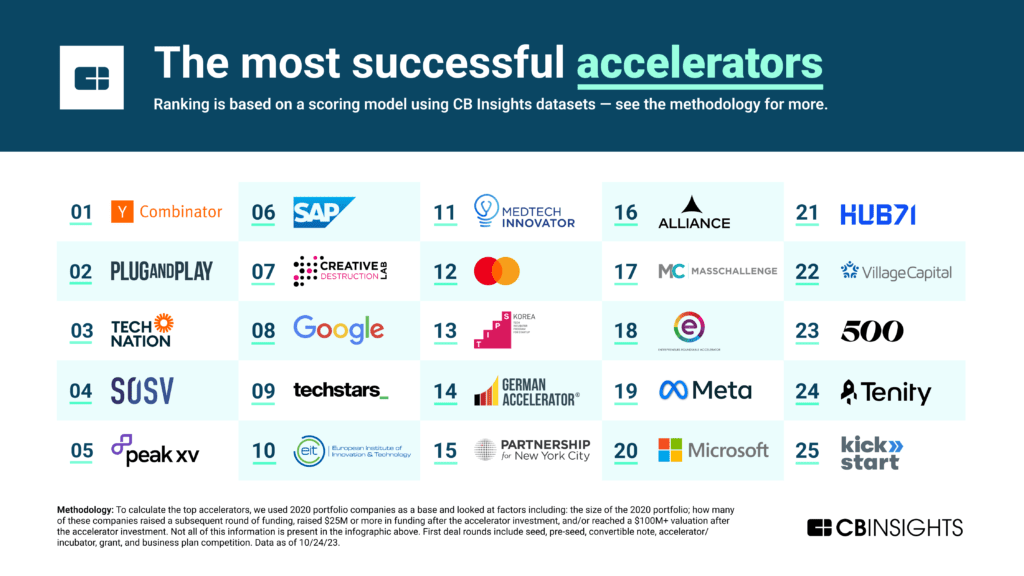
What are the best accelerator programs for pre-seed / seed stage startups?
English
90
6
133
80.5K
Alex
Alex@RealAlex98·
@pronounced_kyle Great research and fact-checking! Appreciate the breakdown of actuals on the article’s core ‘facts’.
English
0
0
0
21
Christian Keil
Christian Keil@pronounced_kyle·
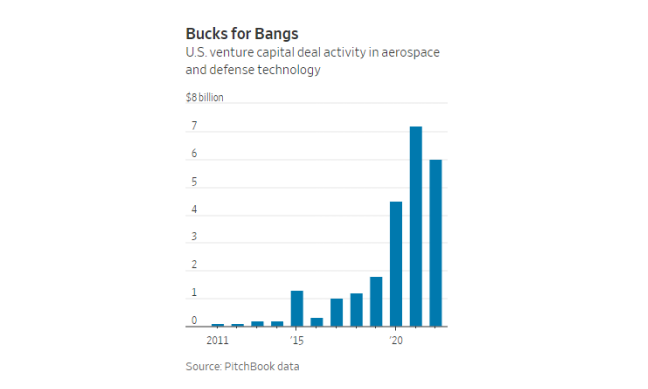
Alright I've got a bone to pick with this WSJ article. I thought it seemed too pessimistic to be true, so I dug in — and I was right. The article is factually inaccurate. -- The article's core "facts": ‣ "Venture-backed companies were awarded less than 1% of the $411 billion Defense Department contracts [last year]." ‣ "Venture capitalists have poured more than $100 billion into U.S. defense-technology startups since 2021." That results in a negative frame: only 1% ($4 billion) of the budget, returning only 4% of invested capital. But: ‣ They link their source for the "$100 billion investment" stat and it is far less than that... their own source says it's ~$20B, not $100B. ‣ Turns out the $100B number includes defense primes like Boeing, Raytheon, etc. (!!!) ‣ That's obviously just a mistake on their part — their argument is that startups are providing a poor return on capital while Boeing & Raytheon get all the contracts... so by including the big guys in the denominator but not the numerator, they're vastly overstating the "lack" of return on capital. ‣ Conclusion: based on their own sources, their core argument is 5x less compelling than the article claims. -- But it gets worse, because the article is also asking you to judge a defense startup by its first 1-3 years of revenue. As anyone in defense tech knows, that is... hard. Defense budgets are planned years in advance. And even if the DoD loves you, they only dedicate so much money to new R&D programs — about 1/2. The other half is for "procurement," which means "buying another unit of something we've already bought." It's even hard to get a true RDT&E contract in 3 years... but still: there's another 2x narrative multiplier for you. -- In the end, we have, based on their own sources: ‣ $20B invested ‣ Addressing a total pie, today, of ~$120B (3% of total RDT&E) ‣ $4B YEARLY revenue, so ~$12B revenue vs. that $20B invested over three years ‣ ...which is up 2x (from $2B yearly revenue) in 2017 Not too shabby. Certainly not alarming enough to claim the Pentagon "isn't betting on defense startups." They are. And they will invest much more in defense startups very soon, if the trends continue.
Christian Keil tweet mediaChristian Keil tweet mediaChristian Keil tweet media
English
10
19
166
31.8K