Tavrix retweeté
Tavrix
4.9K posts


Tavrix
@tavrix
Crypto trader | Share real plays before they go viral.
My channel Inscrit le Ocak 2024
27 Abonnements2.7K Abonnés
Tavrix retweeté

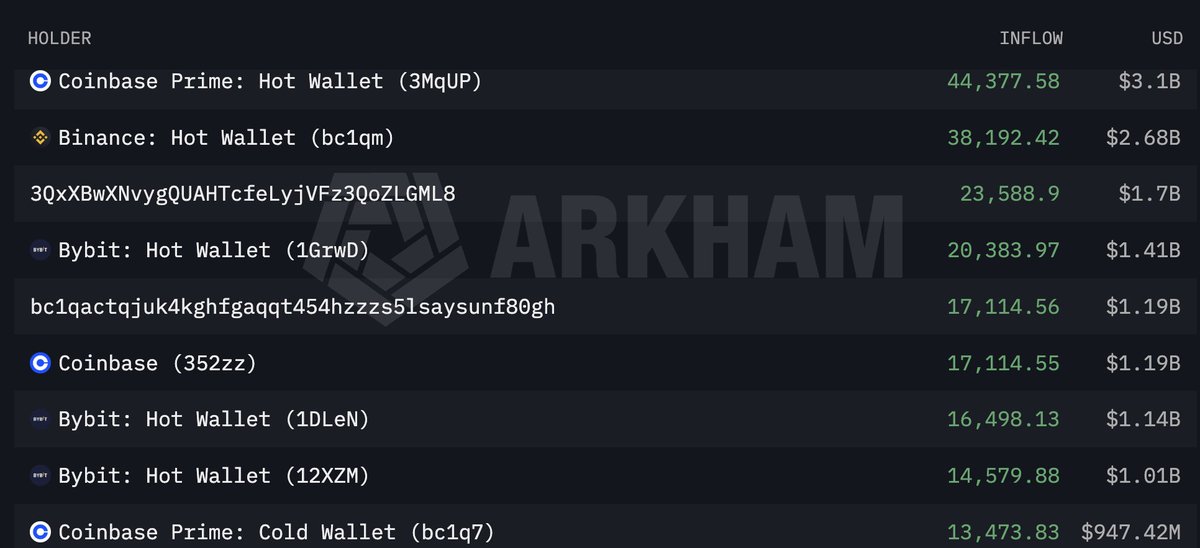
IMAGINE HOW THIS GUY FEELS RIGHT NOW
BRO DEFINITELY WAKES UP AT 3AM SOMETIMES REMEMBERING HE SOLD HUNDREDS OF $BTC FOR $9
RIP 🪦
Jack.poor 🇦🇲@RealJackPoor
I'm never going to financially recover from this
English
Tavrix retweeté
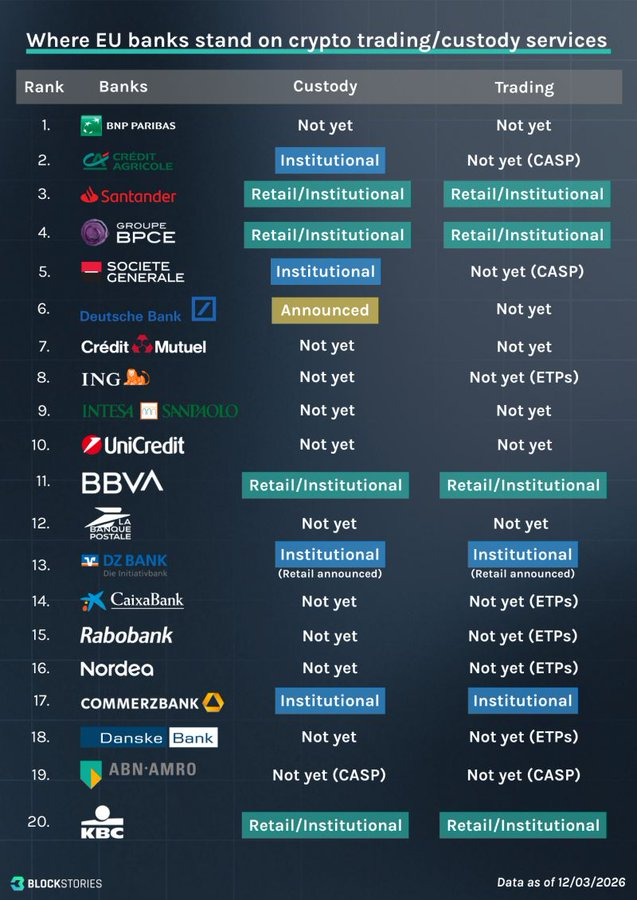
💶 BIG CHANGE IN EUROPE’S BANKING SECTOR:
Around 20 major European banks are moving into crypto.
New EU regulation (MiCA) finally gave banks a clear framework, while customer demand for crypto never really slowed down.
Money kept flowing to exchanges, so banks had to adjust.
Just a few years ago, in 2022, many banks were blocking crypto purchases.
Now, in 2026, those same institutions are preparing to offer crypto directly to retail clients.
The shift from resistance to adoption is happening faster than most expected.
The real expansion phase may just be beginning.
English
Tavrix retweeté

Tavrix retweeté
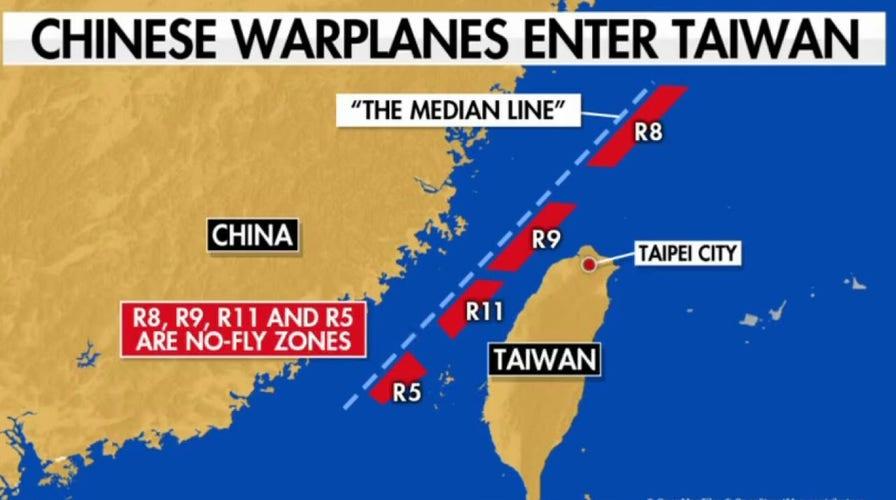
🚨 WHILE THE WORLD WATCHES IRAN, CHINA JUST ESCALATED PRESSURE NEAR TAIWAN
For years, Chinese military aircraft have regularly appeared around Taiwan.
Jets and drones entering the surrounding air defense zone had become routine.
Then the pattern suddenly broke.
On February 27, the activity stopped.
That was exactly one day before the Iran war began.
For more than a week, Taiwan reported no Chinese military aircraft in the area.
Then two aircraft briefly appeared.
Then the skies went quiet again.
Now the activity has returned.
Today, Taiwan’s defense ministry reported 26 Chinese military aircraft detected near the Taiwan Strait within a 24-hour period.
The question analysts are asking is straightforward.
Why did the flights disappear, and why are they showing up again now?
Several explanations are circulating among observers.
One possibility involves diplomacy. Beijing may have wanted to present a calmer posture ahead of a potential Trump-Xi meeting expected later in March.
Another explanation comes from inside China’s military.
The government’s ongoing anti-corruption investigations have already removed several senior officers, which can temporarily disrupt operations and command chains.
There is also a strategic angle.
With the United States concentrating on the conflict with Iran, China may have decided not to open another front of tension at the same time.
Or the pause may have provided time to quietly reposition military assets while the world’s attention remained focused on the Middle East.
The sequence of events stands out.
Chinese aircraft stopped appearing the day before the Iran conflict began.
Now the flights are reappearing after reports that Chinese satellite intelligence was shared with Iran regarding US military positions.
That alone does not prove coordination between the events.
But it inevitably raises new questions.
Military signaling rarely changes without a reason.
When patterns like this pause and then restart, it usually reflects a shift in strategy.
And when Taiwan, the United States, Iran, and China intersect within the same geopolitical window, the implications reach far beyond the region.
The next signals from Beijing and Washington will reveal whether this was simply a pause or something more deliberate.
Follow me if you want clear updates as this situation develops.
English
Tavrix retweeté
Tavrix retweeté
Tavrix retweeté
BITCOIN ENTRY SIGNAL THAT HAS REMAINED RELIABLE SINCE 2014:
- Consider buying when the price pulls back to the 100 EMA.
- Manage exposure if the price drops below the WMA14.
Right now, $BTC is approaching this key trend level once again.
- Above $70K: bullish confirmation.
- Below $65K: likely the last shakeout before a larger move.
Often the most straightforward signals carry the most weight.
This setup has just triggered again.

English
Tavrix retweeté
Tavrix retweeté

Tavrix retweeté
🚨 NOBODY IS SAYING THIS…
$100+ OIL WILL STALL CHINA’S GROWTH.
Everyone thinks China is calling for a ceasefire because it suddenly wants peace.
That’s the story being repeated across media and diplomatic circles.
But the real reason is much simpler.
China cannot afford expensive oil.
China is the largest oil importer in the world.
Every day the country imports roughly 11–12 million barrels of crude.
That energy powers the factories, shipping networks, steel mills, chemical plants, and construction that drive China’s entire economy.
Cheap energy isn’t just helpful for growth.
It’s the foundation of the system.
Now think about what happens when instability hits one of the most important oil routes on Earth, the Strait of Hormuz.
About 20% of global oil supply moves through that passage.
If tensions around Iran escalate, the first impact usually isn’t oil suddenly disappearing.
The first impact is risk.
Insurance costs for tankers jump.
Shipping companies slow routes or change them.
Energy traders rush to secure supply.
Markets begin pricing in disruption.
That’s how $85 oil becomes $100 oil.
And how $100 oil can quickly turn into $120.
For China, that’s not just inconvenient.
It’s dangerous.
China’s export economy runs on thin margins.
The country competes globally by producing massive volumes of goods at low cost.
Energy sits inside every part of that system.
From raw materials
to factory production
to container ships moving products around the world.
When oil prices rise, the entire chain becomes more expensive.
Factories lose margin.
Exports become less competitive.
Growth slows.
And this is happening while China’s economy is already under pressure.
The property sector, once one of the biggest engines of growth, is still struggling.
Developers are buried in debt.
Housing demand has cooled.
Local governments that relied on land sales are now facing serious revenue problems.
At the same time, consumer demand inside China remains weak.
Confidence hasn’t fully recovered.
Youth unemployment is still extremely high.
Local government debt continues to grow in the background.
In other words, the economy is already dealing with several major problems.
Now add an energy shock.
Higher oil prices raise transportation costs, manufacturing costs, and electricity costs.
Those pressures move through supply chains.
Company profits shrink.
Economic growth slows.
This is the part many people miss when looking at China’s calls for a ceasefire.
Beijing isn’t just talking about peace.
Beijing is trying to prevent an oil shock.
China needs stable energy prices.
It needs oil to stay affordable.
And it does not want a conflict that pushes crude into sustained triple-digit territory.
Because if oil stays high long enough
it doesn’t just hurt China’s economy.
It risks stalling the recovery Beijing is trying to rebuild.
Most people will only understand this after the consequences show up in the data.
Many people will wish they followed me sooner.

English
Tavrix retweeté
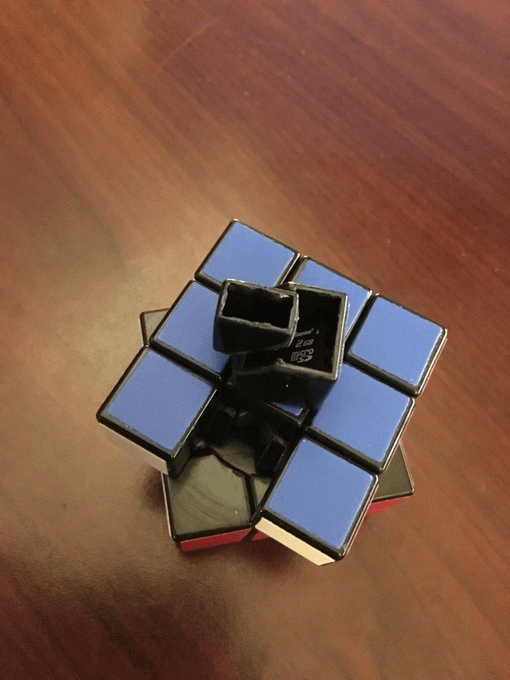
ONE INSIDER
ONE THUMB DRIVE
DATA ON 300 MILLION AMERICANS
The alleged leak involves a former D.O.G.E. employee who reportedly stole databases containing personal data, including Social Security numbers.
Another reminder of how vulnerable massive data systems can be.
English
Tavrix retweeté
🚨 THE U.S. JUST REMOVED THE BIGGEST BARRIER HOLDING CRYPTO BACK
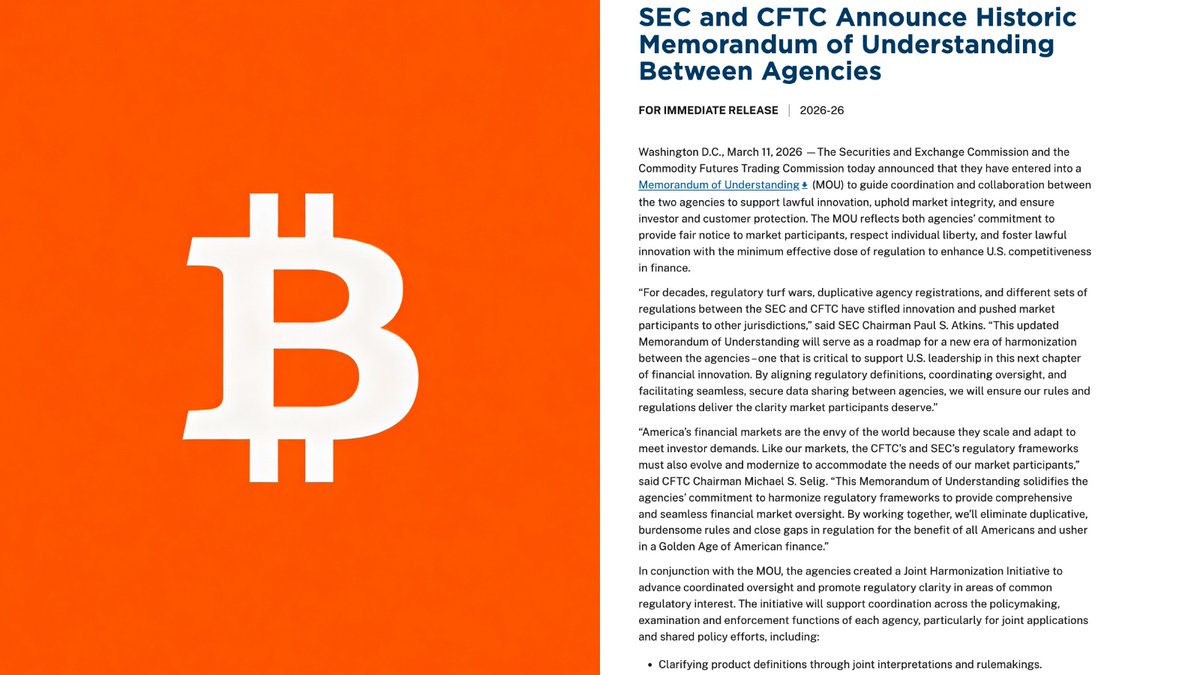
The SEC and CFTC have just signed a Memorandum of Understanding to coordinate crypto regulation, and this quietly addresses one of the biggest structural problems that has held the industry back for years.
For more than a decade, crypto has existed in regulatory limbo.
Two powerful U.S. regulators were claiming authority over the same market while applying completely different frameworks.
The SEC argued that many tokens are securities, while the CFTC viewed much of the market as commodities.
For companies and exchanges, this created an impossible situation.
A platform could attempt to follow one regulator’s guidance and still face enforcement from the other.
For institutions managing billions of dollars, that level of legal uncertainty makes the entire asset class difficult to invest in.
That’s the real reason trillions in institutional capital have stayed on the sidelines.
Large financial institutions don’t avoid crypto because of volatility.
Every market has volatility, and professional investors know how to manage it.
What they cannot manage is regulatory uncertainty.
Pension funds, insurance companies, banks, and sovereign wealth funds operate under strict legal mandates.
If regulators themselves disagree on how an asset should be classified, those institutions simply cannot allocate capital to it.
So capital waits.
The new SEC–CFTC agreement is designed to reduce that uncertainty by coordinating how both agencies approach digital assets.
The framework includes:
• Regular meetings to discuss emerging crypto regulatory issues
• Real-time sharing of market data and incident reports
• Cross-market surveillance of trading activity
• Joint examinations and investigations
• Cross-training staff on each agency’s jurisdiction
• Coordinated enforcement to avoid conflicting rulings
In simple terms, regulators that spent years competing for authority are beginning to align their oversight.
Regulatory clarity is one of the main prerequisites for institutional participation.
When rules become predictable, capital can move with confidence.
When they remain unclear, large investors stay out.
That is why institutional players have repeated the same message for years: the market needs a defined framework before serious allocations can happen.
Many people in crypto instinctively see regulation as a threat.
But large financial markets require structure.
Institutions managing pensions, insurance reserves, and national savings cannot participate in environments where the rules are undefined.
Clarity is what makes large-scale participation possible.
This agreement also arrives at a time when U.S. lawmakers are working on crypto market structure legislation and stablecoins are expanding rapidly across payments and settlement systems.
Piece by piece, the infrastructure for institutional participation is being built.
None of this guarantees immediate price moves.
Stronger coordination will likely increase enforcement against fraudulent projects and non-compliant platforms, and parts of the industry may struggle under stricter standards.
But structurally, this is how markets mature.
For the first time in years, the two primary U.S. regulators responsible for digital assets are formally coordinating their approach instead of competing for control.
And when regulatory clarity improves, capital historically follows.
If you want more clear breakdowns of crypto, macro trends, and market structure like this, follow me.
English
Tavrix retweeté
🚨 NOBODY IS TALKING ABOUT THIS OIL SHOCK
But markets will feel it.
If you hold Bitcoin, crypto, or stocks, you need to understand what is happening right now.
This is not just another geopolitical headline.
Oil shocks have a history of breaking financial markets.
Let me explain:
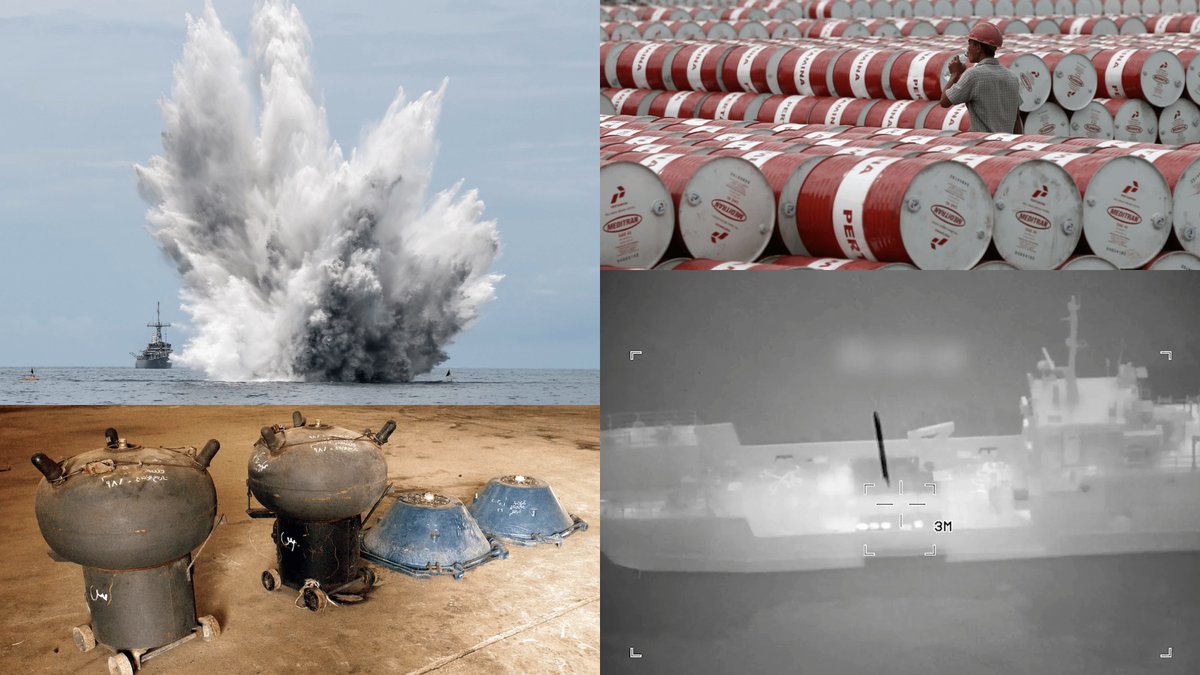
US officials say Iran has laid sea mines in the Strait of Hormuz, the narrow waterway responsible for moving roughly 20% of the world’s oil supply.
That might sound like a distant military story, but financially it is one of the most sensitive choke points on Earth.
The Strait of Hormuz is about 21 miles wide, but the actual shipping lanes used by oil tankers are only about 2 miles wide.
Almost all tanker traffic is forced through that tiny corridor.
Now imagine what happens if mines appear there.
Iran reportedly has more than 5,000 naval mines ready to deploy.
It does not take thousands to disrupt global energy markets.
Even a few hundred placed inside the shipping lanes could make the route too dangerous for tankers.
And markets do not wait for mines to explode.
They price the risk immediately.
Insurance rates for oil tankers spike.
Shipping companies hesitate to enter the area.
Some vessels reroute while others delay shipments completely.
Suddenly one fifth of global oil supply is at risk.
When traders see that kind of threat, oil prices can move extremely fast.
Analysts already warn crude could surge toward $150 to $200 per barrel if the Strait becomes unsafe.
That is where the real economic pressure begins.
Energy sits at the core of the global economy.
When oil jumps sharply, transportation becomes more expensive, manufacturing costs rise, and food prices follow.
Inflation pressures return and central banks are forced to keep policy tighter for longer.
Risk assets usually suffer in that environment.
Stocks weaken.
Liquidity tightens.
Speculative markets feel the pressure first.
Now here is the part most people miss.
Markets do not need the worst case scenario to happen.
They only need investors to believe it might.
If traders begin to think the Strait of Hormuz is becoming too dangerous to use, the fear alone can trigger massive volatility across global markets.
I spend hours every day tracking these macro signals before they hit the headlines.
My early followers always win.
English
Tavrix retweeté
Tavrix retweeté
🚨 THIS IS VERY, VERY BAD
Europe’s industrial economy just sent a major warning signal.
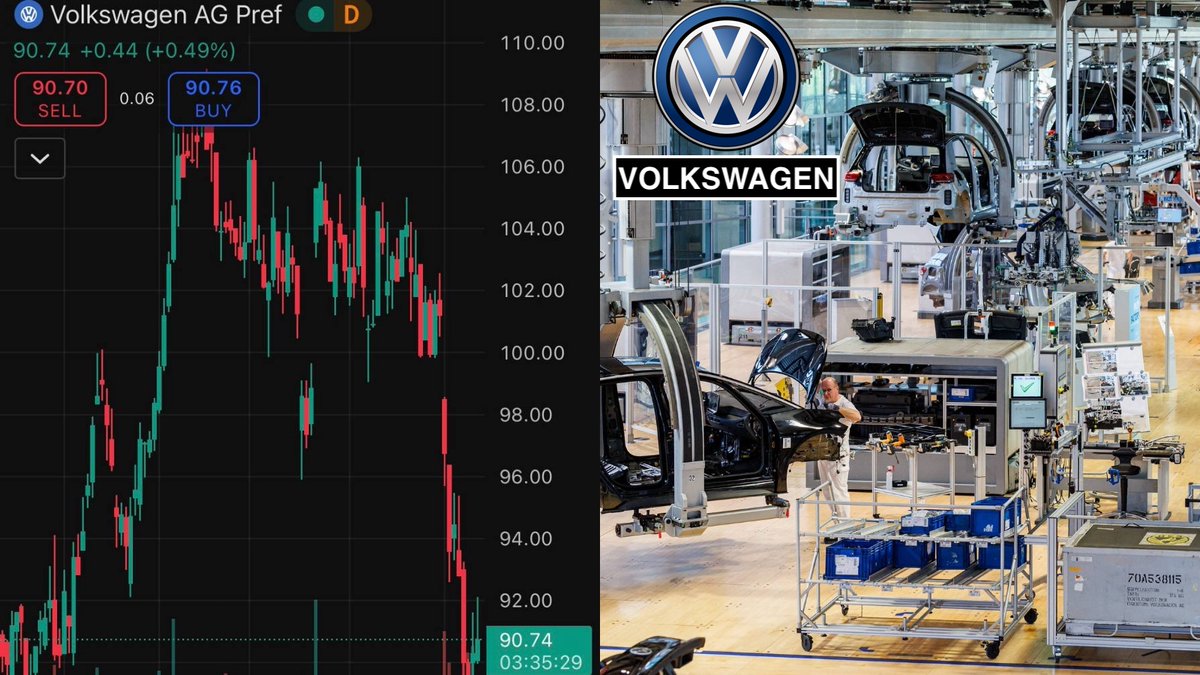
Europe’s largest carmaker, VOLKSWAGEN, just announced it will cut 50,000 jobs after profits crashed to their lowest level in a decade.
Last year alone, Volkswagen’s profits fell 44%.
That’s not a slowdown.
That’s a structural break.
And the pressure is coming from three directions at the same time:
– China: Local EV giants like BYD are beating Volkswagen on both price and technology. Sales in VW’s biggest market are collapsing.
– U.S. Tariffs: Trump’s 25% tariffs on imported cars are costing VW nearly €3 billion per year, making German exports to America barely viable.
– Energy Costs: Electricity and labor in Germany have become so expensive that Volkswagen is shutting down its first German factory in history because producing cars there no longer makes economic sense.
And when a company like Volkswagen starts struggling,
it usually means the entire industrial model is under pressure.
Now Volkswagen plans to eliminate 17% of its German workforce by 2030 just to avoid a full financial collapse.
THE PART MOST PEOPLE MISS:
Volkswagen isn’t just another company.
It’s the backbone of Germany’s industrial economy.
I’m not saying this will trigger an immediate crisis.
But short term? Expect serious volatility across European industry.
Long term? This is exactly where massive economic shifts begin.
Many people will wish they followed me sooner.
English
Tavrix retweeté
Tavrix retweeté
Tavrix retweeté
Tavrix retweeté