Our plugin ecosystem keeps thriving and growing!
Many features are now being shipped by independent plugin authors.
With all this momentum, what is still missing? Which plugin do you want to see built next?
Apple co-founder Steve Wozniak uses custom $2 bill.
He buys uncut sheets of $2 bills from the Bureau of Engraving and Printing, has them bound into pads with perforations by a local printer, and then adds his initials ("WOZ") with a stamp.
For my first post on X, I want to thanks @r0ckstardev for convincing me to join! 💚
Just launched my @BtcpayServer plugin, an uptime monitor to track the availability of your websites & servers directly from your BTCPay instance.
Feel free to test it : plugin-builder.btcpayserver.org/public/plugins…
Programming Lightning: Intro to Payment Channels is now available in Python, with a brand new fully interactive learning platform!
- Code Lightning transactions in a browser-based editor
- Earn sats for completing checkpoints (yes, I pay you to learn)
- Generate & broadcast real funding transactions using built-in Bitcoin node
- Knowledge checks at every step
- Oh and it's free, if you like to save money
Watch the promo below (sound on!)
Want to contribute to Bitcoin, but don't know where to start?
We built contribute.btcpayserver.org 💚
Step by step guidelines and good first tasks to tackle, across our entire organization of 70+ repositories.
Start building your Bitcoin career today!
Life is fucking electric bro. Don’t fall for the doomer shit. Thats for losers and normies scared of their own shadows. Walk around like God sent you and smile at everyone you see. Spread light and abundance. Build things and take chances. This is the best time in history!
Today, we're introducing Spectre I, the first smart device to stop unwanted audio recordings.
We live in a world of always-on listening devices.
Smart devices and AI dominate our world in business and private conversations.
With Deveillance, you will @be_inaudible.
Neil Postman, writing and speaking before his passing in 2003, identified what he regarded as modernity's greatest crime: the systematic destruction of childhood.
He observed that society had begun raising not children, but miniature consumers—children whose natural imagination was being steadily replaced by external stimuli. Noisy, pre-programmed plastic toys that captivated briefly then bored them. Screens that offered constant engagement but left no room for inner invention. Overprotective adults who supervised every step, preventing children from building unsupervised worlds of their own.
The consequence, Postman warned, was profound: a generation arriving at adolescence with almost no internal resources, dependent on outside excitement, and then rebelling—often destructively—as they belatedly tried to create the autonomy and meaning that should have been nurtured much earlier.
He emphasized that childhood was never merely a biological phase; it was a cultural achievement—one that consumer culture and accelerating media saturation were actively dismantling.
His call, delivered decades ago, was both simple and radical: reclaim childhood. Protect the slow unfolding of imagination. Reduce the flood of ready-made stimulation. Allow children space to daydream, explore, fail, and invent without constant adult oversight or digital pacification.
Looking back from 2026, many now reflect that Postman foresaw—with unsettling precision—the trajectory we would follow. The average screen time of young children has only increased, unstructured play has continued to decline, and the mental health challenges among adolescents have grown more visible.
Yet his diagnosis still resonates because it points to something recoverable: the possibility of choosing differently, even now.
Do you believe we have already lost too much of what he called childhood—or do you see meaningful ways, in families and communities, to still reclaim it?
Steve Jobs on how to hire the best people at your company
Absolutely timeless advice that still rings true today
> hire high agency people
> give them high agency tasks
> the job of a leader is to create common vision, not micro manage
> once you have enough great people together in a team, they tend to build groups where mediocre people cannot enter or are quickly pushed out
> the main job of a CEO is ultimately recruiting
> professional managers can manage well, but they cannot do anything incredible by themselves
> great people work for the best do-ers, not the best managers
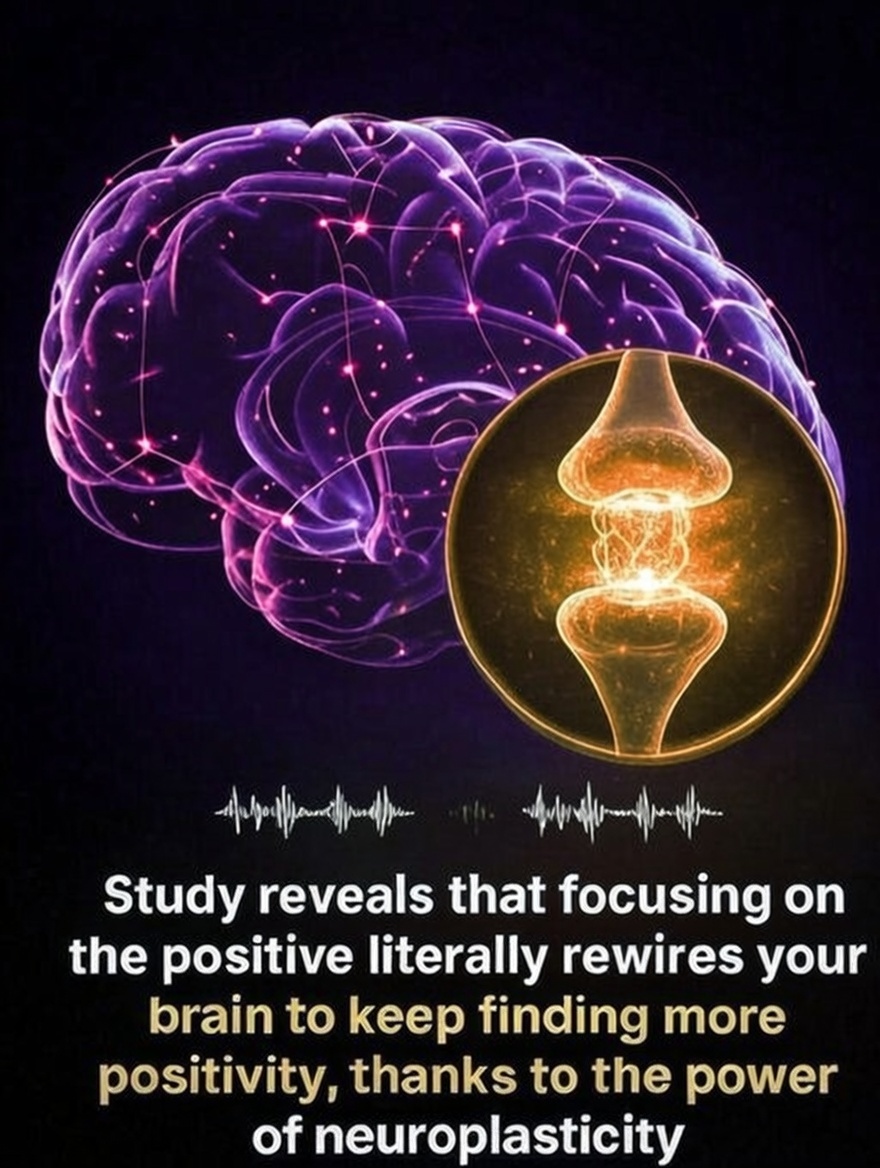
Your thoughts literally reshape your brain.What you repeatedly focus on doesn't just linger in your mind—it physically changes its structure.
By intentionally directing your attention toward the positive, you begin forging and strengthening neural pathways that make it easier to notice and appreciate more good things. This is neuroplasticity at work: your brain's lifelong ability to create new connections in response to your focus, emotions, and habits.
Every time you pause to savor a kind act, a small achievement, or a simple moment of beauty, you're reinforcing the neural circuits that help you view the world with greater clarity and calm. With consistent practice, this becomes your brain's new default—automatically tuning in to what's right rather than dwelling on what's wrong.
The payoff includes reduced stress, improved emotional stability, and stronger mental resilience against life's challenges.This isn't about denying difficulties; it's about actively training your brain to seek out opportunities and solutions instead of getting trapped by obstacles.
The exciting part? You're in control—you can start rewiring these pathways any time you choose.Give it a try: Spot one positive thing today.
Tomorrow, look for two. Soon, make it five. And then watch what happens.
this is a catastrophe. StackOverflow provided data to LLMs, LLMs replaced StackOverflow, and now no new Q&A hub exists to provide fresh data. it’s a self-undermining causal loop, like mold growing on food, consuming it, and dying once the food is gone.