Inpi me-retweet
Inpi
87.4K posts

Inpi
@Inpi
I'm a Teacher of Portuguese, learning how to use Edublogs and wikis with my young Students - while being compliant with GDPR - in our Writing Workshop.
World Bergabung Nisan 2008
5.7K Mengikuti1.9K Pengikut
Inpi me-retweet
Inpi me-retweet
Inpi me-retweet
Inpi me-retweet

Hard today — stronger tomorrow 💪✨
Max is learning to walk on a treadmill after a double leg amputation.
Step by step. Balance. Strength. Progress.
Not perfect on the first try — but that’s how wins are built.
We believe in you, Max.
Support 👇
send.monobank.ua/jar/AeyT7Ea8DV
English
Inpi me-retweet
Inpi me-retweet
Inpi me-retweet
Inpi me-retweet
Inpi me-retweet
Inpi me-retweet
Inpi me-retweet

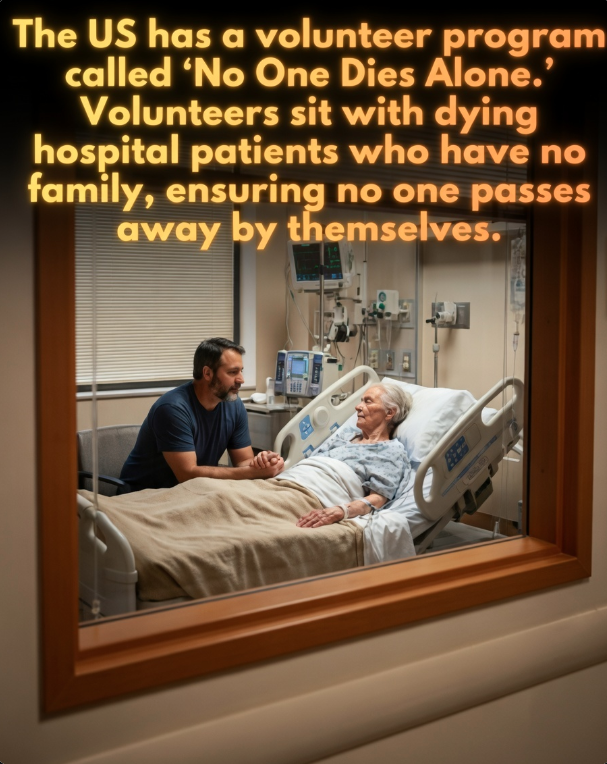
The No One Dies Alone (NODA) program brings compassionate volunteers to the bedside of dying patients who have no family or friends present, ensuring that no one passes away in isolation.
In hospitals and care facilities across the United States, many individuals reach their final moments without loved ones by their side—due to estrangement, distance, or simply having outlived their family and friends. NODA bridges this heartbreaking gap by training ordinary people to sit quietly with these patients during their last hours. Volunteers offer gentle companionship: holding a hand, reading aloud, playing soft music, or simply being present in silence, providing dignity, comfort, and the simple reassurance of another human being nearby.
What began as a single initiative in a Kentucky hospital in 2001 has grown into a widespread movement. Today, NODA programs operate in hundreds of facilities nationwide—including VA hospitals, major health systems like Eskenazi Health, hospices, and long-term care centers. Supporting organizations such as the Anne Robson Trust and the No One Should Die Alone Foundation make it accessible: volunteers typically undergo a background check, brief training on end-of-life care, and orientation to hospital protocols—no medical expertise required.
Through these efforts, NODA reaffirms a powerful truth: in our most vulnerable moments, the presence of another person is one of the deepest forms of compassion and a fundamental act of humanity. By making sure every patient experiences a dignified, accompanied transition, these programs transform end-of-life care and remind us that no one has to face death alone.

English
Inpi me-retweet
Inpi me-retweet

A series of explosive reports—led by an investigation from The Washington Post—alleged that Hungarian Foreign Minister Péter Szijjártó has been providing "minute-by-minute" updates to the Kremlin during confidential EU summits.
According to intelligence sources and diplomatic cables cited in the reports, Szijjártó maintained a direct line to Russian Foreign Minister Sergey Lavrov during high-level meetings in Brussels.
It is alleged that during breaks in sensitive discussions—particularly those concerning military aid to Ukraine and the 20th EU sanctions package—Szijjártó would call Lavrov to relay the specific bargaining positions and "red lines" of other EU member states.
These reports provide the most concrete evidence to date, suggesting that Moscow isn't just watching from the outside but has a virtual seat at the table.
The reaction from European leaders has been one of grim validation rather than shock.
Polish Prime Minister Donald Tusk remarked that the allegations were "no surprise”, admitting that he and other leaders have been "self-censoring" for months. Tusk noted that he often limits his interventions in the European Council to strictly necessary points whenever Hungarian representatives are in the room.
NATO and EU security officials have reportedly begun formalising a "tiered" information-sharing system. This effectively creates a "black box" around Hungary, where the most sensitive intelligence regarding Russian troop movements or cyber-warfare is no longer shared with Budapest.
Hungarian opposition leader Péter Magyar, head of the Tisza Party, has labeled Szijjártó a "traitor to the homeland and Europe," using the reports to argue that the Orbán government has compromised national sovereignty for the sake of Kremlin interests.
This is no longer just a policy disagreement over sanctions, it is a fundamental breakdown of trust within the EU’s security architecture.
As the bloc attempts to finalise a €90 billion loan for Ukraine, the fear is that any strategy discussed with Hungary present will be on putin’s before the meeting even adjourns.
English
Inpi me-retweet

“There was complete silence. And then suddenly, an explosion went off nearby. I turned around...but my son… he was already lying on the ground. I ran to him, but it was too late. It all happened in a matter of seconds,” said Yevheniia Dudnyk, Maksym’s mother.
Maksym was only 6. russia murdered him four years ago on 22 March 2022.
In Ukraine, just seconds separate life from death.
People have been living with this reality for more than four years. Remember that.

English
Inpi me-retweet

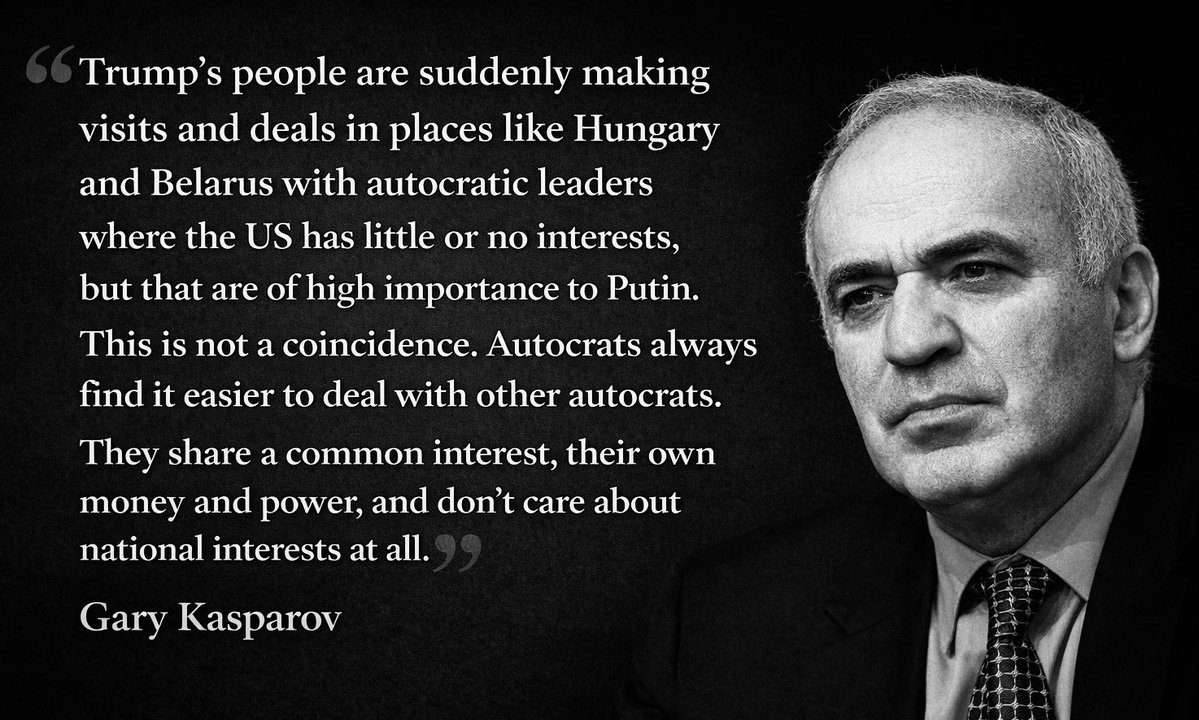
“Trump’s people are suddenly making visits and deals in places like Hungary and Belarus with autocratic leaders where the US has little or no interests, but that are of high importance to Putin. This is not a coincidence. Autocrats always find it easier to deal with other autocrats. They share a common interest, their own money and power, and don't care about national interests at all.”
Gary Kasparov

English
Inpi me-retweet

A beautiful tradition alive today!
Spring awakening on the picturesque Dnipro hills in Vytachiv, Ukraine! 🌸An ancient Ukrainian custom: girls sing vesnianky (spring songs) to call birds back from their winter lands (vyriy) and welcome the warmth of spring.
@honcharmuseum
English
Inpi me-retweet

Russia has started targeting Ukrainian passenger trains recently.
So now, in case of attack, trains stop and people get out (train cars burn down in minutes if attacked).
Passengers of the Lozova-Lviv train lit up a fire as they wait for hours for the attack to end. It's still cold during the night in Ukraine.
Anton Gerashchenko@Gerashchenko_en
This is how passenger trains have to operate in frontline regions - with a flatbed car ahead in case of mines, and drivers shielded by additional protective plates and mesh. Russia has been attacking Ukrainian trains a lot recently. 📹: tvoe_rivne / Threads
English
Inpi me-retweet

"We must attack Narva to destroy NATO and break Europe's will."
Russian state TV is making no secret of Putin's plans. They're now openly claiming that Russia is planning to attack the town of Narva on the Russian-Estonian border. Russian state propaganda convinces Russians that Europe won't respond and this attack will help them win.
The Russians said exactly the same thing before their invasion of Ukraine in 2022. Back then, we didn't believe it was serious. Now, there's no doubt that Putin will attack Europe.
English
Inpi me-retweet