
Mike Abundo がリツイート
Mike Abundo
76.4K posts


Mike Abundo
@MikeAbundoTech
Committee Chairman, @FintechPHL | Silent Lurker, #CryptoPH
Philippines 参加日 Şubat 2021
7.5K フォロー中1.2K フォロワー


Mike Abundo がリツイート

This is insane.
The Institutional Growth Lead at @CantonNetwork is either deliberately lying, or he doesn't understand how Ethereum, Solana and his own product work. Let's quickly dissect each of these claims:
1. “Canton, Solana, and Ethereum have the same permissionless properties”
This is simply false.
On Ethereum and Solana, anyone can deploy, validate (with capital), and read state. Hence, these are permissionless networks.
On Canton, participation is gated. Validator access and broader network interaction require sponsorship and approval flows, IPs, and an SV sponsor. Hence, Canton is not permissionless.
2. “Only one has the privacy required for capital markets”
False.
On Ethereum and Solana, privacy is supported via smart contracts, enabling third party verification without revealing raw data. Examples include:
- Validity proofs
- Encrypted mempools / TEEs
- App-layer privacy (@aztecnetwork-style architectures)
On Canton, what he is calling “privacy” is just access control. Canton restricts who can see the state.
It's "trust me bro" privacy.
3. “Institutions will start where liquidity is deepest and friction is lowest”
Correct in principle, and precisely why liquidity today lives on Ethereum (+ L2s) and increasingly on Solana. Canton has institutional distribution agreements, which is *not* open and composable liquidity.
4. “Only Canton can measure success in trillions”
Sure, trillions in internal ledger value, permissioned environments, and non-composable assets. You can't measure something that you can't even verify.
If you can’t verify it, you can’t integrate it, and you can’t build on top of it.
It is not onchain. It's fugazzi.
Emmett | canton.network@Emmett_
What people will eventually realize is @CantonNetwork @solana and @ethereum have the same permissionless properties but only one of them have the privacy required to support regulated capital markets. There’s no denying institutions have to live in a multi-chain world but they are going to start where liquidity is deepest and has the lowest friction from architectural design, risk and compliance standpoints. This is why Canton is accelerating. Firms realize Canton provides the distribution for capital markets scale with compliance in a simple design. Maybe one day these transparent chains will figure out privacy and be able to support capital markets scale, but as of right now, only one chain can measure success in trillions… Canton.
English
Mike Abundo がリツイート

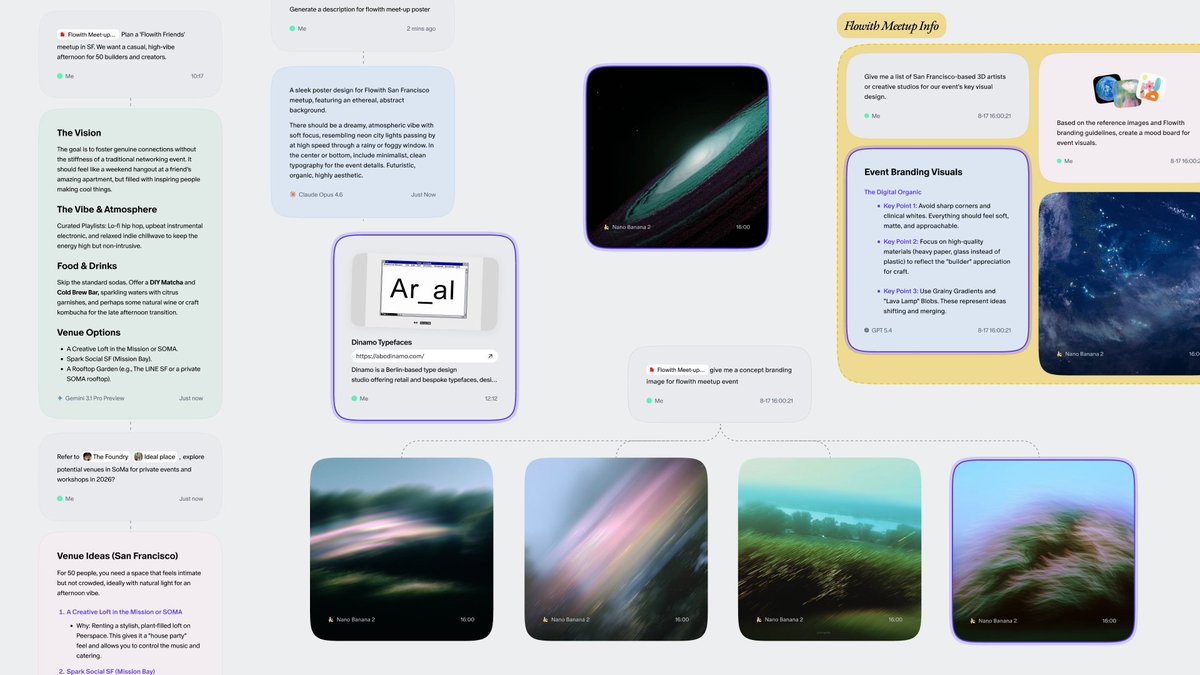
First time ever seeing humans and AI agents actually collaborating in a shared, visible workspace, with Codex and Claude Code creating on canvas at the same time.
I'm pretty sure this the world's first canvas built for agents!
Humans and machines are now becoming collaborators
The best cowork buddy to collab on your creative workflow is now the agents!

Flowith@flowith
for the first time, humans and ai agents share the same living space. Flowith Canvas has just evolved into a human-agent co-creation ecosystem: - navigate freely through your thoughts and reshape your context. - scale a single idea into multi-modal creations. - invite the agents in to co-create seamlessly. humans and agents, flow as one. watch the canvas breathe 🌊
English
Mike Abundo がリツイート

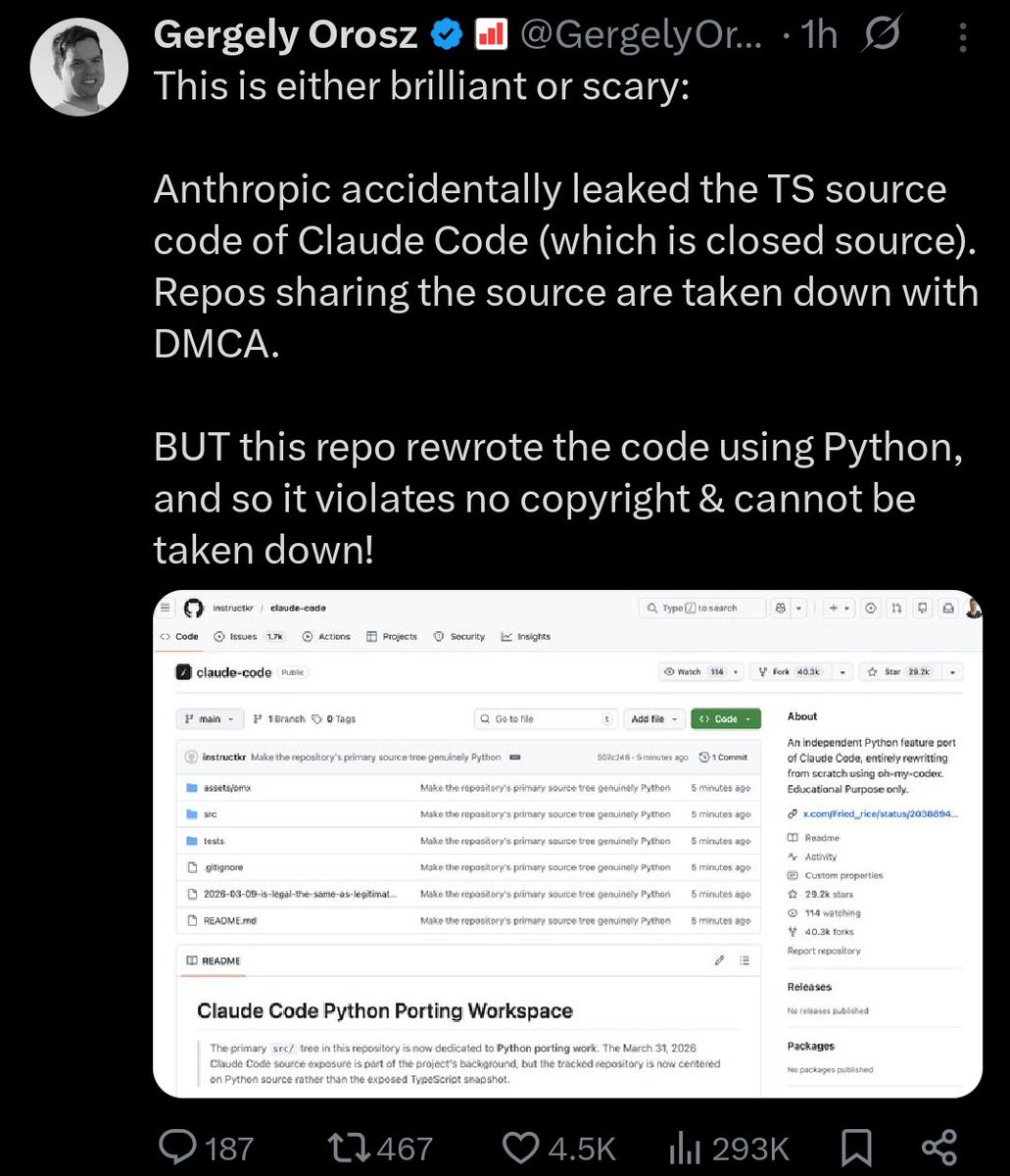
Wait, so both Codex AND Claude has their entire codebases leaked within hours of each other?

English
Mike Abundo がリツイート


Mike Abundo がリツイート

BREAKING: US industrial gas supplier Airgas declared a force majeure, telling a customer it would only meet up to 50% of their normal monthly helium demand amid the Iran War, per WSJ.
Details include:
1. The world is facing a significant helium shortage amid the Strait of Hormuz's closure which has limited ~30% of global helium supply
2. Airgas also told the client that it would add a surcharge of $13.50 per hundred cubic feet above the contracted price
3. Helium supplies which are "critical for AI" have been "choked off," per WSJ
4. Hundreds of specialized cryogenic containers, each costing $1 million, are now stuck in the Middle East
Global helium supply is at risk.
English
Mike Abundo がリツイート
✨Powered by USDm✨
This is where the strength of a day 0 stablecoin will show over the long run.
Teams are coming online and the most liquid, tradeable stable asset on MegaETH will be USDm (so they'll use it).
Ecosystem grows. USDm grows. Engine gets stronger.

katexbt.hl@katexbt
if u bought echo presale for @megaeth and you arent active on that wallet (yet) on the chain itself doing a few trades on gmx, buying GLV (gmx's HLP) forgetting for the next 3 months is probably the best way to get your wallet beyond whatever threshold they will reward
English
Mike Abundo がリツイート
BREAKING: Iran's IRGC issues a warning that they will target 18 US technology companies if the US continues "targeted assassinations" of Iranian leaders, beginning on April 1st.
The companies include Nvidia, Apple, Microsoft, Google, Tesla, Intel, Oracle, IBM, Meta, Boeing, and others.
English
Mike Abundo がリツイート

This is the only public comment Satoshi ever made about quantum computing risk to Bitcoin
Back in 2010 a user "llama" asked what would happen if signatures were compromised due to quantum computers and whether it would make BTC worthless
"True, if it happened suddenly. If it happens gradually, we can still transition to something stronger. When you run the upgraded software for the first time, it would re-sign all your money with the new stronger algorithm."
- satoshi

English
Mike Abundo がリツイート
This could be the offramp the world needs. You can think of it as the best outcome for everyone, under the circumstances.
(1) From MAGA’s perspective, if Trump declares victory here and moves on, the US won’t waste yet more blood and treasure in the Middle East. It won’t invade Iran. It also won’t take all the blame for the ongoing global supply chain crisis. It just pulls out and lets everyone work out the regional security equation for themselves.
Trump can say he’s fulfilled both his campaign promises: stop Iran from getting a nuke, but also no endless Middle Eastern wars.
(2) From Israel’s perspective, Iran has now been shown to be quite hostile to its neighbors, and its military has been substantially degraded. Stopping now is good. Otherwise there’s a danger of overreacting to Oct 7 as Americans overreacted to Sept 11. Israel can stand back and call it a win, because after a US pullout, Iran will have much less excuse for holding the Strait hostage.
(3) From the Iranian diaspora’s perspective, it’s unfortunately clear that the current war isn’t going to result in liberalization. Further attacks would push Iran further into fundamentalism, making it even harder to eventually do a liberal reformation.
(4) From the long-suffering Iranian people’s perspective, ending the war now would also save countless lives. Otherwise they’ll get hit by friendly fire and drafted by the regime to fight for fundamentalism.
(5) Finally, from the world’s perspective, once the US declares victory and goes home, substantial diplomatic pressure will be applied to Iran to simply open the Strait of Hormuz and allow ships through. Iran’s leadership has shown, perhaps surprisingly, that they care about global public opinion…and they would be on the hook for the suffering of billions of people if the Strait remains blocked.
TLDR: if Trump declares victory and leaves, Iran no longer has any excuse for blocking the Strait and holding the global economy hostage. Let the matter be worked out diplomatically with pressure from all the 100+ affected countries on Iran.
America shouldn’t have to spend a single cent more, or send a single soldier more, to the Middle East.
The White House@WhiteHouse
“All of those countries that can’t get jet fuel because of the Strait of Hormuz, like the United Kingdom, which refused to get involved in the decapitation of Iran, I have a suggestion for you…” - President Donald J. Trump
English
Mike Abundo がリツイート
Saw some people panicking or asking about quantum computing's impact on crypto.
At a high level, all crypto has to do is to upgrade to Quantum-Resistant (Post-Quantum) Algorithms. So, no need to panic. 😂
In practice, there are some execution considerations. It's hard to organize upgrades in a decentralized world. There will likely be many debates on which algorithm(s) to use, resulting in some forks.
And some dead project may not upgrade at all. Might be a good to cleanse out those projects anyway.
New code may introduce other bugs or security issues in the short term.
People who self custody will have to migrate their coins to new wallets.
This brings to the question of Satoshi's bitcoins. If those coins move, then it means he/she is still around, which is interesting to know. If they don't move (in a certain period of time), it might be better to lock (or effectively burn) those addresses so that they don't go to the first hacker who cracks it. There is also the difficulty of identifying all his addresses, and not confuse with some old hodlers. Anyway, it's a different topic for later.
Fundamentally:
It's always easier to encrypt than decrypt.
More computing power is always good.
Crypto will stay, post quantum.
English
Mike Abundo がリツイート

Mike Abundo がリツイート

Mike Abundo がリツイート

TRUMP SAYS NOT READY TO ABANDON HORMUZ BID
President Trump told CBS he isn’t ready to end U.S. efforts to force Iran to reopen the Strait of Hormuz, despite frustration that allies haven’t contributed militarily.
He claimed Iran has been “decimated” and downplayed the threat to the strait, saying other nations should step in to secure oil themselves.
English
Mike Abundo がリツイート
BUFFETT SAYS IF THERE IS A BIG MARKET DECLINE, BERKSHIRE WILL DEPLOY CASH
English
Mike Abundo がリツイート

Holy shi
Claude Code source code leaked
Hidden upcoming features mentioned:
- Kairos // autonomous daemon mode with background sessions (on 24/7)
- Buddy System // tamagotchi-style with 18 species, rarity tiers, stats, etc
- Undercover Mode // auto-activated for Anthropic employees on public repos
- Coordinator Mode // turns Claude into an orchestrator managing sub-agents
- Auto Mode // AI classifier that auto approves tool permissions so no prompting required

Chaofan Shou@Fried_rice
Claude code source code has been leaked via a map file in their npm registry! Code: …a8527898604c1bbb12468b1581d95e.r2.dev/src.zip
English
Mike Abundo がリツイート

🚨 HUGE: The Philippine peso has fallen to an all-time low against the U.S. dollar.


English
Mike Abundo がリツイート

In 4 or 5 years, there will be a launch every hour
X Freeze@XFreeze
TWO Falcon 9 launches in one day The pace SpaceX is launching is just Insane… For the rest of the space industry, it takes months or years to pull off one launch But in the last 24 hours, SpaceX completed TWO flawless missions: • 119 payloads delivered to orbit • 29 more Starlink satellites launched That’s 148 satellites in ONE DAY and this is quite routine for SpaceX SpaceX is operating on a completely different level
English
Mike Abundo がリツイート


Mike Abundo がリツイート
🚨“Bitcoin cracked in 9 minutes”. Headlines are going viral today.
The truth is: Google just showed that the math is advancing faster than most expected. That’s serious progress. But no one has the quantum hardware to touch your keys. Not even close.
At @Ledger, we’ve been building for this exact scenario for years. Our hardware is already stress-testing post-quantum signatures.
Your assets are secure, today and in the future.
To the whole industry: stop waiting.
The time for post-quantum migration is now.
We’re not just talking, we’re shipping.
Ledger is ready.
Are you?
Full technical breakdown from our CTO @P3b7_ here 👇
#PostQuantum #CryptoSecurity
Charles Guillemet@P3b7_
Today, Google Quantum AI published a research paper that might boost the post-quantum migration. Their team has tailored Shor’s algorithm to solve the 256-bit Elliptic Curve Discrete Logarithm Problem. ECDLP is the hard mathematical problem that secures ECDSA: the signature scheme underpinning most blockchains, TLS certificates, and countless authentication systems, using fewer than 1,200 logical qubits and 90 million Toffoli gates. Translated to hardware: fewer than 500,000 physical qubits, executing in a few minutes. A few minutes. Less than a Bitcoin block time. Less than two Ethereum epochs. The long-standing argument that public keys can simply remain hidden is now moot (In fact, it has always been x.com/P3b7_/status/1…). What exactly changed Shor's algorithm has been known since 1994 as a generic quantum approach to factoring integers and computing discrete logarithms. But "known" and "practical" are very different things. The real progress is in the engineering: how many qubits and gates you actually need once you compile the algorithm into a fault-tolerant quantum circuit. The last breakthrough by the INRIA Rennes team required ~2,100 logical qubit count for ECDLP. Google's engineers optimized the full circuit stack to ~1,200 logical Qubits. The recent algorithmic trendline is clear: every 12-18 months, the resource estimates drop significantly. And these are pure algorithmic gains: they compound on top of hardware improvements, which remain a major challenge. However, as of today, we're still far from having such a quantum computer. This didn't change. Zero Knowledge Proof Here's where it gets interesting. Google chose not to publish their optimized circuits. Instead, they released a zero-knowledge proof that their circuits achieve the claimed resource counts. We have no doubt they know how to do it, but no clue how (sounds magic ;-)) The reasons are likely multiple: competitive advantage, national security implications, or simply not wanting to hand a blueprint to adversaries. Regardless, it establishes a powerful (and elegant) precedent. What’s ironic: Google's ZK proof is not itself post-quantum secure. What’s next? The good news is that we already have the tools: Post Quantum Cryptography, now we need to migrate. A few days ago, Google announced it is targeting 2029 for full post-quantum readiness. NIST plans to deprecate RSA signatures by 2030 and disallow all legacy algorithms by 2035. Most organizations haven't started their cryptographic inventory. Major blockchain protocols are currently discussing the path forward. Cryptography exists to create mathematical trust in the security of systems. That trust is now being eroded, not by a working attack, but by the increasingly credible prospect of one. In security, the moment you start doubting the foundation is the moment you should be rebuilding it. What this means for blockchains For blockchain ecosystems specifically, the threat is central. ECDSA on secp256k1 (Bitcoin) and P-256 curves (broadly used elsewhere) is the cornerstone of security. Unlike traditional systems where you can rotate certificates behind a corporate firewall, blockchain migration requires coordination across decentralized, permissionless networks. This process will likely take time. I'll be diving deeper into the concrete challenges and strategies for PQC migration on blockchains and secure systems at my keynote this Thursday at EthCC conference.
English