Simen Mjøen Larsen がリツイート
Simen Mjøen Larsen
1.6K posts

Simen Mjøen Larsen
@Simen_ML
"På Twitter finner man mye rart, særlig en selv"
参加日 Temmuz 2017
232 フォロー中32 フォロワー

Simen Mjøen Larsen がリツイート

Simen Mjøen Larsen がリツイート
This is heartbreaking.
In play, children reenact what they see in order to make sense of it and feel a degree of control.
In Gaza, little girls play "funeral" with their doll playing the role of a friend who has been killed.
English
Simen Mjøen Larsen がリツイート

🇮🇱 Israeli soldiers point rifles at CNN journalists… then choke one on camera
All while documenting an illegal settler outpost in the West Bank, where a 75-year-old man was reportedly beaten inside his home.
Source: CNN
Mario Nawfal@MarioNawfal
🇮🇱🇵🇸 Netanyahu accused of funneling money to Hamas "At the time he was under investigation, he arranged for Hamas to receive $35 million every month from Qatar."
English
Simen Mjøen Larsen がリツイート

This week we learned: Israeli soldiers tortured a baby with cigarette burns &, separately, a Palestinian teenager held without charge in Israeli prison was likely starved to death.
This is the security state supported by US taxpayers & described to us as the world's most moral.
Sky News@SkyNews
Gaza toddler released from Israeli custody with suspected torture wounds trib.al/g1SOaOz
English
Simen Mjøen Larsen がリツイート


Simen Mjøen Larsen がリツイート

Gaza toddler released from Israeli custody with suspected torture wounds
trib.al/g1SOaOz
English
Simen Mjøen Larsen がリツイート
This is the moment Israeli forces hand over a small Palestinian child to the Red Cross
The Israelis had reportedly tortured him by extinguishing cigarettes (!) on his tiny body in front of his father in order to extract confessions
Israel is doing this with American tax money
English
Simen Mjøen Larsen がリツイート

Never forget how Israel murdered Palestinian First Responders on a literal live stream.
Repost this. Please I beg you
English
Simen Mjøen Larsen がリツイート
An Iranian woman films her neighborhood being bombed by Israel. As she seeks cover, Israel strikes again, in what appears to be a double-tap strike.
The woman films her own death.
Some Iranians in the diaspora dance and celebrate this, believing these are democracy bombs...
English
Simen Mjøen Larsen がリツイート

Simen Mjøen Larsen がリツイート

I have a strong feeling we're approaching Trump's "emperor has no clothing " moment when even the morally blind see thru him & the cowardly speak up. Perhaps de.lmocracy will prevail after all.
This article shows that Trump's middle is collapsing: nytimes.com/2026/03/17/wor…
English
Simen Mjøen Larsen がリツイート
There's direct causation between dumping severely ill patients on street with little/no care & their winding up homeless/jailed.
This isn't just a statistical accident- it's a terrible human tragedy.
Necessary solutions also clear- access to community care/psych beds/housing.
Daniel@growing_daniel
a statistician will see this and then look you dead in the eye and tell you correlation does not imply causation
English
Simen Mjøen Larsen がリツイート

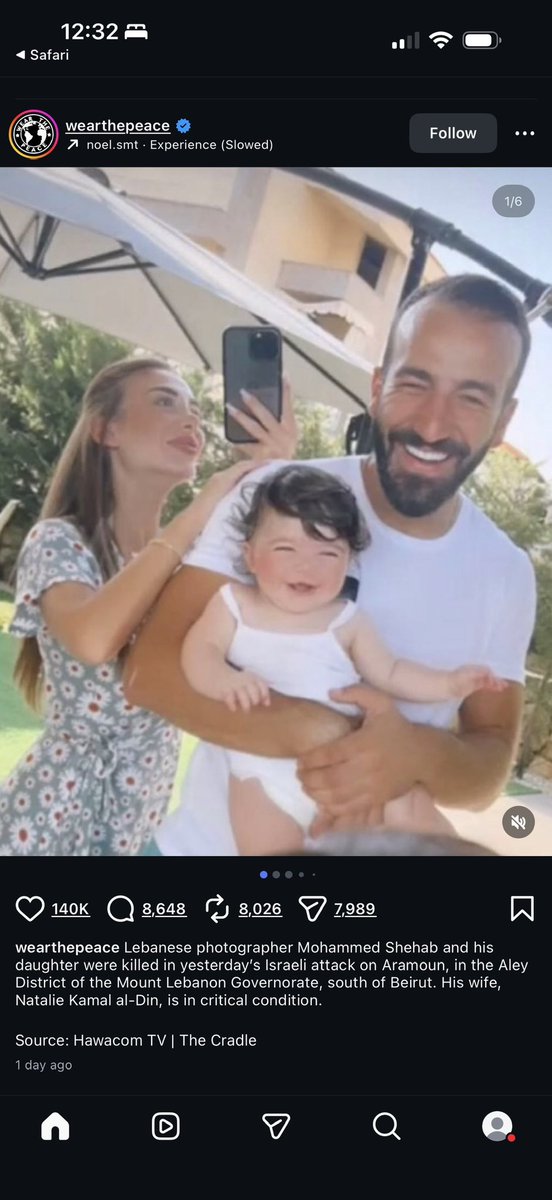
I spent half an hour on Natalie Shehab’s Instagram last night. She is a stylist and boutique owner. Her IG looks like many other American influencers. She’s almost 28, beautiful and classy and has a talent for curating visually pleasing photos and videos.
On Wednesday Israel murdered her husband of 5 years and her 3 year old daughter, using American bombs, and American tax dollars, under the cover of American diplomatic protection.


English
Simen Mjøen Larsen がリツイート

They raped a man.
They gang-raped him.
They raped him so brutally that he had to be hospitalized.
Doctors documented the injuries.
The video of the assault was leaked.
Now the rapists are free.
This is not just unlawful and immoral. It is sick!
#ThisIsIsrael
AF Post@AFpost
Israel dropped charges against 5 IDF soldiers who were caught on camera beating and raping a Palestinian prisoner. Follow: @AFpost
English
Simen Mjøen Larsen がリツイート

If true, this is horrific news--and the U.S. military will have to address this publicly. Proximity of military compound obviously a factor, but our weapons also have pinpoint accuracy.
NEW: Investigators think American forces were likely responsible for an airstrike on a girls’ elementary school that killed dozens of children in Iran, a U.S. official said wsj.com/world/middle-e… via @WSJ
English
Simen Mjøen Larsen がリツイート

Simen Mjøen Larsen がリツイート
Why must LLMs hallucinate? The answer in this paper - a low threshold for guessing because of rewards during post-training - is part of the explanation, but another is that they are designed not to store and retrieve facts but to mash up probabilistic associates. Out of curiosity I asked ChatGPT for the title of my PhD dissertation and it confidently provided the nonsensical and not-even-close “Taxonomy and the Mental Lexicon.” (It was "The Representation of Three-Dimensional Space in Mental Images.")
Nav Toor@heynavtoor
🚨BREAKING: OpenAI published a paper proving that ChatGPT will always make things up. Not sometimes. Not until the next update. Always. They proved it with math. Even with perfect training data and unlimited computing power, AI models will still confidently tell you things that are completely false. This isn't a bug they're working on. It's baked into how these systems work at a fundamental level. And their own numbers are brutal. OpenAI's o1 reasoning model hallucinates 16% of the time. Their newer o3 model? 33%. Their newest o4-mini? 48%. Nearly half of what their most recent model tells you could be fabricated. The "smarter" models are actually getting worse at telling the truth. Here's why it can't be fixed. Language models work by predicting the next word based on probability. When they hit something uncertain, they don't pause. They don't flag it. They guess. And they guess with complete confidence, because that's exactly what they were trained to do. The researchers looked at the 10 biggest AI benchmarks used to measure how good these models are. 9 out of 10 give the same score for saying "I don't know" as for giving a completely wrong answer: zero points. The entire testing system literally punishes honesty and rewards guessing. So the AI learned the optimal strategy: always guess. Never admit uncertainty. Sound confident even when you're making it up. OpenAI's proposed fix? Have ChatGPT say "I don't know" when it's unsure. Their own math shows this would mean roughly 30% of your questions get no answer. Imagine asking ChatGPT something three times out of ten and getting "I'm not confident enough to respond." Users would leave overnight. So the fix exists, but it would kill the product. This isn't just OpenAI's problem. DeepMind and Tsinghua University independently reached the same conclusion. Three of the world's top AI labs, working separately, all agree: this is permanent. Every time ChatGPT gives you an answer, ask yourself: is this real, or is it just a confident guess?
English
Simen Mjøen Larsen がリツイート

Holy shit, catastrophic morning for Trump:
> Oil prices surge as the Strait of Hormuz slows to a halt
> 92,000 jobs unexpectedly lost in February
> Market shock as a result of prior points
> Easing sanctions on Russian oil…
> only to learn that Russia is helping fund Iran
English
Simen Mjøen Larsen がリツイート