3.
Example: A generic function to return the first item of an array:
function firstItem<T>(arr: T[]): T | undefined {
return arr[0];
}
console.log(firstItem([1, 2, 3])); // 1
console.log(firstItem(["a", "b"])); // "a"
#CodeExample#WebDevelopment
Here's how environment variables are often used in Python projects. Notice the repetition:
🔽 Code before using Environs:
#Environment#Python#CodeExample
Here's how environment variables are often used in Python projects. Notice the repetition:
🔽 Code before using Environs:
#Environment#Python#CodeExample
Here's how environment variables are often used in Python projects. Notice the repetition:
🔽 Code before using Environs:
#Environment#Python#CodeExample
Here's how you can use truthiness in conditionals. In this snippet, a check determines if a number is falsy or truthy. Use this logic for cleaner code 🧹 #CodeExample
Here's how environment variables are often used in Python projects. Notice the repetition:
🔽 Code before using Environs:
#Environment#Python#CodeExample
Here's how you can use truthiness in conditionals. In this snippet, a check determines if a number is falsy or truthy. Use this logic for cleaner code 🧹 #CodeExample
Here's how environment variables are often used in Python projects. Notice the repetition:
🔽 Code before using Environs:
#Environment#Python#CodeExample
Here's how environment variables are often used in Python projects. Notice the repetition:
🔽 Code before using Environs:
#Environment#Python#CodeExample
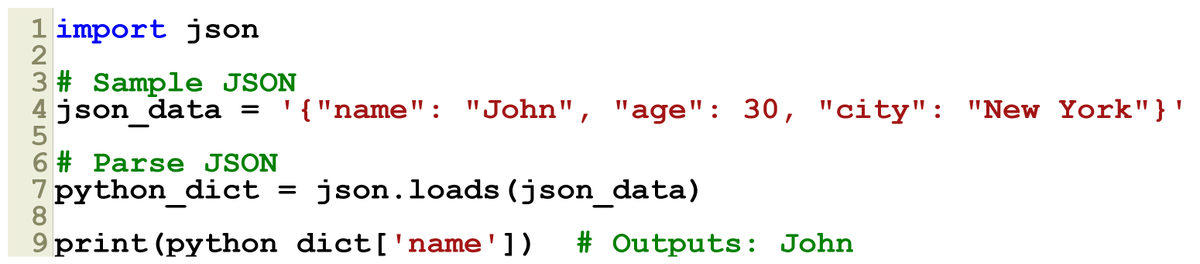
1️⃣ Parsing JSON strings to Python objects is easy with the `json` module.
🚀 Code example below shows how to convert a JSON string to a Python dictionary. Use `json.loads()` to achieve this. #CodeExample#PythonBasics