Alicia Pickrell

706 posts

Alicia Pickrell

Alicia Pickrell

@PickrellLab

Twin tots mommy. Mito PI. Wifey to neuroscientist PI.

Blacksburg, VA 가입일 Ekim 2017
202 팔로잉144 팔로워
Alicia Pickrell 리트윗함
E-mit
E-mit@Emit38935125·
Modelling POLG mutations in mice unravels a critical role of POLγΒ in regulating phenotypic severity nature.com/articles/s4146…
English
0
3
4
344
Alicia Pickrell 리트윗함
Michael Okun
Michael Okun@MichaelOkun·
BREAKING: Your brain’s connective tissue isn’t just glue: It’s a switchboard for neuromodulation. We used to think that astrocytes (the beautiful star-shaped glial cells) were the brain’s 'support staff.' But thanks to exciting new work from Guttenplan and colleagues this week in Science, we have more evidence that glia are more than just passive observers. They are active gatekeepers, controlling how brain circuits turn on and off in response to neuromodulators like dopamine, norepinephrine, and glutamate not to mention 'electricity.' Key Points: - The gating is driven by GPCR signaling and internal cell state, not just calcium. - G protein–coupled receptor (GPCR) activity in astrocytes, especially via the dopamine D2 receptor (Dop2R), changes how these cells regulate circuits. - Dopamine responses can be flipped from inhibitory to excitatory via astrocyte control. - Astrocytes can reverse how neurons react to dopamine, dramatically changing behavior in animal models. - These mechanisms are ancient and conserved across species. - From fruit flies to rats, astrocytes play this surprising regulatory role meaning human relevance is likely high. - Glia may hold the key to improving neuromodulation therapies. - By targeting astrocyte gating mechanisms, we might one day use this to fine-tune DBS or pharmacological treatments more precisely and effectively. - The bottom line? Glia are emerging as not just as glue, but as circuit integrators. - Glia could be the secret to unlocking smarter, more personalized neuromodulation. My take: This isn’t just basic science, it’s a potential game changer for how we think about treating Parkinson’s, depression, epilepsy, and beyond. If astrocytes can 'gate' neuron responses, then targeting glia may be the next frontier in brain modulation therapies like deep brain stimulation (DBS), focused ultrasound, or even neuropharmacology. Glial cells, especially astrocytes, aren’t just background noise; they dynamically shape how neurons behave. This study uncovers a 'gating' mechanism, where one neurotransmitter can flip a switch in astrocytes that changes how they respond to other astrocytes and the surrounding brain tissue. The findings are conserved across species: flies, zebrafish, and mammals. This data collectively suggests that incredibly this process likely has a fundamental role in brain evolution and function. Astrocytes are not passive. They actively decide how and when neurons fire. Exposure to neuromodulators like norepinephrine could potentially unlock how the astrocyte respond to other transmitters such as dopamine and glutamate. #GliaMatters #Astrocytes #Neuromodulation #Parkinsons #Neuroscience #DBS #BrainHealth science.org/doi/10.1126/sc… @ParkinsonDotOrg @FixelInstitute
Michael Okun tweet media
English
7
158
584
45.9K
Alicia Pickrell 리트윗함
Nature Neuroscience
Nature Neuroscience@NatureNeuro·
Neuronal activity influences the growth of #myelin sheaths along axons by signalling through metabotropic glutamate receptor 5 (mGluR5) on oligodendrocytes nature.com/articles/s4159…
English
1
19
99
10K
Alicia Pickrell 리트윗함
Molecular Cell
Molecular Cell@MolecularCell·
ZBP1 senses splicing aberration through Z-RNA to promote cell death dlvr.it/TKWfn0
Molecular Cell tweet media
English
0
13
74
6.6K
Alicia Pickrell 리트윗함
Science Magazine
Science Magazine@ScienceMagazine·
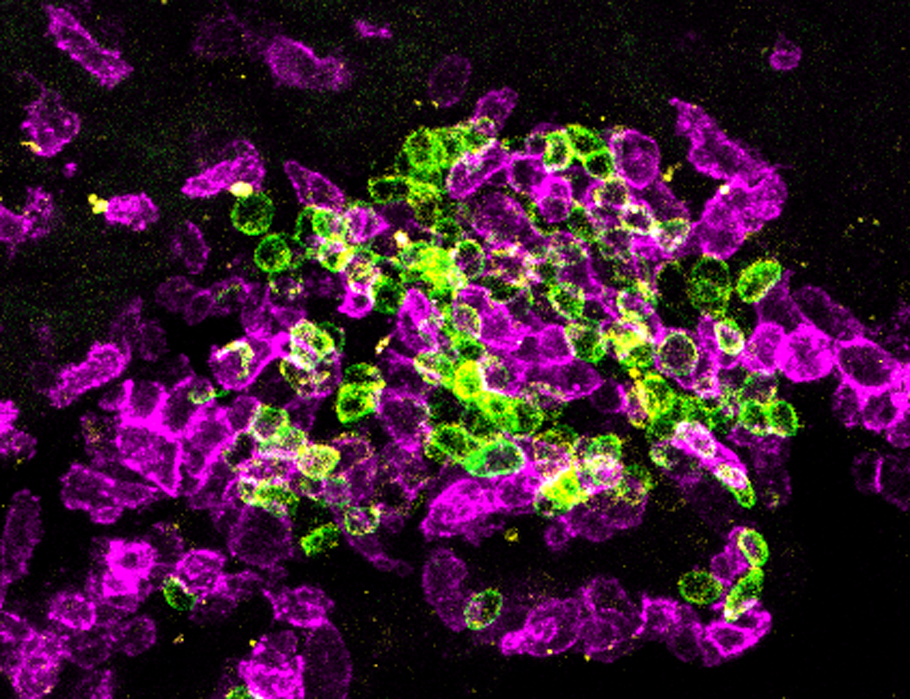
Scientists have identified extensive interactions between T and B cells in the meninges that promote CNS inflammation in mouse models of Multiple Sclerosis. Read more in @SciImmunology: scim.ag/44c3qaG
Science Magazine tweet media
English
4
37
110
21.7K
Alicia Pickrell 리트윗함
nature
nature@Nature·
Nature research paper: Human de novo mutation rates from a four-generation pedigree reference go.nature.com/3ECWGs2
English
8
54
192
25.6K
Alicia Pickrell 리트윗함
eLife - the journal
eLife - the journal@eLife·
Cells have a clever way of flagging damaged DNA so it can be fixed. New research shows they use tiny chemical tags—called m6A—to mark trouble spots and call in repair tools. buff.ly/Ttwi5SX
English
0
28
74
6.2K
Alicia Pickrell 리트윗함
ShorterLab
ShorterLab@ShorterLab·
Astrocytic RNA editing regulates the host immune response to alpha-synuclein | Science Advances science.org/doi/10.1126/sc…
English
1
11
64
4.4K
Alicia Pickrell 리트윗함
Felipe X. Pimentel-Muiños
Felipe X. Pimentel-Muiños@fxpimentelm·
Happy to share a recent publication from our lab @CBM_CSIC_UAM describing a novel unconventional autophagic pathway that inhibits ATP secretion during apoptosis by sequestering it into atypical LC3-positive vesicles rdcu.be/ehdHq
Felipe X. Pimentel-Muiños tweet media
English
5
33
93
5.5K