Prashant Sood

9K posts

Prashant Sood

Prashant Sood

@PrashantSSood

가입일 Mayıs 2023
7.5K 팔로잉299 팔로워
Prashant Sood 리트윗함
bodila
bodila@51bodila·
Citadel paid ~$900K/year to headhunt this Goldman Sachs trader, who trade BILLLIONS dollars - Ken Griffin put him in his place - he explained exactly what qualities made it happen 5-min and you'll learn exactly what skills Citadel looks for that no other fund on Wall Street demands
bodila@51bodila

ex-Goldman Sachs trader ~$500K/year quit the fund in scandal and wrote a letter to the New York Times “how Goldman makes money?” - he compared Goldman to a casino where the house always wins 30-min and you’ll learn the real secrets of how Wall Street’s most powerful bank actually makes money, then read the article

English
6
18
235
162.3K
Prashant Sood 리트윗함
Parimal
Parimal@Fintech03·
In the Valmiki Ramayana, the physician Sushena names 4 distinct medicinal plants that grow on the Dronagiri mountain in the Himalayas. This is the exact pharmaceutical recipe of the ancient world: - Mrita-Sanjivani (मृतसंजीवनी): The restorer of life (for clinical death). - Vishalyakarani (विशल्याकरनी): The arrow-remover (instantly expels weapons from the flesh & heals the wound track). - Suvarnakarani (सुवर्णकरनी): The skin-restorer (restores natural skin color & eliminates scarring). - Sandhanakarani (सन्धानकरनी): The bone-fuser (instantly knits severed muscles, tendons & broken bones). For decades, Indian scientists and ethnobotanists have hunted for these plants. The primary candidate for the actual Sanjivani is a rare, ancient pteridophyte plant called Selaginella bryopteris, popularly known today in India as Sanjeevani. This plant has a stunning, mind-bending characteristic known as resurrection ecology. During scorching droughts, the plant loses 95% of its moisture, shrivels into a dead, brittle, brown ball & enters a state of absolute metabolic arrest. It looks 100% dead. The moment a few drops of water touch it, its cellular matrix unlocks. Within hrs, it unfurls, turns vibrant green, & restarts photosynthesis. It literally comes back to life. If we have the plant, why cannot modern pharmaceutical companies synthesize a resurrection pill from it? This is where the case gets scientifically airtight. A single chemical extract does not a miracle make. In Ayurveda, drugs operate on Sanyoga (synergy). Selaginella bryopteris contains massive amounts of trehalose (a sugar that protects cellular structures from freezing/drying out) & potent antioxidants. However, the ancient text explicitly states it required a cocktail of 4 different rare plants acting simultaneously. Because of climate shifts, massive Himalayan deforestation & 1000s of yrs of ecological decay, the specific companion plants (Sandhanakarani, etc.) that grew alongside it have either gone extinct/their genetic profiles have mutated. We have the lock, but we have lost the specific pins for the key. We cannot simply grow Sanjivani in a hydroponic lab in New York & expect it to work. Plants synthesize their most potent, radical secondary metabolites (the actual healing chemicals) only when stressed by their specific native environment... in this case, ultra-high-altitude UV radiation, Himalayan soil minerals & specific glacial meltwater. Cultivating it elsewhere makes it just a glorified fern. Thank you, @itsmeLuckyhere, Sir for tagging.
Parimal tweet media
English
32
390
2.1K
100.8K
Prashant Sood 리트윗함
Navroop Singh
Navroop Singh@TheNavroopSingh·
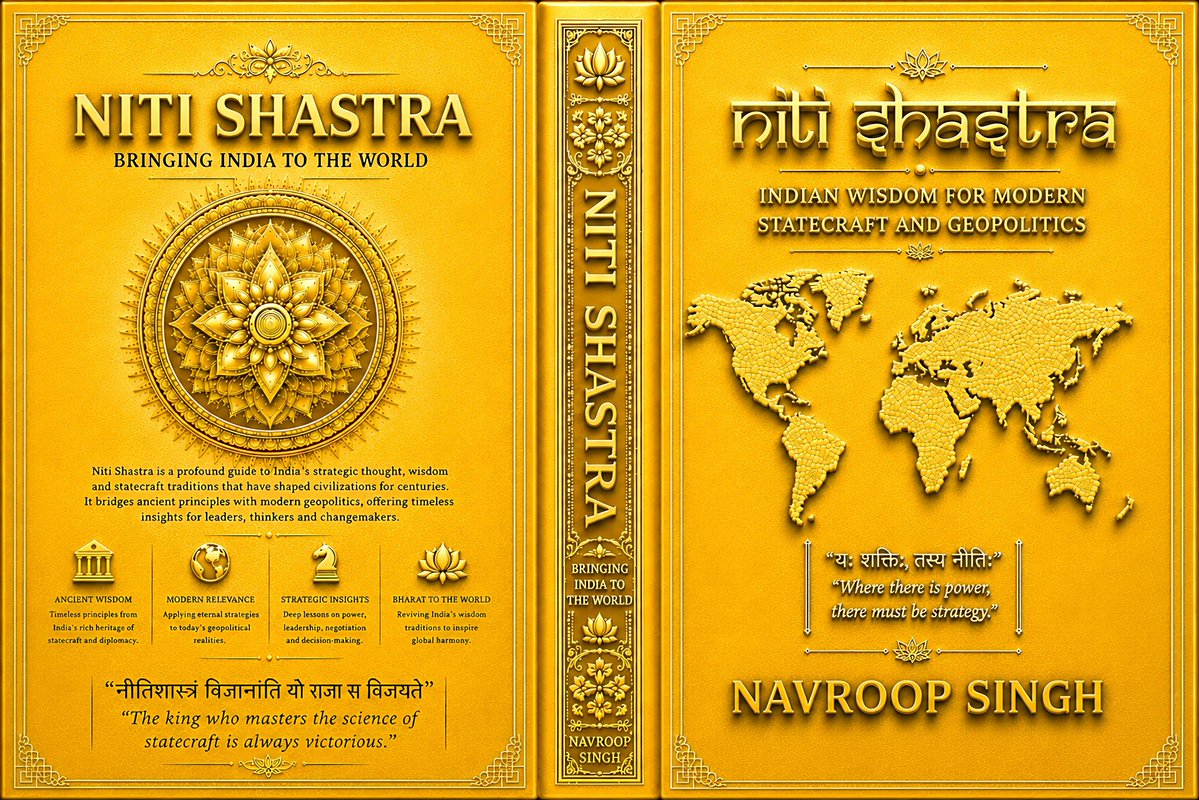
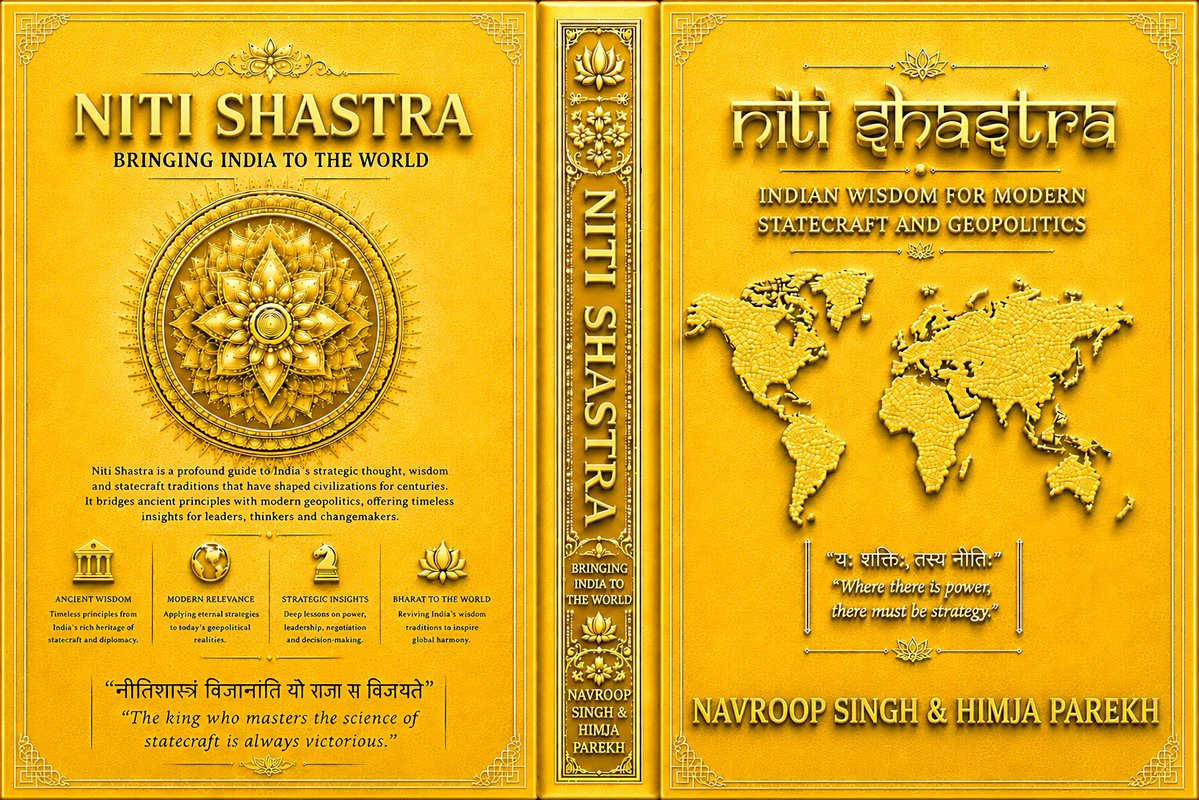
𝗡𝗜𝗧𝗜 𝗦𝗛𝗔𝗦𝗧𝗥𝗔 - 𝗜𝗡𝗗𝗜𝗔𝗡 𝗪𝗜𝗦𝗗𝗢𝗠 𝗙𝗢𝗥 𝗠𝗢𝗗𝗘𝗥𝗡 𝗦𝗧𝗔𝗧𝗘𝗖𝗥𝗔𝗙𝗧 𝗔𝗡𝗗 𝗚𝗘𝗢𝗣𝗢𝗟𝗜𝗧𝗜𝗖𝗦 Finally managed to chronicle the Contents of #NitiShastra 💛 in approximately 3200 Pages in three Volumes. All of our writings chronicled in one place. A physical copy in hand has its own chasm ! Hopefully edited ebook of the compilation would be available soon ! Since its launch in March 2023, Niti Shastra has followed multi-disciplinary approach decoding various facets of Geopolitics, Geo-Economics, Multipolarity in Bi-Polarity, Cold War 2.0 , Bifurcation of Supply Chains, Monetary Rest & Rise of multiple poles challenging the Post War Order. Niti Shastra was founded by us with motto of blending Bharat’s timeless tradition of statecraft and applying it to the realities of the emerging multipolar world order. Its always been about presenting an Indian narrative & putting India First ! Thank You @HimjaParekh for being part of #NitiShastra ! Without your inputs & our enriching discussions this would not have been possible !
Navroop Singh tweet mediaNavroop Singh tweet media
English
10
63
288
17.2K
Prashant Sood 리트윗함
Alpakanya
Alpakanya@Alpakanya·
"Just as a surgeon maintains sterile conditions, a priest maintains ritual purity" - Pandit ji busts the false untouchability propaganda run by seculars to malign Hindus.
English
272
3.7K
11.1K
300.5K
Prashant Sood 리트윗함
Alex Veremeyenko
Alex Veremeyenko@alex_verem·
Let me trace the timeline here because nobody's connecting it. Step 1: Scrape the entire internet. Every book, every article, every conversation, every piece of art, every forum post. Do it without asking. Do it without paying. Step 2: Train a model on all of it. Call it "artificial intelligence." Step 3: Go to BlackRock's Infrastructure Summit and announce: "We see a future where intelligence is a utility, like electricity or water, and people buy it from us on a meter." Step 3 is where you sell people's own knowledge back to them. On a meter. They took the collective output of human thought, compressed it into a model, and now they want to charge you by the token to access a version of what you and everyone you know already created. One Reddit user put it perfectly: "They stole all this data from us, the people, our life's work, creativity, art, by devouring the internet and blowing through all copyright laws. Now they want to sell it back to us in the form of a utility." Imagine if someone photocopied every book in the public library, burned the library down, and then opened a subscription service for the copies. That's the metered intelligence business model. And they're pitching it to infrastructure investors as though they invented water.
Vivek Sen@Vivek4real_

SAM ALTMAN: “WE SEE A FUTURE WHERE INTELLIGENCE IS A UTILITY, LIKE ELECTRICITY OR WATER, AND PEOPLE BUY IT FROM US ON A METER.”

English
3.3K
46.6K
136.4K
5.7M
Prashant Sood 리트윗함
BookNote
BookNote@BookNoteApp·
10 books to understand modern technology: 1) Human Compatible by Stuart Russell ( artificial intelligence )
BookNote tweet media
English
5
83
394
21K
Prashant Sood 리트윗함
Devamritasya Putra - देवामृतस्य पुत्र: 🇮🇳
While everyone’s buried in Arthashastra learning ancient Bharat’s legendary espionage system… Shri Rama casually drops an ABSOLUTE BANGER in Ayodhya Kanda 2:100:36 (Kacchit Sarga): “Do you get to know through three spies each completely unacquainted with the other about the eighteen key functionaries of the enemies… and the fifteen of your own side?” Then he lists them ALL: Chief Minister, Purohit, Yuvaraj, Army Chief, Judges, Treasurers, even the officer guarding forests & waters. Rama wasn’t just asking - he was auditing Ayodhya’s intelligence network like a pro. Ancient Bharat’s statecraft was NEXT LEVEL. Ram Rajya had spies before spies were cool. 🇮🇳 #Ramayana #AyodhyaKanda #KacchitSarga #EspionageInRamayana #AncientBharat #SanatanDharma #RamRajya #HinduWisdom #BharatMatrimonyNoWait #BharatKaGaura
Devamritasya Putra - देवामृतस्य पुत्र: 🇮🇳 tweet media
English
0
86
275
7K
Prashant Sood 리트윗함
Carl
Carl@HistoryBoomer·
100 books?!? Americans can read that many! Here are 30 must-reads: 1- Iliad - Homer 2- Odyssey - Homer 3- Oedipus Rex - Sophocles 4- Medea - Euripides 5- History of the Peloponnesian War - Thucydides 6- The Republic - Plato 7- Nicomachean Ethics - Aristotle 8- Aeneid - Virgil 9- The Bible - The Big Guy 10- Confessions - Augustine 11- Divine Comedy - Dante 12- The Prince - Machiavelli 13- Hamlet - Shakespeare 14- Macbeth - Shakespeare 15- King Lear - Shakespeare 16- Don Quixote - Cervantes 17- Leviathan - Hobbes 18- Second Treatise of Government - Locke 19- The Spirit of the Laws - Montesquieu 20- The Social Contract - Rousseau 21- The Wealth of Nations - Smith 22- On Liberty - Mill 23- Communist Manifesto - Marx and Engels 24- On the Genealogy of Morals - Nietzsche 25- Pride and Prejudice - Austen 26- Moby Dick - Melville 27- Madame Bovary - Flaubert 28- Middlemarch - Eliot 29- War and Peace - Tolstoy 30- The Brothers Karamazov - Dostoevsky
Joshua D Phillips@JoshPhillipsPhD

There are about 100 canonical books everyone should read. These are the foundational texts that hold our culture together. Once you’ve covered these books, go in whatever direction you want Ex: Homer, Greek plays, Bible, handful of Shakespeare, Dante, Dickens, Austen, Tolstoy

English
78
107
1K
107.7K
Prashant Sood 리트윗함
BookNote
BookNote@BookNoteApp·
9 books to understand the global economy: 1) Globalizing Capital by Barry Eichengreen
BookNote tweet media
English
6
86
319
22.7K
Prashant Sood 리트윗함
Millie Marconi
Millie Marconi@MillieMarconnni·
A mathematician at Bell Labs noticed that the scientists who won Nobel Prizes and the ones who never amounted to anything were equally smart, equally hardworking, and equally credentialed, and the only thing that separated them was a single question almost nobody is brave enough to ask themselves before they die. His name was Richard Hamming. He spent 30 years at Bell Labs, in the same building as John Tukey, Walter Brattain, and a long list of physicists who took home Nobel prizes for work they did down the hall from his office, including the legendary Claude Shannon. His invention of error-correcting codes made modern computing possible. He has won the Turing Award. And all the while he was creating his own legacy he was secretly doing a study on the people around him. The study was straightforward. 2 Teams. The legends and the lost. Same I.Q.s. Degrees same. Same desk hours. Same access to the world’s best resources. And yet, at the end of 40 years in their careers, one group had changed entire fields, and the other group could not be remembered by their own colleagues five years after retirement. He wanted to discover what the actual difference was. In March 1986, he stood before 200 researchers in a Bellcore auditorium and told them what he had seen. He said it all came down to one question. And hardly anyone he ever met was willing to ask it directly. He called it the Friday-afternoon ritual. He spent years blocking out his Friday afternoons and not doing anything productive with them every week. No experiments. No meetings. No deliverables. He called it Great Thoughts Time. He sat down with a notebook and asked himself a couple of questions in order. What are the most relevant problems in my discipline? And why I am not working on either of them.” Most weeks, the answer was the same, he said. For a week now he had marched confidently in a direction he did not think was the most important direction. He was a goer. He worked a bit. He was getting clean results that would publish in respected journals. ( And for five days straight he'd been lying to himself about whether any of it mattered. The reason almost nobody does this ritual is because the honest answer is unbearable. The thing is that if you sit down on a Friday afternoon and say out loud that you are not working on the most important problem in your field, now you have to do something about it. You have an immediate change in direction, or you have to keep lying to yourself every week from that point on. Most people choose the lie. In the short term it’s cheaper, but over a career it’s more expensive. Hamming took the ritual a step further in the Bell Labs cafeteria. He began approaching scientists he barely knew, asking them what they thought the most important problems in their field were. A week later he would ask them why they had not worked on these problems. Eventually people wouldn't have lunch with him. “I had to keep finding new tables,” he said. Nobody had a good answer for that, and being around someone who kept asking it made every meal feel like a performance review. The line that broke me is the line that most people skim over in the transcript. His words: If you do not work on an important problem you are unlikely to do important work. That’s not motivational line. It is a rational one. You cannot make a great result from a problem that does not matter. Input restricts the output. The choice of the problem is the ceiling of the career. The transcript has been freely available on the internet for almost 40 years. Stripe Press published the complete lectures as a book. Naval Ravikant quotes it all the time. It’s still given out to new hires at every serious engineering lab in Silicon Valley. Most people will not run the ritual this Friday. They will be busy. They always are.
Millie Marconi tweet media
English
77
593
2.5K
229.3K
Prashant Sood 리트윗함
महावीर, ಮಹಾವೀರ, Mahavir
Before Hampi. Before Khajuraho. Before most of India’s great temples — there was Aihole. A forgotten village in Karnataka where the Chalukyas experimented with over 120 temples and changed Indian architecture forever. The real birthplace of Indian temple design. 🇮🇳
English
26
923
2.8K
40.4K
Prashant Sood 리트윗함
History इतिहास 🇺🇲🛕 🚀
This is how it looks. Since nothing was available, I created the shape files using some intelligent reassignment at minute level and map came out awesome!!
History इतिहास 🇺🇲🛕 🚀 tweet media
History इतिहास 🇺🇲🛕 🚀@ShreeHistory

@Kyangs_Thang @tweetenator I have provided blank national map shape file, district maps and sample code to use this in Python earlier. Let me provide that link again. kaggle.com/code/shreep/bh… kaggle.com/datasets/shree…

English
1
7
47
2.2K
Prashant Sood 리트윗함
Eztainutlacatl
Eztainutlacatl@cbkwgl·
Two more data points. If IVC collapsed and the Steppe Barbarians imposed their language, social structure and religion on India, explain these two. 1. How do you account for ivory trade in the Steppes between 1500 and 1100? 2. How do you explain the presence of cowries in Shang graves? If the whole networks are shattered and if the whole zone is in a turmoil, how did post IVC India continue to extract ivory and import cowries? Any thoughts?
English
3
9
61
2.9K
Prashant Sood 리트윗함
Furkan Gözükara
Furkan Gözükara@FurkanGozukara·
Absolute horror. Prof. Leocadie Lushombo exposes the dark secret behind the AI revolution that billionaires desperately hide. She reveals children in the Global South are literally working in their own graves just to keep Western computational flows running.
Furkan Gözükara@FurkanGozukara

Absolute bombshell. Prof. Lushombo confirms the AI revolution is intentionally designed to create terrifying new forms of global slavery. She exposes how tech elites use AI to repress human dignity and drastically widen the wealth gap to exploit workers.

English
8
516
807
26.4K
Prashant Sood 리트윗함
Furkan Gözükara
Furkan Gözükara@FurkanGozukara·
Absolute bombshell. Prof. Rowlands confirms global power has completely shifted from sovereign states to a few tech billionaires. She exposes how elites secretly embed their own agendas into AI to build a terrifying new digital imperium to dominate humanity.
English
157
3.8K
6.4K
140.2K
Prashant Sood 리트윗함
Nick Di Fabio
Nick Di Fabio@NickDiFabio1·
Elon Musk said civilization's survival depends on reading this book. So I did some digging... And what I found explains exactly why the West is struggling right now. Here are the 7 most important lessons inside:
Nick Di Fabio tweet media
English
40
260
951
143.7K
Prashant Sood 리트윗함
st1ne
st1ne@SolSt1ne·
Goldman Sachs MDs make $1-3M/year doing one thing: keeping CEOs of Fortune 500 firms on speed dial. This 23-min UVA Law lecture by Goldman's Vice Chairman of Global Client Coverage teaches you the exact 18 rules he uses to do it. worth more than any $5K business school elective on client management. bookmark & watch today.
st1ne@SolSt1ne

BlackRock controls over $10 trillion in assets - more than the GDP of China. Larry Fink - the man behind it - just explained on stage exactly how he got there: the acquisitions, the macro bets, why the U.S. deficit "will overwhelm this country." 35-min and you'll see how the world's most powerful asset manager thinks about capital, risk, and the next decade. bookmark & watch - the most important Fink interview of 2025.

English
41
191
3.1K
1.3M
Prashant Sood 리트윗함
Nav Toor
Nav Toor@heynavtoor·
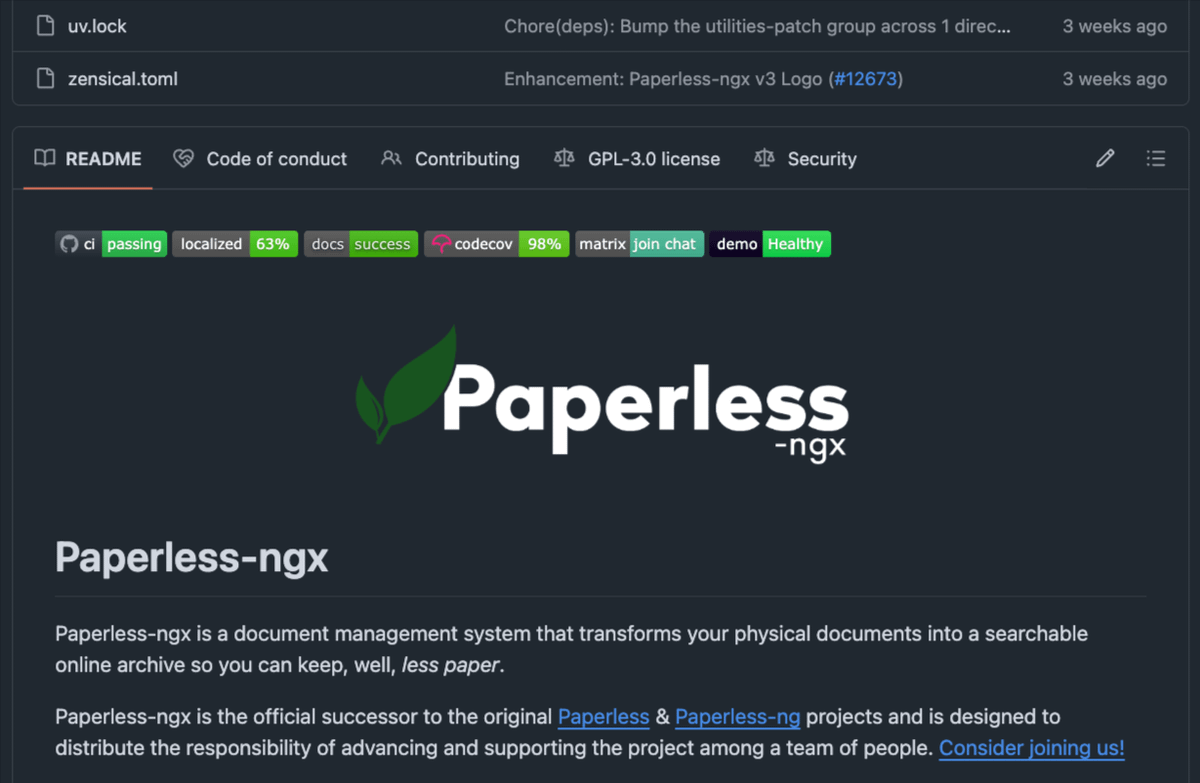
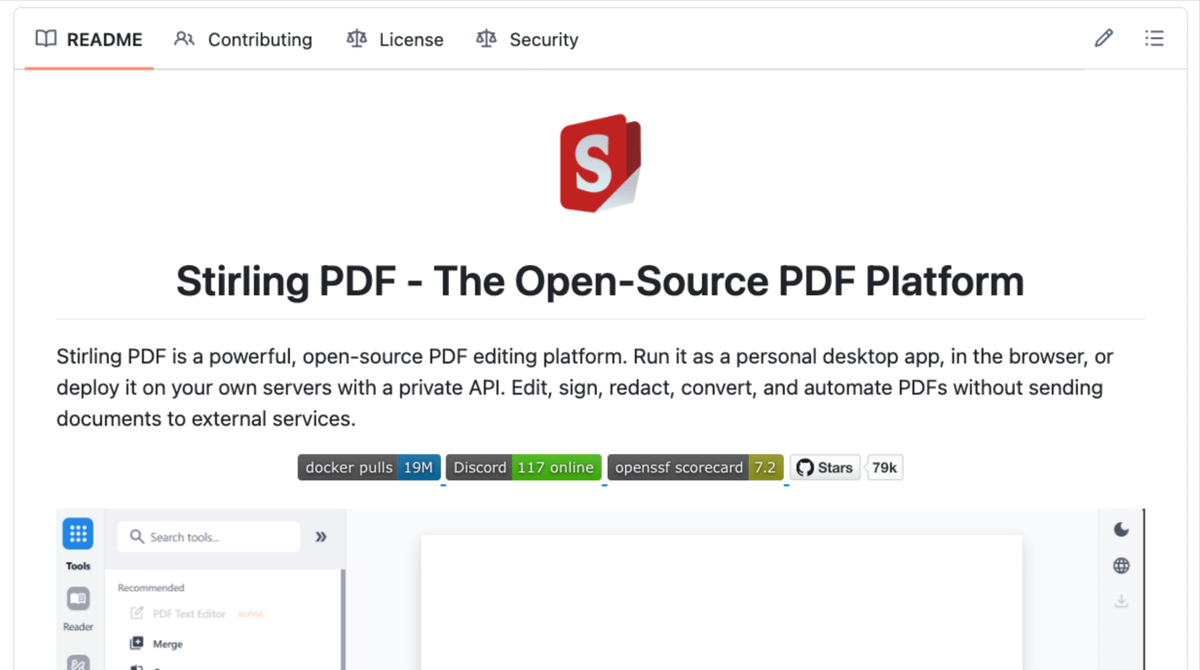
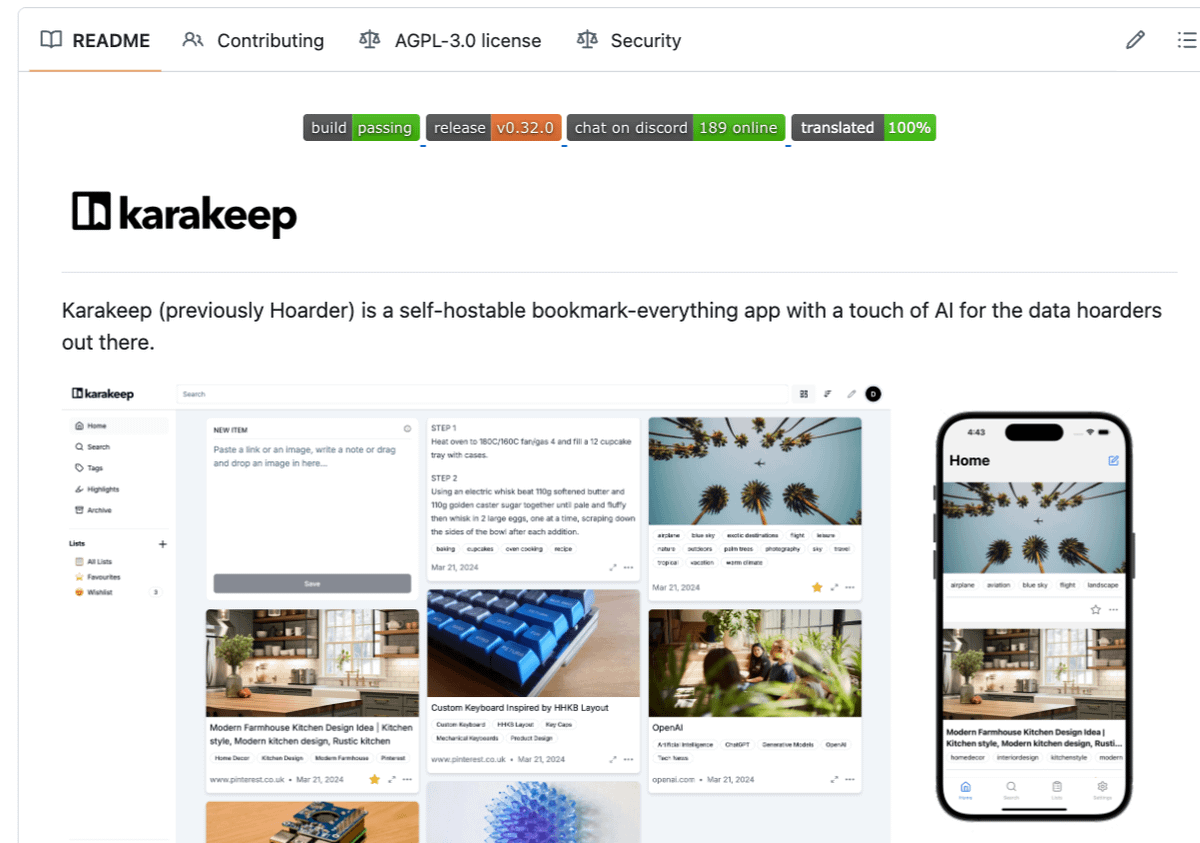
10 GitHub repos that quietly run my daily life and save me $2,000 a year in 2026. Bookmark this list. 1. Paperless-ngx Every receipt, invoice, contract, and tax document scanned, OCR'd, and tagged automatically. The most-cited "non-negotiable" self-hosted tool of 2026. Replaces Adobe Scan + Evernote at $15/month. Repo → github.com/paperless-ngx/… 2. Karakeep Saves every link, screenshot, article, and PDF I'll ever want again. AI auto-tags everything. Mozilla just killed Pocket. This took its place. Replaces Raindrop Pro + Pocket at $15/month. Repo → github.com/karakeep-app/k… 3. Vaultwarden Every password I'll ever need, on every device, encrypted. Replaces 1Password Family at $10/month. Repo → github.com/dani-garcia/va… 4. Anytype My notes, tasks, knowledge base, all local, all encrypted. Notion is $10 billion. Anytype is mine. Replaces Notion Plus + Roam at $20/month. Repo → github.com/anyproto/anyty… 5. AdGuard Home Blocks ads on every device on my home network. Phones, TVs, tablets, laptops. Replaces NextDNS Premium at $20/month. Repo → github.com/AdguardTeam/Ad… 6. Syncthing Syncs files across every device I own, peer-to-peer. No cloud, no subscription, no Dropbox account. Replaces Dropbox 2TB at $15/month. Repo → github.com/syncthing/sync… 7. Home Assistant Lights, doors, thermostat, security cameras — all on one dashboard. Replaces SmartThings Pro + Alexa Plus at $25/month. Repo → github.com/home-assistant… 8. Audiobookshelf Audiobooks and podcasts on every device. Beautiful apps. Mine forever. Replaces Audible + premium podcasts at $30/month. Repo → github.com/advplyr/audiob… 9. Stirling-PDF Every PDF operation in one place. Merge, split, OCR, compress, sign, redact. Replaces Adobe Acrobat Pro at $20/month. Repo → github.com/Stirling-Tools… 10. Bitwarden Send Encrypted file sharing with expiration timers. Replaces WeTransfer Pro + Dropbox Transfer at $20/month. Repo → github.com/bitwarden/serv… Save this. Share it with the person in your life still paying $190 a month for what's been free this whole time. 100% free. 100% open source.
Nav Toor tweet mediaNav Toor tweet mediaNav Toor tweet mediaNav Toor tweet media
English
40
310
2.4K
144.2K