
Rosetta Stone

35.1K posts

Rosetta Stone banner
Rosetta Stone

Rosetta Stone

@rosettastone

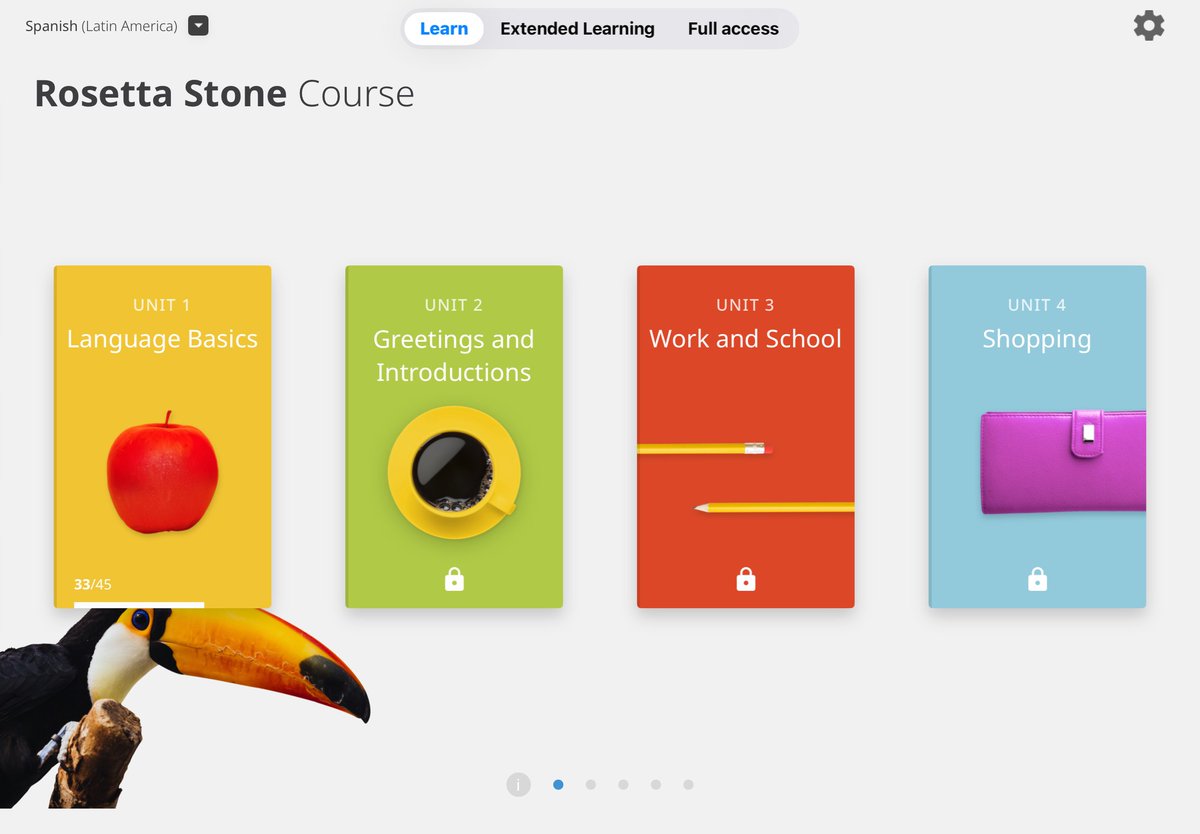
For over 30 years, Rosetta Stone has helped millions speak new languages with confidence. Follow us and start talking today!

가입일 Nisan 2008
664 팔로잉86K 팔로워
Rosetta Stone
Rosetta Stone@rosettastone·
Rather than unifying under a single language, #Belgium is divided into 3 distinct language regions. Each region has the freedom to preserve its unique traditions and manage its own institutions. Learn more about Belgium's multilingualism here: blog.rosettastone.com/what-language-…
English
1
0
2
209
Rosetta Stone
Rosetta Stone@rosettastone·
In #Japanese, suki (好き) usually means “like.” …ga suki desu(~が好きです。)= I like… (formal) …ga suki da(~が好きだ。)= I like… (casual) …ga suki(~が好き。)= I like… (very casual) Learn more here: blog.rosettastone.com/suki-in-japane…
日本語
0
0
3
436
Rosetta Stone
Rosetta Stone@rosettastone·
"How are you?" is one of the first questions you'll want to learn in any language. Here are some common ways to say it in #Italian: - Come sta? = How are you? (formal) - Come stai? = How are you? (informal) - Che si dice? = What's up? Discover more here: blog.rosettastone.com/how-are-you-in…
English
0
1
3
230
Rosetta Stone
Rosetta Stone@rosettastone·
What Is a #lexicon? 1. It's a complete collection of words, phrases, and bound morphemes used by a population 2. Every language has a lexicon, but specific professions or groups can also have their own, filled with specialized vocabulary Learn even more: blog.rosettastone.com/lexicon-defini…
English
0
0
2
260
Rosetta Stone
Rosetta Stone@rosettastone·
The #German language follows clear patterns: 1. Like English, it usually follows a subject-verb-object (SVO) order 2. In questions, the verb often comes first, followed by the subject 3. Adverbs generally follow a time–manner–place order Learn more here: blog.rosettastone.com/german-sentenc…
English
0
0
2
339
Rosetta Stone
Rosetta Stone@rosettastone·
To ask “Do you speak English?” in #Japanese: Casual: 英語を話す? (Eigo o hanasu?) Polite: 英語を話しますか? (Eigo o hanashimasu ka?) Honorific: 英語をお話になりますか? (Eigo o ohanashi ni narimasu ka?) Learn how to respond to this question here: blog.rosettastone.com/do-you-speak-e…
日本語
1
0
1
260
Rosetta Stone
Rosetta Stone@rosettastone·
#Switzerland’s commitment to neutrality, along with its location nestled among several European countries, has contributed to its rich multilingualism. Switzerland has 4 national languages, each with its own unique dialect, like Swiss French. Learn more: blog.rosettastone.com/switzerland-la…
English
0
0
3
282
Rosetta Stone
Rosetta Stone@rosettastone·
Argentinian Spanish sounds distinct from other #Spanish dialects. Key differences: 1. The pronunciation of “y” and “ll” sound more like the English “sh” sound in “fish” 2. It has a musical quality reminiscent of Italian intonation and cadence Learn more: blog.rosettastone.com/argentinian-sp…
English
0
1
2
324
Mike Fisher
Mike Fisher@mgfisher8·
Comment ça va, mi amigo!
Mike Fisher tweet media
Français
1
0
1
119
Rosetta Stone
Rosetta Stone@rosettastone·
6 common #Japanese question words: 1. Who → だれ (dare) 2. What → 何 (なに nani / なん nan) 3. Where → どこ (doko) 4. When → いつ (itsu) 5. Why → なぜ (naze), どうして (dōshite), なんで (nande) 6. How → どう (dō) or どうやって (dōyatte) Learn more: blog.rosettastone.com/japanese-quest…
日本語
1
0
1
479
Rosetta Stone
Rosetta Stone@rosettastone·
Here are some fun #Spanish idioms: 🥤 Ahogarse en un vaso de agua = To overreact to a problem 🥥 Comerse el cocoto = To worry excessively about something 🪱 Matar el gusanillo = To take the edge off your hunger Discover even more here: blog.rosettastone.com/spanish-idioms
English
0
0
1
207
Rosetta Stone
Rosetta Stone@rosettastone·
Want to improve your #German pronunciation and sound like a native speaker? The German alphabet uses all 26 English letters, plus four unique letters: Ä, Ö, Ü, and ẞ. Learn how to master them and speak authentically with this German pronunciation guide: blog.rosettastone.com/german-pronunc…
English
0
0
0
172
Rosetta Stone
Rosetta Stone@rosettastone·
Here’s a 5-step path to clearer, more confident speech in any language: 1️⃣ Listen to native speakers 2️⃣ Repeat what you hear 3️⃣ Get consistent feedback from language experts 4️⃣ Read out loud to connect speaking and reading skills 5️⃣ Practice Learn more: blog.rosettastone.com/how-to-perfect…
English
0
0
3
223
Rosetta Stone
Rosetta Stone@rosettastone·
English speakers have a head start in #German thanks to many similar words called cognates. But beware of false cognates: Gift = poison ☠️ Bad = bathroom 🚽 Hose = pants 👖 Chef = boss 👨‍💼 Discover more here: blog.rosettastone.com/german-false-c…
English
0
0
1
217
Rosetta Stone
Rosetta Stone@rosettastone·
In #French, “excusez-moi” is the go-to phrase for getting someone’s attention, especially when you want to ask a question or request help. But there are a few other options and it’s important to know when to use each one. Discover them here: blog.rosettastone.com/excuse-me-in-f…
English
0
0
0
224
Rosetta Stone
Rosetta Stone@rosettastone·
Did you know that #Japanese does not have a dedicated future tense? Rather than “past,” “present,” and “future,” Japanese verbs are divided into two tenses: “past” and “non-past.” Learn more here: blog.rosettastone.com/future-in-japa…
English
0
1
1
217
Rosetta Stone
Rosetta Stone@rosettastone·
How do you say “Excuse me” in #Italian? It’s not as simple as memorizing "scusa" and calling it a day. In Italian, the right expression depends on the situation, who you’re speaking to, and how formal you want to sound. We break it all down here: blog.rosettastone.com/excuse-me-ital…
English
0
0
1
243
Rosetta Stone
Rosetta Stone@rosettastone·
"Vamos"" and "vámonos" are the most common ways to say “Let’s go” in #Spanish. But what if you want to shout “Let’s go!” to cheer someone on? Here are a few different ways to say it (and show your support) in Spanish: blog.rosettastone.com/lets-go-in-spa…
English
0
0
1
212
Rosetta Stone
Rosetta Stone@rosettastone·
You might not speak #Latin daily, but every time you write in English or a romance language like Spanish or Italian, you’re using Latin! Discover how the Latin alphabet became the world’s most popular writing system and learn which languages use it today: blog.rosettastone.com/latin-alphabet
English
0
0
5
377
Rosetta Stone
Rosetta Stone@rosettastone·
Knowing how to say “yes” and “no” is critical in any language. Here are 3 common ways to say “yes” in #Japanese: - Hai(はい。)= Yes - Sō desu(そうです。)= That’s right - Mochiron desu!(もちろんです!)= Of course! (polite) Learn more here: blog.rosettastone.com/yes-in-japanese
日本語
0
0
1
422