We saw an opportunity and we took it.
We will make episode 1, if we get permission from @KITKAT and @druski
The Heist. The Druski Multi Verse.
And no. This is not Seedance 2.0
A young Saudi man reopened the well that his grandfather had built and left for him many years ago. When he saw the clear spring water, which was as transparent as crystal, he realized that this heritage was his grandfather’s most precious treasure.
Absolutely incredible. The Edo-Tokyo Museum boasts a rotating collection of over 350,000 historical artifacts. For the first few weeks, they are showcasing authentic Samurai armor from the Edo period. The preservation of history here is unmatched.
A cow escaped her farm in Poland in November and is living her new life. She has been found months later roaming a forest with a herd of European bison. Forest officials say the herd has fully accepted the cow as one of their own. ✨
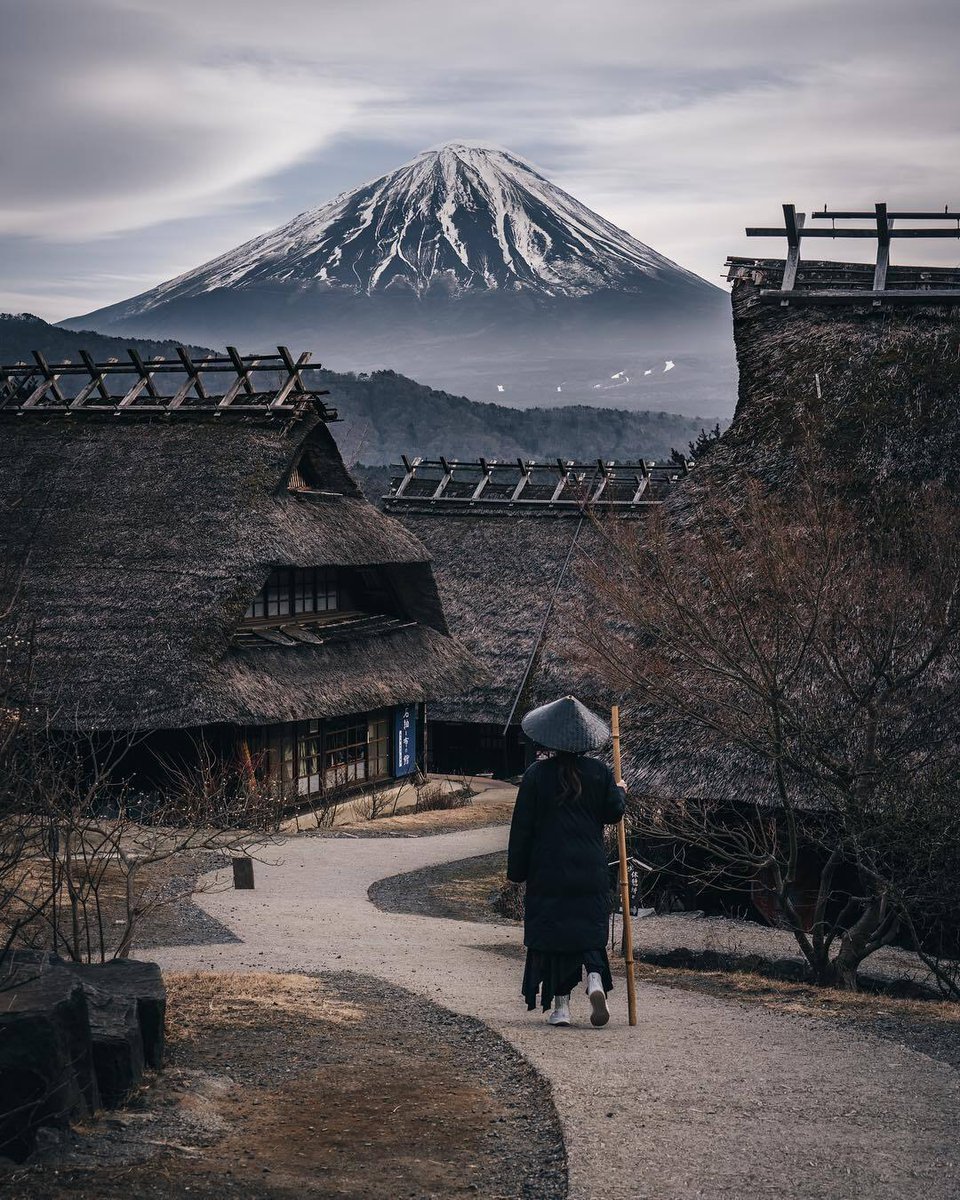
Japan; one of world’s most mountainous countries, so it’s not surprising that mountain worship is an historic element of Japanese culture. And of all mountains in Japan, Mount Fuji stands out as a unique cultural symbol. At 12,388ft, Fuji is Japan’s tallest mountain. Japan’s two major religions, Shinto and Buddhism, regard Fuji as sacred, and Japanese from all walks of life attest to power of this natural symbol so deeply inscribed in national psyche.
Japan’s sacred history and national identity are tied to this mountain, which, as author Edwin Bernbaum explains, “symbolizes quest for beauty and perfection that has shaped so much of Japanese culture, both secular and sacred.” Mount Fuji, a composite volcano, growing larger as layer upon layer of lava and ash built up on its slopes. Like its geologic history, Mount Fuji’s sacred history has also developed over time as different religions, beliefs and myths have added new layers. Since ancient times, mountains of Japan have been revered as sacred places, giving rise to a tradition of beliefs and rituals that scholars call sangaku shinko (mountain creed). When Shinto, native religion of Japan, emerged sometime before 6th Century AD, it wove this mountain creed into a wider veneration of nature. According to Shinto belief, natural features such as trees, lakes, streams, rocks and mountains are dwelling places of spirits called kami, which hold influence over human affairs and respond to human prayer and ritual. Kami are believed to be concentrated in mountain areas, and shrines have been erected to mark sacred spots. Introduction of Buddhism from China in 6th Century AD, further developed practice of mountain worship as Buddhists, who viewed mountain climbing as a metaphor for spiritual ascent to enlightenment, adopted Shinto sacred mountains as pilgrimage destinations. In 9th Century AD, a religious sect called Shugendo arose that based its doctrine and practice on mountain climbing itself, believing that practitioners could commune with deities on mountain summits and thereby obtain supernatural powers.
Name “Fuji” most likely came from an indigenous Ainu word meaning “deity of fire” not surprising for a volcano that erupted often. In 800 AD, a shrine was built near base of mountain with hope of placating god that caused volcano’s eruptions. Fuji later became regarded as dwelling of Shinto goddess Konohana Sakuya Hime, “Goddess of Flowering Trees.” Today, she is still principal deity of sacred mountain, revered in Shinto shrines at Fuji’s base and summit, including one originally built for older fire god and honored in a fire ceremony at end of each year’s climbing season. Buddhists found in Fuji an inspiring symbol of meditation and called its summit zenjo, buddhist term describing a perfect meditative state. Buddhists also came to regard Fuji as abode of Buddha of All-Illuminating Wisdom. In 14th Century AD, Shugendo practitioners established first climbing route to lead pilgrims to Fuji’s summit. Four centuries later, Fuji-ko, societies devoted to worship of Fuji, became a major religious movement and inspired thousands of people to embark on annual pilgrimages. Those unable to make climb used lava sand from mountain to create miniature Fujis in home gardens and Shinto shrines.
Today, pilgrims, including members of Fuji-ko, still climb Mount Fuji. Some stop to worship at shrine of Konohana Sakuya Hime, pray at summit altars or ritually circumambulate volcano’s crater. Others make the climb out a sense of tradition rather than genuine Fuji worship, but mountain’s strong mystical appeal continues. Mount Fuji, also an important religious center; nearly 2000 religious organizations are based around mountain, including one of Japan’s largest Buddhist sects.
#archaeohistories