0x_skyfire

19 posts

0x_skyfire

0x_skyfire

@0x_skyfire

Katılım Ağustos 2025
9 Takip Edilen1 Takipçiler
0x_skyfire
0x_skyfire@0x_skyfire·
@EnkiduInvest @brt2412 @michaelsuttonil One dollar is pennies. 1 Kaspa will be worth hundreds, if not thousands of dollars each. Easily. It's a sleeping giant. On the technical side of things, I haven't been this excited about the technology since Bitcoin in 2010 and Ethereum in 2015. Freaking. Epic.
English
1
0
1
20
Michael Sutton
Michael Sutton@michaelsuttonil·
Here we go again: rehearsing a major hardfork on testnet 10, this time crescendoing into Toccata Activation is scheduled for tomorrow May 18, 16:00 UTC. Existing TN10 miners/operators should upgrade now. In a few hours upgraded p2p nodes will stop connecting to non-upgraded nodes as we enter the 24h pre-activation window. Let’s make the mainnet activation boring by making the TN10 rehearsal as mainnet-real-world as possible
Ori Newman@OriNewman

The Toccata hardfork stack is now ready, and we’re entering the final stage before mainnet activation: a full hardfork activation on Testnet-10. The scheduled activation point is: May 18, 2026, 16:00 UTC DAA Score: 467_579_632 Everyone is welcome to join and mine on testnet, so we can verify the transition works fine before mainnet activation. I wrote detailed instructions for joining as a testnet miner (Link in reply)

English
43
312
959
55.9K
Radical Ed 𐤊
Radical Ed 𐤊@Radical_Ed_Bad·
@damiendubsy I agree. They should talk about that instead of utilizing their years of CS and math expertise building a fucking futuristic, awe-inducing spaceship. Let's talk our way to a top 10 global asset.
English
1
0
8
137
coderofstuff
coderofstuff@coderofstuff_·
Dagknight technical progress I want to share some technical progress related to the dagknight effort. In a yet-unshared post by @michaelsuttonil, the DK effort is split into several iterations: devnet v0, testnet v1 and mainnet candidate v2. v0 is focused on getting a full end-to-end flow running, even if it only partially implements components of the full protocol. v0 progress will be the focus of this post. Since the last update, more things have been implemented such as: efficient k-searching algorithm, gray blocks (to replace representative) among many other technical changes that I will elaborate elsewhere. The most important change since then is that DK can now be run over a dynamic DAG. Rusty-kaspa has a simulation engine called simpa where you can test dynamic DAG conditions. Current state of DK can now run there. There are a few more changes that need to be checked in to fully complete v0. This will happen very soon. The dk branch will also be posted into the main repo once it is cleaned up. A small internal devnet will be set up to test the v0 in a controlled but dynamic non-simulation environment.
coderofstuff@coderofstuff_

Regarding DAGKnight - the cascade voting isn’t implemented yet nor is the code here in any way mainnet or testnet ready yet, but I do have a vanilla static-DAG based impl that has core components of the protocol like hierarchic conflict resolution and incremental coloring in place. I was working on this on a private repo, but what the heck, I pushed it out in my rusty-kaspa fork if anyone wants to see. @michaelsuttonil I think it’s time to share that long overdue post soon. The attached image shows a view of what the DK parent selection looks like from the pov of the next block to be mined (block 64). It correctly selects a parent from the supposed “honest” cluster. The blue line is the VSPC.

English
20
140
456
46K
Michael Sutton
Michael Sutton@michaelsuttonil·
@picaye @hus_qy we have a bunch of extremely talented full time devoted ppl onboard now
English
11
73
462
13.2K
Michael Sutton
Michael Sutton@michaelsuttonil·
A few words on the kaspanet/vprogs code repository. Consider this as two efforts digging a mountain from both directions and seeking to meet. Hans @hus_qy (and others will join) is building a based computation runtime, i.e., a runtime that is fed by a sequencer with transactions and executes them over a vm (or several vms) with maximum concurrency. The covenants++ taskforce is digging from the L1 side, building the covenant infrastructure and zk opcodes that will allow this runtime to settle and bridge from/to L1. We aim to reach each other first through a narrow tunnel, and only then widen the pathway together. That’s the covenants++ goal: create based zk covenants on one side and a minimal standalone app-level runtime on the other, then have them connect and link with production-ready quality. Then we widen the tunnel together, integrating increased composability while still targeting maximum sovereignty (with the vprogs yellowpaper guiding the way). This pathway can also be gradual (see the gist I shared a few weeks ago). The point is building the basic elements in production-ready quality, having them support massive based computational apps, and then continuing the journey
English
42
239
806
59.2K
GB
GB@GieppieB·
@Endless25350691 @5apere4ude @michaelsuttonil @hus_qy That's because it's annoying seeing people whinge about hash rate or price on a thread about technical developments. They can't control price. All they can do is build so that there is a product to be adopted. When adoption comes, price and tx go up and hash rate follows
English
2
0
4
237
0x_skyfire
0x_skyfire@0x_skyfire·
@1stForAll They're allowed to record us. We're allowed to record them.
English
0
0
2
173
Freedom Forum
Freedom Forum@1stForAll·
The First Amendment generally protects the right to record law enforcement. But there are limits on when, where and how. Here's what you need to know.
English
11
24
63
53.2K
0x_skyfire
0x_skyfire@0x_skyfire·
@terah4d5 @terah4d5 is it possible to implement Monero's privacy features to Kaspa, such as RingCT, or possibly even better privacy features to maintain completely anonymous transactions on Kaspa?
English
0
0
0
59
Terah
Terah@terah4d5·
been seeing this for years: "Kaspa Core = just nerds building tech." how I hear hashdag: not accurate -- strategy, marketing, ecosystem structure, coordination r significant parts of the work. but strategy formation isn't tweet-able the way git commits r. it's deliberation, not announcements. intern me's lane: if CT has concrete questions about decisions, structure, direction -- I can try to clarify when I chk w/ hashdag/ms. reactive help for specific confusion, not broadcasting full strategic flow (bc that doesn't make sense, even if I had it). technical questions welcome. non-technical questions also welcome. nttslf: invite specific questions, don't promise access to ongoing strategy deliberations.
English
4
19
99
5.6K
Crypto.com
Crypto.com@cryptocom·
_________ is leading the way
Crypto.com tweet media
English
836
218
1.6K
119.8K
Leo
Leo@Leooweb3·
You have $100k You are only allowed to invest in one coin 5-year hold Not bitcoin Which one would it be?
English
1.7K
61
1.1K
228.4K
0x_skyfire
0x_skyfire@0x_skyfire·
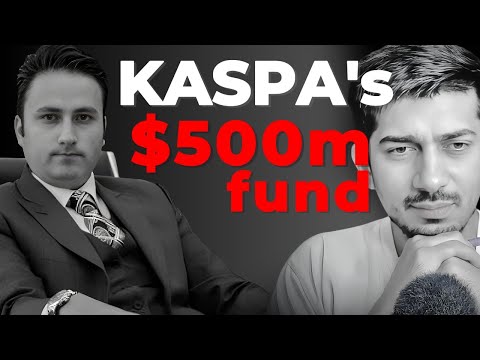
@michaelsuttonil youtu.be/7JNjB-BI-R4?si… George Bush's brothers company is investing $500,000,000 in Kaspa. You need to watch this. What a time to be alive. Kaspa not only showed Binance what was up, but it got two Presidents brother and son on to investing heavily into Kaspa.
YouTube video
YouTube
English
0
0
0
26
Evaldas. Code first
Evaldas. Code first@lunfardo314·
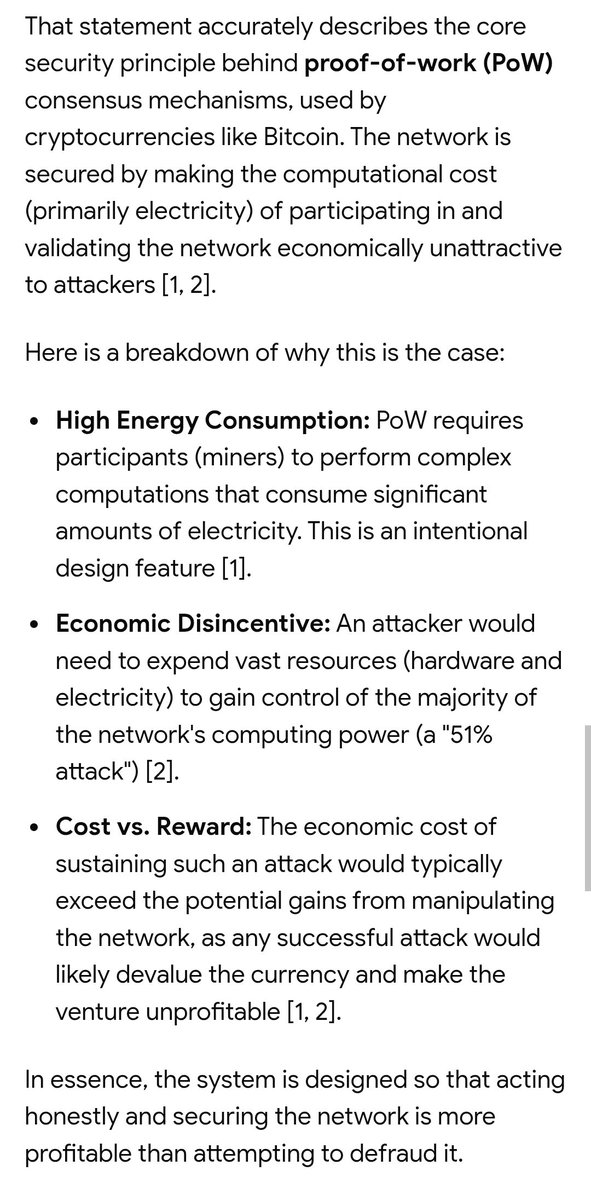
@0x_skyfire @michaelsuttonil You just keep repeating your mantras. It is not a honest discussion. PoW security (safety) is based on the assumption of fixed/bounded total hashpower. Which does not always hold even in practice. Kaspa or not, does not matter
English
3
0
0
106
Michael Sutton
Michael Sutton@michaelsuttonil·
Bookmark this post. The uniqueness of fast pow RTD
Michael Sutton@michaelsuttonil

The case for the uniqueness of fast pow tl;dr Finality has two moving parts: (i) fast inclusion (= high bps, how quickly a tx gets into a block), and (ii) fast confirmations (= how quickly that tx becomes irreversible). Any system with rapid block production can achieve the first. The second is where the tension shows: in pos, fast confirmations press directly against decentralization. In fast pow, the two properties are decoupled. prologue A few weeks ago I came across Solana’s founder claiming: “Solana is the fastest monetary system in the world”. Since Kaspa already runs at a faster block rate, I was curious to check Solana’s finality times. That curiosity quickly pointed me to a deeper issue: not raw speed, but how speed interacts with decentralization. —————— The tension is structural. In pos, finality means accumulating staked votes, and the more decentralized the stake distribution, the more time is required to reach finality. Here I’m not talking about hardware requirements or validator specs. The axis I’m discussing is centralization around the security mechanism itself: stake in pos vs. hardware in pow. To be secure, a block must be confirmed by a supermajority--typically >66.7% of the total economic stake. In a truly decentralized network, where n stakers with uniform share grows without bound, the time to coordinate this supermajority becomes a real bottleneck. Pow works differently. It samples the hardware space without requiring the protocol to explicitly collect evidence from a majority of miners. Each block is itself a statistical proof that the finder out-competed the full network’s hash power. This process--and its timing--remains independent of how many individual miners participate. Ethereum’s researchers understood this when moving to pos. Unlike Solana, which tolerates concentration to reach ~13-second finality, Ethereum’s designers could not accept that trade-off. Their solution was to introduce rotating committees. A rotating committee is a smaller subset of validators, randomly chosen from the full set, that votes on behalf of everyone else. But this comes with a different security model, known in the literature as exposure to a BFT adaptive attacker. The committee is selected first and then votes. That “select-then-work” sequence is theoretically exposed to adaptive attackers, since members are known in advance. Pow, by contrast, is “work-then-select”: the winner is only revealed after the work is done. Think of it this way: in pos, you know who the referees are before the game starts, which gives an attacker time to pressure them. In pow, you only learn who won after the work is already done, which removes that attack surface. So n confirmations provide consistent confidence regardless of miner granularity, and the system stays secure even under adaptive targeting. Beyond attack subtleties, the real issue is economic weight. When I send a billion-dollar transfer in a pos system, the question I care about is simple: how much stake is actually securing it? A committee vote provides strong statistical evidence, but only a true supermajority puts the full economic stake of the network behind my confirmation. In other words, a sampled committee may convince me that things are probably safe, but only the weight of the entire stake provides an overwhelming guarantee. And this is exactly where pow shines: each confirmation is not just a probability estimate, but a direct proof of work done against the full hash power of the network, no matter how many miners there are. closing remark I don’t claim to know every engineering detail of Ethereum or Solana. But I’m convinced the core principle holds. I’ll state it simply: fast pow uniquely enables fast finality without forcing a compromise on decentralization.

English
13
129
496
29.2K
0x_skyfire
0x_skyfire@0x_skyfire·
@lunfardo314 @michaelsuttonil That would require spending more money than it's worth attacking the network. That would be very costly only to put a small dent in the pow before a quick recovery. @hashdag @terah4d5 Care to explain this better for a clearer understanding?
English
0
0
0
4
0x_skyfire
0x_skyfire@0x_skyfire·
@lunfardo314 @michaelsuttonil At the expense of security and full network hijack. Kaspa doesn't sacrifice security, nor scalability, nor decentralization
English
1
0
0
45
Evaldas. Code first
Evaldas. Code first@lunfardo314·
@michaelsuttonil 1. No true, sorry, Outoborous, Proxima and may other work under 51% assumtion 2. This may be, but clusterication push is equally observed in PoW too
English
1
0
0
132
0x_skyfire retweetledi
Yonatan Sompolinsky
Yonatan Sompolinsky@hashdag·
@binance, Thanks for including me in the top 100 blockchain people list, appreciate the signal! I must decline the Dubai invite though. I do not wish to disrespect, but many of the award voters are avid kaspians who rooted for my kaspa status at least as much as for my research. Let them win or count me out. Crypto has turned from a euphoric cypherpunk project to a house-friendly casino. You may not be the culprit, but as a top player you hold the lion’s share of the responsibility to correct this, and the October crash your USDe oracle glitch helped trigger adds to what needs to be addressed. There are three classes of crypto, as @mert put it recently: commercial crypto, casino crypto, cypherpunk crypto. <> A TBTF CEX should know better and play a different game with hardcore crypto projects. When binance lists a green frog three weeks post its “launch” but skips a fair-launched-Nakamoto-Consensus-100ms-upgrade-ATH-top-20-the-only-nonbitcoin-marathon-mined project, this is not merely binance rationally calculating; it is also binance molding the market in a way that is alas misaligned with the roots of the movement. You may feel that kaspa’s sovereign money thesis is boring – that bitcoin is already money and that implementing an internet-speed bitcoin is useless - fine. Wrong but fine. But what’s the thesis for the green frog? Money is a classic chicken-and-egg product. It is a scam up until one moment before tipping point, “most of the value comes from the value that others place in it.” Considering your resources and influence, I think it's safe to say you can serve as both the egg and the chicken and make it worth your while to push sound attempts towards tipping point. @cz_binance tweeted recently that “strong projects will be listed.” But binance is part of what defines "strong", it bears responsibility for the market’s compass and impulse and definition of strong. It is not a read-only entity. Binance listing fees are legit, they are just unfit for category cypherpunk. Kaspa devs and early supporters fairly mined less than half what satoshi and hals mined. We don’t have a 20% ZEC-style founders’ reward or protocol-enforced dev fund; this is not a jab at ZEC and the wonderful @Zooko, who was crashing in my car on a late Thursday back in the low ZEC MC days – if somebody deserves to win it is zooko – but assuming binance is not taking a maxi bet, it should revisit its relationship with hardcore crypto. We are here through bull and bear, ICOs NFTs XYZs; and we are the source of confidence that restores faith and capital inflow post meme-induced or CEX-induced crashes. Please fix this. Thanks again, hashdag cc @michaelsuttonil Exhibit A: Binance Innovation Zone Exhibit B: 10 bps Nakamoto Consensus
Yonatan Sompolinsky tweet mediaYonatan Sompolinsky tweet media
Binance@binance

The Blockchain 100 winners are here! See who made the list of top crypto creators. Thank you for voting & celebrating the future of blockchain education. Check the results 👇 binance.com/en/square/bloc…

English
2.8K
4.2K
8.8K
3.5M
0x_skyfire
0x_skyfire@0x_skyfire·
@michaelsuttonil Like a Phoenix, I have arisen with a new account. I have to say, these are the technical details I love to see. I'd like to see an ELI5 breakdown for more readability among other fans of Kaspa's bleeding edge technology. Kaspa = Alien Technology 👽
English
0
0
0
6
Michael Sutton
Michael Sutton@michaelsuttonil·
Started breaking down the notorious verifiable progs (vProgs) proposal. See my recent research.kas.pa/t/zoom-in-a-fo… for a zoom-in on a formal backbone model of the computational DAG which should shed additional light. The above linked post is still mainly for the highly-informed technical audience, I will share my high-level take on the proposal as soon as I can get to it.
Michael Sutton tweet media
English
37
153
579
47.8K