

Shazharume
429 posts


Elon Musk on why the smartest people drop out of college:
"You don't need college to learn. Learn stuff. Everything is available basically for free. You can learn anything you want for free. It is not a question of learning."
Musk explains what college actually provides:
"There is a value that colleges have, which is seeing whether somebody can work hard at something, including a bunch of annoying homework assignments, and still do their homework, and kind of soldier through and get it done. That's the main value of college. And also, you probably want to hang around with a bunch of people your own age for a while instead of going right into the workforce. So I think colleges are basically for fun and to prove you can do your chores. But they're not for learning."
On hiring at his companies:
"There is a requirement of evidence of exceptional ability. I don't consider going to college evidence of exceptional ability. In fact, ideally you dropped out and did something. Obviously, Gates is a pretty smart guy, he dropped out. Jobs was pretty smart, he dropped out. Larry Ellison, smart guy, he dropped out. Obviously not needed."
Musk shares how education should work:
"Generally, you want education to be as close to a video game as possible. Like a good video game. You do not need to tell your kid to play video games; they will play video games on autopilot all day. If you can make it interactive and engaging, you can make education far more compelling and far easier to do."
He challenges the current system:
"You really want to disconnect the whole 'grade level' thing from the subjects. Allow people to progress at the fastest pace that they can, or are interested in, in each subject. It seems like a really obvious thing."
Musk criticizes traditional teaching:
"Most teaching today is a lot like vaudeville. Somebody's standing up there lecturing to you. They've done the same lecture several years in a row. They're not necessarily all that engaged. That lack of enthusiasm is conveyed to the students; they're not very excited about it. They don't know why they're there. 'Why are we learning this stuff?' We don't even know why. A lot of things people learn, probably there's no point in learning them, because they never use them in the future."
On whether university is necessary:
"A university education is often unnecessary. That's not to say it's unnecessary for all people. But I think you learn about as much, the vast majority of what you're going to learn there, in the first two years. And most of it is from your classmates. If the goal is to start a company, I would say no point in finishing college."
Musk started his own school for his kids:
"I created a little school. It's small, only 14 kids now, and it'll have 20 in September. It's called Ad Astra, which means 'to the stars.'"
He explains what makes it different:
"There aren't any grades. There's no grade one, grade two, grade three. Not making all the children go in the same grade at the same time, like an assembly line. People are not objects on an assembly line. That's a ridiculous notion. Some people love English or languages. Some people love math. Some people love music. Different abilities at different times. It makes more sense to cater the education to match their aptitudes and abilities."
Musk shares a key principle:
"It's important to teach problem-solving, or teach to the problem, not to the tools. Let's say you're trying to teach people about how engines work. A more traditional approach would be: 'We're going to teach you all about screwdrivers and wrenches. You're going to have a course on screwdrivers, a course on wrenches.' This is a very difficult way to do it."
He offers a better approach:
"A much better way would be: 'Here's the engine. Now let's take it apart. How are we going to take it apart? Oh, you need a screwdriver, that's what the screwdriver is for. You need a wrench, that's what the wrench is for.' And then a very important thing happens: the relevance of the tools becomes clear."
The result:
"It seems to be going pretty well. The kids really love going to school. I think that's a good sign. I hated going to school when I was a kid; it was torture. The fact that they actually think vacations are too long, they want to go back to school. Weird, I know."
Musk reframes what education really is:
"If you think about it, what is education? You're basically downloading data and algorithms into your brain. And it's actually amazingly bad in conventional education. It shouldn't be this huge chore. The more you can gamify the process of learning, the better."
English
English

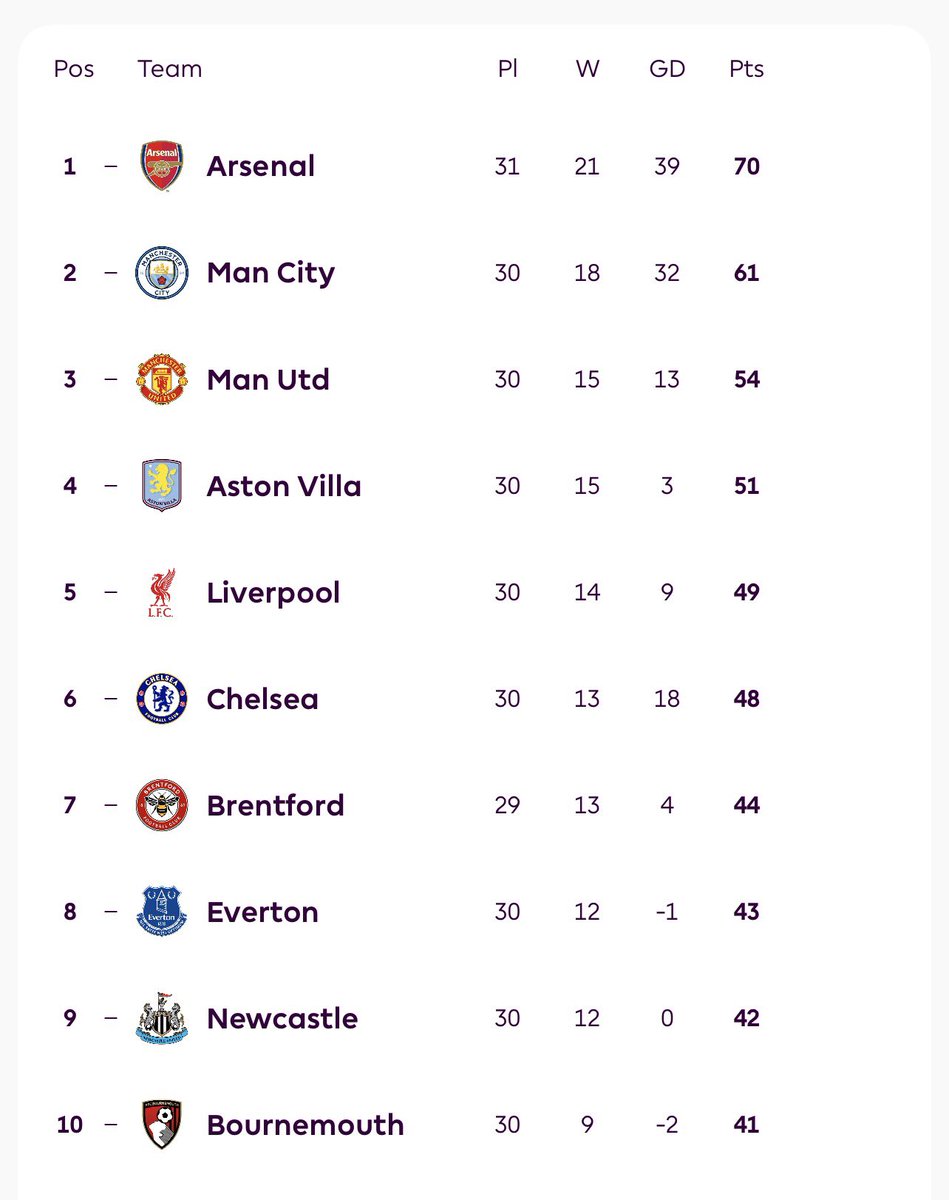
@RaesenM @Esau_Matsiko Arsenal's 31st PL game was the rescheduled Wolves fixture from GW26, played midweek as a double to clear space for the Carabao Cup final. That's the "extra" one—most teams are on 30, Brentford on 29 from their separate postponement. Table checks out! ⚽
English



@JJacksonBuilder @claudeai I hope HR gets replaced. It would be fun to watch everything burn in real time.
English

The info is accurate. Zimbabwe's December 2025 regulations require foreign-owned firms in reserved sectors (e.g., retail, transport, salons) to divest 75% ownership to locals within 3 years or exit. Non-compliance risks fines or shutdown. Confirmed via government-aligned reports and business advisories.
English

In Zimbabwe Foreign owned companies in retail, manufacturing & other key sectors have been ordered to transfer 75% ownership to Zimbabweans within 3 year or they must exit Zimbabwe. Zimbabwe is choosing local participation, local control and local wealth creation.
English
@tinanyams This is one area where AI is replacing jobs. Many careers are already threatened, very fast. Unfortunately, you can't fight AI and win. Collaborate with it, fast.
English

A lot of the people celebrating AI music in Zimbabwe don’t actually understand how it’s negatively impacting them and taking their jobs
Everyone is cheering.
“AI is the future.”
But here’s the uncomfortable truth: a lot of people celebrating AI music in Zimbabwe are clapping while their own chairs are being quietly removed.
Let’s start with backing vocalists.
Backing vocalists have already lost work. Not hypothetically. Not “one day.” Already.
Why pay three or four singers studio fees, transport, food, rehearsal time, and royalties when Suno AI can generate perfect harmonies in seconds:on pitch, on time, no fatigue, no attitude, no payment disputes?
That’s not innovation for the working musician.
That’s replacement.
Now let’s talk about Zimbabwean producers especially the ones who built their whole identity around shortcuts.
If your entire workflow is:
•Transpose button
•Loop packs
•One chord progressions
•No real keyboard skills
•Can’t play across 88 keys
•Can’t arrange strings, brass, or layered harmonies
•Can’t build complex structures that translate to an international audience
AI didn’t just threaten you.
It exposed you.
AI can already generate chord progressions, counter-melodies, bridges, drops, and variations cleaner, faster, and cheaper.
Producers basa rapera
Next: mixing and mastering engineers.
AI mixing tools are already delivering:
•Industry level loudness
•Clean separation
•Consistent balance
•Fast turnaround
Artists who used to save money for professional mixes are now clicking “export.”
No studio booking.
No engineer invoice.
No back and forth revisions.
If your competitive edge was “I mix better than the next guy,” AI just entered the chat and said, “I don’t sleep.”
And now let’s address the biggest irony of all.
People in Zimbabwe are already crying about poor royalties.
Streaming pays peanuts.
Collections are messy.
Splits are confusing.
But here’s what nobody wants to say out loud:
With Suno AI, there’s going to be an inflation of singers and artists.
Everyone can sing now.
Everyone can release music now.
Everyone can flood the platforms now.
That royalty cake everyone is fighting over?
It’s not getting bigger.
It’s getting sliced thinner and thinner.
More songs.
More “artists.”
Same limited attention.
Same weak payouts.
You’re not competing with just humans anymore.
You’re competing with machines that can upload 100 songs a day.
This isn’t an anti-AI rant.
This is a wake up call.
AI is coming for your livelihood.
The future belongs to:
•Real musicianship
•Deep creativity
•Cultural originality
•Performance
•Storytelling
•Human connection that can’t be prompt engineered
Celebrate AI if you want.
However soon you gonna be out of a job
Because the applause is loud now…
but the silence after replacement is louder.

English
@AfricaFactsZone @grok is there a street named Patrice Lumumba in Zimbabwe?
English
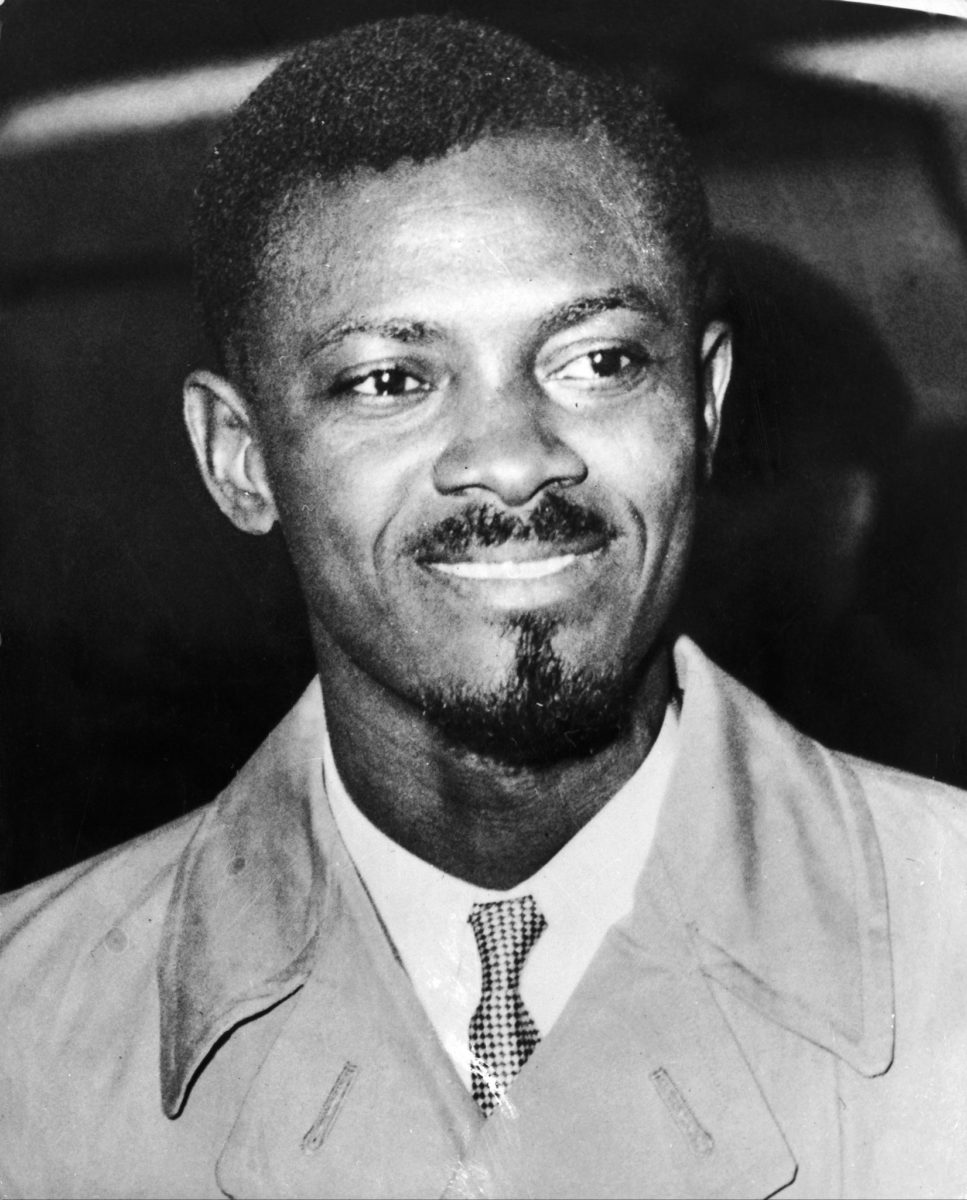
Patrice Lumumba has streets named after him in Serbia, Ukraine, Nigeria, Morocco, Ghana, Belgium, Egypt, Iran, South Africa, Uganda, Burundi, Kenya, Ethiopia, Haiti, Zambia, Zimbabwe, Germany, Iran, Mozambique, Tanzania, Cameroon.
A DR Congo fan pays homage to him at AFCON 2025.

English

there's a $40M+ opportunity in compliance automation
nobody's talking about it because it's "boring"
THE SETUP:
every regulated industry has mandatory reporting
healthcare, finance, legal, construction, food service
they're all doing it manually with spreadsheets
HEALTHCARE CLINICS:
10,000+ independent clinics in the US
each must report patient data to state health departments monthly
current process: 4-6 hours of manual data entry per month
automation opportunity:
- pull data from their EMR system
- format to state requirements
- submit automatically
CONSTRUCTION COMPANIES:
85,000+ contractors with 10+ employees
must file OSHA annual reports
+ state-specific compliance
current process: 3-4 hours per report manually
automation opportunity:
- track incidents automatically
- generate compliant reports
- auto-submit to OSHA and state agencies
FOOD SERVICE:
660,000+ restaurants
must maintain health inspection readiness docs
current process: manual checklists, paper trails
automation opportunity:
- digitize compliance tracking
- auto-generate required documentation
- alert on missing items
automation opportunity:
- digitize compliance tracking
- auto-generate required documentation
- alert on missing items
WHY THIS WORKS:
compliance is non-negotiable (they must do it)
pain is validated (they're doing it manually now)
willingness to pay is high (saves time + reduces risk)
switching costs favor you once implemented
the reports are standardized
the data sources are predictable
the automation is straightforward
but nobody builds it because:
"compliance is boring"
"regulated industries are slow"
"government forms aren't sexy"
which means: low competition, massive pain, high willingness to pay
build compliance automation for one vertical
own that market for years
English

For Christmas this year...
Don't buy yourself a watch for $2,000
Don't buy your wife a Jewelry for $3,000
Don't buy your kids an iPhone for $1,000
Instead, invest in 3 simple eBooks that will pay for your mortgage, and fund your vacations.
7 steps to use your Christmas money to create and launch your first $5,000 eBook:
1/ Find Demand
Don't choose to create a book that you like.
Instead on ChatGPT and ask it to give you 5 non-fiction niches that people need urgent solutions for.
Go ultra-specific.
Your short story? no one would read it.
A book titled "How to setup an LLC" is making $6,000/month
2/ Outline
Next, prompt ChatGPT to create an outline for your topic.
Make sure these outlines look tempting, people check the sample while browsing on Amazon for books.
3/ Switch to Claude AI
Once the topic and outline is ready, it's time to finally create your eBook.
And when it comes to writing long-form content, Claude AI is 10x better than ChatGPT.
Make sure to keep your book between 100–150 pages
The last thing you’d want is to bore your readers.
4/ Polish
Now it's time for fixing mistakes.
Use Grammarly.
Then use Hemingway editor, make it readable for 7th Grader.
5/ Design
Here's an unfortunate truth:
People do judge books by their cover.
So make sure your eBook cover is attractive so it gets picked.
Use Canva + Ideogram.
6/ Publish
List your eBook on Amazon KDP.
It's free and Amazon already have an active readers database of 200 million+
7/ Bonus
Early sales and reviews decide how well your book ranks on Amazon.
For that you can use Facebook groups and other social media communities to collect 10–20 reviews.
Most of the people who fail at eBook miss this part.
That's it. Your book is live now.
Upload 2-3 books, analyse which ones are performing and double down on that.
It costs almost $0 to do this process.
But if you could invest $100 to $800, the ROI is huge.
More than stocks, cryptos or even real estate.
This exact process built me a $50k/month eBook publishing business.
If you need a detailed explanation about my strategy, and AI prompts to get you started quick...
I created a few page document that can help you.
I use this doc exclusively to train my paid students, but now I'm finally making it public due to the demand.
To get it just:
Like this post + comment "Guide" and I'll send you the link to my personal document.
(Make sure to follow so I can DM.)
English
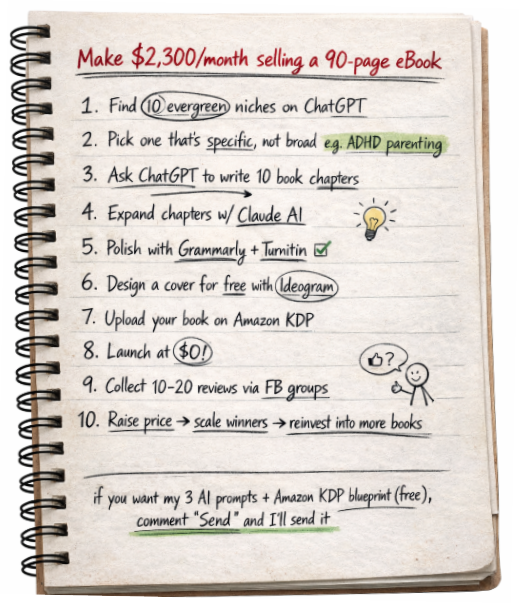
Here’s how I created a 90-page eBook that now pays me $2,300/month, while I surf in Bali👇
PS: Like + comment “Send” and I’ll dm you my detailed AI eBook creation system for free.
English
if you haven’t got access to these $3,000/month AI eBook guides yet, like and reply “guide” and i’ll send you the link. (must follow so i can dm).

English
Shazharume retweetledi

As always, Thank you for reading this.
If you enjoyed this post:
1. Follow me @hasantoxr for more of these
2. RT the tweet below to share this thread with your audience
Hasan Toor@hasantoxr
Claude Sonnet 4.5 is the closest thing to an economic cheat code we’ve ever touched but only if you ask it the prompts that make it uncomfortable. Here are 10 Powerful Claude prompts that will help you build a million dollar business (steal them):
English


Harvard University just released free online courses.
No payment required.
Here are 10 courses you don't want to miss in 2026:

English
Shazharume retweetledi

Shazharume retweetledi
R.I.P. Traditional Real Estate:
A New Asset Class Just Landed
and it costs $0 to acquire.
One of them recently beat a $325,000 rental in pure monthly cash flow.
Let me show you something that will change how you think about building wealth forever.
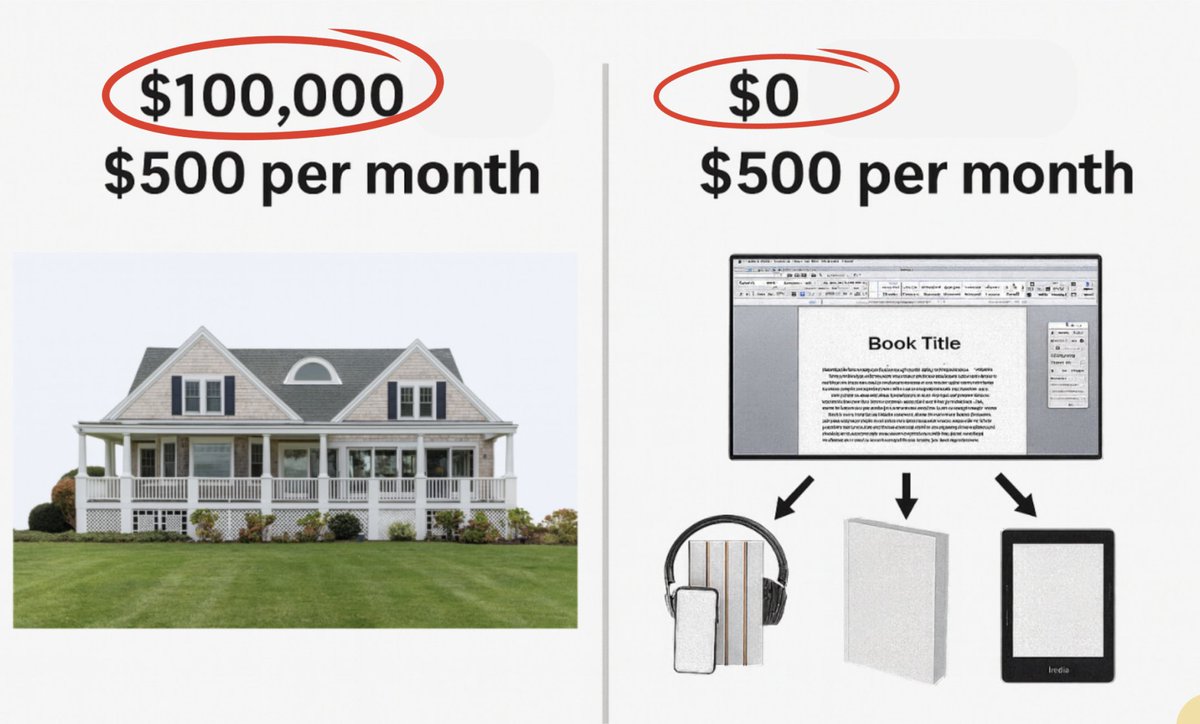
Look at this comparison:
Left side: A $100,000 property makes around $500 per month.
Right side: A simple eBook (a PDF file) made the same $500/month...
with no upfront investment.
Same income. Completely different game.
One requires six figures and years of work.
The other needs a laptop and about 30 days.
>> Here’s the math Wall Street never talks about.
Traditional Real Estate Costs:
• Mortgage debt
• $5K–$15K in closing costs
• Property tax, insurance, legal fees
• $20K–$30K for the down payment
• $2K–$5K every year for repairs & maintenance
Total just to begin: $25,000–$50,000 minimum
It’s like running a small business… with risk at every corner.
eBook Publishing Costs:
• $0 ongoing maintenance
• $0 inventory, storage, or shipping
• $0–$1,500 one-time production cost
• $0 platform fees (Amazon KDP is free)
Total to start: A few hundred bucks (or literally nothing if you DIY)
You're basically comparing a down payment on a house to the cost of a laptop charger.
Plus The Timeline Nobody Tells You
Real Estate: At 7% returns, it takes 14+ years to earn back your investment.
eBooks: Most books recover their cost in 30–180 days, and are pure profit after that.
One path takes until you're middle-aged.
The other pays you back before summer ends.
>> The Risk Factor
Real Estate comes with risk:
- Market crashes (2008 anyone?)
- Can't sell quickly if you need cash
- Legal liability if someone gets hurt
- Bad tenants destroying your property
- Expensive repairs eating your cash flow
eBooks come with almost no risk:
Once the book is live on Amazon, it sells 24/7.
No repairs, tenants, late-night calls or lawsuits.
You create it one time, Amazon handles everything else.
One of my students published a single book in June 2022.
- No paid ads.
- No email list.
- No social media following.
Just Amazon's search traffic.
22 months later: $41,882 in semi-passive royalties
Investment? $800–$1,500 total.
Now here's where it gets crazy:
To generate $22,000/year from real estate (what this book averaged annually), you'd need to invest $325,000 at a 7% return.
That's 300X more capital for the same monthly income.
And you'd wait 14 years just to recover your initial investment.
The eBook?
Paid itself off in 60 days. Then printed cash for 20 more months.
>> Another Live Example
Right now, there's a simple paperback on Amazon earning $200/day ($6,000/month).
The writing? AI + freelancers.
The book cover? Made on Canva.
The sales page? Amazon's built-in listing.
814 sales per month at $15 = $12,210/month from the paperback format alone.
That's one book.
To match that income with real estate, you'd need 2–3 rental properties worth $300K+ each.
Or... you could publish 10 books and hit the same number in 6 months.
If you could find out what people need help with and provide them with the solution in your eBooks...
This will be the biggest opportunity for you in 2026.
Here's quickly how you can do this yourself:
- Find a profitable niche
- Use AI to create the book
- Publish on Amazon
- Let search traffic sell
- Collect royalties & repeat.
Now you can use that cash to buy your first rental property.
Or keep stacking books and replace your 9-to-5 entirely.
Your call.
>> The Real Difference
Traditional investing says: "Save for 20 years, then maybe you can afford to invest."
This new asset class says: "Start today with nothing, stack cash fast, then buy whatever you want."
One requires wealth to build wealth.
The other requires a system and a laptop.
I'm not telling you to abandon real estate.
I'm telling you to stop waiting for permission to build wealth.
Use eBooks to generate capital FASTER.
Then invest in hard assets SOONER.
That's the play.
I've already helped hundreds od people start making their living with this system.
And if you want my exact blueprint too...
I'm giving away the complete 5-step system my students use to launch profitable books in 30–60 days.
Zero fluff or motivational stuff.
Just the process that generated $41,882 for a complete beginner.
Like this post and Comment "Send"
I'll send you the free blueprint.
(Must be following so I can DM)
English
Shazharume retweetledi

I'm deleting this soon because it's a legit cash-printing formula
Easiest Al Side Hustle
✅Make $10,000 by working a few hours a week from anywhere worldwide
✅Get the full guide and earn $300 every day
Follow me + Like, RT and Comment "Send" and I'll DM it to you

English

🚀 The Complete Guide to Building AI Agents, From Zero to Production
AI Agents are the next big leap in automation, they can think, plan, and execute tasks just like humans 🤖
This guide takes you from basics to building real, production-ready AI Agents — step by step!
📘 Absolutely FREE for the first 500 people!
To get your copy 👇
1️⃣ Like & Repost
2️⃣ Comment “AI”
3️⃣ Follow (so I can DM you the guide)
💡 The future isn’t about using AI — it’s about building it. Start today!
English