Sabitlenmiş Tweet
Norma Perez Flores
1.3K posts

Norma Perez Flores
@2020aggiemom
Proud Mommy to my beautiful Aggie daughter...Class of 2020! Marine Wife!
Katılım Ağustos 2017
459 Takip Edilen97 Takipçiler
Norma Perez Flores retweetledi

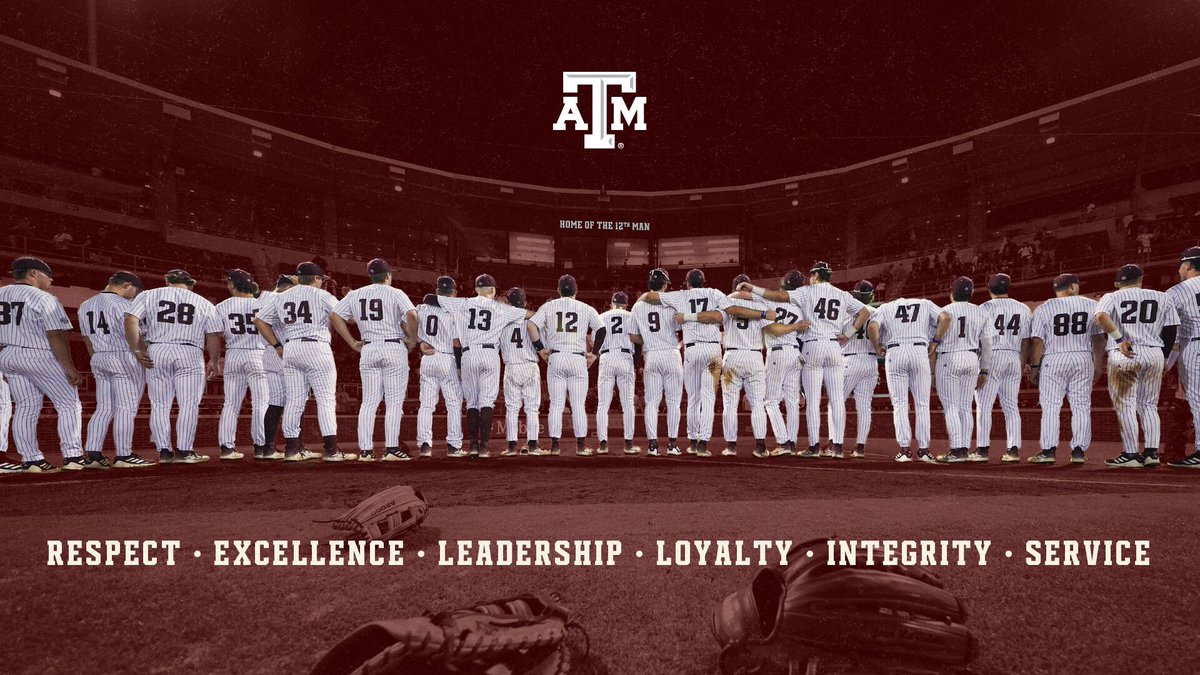
We are proud to celebrate our @Aggiebaseball team, who embody the Core Values that Texas A&M stands for.
Join us today, as Aggies everywhere show their support for the true Aggie Spirit exhibited by the players not just in Omaha, but every day. #12thMan

English
Norma Perez Flores retweetledi

@camarillo_ali @12thMan Ali, I saw your mom’s interview on the news. We love y’all! Love & Gig’Em!
English

Thank you @12thMan for such an amazing year! You welcomed my family and I with open arms and I will forever be grateful! There is no better place than Aggieland. Gig em 👍
Texas A&M Baseball@AggieBaseball
English
Norma Perez Flores retweetledi

Rest in Peace to an absolute legend.
More than a man, an entire lifestyle.
🙏🏼
The Financial Magpie@FinancialMagpie
Here, the late legendary Jimmy Buffett performs MARGARITAVILLE with special guest JJ Watt. #jimmybuffet #RIPjimmybuffett
English

A very special "THANK YOU!" to Amber for the AWESOME Country Cardio Water class yesterday!!!!!! She did an amazing job! It was so much fun!🩷👍 @RecSports
English

Hey Aggie Nation! 💙 Just wanted to give you all a quick heads up that I'll be undergoing ACL surgery tomorrow. It's finally time to fix this and come back even stronger! Thank you all for your endless love and support – it truly means the world to me. I'll keep you updated on my recovery journey. Stay awesome! 👍🏾#RoadToRecovery #GratefulForMyFans" #GigEm #AGTG
English
Norma Perez Flores retweetledi

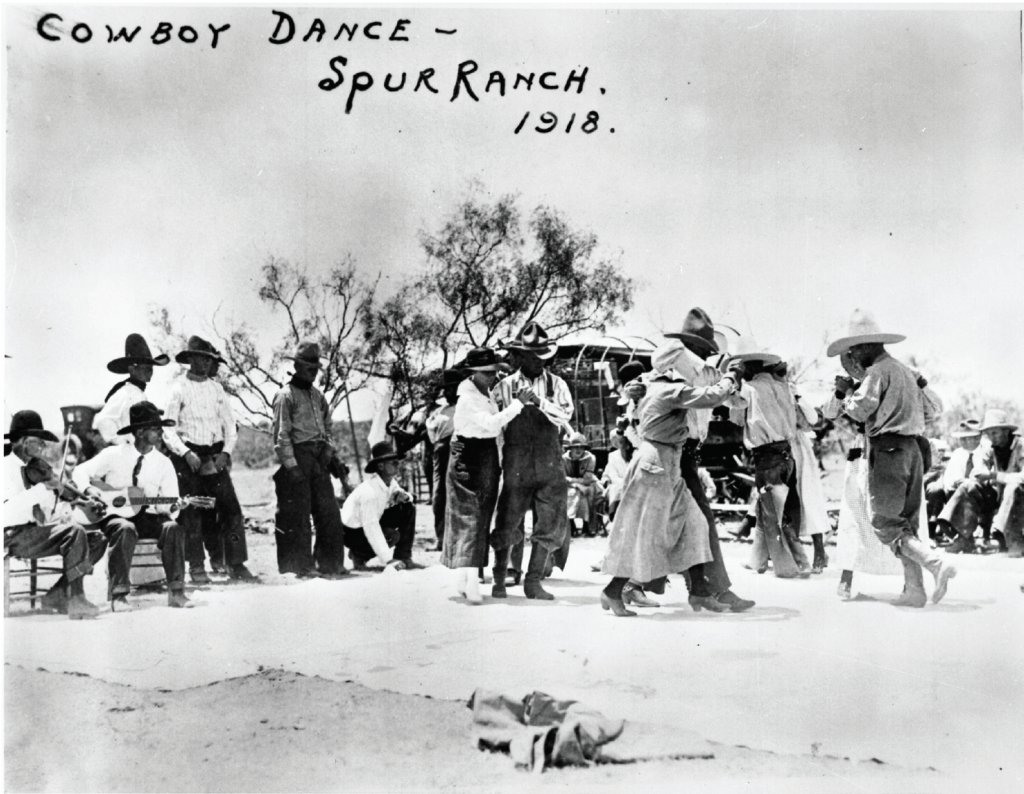
I am not sure why the subject of amusement in old-time Texas is of such interest to me. I suppose it's because I imagine the lives of folks who lived during frontier days to be filled with drudgery and occasional violence and so the idea of them doing what they could to amuse themselves with what little they had seems like human optimism winning out. In any case, the Texas Quote of the Day details some of the ways Texans amused themselves back in the day"
"The decoration of trees and exchange of presents at Christmas time were probably not customary in Texas before it was annexed by the United States, except among German settlers. On Christmas Eve and the following day friends assembled to make merry in small groups. The festivities were often forwarded by the drinking of whiskey punch, 'the national drink here with which Christmas is celebrated,' according to an 1835 edition of the Houston Telegraph and Texas Register newspaper. Afterwards, Negroes and whites had separate dances. The sounds of dance music half tortured a Nacogdoches lawyer who sat writing a letter on Christmas Eve of 1839. The letter writer 'had been on the water wagon' for nearly four months [meaning he wasn't drinking alcohol], and deserved commiseration as he wrote the following postscript:
'..... it is now 9 o'clock P.M., and tomorrow's Christmas. The way the votaries of that jolly God Bacchus are "humpin'" it is curious. Fiddles groan under a heavy weight of oppression, and heel-taps suffer to the tune of "We Won't Go Home 'Till Morning," and I fear they mean what they say. And now and then the discharge of firearms at a distance, remind me that merriment, now despotic, rules to the utter discomforture of dull care, while I, O Jeminy! have nothing stronger wherewith to lash my cold sluggish blood than Water.'
No pastime in American history has been carried out with more unstinted gusto than frontier dancing. A Texas woman explained how it met the psychological requirements for a Western diversion:
'Times were too pregnant with excitement for grave pleasures to take strong hold in the minds of the people .... How could people sit often to listen to high-browed discourses when at every random shot of a gun their ears were on the alert for the cry of Indians? To be so situated as to have these quick vibrations operate nervously upon the brain disposes the mind to seek relief in softer emotions of pleasure, but still one of excitement, consequently the dancing master found favor with the majority of the philosopher.'
----- William Ransom Hogan, "Amusements in the Republic of Texas," The Journal of Southern History, November 1937

English
Norma Perez Flores retweetledi

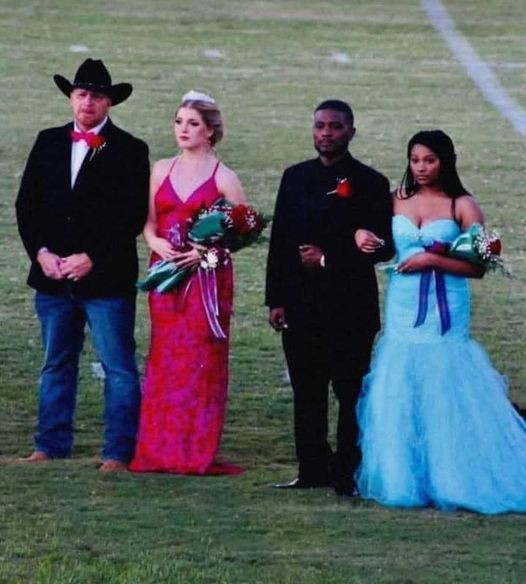
The girl in the blue dress was elected homecoming !
The girl in the red dress lost her mom that morning but her dad made sure she got to homecoming.
The girl in the blue dress took the crown off her own head and placed it on the head of the girl in the red dress.
That's the America I want to live in!

English

I suffered a season ending injury this past weekend. This was not what I was expecting for this season, but I do understand God's plans are sometimes different from ours. So now I'm already working for next season and helping our team anyway possible. I want to say thank you for all the support and prayers. They are definitely motivational.
He did not waver at the promise of God through unbelief, but was strengthened in faith, giving glory to God,
Romans 4:20 NKJV
I do it all in his name, AMEN
#GigEm @AggieFootball 👍🏾

English

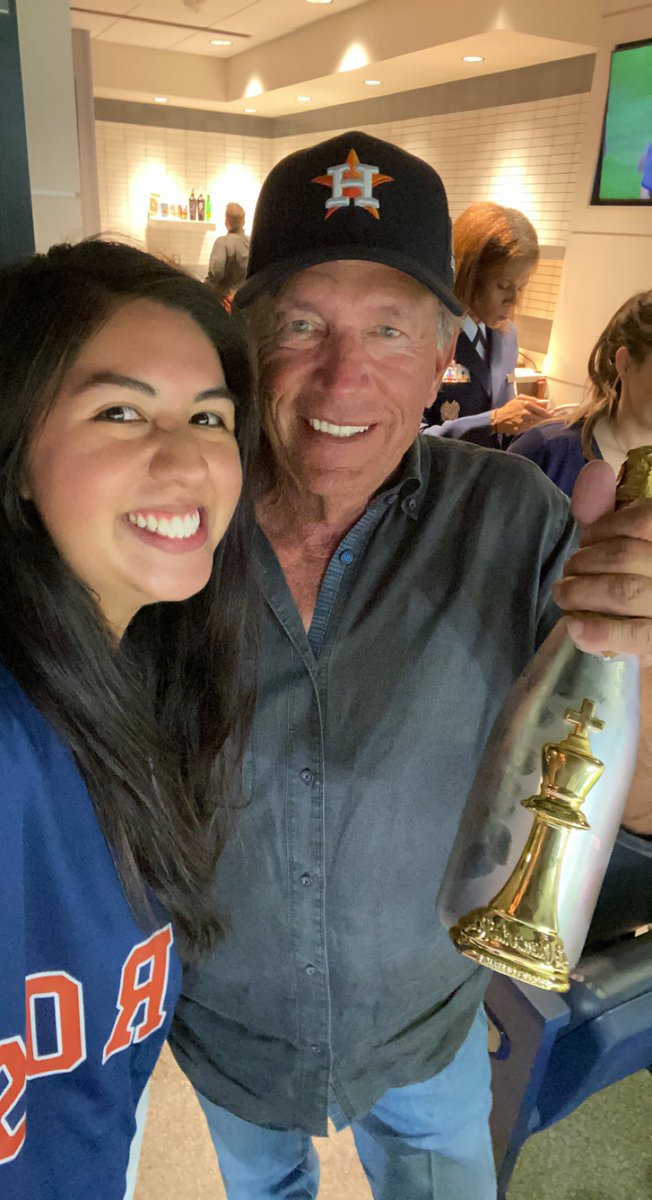
@RODEOHOUSTON George Strait
Alan Jackson
Clint Black
Toby Keith
Trace Adkins
English
Norma Perez Flores retweetledi

The Arcane Texas Fact of the Day:
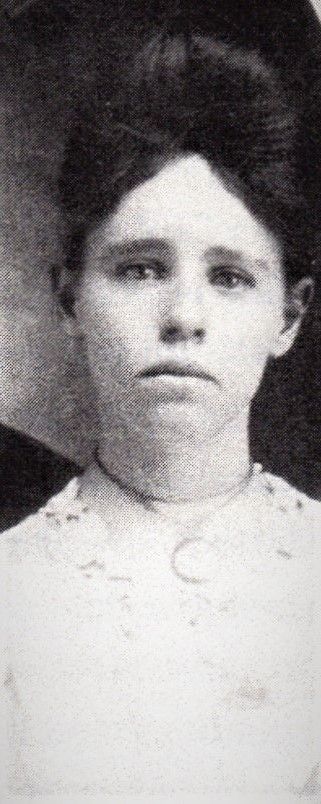
Gladys Hamer, the wife of legendary Texas Ranger Captain Frank Hamer, was not afraid to jump in and help out her husband in a fight. On October 1, 1917 the Hamers drove into Sweetwater, Texas. Stopping to have a punctured tire repaired, Frank Hamer was attacked by former lawman Gee McMeans and a young man named Red Phillips. It was part of an ongoing feud between Gladys Hamer's family and her former in-laws. As Frank was struggling to get McMeans’ weapon away from him, another man with a shotgun started across the street toward Hamer. Gladys Hamer, seeing this man, picked up a small automatic pistol from the front seat of the car and fired at him. The man ducked behind a car. Every time he attempted to move, Gladys shot at him, keeping him from attacking her husband.
Shown here: Gladys Hamer, the wife of Frank Hamer. She died in 1974 and is buried next to Frank in the Austin Memorial Park Cemetery.

English
Norma Perez Flores retweetledi

What a day for incoming freshman Issam Asinga 🤩
Can't wait to see you do it in the maroon & white 👍
#GigEm | #AggieTFXC
12thman.com/news/2023/7/28…
English
Norma Perez Flores retweetledi

The Arcane Texas Fact of the Day:
If you go to the Evergreen Cemetery in Victoria, Texas you will find the grave of Margaret Borland, shown in the photo below. Margaret died on July 5, 1873. The inscription reads
Our Mama
Margaret Heffernan Borland
Born Apr. 3, 1824
Died July 5, 1873
Gone but not forgotten
There is nothing to indicate the remarkable life that Margaret Borland led. Margaret, you see, was the only woman in the history of the Old West to run her own cattle drive. She was one of the first cattle queens and, like so many of the tales I relate here, her life was one of triumphing over adversity. It would make a great Hollywood movie. You WILL NOT believe this story.
Let's start at the beginning. She was born in Ireland in 1824. When she was five years old, she and her parents sailed across the ocean to New York City. Her dad, a candle maker, found it hard to make ends meet there, so when a land agent told him about opportunities in Texas, he jumped. The government of Mexico was offering incentives as well to families that supplied their own tools and were able to sustain themselves for a year. If a family was able to do that the government would give a yoke of oxen, a cart, ten milking cows, and a league of land. In addition, the family was required to practice Catholicism and to speak Spanish for business purposes. Margaret was nine years old when she arrived in Texas.
Along with her family, Margaret was part of the McMullen-McGloin colony that settled around San Patricio. Her dad did pretty well as a cattleman/rancher for about three years. Then he died at the hands of Jose de Urrea's forces during the Texas revolution. another cousin, her uncle, his wife, and their five children were killed in the same attack. The surviving family fled to the fort at Goliad.
In August 1843, Margaret married a man named Harrison Dunbar. In the 1840 census, Harrison Dunbar was listed as having 30 head of cattle, which would have set Margaret up for the beginning of her own career in cattle. Margaret gave birth to their daughter Mary in 1844, but Harrison died shortly after her birth from wounds he received in a pistol duel. Margaret was only 20 years old.
in October 1845, Margaret was remarried to a man named Milton Hardy. In the same 1840 census that showed the cattle count for Margaret's first husband, the census showed her second husband had 2,912 acres of land, as well as having five additional lots in town. They had two children together in the following two years. Two girls, Eliza who did not survive infancy, and Julia. In 1852, Margaret gave birth to another healthy daughter named Rosa. That same year Milton contracted cholera during an epidemic that also killed their young son William, and he died on August 24. Milton had 1200 cattle at the time of his death.
Margaret marred for a third time to a man named Alexander Borland on February 11, 1856. In 1858, Alexander participated in Victoria's first annual live stock exhibition. By the 1860 census, the couple had amassed the largest herd of cattle in Victoria, a number of 8,000. They had four children together, 3 boys and a girl named Nellie. The Civil War gave the Borlands access to millions of cattle that were free roaming in Texas due to many ranchers leaving their farms to fight for the Confederate States Army. In 1867, the Borlands opened a store but Alexander was not well. Since he had the money, Alexander spent it to see a surgeon in New Orleans, LA hoping to receive the best medical care. Alexander never returned to Victoria, and died in New Orleans, leaving Margaret a widow yet again.
For Margaret, the tragedy did not stop there for her or her family. In the summer of the same year of Alexander's death, yellow fever was spreading across Texas. The town of Victoria was not spared during this time, and the first casualty for the family was Margaret's daughter Rosa, who was only 15 at the time of her death. Margaret's firstborn Mary was next and, shortly after Mary died, her infant son died as well. Margaret's daughter Julia, who was 19 and a new mom herself, also succumbed to the illness. Julia's husband, Victor Rose, who almost perished himself during the epidemic, left their daughter named Julia Rose with Margaret so she could raise her. With all of her children from her first two marriages now dead, Margaret began to bury her children from her most recent marriage. William was only 6 years old when he died in the same epidemic. By the time the epidemic ended with the cooler winter temperatures setting in, Margaret only had three surviving children out of the nine she had given birth to.
After the death of Alexander, Margaret took over the ranching operation. Her brother James Heffernan stayed with her and her family and was considered to be a loyal and hardworking man who helped his sister during difficult times. There were more hardship to come. In the winter of 1871-72 a freak blizzard struck Victoria and killed thousands of her cattle. Despite the hardships of the previous years, by 1873 Margaret had over 10,000 cattle. Margaret decided to sell some of her cattle to provide some more income. The problem was that the price for Texas cattle was about $8 per head in Texas, whereas the price for cattle in Kansas was almost $24 per head. So what did Margaret do? She made the unprecedented decision to be her own trail boss and to drive her cattle over the Chisholm Trail to Kansas. To do this meant she needed to take her surviving children and her young granddaughter with her despite the dangerous road that lay ahead for them all. And so, at the age of 49, Margaret made the decision to take her family and 2,500 cattle to Wichita, Kansas in search of opportunity and fortune. It was, as you can imagine, an arduous journey through what was then hazardous Indian country.
Despite the hardship, the group arrived in Kansas with most of their herd intact. Sadly, Margaret would not make it to see the cattle sold, as she took ill towards the end of their journey and would not be able to make a full recovery and didn't live to see the selling of her cattle. After reaching Wichita, Kansas Margaret fell seriously ill with an illness known as trail fever. It has also been cited as congestion of the brain or meningitis. She did not recover. The task of selling her cattle was left to her surviving family members. The Wichita Beacon newspaper reported on Margaret's death with the following, "We regret to announce the painful news that Mrs. Borland, the widow lady who came up with her own herd of cattle about two months ago, bringing with her three little children, died at the Planter house Saturday evening with mania, superinduced by her long, tedious journey and over-taxation of the brain."
Margaret Borland died on July 5, 1873. As I mentioned, she was only 49 at the time of her death. Her body was then returned from Kansas to Victoria, where she now sleeps under an eternal Texas sky.

English