@whencyclopedia What’s fascinating is how Greek travelers reinterpreted Egyptian monuments through their own myths — a perfect example of cultural translation long before the modern term existed.
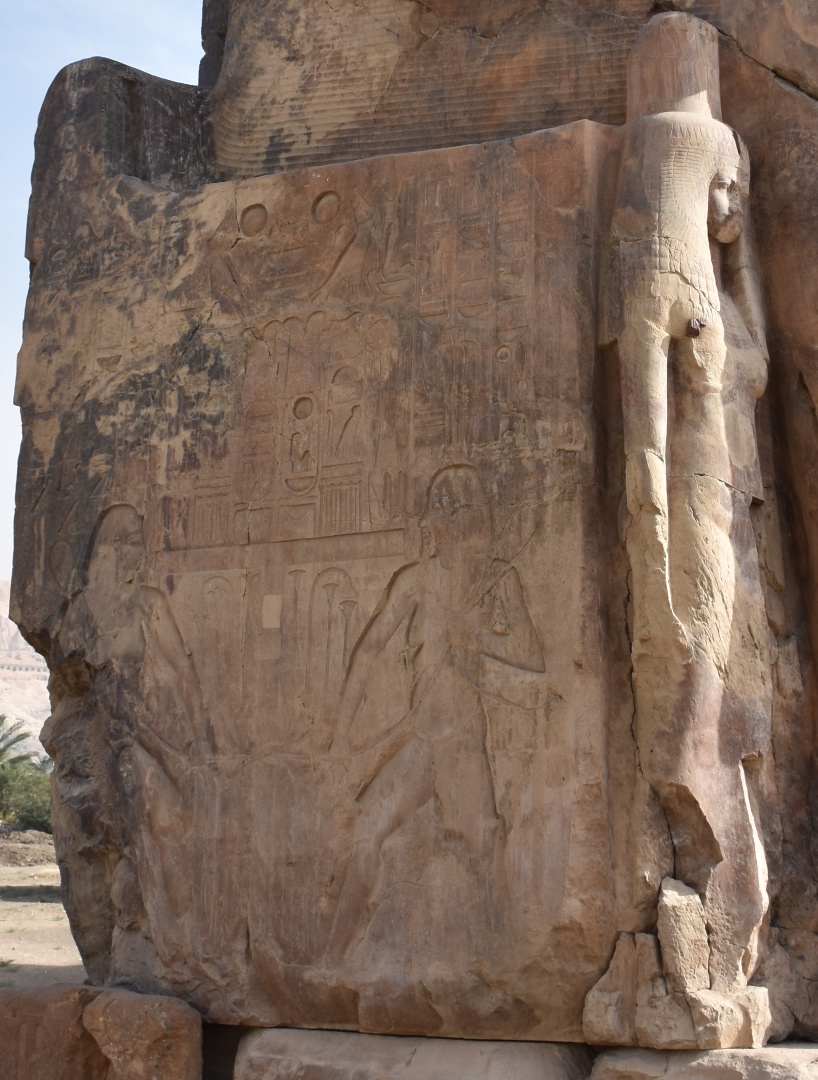
Sat faced towards the #Nile, these ancient #Egyptian structures hold a special link to the myths of the #TrojanWar and the story of #Achilles, famously depicted in #Homer's #Iliad. The #ColossiofMemnon are two monumental, 60ft statues representing Amenhotep III of the 18th dynasty of #AncientEgypt, showing him as a seated king on a throne ornamented with imagery of his mother, his wife, the god Hapy, and other symbolic engravings. Constructed as guardians for the pharaoh's mortuary complex, they are some of the only remaining elements of the original structure.
Their name comes from Memnon, the king who fell at #Troy, as described in epic poems like #Virgil's #Aeneid. Memnon was an ancient #Ethiopian (Aeithiopian) king who joined the battle on the side of the #Trojans against the Greeks and was killed by the Greek champion #Achilles. Memnon's courage and skill in battle, however, elevated him to the status of a hero among the Greeks. Greek tourists, seeing the impressive statues, associated them with the legend of Memnon instead of Amenhotep III and this link was also suggested by the 3rd century BCE Egyptian historian Manetho who claimed Memnon and Amenhotep III were the same person.
📝Read about the story of Amenhotep III and the Colossi of Memnon in the article by Joshua J Mark: worldhistory.org/Colossi_of_Mem…#AncientEgypt#AncientHistory#Archaeology#History
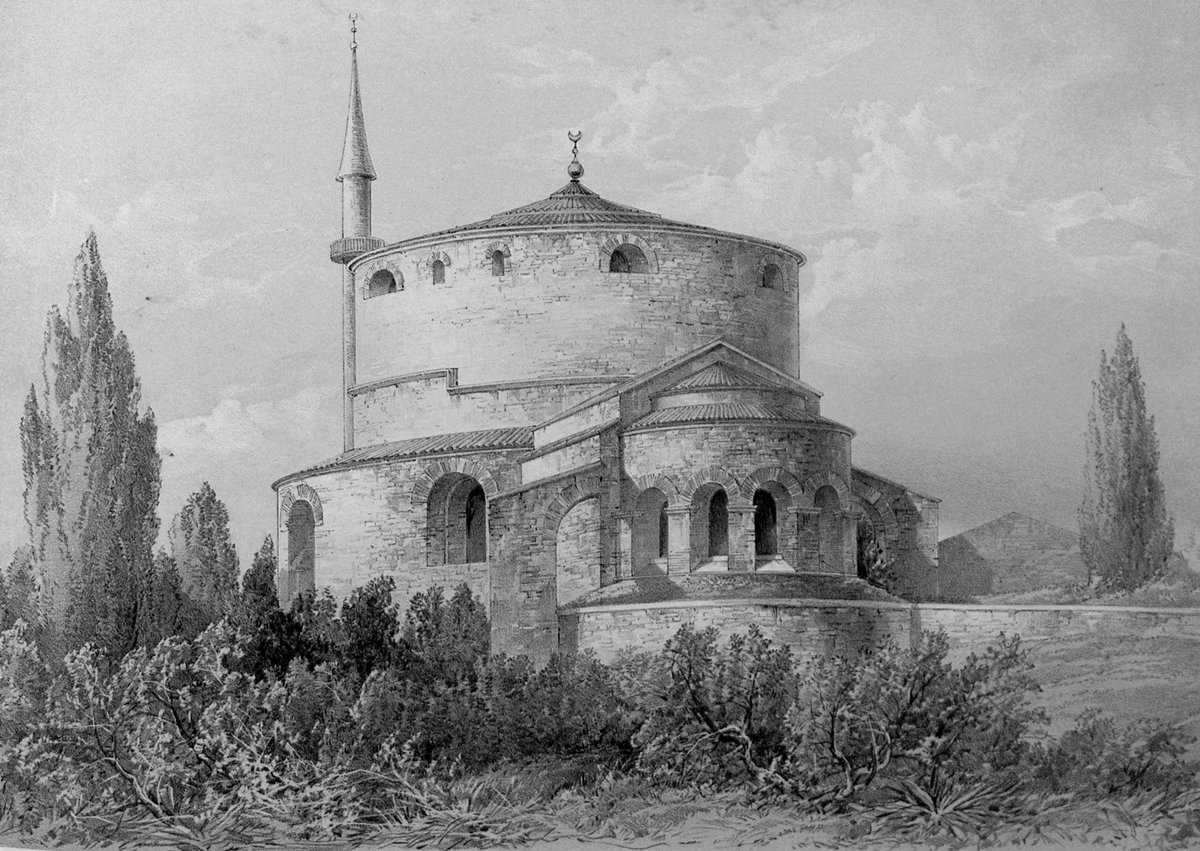
@ByzantineLegacy A building that has been Roman, Christian, and Ottoman — few places have witnessed more layers of faith and empire than the Rotunda of Thessaloniki.