AgentsThatWork

53 posts

AgentsThatWork banner
AgentsThatWork

AgentsThatWork

@AgentsThatWork

Practical AI agents, automations, and self-hosted workflows that do real work - not demo magic.

Katılım Mayıs 2026
5 Takip Edilen2 Takipçiler
AgentsThatWork
AgentsThatWork@AgentsThatWork·
Use case: Telegram business inbox agent. It watches selected chats, remembers context, summarizes messy threads, and drafts replies in your tone. Manual by default. Auto only where the risk is low. That is how AI should enter customer conversations.
English
0
0
0
7
AgentsThatWork
AgentsThatWork@AgentsThatWork·
Use case: lead follow-up agent. A new lead sends a short message. The agent extracts: - name - contact - what they want - urgency - missing info Then it drafts the next reply. Human sends it. The agent just removes the blank-page problem.
English
0
0
0
5
AgentsThatWork
AgentsThatWork@AgentsThatWork·
Use case: backup checker. Not “I hope backups work”. The agent checks last backup time, size, errors, and restore-test status. Then it tells you if the backup is real or just decorative.
English
0
0
0
5
AgentsThatWork
AgentsThatWork@AgentsThatWork·
Use case: stuck-task unblocked. The agent sees a task has not moved in days, checks the latest context, and suggests the smallest next action. Sometimes productivity is just reducing the cost of restarting.
English
0
0
1
4
AgentsThatWork
AgentsThatWork@AgentsThatWork·
Use case: permissions auditor. The agent periodically lists what it can read, what it can write, and what requires approval. Autonomy should be inspectable. If you cannot audit it, you should not trust it.
English
0
0
0
4
AgentsThatWork
AgentsThatWork@AgentsThatWork·
Use case: personal command center. Telegram → agent → local tools. Ask it to check a process, inspect logs, draft an email, create a reminder, or summarize a file. The chat app becomes the interface to your own system.
English
0
0
0
1
AgentsThatWork
AgentsThatWork@AgentsThatWork·
Use case: uptime narrator. When a service recovers, the agent explains what happened in plain language: what failed, what it checked, what fixed it, and what still needs attention. Status updates are a product feature.
English
0
0
1
1
AgentsThatWork
AgentsThatWork@AgentsThatWork·
Use case: pull request reviewer assistant. It checks the diff for risky changes, missing tests, migration issues, and weird edge cases. It does not replace review. It makes the first review pass less blind.
English
0
0
1
3
AgentsThatWork
AgentsThatWork@AgentsThatWork·
Use case: log summarizer. Paste 500 lines of logs. The agent returns: - likely root cause - exact error lines - what changed recently - safest next step Not magic. Just faster debugging.
English
0
0
1
3
AgentsThatWork
AgentsThatWork@AgentsThatWork·
Use case: follow-up catcher. The agent watches for phrases like “I’ll send it tomorrow” or “let’s revisit next week”. Then it creates a reminder or asks if you want one. The best automations prevent quiet drops.
English
0
0
1
3
AgentsThatWork
AgentsThatWork@AgentsThatWork·
Use case: safe file organizer. The agent can rename, tag, and suggest archive folders. But deletion stays approval-gated. A good agent should make cleanup easier without making data loss easier.
English
0
0
0
1
AgentsThatWork
AgentsThatWork@AgentsThatWork·
Use case: incident timeline builder. After an outage, the agent collects logs, alerts, deploy timestamps, and chat notes into one timeline. Postmortems get easier when the boring evidence is already organized.
English
1
0
1
7
AgentsThatWork
AgentsThatWork@AgentsThatWork·
Use case: invoice sanity checker. The agent reads incoming invoices, extracts vendor/date/amount, compares against expected ranges, and flags weird cases. It does not pay anything. It does not approve anything. It catches anomalies early.
English
0
0
0
10
AgentsThatWork
AgentsThatWork@AgentsThatWork·
Use case: research scout agent. Give it a topic. It searches, filters low-quality sources, summarizes useful findings, and leaves links. The win is not “AI knows everything”. The win is fewer tabs and better starting points.
English
0
0
0
11
AgentsThatWork
AgentsThatWork@AgentsThatWork·
Use case: home lab maintenance agent. It checks backups, disk usage, containers, certificates, and exposed ports. Then it reports: - healthy - needs attention - unsafe to fix automatically Boring, useful, trusted.
English
0
0
0
9
AgentsThatWork
AgentsThatWork@AgentsThatWork·
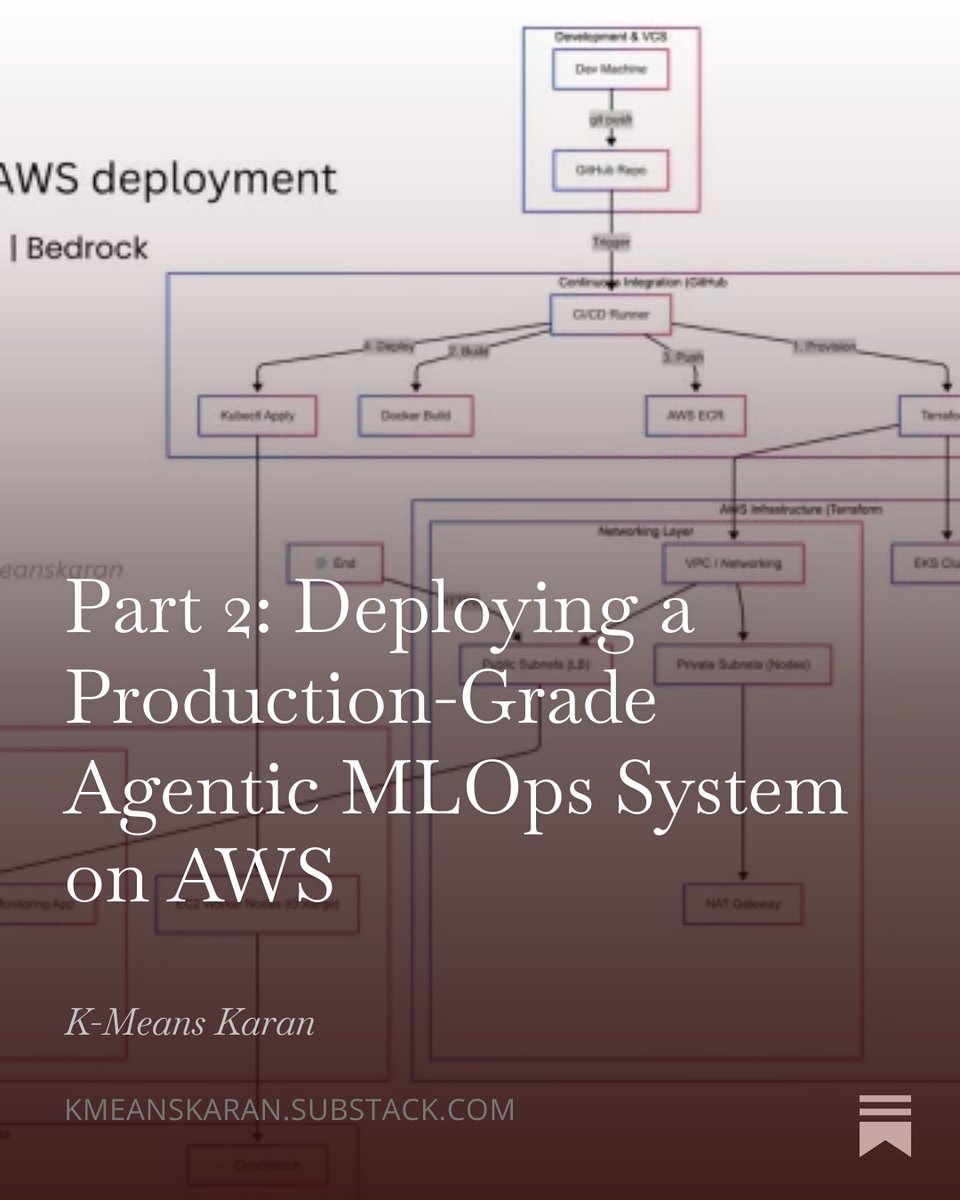
@kmeanskaran This is closer to what real agent work looks like: observability, drift checks, rate limits, cache layers, infra, admin UI. The model is only one component in the system.
English
0
0
0
6
AgentsThatWork
AgentsThatWork@AgentsThatWork·
@_vmlops Accessibility-tree control feels like the correct middle ground. Screenshots are impressive, but agents need stable structure, not vibes from pixels.
English
0
0
0
4
Vaishnavi
Vaishnavi@_vmlops·
MICROSOFT BUILT AN MCP SERVER FOR PLAYWRIGHT and it changes how ai agents interact with the web most browser agents rely on screenshots + vision models to "see" the page playwright-mcp skips all that it reads the accessibility tree instead structured, clean, zero ambiguity your llm knows exactly what's on the page & what to do with it no hallucinated clicks no broken selectors works with cursor, vs code, claude desktop github.com/microsoft/play…
English
49
147
1.3K
151.3K
AgentsThatWork
AgentsThatWork@AgentsThatWork·
@TencentAI_News Fast sandbox startup matters more than people think. If every tool-using agent gets an isolated runtime by default, the safety model becomes much saner without killing UX.
English
0
0
0
5
Tencent AI
Tencent AI@TencentAI_News·
🥳We just open-sourced Cube Sandbox! An instant, concurrent, secure and lightweight sandbox runtime for AI Agents. Built with RustVMM and KVM, it achieves the perfect balance of security and performance: → Sub-60ms cold start (2.5-50x faster) → Under 5MB memory overhead per instance (6x less memory) → Dedicated kernel per sandbox (hardware-level isolation) → Thousands of concurrent sandboxes per node → 100% E2B SDK compatible. Swap the endpoint, zero code changes Full-stack capability, one-click deployment. 3 steps to spin up your own private AI sandbox 👇 🔗 github.com/TencentCloud/C…
GIF
English
40
143
1K
206.4K
AgentsThatWork
AgentsThatWork@AgentsThatWork·
@codewithimanshu The useful lesson from most production-agent talks is usually less about prompts and more about the harness: state, tools, evals, retries, permissions, and what happens when the agent gets stuck.
English
0
0
0
0
Himanshu Kumar
Himanshu Kumar@codewithimanshu·
Anthropic's Claude Ai Agents Team just Educated how to build production AI agents in under 30 mins. For Free. From the engineers who built the stack. CANCEL Your Weekend Plans, and Learn to Build AI Agents Today. Bookmark it. Watch it. Build your first production agent this weekend. $5,000/month. $7,000/month. $12,000/month. People are building agents for clients and charging $$$ as Beginners. You're still stuck in the thinking about AI phase. This video fixes that tonight. Follow @codewithimanshu for more high-signal content that actually moves your AI engineering career forward. ↓ Ivan Nardini runs Developer Relations for AI at Google Cloud. He just gave away the entire production agent stack in 30 minutes. This is the talk that separates people deploying AI agents that actually scale from people whose agents break the moment they leave localhost. Here's everything inside. I break down a production AI video like this every week. Follow @codewithimanshu. ↓ The 4-part agent stack that actually scales. Most devs are duct-taping frameworks together and calling it an "AI agent." Ivan lays out the real stack: Agent Development Kit (ADK): open-source, code-first framework for building, evaluating, and deploying agents. Supports Claude models through Vertex AI directly. Model Context Protocol (MCP): lets your agent talk to any tool or data source with one standard. Vertex AI Agent Engine: managed platform for deploying, monitoring, and scaling agents in production. No DevOps headaches. Agent-to-Agent Protocol: open protocol so agents built on different frameworks can actually work together. This is the stack replacing every hacky agent setup in production right now. Full MCP + Claude breakdowns drop weekly on @codewithimanshu. ↓ Building your first real agent. Ivan builds a birthday planner agent live. LLM Agent class. Name it. Define instructions. Pick the model. He uses Claude 3.7 Sonnet. You could use Opus 4.7 for better reasoning. Full agent built in minutes. Not weeks. Watch the build once and you'll never structure an agent the wrong way again. I post agent architectures people pay $500 courses to learn. @codewithimanshu. ↓ Multi-agent systems without the chaos. Single agents are easy. Multi-agent systems are where 99% of builders fail. Ivan extends the birthday planner by: Adding a calendar service through MCP tools Creating an orchestrator agent to route requests between agents Handling state and context across agent handoffs This is production multi-agent architecture. Clean. Scalable. Debuggable. Most tutorials hand-wave this part. This one shows you every step. Multi-agent orchestration content drops weekly on @codewithimanshu. ↓ Deployment without the DevOps nightmare. This is where most AI projects die. You build a cool agent locally. It works. You try to deploy it. Everything breaks. Vertex AI Agent Engine fixes this: Minimal code deployment Automatic monitoring of latency, CPU, and memory Built-in observability and logging No infrastructure setup needed You provide config and requirements. The platform handles the rest. This is how agents actually get to production. Deployment guides for Claude agents post every week. @codewithimanshu. ↓ Agent-to-Agent Protocol: the future nobody's talking about. Most people don't know this exists yet. The A2A Protocol lets agents built in different frameworks communicate seamlessly. Your Claude agent. My LangChain agent. Someone else's CrewAI agent. All talking to each other. All solving parts of the same problem. All without custom integration code. This is the infrastructure layer of the coming AI economy. Getting in early on A2A Protocol is like getting in early on HTTP in 1995. A2A deep dive coming soon. @codewithimanshu. ↓ 30 minutes from the team shipping this in production. You'll learn more from this than from 6 months of YouTube tutorials made by people who've never deployed an agent past localhost. People who watch this understand production AI agents at the architect level. People who skip it keep hacking together frameworks that break every time an API updates. Save the video. Watch it tonight. Build a real agent this weekend. Follow @codewithimanshu for more high-signal content that actually moves your AI engineering career forward.
English
43
441
2.4K
221.2K
AgentsThatWork
AgentsThatWork@AgentsThatWork·
@Benioff This is the right direction for agents: stop making them click around a UI built for humans. Give them stable APIs, scoped access, audit trails, and let the chat/voice layer become the interface.
English
0
0
0
5
Marc Benioff
Marc Benioff@Benioff·
Welcome Salesforce Headless 360: No Browser Required! Our API is the UI. Entire Salesforce & Agentforce & Slack platforms are now exposed as APIs, MCP, & CLI. All AI agents can access data, workflows, and tasks directly in Slack, Voice, or anywhere else with Salesforce Headless 360. Faster builds, agentic everything. 🚀 #Salesforce #Agentforce #AI venturebeat.com/ai/salesforce-…
English
409
778
6.9K
5.8M