RationalExuberance

11.3K posts

RationalExuberance banner
RationalExuberance

RationalExuberance

@AlexDemache

New York, NY Katılım Aralık 2013
2.5K Takip Edilen469 Takipçiler
RationalExuberance retweetledi
Nick Timiraos
Nick Timiraos@NickTimiraos·
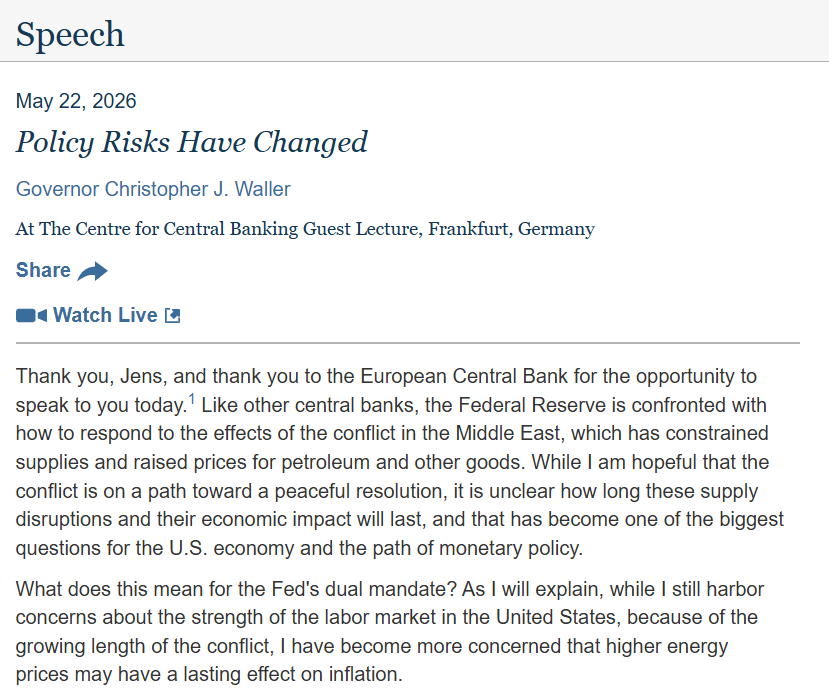
This is a hawkish speech from Waller. While he doesn’t think hikes are needed in the near-term, he comes across as quite troubled by recent inflation developments. I’ll thread a few highlights:
Nick Timiraos tweet media
English
33
152
604
101.8K
RationalExuberance retweetledi
Ed Bradford
Ed Bradford@Fullcarry·
A bit too much anchoring to 3% neutral. I think 5s are too expensive for a Fed that is on pause and/or hiking in the next year
English
4
4
48
6K
RationalExuberance retweetledi
Nick Timiraos
Nick Timiraos@NickTimiraos·
Bessent: After "one or two more hot inflation numbers...I think we're going to see substantial disinflation." "I was never on team transient during Covid, and a lot of that had to do with what happened with very expansionary fiscal policy that was financed by debt purchases from the Central Bank, kind of an experiment in modern monetary theory that caused inflation. And, but here, I firmly believe that nothing is more transient than a supply shock. And we can, we can look through that because before the Iranian conflict began, core inflation was coming down. So I think core inflation will continue coming down. We’ll get to the other side of this, and I don’t know whether it’s a few days or a few weeks, and energy inflation will come back down. And we’ve got the start of the Warsh Fed…. And I think that he’s going to bring an open mind to this. And I actually think he’s going to be in a very good position, because we may get a series, one or two more hot inflation numbers, but then I think we’re going to see substantial disinflation.
Squawk Box@SquawkCNBC

Watch @JoeSquawk's full interview with Treasury Secretary Scott Bessent: cnb.cx/4tvp4j5

English
51
152
703
469.6K
RationalExuberance retweetledi
MacroGuru
MacroGuru@macroguru9·
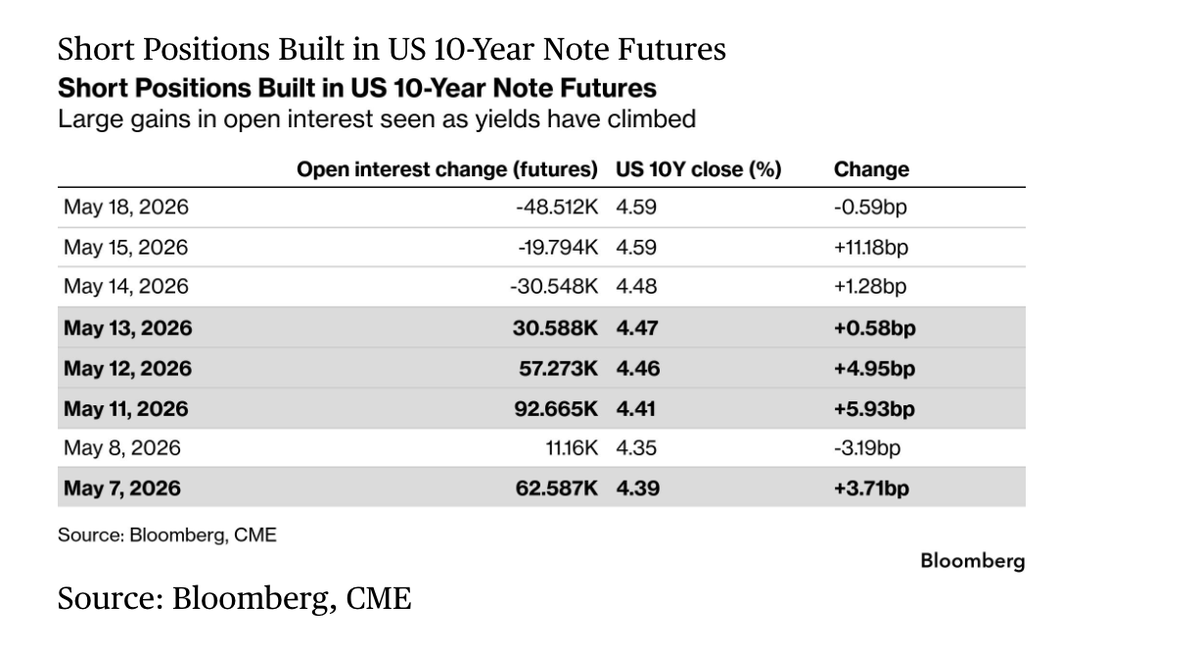
Big Treasury Block Sales Drive ‘Capitulation’ Selloff in Bonds - BBG A series of large sales in US Treasury futures exacerbated a selloff in the $31 trillion government debt market, as concern about resurgent inflation pushed investors to price in higher interest rates As long-end yields soared to their highest level since 2007 on Tuesday, a wave of block sales in both 5- and 10-year note futures added to the pressure. The futures transactions — which came during a manic hour of trading in the US morning session — were equivalent to roughly $15 billion of the current cash 10-year note, according to data compiled by Bloomberg. It was a “capitulation-type day in Treasuries,” said Alan Taylor, Founding Partner at Archr LLP, adding that the selloff was accelerated by “multiple block sellers.” The selling was the latest evidence of how a war-fueled jump in energy prices is adding to inflation fears and driving bets that central banks, including the Federal Reserve, will need to raise interest rates. Futures on Tuesday reflected an 85% chance of a rate increase by year-end, compared to no pricing of a hike reflected on May 1. Persistently higher yields threaten to slow the US economy, which has so far proved resilient, and lift borrowing costs for US home buyers and corporations. Block Barrage The first of Tuesday’s big blocks Wave of Futures Block Trades Adds Momentum to Treasuries Selloff the market at 9:38 a.m. New York time and was followed by steady selling until around 10:40 a.m. The roughly one-hour stretch saw 136,500 10-year note futures sold via block trades with 83,000 5-year note futures. Volumes in 10-year notes was around 80% above its 20-day average. The trades amounted to a combined risk weighting of approximately $12 million per basis point over ten blocks. Transactions in these contracts are anonymous, making it difficult to identify the firms involved and the exact beneficiaries of the bets. While Tuesday’s activity likely stemmed from traders liquidating bullish wagers, market positioning over the last several sessions has increasingly leaned bearish. Last week, open interest data reflected the build-up of new short positions, with traders adding risk in 10-year note futures as yields started to climb. There has been a “large addition of new short risks into the cheapening over the last five days,” Citi strategist David Bieber said. He added that short positioning is now “highly extended” both tactically and structurally. In Treasury options, the sale of an August 10-year put on Tuesday appeared to kick off a spree of Bearish Treasury Option Sold for Apparent Profit as Yields Soar by a trader who purchased bearish puts back in April. There has also been recent demand to fade the bond market selloff: One trade Treasury Option Trade Targets 4.45% 10-Year Yield by End of Week looked to target a move in 10-year yields back down to 4.45% by the end of this week.
MacroGuru tweet mediaMacroGuru tweet media
English
1
1
8
616
RationalExuberance retweetledi
The Kobeissi Letter
The Kobeissi Letter@KobeissiLetter·
BREAKING: NATO is discussing deploying troops in the Strait of Hormuz to help ships pass through the waterway if it is not reopened by early July, per Bloomberg.
English
478
522
4.2K
352.6K
RationalExuberance retweetledi
Ed Bradford
Ed Bradford@Fullcarry·
I know peeps love to doom and gloom about it but nothing that unusual about the current rate structure. Here the spread of 30s to overnight rates and its long run average.
Ed Bradford tweet media
English
10
16
100
10.2K
RationalExuberance retweetledi
The Kobeissi Letter
The Kobeissi Letter@KobeissiLetter·
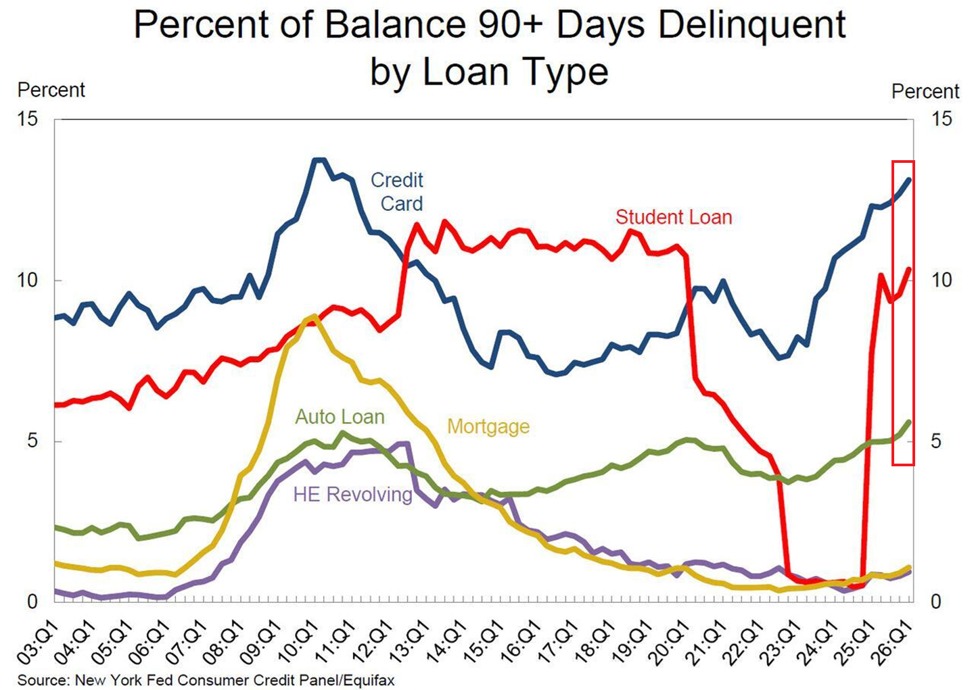
BREAKING: Credit card serious delinquencies rose +0.4 percentage points in Q1 2026, to 13.1%, the highest since Q4 2010. This is only below the 2010 peak of 13.7%, in the aftermath of the 2008 Financial Crisis. Since Q3 2022, serious credit card delinquencies have surged +5.5 percentage points, even larger than the +3.9 point increase in 2007-2010. Furthermore, student loan 90+ days delinquencies jumped +0.7 percentage points in Q1 2026, to 10.3%, the highest since Q1 2020. Auto loan serious delinquencies increased +0.4 percentage points, to 5.6%, the highest on record. US consumers are falling behind debt at a crisis pace.
The Kobeissi Letter tweet media
English
175
426
1.9K
321.1K
RationalExuberance retweetledi
Neil Sethi
Neil Sethi@neilksethi·
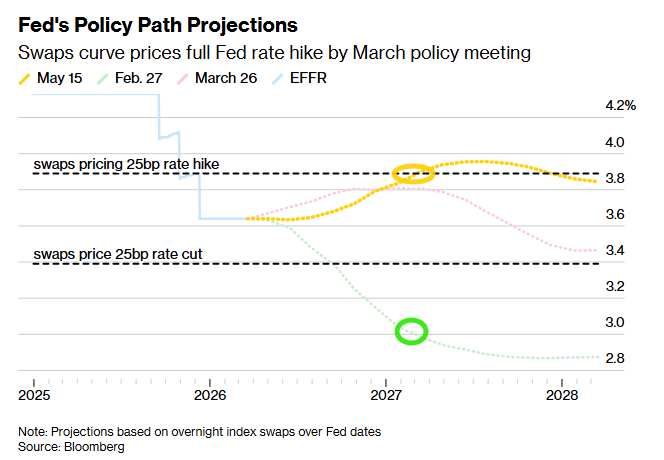
BBG for their part looks at Fed swap curves and sees a similar path with pricing peaking in June/July w/32 basis points of hikes but a 25bps hike fully priced as of the March meeting. That is up from a 2.5 cuts priced just before the start of the Iran conflict for March.
Neil Sethi tweet media
Neil Sethi@neilksethi

From the Markets Update (neilsethi.substack.com/p/markets-upda…): FOMC rate expectations from the CME Fedwatch tool pushed a little higher with rate hike bets now peaking next July at 77% (the highest to date). The chance of a 2026 rate hike up to 49% (while chance of a cut is 0.4%). The chances of two hikes by the end of next year now 39% (July). The chance of one cut by the end of next year is 11.5%.

English
0
5
17
4K
RationalExuberance retweetledi
Kurt S. Altrichter, CRPS®
Kurt S. Altrichter, CRPS®@kurtsaltrichter·
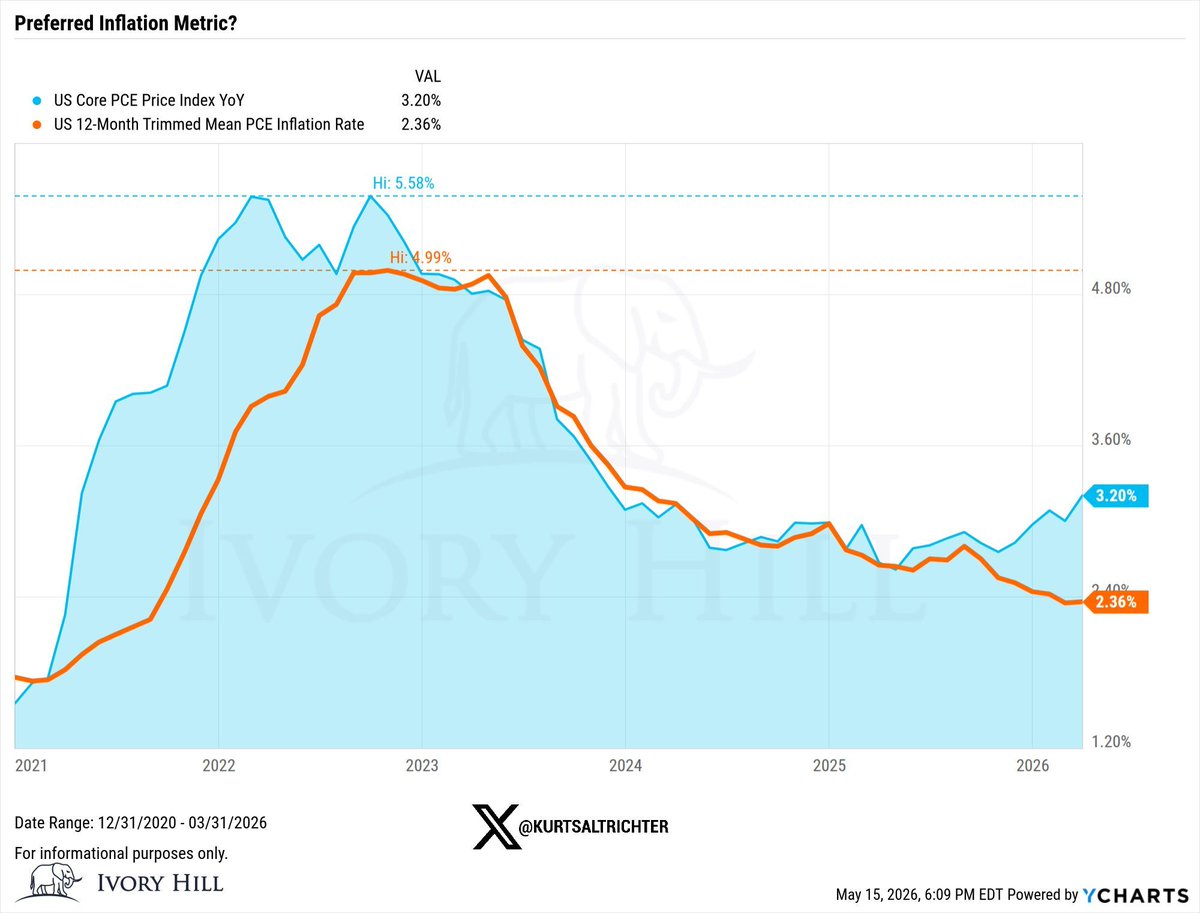
Warsh has signaled he wants to change the Fed’s preferred inflation gauge. The Fed has used Core PCE, which excludes food and energy, as its benchmark since 2000. Warsh favors Trimmed Mean PCE, which removes the most extreme price movements each month instead of excluding whole categories. The practical difference: Trimmed Mean PCE currently reads 2.36%, well below the 3.20% reading on Core PCE. Depending on which measure the Fed follows, the case for rate cuts looks very different. This is not a minor procedural change. The metric the Fed uses to gauge inflation directly determines when it judges the economy to be at target. If Warsh moves the committee toward Trimmed Mean PCE, he is mathematically moving the Fed closer to a declared victory on inflation, which creates runway for rate cuts even as headline readings stay elevated. You’d think with 400+ Ph.D. economists and 500+ researchers on the payroll, the Fed would run the most sophisticated macro forecasting operation on the planet, leaving Bloomberg and every major hedge fund in the dust. Not even close. When the data doesn’t cooperate, just change the data. Same thing I saw in the Army when time or weather worked against higher leadership, and we would quietly move the goalposts rather than admit the standard couldn’t be met. Can you tell why I didn’t stick around for the full 20 years?
Kurt S. Altrichter, CRPS® tweet media
English
245
581
2.5K
473.9K
RationalExuberance retweetledi
stewart  hampton
stewart hampton@stewhampton·
@ClausVistesen Policy is already above all neutral estimates though and from Bailey’s own words not cutting 50 this year amounts to a material tightening already. Do we need 75more?
English
0
1
0
43
RationalExuberance retweetledi
stewart  hampton
stewart hampton@stewhampton·
@ClausVistesen No argument there. But I think 3 hikes from 2 cuts is very punchy given macro backdrop and I don’t think the UK economy can take it. BOE policy is not made on poss future fiscal. Announced policy only. If the war ends as every1 expects do they need to be that aggressive?
English
1
1
1
54
RationalExuberance retweetledi
ACLLC
ACLLC@acllc2·
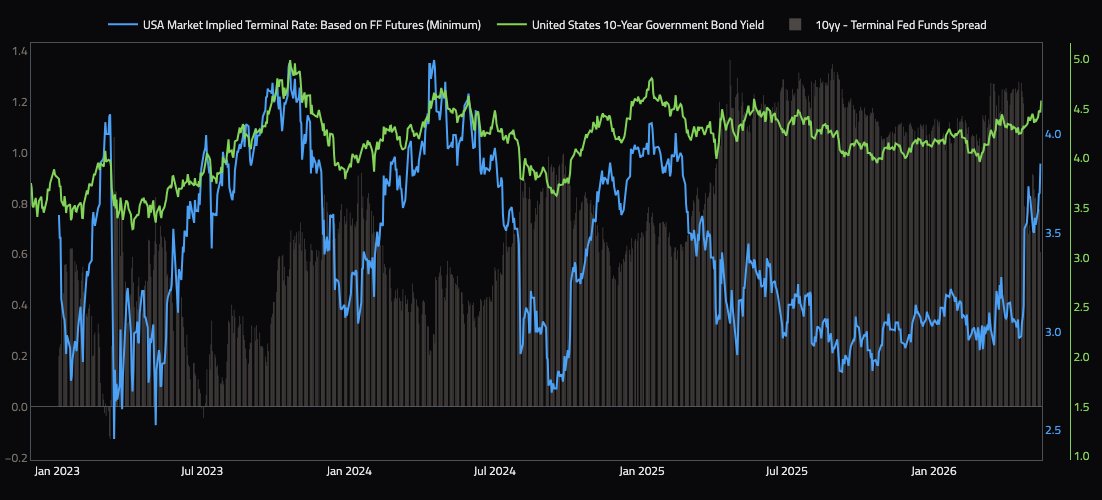
Terminal Fed Funds vs 10yr Yield
ACLLC tweet media
English
0
3
12
982
RationalExuberance retweetledi
The Kobeissi Letter
The Kobeissi Letter@KobeissiLetter·
BREAKING: The odds of the Fed cutting interest rates in 2026 have collapsed to a new low of just 27%. There is now a higher chance of the Fed HIKING interest rates than cutting interest rates by December. Inflation is officially back in full swing.
The Kobeissi Letter tweet media
English
164
307
2K
181.6K
RationalExuberance retweetledi
Lisa Abramowicz
Lisa Abramowicz@lisaabramowicz1·
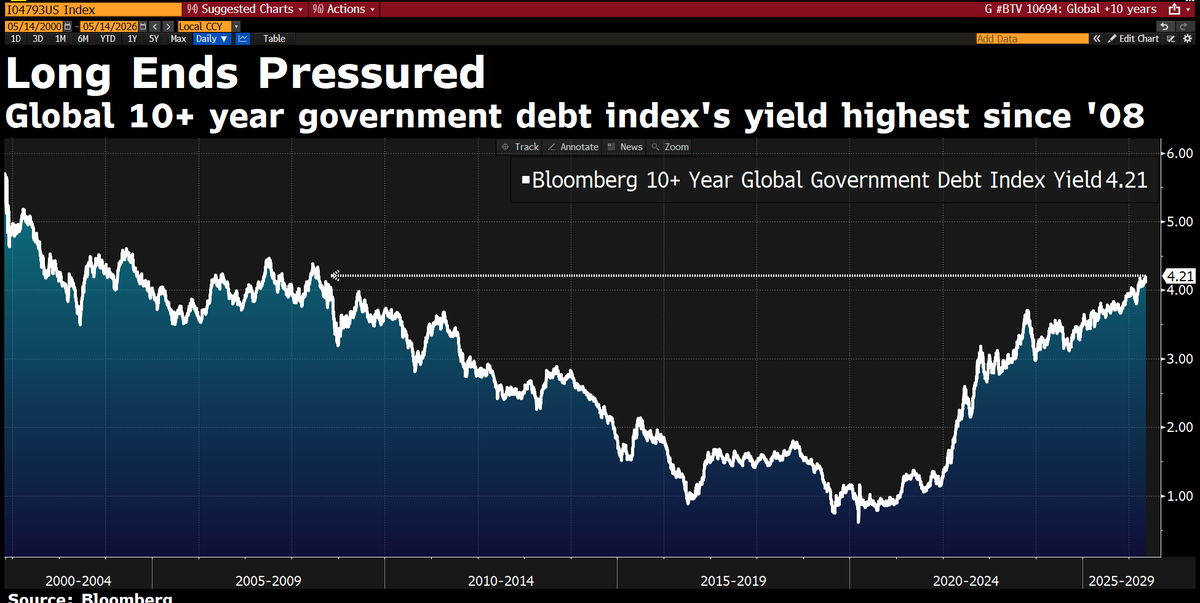
Average yields on long-dated government bonds have reached their highest levels since 2008, h/t @DRBCurtis "The last mile of fighting inflation is a marathon rather than a sprint...there are a lot of upward pressures on rates across the curve:" Apollo's Torsten Slok
Lisa Abramowicz tweet media
English
32
118
465
43.8K
RationalExuberance retweetledi
Lisa Abramowicz
Lisa Abramowicz@lisaabramowicz1·
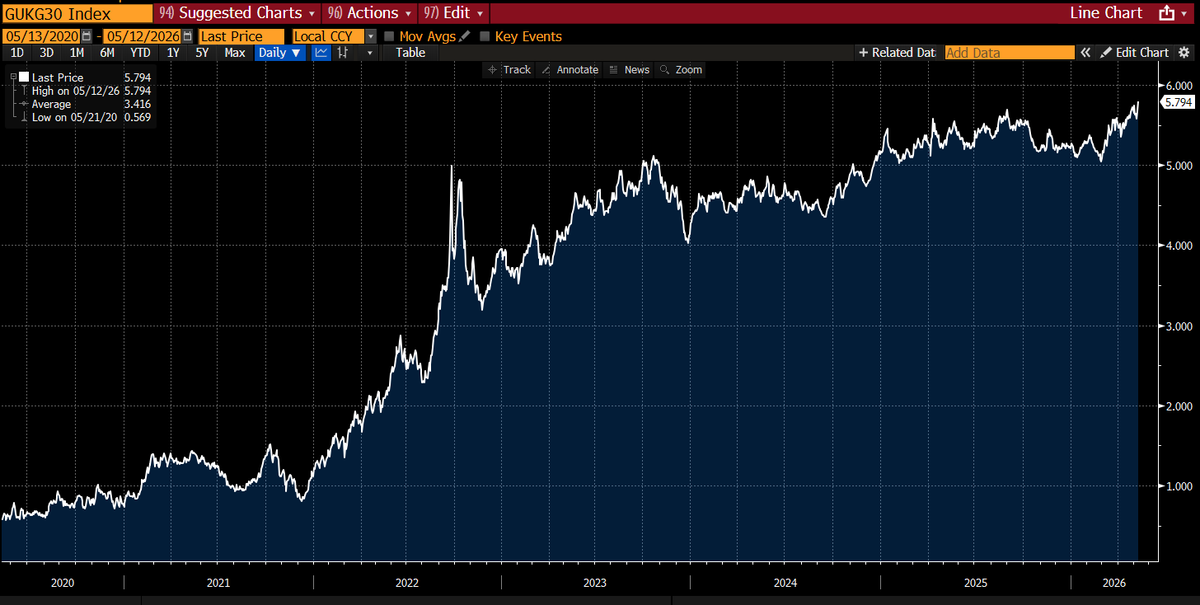
The "Liz Truss moment" of 2022 has turned into the UK's political reality, with 30-year yields soaring to their highest levels since 1998 and the pound weakening. "No matter who is in power, no matter their political leaning, there does not appear to be a credible plan to restore the country’s finances." bloomberg.com/news/articles/…
Lisa Abramowicz tweet media
English
103
438
1.8K
346.6K
RationalExuberance retweetledi
Ed Bradford
Ed Bradford@Fullcarry·
Looks like USTs are past denial, anger and bargaining, and well on their way to depression and acceptance of the possibility of a hike cycle.
English
9
13
136
16.1K
RationalExuberance retweetledi
Nick Timiraos
Nick Timiraos@NickTimiraos·
April CPI won't change minds at the Fed. But more of this will complicate the dovish case, which has already flipped away from arguing for cuts and towards arguing against toying with hikes. It's a tough inheritance for a new Fed chair picked by a president expecting cuts wsj.com/livecoverage/c…
English
14
45
200
33K
RationalExuberance retweetledi
Anna Wong
Anna Wong@AnnaEconomist·
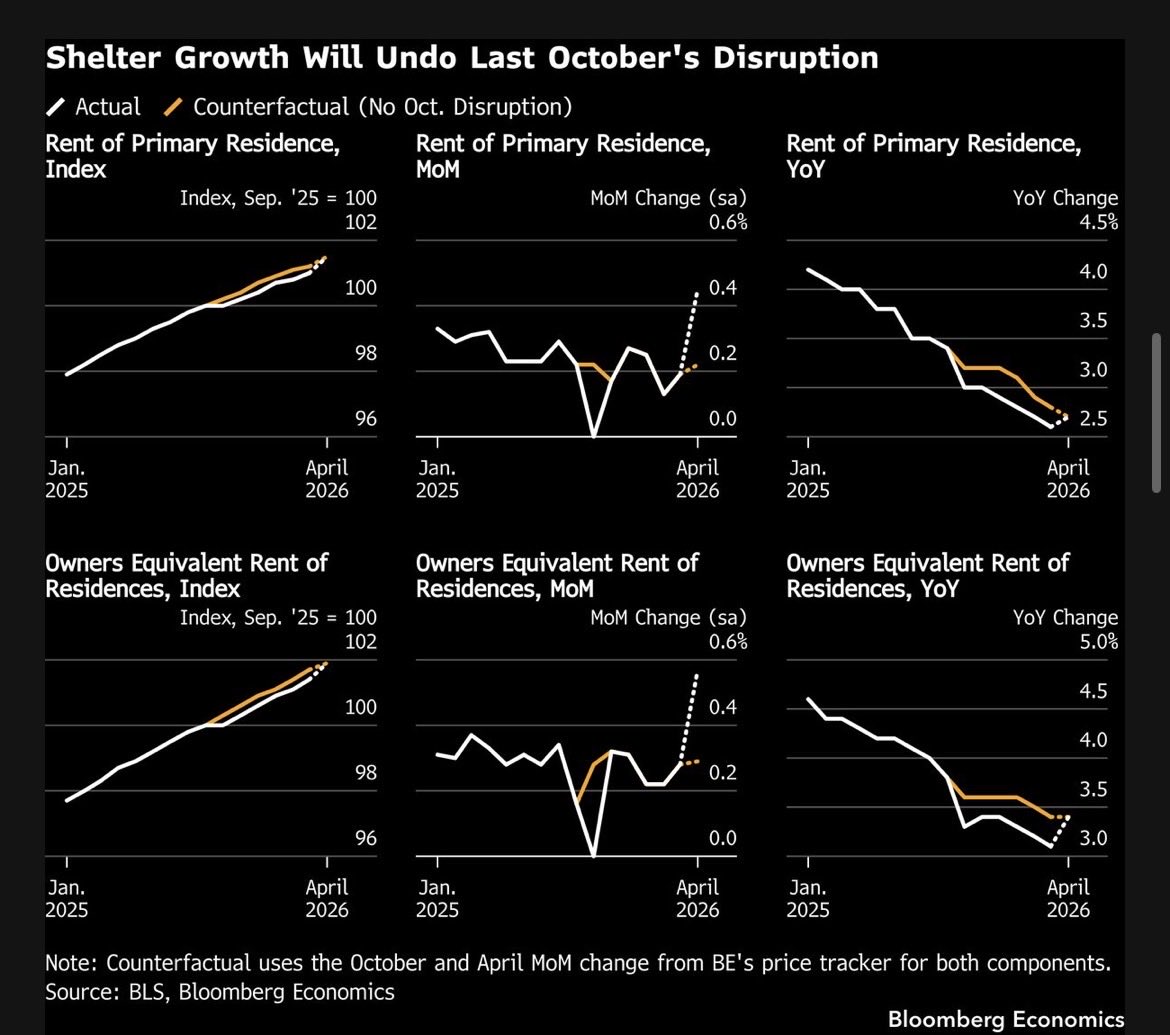
Three things to watch for in April’s CPI tomorrow: 1) a jump in rents inflation that is roughly 2x the typical monthly oer/primary rents pace. This is the primary cause of hthe hot core reading. This June reflects the rectification of the zero-out rents inflation last October from the shutdown. 2.) collateral impact on cpi from AI — storage and memory chips storage boosting computers related cpi items. Don’t see a clear end to this. 3) tariff pass through has peaked. Audio equipment is the poster child for tariff pass-through throughout last year. Rolling over now. 4) Airfares surge, but other travel related discretionary services deflating provide much offset. 5) Food prices rising. Full preview @TheTerminal blinks.bloomberg.com/news/stories/T…
Anna Wong tweet mediaAnna Wong tweet mediaAnna Wong tweet media
English
11
47
283
34.3K
RationalExuberance retweetledi
Diane Swonk
Diane Swonk@DianeSwonk·
Another issue is the data lost to the six-week government shutdown…that left much of October CPI zeroed out and biased down year on year measures. Next week CPI release will have change to home ownership update that will add to heat in CPI measures.
Lisa Abramowicz@lisaabramowicz1

Two gauges of US inflation, CPI & PCE, have diverged meaningfully. The reason: Price spikes in products tied to the AI infrastructure buildout. "AI infrastructure demand plus energy-related supply constraints tied to the Iran conflict could make inflation more persistent:" Pimco

English
4
9
57
4.7K