

SFA
459 posts

Good morning $S fam 👋
Mitch is out - better news to come 🙂
English
SFA retweetledi


@BigBodie12 @SonicLabs @MitchellDemeter Supply has to be capped by all means, not sure if this will ensure the token will stop falling, but if it’s not capped, $S will not survive
English

$S SONIC
@SonicLabs
@MitchellDemeter
But does any of this matter or is FeeM even relevant if token value can just be diluted into oblivion by unlimited minting moving forward?
iKILZ on SONIC🦇@iKILZ80
When Speed Is No Longer an Advantage, How Do Layer 1s Compete? This text is based on remarks by @MitchellDemeter, CEO of the @SonicLabs, in a recent interview, where he explains how the core axis of competition among Layer 1 blockchains has shifted. In previous years, L1s differentiated themselves through higher speed and lower transaction fees. However, with the growing number of fast and inexpensive chains, block space has effectively become commoditized. Under these conditions, the central question is no longer “Who is faster?” but rather: Which network can attract and retain devs, users, and capital? Demeter frames this challenge as one of retention, and defines Sonic’s response as the construction of a moat a defensive barrier that makes leaving costly and staying rational. This strategy is being pursued across two stakeholder-level dimensions: Developer Retention and Holders Retention 🔹Developer Retention Dev retention at Sonic is pursued through two primary paths: 1) Differentiation at the Protocol Level Through: •Rapid implementation of EIPs •Improved developer experience •Increased infrastructure migration costs Sonic’s advantage relative to Ethereum and Layer 2s lies here: as an independent and smaller ecosystem, it enables faster decision-making and quicker experimentation with protocol-level changes. 2) Financial Ecosystem Building Through VC Partnerships Rather than acting as a VC itself, Sonic seeks partnerships with venture capital funds to enable long-term capital formation for sustainable, real businesses within its ecosystem. One concrete implementation: Collaboration with @CMCC_Global, leading to the launch of the $25 million @ResonanceFund for investing in the Sonic ecosystem The ultimate goal is to create an environment that is difficult to exit both technically and economically. 🔹Token Holder Retention As the market exits a predominantly speculative phase, investor focus has shifted to a key question: How does network usage translate into value return for token holders? Demeter addresses this issue at Sonic through two parallel approaches: Tokenomics reform and Off-chain revenue 1) Tokenomics Reform: Previous Fee Model: •90% of fees allocated to developers •10% allocated to validators This model created a very simple UX; •Allowed applications to pay gas fees on behalf of users •Hid the blockchain from the user’s perspective •Produced a Web2-like (Venmo-style) experience However, on-chain usage did not necessarily return value to token holders. Solution: FeeM Reform Under the new model: •Approximately 15% allocated to builders •Approximately 10% allocated to validators •The majority of fees are burned Result: Conversion of activity into scarcity. Usage → Fees → Burning → Scarcity → Value for holders 2) Off-Chain Revenue: In addition to fees: •Licensing Sonic’s technology to banks, exchanges, and governments seeking their own private blockchains •Using this off-chain revenue for buybacks and burns 🔹Organizational Transformation at Sonic (Execution Layer) One of the clearest points in Demeter’s remarks is the emphasis on cultural transformation at Sonic: the shift from a purely tech-focused organization to a complete business. Sonic spent years operating as a highly technical organization, but today: •Technology alone is no longer sufficient •The market has matured •Capital is seeking real business models Accordingly, Sonic is strengthening: •Marketing and communications •Business development •Institutional sales and strategic partnerships This transformation provides the foundation for executing the network’s technical and economic strategies. 🔹Conclusion L1s will not win through speed. They will win through protocol level retention and sustainable economic design.
English
@MitchellDemeter you know the only way to revive token price is to switch to fixed supply. This was the real issue. This will instantly boost the price and everyone will benefit. Add to that a decent burn plan and you have a good chanceto do the impossible. Sometimes it really doesn’t have to be too complicated. You don’t have the best legacy, appreciate everything you do
English

Season 1 did exactly what it was meant to do. It bootstrapped Sonic at launch, drove real usage, brought in infrastructure partners, and helped establish the network quickly. It worked.
It also came with an unavoidable tradeoff: meaningful sell pressure. Large, broad airdrops optimize for short-term behavior as much as long-term participation. That’s not a mistake, it’s a lesson. And good networks evolve based on lessons, not narratives.
After reviewing Season 1 outcomes and the broader market response, we made the deliberate decision to cut Season 2 short and materially reduce distributions. We know that wasn’t popular for everyone, but we believe it was the right call for the long-term health and alignment of the Sonic ecosystem.
Going forward, we’re moving away from broad participation-based airdrops and toward targeted, usage-driven incentives that reward real activity: builders shipping, users creating demand, and teams contributing to sustainable growth. In parallel, we’re re-evaluating tokenomics and burn mechanisms so value accrues to those who participate meaningfully as the network grows.
This is a shift from bootstrapping to optimization. From growth at any cost to discipline, alignment, and durability. We’re building Sonic for the long haul, and every decision from here forward will reflect that. $S
Sonic@SonicLabs
Transparency Update on Sonic Labs Airdrop Economics. Per a community governance vote, we originally minted 190,500,000 S for airdrops and ecosystem incentives on June 19th, 2025. 🧵
English

🚨 ICYMI: Sonic's new Director of BD, @Captain_Owens, is ready to make Sonic the most attractive environment for builders.

English
@SonicLabs You gotta be kidding. This guy was VP of Business Development at Kadena until November this year. I guess we know the reason why he was open for job 😀 Best of luck, anyway! It cannot go worse
English

We’re thrilled to welcome Evan Owens as our new Director of Business Development.
With 15 years of experience as a founder, investor, and operator, Evan brings deep expertise in building partnerships, scaling ecosystems, and turning strategy into revenue-driving execution.
He has led business development across both web2 and web3, structuring high-impact partnerships, opening new markets, and building long-term relationships with operators, enterprises, and builders.
At Sonic, Evan will focus on expanding strategic partnerships, accelerating ecosystem growth, and translating world-class technology into real-world adoption.

English

@sonicmaxii @LilRascalSonic @MitchellDemeter @SonicLabs There’s no accountability in crypto, guys. We are all in the same boat, but let’s face it, this is what happens if you want to get rich quick
English

@LilRascalSonic @MitchellDemeter It should be a case of study how @SonicLabs managed to turn its biggest supporters into haters... $S
English

Sonic didn't just take money from me; it stole my time, my motorcycle, my social life, my hair. You sons of bitches, I've been supporting you since FTM and I'm regretting it like a dog—my biggest mistake was ever supporting you.
$S
@MitchellDemeter
English

@Defi_Maximalist @SonicLabs @MitchellDemeter You are new in this role, so literally no one can blame you for anything. Time for you to show up if you care about the people that have put their trust in you. You’re a business man and have a different way to measure success, which goes beyond tech.
English
@Defi_Maximalist @SonicLabs Most tokens are starting a recovery from this point. Not the case for $S. @SonicLabs, you started the war against the community via your prominent voices in the 1st place and then by your actions. If you don’t step in now, $S will go to zero and no one will benefit.
English

I think $S is doing so poorly from a price perspective because @SonicLabs can basically mint tokens whenever they want. Until that is solved I don't see how this turns around.
English
@cryptomanran Is there any reason why anyone should still be in this market at all?
English

Just a little more pain before the next violent leg up!
My suggestion, cancel your December vacation plans. It’s going to be wild!
English
@aj_alexjacobi I guess this is what happens when you print tokens out of thin air to cover needs that you don’t have
English


@MitchellDemeter Well, it looks like finally @SonicLabs has a CEO. This type of message is what community and all the people involved needed, congrats for communicating in such a clear and transparent manner. Suddenly there is hope for $S. Good luck in your new role
English
Last night’s market cascade was another reminder of how fast things can move in crypto when leverage unwinds against a backdrop of global uncertainty. These moments test conviction and show why strong foundations matter.
$S, like much of the market, saw sharp volatility, but nothing about Sonic’s fundamentals has changed. We have a strong balance sheet, best-in-class tech, and a mission built for the long haul.
Through it all, the Sonic network performed exactly as designed. Zero pending transactions, hundreds of TPS sustained for hours, near-instant finality, and sub-cent fees. No congestion across DEXs or infrastructure. Pure, consistent performance.
As the dust settled, we added just over 30 million more $S to our treasury, purchasing roughly $6M USD directly from the market, as we believe this will deliver stronger long-term ROI than sitting in stable reserves.
Markets move in cycles, but our focus doesn’t change. Building real technology, real partnerships, and products that last.
To our builders, validators, and community: stay focused. The work continues today, just like it did yesterday.
English
@TheMoonCarl Entrie industry would benefit if you just shut the fuck up, 🤡
English

The fakeout is done.
Now comes the parabolic run to new highs.
English
@DoctorDeFi $S is the weakest coin by far. All others have started a decent recovery, except for $S. Order book indeed so thin, it could go up straight to .25 a matter of seconds
English

If anyone wants to step in and save the day, $S can run up to 0.26 with less $800k buy on Binance.
Who is most bullish on Sonic with deep pockets?
English
English
@Mich820202 @AndreCronjeTech yes I know, he did that on purpose
English
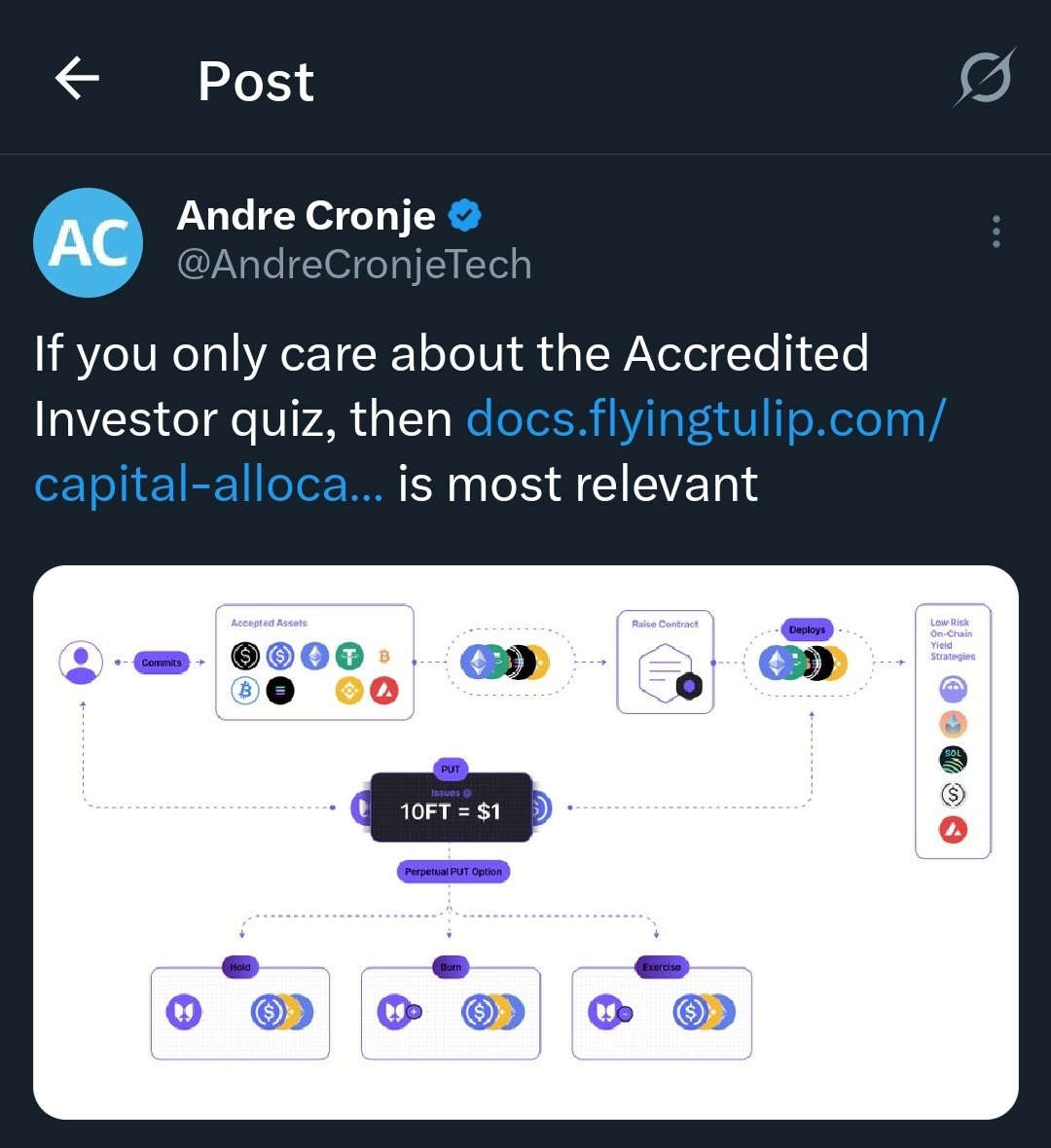
@AndreCronjeTech have you really removed Sonic logo from this infographic?
I was Fantom/Sonic supporter for years, but I'm not interested in $S or $FT after this. I was here first time you left, i think that was enough.
Cant take the heat, blaming community for bad Sonic performance, blocking $FTM OGs, and now turning your own back to the project again. What a timeline.
Gl with $FT coz ppl will realize soon enough, who will profit the most from that project, and no, it wont be them, you already know that.
English