AlternativeL1fe

53 posts

AlternativeL1fe

AlternativeL1fe

@AlternativeL1fe

Katılım Ocak 2024
245 Takip Edilen26 Takipçiler
AlternativeL1fe retweetledi

Aave
Aave@aave·
Aave service providers and ecosystem partners have established a recovery fund that factors in pending DAO votes, including the Arbitrum governance vote, indicative agreements, and successful execution to restore rsETH’s full backing. We are DeFi United, and resolving this for affected users and the broader DeFi ecosystem is our top priority. We have aligned with @KelpDAO and @LayerZero_Core on the technical steps required to execute our plan. That work is now moving forward. Thank you to everyone who contributed to DeFi United and to the thousands of community members who stood with us throughout. Watching the DeFi community come together has been genuinely inspiring. The final recovery plan, steps for users, and further updates will follow shortly.
English
163
295
1.4K
326.3K
AlternativeL1fe retweetledi
Ben Zhou
Ben Zhou@benbybit·
Bybit, as the biggest holder and supporter of Mantle, will vote YES for this proposal. When we got hacked the industry got together and helped us. It is the only right thing that we do the same to unit together and walk out from difficult times.
Mantle@Mantle_Official

Following this week's rsETH incident involving @KelpDAO and @LayerZero_Core, a proposal has been put forward for Mantle to contribute a loan facility to @aave's coordinated relief effort. The loan would form part of a wider coordinated framework, structured to minimize disruption across the broader ecosystem and contribute to a measured path forward for users affected. DeFi United, as one. Full details below: forum.mantle.xyz/t/discussion-m…

English
145
113
1.5K
160.3K
AlternativeL1fe retweetledi
The Wolf Of All Streets
The Wolf Of All Streets@scottmelker·
Yahoo Finance is an absolute giant. I could not be more excited to work with them. ~150M+ monthly users ~200M+ visits Bigger than CNBC by 2x. Dwarves Bloomberg and Reuters… crushes ALL crypto media combined (~70M for top 30 crypto sites). We are going big.
The Wolf Of All Streets@scottmelker

Big news. I’m launching a brand new show with @YahooFinance – The Daily Wolf. Daily crypto for the masses – minus the noise, narratives, and nonsense. 12 PM ET. Coming soon.

English
115
23
946
53.7K
AlternativeL1fe retweetledi
Chamath Palihapitiya
Chamath Palihapitiya@chamath·
let me know what you think and what you'd like me to share on this channel think would be fun to do a video on my best and worst investments
English
156
16
651
80.2K
AlternativeL1fe retweetledi
Mezzanine
Mezzanine@mezzanine_fi·
Love this. Quick clarifications: losses absorb JLT → MLT → smzUSD; mzUSD isn’t a tranche; smzUSD isn’t currently capped; and Pendle + token timing aren’t confirmed. Great effort, happy to see the community digging into the details.
Daniel | Woof@0x_dani8

x.com/i/article/2006…

English
10
5
35
3.8K
AlternativeL1fe retweetledi
JayOw | Hanyon Analytics
JayOw | Hanyon Analytics@jayowtrades·
Three months ago, my teenage son totaled our car. It was his fault—texting. Thank God no one was hurt, but the repair estimate was brutal: $4,200. Our insurance deductible alone was $2,500. I was furious and terrified. We didn’t have that kind of money. I work two jobs. My husband is disabled. Some months, we were already choosing between electricity and groceries. The body shop suggested a place on the south side. “Cheaper,” they said. “Cash only.” I pulled up to what looked like a junkyard. Rusted cars everywhere. Weeds pushing through cracked concrete. A faded sign barely hanging on. I almost drove away. Then an elderly man shuffled out. He had to be seventy-five, maybe older. Grease-stained coveralls. Hands trembling slightly. A thick accent I couldn’t quite place. “You need fix?” he asked. I explained the situation. He looked at the car, grunted, and disappeared into the garage. A few minutes later, he returned with a clipboard. “I fix for $800.” I blinked. “But the estimate said—” “They charge new parts, fancy paint,” he said. “I use good parts. Make it safe. $800.” “And… when do I pay?” “You pay $50 now. Rest when you can. No hurry.” I just stood there. “Why would you trust me?” He looked at me with eyes that had seen a lifetime. “During war, stranger hid my family in barn. Six months. Never asked for money. Only said, ‘When you can, help someone else.’ I never could hide someone. But I can fix cars.” I cried right there in that cluttered lot. He fixed the car in three days. Perfect. Safe. When I came to pick it up, an elderly woman was there, arguing with him in the same language, crying and waving her hands at her battered sedan. He just nodded, patted her shoulder, and took her keys. “Another charity case?” I asked quietly. He shrugged. “Her husband died. Pension not here yet. Car is how she sees granddaughter. I fix.” Over the next two months, I paid him in $50 and $100 installments. Every time I stopped by, someone else was there—a single dad, a laid-off factory worker, an immigrant family. All driving cars that should have been scrap, all kept alive by this old man who charged what people could afford, or nothing at all. When I made my final payment, I asked him, “How do you stay in business?” He smiled, gentle and tired. “Some people pay full. They keep lights on. Some pay little. They keep heart on. Balance.” Last week, I drove past his shop. It was closed. A “For Sale” sign stood out front. I panicked and called the number on his card. A woman answered—his daughter. “My father passed away Tuesday,” she said softly. “Heart attack. In the shop.” I couldn’t breathe. “We’re going through his records,” she continued. “He had $847 in the bank. But his ledger… seventy-three people still owed him money. Some for years. Over $30,000 total.” She paused. “His note says, ‘Forgiven. They needed wheels more than I needed money.’” The funeral was yesterday. Seventy-three people showed up. Every single name from that ledger. Strangers bound together by one man’s refusal to let us stay broken. We pooled money, paid off the shop’s debts, and gave the rest to his daughter. Later, my son asked me, “Mom, why are you crying? You didn’t even know him that well.” “Because,” I told him, “that man taught me something your generation needs to learn. Every day, you see people—really see them. Their broken cars. Their broken hearts. Their empty wallets. And you decide: am I someone who fixes things, or someone who walks away?” My son understood. Last month, he started volunteering at a food pantry. He doesn’t talk about it. He just goes. The shop is still for sale. The sign still says “Cash Only.” But seventy-three of us know what it truly meant: Pay what you can. When you can. If you can. Because some debts aren’t about money. They’re about remembering that once—when we were broken—someone fixed us anyway.
English
0
1
3
310
AlternativeL1fe retweetledi
Jonah
Jonah@jvb_xyz·
Consolidated thoughts on Venezuela: Venezuela matters to the oil market, but not because “big reserves = easy barrels” Venezuela is not Saudi Arabia. You don’t stick a toothpick in the ground and get 1m bpd Much of Venezuela’s crude is ultra-heavy and extremely viscous, requiring diluent and complex processing just to move Extracting it (Maracaibo especially) is technically brutal and environmentally disastrous Oil under the ground is irrelevant. Only oil that reaches a refinery matters Today Venezuela pumps ~1m bpd and exports most of it because the domestic economy is broken Historically, Venezuela produced over 3m bpd, with exports peaking in that range decades ago Even in the most extreme bearish fantasy - Venezuela fully opened, perfectly run, “51st state” scenario - this is slow It would still take 3-4 years just to restore fields enough to pump 3-4m bpd A functioning economy of that size would also consume ~2m bpd domestically So exports go from ~1m today (1 pumped - ~0 consumed) To maybe ~2m in the future (4 pumped - 2 consumed) Net change: exports increase by ~1m bpd Global oil demand is ~105m bpd So even in the most aggressive case, this is <1% of global consumption Yes, oil demand growth is slowing, so +1m bpd is marginally bearish It knocks a couple dollars off flat price - not a collapse And none of this happens quickly Big oil projects are long-cycle: engineering, remediation, contractors, housing, schools, logistics These things take years, not months (look at Guyana) This is not “another million barrels tomorrow” It’s maybe +1m, max +2m, in ~3 years Which means this isn’t really about future supply at all This is about the existing ~1m bpd Venezuela already produces today Right now, a lot of those barrels flow to China at steep discounts Venezuela also cut strategic deals with Russia and Iran - weapons, influence, Western Hemisphere presence Removing sanctions changes that dynamic China loses access to heavily discounted Venezuelan crude Venezuela can sell on the open market at market prices Chinese oil gets more expensive More importantly: if China invades Taiwan, it loses a guaranteed Venezuelan supply backstop Those barrels would have to be replaced on the open market And under US sanctions, they won’t reach China Russia doesn’t benefit on the crude side - it’s already maxed out on buyers If anything, China becomes more dependent on Russian oil, improving Russia’s pricing power What Russia does lose is refining arbitrage Venezuela’s refining system collapsed under Maduro Crude was sent abroad, refined, and shipped back as gasoline, diesel, and jet fuel Those flows unwind Russian refiners lose a customer Product flows reroute modestly Net-net: marginal oil impact, meaningful geopolitical leverage The real objective is leverage over China And denying Russia and China the ability to embed military systems on America’s doorstep
English
37
38
392
55.5K
AlternativeL1fe retweetledi
Stephen | DeFi Dojo
Stephen | DeFi Dojo@phtevenstrong·
So, what did I miss? What are you seeing? Please let me know. A bunch of ambassadorships mentioned, a bunch of completely unrelated teams mentioned, learn more here: defidojo.vip I do try to diligence everything before talking about it, but certainly don't bat 1000, if there's anything mentioned you find particularly risky, please do let me know.
English
1
1
13
3K
AlternativeL1fe retweetledi
Haseeb >|<
Haseeb >|<@hosseeb·
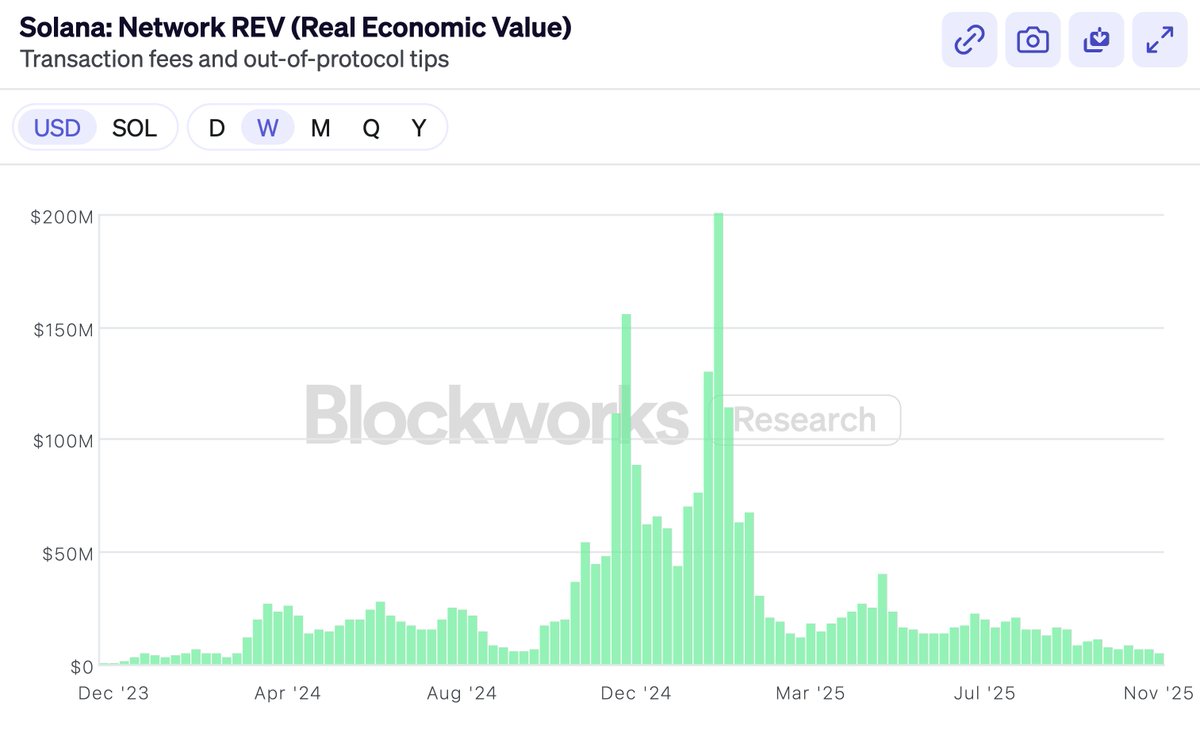
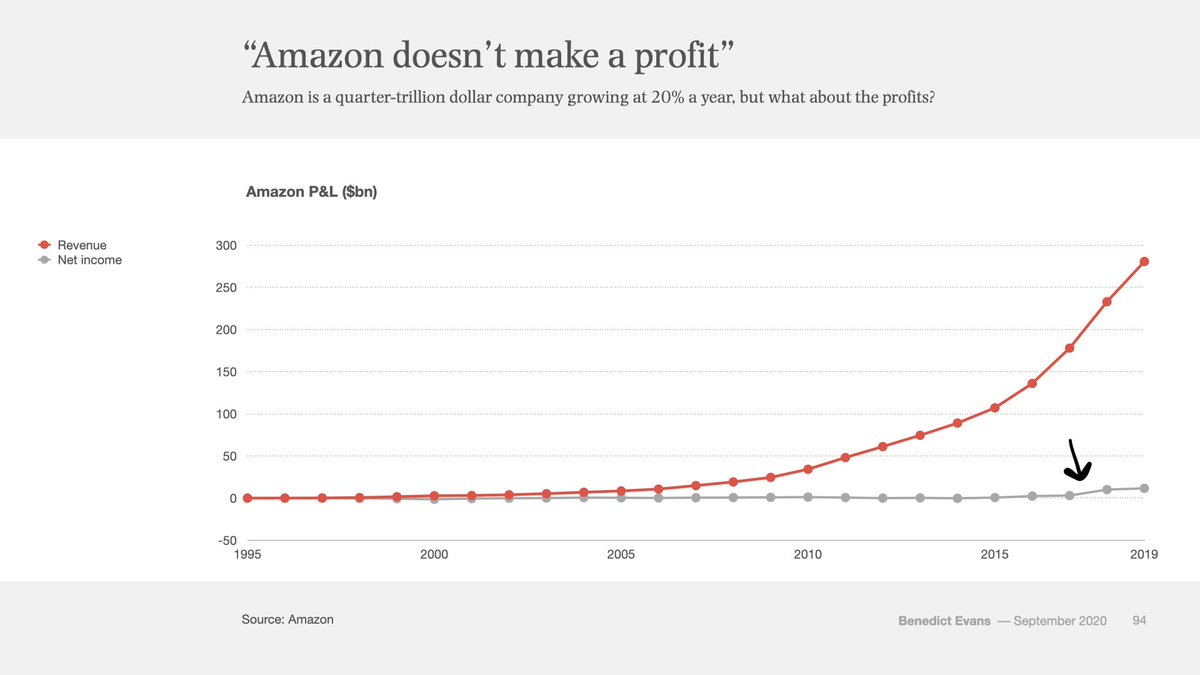
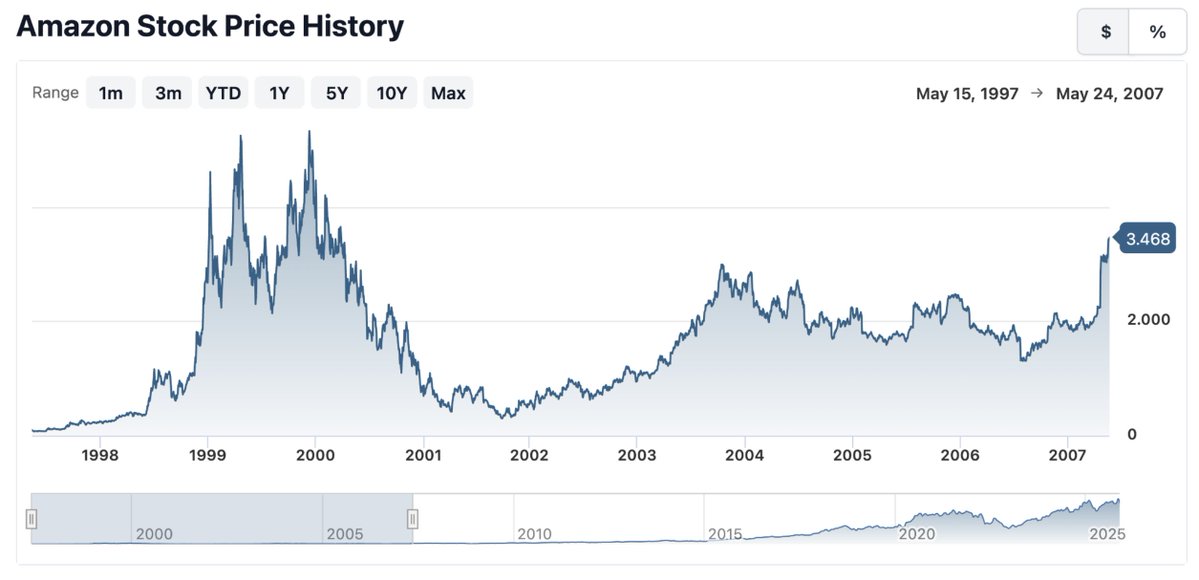
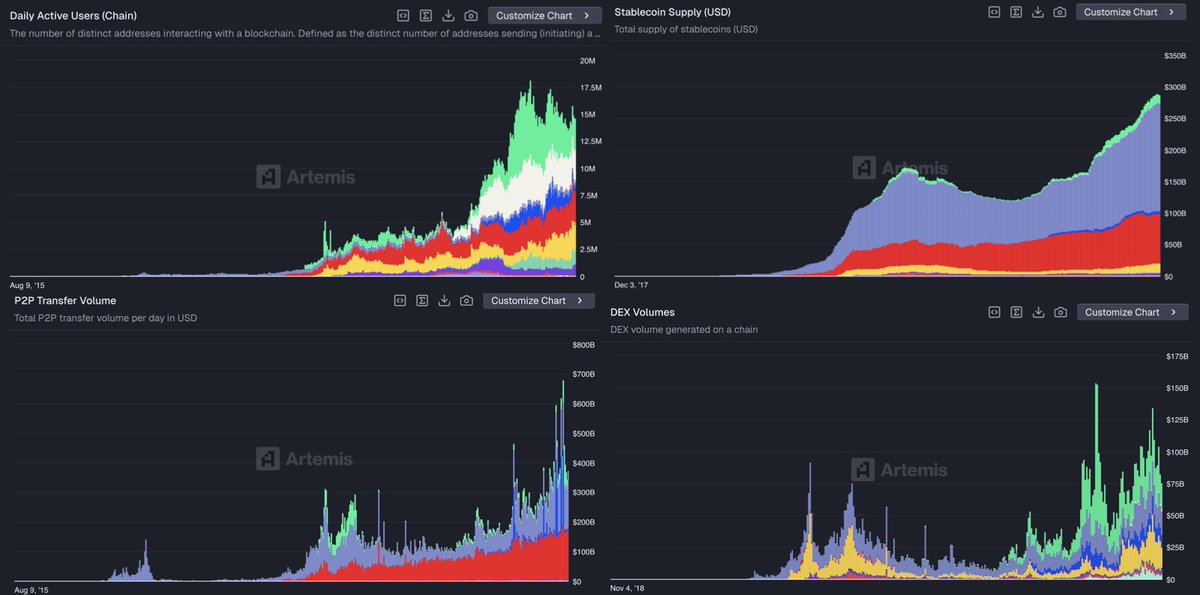
In Defense of Exponentials I used to tell founders, the reaction you are going to get to your launch is not hate, it’s indifference. By default, nobody cares about your new chain. I have to stop telling them that now. Monad just launched this week, and I’ve never seen so much hate about a blockchain that just launched. I’ve been investing into crypto professionally for 7+ years now. Before 2023, almost every chain I’ve ever seen that launched was mostly met with enthusiasm or indifference. But now, new chains are born into a chorus of hate. The amount of haters I’ve seen for projects like Monad, Tempo, MegaETH—before they even hit mainnet—is a genuinely new phenomenon. I’ve been trying to diagnose: why is this happening now, and what does it mean about the psychology of this market? The Cure is Worse than the Disease Forewarning: this is going to be the vaguest blockchain valuation post you ever read. I don’t have any fancy metrics or charts to sell you on. Instead, I’ll be arguing against the zeitgeist of Crypto Twitter, which for the last couple of years, I’ve been constantly on the opposite side of. In 2024, I felt like what I was arguing against was financial nihilism. Financial nihilism is the belief that none of these assets matter, it’s all memes at the end of the day, and everything we’ve built is inherently worthless. Thankfully, that’s no longer the vibe. We have broken out of that spell. But the zeitgeist now is what I’d call financial cynicism: OK, maybe some of this stuff has value, maybe it’s not all memes, but it’s grossly overvalued and it’s only a matter of time before Wall Street finds that out. Not that all chains are worthless. But these things are all maybe worth 1/5th-1/10th of what they’re currently trading at (have you seen these PE ratios?), and so you’d better pray like hell Wall Street doesn’t call us on our bluff, because once they do it’s all getting wiped out. You’ve got many bullish analysts now trying to conjure up optimistic L1 valuation models, inflating PE ratios, gross margins, DCFs, trying to fight against this mood. Late last year, Solana very proudly embraced REV as a metric that could finally justify their valuation. They proudly announced: we—and only we—are no longer bluffing to Wall Street! And, of course, almost immediately after REV was embraced, it fell off a cliff (though $SOL, tellingly, did better than REV did). Not that there’s anything wrong with REV. REV is a very clever metric. But the point of this post is not metric selection. Then came the launch of Hyperliquid. A DEX that had real revenue and buybacks and PE multiples. And the chorus said—look, look I told you! Finally, for the first time ever, a token that has some real profits and a proper PE multiple. (Nevermind BNB, we don’t talk about that.) Hyperliquid will eat everything because obviously Ethereum and Solana don’t make any real money, we can stop pretending to value them now. Hyperliquid, Pump, Sky, these buyback-heavy tokens are all great. But the market always had the ability to invest into exchanges. You could always buy Coinbase, or BNB, or whatever. We own $HYPE, and I agree that it’s a fantastic product. But that’s not why people were investing in ETH and SOL. The fact that L1s don't have exchange-like profit margins is not why people were buying them—if they wanted that, they could’ve bought Coinbase stock. So if I’m not critiquing blockchain financial metrics, maybe you think this post is going to be chiding the sinfulness of the token-industrial complex. Obviously, everyone has lost money on tokens in the last year, VCs included. Alts are down bad this year. And so the other half of the zeitgeist on CT is arguing about who's to blame. Who’s become greedy? Are the VCs greedy? Is Wintermute greedy? Is Binance greedy? Are the farmers greedy? Are the founders greedy? The answer, of course, is the same as it’s ever been. Everyone is greedy. Everyone. The VCs, Wintermute, the farmers, Binance, the KOLs, they're all greedy, and you are greedy too. But it doesn't matter. Because no functioning market has ever required anyone to act against their self-interest. If we're right about crypto, we can all be greedy and the investments will still work out. Trying to analyze a market that has gone down by figuring out “who’s greedy” is going to be about as fruitful as commissioning witch trials. I guarantee you, nobody just started being greedy in 2025. So this, too, is not what I’m going to be writing about. Many people want me to write a post about why $MON should be valued at X or $MEGA at Y. I’m not interested in writing this post, or advocating that you buy anything in particular. In fact, you probably shouldn’t buy any of them if you don’t already believe in them. Will any new challenger chain win? Who knows. But if it has a material chance of winning, it's going to be priced on that basis. If Ethereum is worth $300B or Solana is worth $80B, a project that has a 1-5% chance of becoming the next Ethereum or Solana will be priced according to those probabilities. Somehow CT is scandalized by this, but it’s no different than Biotech. A drug that has less than a 10% chance of curing Alzheimer's is priced by the market as worth billions of dollars, even if 90% chance it won’t pass stage 3 trials and will go to 0. That's how the math works—and turns out, markets are pretty good at doing math. Binary outcomes are priced on probabilities, not on run rates or moral turpitude. It’s the “shut up and calculate” school of valuation. I really don’t think that’s an interesting question to write about. “5% chance to win? No way, that’s clearly a 10% chance!” Markets, not articles, are the best way to assess that for any individual token. So here’s what I am going to write about: CT doesn't seem to believe anymore that chains are valuable. I don’t think this is because they don’t believe new chains can win market share. We just saw Solana dominate market share after emerging from the ashes less than 2 years ago. It’s not easy, but of course it’s possible. It’s more that people have come to believe that even if a new chain wins, there’s no prize worth winning. If $ETH is just a meme, if it’ll never generate real revenue, then even if you win, you won’t be worth $300B. The contest is not worth winning, because these valuations are all bunk and it’ll all come crashing down before you go to claim your prize. Being optimistic about chain valuations has become passé. Not that nobody is optimistic—obviously there must be optimists out there. For every seller there’s a buyer, and as much as CT cool kids love to drag L1s, people are comfortable buying SOL at $140, ETH at $3000. But there’s a perception now that all the smartest people are over buying smart contract chains. Smart people know the jig is up. If not now, then soon. The only people buying here are suckers—Uber drivers, Tom Lee, and KOLs who say stuff like “trillions.” And maybe the US Treasury. But not the smart money. This is bullshit. I don’t believe it, and you shouldn’t either. So I felt like I had to write a smart person’s manifesto on why general purpose chains are valuable. This post is not about Monad or MegaETH. It’s really in defense of ETH and SOL. Because if you believe ETH and SOL are valuable, the rest is straight downstream. Defending ETH and SOL valuations is generally not my job as a VC, but fuck it, if nobody else is willing to do it, then I’ll write it. Feeling the Exponential My partner Bo experienced the Chinese Internet boom first-hand as a VC. I’ve heard how “crypto is like the Internet” so many times now that it doesn’t even register for me anymore. But when I hear his stories, it always reminds me how costly it is to be wrong about these things. A story he often tells is about when all the early e-commerce VCs (it was a small group back then) got together for coffee in the early 2000s. They debated: how big is the market for e-commerce going to be? Is it going to be mostly electronics (maybe only techies will use PCs)? Could it ever work for women (perhaps they’re too tactile)? What about food (maybe impossible to manage perishables)? These were deeply important questions for early VCs to decide what to invest in and what prices to pay. The answer, of course, was that literally every single one of them was devastatingly wrong. E-commerce would sell everything, and the target audience was the whole fucking world. But nobody at the time actually believed it. And even if they did, it would be too absurd to say out loud. You just had to wait long enough for the exponential to show you. Even among the believers, very few thought e-commerce would become as big as it became. And those few who did, almost all of them became billionaires from just not selling. Every other VC—as Bo tells me, since he was one of them—sold too early. It has become passé in crypto to believe in the exponential. I believe in the crypto exponential. Because I’ve lived it. When I started in crypto, nobody used this stuff. It was tiny and broken and awful. TVL on-chain was in the millions. We invested into the first generation of DeFi, MakerDAO, Compound, 1inch, back when they were science projects. I remember playing around on EtherDelta back when DEXes traded single digit millions a day, and that was considered to be a huge success. It was complete dogshit. Now we routinely trade in the tens of billions on-chain every day. I remember believing it was crazy that Tether hit a billion dollars in issuance and was being written up in the NYT as a ponzi scheme on the brink of shutdown. Now stablecoins are over $300B and regulated by the Federal Reserve. I believe in the exponential because I’ve lived it. I’ve seen it over and over again. But you might respond—well, stablecoin growth might be exponential, maybe DeFi volumes are exponential, but they don’t accrue to ETH or SOL. The value doesn’t get captured by the chains. To which I answer: you still don’t believe in the exponential. Because the exponential’s answer is always the same: it doesn’t matter. This stuff is going to be so much bigger than it is today. And when it’s absolutely enormous, you’ll make it up on scale. Study this chart. This is Amazon’s P&L from 1995 to 2019. That’s 24 years. Red is revenue, gray is profit. You see that little blip on the end where the gray line goes up? That’s when, 22 years in, Amazon started actually making a profit. Amazon was 22 years old when this little gray line of net income first peeled off of 0. Every single year before then, there were op eds and critics and short sellers claiming that Amazon was a ponzi scheme that would never make any money. Ethereum just turned 10 years old. This is what the first 10 years of Amazon stock looked like: 10 years of chop. All along the way, Amazon was beset with doubters and non-believers. Is e-commerce a VC-subsidized charity? They’re selling underpriced cheap low-quality knick-knacks to bargain hunters, who cares? How are they ever going to make actual money, like Walmart or GE? If you were arguing about Amazon’s P/E ratio, you were in the wrong regime. That’s the regime of linear growth. But e-commerce was not a linear trend, and so every single person for 22 years arguing about P/E ratios was devastatingly wrong. No matter what you paid, no matter when you bought, you were not bullish enough. Because that’s what exponentials do. When it comes to truly exponential technologies, no matter how big you think it’s going to get, it just keeps getting even bigger. This is the thing that Silicon Valley has always understood better than Wall Street. Silicon Valley was raised on exponentials, while Wall Street was raised on linearity. And over the last few years, crypto’s center of gravity has migrated from Silicon Valley to Wall Street. You can feel it. Granted, crypto growth doesn’t look as smooth as e-commerce’s growth. It’s burstier, it goes in fits and starts. This is because crypto, being about money, is deeply tied to macro forces, and it also has more violent regulatory push and pull than e-commerce. Crypto strikes at the heart of the state—money—and so it’s more unnerving to governments than e-commerce ever was. But the exponential is no less inevitable. It's a crude argument. But if crypto is exponential, then the crude argument is correct. Zoom out. Financial assets want to be free. They want to be open. They want to be interconnected. Crypto turns financial assets into file formats, makes it as easy to send a dollar or a stock as to send a PDF. Crypto makes it possible for everything to talk to everything. It makes it all 24/7, global, interconnected, and open. That will win. Open always wins. If there’s no other lesson I've learned from the Internet, it’s that. Incumbents will fight against it, governments will huff and puff, but eventually they will give up against the adoption, the generativeness, the sheer efficiency that this technology enables. It’s what the Internet did to every other industry. Blockchains are how that same trend will gobble up all of finance and money. Yes—with enough time—all of it. An old saying goes: people overestimate what can happen in two years, but they underestimate what can happen in ten. If you believe in the exponential, if you zoom out enough, then it’s all still cheap. And it should humble you that every day, the holders outlast the sellers and naysayers. Big capital has a longer time horizon than CT swing traders might lead you to believe. Big capital has been trained through history not to fade big technologies. You know, the big gushy story that originally got you to buy $ETH or $SOL? Big capital believes that story and hasn't stopped. So what exactly am I arguing? I am arguing that applying P/E ratios to smart contract chains (the “revenue meta,” as it’s now called), is giving up on the exponential. It means you have consigned this industry to the regime of linear growth. It means you believe 30 million DAUs on-chain and <1% of M2 is it. Crypto is just one of the things in the world. A sideshow. It did not win. It was not inevitable. More than anything, I’m arguing to be a believer. Not just a believer, but a long-term believer. I’m arguing that this exponential will be bigger than anything else you’ve been a part of in your life. That this is your e-commerce. That you will look back when you’re old and tell your kids—I was there when it all happened. Not everyone believed it was possible, that whole societies could change, that all of money and finance would be transformed by programs running on decentralized computers that we collectively owned. But it actually happened. It changed the world. And you were a part of it. Disclosure: These are my own views. Dragonfly is an investor in $MON, $MEGA, $ETH, $SOL, $HYPE, $SKY among many other tokens. Dragonfly believes in the exponential. This is not investment advice, but is advice of another kind.
Haseeb >|< tweet mediaHaseeb >|< tweet mediaHaseeb >|< tweet mediaHaseeb >|< tweet media
English
929
680
3.7K
2.1M
AlternativeL1fe retweetledi
Stephen | DeFi Dojo
Stephen | DeFi Dojo@phtevenstrong·
Thanks man, that means a lot🙏
Aiirichⓛ@Aiirich04

I’ve been following @phtevenstrong lately not because he finds good yields, but because of the way he approaches DeFi. He mixes numbers, discipline, and faith (a Christian believer innit) in a way that feels rare in this space. You’ll see him breaking down strategies on $PENDLE or Gearbox one day, and reminding his followers to lead with integrity the next day. His project, DeFi Dojo, isn’t not just another community. It’s where people actually learn how to manage risk, size portfolios, and build sustainable returns without chasing noise. At its core, DeFi Dojo delivers deep research, sharp analytics, and a community focused on real skill building over hype. It’s not free to join lol, I checked 😭but it’s not about the fee either. It’s about valuing the space enough to build mastery, not just chase trends. While most people in crypto talk about chasing alpha. Stephen shows you how to stay consistent through it. Guys, I think it will be a great investment to subscribe to his private community. Check his page for more details. Goodluck

English
7
3
59
10.5K
AlternativeL1fe retweetledi
Matt Hougan
Matt Hougan@Matt_Hougan·
I'll edit Larry Fink's quote for him: Every stock, every bond, every fund—every asset—c̶a̶n̶ will be tokenized.
English
6
12
76
9.1K
AlternativeL1fe retweetledi
Lex Fridman
Lex Fridman@lexfridman·
Feeling lonely. Just one of those nights. I'm sitting outside 7 eleven at 2am like old times, listening to music, trying to figure out what it's all about. Silly brain is stuck feeling low tonight, even though I know life is so fucking beautiful. These nights make the happy ones that much sweeter. I wouldn't have it any other way. If you're feeling low, hang on, we're in this together. Love you all ❤️
English
4.8K
1.8K
51.7K
3.9M
AlternativeL1fe retweetledi
H.E. Justin Sun 👨‍🚀 🌞
H.E. Justin Sun 👨‍🚀 🌞@justinsuntron·
If EF and Ethereum Were Under My Leadership “#ETH to $10,000” My First Week Plan 1. Halt ETH Sales immediately and Optimize Revenue EF will immediately cease selling ETH for at least three years. Operational costs will be covered through AAVE lending, staking yields, and stablecoin borrowing. This ensures ETH supply remains intact, aligning with our deflationary goals and reinforcing market confidence. 2. Heavily Tax Layer 2 Solutions immediately Significant taxes will be imposed on all Layer 2 projects, ensuring Ethereum generates at least $5 billion annually in taxes (whether in stablecoin or tokens). All collected taxes will be used to repurchase ETH and burn it in a fully decentralized manner, period. 3. Streamline EF Operations EF staff will undergo a drastic downsizing, retaining only the most capable team members. Remaining employees will receive significant salary increases, transitioning EF into a purely merit-based system that rewards performance and results. 4. Adjust Rewards and Increase Fee Burns Node rewards will be reduced, and more emphasis will be placed on fee-burning mechanisms. This ensures Ethereum remains DEFLATIONARY, solidifying its position as a store of value. Focus Exclusively on Layer 1 and ETH reaches $10,000 All resources will be redirected toward Ethereum’s core Layer 1 development, prioritizing scalability, security, and adoption and ETH reaches $10,000. With these decisive actions, ETH is poised to break $4,500 within the first week, setting the foundation for long-term success.
English
1.8K
1.4K
10.8K
2M
AlternativeL1fe retweetledi
Kraken
Kraken@krakenfx·
Dear Ross, All of us at Kraken want to make sure that after what you've been through, you're able to land on your feet with the support of the community that loves you most, the ₿itcoin community. That's why we've donated $111,111 in $BTC to YOU -Kraken
Kraken tweet mediaKraken tweet media
English
2.5K
4.3K
51.9K
2.6M
AlternativeL1fe retweetledi
Erik Voorhees
Erik Voorhees@ErikVoorhees·
Okay, I'll critique your ideas. "Bitcoin needs no leaders, no board, no reform." Do you know Bitcoin was lead by Satoshi for a while? Then by Gavin Andresen. With time, it decentralized, and yet it is not perfectly decentralized even today (nothing is). It has a core development team which has more influence than those who aren't on this team. That team changes with time, and the way it governs itself can and does change. The majority of hashpower comes from known, legally-registered entities. Singular corporate entities have and are acquiring material percentages of supply. Am I making the argument that Bitcoin is centralized? I'm not. Bitcoin is the most decentralized economic apparatus on the world. But decentralization exists on a spectrum with many variables, and they change with time. It's nuanced and worthy of study and consideration. Bitcoin is not a holy thing, perfect and beyond critique or improvement. It has become increasingly decentralized with time (on most metrics), and hopefully this continues. Vitalik could die tomorrow, and the EF disappear. What would happen? Would Ethereum go away? Obviously not. Ethereum is *also* a decentralized project. Yet it is not identical to Bitcoin. In some ways it is more centralized. In others, it is less (should we talk about mining centralization? Should we talk about number of devs involved in the protocol? Should we talk about the number of implementations or apps built on it?) You're right to praise Bitcoin as decentralized and wonderful. It is. And if you want to levy targeted criticism of specific aspects of how Ethereum is structured or operates or is governed, that's perfectly fine. But "targeted criticism of specific aspects" is not what maxis engage in, is it? Your original post above is the perfect example. Maxis cast the most obtuse, crude, propagandistic condemnations of anything that isn't Bitcoin. "Bitcoin is decentralized, everything else is a centralized shitcoin." This is absurd nonsense, unbecoming of any serious Bitcoiner, of anyone who is passionate (and principled) about these technologies. You, and other maxis, come across as the worst kind of insecure zealots... praising national governments for their "strategic reserves" and cheering on custodial, permissioned companies, while condemning actually decentralized financial innovations. You adore custodians that are proudly "Bitcoin only" while insulting as scams open-source apps that actually imbue the cypherpunk ethos. Look how the maxis have treated privacy coins... actual anonymity in finance, yet disparaged as shitcoin scams because you make no distinction between actual fraud and earnest technology. To you, if it isn't Bitcoin, it's fraud. This is fucking retarded, emblematic of the most left-curve thinking that I'd expect from someone like Paul Krugman, not from any principled Bitcoiner. You say you have principles? Okay, what are they, exactly? To call Ethereum a "shitcoin trying to ride Bitcoin's coattails" is not a principled statement. It's maxi dogma, devoid of depth, accuracy, and honor. And when it spews forth with such bravado from an operator of a centralized custodial KYC'd company, you simply embarrass yourself and deserve to be called on it. Every decentralized permissionless app builder in Ethereum is doing more to advance the foundational principles of Bitcoin than any Bitcoin maxi with their gov-registered and state-regulated custodial service. /endrant
English
155
192
1.5K
84.2K