

Aranyo Ray
209 posts

Aranyo Ray
@AranyoRay
scaling behavior-first safety with AI / @yale CS + psych / blr, ccu
kolkata/new haven Katılım Temmuz 2025
814 Takip Edilen146 Takipçiler

Smart Earbuds with built-in camera and AI embedded
I've always hated smart glasses because I don't want to look at more screens
So I built Ordo:
- ask anything to a local ai and hear answers instantly
- takes photos of your life hands-free, just by speaking
- remembers everything you say from your grocery list to meeting notes & brings it up later
- Integrated with your major apps you use everyday - slack, notion, gmail…….more
Your assistant that can see, hear and talk to you effortlessly, just blended in your everyday life without you realizing
I'm calling it Ordo! Take a look:
English
English
Aranyo Ray retweetledi

Introducing Evokoa: a new breakthrough unified context system, designed for enterprise workloads & AI agents.
Every enterprise building agents hits this wall: how do I provide vast amounts of relational context to my ai agents?
To do this today,
> You have to spin up a separate expensive graph DB
> Build heavy ETL data pipelines that break down
> OR use a duct-tape solution like Apache AGE that breaks down at enterprise scale.
If you're not an enteprise company
> Pray to the rng gods, you get the right context
> Use some slow hacked together bs
> Basically. You're screwed.
So, we invented Evokoa.
Evokoa is an entirely new virtual graph layer that was built from the ground up for ai.
> No data migration (keep your daya in your main DB)
> Zero-ETL (it auto-discovers schemas)
> Up to 34X less ram than neo4j w/ comparable speeds
> Oh, it's also built in rust so its fast as f*ck 🦀🦀
You connect your ai agent to evokoa's MCP, and connect evokoa to everything else. Swap between models anytime (model-agnostic), and its magnitudes cheaper than a traditional graph DB. And it uses mathematics, not ai, to create the graph, so everything is fully auditable and deterministic.
Evokoa is already being deployed around the world in high-intensity workflows and agents that need accurate context, with no compromise. This includes healthcare, international enterprise, visa services and more.
Sign up to our beta 👇

English
@theblackmanda building AI wearable for the $8Bn remote cardiac monitoring market (samawritten.com) & first PPG dataset for South Asians - CTO is on multiple patents at Bos Scientific, Abott, Medtronic; I've helped grow a co-owned NABL lab to $1M rev in 3.5 yrs. Dual-IRB in US and India
English

When we got into YC Spring ‘26, we had 3 YC alum generously refer us.
It made all the difference.
I’d like to pay it forward :)
Pitch me what you’re building and why you’re the right team to solve it in 1-2 lines.
I will refer 10 founders.
English
Aranyo Ray retweetledi

Her name was Shehla Masood.
She was 38 years old, lived in Bhopal, and ran an event management company.
Then in 2009, she discovered the RTI Act.
She filed over 200 RTI applications in two years. She exposed illegal construction happening in plain sight. She fought to save tigers being poached by the very forest officers meant to protect them. She took on Rio Tinto, a global mining giant sitting on 27.4 million carats of diamonds inside a protected forest in Chhattarpur. Two district collectors were transferred to make that mining happen. She filed RTIs, went to parliament, and stopped it.
A month before she died, she gave an interview. She said she feared for her life but would not stop, because the nexus between politicians and babus was slowly poisoning this country.
On August 16, 2011, she sat in her car outside her home, about to leave for an Anna Hazare rally.
A hired gunman shot her once through the throat.
The CBI said the motive was a love triangle. Four people were convicted and sentenced to life. The mining angle was never investigated.
Her father told investigators that high profile people had conspired to kill his daughter.
Nobody listened.
She was posthumously given the SR Jindal Crusade Against Corruption Award, an honour shared with APJ Abdul Kalam.
India rewarded her with a bullet, then gave her an award, then forgot her name.
Follow for real stories India never makes headlines about.

English

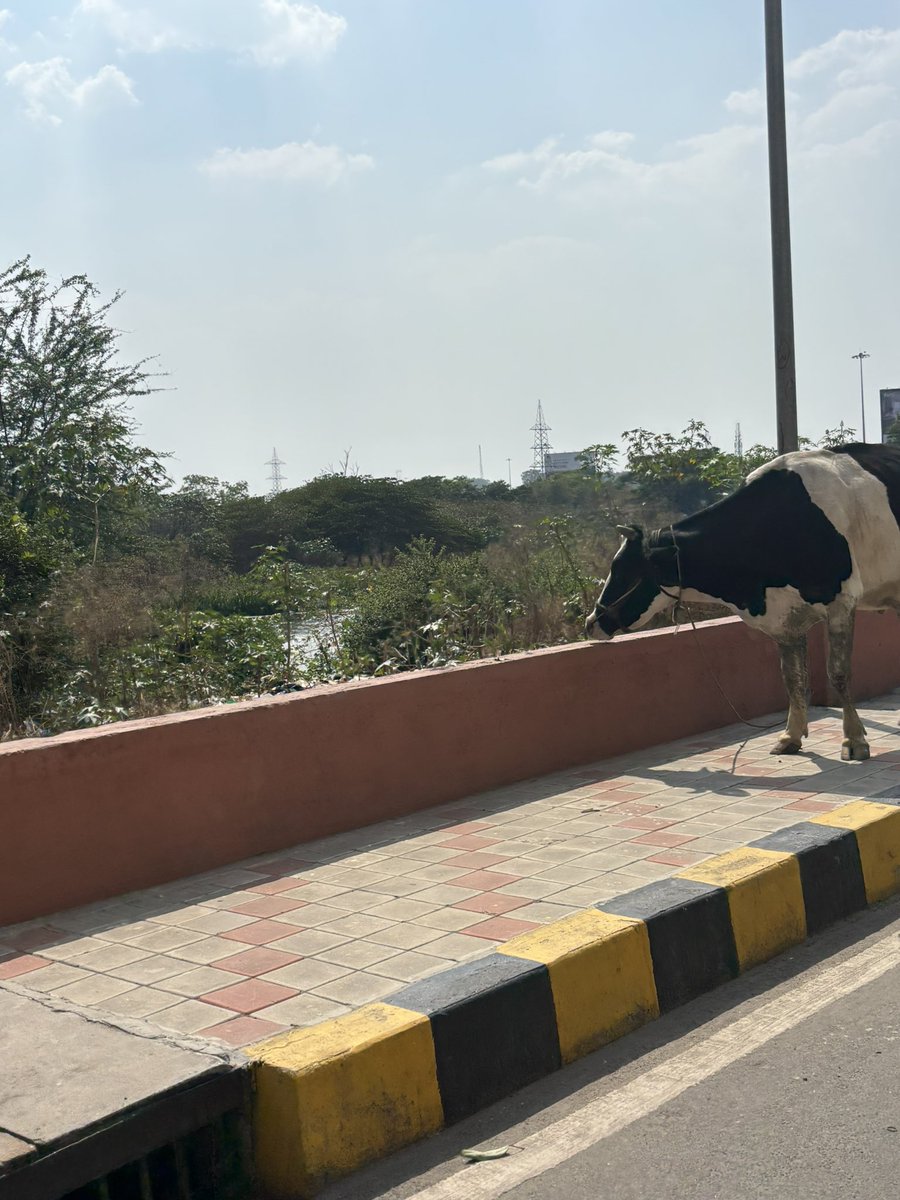
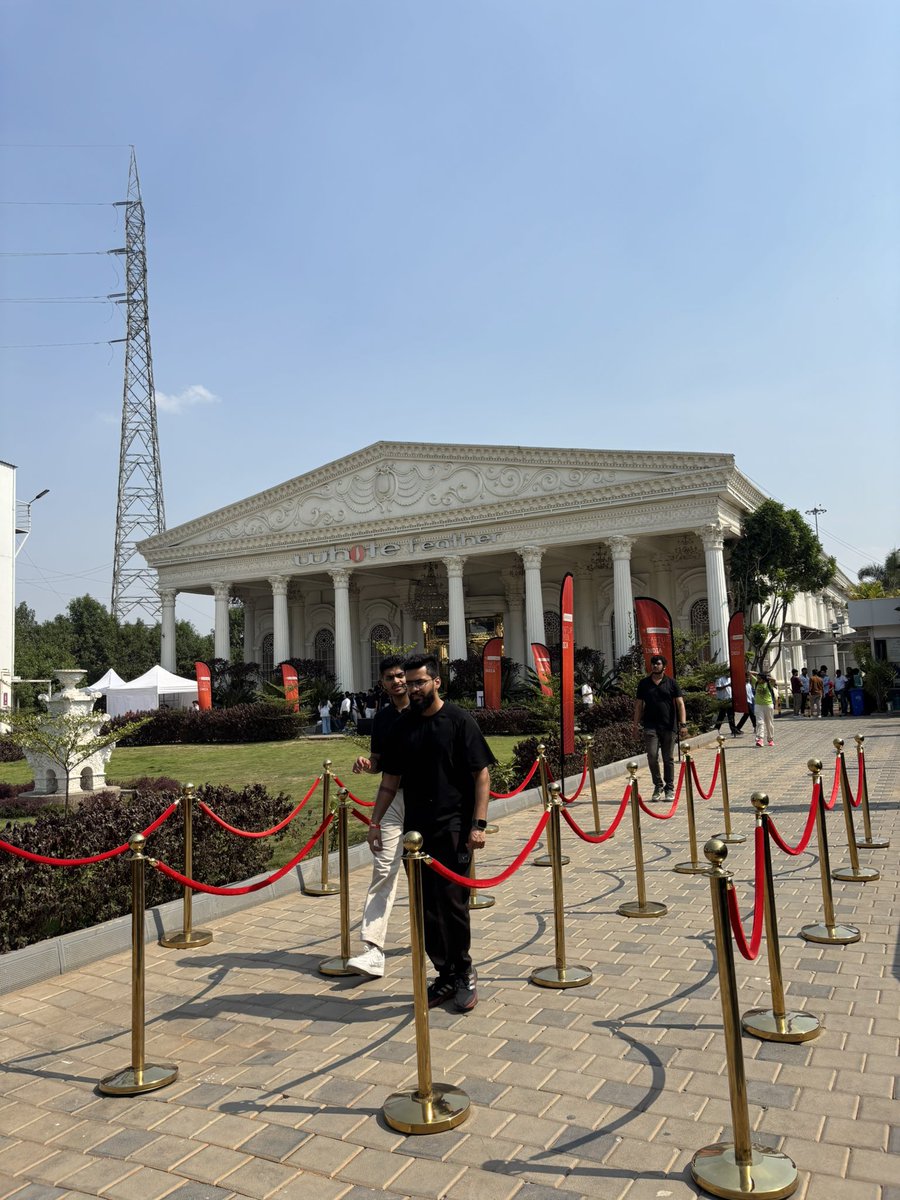
Burned almost a month of runway just to get to BLR for YC SUS India and it was completely worth it.
Had to leave a bit early, but the value packed into those hours was unreal.
Networking maxed out. Learning maxed out. Inspiration maxed out. Product validation maxed out. Feedback maxed out..
Days like this remind you why building is so exciting.
All the credit goes to @ycombinator and their partners for hosting this amazing event @snowmaker @xuster @agupta @garrytan

English


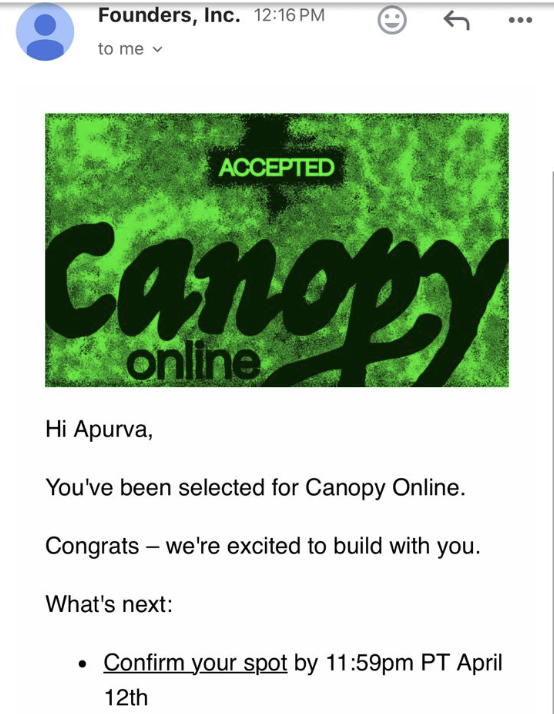
built a startup with 2 co-founders
they just got into @fdotinc
I’m still under review
if I get in: insane team
if I don’t: unbelievable that I carried these guys this far
PS @ShweetaPatel @ApurvaChatole @hthieblot

English

English

QME
can’t wait to keep building with @fdotinc :) building in st(health) with the best folks
@hthieblot @FurqanR @joherkhan @stavan @KiranKhanzada

English

@AranyoRay @fdotinc @hthieblot @FurqanR @joherkhan @stavan @KiranKhanzada wow! let's go! welcome! excited to do this alongside you!
English

QME

English
English


@shiri_shh Perfect match honestly. Both are all about the frontend with zero backend support
English

$400M annual revenue...but can't buy your own domain.
Lovable.com redirecting to LINGERIE is the funniest thing in tech right now.

English

We raised $72M from Sequoia/YC and hit 8-figures in ARR. Then we shut it all down & rebuilt the company from scratch.
Today we’re launching the new Mutiny: the first AI agent for GTM teams to create anything customer-facing, in minutes.
Comment "Mutiny" to get 3X free credits.
English
Aranyo Ray retweetledi

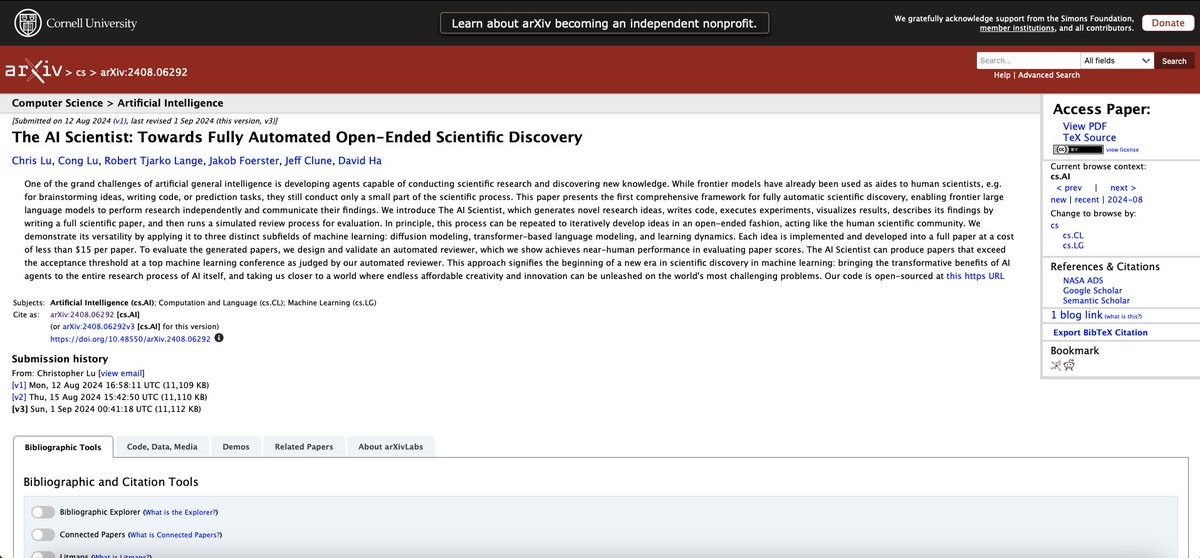
BREAKING: An AI just wrote a research paper. Submitted it to a top science conference. Passed peer review. Nobody on the review panel knew it was AI.
The paper is called "The AI Scientist." Published last week in Nature. Built by Sakana AI in Tokyo, with researchers from Oxford and UBC.
Here is what it did — completely on its own.
It read existing scientific literature. Formed a hypothesis. Designed an experiment. Ran the experiment. Analyzed the results. Wrote the full academic paper. Then peer-reviewed its own work.
No human at any stage.
They submitted three fully AI-generated papers to a top ML conference under blind peer review. Human reviewers were told some might be AI, but not which ones.
One was accepted. It scored higher than 55% of human-authored papers at that same conference.
The accepted paper cost $15 in compute to produce.
Fifteen dollars.
Now here is the part nobody is talking about.
The team found a clear scaling law: stronger foundation models produce higher-quality research outputs. Better base model in, better science out.
Which means this gets dramatically better — automatically — every time a new model drops.
Right now it is limited to computational ML experiments. No biology. No chemistry. No physical labs.
For now.
What happens when the thing that discovers new science... is itself?
English
Aranyo Ray retweetledi

The implementation of free market and capitalism in Eastern Europe made them not only much wealthier, but also significantly improved life expectancy.
The only people in favor of socialism are those who have never experienced socialist misery by themselves. Don’t listen to them.

English