Architect Of Reason
81 posts

Architect Of Reason
@ArchOfReason
Systems thinking | AI | Software Engineering | Philosophy | Founder @ VictoryTechnologies | Systems over Slogans.
England, UK 🏴 Katılım Nisan 2026
288 Takip Edilen13 Takipçiler

Sounds like an excellent way to kill off farming in Britain for good. What a terrible idea.
The Telegraph@Telegraph
Andy Burnham is set to bring in a land value tax if he becomes Britain’s next prime minister Read how the Manchester mayor eyes up new levy if he succeeds in becoming next PM 👇 telegraph.co.uk/politics/2026/…
English
Architect Of Reason retweetledi

Digital ID will prove to be a horrible evil imposed on us all. It must be resisted at all costs. See @Togetherdec
GB News@GBNEWS
Keir Starmer handed blueprints for how to enforce digital ID without sparking public fury gbnews.com/politics/keir-…
English
@Eurocarparkhelp disappointed with how Euro Car Parks handled my appeal. I paid for longer than my stay, submitted both my parking app booking and VAT receipt as evidence, yet received a rejection that seems automated stating no payment could be found. The email came from a no-reply address. Escalating to POPLA now.
English
I may be wrong here as this is not something I have formally studied. It is mostly an area I have read about out of personal interest. But the way I understand it, a few different issues tend to get mixed together in discussions like this.
It is clearly true that many people are struggling with rising living costs right now, and that is a serious issue. My hesitation is mainly around attributing that directly to capitalism as a concept. Capitalism, in its basic sense, describes an economic system where productive assets are largely privately owned and economic activity happens through voluntary exchange in markets. It does not promise that outcomes will always be comfortable or equal. It is mainly a mechanism for coordinating production and prices through supply and demand.
Most countries today, including the UK, are not purely market systems anyway. They are mixed economies with significant regulation, taxation, welfare programs, and central banking. Because of that, when living costs rise it is difficult to attribute the cause to capitalism itself. Many different factors can influence prices, such as housing supply constraints, energy shocks, monetary policy, demographic changes, or global disruptions. Without identifying clear mechanisms that link those outcomes directly to capitalism, the label itself starts to lose explanatory meaning.
On the point about co-ops or collectives, my understanding is that capitalist systems generally allow those kinds of arrangements. People are free to organise businesses around collective ownership if they choose to. The fact that we do not see them dominate the economy might suggest that collective ownership brings certain practical challenges that place them at a competitive disadvantage. Coordinating decisions across many owners, raising capital, and competing in fast-moving markets can be more difficult under those structures. That does not mean they cannot exist, but it may help explain why they tend to remain a smaller part of the economy rather than replacing other forms of organisation.
You also raised the possibility that modern capitalism might have its own strict rules. I think that depends on what we mean by rules. Market economies do operate within a framework of laws such as property rights, contract enforcement, and regulatory structures. But those rules generally set the conditions for exchange rather than dictating how people must organise production or ownership. Within that framework people can still form traditional companies, partnerships, co-ops, charities, or other arrangements.
So the distinction I was trying to make is simply that capitalism sets the general framework for voluntary exchange, but it does not prescribe a single model of ownership or organisation.
English

You clearly differentiate between types of government and economic systems. But right now, the way capitalism is set up doesn't seem to be making life easier for the average person who is dealing with rising living costs. If the system supports co-ops or collectives, then why are so many people finding their economic situation getting worse instead of better? Could it be that the way capitalism works globally today has its own strict rules that are just as troubling as the ones you pointed out?
Architect Of Reason@ArchOfReason
I think it helps to separate economic systems from systems of government, because those are often mixed together in discussions like this. Capitalism isn’t a form of government; it’s an economic system. It describes how economic activity is organized, mainly through private ownership and voluntary exchange in markets. A capitalist economy can exist under many different kinds of governments because it doesn’t determine who holds political power or how the state is structured. Communism, as described by Marx and Engels, was theoretically meant to be a classless and stateless society where productive resources are owned collectively and production is organized for shared benefit. However, Marx also described a transitional stage where the state would abolish private ownership of productive assets and reorganize the economy collectively. In practice, that stage requires enforcement, because if people were free to privately own businesses or trade independently, markets and private property would re-emerge. By contrast, capitalism generally allows different economic arrangements to exist within it. People can choose to form co-ops, communes, or collective ownership structures if they want to. The system doesn’t require everyone to participate in one specific model of ownership. You could also point out that taxation introduces some level of coercion, which is a fair criticism of government power. Personally, I tend to favor minimising that as much as possible. But that issue relates more to the role of the state, rather than to the definition of capitalism itself. So the distinction being made here is mainly about how much flexibility a system allows in terms of different economic arrangements existing alongside each other. At least that’s how I understand the difference between the systems.
English
Development hardware is a different scenario because you control the boot chain and signing process. In production systems with secure boot and a hardware root of trust, the device will only run firmware signed by the manufacturer. Without those signing keys you generally need to find a vulnerability in the boot chain or attack the hardware itself, which is far more difficult than simply flashing a new bootloader. Not impossible, but it is not something someone is likely to achieve quickly. Personally, I'd just avoid cars which have it installed.
English

@ArchOfReason @Sassygal1971 Everything can be hacked.
There is always a way to get another firmware to boot onto the sytem.
We are having to load the new OS to the hardware my company designs by running a bare bones boot loader from the memory reserved for the bios image.
English

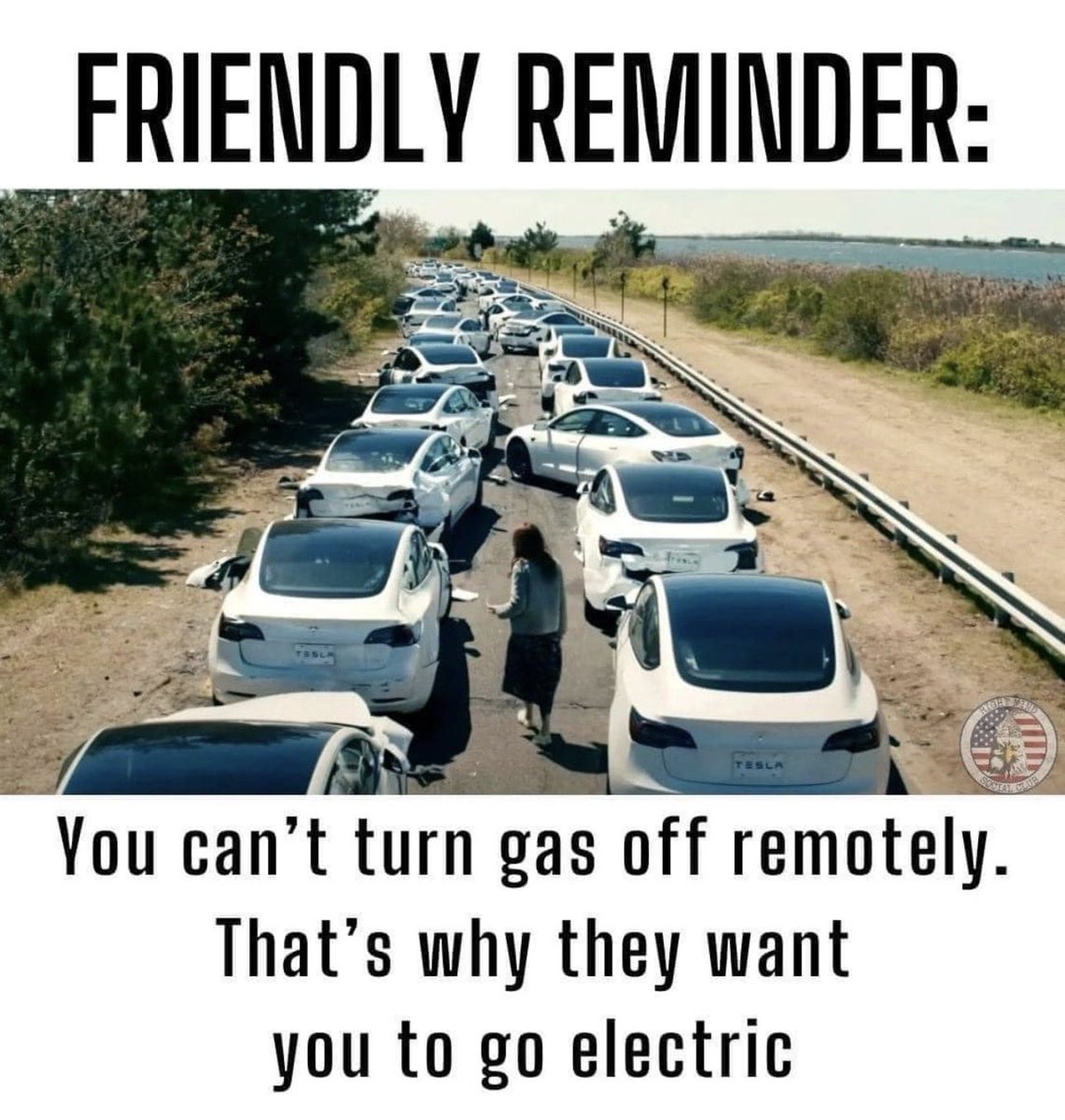
@ayesha_fatiima Yes. As someone who is currently cleaning up messy AI generated code bases. Yes.
English



I’m not sure it would be easy even for professionals. Modern systems often rely on secure boot and digitally signed firmware, which means the vehicle will only run software signed by the manufacturer. Without the signing keys, modifying that software becomes extremely difficult. In practice that kind of security is designed to prevent exactly that sort of tampering.
Even projects like Openpilot still have to run alongside the manufacturer’s systems rather than replacing them, because the core vehicle firmware is locked down.
From that perspective, avoiding those systems in the first place is usually simpler than trying to bypass them later. There has been years of reverse engineering work on vehicles from Tesla, and while researchers have been able to modify some behaviours and unlock certain features, fully replacing or freely modifying the core firmware remains very difficult without finding and exploiting existing vulnerabilities.
English
@ArchOfReason @Sassygal1971 Yeah. And the first thing people are going to do if the government started doing that is reprogram they cars so that they do in fact work.
English
Honestly, I worry it could happen sooner than people expect. At this point the main bottleneck seems more legislative than technological. I hope I am wrong, but the European Union is already discussing requirements for driver monitoring systems in future vehicles, including camera based systems that track driver attention.
Personally, I plan to stick with buying older second hand petrol cars for as long as I reasonably can.
English

@ArchOfReason @Sassygal1971 Imo.. I think within the last 10-15 years maybe, but EVs are computers on wheels, all have a 'kill switch', I hope we never get too that point. When a government and so called leaders of tech push such EV narratives, you should know it does not end well for the masses.
English
I agree that external control of a personal system is something people should think carefully about. My point is not to defend that idea, but to correct the assumption that it only applies to EVs.
Many modern cars, especially higher end models, have had remote connectivity for years. Systems like OnStar have allowed remote immobilisation of stolen vehicles in some petrol cars for quite a long time. Because of that, the capability is not really tied to whether a car runs on electricity or fuel. It is more about whether the vehicle is connected to external networks and designed to accept remote commands.
For that reason I think we should avoid popularising the oversimplification that petrol cars are immune to this. They are not. Many modern connected petrol cars have similar capabilities built into their systems. If someone is concerned about that kind of control, the more relevant factor is how connected the vehicle is, not whether it is electric or petrol. Older vehicles with fewer networked systems generally avoid that issue simply because they were not built with that connectivity in the first place.
That is really the only part of the original assumption I was trying to clarify. Personally, there are numerous reasons I would not own an EV.
English
@Zinny_Edmund Guitar, photography, game dev, reading. Though, I've not had much time for the hobbies with the pace of things lately.
English

I think it helps to separate economic systems from systems of government, because those are often mixed together in discussions like this.
Capitalism isn’t a form of government; it’s an economic system. It describes how economic activity is organized, mainly through private ownership and voluntary exchange in markets.
A capitalist economy can exist under many different kinds of governments because it doesn’t determine who holds political power or how the state is structured.
Communism, as described by Marx and Engels, was theoretically meant to be a classless and stateless society where productive resources are owned collectively and production is organized for shared benefit.
However, Marx also described a transitional stage where the state would abolish private ownership of productive assets and reorganize the economy collectively. In practice, that stage requires enforcement, because if people were free to privately own businesses or trade independently, markets and private property would re-emerge.
By contrast, capitalism generally allows different economic arrangements to exist within it. People can choose to form co-ops, communes, or collective ownership structures if they want to. The system doesn’t require everyone to participate in one specific model of ownership.
You could also point out that taxation introduces some level of coercion, which is a fair criticism of government power. Personally, I tend to favor minimising that as much as possible. But that issue relates more to the role of the state, rather than to the definition of capitalism itself.
So the distinction being made here is mainly about how much flexibility a system allows in terms of different economic arrangements existing alongside each other.
At least that’s how I understand the difference between the systems.
English
@TheAliceSmith Isn't that just every government system, though?🤔
English

Socialism isn’t about voluntary cooperation, it’s about forced participation.
English
@_devJNS True. Even when using AI for production speed one should be sure to make the take time to actually implement a concept manually at least once to understand it at a deep level.
English

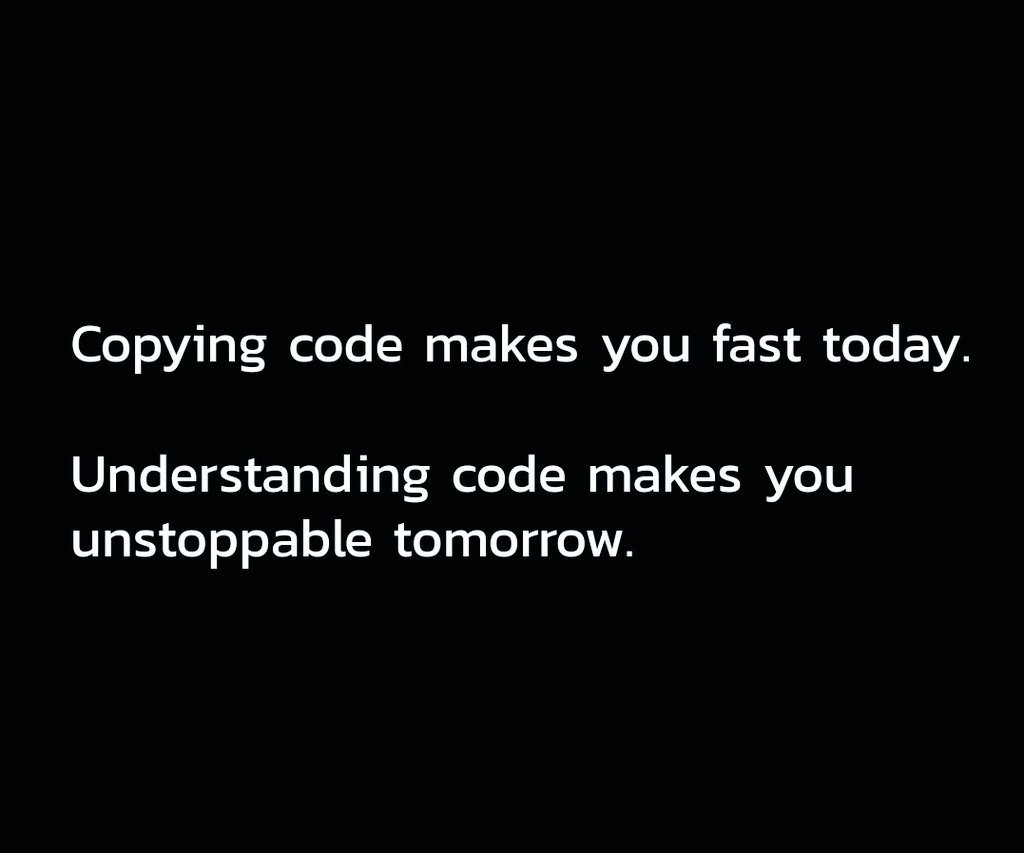
@plainionist You're not wrong. Well written code should be self documenting. Thus, it follows that an LLM should be able to write plain accurate English docs if provided well written code.
English

Yep, I don't use AI based IDEs. Mostly because I don't want to be tied into them. If I am writing code I sometimes find the constant attempts to predict what I am writing annoying, especially when trying to think. I like the option to enable them when they are useful and disable them when they are not.
English

Architect Of Reason retweetledi


@NanouuSymeon Yes, mostly because it's the only one my workplace uses. Its good to have consistent tooling. At home however, I am learning to use Neovim more and have started to enjoy it more than VSCode.
English

The number of sources that accurately corroborate. Or if there are other records or identifiable evidence to support it along with alignment or contradicition with my own experience of the world and if the claim is logically sound, reasonable, or from a source I have verified previously and trust.
English