WW2 The Eastern Front@ShoahUkraine
Debunking the "We Were Just Fighting the Soviets" !
Across the post-Soviet Baltic states and in post-Maidan Ukraine, a remarkably consistent historical narrative has taken root, one laundered through nationalist historiography, enshrined in official commemorations, and promoted with the financial backing of Western governments eager for Cold War 2.0 allies. It goes roughly like this:
"Yes, some of our people fought alongside the Germans. But they weren't Nazis. They were patriots. They were fighting Soviet occupation, not helping Hitler. The real enemy was Stalin, not the Jews or the Poles. The SS insignia on their collars was just a uniform of convenience. Judge them not by who they fought for, but by what they fought against." It is the historical equivalent of defending a man who burned down an orphanage by noting that he genuinely hated the landlord next door.
This article will dismantle this myth, piece by piece, with the historical record as the demolition tool. We will examine the Ukrainian nationalists of the OUN and UPA, the Waffen-SS Galicia Division, and the Estonian and Latvian SS Legions. We will look not at what their modern apologists claim they did, but at what the documented historical evidence shows they actually did.
Part I: Ukraine, The OUN, the UPA, and the Mountains of the Dead
Who Were the OUN?
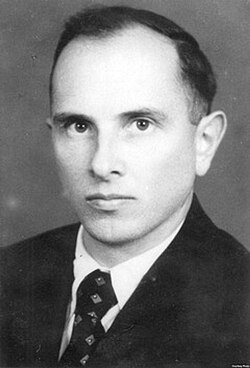
The Organization of Ukrainian Nationalists (OUN) was founded in 1929, and by the late 1930s had split into two factions: the OUN-M, led by Andriy Melnyk, and the more radical OUN-B, led by Stepan Bandera. Both factions were ideologically fascist in the classical sense, not as a slur, but as a precise descriptor. The OUN's own documents and ideological texts from the period are explicit about this.
The OUN's 1929 founding congress enshrined a doctrine of ethnic exclusivism and violent struggle. Its youth wing, the Юнацтво (Yunatstvo), was modeled explicitly on the Hitler Youth. The OUN celebrated the "national leader" (vozhd') principle, a Ukrainian Führer principle. Its publications from the 1930s openly expressed admiration for Mussolini, Hitler, and Franco. This was not guilt by association. This was ideological self-identification.
Bandera himself had been implicated in the assassination of Polish Interior Minister Bronisław Pieracki in 1934 and was imprisoned by Polish authorities. He was released by the Germans upon their invasion of Poland in 1939. The Germans didn't release him because they were fans of Ukrainian self-determination. They released him because he was useful.
The apologist argument demands that we see OUN collaboration with Nazi Germany as reluctant, tactical, and temporary. The historical record shows the opposite. Before the invasion of the Soviet Union, the OUN-B was actively working with German military intelligence (the Abwehr). The OUN trained two battalions, Nachtigall and Roland, under German command.
These were not underground resistance fighters. These were uniformed auxiliary units integrated into the Wehrmacht's operational structure for Operation Barbarossa. They were, by every legal and military definition, German auxiliary troops.
The OUN-B had prepared detailed operational plans, the so-called "Instruction to the OUN in the period of war" (June 1941), which explicitly called for the "destruction" of hostile ethnic groups including Jews, Poles, and Russians. The document stated: "Jews are to be isolated, imprisoned in concentration camps and liquidated."
Lviv, July 1941:
When German forces entered Lviv on June 30, 1941, what followed was one of the most vicious urban massacres of the early war. Over the course of several days, between 4,000 and 6,000 Jews were murdered in Lviv, beaten to death in the streets, shot in courtyards, dragged from their homes.