Abelard Lindsay

767 posts

Abelard Lindsay

Abelard Lindsay

@ciltep

I am the creator of the CILTEP stack. Software engineering. Medical research. Transhumanism. Making people smarter by designing better nootropics.

Katılım Mart 2013
149 Takip Edilen1.3K Takipçiler
Abelard Lindsay
Abelard Lindsay@ciltep·
@drmichaellevin @kanair I think people arguing about consciousness are like Romans looking at lightning and thinking it's evidence of flammable liquid in the sky. There's some basic science about it we don't understand yet and might not for some time.
English
0
0
0
65
Michael Levin
Michael Levin@drmichaellevin·
I think this question may based on an incorrect (but pervasive) assumption: that consciousness is a late product of evolution and thus must be developed as the result of some kind of selection pressure or function. We don't ask "What is being sensitive to the gravitational force for?", in biology, because it's a ubiquitous background fact with which evolution has to grapple, not something that had to evolve. I suspect consciousness is like that - evolution didn't need to create it because it was already there all along, all the way down. However, we can ask (if not necessarily answer) meaningful questions about how well consciousness tracks intelligence, and how the ingression of differently-conscious patterns into evolved embodiments might alter the future course of evolution of bodies. I think consciousness is causal, not epiphenomenal, so there are likely effects; I have a bunch of stuff on related issues coming soon. tl;dr: I don't think it's *for* anything else - it couldn't not exist. But I do think it makes a difference on the behavioral, and possibly the evolutionary, timescales, and the work we're doing on intrinsic motivations in minimal (living and non-living) models could shed light on those kinds of effects.
English
57
48
368
30.8K
Ryota Kanai
Ryota Kanai@kanair·
Consciousness research often starts from the hard problem and declares consciousness has no function. But even if phenomenal consciousness does not seem to add new physical causality, the fact that organisms evolved consciousness may still matter. They are actually separate issues. We should ask what consciousness is for. Many say consciousness and intelligence are independent, but I suspect they might be deeply connected.
English
72
10
146
17.6K
Abelard Lindsay
Abelard Lindsay@ciltep·
@bryan_johnson Lol, the moon? You can't hide anywhere from drones and global satellite surveillance. Might as well lean into the future.
English
0
0
0
61
Bryan Johnson
Bryan Johnson@bryan_johnson·
Imagine this scenerio: you're going to disappear. Be off-grid until Jan 2030. You'll then check in on the post AGI world. > where do you go? > what's your set up?
English
298
33
1.2K
224K
Owen Lewis
Owen Lewis@is_OwenLewis·
This is actually huge news. Well on the way to more easily dealing with radiation in space. Korean scientists just created an ultra-thin radiation shield: thinner than a human hair, stretchy like rubber, and highly effective against both electromagnetic waves and neutron radiation. The new composite material blends carbon nanotubes (for blocking electromagnetic waves and conducting heat/electricity) with boron nitride nanotubes (excellent neutron absorbers). Even at minimal thickness, it blocks 99.999% of electromagnetic waves and cuts neutron radiation by ~72%. The material is extremely lightweight, flexible (stretches to double its length), and easily 3D-printable into custom shapes (honeycomb patterns boost shielding performance by an extra 15%). And, it performs well across a variety of extreme temperatures and environments. Lead researcher Joo Yong-ho explained: “This material represents a completely new concept in shielding technology — it is as thin as tape and as flexible as rubber, yet simultaneously blocks both electromagnetic waves and radiation.” Perfect for protecting satellites, spacecraft electronics, nuclear propulsion systems, and astronauts without adding much mass. It could also find uses here on Earth in medical devices, semiconductors, and terrestrial nuclear applications. 📸 Korea Institute of Science and Technology Source: space.com/technology/thi…
Owen Lewis tweet media
English
106
422
2.3K
68.6K
Abelard Lindsay
Abelard Lindsay@ciltep·
@fedichev Aging may also be a programmed stage of development like puberty. For example, people with the disease progeria age much faster than normal, but also go through early puberty. If aging was just accumulated damage, puberty would not also arrive early in these pathologies.
English
0
1
1
66
Peter Fedichev
Peter Fedichev@fedichev·
At its most fundamental level, aging is the progressive, thermodynamically irreversible accumulation of entropic damage in the body — the inevitable loss of information and control over the microscopic degrees of freedom in our complex biological network. This is the physical source of the arrow of time within us. More concretely, aging manifests as the interplay of two simultaneous processes (first described mathematically by Gompertz in 1825): 1. The gradual loss of resilience — the body's declining ability to recover from stress 2. Stochastic pressure — the constant bombardment of internal and external insults Together, these produce the exponential acceleration of mortality we observe: your risk of dying from all causes roughly doubles every 8 years after age 30. A few critical points that follow from this definition: • Aging is not a collection of diseases — it is progressive functional decline that causes diseases. People who survive to 90+ have fewer diagnosed diseases than their deceased peers, yet they are functional shadows of their younger selves. • Aging is not a choice — no amount of diet, supplements, or drugs targeting specific age-related diseases will stop it. It is currently a thermodynamic inevitability. • Aging is emergent — it arises from the collective behavior of biological systems rather than being encoded in any single molecule or pathway. As Hayflick put it, aging is not fundamentally a problem of biology, but a problem of physics. • Aging is the slowest, simplest process of all — which is exactly why a physicist's toolkit is well-suited to understanding it. The slower the process, the less the microscopic mechanistic details matter, and the more universal laws dominate. The key insight: while reversing aging would require impossible knowledge (complete information about every molecular change in every cell), stopping aging is physically possible. Nature has already proven this — naked mole-rats show no increase in mortality risk for decades, violating the Gompertz law entirely. The path forward is not reversing the arrow of time, but slowing its march and maintaining resilience in its face. Like, follow, and reshare for more! Find the link to the relevant paper and my Substack below.
English
27
17
104
12.1K
Abelard Lindsay retweetledi
Aakash Gupta
Aakash Gupta@aakashgupta·
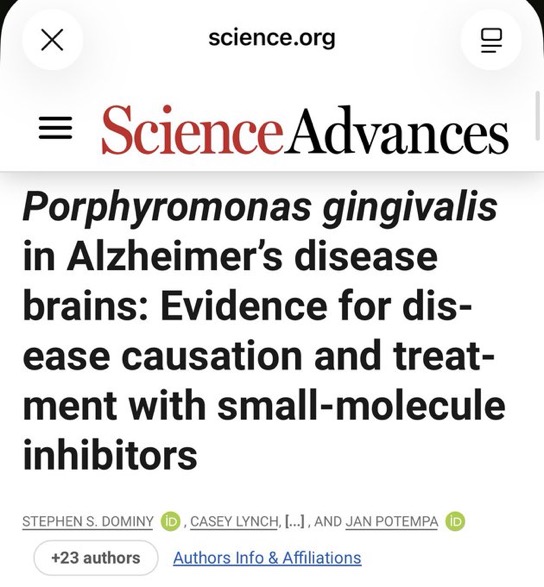
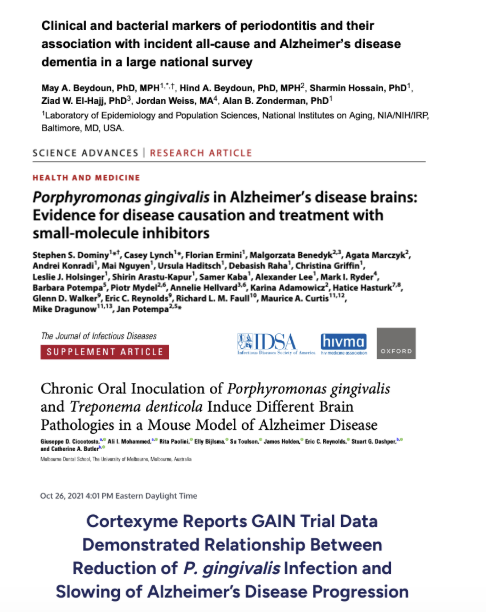
Spouses of Alzheimer's patients are 6 times more likely to develop Alzheimer's themselves. They share daily saliva exchange for decades. Their oral bacteria converges to the same strains. In 2019 Cortexyme published a paper in Science Advances showing Porphyromonas gingivalis, the bacterium behind gum disease, was present in over 90% of postmortem Alzheimer's brains. They also found its DNA in the cerebrospinal fluid of living Alzheimer's patients. P. gingivalis is the keystone pathogen of periodontitis. The CDC says 47% of American adults over 30 have periodontitis right now. The mechanism is specific. P. gingivalis produces enzymes called gingipains. Two types: one cuts proteins at lysine residues, the other at arginine. Tau, the protein that holds your neuronal scaffolding together, is loaded with both amino acids. In cell culture, gingipains shred soluble tau within one hour of infection. The fragments seed the paired helical filaments that become tangles. Tangles are Alzheimer's. Mice fed P. gingivalis through the mouth grew amyloid plaques in their brains. Hippocampal neurons died. The bacteria crossed the blood-brain barrier and started chewing through the same proteins that fail in human Alzheimer's patients. Cortexyme built a drug called atuzaginstat to block gingipains. Phase 1 was clean. They ran a 643-patient Phase 2/3 trial called GAIN. The FDA hit it with a partial clinical hold for liver toxicity. The drug missed both primary endpoints. In August 2022 Cortexyme shut the program down, renamed itself Quince, and pivoted to bone disease. The subgroup with the highest baseline P. gingivalis loads still showed cognitive improvement on secondary endpoints. The bacteria itself kept showing up in postmortem brains across independent studies after the trial closed. Periodontal disease shows up 10 to 20 years before cognitive symptoms in people who later develop Alzheimer's. By the time someone forgets a name, the bacteria has been working for two decades. The intervention point is upstream of your skull.
Aakash Gupta tweet mediaAakash Gupta tweet media
English
70
457
1.9K
822.2K
Bryan Johnson
Bryan Johnson@bryan_johnson·
Your gums may be a back door to Alzheimer's. > gingipain antigens (toxic bacterial enzymes) found in 91–96% of postmortem Alzheimer's brains > bacterial DNA detected in the spinal fluid of 7 out of 10 living Alzheimer's patients > in mice: oral infection increased brain tau tangles by roughly 500% and amyloid plaques by 140% > in 3,251 humans: 22% higher Alzheimer's risk per SD increase in gum pathogen antibodies (up to 26 year follow up) > clinical data: a protease inhibitor slowed cognitive decline by 57% in patients with active infection Your dentist may be your most underrated Alzheimer's doctor.
Bryan Johnson tweet media
English
128
194
2.2K
289.2K
Abelard Lindsay
Abelard Lindsay@ciltep·
IMHO, The four pathways are probably keap1/nrf2, htrt, ampk/mtor, alk5/oxytocin. Probably inhibiting fibrotic growth is important like IL inhibitors too.
John Cumbers@johncumbers

David Sinclair's lab may have just found the $100 pill that reverses aging. Over the holidays, his team ran what he calls a "hail mary experiment." They gave old mice a "longevity" cocktail three times a week for 4 weeks. He didn't reveal what's in it - only that it contained molecules that work on the four longevity pathways that control the epigenome. They weren't expecting any significant results. Yet every treated mice came back physiologically younger while the controls didn't. Biological age clocks confirmed the reversal. This changes the trajectory for longevity medicine. The gene therapy his company is taking into human trials costs over $10 million to manufacture per batch. It requires a direct injection into the target organ. These oral molecules cost roughly $100 for a month's course. If they're able to put these molecules into a pill that patients can take instead of them using a multi-million dollar gene therapy, they'd save a ton of money. "Imagine in 10 years you just take a pill for 4 weeks and you get younger. That's what we're headed towards. I can see how this is going to happen." The proof of concept exists in animals. Now it's a race to get it into humans. — David Sinclair (@davidasinclair) on Peter Diamandis' (@PeterDiamandis) Moonshots podcast PS. David Sinclair is speaking at SynBioBeta on May 6th this year, discussing the science of slowing and reversing aging. If longevity is the world you're in, the investors, partners, and scientists shaping this space will be in the room. You won't want to miss it: syntheticbiologysummit.com/tickets?utm_so…

English
0
0
0
62
Abelard Lindsay retweetledi
Niklas Anzinger 📍 Infinita
Niklas Anzinger 📍 Infinita@NiklasAnzinger·
He was diagnosed with rare bone cancer. He exhausted the standard of care: surgery, radiation, chemotherapy. There were no viable trials for his case. No approved treatments. No doctor willing to promise any potential for hope. That’s where most journeys end. Not his.
Niklas Anzinger 📍 Infinita tweet media
English
3
16
45
12.7K
Abelard Lindsay
Abelard Lindsay@ciltep·
@techno0ptimist Write 500 words every day, even if it's garbage. Just doing it badly will help you get better. You can get AI to confidentially criticize your writing if you're sensitive about it.
English
0
0
1
29
Abelard Lindsay
Abelard Lindsay@ciltep·
@bryan_johnson Hey go watch "A Scanner Darkly" if you want to see what it's like when a person's brain becomes so neuroplastic that it decides to believe just about any random thought that comes to mind.
English
2
1
5
2.1K
Bryan Johnson
Bryan Johnson@bryan_johnson·
Tomorrow I’m doing the world’s most powerful entheogen. It obliterates the self and enables raw, full-spectrum consciousnesses. What I imagine the singularity will feel like. This is a longevity experiment + exploring the future of a deeply interwoven human+AI reality.
English
428
100
3.4K
449.4K
Abelard Lindsay
Abelard Lindsay@ciltep·
@KiesowPaul @wings1673 The tyramine issue is very overblown. From what I remember arguing about this on Longecity forum back in the day, there were only a few case reports.
English
0
0
2
19
Paul Kiesow
Paul Kiesow@KiesowPaul·
No known risks, especially at subclinical dosings of one-tenth/one-20th that of PD. The apparent deleterious effects seen were preservation of the brain and CNS, which is a problem if it constitutes continuing enablement of a despot. The metabolite people cite is again both miniscule, as well as the amphetamine isomer with little CNS activity; such are used in OTC nasal sprays. Since 1996.
English
1
0
3
64
Abelard Lindsay
Abelard Lindsay@ciltep·
@bryan_johnson Bryan, please do not mess with your GABA or Opioid receptors with any synthetic agonists. I want to read more interesting content from you than how to do drug tapers without severe withdrawal symptoms.
English
1
0
0
170
Bryan Johnson
Bryan Johnson@bryan_johnson·
People are like medications. One is xanax, another is modafinil, and the other is the kind you shouldn't mix with alcohol.
English
99
42
961
131.6K
Abelard Lindsay retweetledi
Liz Parrish MBA
Liz Parrish MBA@ParrishLiz·
Known as cyclin D-binding myb-like transcription factor 1 or DMTF1, the scientists found that this protein's levels are repressed in the “aged” neural stem cells and that restoring it is sufficient to restore the regeneration capabilities of such neural stem cells. healthandme.com/health-wellnes…
English
0
2
18
1.2K
Abelard Lindsay retweetledi
Brian Roemmele
Brian Roemmele@BrianRoemmele·
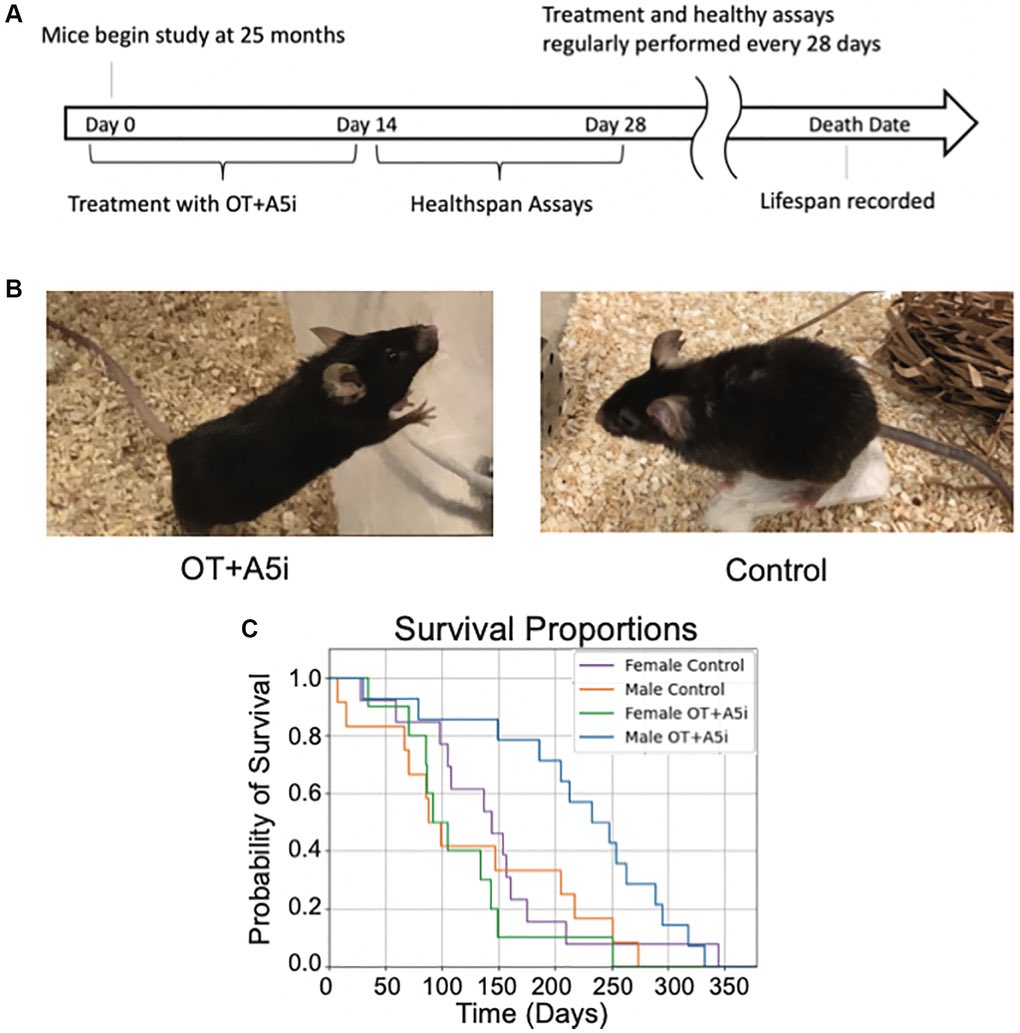
The 70% Life Extension Nobody Is Talking About Two cheap drugs. One university lab. A 73% increase in remaining lifespan for elderly mice. The longevity breakthrough that should be front-page news and why decentralized science may be the only force that can bring it to your medicine cabinet. Oxytocin and Inhibitor Extend Mouse Lifespan
 Combining oxytocin and Alk5 inhibitor extended elderly mouse lifespan by 73%. Inexpensive drugs, no gene therapy. Major longevity paper. 
Why Important: Demonstrates affordable pharmacological approaches to longevity, bridging natural hormones with targeted inhibition for human applications. doi.org/10.18632/aging…
Brian Roemmele tweet media
English
69
207
1.3K
78.6K