Dag Ekelberg retweetledi
Dag Ekelberg
2.1K posts

Dag Ekelberg
@DEkelberg
Head of Gov. and NGO relations @yara Tweeting on behalf of myself. Following or RT does not equal endorsement
Katılım Nisan 2009
2.3K Takip Edilen883 Takipçiler
Dag Ekelberg retweetledi


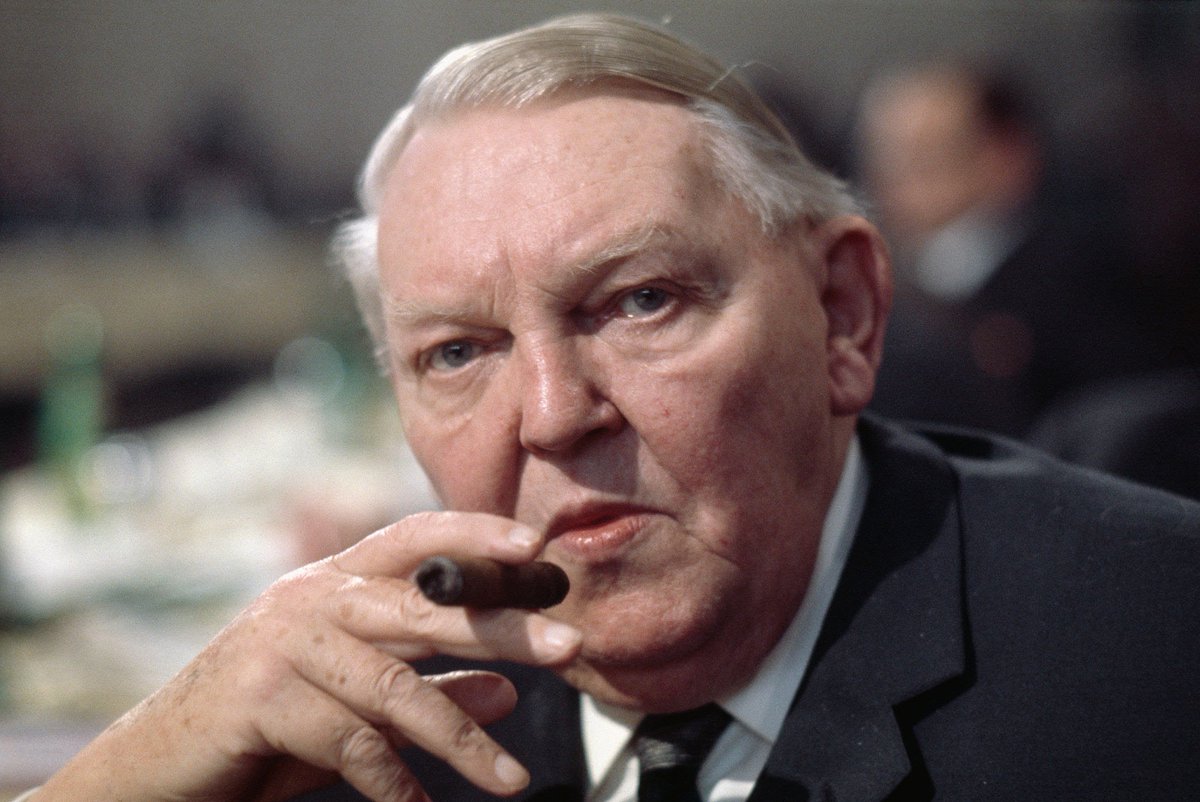
Ludwig Erhard abolished price controls and stabilized the German currency in one bold stroke on June 20, 1948. Ending the Marshall Plan and kicking off the Wirtschaftswunder. Arguably, the greatest economic miracle of the 20th century.
The Deutsche Mark replaced the worthless Reichsmark at a 10:1 ratio, instantly creating sound money. Erhard simultaneously eliminated Nazi-era price controls on everything except rent, coal, and steel. The Allied authorities were furious. General Lucius Clay summoned Erhard and accused him of modifying the controlled economy. "I have not modified it," Erhard replied. "I have abolished it."
The results were immediate and spectacular. Industrial production jumped 50% in the second half of 1948. By 1950, it had doubled from 1947 levels. Real wages rose 15% per year through the early 1950s while consumer prices actually fell. German workers could suddenly buy what they produced, and they produced more than ever before.
Compare this to Britain, which maintained wartime controls, rationing, and a weak pound through the 1950s. British industrial production crawled upward while German factories hummed. The contrast couldn't be starker: free prices and sound money created abundance, while controls and currency debasement perpetuated scarcity.
Modern economists credit everything except the obvious, that Erhard unleashed market forces and anchored them to stable money. They invoke multiplier effects, infrastructure investment, even "pent-up demand" (whatever that means). They refuse to admit that lifting the boot from the economy's throat works better than any stimulus package ever designed.
Erhard is a legend. Your country needs an Erhard.

English
Dag Ekelberg retweetledi

I've seen dozens of these over the years, with dozens of topics. This one has the best script ever!
Fintwit Capital@fan_fintwit
Trump's Iran Downfall
English
Dag Ekelberg retweetledi

Since it increased its wealth tax in 2022, a quarter of Norway’s top 400 taxpayers have left, representing more than $54bn (£44bn) in assets and a net decrease of $448m (£360m) in tax revenue.
telegraph.co.uk/money/tax/inco…
English
Dag Ekelberg retweetledi

F.A. Hayek (1899-1992), one of the most important free market economists in history, died on March 23, 1992.
He refuted the tenets of socialism in his best-selling book “The Road to Serfdom,” and was awarded the Nobel Prize in Economics in 1974. If you want to fight for freedom, study Hayek.

English
Dag Ekelberg retweetledi

Freedom can also be lost little by little, by what the Fabians call the doctrine of gradualness. A little more taxation here, a little more government expenditure there, year after year until the people are no longer the masters of the state but its servants.
There are always, it seems, good reasons advanced for the state to have more power. But rarely for the state to divest itself of power.
Each new problem becomes an excuse for more government intervention and less individual responsibility.
English
Dag Ekelberg retweetledi

Dag Ekelberg retweetledi

This is a serious accusation.
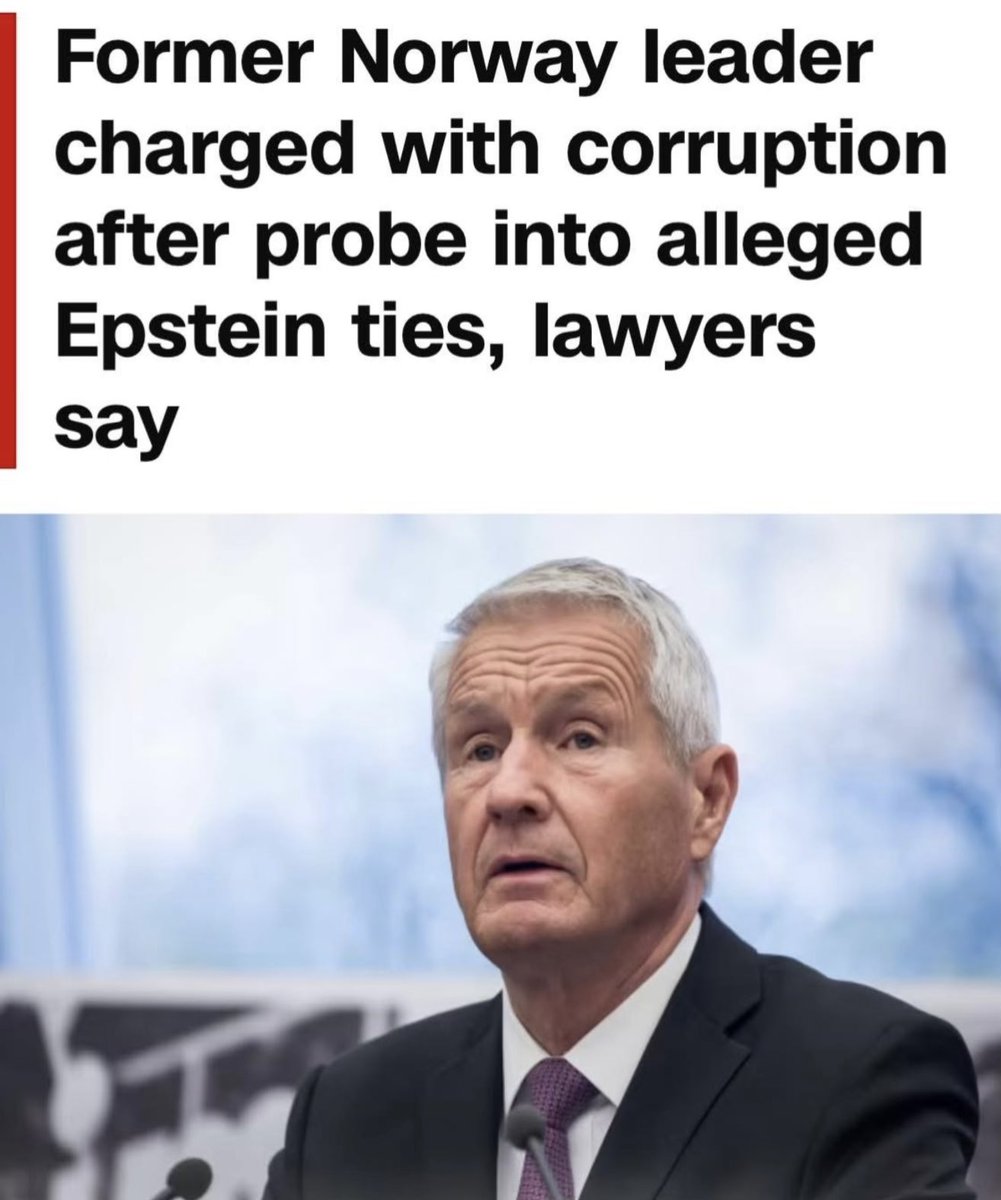
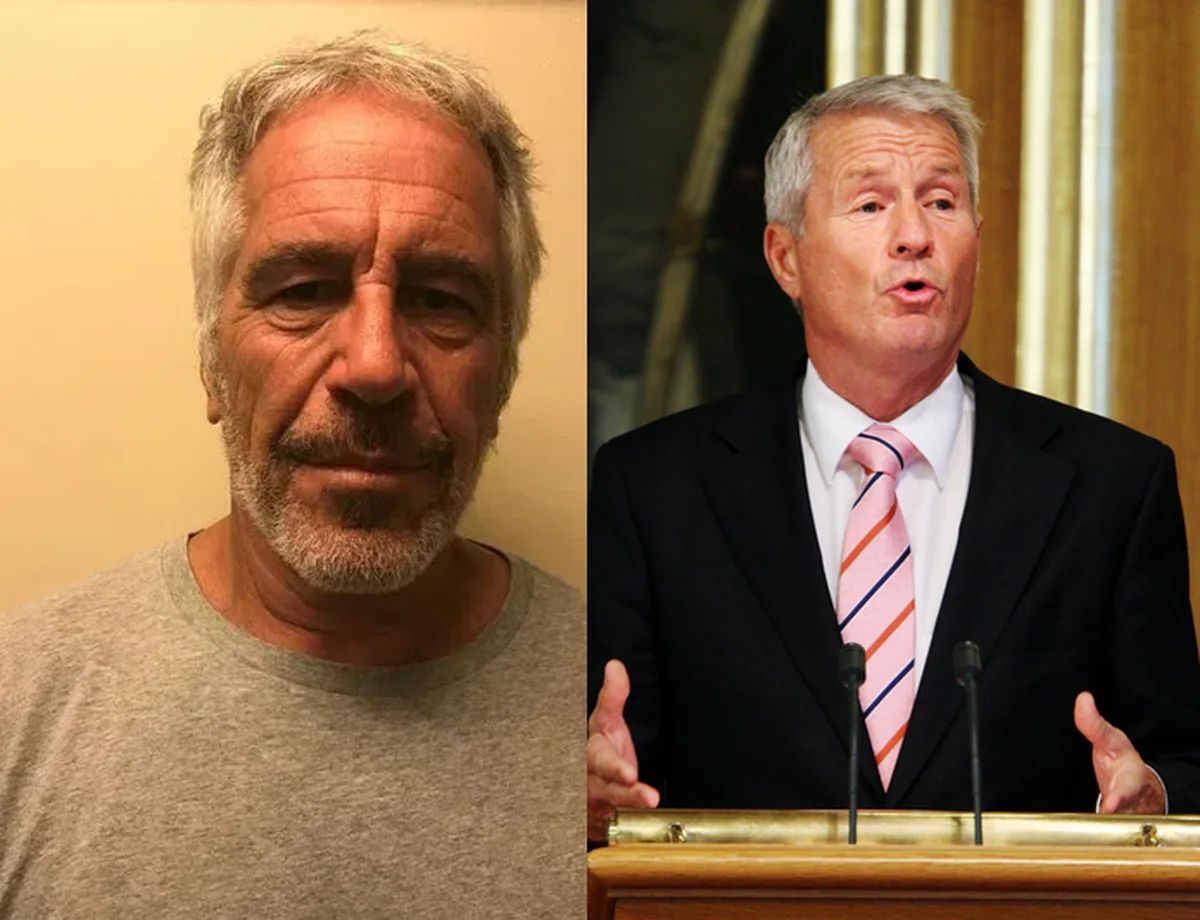
Thorbjørn Jagland, former Prime Minister of Norway and later Secretary General of the Council of Europe, has reportedly surfaced in connection with the released Epstein files.
That alone is serious. But let me add one more detail.
During his tenure as Secretary General of the Council of Europe, Jagland played a key role in restoring russia’s voting rights in 2019 - five years after russia’s illegal annexation of Crimea.
At the time, critics warned that reinstating russia sent a dangerous signal: that aggression could be absorbed, normalized, and negotiated away.
The Kremlin celebrated that decision.
I have a feeling that there may be a significant russian trail in the Epstein files that we still don’t know about.
Sources: BBC, CNN

English
Dag Ekelberg retweetledi

For years, Ukraine warned that Thorbjørn Jagland, Europe's top human rights official, was working for Moscow's interests. The Epstein files just added a troubling new chapter.
Three weeks before the 2018 Trump-Putin summit, Jeffrey Epstein asked Jagland—then head of the Council of Europe—to connect him to Russian Foreign Minister Lavrov.
Jagland agreed to help, responding that he would meet Lavrov's assistant and "suggest" a connection. This was the same man who spent years pushing to restore Russia's voting rights after Crimea, despite documented torture, disappearances, and Moscow's military occupation.
KGB defectors identified Jagland as having been assigned the codename "Yuri" when he was chairman of Norway's Labour Party youth organization. He dismissed it as "normal diplomatic activity."
Poland has now established an analytical task force to examine whether Russian intelligence "co-organized" Epstein's operation, with a formal investigation to follow if warranted.
"This can only mean that they also possess compromising materials against many leaders still active today," Polish PM Donald Tusk said.
euromaidanpress.com/2026/02/04/ukr…

English
Dag Ekelberg retweetledi

Javier Milei has been president for less than 26 months in Argentina. Here is the record from economist Chris Lingle:
Inflation rate: from 300% to 30% …
Poverty rate: from 52% to 31% …
Budget Deficit: from 15% to 0% …
Public-sector debt: fell from $500 billion to $446 billion & is now 84.65% of GDP, down from 154.6% in 2023 …
Country risk: from 3,000 to 487 …
Central bank reserves: from $20 billion to $47 billion …
¡Motosierra! ... ¡Motosierra! ...
English
Dag Ekelberg retweetledi

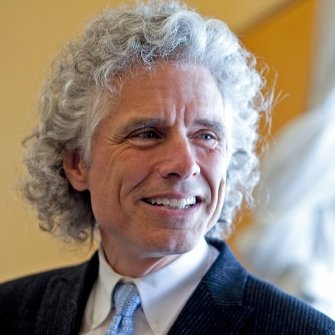
I spoke with @LaulPatricia about Marxism:
One is: What’s remarkable is that Marxism has been tried. Now, of course, defenders of Marxism say it hasn’t really been tried anywhere, but certainly the people who implemented it claimed they were implementing Marxism.
And this is a massive experiment—a global experiment—with a very clear outcome. Namely, the Soviet Union was a disaster. The imposition of communism on Eastern Europe was a disaster. The imposition of communism in Venezuela was a disaster. The imposition of communism in Maoist China was a disaster. Disaster in terms of both poverty and oppression and genocide and stupid wars. So the world has told us what happens under communism, and it’s a sign of how out of touch intellectuals can be that there are still people who defend it despite the entire world giving a very clear-cut answer.
One more is: would you rather live in North Korea or South Korea? Would you rather live in the old East Germany or West Germany? We have an experimental group and a matched control group in terms of culture, language, and geography, and the answer is crystal clear. So this is a sign of, I think, the pathology of intellectual life—that Marxism can persist.
The other is, you did call attention to one of the appeals of Marxism, though, and more generally of heavy, strong influence of government guided by intellectuals, which is that there are certain kinds of reforms that you can state as principles. You can articulate them verbally as propositions—like equality, human rights, democracy—but there’s other kinds of progress that take place in massive distributed networks of millions of people, none of whom implements some policy. But collectively, there is an order, an organization that’s beneficial.
So that can happen organically through, for example, the development of a language. No one designed the English language. It’s just hundreds of millions of English speakers. They coin new words. They forget old words. They try to make themselves clear. And we get the English language and the other 5,000 languages spoken on earth.
Likewise, a market economy is something where knowledge is distributed. You don’t have a central planner deciding how many shoes of size 8 will be needed in a particular city, but rather information is conveyed by prices, which are adjusted according to supply and demand. And you’ve got a distributed network of exchange of information that can result in an emergent benefit.
Now, intellectuals tend to hate that. They like rules of language—of correct grammar. They like top-down economic planning. They like cultural change that satisfies particular ideals described by intellectuals. And so rival sources of organization, like commerce, like culture—traditional culture—tend to be downplayed by intellectuals.
And this can be magnified by the fact that many dictatorships give a privileged role to intellectuals, which may be why, over the course of the 20th century, and probably continuing to the present, there has not been a dictator that has not had fans among intellectuals—including the mullahs and ayatollahs of Iran, but also the communist dictators: Mao and Castro, even Stalin in his day. And every other dictator has had, actually, often fawning praise from Western intellectuals.
English