Ethan Anderson

7.8K posts

Ethan Anderson banner
Ethan Anderson

Ethan Anderson

@ethananderson

Pastor, real estate investor, web development agency owner.

Iowa, USA Katılım Nisan 2008
1.1K Takip Edilen1.7K Takipçiler
Sabitlenmiş Tweet
Ethan Anderson
Ethan Anderson@ethananderson·
My prayer this week, as a leader, is for wisdom and courage. Wisdom to know what to do. Courage to do it.
English
5
0
13
1K
Darren Rowse
Darren Rowse@problogger·
@ethananderson Yes I actually have built a command for Claude code for helping me to find personal illustrations by asking me a series of questions designed to push me to dig deeper and think of times when things happened in my own life that might be relevant.
English
1
0
1
33
Darren Rowse
Darren Rowse@problogger·
I've been quietly refining an AI sermon research prompt for two years. A few people asked me to share it, so here it is, along with what I've learned along the way. (This is about researching sermons, not writing them. Worth saying upfront.) 🧵
English
7
1
37
5.5K
Mike Beckham
Mike Beckham@mikebeckhamsm·
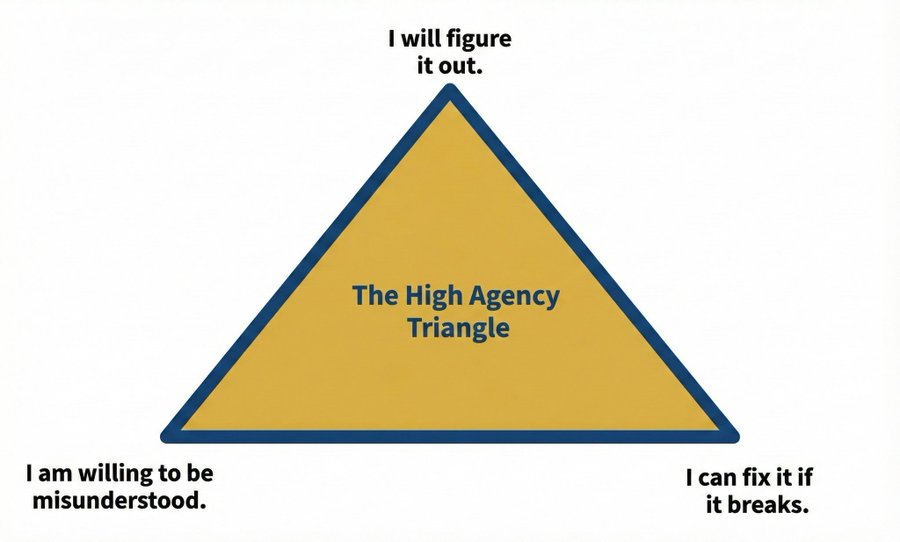
The high agency triangle Build teams with high agency people Pick a high agency spouse Surround yourself with high agency friends
Mike Beckham tweet media
English
4
4
24
1.1K
Nate Lorenzen
Nate Lorenzen@anatelorenzen·
Who is Rogan's newest guest?
Nate Lorenzen tweet media
English
2
0
2
508
Ethan Anderson
Ethan Anderson@ethananderson·
@anatelorenzen Looks nice! One thought: the “before” images are easy to read from a phone screen, the new ones are not — fonts are small and they are busier overall. Just a thought, take it or leave it!
English
1
0
0
20
Nate Lorenzen
Nate Lorenzen@anatelorenzen·
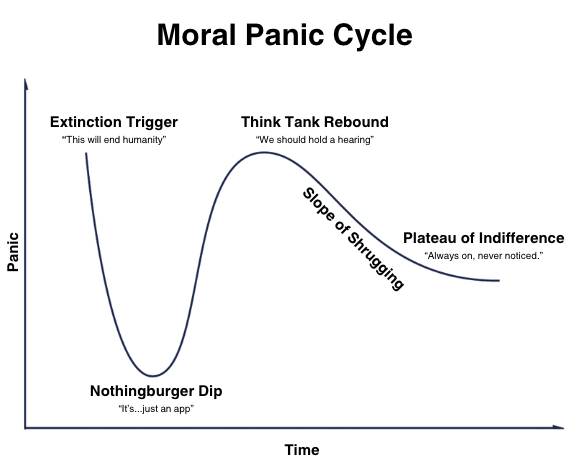
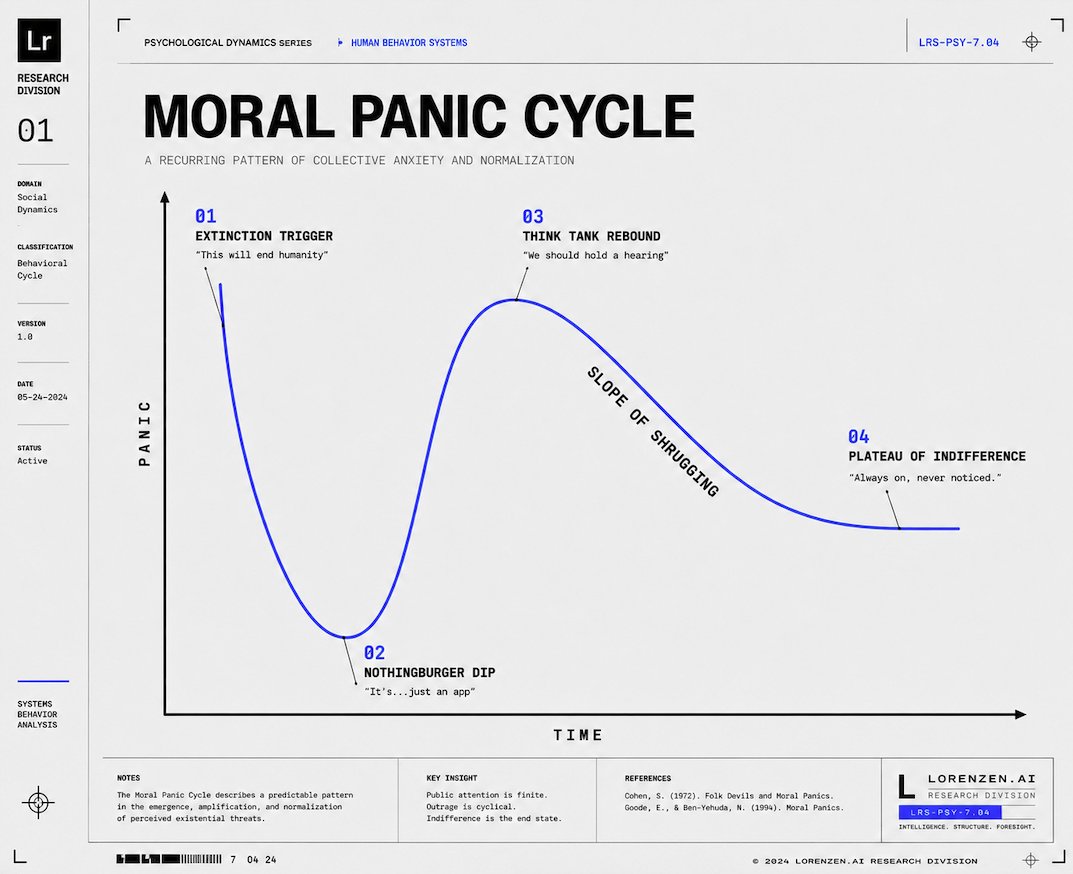
I've been an idiot. Years of infographics with zero consistent branding. Built a custom GPT around my brand guidelines. Five minutes to fix what should have never been broken. Before and after.
Nate Lorenzen tweet mediaNate Lorenzen tweet media
English
3
0
4
345
good
good@thenarrator·
the next social network is a prediction market where your feed is ranked by accuracy not engagement. the person who is right 80% of the time gets seen while the person who is loud gets buried
English
254
153
2K
409.7K
Jason Fried
Jason Fried@jasonfried·
Obliterate! Great word in an unexpected place.
Jason Fried tweet media
English
7
0
60
15.3K
Stephen Olmon
Stephen Olmon@stephenolmon·
A friend in Dallas got terrible news yesterday about their elementary age son Long, hard journey ahead with big questions including surgery this week Please pray for L and his parents
English
5
0
16
1.7K
Ethan Anderson
Ethan Anderson@ethananderson·
Everyone is to be loved. But some people are to be avoided. (This can be a tricky thing to explain to your kids, I’m learning.)
English
0
0
0
30
Ethan Anderson
Ethan Anderson@ethananderson·
Awesome
Daniel Vassallo@dvassallo

I've been in the process of building a custom home for 5 years. Bought the land in 2021. Got the building permit this year. Haven't started construction yet. During those 5 years, I accumulated thousands of emails with dozens of architects, engineers, surveyors, contractors, government agencies, title companies, and others. Hundreds of PDFs I opened once and never found again. My project management system was email search and my own memory. I could always find individual emails when I needed them. What I couldn't do was see the project. How much money have we actually spent, and on what? Who are all the contractors we talked to, and how did we find each one? What happened with the easement, not one email about it, but the full arc across three years? Why did we stop using the original surveyor? The answers were all in my inbox. But they were spread across hundreds of threads. No single email contained the story. The story only existed in the connections between them. So I tried something. I pointed OpenClaw at my full email inbox and said: read all my emails in chronological order and figure out what happened with this project over the last 5 years. Build me a timeline. Find all the documents. Track the money. Map the people. That's it. I didn't sort anything. I didn't classify anything. I didn't tell it which threads mattered. I just pointed at the inbox and let it work. And it worked way better than I expected. It found 1,850 emails across 450 threads involving 58 people at 35 organizations. From that, it produced 511 timeline events describing what actually happened over 5 years. Not "Daniel emailed the architect" but "Easement delay threatens grading permit" or "architect warns the entire permit depends on securing the neighbor's access agreement." Real project history in PM language. It identified 690 documents and classified each one: invoice, permit, survey map, legal agreement, environmental report, estimate, and so on, and it linked them to the timeline events that referenced them. It extracted 170 finance records from email bodies and PDF attachments. Invoices, payments, estimates, and receipts with amounts, dates, and payees pulled from messy documents. It mapped out 58 contacts with their roles, their organizations, and how they related to the project over time. All interlinked. Click a timeline event, see the emails that produced it and the documents attached. Click a payment, trace it back to the invoice and the email thread. Click a person, see every event they were involved in. It built a dashboard on top of it and for the first time in 5 years, I could actually see the whole project. The full arc. Every dollar. Every person. Every decision. Stitched together from raw correspondence into something I can sit down and browse. The key insight for me was realizing this is basically an ETL process: Extract, Transform, and Load. The emails are the source data. The agent does the extraction from emails and loading into a database. But the really powerful part is the Transform: the LLM reads the raw correspondence with enough context to do intelligent enrichment across hundreds of threads spanning months and years. And by enrichment I don't mean summarization. I mean it actually reconstructed the narrative of the project. It traced how we almost hired the wrong well driller. We originally hired one company, paid a deposit, and were ready to go. Then the architect heard from someone in his network that they weren't reliable. We pivoted to a different driller who came recommended through a chain of referrals the agent traced back to its origin. The new company came out, drilled 140 feet, hit an artesian well with water pressure above ground level, and finished in two weeks. The original deposit got refunded. The agent reconstructed that entire sequence from first contact to final invoice, across dozens of emails and multiple contractors, and presented it as one coherent story. It reconstructed the full permit saga. Four separate permits with the county, each with its own cycle of applications, reviews, correction letters, resubmissions, and approvals. Years of back and forth. The agent built the complete timeline for each permit and linked every document and payment to the right stage. It tracked the money flow end to end. Not just "we paid the architect X." It found every invoice, matched them to the work described in the email threads, categorized the spending, and produced a financial history of the entire project broken down by architect, engineer, surveyor, contractor, county fees, and everything else. It mapped out relationships between people that I had half-forgotten. Which engineer referred which surveyor. Which contractor's crew member later became a separate vendor. Which county reviewer handled which permit. All of it was in the email, I just never had the time to stitch it together myself. One of the most fun things it did was writing honest personality profiles for each contact based purely on their communication style. How responsive they are. How they handle pushback. Whether they tend to over-promise. Whether they're the kind of person who answers at 11pm or takes five days to reply. Reading an AI's unfiltered take on the people you've been doing business with for years, based on nothing but their emails, is surprisingly entertaining and uncomfortably accurate. The thing that surprised me most is how much structure was already hiding in the email. I didn't add information. The agent found what was already there. The timeline, the document graph, the money flows, the cast of characters. It was all latent in the correspondence. Five years of decisions and negotiations and payments, all recorded in email, just never connected. I think a lot of people are sitting on projects like this without realizing it. Your renovation emails are a project database waiting to be assembled. Your legal correspondence is a case file. Your immigration threads are an application history. The raw material has been accumulating for months or years. It's rich, timestamped, and complete. It's just in a format designed for messaging, not for understanding. Point an agent at it. Let it read everything. Let it do the transform. The whole story was in my inbox the entire time. I just needed something that could read all of it at once.

English
0
0
0
60
Ethan Anderson
Ethan Anderson@ethananderson·
@dvassallo This is a good example of something I know I could build myself but would happily pay someone to just make for me. I have nearly this exact situation here. Complicated a little bit by the fact that more than one email account was used over time.
English
0
0
1
149
Daniel Vassallo
Daniel Vassallo@dvassallo·
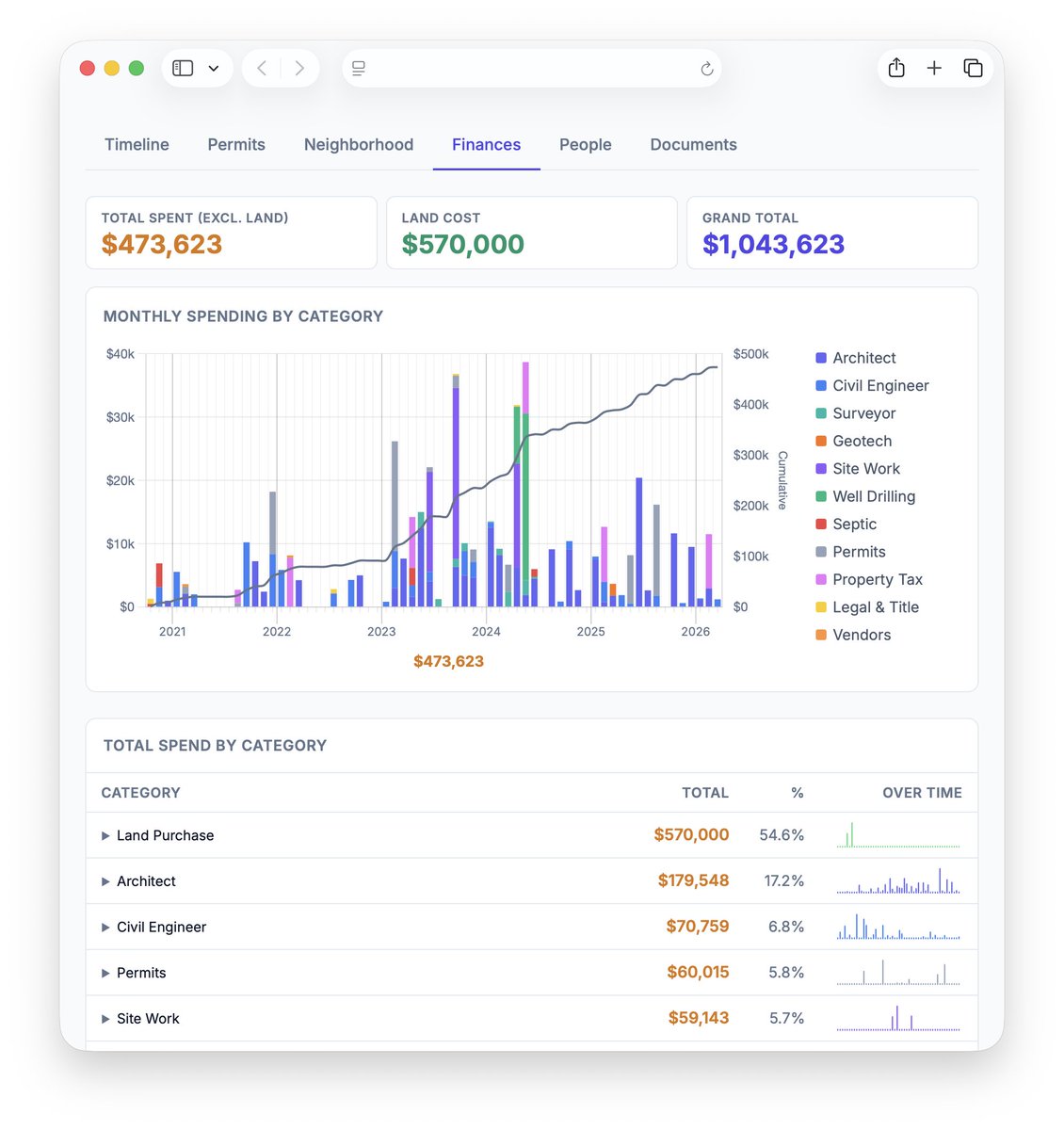
I've been in the process of building a custom home for 5 years. Bought the land in 2021. Got the building permit this year. Haven't started construction yet. During those 5 years, I accumulated thousands of emails with dozens of architects, engineers, surveyors, contractors, government agencies, title companies, and others. Hundreds of PDFs I opened once and never found again. My project management system was email search and my own memory. I could always find individual emails when I needed them. What I couldn't do was see the project. How much money have we actually spent, and on what? Who are all the contractors we talked to, and how did we find each one? What happened with the easement, not one email about it, but the full arc across three years? Why did we stop using the original surveyor? The answers were all in my inbox. But they were spread across hundreds of threads. No single email contained the story. The story only existed in the connections between them. So I tried something. I pointed OpenClaw at my full email inbox and said: read all my emails in chronological order and figure out what happened with this project over the last 5 years. Build me a timeline. Find all the documents. Track the money. Map the people. That's it. I didn't sort anything. I didn't classify anything. I didn't tell it which threads mattered. I just pointed at the inbox and let it work. And it worked way better than I expected. It found 1,850 emails across 450 threads involving 58 people at 35 organizations. From that, it produced 511 timeline events describing what actually happened over 5 years. Not "Daniel emailed the architect" but "Easement delay threatens grading permit" or "architect warns the entire permit depends on securing the neighbor's access agreement." Real project history in PM language. It identified 690 documents and classified each one: invoice, permit, survey map, legal agreement, environmental report, estimate, and so on, and it linked them to the timeline events that referenced them. It extracted 170 finance records from email bodies and PDF attachments. Invoices, payments, estimates, and receipts with amounts, dates, and payees pulled from messy documents. It mapped out 58 contacts with their roles, their organizations, and how they related to the project over time. All interlinked. Click a timeline event, see the emails that produced it and the documents attached. Click a payment, trace it back to the invoice and the email thread. Click a person, see every event they were involved in. It built a dashboard on top of it and for the first time in 5 years, I could actually see the whole project. The full arc. Every dollar. Every person. Every decision. Stitched together from raw correspondence into something I can sit down and browse. The key insight for me was realizing this is basically an ETL process: Extract, Transform, and Load. The emails are the source data. The agent does the extraction from emails and loading into a database. But the really powerful part is the Transform: the LLM reads the raw correspondence with enough context to do intelligent enrichment across hundreds of threads spanning months and years. And by enrichment I don't mean summarization. I mean it actually reconstructed the narrative of the project. It traced how we almost hired the wrong well driller. We originally hired one company, paid a deposit, and were ready to go. Then the architect heard from someone in his network that they weren't reliable. We pivoted to a different driller who came recommended through a chain of referrals the agent traced back to its origin. The new company came out, drilled 140 feet, hit an artesian well with water pressure above ground level, and finished in two weeks. The original deposit got refunded. The agent reconstructed that entire sequence from first contact to final invoice, across dozens of emails and multiple contractors, and presented it as one coherent story. It reconstructed the full permit saga. Four separate permits with the county, each with its own cycle of applications, reviews, correction letters, resubmissions, and approvals. Years of back and forth. The agent built the complete timeline for each permit and linked every document and payment to the right stage. It tracked the money flow end to end. Not just "we paid the architect X." It found every invoice, matched them to the work described in the email threads, categorized the spending, and produced a financial history of the entire project broken down by architect, engineer, surveyor, contractor, county fees, and everything else. It mapped out relationships between people that I had half-forgotten. Which engineer referred which surveyor. Which contractor's crew member later became a separate vendor. Which county reviewer handled which permit. All of it was in the email, I just never had the time to stitch it together myself. One of the most fun things it did was writing honest personality profiles for each contact based purely on their communication style. How responsive they are. How they handle pushback. Whether they tend to over-promise. Whether they're the kind of person who answers at 11pm or takes five days to reply. Reading an AI's unfiltered take on the people you've been doing business with for years, based on nothing but their emails, is surprisingly entertaining and uncomfortably accurate. The thing that surprised me most is how much structure was already hiding in the email. I didn't add information. The agent found what was already there. The timeline, the document graph, the money flows, the cast of characters. It was all latent in the correspondence. Five years of decisions and negotiations and payments, all recorded in email, just never connected. I think a lot of people are sitting on projects like this without realizing it. Your renovation emails are a project database waiting to be assembled. Your legal correspondence is a case file. Your immigration threads are an application history. The raw material has been accumulating for months or years. It's rich, timestamped, and complete. It's just in a format designed for messaging, not for understanding. Point an agent at it. Let it read everything. Let it do the transform. The whole story was in my inbox the entire time. I just needed something that could read all of it at once.

Daniel Vassallo tweet mediaDaniel Vassallo tweet media
English
80
23
570
76.7K
Michael Whittle
Michael Whittle@michaelwhittle·
Fire in my bones @lensweet "The church is at a crossroads: We can be the ones who burn the new tools because we fear their power, or we can be the Vanguard who enters the code. AI will either be a new gatekeeper—filtering God out of the human conversation—or a new means of release, putting the Living Word into the pockets of the digital “plowboys” of 2026. The Vanguard doesn’t just use AI to be efficient; we use it to be incendiary. The Vanguard of 2026 will smell like smoke. It will be composed of those willing to “burn” their own comfort to ensure that as AI reshapes what it means to be human, the Word of God is there to define it. It is for those who would rather be a “heretic” to the status quo than a stranger to the Spirit’s move. The altar is waiting. The code is being written. The vanguard is calling. Better to be ashes in the engine of the Third Millennium Church than dust settling on the pews of the old one. Better to be consumed in the service of the Living Story than preserved in the safety of a silent one. The fire is moving from the printing press to the processor. Will you stand in the heat? Will you take the heat? Somewhere in heaven, Tyndale is smiling as we reach for our devices—and our souls—and whisper once more: “Thank you, God… for the fire.”
English
4
1
6
550
Ethan Anderson retweetledi
Reid Wiseman
Reid Wiseman@astro_reid·
On the helicopter leaving the ship right now. This planet is impossibly beautiful from every altitude I’ve seen it…surface to 250,000 miles
Reid Wiseman tweet media
English
2K
27.4K
287.6K
3.7M
Daniel Berk 🐝
Daniel Berk 🐝@danielcberk·
People overestimate how easy it is to consistently make an extra 5 figures on the side in only a couple hours a week. Anyone should be able to do it. I did it across 3 ventures last year and broke 6 figures total, all while working a demanding role at beehiiv and being consistently present with my wife and kids, and actively involved in my local community. If you learn how to build tight, repeatable processes you can effectively quadruple your output without changing actual hours worked. Downside: filing my taxes is a nightmare.
English
24
4
141
20K
Ethan Anderson retweetledi
Victor Glover
Victor Glover@AstroVicGlover·
Home, again! Mission complete. I hope we glorified God, humanity, our families and our terrific teams a @NASA and @csa_asc. Time to share the good news!
Victor Glover tweet media
English
7.8K
36.8K
324K
7.2M
Ponch
Ponch@PonchatoYT·
@TheOnlyFronk @BrianRoemmele Sound logic and good questions to ask. $0.14/kWh is pretty average - it'd be higher in California, lower in Arkansas, but not by a ton. The more important factor here is that these old fridges are still running 50 years later, but new fridges fall apart after 5.
English
1
0
1
110
Brian Roemmele
Brian Roemmele@BrianRoemmele·
“Oh they had to stop making those old refrigerators because they used a TON of electricity. The costs were outrageous.The new ones save so much and are ‘energystar’” Welp…
English
222
1.6K
13.4K
649.9K
Ethan Anderson retweetledi
Sarah Salviander
Sarah Salviander@sarahsalviander·
A common response to the fine-tuning argument is to say that of course the universe is finely tuned, because if it wasn't we wouldn't be here to observe it. That's a truism and a tautology, not an explanation. Think of it this way. You're standing before a firing squad of dozens of skilled shooters, all with loaded weapons pointed straight at you, who all fire at you simultaneously. Yet you walk away unscathed. Your response? Well, if I hadn't survived, I wouldn't be here to observe it. Does that explain this extremely improbable outcome? No. It's a statement of the obvious, but you'd be searching for answers. In the same way, the fine-tuning of the universe to allow conscious life cries out for an explanation. The possibilities are that this happened by 1. Chance 2. Necessity 3. Design Option 1 is the firing squad problem. The odds are so overwhelmingly against this "just happening" that proponents have resorted to untestable and bizarre explanations like an infinite multiverse. There is no evidence for Option 2. Nothing in the laws of nature requires the finely-tuned parameters of the universe to be the way they are. Logically, this leaves Option 3 as the most probable explanation. When I was a physics student coming out of my lifelong atheism, I was deeply moved by this argument. It didn't matter what my prejudices were, the logic was so sound that I couldn't see any way around it.
Sarah Salviander tweet media
English
205
230
1.1K
46.5K
Luke Netti
Luke Netti@luke_netti·
Most note-taking tools are too complex to setup for pastors to actually use. Not anymore. Here's a sneak peak at what I'm building.
Luke Netti tweet media
English
1
0
3
205