

@CryptoHass @mediumtension If he doesn’t make this right and I highly doubt there is any way to, I suspect he’s a dead man tbh.
English
GIGACHAD
260 posts

THE @MorphwareAI SCAM! 🚨🚨🚨🚨🚨 Before you start reading. Like, retweet and bookmark please. This needs to be seen everywhere! I stayed quiet for a long time, but people deserve to understand what happened around Morphware and why so many holders lost money. In my opinion, Kent Trabing, also known as Kenso Trabing, ran one of the most deceptive crypto operations I have ever been close to. I know this because I worked directly with him. I was lead of marketing for Morphware from December 2024, with two short breaks in between when I stepped away. I came back because I genuinely believed this was a real infrastructure project and not the kind of project that would collapse like this. Looking back now, the red flags were there all along. At the time, I gave the project the benefit of the doubt. Startups make mistakes. Delays happen. Communication can be messy. But this was not normal startup chaos. This was something much darker. Before I continue, I want to be clear about one thing. Everything I am saying can be backed up for authorities with screenshots, screen recordings, messages, and supporting material. Also, information that was supposedly under NDA was repeatedly shared by Kenso himself with many other people in private messages. A large part of what was treated as confidential was already being circulated by him. That is one of the reasons I am speaking now. My journey with Morphware started in December 2024. I was an early buyer and wanted the project to succeed. And like many people in crypto know, when you have influence, you also try to help your bag perform better. So where did it really start going wrong? For me, the first major warning signs came in April during the so called 30 days of alpha campaign. I quit on day one of that campaign because it was obvious to me that it was not real alpha. The story being told publicly did not match what was actually there. Around that time, Kenso was heavily implying that Morphware had signed major global brands like Nike, Jordan, Volkswagen, Porsche, Honda and others. He posted a photo of himself in front of a wall of branded shirts, creating the impression that he had secured major partnerships. The messaging around it, including references like Just Do It, was clearly designed to make people believe these brands were now clients. Later, I received screenshots from people who did basic research and found that the same setting was connected to Zavidoro, a Paraguayan importer and distributor for international brands entering that market. That changed everything. It appeared that Morphware had not signed those major brands directly at all. What existed were AI pilot discussions or small experiments through a distributor, not direct high value brand partnerships as the market was led to believe. That is also why announcements were always phrased carefully around meeting a representative of the brand. In hindsight, that should have been a huge warning sign. Then came the tax and treasury mess. At one point, the team told the community that the project had not raised 7.8 million dollars, but only 5.8 million. The explanation was that they had swapped collected ETH near the lows because they needed funds, supposedly for a 1 million dollar miner order. But in reality, that order was reportedly canceled, and only around 40 miners were ordered instead of the 200 plus miners people had in mind. There was no transparent update. There was no honest explanation. There was no clear accounting of where the money really went. The story kept changing, and the community was expected to just accept it. By June, the token price had crashed back toward 2 cents. Around that time, I got pulled back into the project after an argument on X about the team not even locking their own tokens. Kenso contacted me directly, and we spoke about reviving the project. I made a new marketing proposal based on ideas I had already shared before but never got approval for. That is when I signed an NDA and got pulled back in to help rebuild sentiment around the token. I genuinely believed there was still something real underneath the mess. That is where the famous 08 narrative came in. Based on the information I was given, I created a riddle campaign with hidden clues about Morphware’s future. The most important clue was 08, which pointed to 08 08 2025. I was told the contracts were signed. I was told the deal was locked. I was told nothing could stop it. This was presented to me as a deal that would drive around 0.8 BTC per day into buybacks. That kind of number would obviously make anyone bullish if they believed it was real. Then 08 08 came and nothing happened. There was a delay. Then more delay. Then more excuses. And later it became clear that the signed deal story was never what it was made out to be. I was also told stories about major backing from the UAE, royal family involvement, and expansion plans that would make Morphware huge in Paraguay. But when I asked for the material I needed to market those claims properly, it never came. No proof. No documents I could use. No clarity. Just more promises and more future talk. Another major narrative was the Strategic Bitcoin Reserve angle for Paraguay, with Morphware allegedly tied to huge mining plans involving 30,000 miners. Again, the story spread widely. And again, I later found out that Kenso had been sharing variations of this information with many people privately. That mattered for one reason. When you leak exciting inside stories to a wide group of buyers, you create hype. When people buy based on that hype, someone on the other side can sell into it. That is exactly what this started to look like. At one point, after pressure from the community, the tax was finally removed. This only happened after a huge amount had already been collected through taxes. Even after that, new seed wallets kept appearing and selling. At first, we thought it might be Andrew Eddy. Then we were told it was him. Then later we were told it was someone else connected to the project since 2021. The explanations kept changing depending on the day. That alone should tell you enough. Then Q4 came and went. All the big news that was used to keep people hopeful kept getting delayed again and again. The 08 story was pushed back once more, this time because some AI bill supposedly had to pass first. By then, communication had collapsed again. The moment the tax was off and retail trading no longer directly fed the machine, Kenso and Khurram faded further into the background. Community communication got worse. Transparency got worse. And trust kept eroding. Then I tried to help one last time. I gathered whales and helped organize a 152,000 dollar miner order, with the clear condition that Kenso would place the order quickly and provide proof. He agreed. Then the delays started. Five days passed. Still no order. Then we were told the order had been canceled because they thought they could get more miners another way. A few days later, the proof shown on X was not an invoice, but a letter claiming 31 miners had been ordered. That was a massive red flag. From everything I later learned, miners like that are generally shipped fast, which made the cancellation story sound highly questionable. To me, it looked like the market and the whales had once again been sold a story that did not line up with reality. After that, I proposed a new token structure that could have actually helped the project survive. My proposal was simple. 50 percent for buybacks and burn 25 percent for LP 25 percent for treasury That would have supported price, strengthened liquidity, and still given the company working capital. It was rejected. Why? Because the treasury share was too low. The team wanted more money. That told me everything about priorities. Then came the supposed 40 million dollar energy resale deals. This was another huge narrative pushed into the market. After the announcement, I was suddenly no longer allowed to talk about it. I was told it was too political and sensitive. Then, two months later, I received leaked screenshots showing that those energy deals were already off. Think about that for a second. I was the marketing lead, yet I was not informed that one of the biggest narratives I had been helping push was apparently dead. That raises a very serious question. Were those deals ever real in the form they were presented to the public? Because if they were real, why keep your own marketing team in the dark? After that, things unraveled quickly. The parcel idea came next, where the project wanted to raise 4 million dollars around land and infrastructure concepts that, in my opinion, made little practical sense. Both me and Ugluuk advised against it. It happened anyway. Then came the BSC move with advisor Simon. Again, we advised against it. Again, it happened anyway. At that point, we could no longer support the direction of the project. I publicly said I stepped away because they were moving in a direction I could not support. Then the final piece dropped. Research from people in my TrashTalk circle showed that Kenso himself appeared to be behind a large part of the sell pressure after the tax was removed. The key detail was this. Some of the seed wallets received ETH from a wallet linked to claiming tokens, and that same wallet was connected to deploying the old MWT token. Once that connection was made, the full picture started to make sense. The hype. The leaks. The delays. The fake urgency. The insider stories. The constant narrative changes. It all looked like a machine built to create buying pressure while unloading into the market. Even calls I was forced into with supposed seed investors now look very different in hindsight. One of them turned out to be far less independent than presented to me. Then came the truth around the 08 announcement. After almost 9 months, what was originally framed to me as a signed 0.8 BTC a day deal became a weak MOU with a 30 day termination clause and no direct value for holders. That is not a delay. That is not bad luck. That is a completely different reality. And the 30,000 seized miners story? That turned out to be tied to a public tender process where multiple companies could apply, not some exclusive secured Morphware position. That was game over for me. By then, me and Ugluuk were out, and the next move was a relaunch with a new token. New token. New story. New promises around ownership and buybacks. Same people. At that point, I learned that a new advisor had allegedly been told that all the streams were sold to fund a 2 million dollar liquidity pool for the new token. What actually happened? Only around 14,000 dollars was done. Again, the people coming in were told one story while reality looked very different. That is why I am writing this now. Because many holders still do not know how deep this goes. Many people only saw the surface level failures. What I saw from the inside was a pattern. A pattern of exaggerated claims. A pattern of selective leaks. A pattern of fake confidence. A pattern of pushing narratives that did not hold up. A pattern of extracting money while the community was being kept hopeful. In my opinion, Kent Trabing, also known as Kenso Trabing, scammed this market. People should also look into the damage linked to NKP that has been discussed by others, and the connections around Read_VU involving Khurram, Kenso, and former team member Darsjan. And now there are talks about a new stablecoin tied to the Paraguayan guarani.🚨🚨🚨🚨 People need to pay attention. Because if this market keeps ignoring patterns like this, the same people will keep coming back with a new token, a new story, and a new way to extract from the next group of believers. @ANDEOficial @FelixSosaPy Stop doing business with these scammers. We share proofs in my channel; t.co/nJxuWjCBld


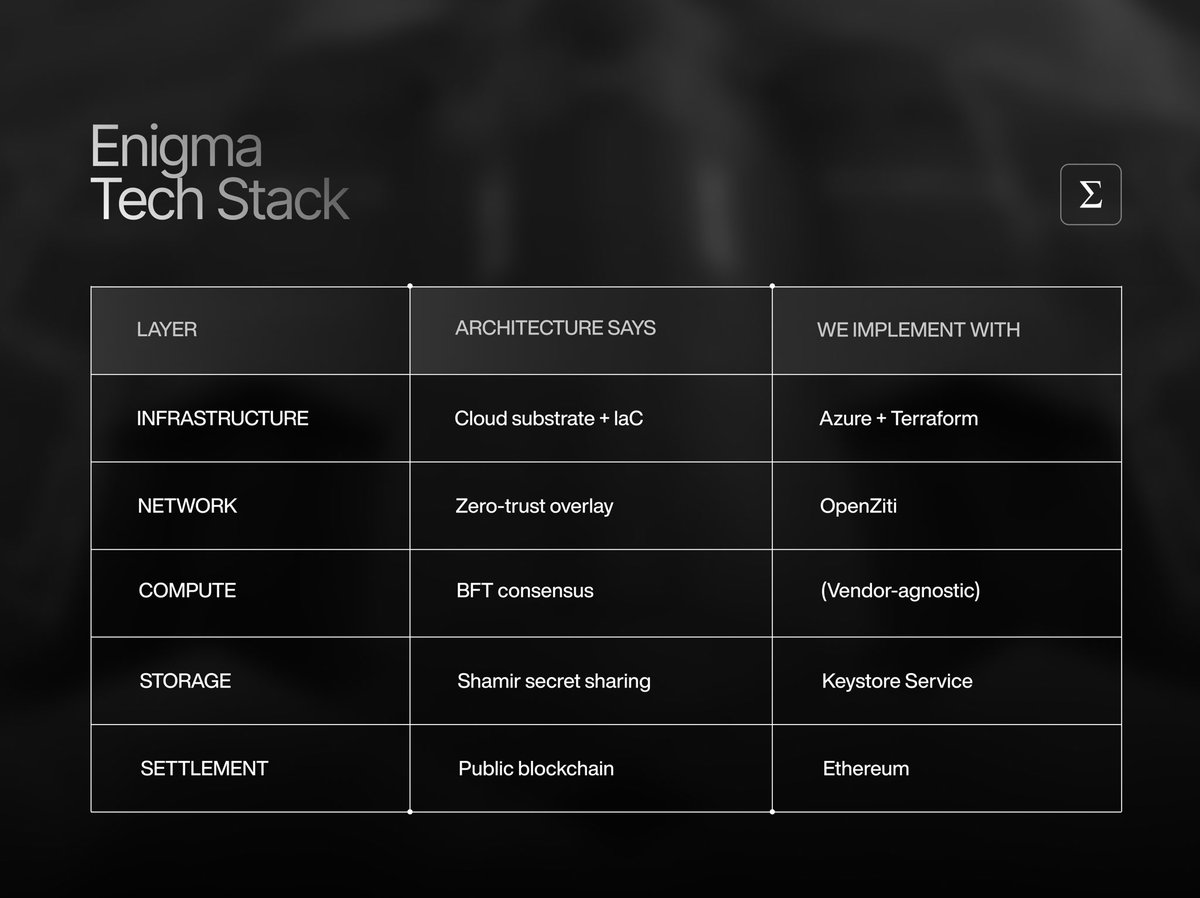
Open Source Agentic AI: Risk or Opportunity? (Pt. 01) A new generation of AI agents has blown up worldwide over the last days, bringing to life immense hopes and horrible fears alike. In just one week, we’ve monitored hundreds of leaks, breaches, and privacy incidents, while being genuinely impressed by Clawdbot and the performance of its early descendants. So what’s happening exactly? In Part 01 we will take a deep look at the opportunity and attack vectors that open source AI agent systems are currently confronted with. Advanced autonomous agents such as Clawdbot, Moltbot, and similar self-hosted or semi-hosted systems represent a shift from passive assistants to active operators. These agents observe multiple data sources, maintain long-term memory, interact with wallets, exchanges, and messaging apps, and in some cases execute actions without continuous human confirmation. Typical deployments run on local servers, cloud instances, or hybrid setups tightly coupled to personal communication channels and financial infrastructure. The appeal is straightforward. These systems operate continuously, reduce reaction time, and automate workflows that are difficult to supervise manually. Much of the current hype focuses on capability, autonomy, and convenience. Recent incidents and post-mortems around Clawdbot-like agents show risk systemic concentration. The failures were not caused by a single exploit, but by overlapping architectural, operational, and behavioral weaknesses that compounded over time. 1/ Technical exposure and attack surface Most advanced agents require broad permissions to function. API keys, wallet access, persistent credentials, and read/write access to local or cloud storage are commonly granted by default. In several documented cases, sensitive secrets were stored in plaintext configuration files, environment variables, or long-lived memory stores. Once filesystem access, logs, or remote command execution were obtained, escalation to full control followed quickly. Isolation was frequently insufficient. Plugins, tools, and integrations often shared a single runtime and privilege scope, allowing vulnerabilities in auxiliary components to propagate into core agent functionality, including financial actions. Network exposure further amplified risk. Agents listening on fixed ports, exposing dashboards, or relying on publicly reachable endpoints became discoverable. Persistent exposure increased the likelihood of misconfiguration, credential reuse, and brute-force attacks. 2/ Data accumulation and metadata leakage Autonomous agents accumulate large volumes of contextual data by design. Conversation history, decision context, transaction metadata, and behavioral traces are retained to improve performance. This creates dense, high-value datasets that are rarely segmented or time-bounded. Even when payload data is encrypted, metadata often remains observable. Stable IP addresses, fixed routing paths, predictable polling intervals, and continuous uptime allow external observers to infer behavior patterns over time. Unlike traditional applications, these agents rarely have clear session boundaries. Continuous operation means continuous exposure. Part 01 was all about attack vectors and data - next time we will analyze how Enigma's privacy stack and RAVID can drastically reduce systematic risk and improve architectural security of all open source advanced agents. Stay tuned for Part 02 and make sure to join our community. $ENX


Ethereum is the #1 choice for global financial institutions. Over the last few months, adoption has accelerated. Here are 35 stories of how institutions are building on Ethereum. 1/ @krakenfx launched xStocks on Ethereum, issuing tokenized versions of popular U.S. stocks and ETFs as ERC-20 tokens. Kraken’s eligible clients can now deposit and withdraw fully collateralized equities, directly on Ethereum. 2/ @OndoFinance launched Ondo Global Markets on Ethereum with 100+ tokenized U.S. stocks & ETFs. 24/7 access to programmable equities, backed by real securities, is now available alongside DeFi integrations for lending, trading, and more. 3/ @ChinaAMC_HK launched its Select USD Money Market Fund on Ethereum, one of the first tokenized funds from a major Chinese asset manager. One of Asia’s largest firms (over $449B AUM) now provides access to high-quality, short-term USD instruments with 24/7 settlement. 4/ @Fidelity introduced the FDIT tokenized money market fund on Ethereum. The Fidelity Digital Interest Token (FDIT) brings the bank’s investors the speed of onchain settlement alongside the stability of traditional instruments. 5/ @Google announced the Agent Payments Protocol (AP2), enabling AI agents to autonomously execute payments using stablecoins on Ethereum. Built in collaboration with The Ethereum Foundation, Coinbase, MetaMask, and others, AP2 allows AI to transact securely, bridging the gap between automated intelligence and finance. 6/ @UBS, @PostFinance, @sygnumofficial, and the Swiss Bankers Association successfully piloted Deposit Tokens on Ethereum. By demonstrating legally binding cross-bank settlement on Ethereum’s public infrastructure, the proof-of-concept paves the way for programmable, instant, cross-institution settlement. 7/ Santander’s @openbank_es launched ETH trading services in Germany, allowing customers to buy, sell, and custody ETH directly through their bank accounts. This integration is a strong signal of institutional confidence in ETH under MiCa regulation. 8/ @AmericanExpress launched Amex Passport, blockchain-based travel stamps minted as NFTs on Ethereum L2 @base. Cardholders can now create an onchain record of experiences and memories from international trips, blending loyalty rewards with digital ownership. 9/ The first tokenized S&P 500 Index Fund licensed by @SPDJIndices, SPXA, was launched by @centrifuge on Base. 10/ SWIFT and 30+ banks are designing a blockchain ledger to support tokenized assets and real-time, 24/7 cross-border payments alongside existing financial systems, starting with a prototype with Consensys. @swiftcommunity connecting 11,500+ institutions globally will create a bridge between traditional finance and onchain value. 11/ @SocieteGenerale FORGE, an integrated subsidiary of the 161-year-old commercial bank, deployed EURCV & USDCV lending and trading on Ethereum DeFi protocols Morpho and Uniswap. One of the largest custodians in Europe now provides institutional-grade collateral and liquidity for DeFi markets. 12/ @Stripe expanded its crypto support on Ethereum to include stablecoin-based subscriptions and recurring billing. Hundreds of thousands of companies that use Stripe can now accept USDC for subscriptions with automatic renewals, building on Ethereum for lower-cost payments with near-instant settlement. 13/ @Securitize and @FGNexusio tokenized the FGNX stock on Ethereum, representing the first NASDAQ-listed preferred equity issued fully onchain. Ethereum is the platform to build programmable assets that bring public markets to the digital age. 14/ @AntGroup, the fintech behind @Alipay, launched @JovayNetwork, a L2 for institutional tokenization. The company behind one of the world's largest retail platforms is now building global institutional settlement for tokenized assets on Ethereum. 15/ @jpyc_official launched the world's first yen-pegged regulated stablecoin on Ethereum. Complaint, programmable yen transactions are now available worldwide, backed 1:1 by yen reserves under Japan’s Payment Services Act. 16/ @BNYglobal and Securitize announced a tokenized AAA-rated CLO fund on Ethereum. Institutional credit moving onchain brings liquidity and transparency to traditional asset classes. 17/ Google partnered with @Polymarket, integrating onchain prediction market data to Google search results. The largest search provider now leverages the Ethereum ecosystem as a primary source of truth. 18/ @StartaleGroup released the Startale App, a SuperApp for @soneium's growing Ethereum L2. Mainstream users in the Soneium L2 ecosystem can now access simple onchain interactions and rewards with a unified platform for wallets, assets, and apps. 19/ @jpmorgan migrated its tokenized deposit product, JPM Coin (JPMD), from its internal permissioned blockchain to Base. Moving from a private chain to an Ethereum L2 will meet demand from JPMorgan’s institutional clients for payments, collateral, and margin settlement on public infrastructure. 20/ @Mastercard announced it will build on Ethereum L2 @0xPolygon to expand its Crypto Credential program to self-custody wallets. Working with @mercuryo_io, the expansion will allow Mastercard users to send crypto using verified, human-readable aliases. 21/ @Amundi_ENG, Europe’s largest asset manager ($2.75T AUM), launched a tokenized share class of its euro money market fund on Ethereum mainnet. Bringing traditional cash management onchain unlocks 24/7 settlement and composability for euro-denominated capital. 22/ Sony Bank announced plans to launch a USD-pegged stablecoin on @soneium, its Ethereum L2, in early 2026. From gaming to finance, Sony is building its ecosystem’s home base on Ethereum. 23/ @WisdomTreeEU introduced the world’s first physically-backed ETP for @LidoFinance Staked Ether. The fund will provide European investors with regulated exposure to the spot price of stETH and its ETH staking rewards. 24/ The @CFTC announced a pilot program that will allow ETH, BTC, and USDC to be used as collateral in US derivatives markets, alongside new guidance on using tokenized assets as collateral. This marks a significant shift in how ETH and other digital assets can be integrated into regulated US markets. 25/ @BlackRock filed for a staked ETH ETF. Following the success of their spot ETH ETF, this filing seeks to unlock the value of Ethereum's native staking reward rate for traditional investors. 26/ The @ADI_Foundation, backed by IHC, announced the mainnet launch of institutional L2 @ADIChain_, part of the @zksync Elastic Network. Supported by the UAE's largest conglomerate, ADIChain will host the country's regulated stablecoins and aims to bring 1 billion people onchain across the Middle East, Asia and Africa. 27/ JP Morgan launched MONY, their first tokenized money market fund, on Ethereum mainnet. The firm seeded the fund with $100M of its own capital, signaling their commitment to public chain tokenization. 28/ @coinbase announced Coinbase Tokenize, built on Base, as their new end-to-end institutional platform for tokenizing RWAs. Combining issuance, custody, compliance, trading, and infrastructure, the new product will streamline the process of bringing assets like tokenized stocks, equities, funds, and real estate onchain in the Ethereum ecosystem. 29/ @RobinhoodApp added 500 tokenized assets on @arbitrum, bringing their platform to nearly 2000 assets tokenized. With over $14M in total tokenized value, Robinhood continues deepening their integration with Ethereum’s L2 ecosystem. 30/ @BlackRock, @Mastercard, and @FTI_Global partnered with the ADI Foundation in the UAE, builders of the ADIChain L2. The group will explore tokenized asset structures, digital asset regulatory frameworks, stablecoin settlement, and cross-border payment infrastructure. 31/ @SoFi became the first national US retail bank to issue a stablecoin (SoFiUSD) on a public, permissionless blockchain. Launched on Ethereum, SoFiUSD will first be used for faster, cheaper internal settlements for the fintech giant and its partners. 32/ @telcoin launched eUSD on Ethereum and Polygon, a regulated U.S. dollar stablecoin issued by Nebraska state-chartered digital asset depository institution Telcoin Digital Asset Bank. The launch marks another milestone in U.S.-regulated banks issuing stablecoins directly on public blockchains, bringing traditional regulated banking to the Ethereum ecosystem. 33/ @Grayscale distributed the first ETH staking rewards to ETHE ETF shareholders. In a first for US regulated products, investors received Ethereum’s native yield directly, proving that staked ETH ETFs can deliver the economic utility of the network. 34/ @MorganStanley filed for a Staked Ether ETF, doubling down on its crypto strategy. One of the world’s largest wealth managers is moving beyond spot exposure to capture Ethereum’s native staking yield for clients, signaling a shift to productive participation. 35/ The ADI Foundation partnered with M-Pesa to bring 60M+ users onchain. Africa’s largest mobile money platform is integrating blockchain rails to power instant cross-border payments and stablecoin transactions, merging massive fintech scale with Ethereum’s global settlement layer. — Ethereum is the trusted, global settlement layer for real-world adoption, used by institutions, governments, and enterprises worldwide. Learn more about building on the institutional liquidity layer: institutions.ethereum.org
EPN versus Legacy VPNs: Key Differences Traditional VPNs were built for a simpler internet. They rely on fixed servers, long-lived static tunnels, and stable identities, which makes them easier to block, log, and analyze over time. As John McAfee (@officialmcafee) put it bluntly: “A VPN just gives you another master.” The point is structural rather than rhetorical. Traditional commercial VPNs depend on visible, privately operated infrastructure. While traffic is encrypted, the infrastructure itself remains observable and, under certain threat models, subject to logging, analysis, or compromise by sophisticated actors. A tunnel may hide traffic on an untrusted local network, such as public Wi-Fi, but the tunnel itself remains visible to upstream networks, ISPs, and regulators. In this model, privacy depends on the operator and the persistence of the infrastructure. Enigma takes a different approach. Instead of relying on a long-lived tunnel, sessions are short-lived, identifiers are reassigned over time, and routing paths shift. The goal is to reduce the availability of stable identifiers that enable correlation. This highlights the core difference. Legacy VPNs rely on static tunnels and fixed infrastructure, which can simplify trust assumptions but leave long-term observability intact. Enigma Private Network is designed around different architectural assumptions, resulting in a different risk profile under defined conditions. $ENX



Public launch coming for $ALVA Hedge fund style investing on chain with bskts of assets Team well connected & had $10m investment from a VC Expecting some big bskts driving buy pressure on $ALVA with 5% required in each one 0 buy tax, undervalued AF here


The robotics industry is heading toward $110B+ by 2030… and $QACE is carving its lane. Here’s why: Roadmap: from Ignition Layer to QARC Edge Kit Recent highlights: ✅ VIBR → visual AI demo ✅ QOGNIX → intent-driven rule engine ✅ Crossed 1,000 holders ✅ Campaigns across YT + TikTok End-to-end workflow just dropped: - Define inputs/outputs inside the dApp - Stack AI blocks → instantly become ROS2 nodes -NLP core auto-builds syntax trees + execution graphs - Simulate in Gazebo → deploy to hardware bug-free $QACE token: * 1B total supply | 4% in/out * Liquidity locked 2Y * Utility: unlock AI modules, staking, dev rewards, burns Robotics needs brains and $QACE provides the unified autonomy layer. x.com/Qace_Dynamics/…
$QACE team continue to blaze the trail & prove they here to build & have the tech to help the adoption & scale of the robotics segment Nice comms from team Chart looking primed for breakout & community growing Prolly better R/R here in $30m range than 6fig shitters
🚀🤖 $QACE Bringing Real AI to Robots As previously mentioned a recent addition to my portfolio is a robotics play, a niche I was and am quite skeptic of. However after seeing the previous success this team has had I was comfortable to bid the project on launch and still feel there is room to run much higher. As I understand robotics today is messy. Developers currently stitch together random libraries, cloud services, and hardware hacks just to get basic autonomy working. It’s slow, complicated, and often breaks. That’s where @Qace_Dynamics steps in. Instead of cloud-dependent AI, QACE gives robots plug-and-play modules, vision, voice, decision-making all running directly on the robot. No coding. No latency. No privacy issues. Just simple, modular AI built for real-world machines. Streamlining the process. Some Use Cases for this are: 🛸 Drones that adjust flight mid-air without internet 🏭 Factory bots checking equipment fully offline 🧹 Cleaning bots that respond to voice commands 🏥 Patient-care robots that keep data private 📦 Logistics robots routing deliveries in real time The $QACE Token: is how the ecosystem ties together as its required to: Unlock AI modules (Vision, Voice, Logic, SLAM) Reward robotics developers 🛠️ Governance on upgrades & security 🗳️ Staking for premium features & scaling 🔒 📊 Tokenomics Snapshot: 1B supply 4% / 4% tax 80% liquidity (2Y lock) Treasury + R&D reserves for real expansion The pitch is simple: robotics is a trillion-dollar market, and $QACE is building the convenient layer that aims to make robots smart, while giving token holders a direct stake in that growth. More robots = more demand for $QACE modules = more token demand = price goes up. Currently this is the only AI x Robotics project I see worthy of bidding, rather than tokenized temu robots. The issue I've learned about the robotics niche is that tokenizing physical robots that can be monetized in factories as an RWA is both slow and inefficient as a business model. $QACE approaches the niche from a different angle 🤝
QACE Dynamics | Weekly Progress The second week of QACE was all about moving from introductions into real tech. Here is what we achieved this week: Momentum is hitting new levels for QACE this week: - VIBR Demo: showed how robots gain vision intelligence through our dApp, with object and face detection configured in just a few clicks. - Qognix Demo: introduced the rule engine that turns instructions into intents and actions, giving robots a thinking brain. - 1,000 Holders: milestone reached alongside steady market expansion. - Campaign Launch: YouTube and TikTok campaigns officially kicked off to amplify our reach. We also delivered deep dives into the hardware and core layers of our stack: - QARC Hardware Update: detailed how one standardized supercomputer kit simplifies robotics hardware and upgrades. - Qognix Rule Engine: revealed modular AI blocks with NLP that build intent driven autonomy. - Qognix Core: showcased the foundation that translates human instructions into executable autonomy graphs. QACE is moving fast, robots that see with VIBR, robots that think with Qognix, and the QARC hardware that makes it all possible.