
Greg Karelitz retweetledi
Greg Karelitz
1.2K posts


Greg Karelitz
@GregKarelitz
CRO @Auctor_ai • Aspiring Ski Bum • Ex. Global Senior Director of Tech Partnerships @HubSpot
Katılım Haziran 2011
273 Takip Edilen664 Takipçiler

Greg Karelitz retweetledi

Greg Karelitz retweetledi

We grew from zero to $100M ARR and 70M users in <2.5 years, profitably
it cost us millions in experiments to learn what worked
1100-word post on every growth hack that got us here
I'll cover:
1. How to launch a feature in one day
2. How to find top 0.01% talent and keep them
3. What to focus on (and what not to)
4. Influencer marketing
5. You can't wish culture into existence
0. The thing that matters the most
1. How to launch a feature in one day
Our feedback loop:
10am: we come up with a new idea, or triggered by user insight.
12pm: designers code a prototype using Cursor.
4pm: we find new users to record themselves testing the feature (Voice Panel, UserTesting).
6pm: we watch the recording.
8pm: we know if the feature can be launched, if it needs refining, rebuilding, or if we should just drop it.
This is a way for you to actually watch and hear from your customers as they struggle through your product. You can hear in their voice where they're confused.
Sometimes you think you came up with a cool prototype. But as soon as users test it, they get stuck or have no idea how to use it. It's very helpful to have them explain how they're trying to use this feature.
When you see them confused, double click there. If they light up, you know you've hit gold.
That's how we often ship a feature per week. And not any feature; a feature with good odds of being well received.
In a month, we might improve our product in ways that would otherwise take a year.
Speed compounds.
2. How to find and keep talent
Finding Talent
- The best hires came from our network and cold inbound.
Someone once sent me a great message on LinkedIn, out of nowhere. We got on a call. 3 weeks later, he was hired full-time on-site.
- When someone joins, ask them “Who’s the best engineer you’ve ever worked with,” and reach out right away.
- Only open a role after you’ve felt the pain of doing it yourself so that you know what 'Great' looks like. (I ran marketing solo for nearly a year before hiring).
- Look for depth. In interviews, ask, “What’s a new skill you’ve learned recently? Can you teach it to me?” Keep asking 'why' and see how far they go. The best candidates go deep.
Keeping Talent
- A players want playing time. Hiring others takes time in the field away from them. Careful.
- Retention takes care of itself when you keep the bar high for hiring.
- We'll do regular tender offers so employees' vested shares actually get them liquidity from time to time.
- Give them ownership. Our hires are more 'full stack'. Designers can code in Cursor, engineers talk to users, marketers have design literacy. This way, they can own more of what they do and compensation can be proportional to the value they create.
3. What to focus on (and what not to)
In March 2023, we rebuilt Gamma to focus on one thing: users must feel the magic in the first 30 seconds.
We reworked everything in the process and became AI native.
In the 2.5 years before this, Gamma went from 0 to 60k users.
In the 2.5 years after this, Gamma went from 60k to 70M users.
What changed? What we focused on.
As we scaled, the temptation was to go wider - add more things. But we went deeper - make the current thing easier, faster, more delightful.
Every new feature, hire or campaign had to be tied directly to user value.
Gamma 3.0 does exactly what Gamma 2.0 did, just 10x better.
The most common error of a smart engineer is to work on something that should not exist - Elon Musk
4. Influencer Marketing
This is a strong amplifier for word of mouth. Anytime we scaled up an influencer program, we saw a disproportional increase in people that came through word of mouth. And when we invested less, we saw a deceleration.
What you need to know:
- 10% of your content will generate 90% of reach. When something works, figure out why and replicate it 100 times.
- Give it 6+ months, select multiple creators, and be willing to spend $10-$20k/mo. It'll not work until it does. When it does, it'll explode.
How to get it right:
- List creator personas with relevant audiences. Use freelancers/agencies for outreach.
- Pay base + viral bonus. What you reward will happen more often.
- On TikTok, use new accounts. Same chance of virality as old ones but without previous audience, so you can test.
- Test all platforms (TikTok, IG, X, LinkedIn), track specific creators/hooks that work. Triple down on those.
- Add "How did you hear about us" to onboarding. Measure leads, not views.
- Document 20-30 winning formats, then hire top creators to train others on these.
- Never write scripts, creators know their audience better than you do.
The formula:
Go broad -> See what works -> Scale it.
Virality isn't luck. It's discovering the hooks/formats that resonate with your audience and exploiting them.
5. Culture
People got this concept backwards. They think, 'I'll write down some principles and tell everyone they need to follow them.'
But you can't wish culture into existence. It's not what you hope it was. It's what you do.
Culture is a habit. A moving average of the past 60 days. It's not steady. Behavior molds it.
One day I looked around, identified the traits I admired in our teammates and wrote them down. Then I realized, 'That's our culture'.
Now we had to nurture it. We have an internal Slack channel where people give praise to teammates for a specific thing they did.
I note these things and try to reinforce them.
Don't just let anyone into your ecosystem. They always change it in some way. Hire up.
0. Have a word of mouth worthy product
Are users bragging about having found your product? Are they sending it over to friends and people they work with? Do they feel relieved when they open your app?
Until then, stick in a room with your team and get it right. Nothing of what I said above will save you if you don't get to this stage.
It doesn't matter if it takes 6-12 months. Digital products can go from $0 to $1bn in a few years if you solve a worthy problem.
If you try to speedrun through this step, you'll always be behind. 10 years will have passed and you'll be stuck at the same place.
Closing up, these are the main things that helped us grow Gamma.
Hope you find our playbook useful.

English
Greg Karelitz retweetledi

SaaS + AI Agents are the best combination for the future of software.
You need deterministic systems for handling workflows, security, governance, data management, and providing consistent end-user interfaces that users interact with.
But Agents will be doing most of the work within that software in the future. We can anticipate that agents could be 100X or 1,000X the size of the end user population for software, so increasingly we need to design our software for humans that are managing and using agents.
Box@Box
AI Agents won’t replace SaaS—they’ll supercharge it. Box CEO @levie discusses with @TechCrunch why’s he bullish on the future of AI and human labor.
English
Greg Karelitz retweetledi
AI will largely automate tasks, not jobs. Even as AI agents get better at automating more of what we define as a job in a particular field, we will just raise the bar for what the job is. Ultimately, today’s jobs are tomorrow’s tasks.
Today, many things that we consider as tasks were entire jobs in the past. Telephone operators, telegram clerks, message runners, bookkeepers, typists, and on and on. But then we used technology to digitize and automate parts of the work, and then expanded the scope of the job requirement.
AI agents will cause us to just constantly expand the expectation level of what work output looks like in a particular field.
This is the continuous cycle of technology and automation. Now it’s being applied to knowledge work in a scale that hasn’t been seen before, but the general trend will likely remain the same.
Dan Hendrycks@hendrycks
Can AI automate jobs? We created the Remote Labor Index to test AI’s ability to automate hundreds of long, real-world, economically valuable projects from remote work platforms. While AIs are smart, they are not yet that useful: the current automation rate is less than 3%.
English

@_mrosenfield Who does'nt pay? Its a banger product.
I use it just to make songs with my kids about our family.
English

Can someone explain where this revenue comes from? Who's paying?

English
@syedbalkhi 100% agree. The gap between ai-literate people and not is somewhat visible. It will soon be blatantly obvious.
English

We're witnessing the creation of what I'd call "AI Literacy Moats."
Those who learn to prompt effectively, integrate AI into their workflows, and understand its capabilities and limitations are building sustainable competitive advantages.
It's like Economies of Scale in reverse.
Instead of getting better by always getting bigger, people + teams are getting exponentially more productive by getting smarter about leveraging these AI tools.
A single person with excellent AI skills can now compete with entire teams who are still doing everything the old way.
The real winners will be the "boring businesses" that use AI to dramatically improve their efficiency and service quality while everyone else is still debating whether it's slop or scary or [insert another adjective].
What's the latest AI tool or tutorial that you have seen lately that looked interesting? Let me know in the comments below.
English

The end of an era. Goodbye, New York. Hello, Boston. I’m coming home.

English
Greg Karelitz retweetledi

Greg Karelitz retweetledi

BREAKING 🚨: Perplexity Comet is about to get local MCPs' support soon as well. This means that Comet Assistant will be able to manage other desktop apps and local files in addition to your open tabs.
A new superpower 👀
English
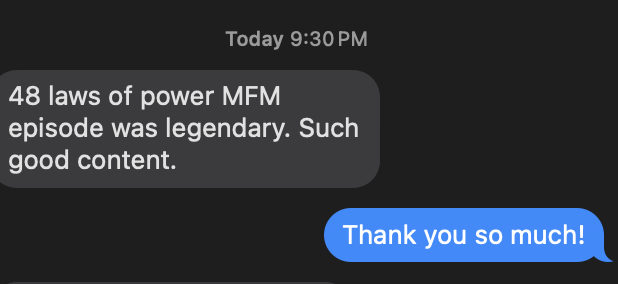
@thesamparr I listen to every episode. This one was definitely up there for me.
I immediately purchased the 48 laws of power…
it was also obvious how into it you were. Keep doing these kind of interviews!
English

Let me tell you about the creator tension.
On Youtube, My First Million episodes mostly get ~60k-300k views per pod lately.
Spotify + iTunes, consistently in the 100k range (haven't looked in forever, but whatever it is, its consistent).
This week Robert Greene was on.
I LOVED recording it. I learned so much. I wanted to go for another 2 hours. He moved me.
But on YouTube, its maybe the worst performing pod in the last 1-3 months.
And yet - I've had SO many people text me saying how much they loved listening to the Robert Greene episode.
I assume they listened (spotify, itunes), not watched
This is the tension.
The episode made me very happy. But will make me very little $$$.
English
Greg Karelitz retweetledi

🚨 I'm thrilled to share the newest and most unbelievable collection of 15+ premium products available free, exclusively to annual Lenny's Newsletter subscribers.
This curated collection features the most innovative and beautifully crafted products out there—some that you already love, some that are under the radar, and all of which I use regularly.
Paid annual subscribers now get a free year of:
1. Building faster with:
- @lovable ($252)
- @Replit ($240)
- @Boltdotnew ($240)
- @n8n_io ($240)
- @Warpdotdev ($200+)
- @MagicPatterns ($228)
- @ChatPRD ($180)
2. Collaborating better with:
- @Linear ($840)
- @Superhuman ($300)
- @MeetGranola ($5,000+)
3. Making it more beautiful with:
- @descript ($420)
- @gammaapp ($180)
- @Mobbin ($120)
4. Getting more done with:
- @WisprFlow ($180)
- @Raycast ($96)
- @Perplexity_ai ($240)
Yes, this is for real.
You get all of these products for the price of an annual newsletter subscription. This is over $10,000 in value for just $200/year.
It’s arguably the most ambitious product bundle ever attempted, and none of these companies have ever offered this deal on their products before.
A huge thank you to all of these partners for making this possible, for working with me to increase access to these important tools, and most importantly, for helping us all build better and more joyful products, companies, and careers.
Learn more about the offer here: lennysnewsletter.com/p/productpass
Annual subscribers can redeem their deals here: lennysproductpass.com
P.S. Offer codes are limited, and granted on a first-come, first-served basis. So act quickly. We’ll be adding new products quarterly, and products will rotate in and out of the collection.
P.P.S. The site might get a little slow with all of the traffic about to come its way. Be patient.
More details in thread below.

English
Ben Askren is a legend.
One of the best wrestlers of all time. Stares death in the face. Pins it. And what’s his first move in recovery?
Motivating people to get off their butts.
Time to step it up.
Funky 🇺🇸🇺🇸🇺🇸@Benaskren
Update #5- still got a long way to go physically.
English

Greg Karelitz retweetledi
Last month, I was invited to speak at TEDx Boston. Exciting! On my list of things I wanted to do.
Just one problem: There were only 12 days to prepare -- and most of those days I was busy with other stuff, so just had 12 *nights* to prepare.
Oh, and also: Public speaking gives me a LOT of fear and anxiety. I get super-stressed out.
But, YOLO + FOMO > FEAR so I was compelled to say yes.
The talk is now live on YouTube:
"How To Compete With AI -- And Win".
I'm happy with how it turned out.
I was able to beat my target LPM goal (Laughs Per Minute) of 1.5. Clocked in at 1.7.
And also, I think there's some interesting stuff in there about AI. :)
The full talk is now on YouTube:
dharme.sh/xtedx
Hope you enjoy it.
All feedback/questions/comments are welcome, either here or on the YouTube page.
Thanks for your support.
English

Greg Karelitz retweetledi

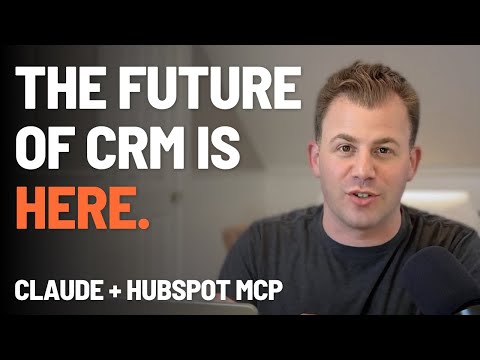
YouTube
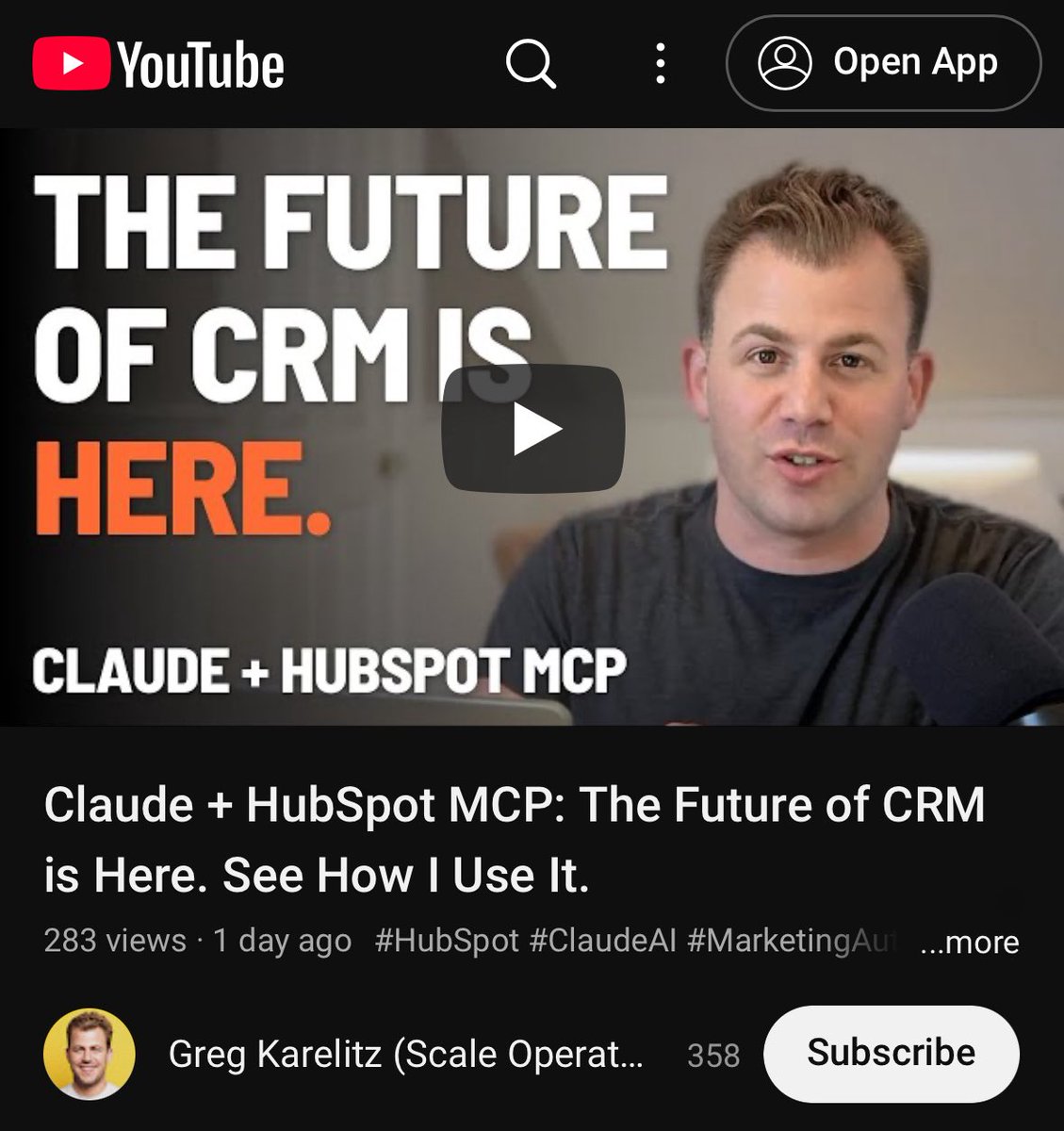
QME
AI's Following the Exact Same Pattern as the Internet. Here's What Happens Next...
linkedin.com/pulse/ais-foll…
English
Greg Karelitz retweetledi

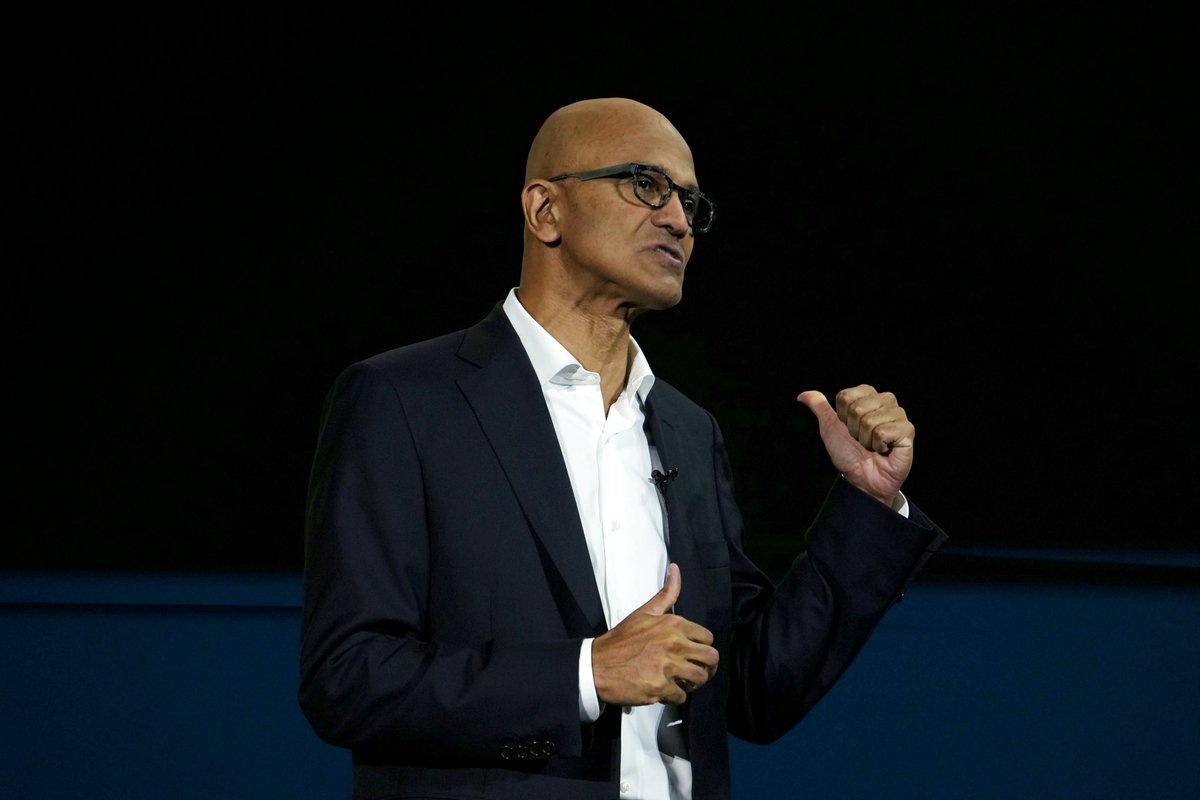
Satya Nadella, CEO of Microsoft, just made a bold prediction:
"The application layer is collapsing into agents."
Translation? Your apps are obsolete.
In a recent interview, he revealed the ONE shift that will redefine AI’s future...
Here's everything you need to know:🧵
English
I'm oddly proud to hit my @AnthropicAI Claude Pro limit (on a Sunday)... Do I upgrade to Max?

English