

Jane Lankes Smith, PhD
1.3K posts
Jane Lankes Smith, PhD
@JaneLankesSmith
Sociologist & Demographer | Research Scientist @OSUPopCenter | Researching family, gender, fertility, moms, & abortion
Katılım Mayıs 2011
842 Takip Edilen660 Takipçiler

@jessesmithsoc My impression has always been that "we should hire a health disparities scholar" or whatever was more about teaching expertise (where students are confined to their institution) than research exchange (which is not confined to your institution).
English

The appropriate comparison for calls to increase viewpoint diversity in higher ed isn’t classic affirmative action. The aim of AA was broadly understood to be the external good of social justice rather than the internal good of improved professional practice of teaching and research. People may claim the latter for purposes of legitimacy, but this is often implausible or at least clearly indirect and secondary.
Another comparison I’ve used is the case of departments hiring people with expertise they currently lack but which is substantively important or has high student demand. A SOC department might say, “We could really use a health disparities scholar,” and hire in a way that diversifies their expertise. But that’s not quite right either. It does get at the internal goods of higher ed, but it’s more about content coverage than intellectual exchange. The primary sites of intellectual exchange are journals and conferences. Ideally it happens some within departments, too, but there it’s really a bonus and secondary to the core within-departments of developing and assigning coursework, committee work to keep the wheels spinning, etc.
But I’ve landed on a more appropriate comparison for the need and function of viewpoint diversity: Putting together an academic panel discussion. When setting up a panel, you want a handful of scholars whose expertise is similar enough that they can meaningfully talk to each other, but different enough that they’ll cover the key elements and not all be saying the same thing. Say you want a panel on the consequences of out-of-school suspensions. Of course, you want people discussing the effects on suspended students, which will likely be argued to include long-term negative outcomes. But a major part of the rationale for suspensions is to create a classroom more conducive to learning for all the other non-disruptive students. If you can’t find an expert examining *that* angle, you can’t claim your panel is adequately covering the topic. So as a rough heuristic, we might judge the problem of lack of viewpoint diversity by the quality of panel discussions.
Here’s the trouble: Hiring happens at the department level, and departments aren’t incentivized to maximize the quality of panel discussions. Publication records might be a *very* rough proxy as they indicate someone contributing to “the conversation,” but they can’t effectively distinguish between someone genuinely advancing inquiry vs. hacking paint-by-numbers, path-of-least-resistance approaches to maximizing publications and citations. In this sense, personnel decisions really aren’t geared toward fostering real intellectual exchange.
This matters for how we think about higher ed reform. Often, calls for external intervention in higher ed take the tone of, “The professors are too ideological and intransigent to fix their problems, so change must be forced upon them.” (Guilty.) But at least as important is the matter of structure and incentives. The problems that stem from lack of viewpoint diversity don’t occur at the point where such diversity would need to be fostered (department-level hiring). Intervention has to occur at some other point higher up the chain. It isn’t essential that the intervention be external to higher ed, but it does need to be structural.
English
@jessesmithsoc I'm not sure I agree that statistical wizardry will be or can be offloaded to the machines. Perhaps AI can run the basics, but effective troubleshooting seems to be reserved to humans who actually understand the underlying math.
English
Peter Berger complained sociology had taken a turn toward methodological fetishism—the application of ever more sophisticated statistical techniques to ever more trivial topics. I think he was correct, and that the observation extends beyond sociology.
One optimistic, somewhat counterintuitive AI speculation is that as statistical wizardry is offloaded to the machines, that skill set will lose its scarcity and marketability. As a result, people who want to make real contributions to social science will need to learn to think more theoretically—dare I say, philosophically?—and ask more interesting questions about how the social world works. Academic training will thus start selecting for and developing that skill set.
The machines and the humanists can triumph together!
English
Jane Lankes Smith, PhD retweetledi

Best angle I’ve seen so far. A catch. Clear as day. I will never get over this (at least until they finally win one). Unbelievable.
English
Jane Lankes Smith, PhD retweetledi

There are literally thousands of studies reporting sex differences in the brain, whether structural, functional, developmental, or related to aging and neurodegeneration. Some findings replicate, others do not. Some studies are more convincing than others.
Yet across this literature, the variation is enormous: sample demographics, investigative methods, statistical pipelines, approaches to controlling covariates, scanner types, and more. Even the classic nature vs nurture debate is never far from the surface.
So if someone claims there is NO evidence of average sex differences in the brain (for whatever reason), they are either uninformed or deliberately ignoring the literature. On the other hand, if someone insists we have pinpointed a single, consistent brain region, that too is inaccurate (though we can reasonably speculate about regions linked to core reproductive behaviours).
What’s striking is how often sweeping claims are made in this field, usually without nuance or careful consideration (on both sides).
English
41 years old, took a redeye to Buffalo on Thursday, and a game winning field goal on Sunday. Welcome to Buffalo, Prater!
NFL@NFL
THE BUFFALO BILLS WIN. WHAT A COMEBACK.
English
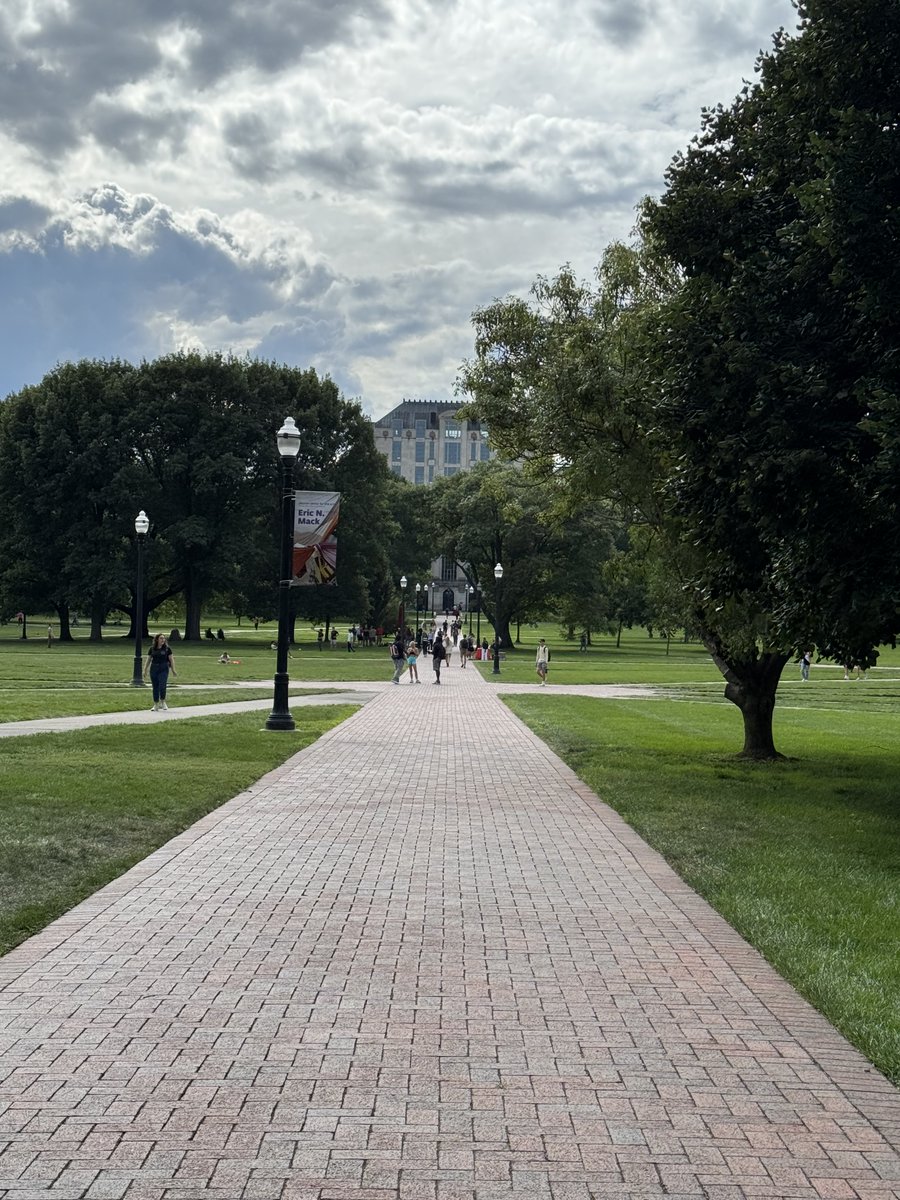
Exciting professional news! I am now a Research Scientist at the Ohio State Institute for Population Research. More research on family, gender, fertility, and well-being coming soon to a journal near you.
English
Collaborating with your spouse on a project is funny, because you say things like "Okay, let's plan to meet again during [child's] nap time."
English
@jessesmithsoc But but but. Salami slicing is boring!
English
As someone with a generalist outlook (so prone to pivoting), I see this as a bummer…but not really a surprise. Sometimes I get asked to review papers by people who, however smart and competent they might be, are clearly outsiders to my field, and it shows.
Yian Yin@yian_yin
🚨New paper🚨 Excited to share our latest on @Nature today: The PIVOT PENALTY in research. nature.com/articles/s4158… More than five years in the making. Key finding: The impact of new research steeply declines the further a researcher moves from their previous work.
English
Excited to announce that come Fall 2025, I'll be part of the inaugural faculty of Ohio State's Chase Center for Civics, Culture, and Society. I've had a great experience at Benedictine College, but looking forward to contributing to this new academic enterprise!
English
We did baby led weaning, and ultimately I think it was a good thing. Kiddo has always fed herself, rather than us having to sit there and spoon feed her every bite. Still, the cult of BLW is...a lot. Do it if it's easier, don't do it if it's not.
theatlantic.com/family/archive…
English
Jane Lankes Smith, PhD retweetledi
Kieran Culkin's Oscar acceptance speech has gotta be one of my all-time favorites. Funny, appreciative, and just incredibly sweet toward his wife and kids.
English
Allison Daminger's recent substack post on mental load in pregnancy is so, so on point. "Do abcdefghijklmnop, but also, don't stress, it's bad for the baby!"
open.substack.com/pub/allisondam…
English
Jane Lankes Smith, PhD retweetledi


