Fred Knox

7.8K posts

Fred Knox banner
Fred Knox

Fred Knox

@Kispiox21

Long-time BC resident. Retweets are not necessarily endorsements.

Katılım Aralık 2011
1.5K Takip Edilen162 Takipçiler
Fred Knox retweetledi
Jonathan Alpert
Jonathan Alpert@JonathanAlpert·
Therapy was supposed to help people become more self-aware and resilient. Instead, too much of modern therapy culture is teaching people to externalize blame, pathologize everyday conflict, and see themselves as permanent victims. My latest in @TheFP thefp.com/p/therapy-cult… #TherapyNation
English
11
27
204
77.7K
Sarah Elder
Sarah Elder@sarahelder·
With all due respect to John Horgan, Site C should have been named after Gordon Campbell. Site C was Gordon Campbell’s project and it’s his legacy to British Columbians. Site C never would have been built under the BC NDP. #bcpoli
English
4
2
30
2K
Bowinn Ma
Bowinn Ma@BowinnMa·
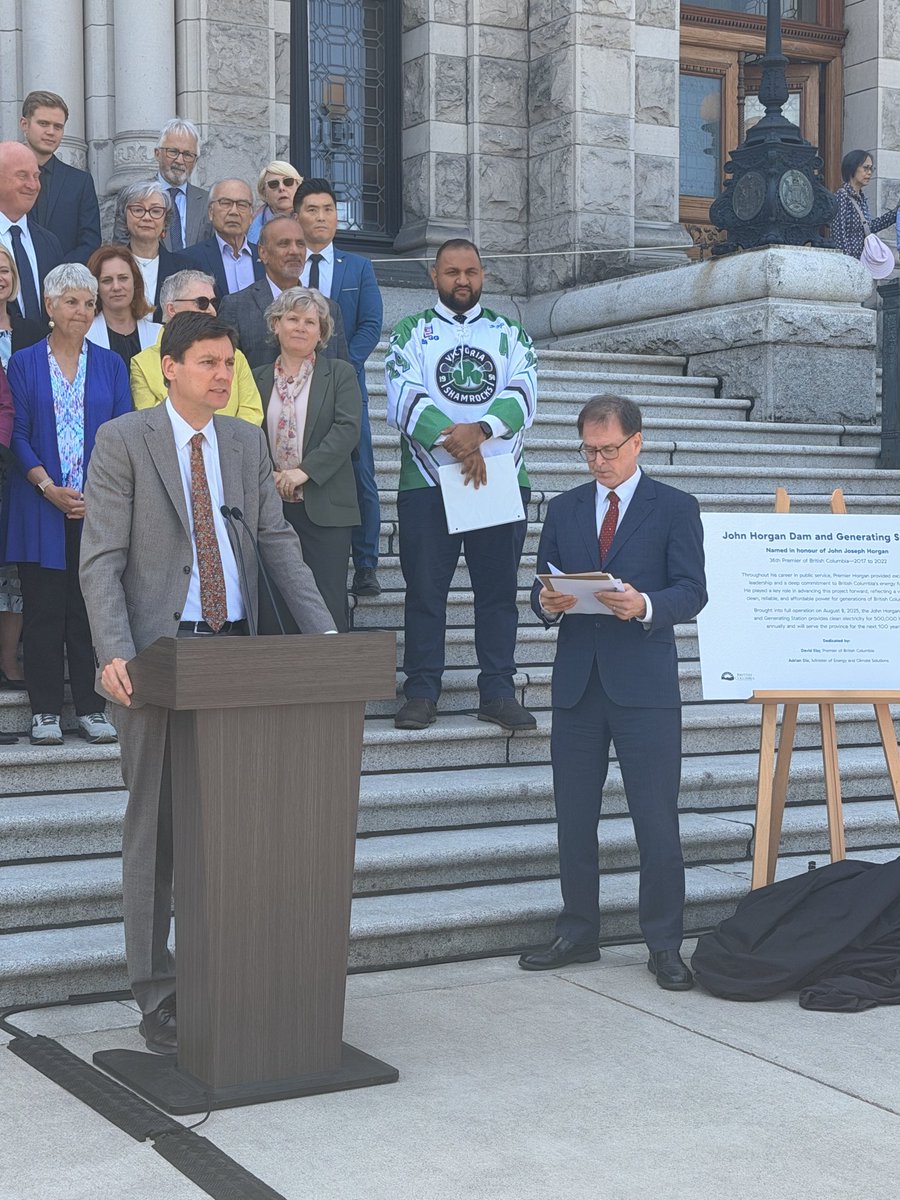
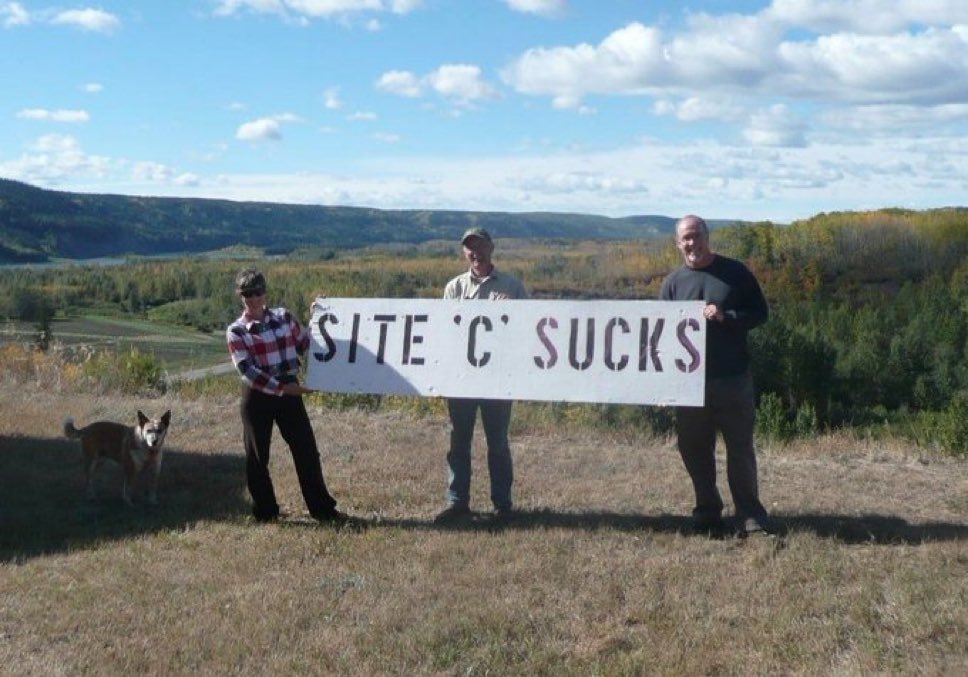
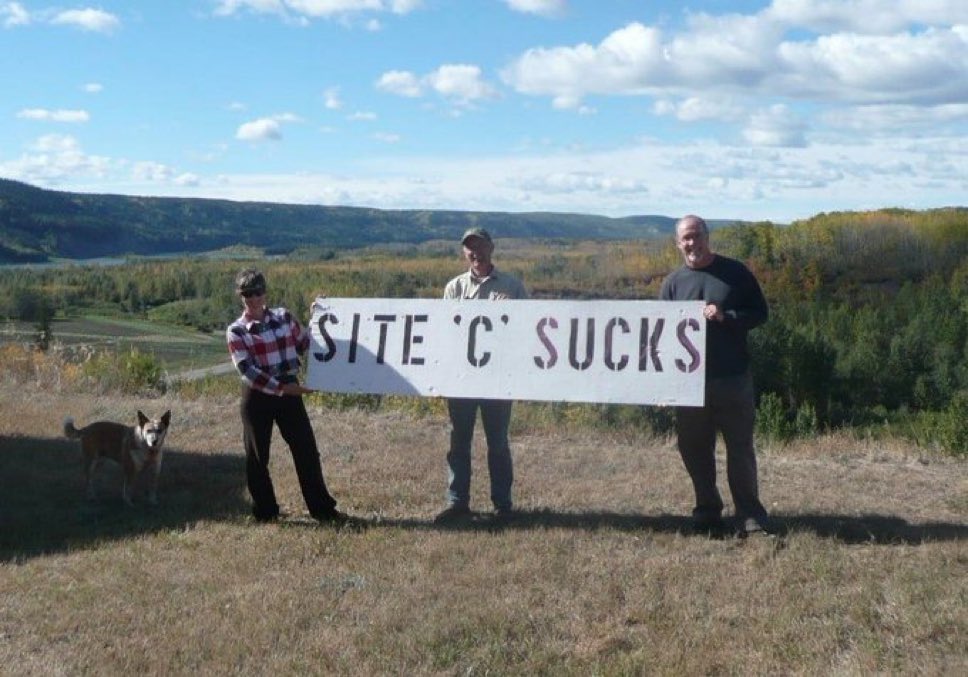
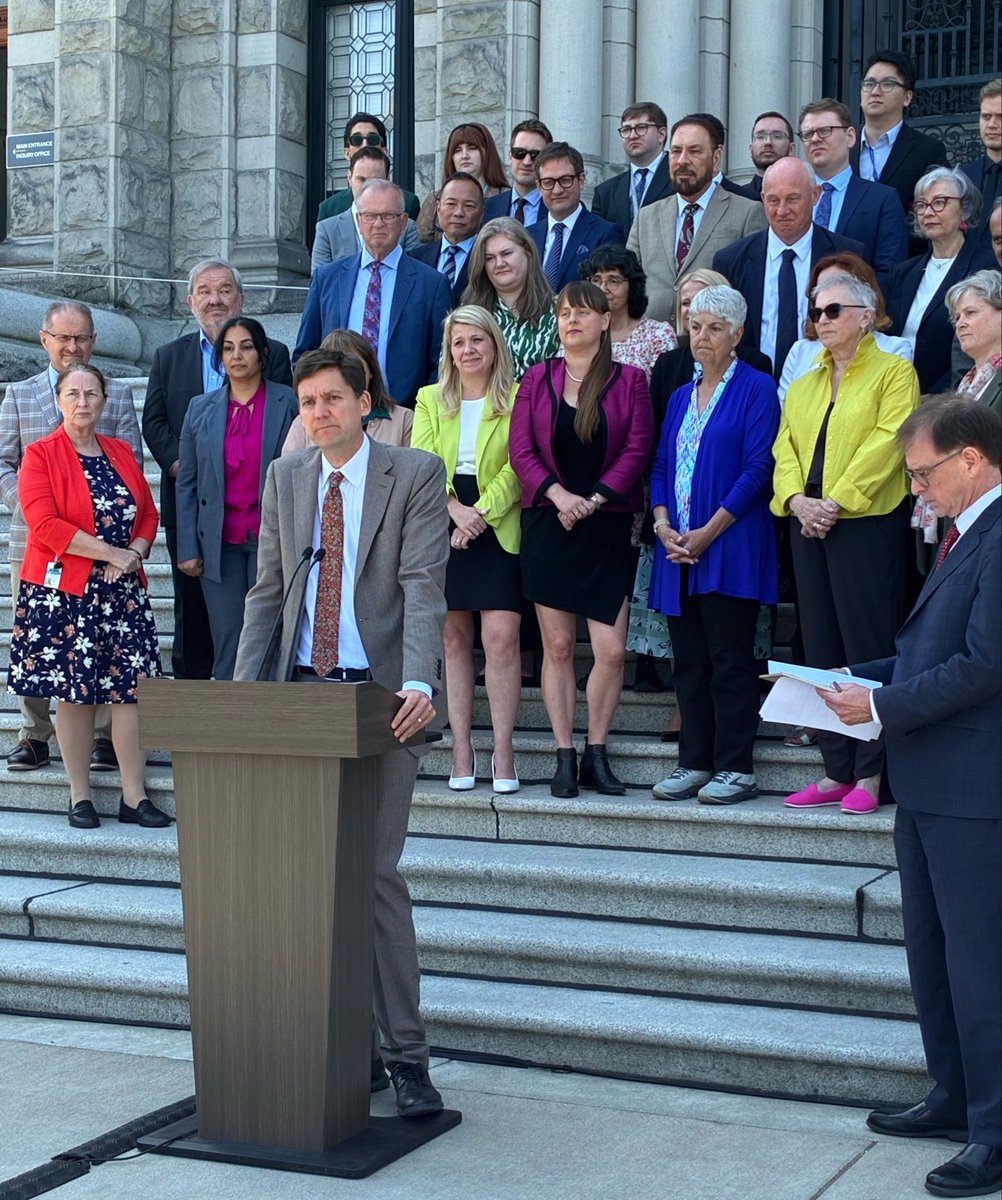
In honour of his legacy and all he brought to our province, Premier @Dave_Eby announced that the Site C dam and generating station has been officially named The John Horgan Dam and Generating Station; powering British Columbia for generations.
Bowinn Ma tweet mediaBowinn Ma tweet mediaBowinn Ma tweet mediaBowinn Ma tweet media
English
33
7
35
2.3K
Ravi Parmar
Ravi Parmar@rparmar_BC·
John Horgan was my friend, mentor, and role model. That’s why I was so proud to be a part of today’s announcement. The Site C Dam will now be called the John Horgan Dam and Generating Station. We miss and love you John. #johnhorgan #bcpoli
Ravi Parmar tweet mediaRavi Parmar tweet media
English
25
4
21
1.8K
Katie DeRosa
Katie DeRosa@katiederosayyj·
NEW - The Site C dam will be renamed after the late John Horgan. David Eby acknowledges Horgan was once against the dam but as premier was instrumental in getting it built. Eby recalls Horgan saying, I know there are many positions about the Site C dam, I’ve held all of them
Katie DeRosa tweet media
English
31
11
72
23.5K
BC Hydro
BC Hydro@bchydro·
Today, the Province announced that the Site C dam and generating station will be permanently named in honour of former premier John Horgan, recognizing his leadership and commitment to delivering clean, reliable, and affordable energy in B.C. The reservoir will be named Nááchę mege (Dreamer Lake), a name chosen by local First Nations that reflects the deep history, language, and cultural connections Indigenous Peoples have to the region and the Peace River. Learn more: bit.ly/4fy4N9c
English
23
8
31
3.2K
Robert Buffam
Robert Buffam@CTVNewsRob·
NEW: premier Eby announces that the Site C Dam is being renamed the John Horgan Dam & Generating Station. #bcpoli
Robert Buffam tweet media
English
4
2
6
19.9K
Kenneth Chan
Kenneth Chan@iamkennethchan·
JUST IN... BC government officially names the newly completed Site C project the "John Horgan Dam and Generation Station." A decade ago, Hogan's new NDP government nearly cancelled Site C for reasons such as cost & "excess" electricity. #bcpoli #vanpoli dailyhive.com/vancouver/john…
English
14
7
63
27.7K
Ben O'Hara-Byrne
Ben O'Hara-Byrne@Ben_oharabyrne·
The Eby government announces that the Site C Dam will officially be named The John Horgan Dam and Generating Station.
Ben O'Hara-Byrne tweet media
English
34
10
40
33.4K
Fred Knox retweetledi
Gandalv
Gandalv@Microinteracti1·
The Wrong Side of History Has a Very Specific Smell By Gandalv / @Microinteracti1 Ben Hodges is not a man who wastes words. The former commanding general of US Army Europe has spent the better part of three years telling anyone who would listen that Ukraine was going to win, that Russia was going to lose, and that the only real question was how much unnecessary dying would happen in between. He has now added a postscript, and it is not a comfortable one: America, he says, is going to deeply regret what it failed to do. He is, of course, absolutely right. Ukraine is not merely surviving this war. It is industrialising it. The country that Russia expected to fold in 72 hours has spent three years building one of the most sophisticated drone warfare ecosystems on the planet, developing long-range strike capabilities that have genuinely rattled the Kremlin, and producing battle-hardened soldiers who have forgotten more about modern combined-arms warfare than most NATO generals have ever learned. When this war ends, Ukraine will not be a grateful, shell-shocked recipient of Western charity. It will be the single most capable and battle-tested defence industry in the World. Full stop. And the United States, which spent the last stretch of this conflict flirting with the aggressor, slow-walking ammunition, blocking long-range strikes, and sending its president to Mar-a-Lago to take phone calls from Putin like a middle manager hoping to avoid a performance review, will have precisely zero claim on any of that. Now imagine the day it ends. Imagine a billion people in the streets. Kyiv, Warsaw, Tallinn, Berlin, London, Tokyo, Seoul, every city that understands what it means when a free country refuses to die. The flags, the tears, the noise of it. The sheer, thunderous relief of a world that held its breath for years and can finally exhale. It will be one of those moments that gets burned into the collective memory of a generation, the kind that people will tell their grandchildren about with the particular pride of having been on the right side. And America will watch it on television. Not as a liberator. Not as the arsenal of democracy, the role it once played and once deserved. It will watch as the country that looked at the greatest struggle for freedom in a generation and decided, at the critical moment, to see which way the wind was blowing before quietly backing the wrong horse. The Stars and Stripes will not be waving in Maidan that day. Ukrainian children will not be naming their sons after American presidents. The defence contracts, the partnerships, the strategic relationships, the soft power that the United States spent eighty years accumulating as the world’s indispensable nation: all of it auctioned off for nothing. There is a particular kind of shame that comes not from doing something terrible, but from failing to do something obvious. The historical record does not grade on a curve, and it has no sympathy for anyone who says they were confused about which side was which. Russia invaded. Ukraine bled. The rest of the world chose. America, under its current management, is choosing badly. And when that billion people starts dancing, the silence from Washington will be the loudest sound in the room.
Kate from Kharkiv@BohuslavskaKate

HODGES: We are going to regret that we, United States, didn’t do more to help Ukraine, because Ukraine going to win this war. Ukraine’s defeat of Russia is in best interests of all of us. Ukraine will become dominant defense industry power in Europe. America will be left behind.

English
88
1.4K
3.3K
108.9K
Fred Knox
Fred Knox@Kispiox21·
@BenWoodfinden @katy_merrifield The concern is that BC and Canada will have to buy back the land in order for the First Nations to agree to cede aboriginal title. The price would be staggering.
English
1
0
2
306
Ben Woodfinden
Ben Woodfinden@BenWoodfinden·
The concern with Cowichan was never that someone would show up and take your house. The concern is what happens for example when you try to refinance your mortgage. Justice Young’s decision declared Aboriginal title over roughly 800 acres in Richmond (not the remote northeast...Richmond), covering over 100 privately held properties. The court declared Crown and city-held titles on the land “defective and invalid.” It found that the granting of private titles “unjustifiably infringed” on Aboriginal title. And it said the coexistence of Aboriginal title and private property would need to be negotiated and reconciled going forward with private interests remaining valid only “until such a time as a court may determine otherwise.” Your title wasn’t struck down. But it’s been put on notice. And that’s all a bank needs to hear. Your mortgage is backed by your fee simple title. When a court says Aboriginal title coexists on the same land, and that your title’s grant was an unjustifiable infringement, and that its future needs to be negotiated, the bank looks at its collateral and asks what it’s actually worth. Banks don’t do uncertainty. They price it or they walk away. And they are walking away. A Richmond homeowner who had owned his home since 1975 went public saying his bank refused to renew his mortgage after the ruling. Over 650 people showed up to a Richmond townhall, furious. Montrose Properties (the largest private landowner in the claim area, with Coca-Cola, Wayfair, and Canadian Tire warehouses on the land) stated in legal filings it was denied $35 million in financing because of the ruling, and that discussions about a separate project had ceased. Appraisers are warning property values in the area could drop 30 to 40 percent. It appears that not a single property in the claim area has sold in 2026. Appraisers have started adding disclaimers to their reports: “We assume the subject property is not subject to a land claim and they are valued as if unencumbered.” Plant drew a line between a house in a city and a mining project in the northeast. The court erased that line. And if the ruling really poses no threat to private property, why did David Eby offer $150 million in loan guarantees to backstop mortgages that banks won’t write? Why did his government go door to door asking homeowners if they’d been unable to refinance? Why did his own AG say the ruling “could have significant unintended consequences for fee simple private property rights in BC”? Governments don’t backstop mortgages against threats that don’t exist.
Mark Marissen@marissenmark

Who would you believe when it comes to First Nations issues in British Columbia? Geoff Plant or Pierre Poilievre/Caroline Elliott? Here are some quotes: “No, I don’t think people should be worried,” said Plant, attorney general under Premier Gordon Campbell. “If you, like me, live in a house in a neighbourhood in a city, some nice tree growing in front of it, you’re not at risk. If you’re planning a $25 billion mining project in northeastern British Columbia, then you better sit and do some work about who the Indigenous people are in that territory and find out how you can engage with them. “There is nothing in Cowichan that is intended to unsettle what I’ll call ordinary private property ownership in British Columbia.”


English
28
68
430
42K
Fred Knox retweetledi
Public Land Use Society
Public Land Use Society@PublicLandBC·
PLUS has obtained FOI records revealing years of BC government negotiations with the Tahltan toward a sweeping “Foundation Agreement” involving land and governance transfers, Aboriginal title recognition, and Crown authority across 11% of B.C. More than 400 pages were withheld from disclosure. The public still has not been told what this Tahltan-BC agreement is or whether it has already been finalized, even though released records included completion timelines that have already passed. This is not a treaty process. It is certainly not a public process. And it may be one of the most significant governance and land restructurings in modern B.C. history. #bcpoli publiclanduse.ca/news/plus-foi-…
English
15
98
193
55.1K
Fred Knox retweetledi
SightBringer
SightBringer@_The_Prophet__·
⚡️Gen Z is living inside a broken time horizon. That is the real issue. A $28 lunch is obviously dumb if repeated daily. At the personal level, Kevin O’Leary is right. Small leaks become real holes. People who cannot control recurring expenses usually cannot build capital. Discipline still matters. The math still matters. Nobody gets exempt from compounding because the system is unfair. But the reason the lecture feels hollow is because the old system used to reward discipline with visible progress. Pack lunch, save money, buy a house, start a family, invest, build a career, retire. Sacrifice was tied to a future that felt reachable. Now the future feels priced out. That changes behavior at the root. When housing feels unreachable, careers feel unstable, healthcare feels predatory, dating feels broken, children feel unaffordable, and AI threatens the entry-level ladder, thrift loses its sacred function. It stops feeling like a bridge to ownership and starts feeling like self-denial inside a game already lost. That is how financial nihilism forms. People do not say it directly. They say, “I deserve a little treat.” They say, “Everything is expensive anyway.” They say, “What’s the point?” They say, “I’ll never own a house.” They say, “At least lunch makes the day tolerable.” The $28 lunch becomes a tiny rebellion against a future they do not believe will arrive. That is why older personal-finance commentary keeps missing the emotional layer. The old advice assumes the listener still believes in delayed gratification. But delayed gratification only works when the delay has a credible endpoint. If the endpoint disappears, delayed gratification starts to feel like humiliation. So young people consume the present because the future has stopped making a persuasive offer. There is also a status layer. A lot of modern consumption is not about the object. It is about maintaining self-respect in a system where people feel economically powerless. Coffee, lunch, delivery, clothes, trips, subscriptions, gadgets, nightlife, little comforts. These become micro-status and micro-control. They let people feel briefly like participants in abundance even while their actual ownership path deteriorates. That is the trap. The spending is both understandable and destructive. The system damages the future, then sells little present-tense anesthetics to the people who lost faith in it. Delivery apps, fast casual, lifestyle brands, streaming, subscriptions, social media, gambling, crypto speculation, “self-care,” buy-now-pay-later. All of it feeds on broken time preference. The more unreachable the future feels, the more valuable immediate relief becomes. That is the real sickness. A healthy civilization teaches young people: sacrifice now and something real becomes yours later. A decaying civilization teaches young people: sacrifice now and maybe you still lose, so consume enough to keep functioning. The $28 lunch is not why Gen Z is financially cooked. It is what a cooked generation buys on its lunch break.
Mikli@CryptoMikli

Kevin O’Leary says Gen Z is financially cooked when people making $70K a year are spending $28 on lunch

English
78
168
1K
123K
Fred Knox retweetledi
Meaghan Mobbs
Meaghan Mobbs@mobbs_mentality·
While people are focused on a has-been, deranged American podcaster platforming an attention-seeking Ukrainian woman, let me just remind you - From a foreign policy/natsec perspective, support for Ukraine should never be predicated on liking or supporting its leader. For me, it has always been about America’s strategic interests, the preservation of the West, and, because of my faith, standing with the innocent and oppressed. It is in America’s interest for Ukraine to prevail and for Russia to emerge weaker from this war. It is also in our interest to remain morally serious enough to distinguish between aggressor and victim, between a flawed democracy struggling toward the West and an authoritarian regime actively aligned with our enemies. I will never side with a state that suppresses religious freedom, crushes dissent, censors speech, steals children, doctrinally encourages the rape of women, shuts down the internet to their people, enables societal collapse through rampant addiction and abortions, and partners with Iran to help kill Americans and our allies. Russia is not some misunderstood counterweight to Western excess. It is a revanchist power built on repression, corruption, violence, and imperial nostalgia. Ukraine is imperfect. Corruption exists. Political failures exist. I have never denied that, whitewashed it, or indulged in fantasy about it. But none of that changes the fundamental strategic reality. An 800k strong, battle-hardened Ukrainian military standing between Russia and the rest of Europe is not charity. It is one of the greatest strategic bargains the United States has seen in generations. The tragedy is that the American left failed to define a real end-state and failed to arm Ukraine rapidly enough to secure victory when it was still achievable in 2023. And now parts of the far right are collapsing all moral hierarchy in service of some end-state that runs counter to our interests. If we care about Western civilization, deterrence, and American strength, then the answer is not retreat, confusion, or moral relativism. The answer is clear aggressive policy that drives this war to a conclusion that benefits Ukraine - not as an act of charity, but as an act of American national interest and civilizational self-preservation. And no it’s not endless arming. That is politically impossible and strategically lazy. The answer is a hard-nosed Ukraine endgame built around leverage, burden-shifting, and conditional pressure. America should define the objective clearly: a sovereign, armed, economically viable Ukraine capable of denying Russia future conquest, while Russia pays a permanent strategic price for aggression. Europe must carry the long-term burden. The United States should provide the capabilities only America can provide: intelligence, air defense, long-range fires, advanced munitions, and defense-industrial surge capacity. Europe should finance the bulk of Ukraine’s sustainment, reconstruction, artillery, armor, and territorial defense. America provides the strategic backbone. Europe provides the mass and permanence. Frozen Russian assets should be used to arm and rebuild Ukraine. Russia broke it. Russia should pay for it. Ukraine must receive enough battlefield capability to make continued Russian war irrational, not merely expensive. Support should be tied to reform, transparency, and anti-corruption benchmarks. The United States should pursue negotiations only from a position of strength. A ceasefire that rewards conquest is not peace. It is a pause before the next war. Any settlement must preserve Ukraine’s sovereignty, deny Russia a veto over Ukraine’s future, and build a defense architecture that makes a second invasion far harder than the first. None of this charity. It is not maximalism. It is not endless war. Make Russia’s aggression fail, Europe carry its share, make Moscow pay, arm Ukraine to deter, and secure an outcome that strengthens America rather than draining it.
English
37
76
389
10K
Fred Knox retweetledi
Christina Buttons
Christina Buttons@buttonslives·
One of the most consequential shifts in our culture is the move from understanding human difficulties as dynamic to understanding them as identity. Part of what worries me about the growing tendency to reach for diagnostic labels to explain the self is that they can shift people away from thinking, “This is what I’m dealing with right now and working to improve,” and toward, “This is just the way I am and everyone has to accept it.” Increasingly, people recognize stable patterns in how they think, feel, and respond and take them as evidence that this is just how they are, especially when those patterns do not feel consciously chosen. But what feels automatic is not necessarily fixed. It may simply be the product of repetition and reinforcement over time. People can learn to regulate their emotions, challenge negative thinking, improve their ability to socialize, increase their attention span, and more. But many people give up when change does not come easily or feel natural. Just as you would not expect to transform your body after one day at the gym, you cannot expect to change long-standing thought and behavior patterns overnight. It takes time and hard work. For some people, it takes more effort than for others. But it is possible, and it is worth the effort. Disclaimer: This commentary is about the broader population, not people with serious mental illness or profound disability.
English
27
87
529
41.5K