Medapati Narasimha Reddy retweetledi
Medapati Narasimha Reddy
1.4K posts

Medapati Narasimha Reddy
@Medapati111
software tester by profession, investor by passion
Hyderabad, India Katılım Aralık 2017
461 Takip Edilen63 Takipçiler
Medapati Narasimha Reddy retweetledi


Was feeling lately Gemini was getting slower/ less helpful (I use pro) and was seeing my share move to Claude
I bet 3.5 brings it back esp on the research/ data/ writing side. $GOOG is a beast
Sundar Pichai@sundarpichai
Gemini Spark is your personal AI agent in the @GeminiApp that gets things done on your behalf, under your direction. It runs 24/7 (and yes - you can close your laptop). It’s powered by Gemini 3.5 and built on the Google Antigravity harness so it can complete long horizon tasks. Spark will integrate seamlessly with tools, starting with ours, and soon with 3P tools with MCP. You’ll also be able to work with it through email + chat. Available to trusted testers this week and next week in Beta to AI Ultra users in the US.

English
Medapati Narasimha Reddy retweetledi

Learn AI for free directly from top companies.
1 - Anthropic:
anthropic.skilljar.com
2 - Google:
grow.google/ai
3 - Meta:
ai.meta.com/resources/
4 - NVIDIA:
developer.nvidia.com/cuda
5 - Microsoft:
learn.microsoft.com/en-us/training/
6 - OpenAI:
academy.openai.com
7 - IBM:
skillsbuild.org
8 - AWS:
skillbuilder.aws
9 - DeepLearning.AI:
deeplearning.ai
10 - Hugging Face:
huggingface.co/learn

English
Medapati Narasimha Reddy retweetledi

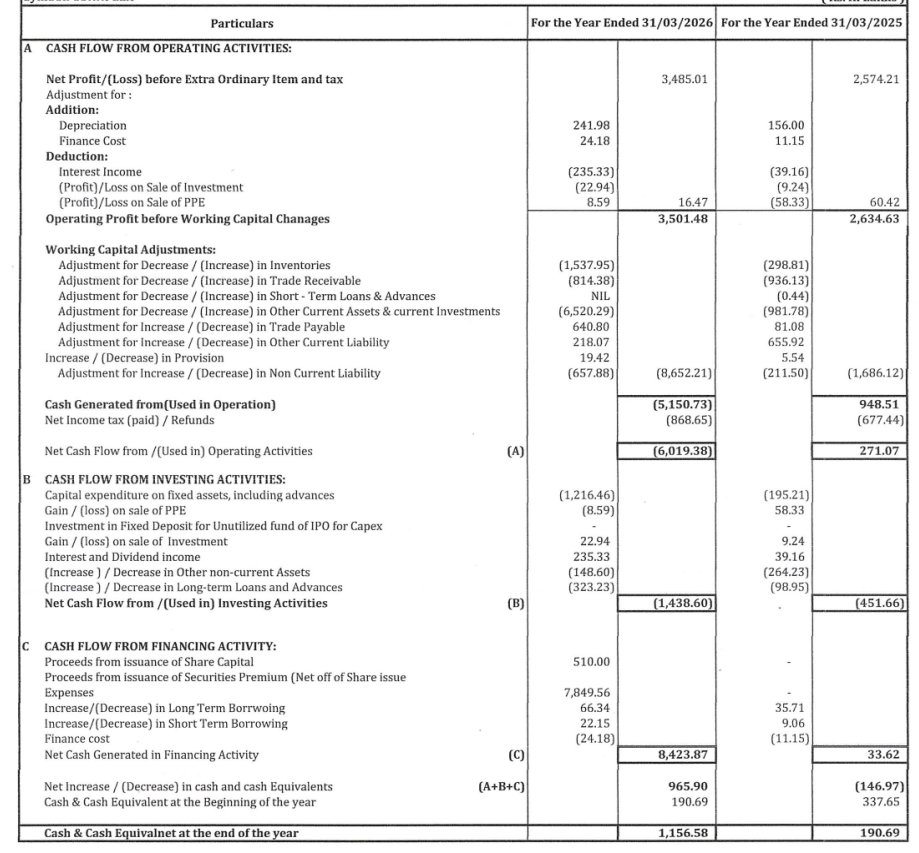
A Masterclass on Cash Flow Statements🚨
Recently reviewed an SME company’s Cash Flow Statement and found some shocking classifications:
• Non-current liabilities adjusted under working capital changes- even though they belong to Financing Activity/(else depend on line item but not shown as part of Operating Activity)
• Current investments deducted from Operating Cash Flow: turning positive CFO into negative -
Either shown as a part of Investing Activity or as a part of Cash Equivalent
• Only gain/loss on sale of assets shown, but actual sale proceeds missing from Investing Activity
• For the first time ever found interesting line item in Cash Flow from Financing Activity - “Proceeds from issue of Security Premium” 👀(Just Disclosure Change - Proceeds from issue of equity share)
Interestingly How this Man matched the Cash Balance?
Comment below - what can be the possible balancing figure here?
One more Interesting part?
The company raised funds to purchase a corporate office. This is exactly why smart investors don’t stop at Revenue, EBITDA or PAT.
The real story hides inside:
• Cash flow classifications
• Notes to accounts
• Working capital adjustments
#redflags

English
Medapati Narasimha Reddy retweetledi

THE BAKING SODA TEST: how to see if your stomach acid is low
low stomach acid kills gains causing:
- low protein absorption
- low fat soluble nutrient absorption
- gut dysbiosis
- LPS circulating
a quick way to test at home if you are suffering from low stomach acid is the baking soda test
do this in the morning before eating or drinking
step 1. put quarter teaspoon of baking soda in around 100-200ml of water
step 2. drink it
step 3. time yourself
burping after 2 or 3 minutes = stomach acid likely fine
no burping or burping after 5+ minutes = low stomach acid
do this a few days in a row and if results are consistent, you should have a general idea on your stomach acid.

English
Medapati Narasimha Reddy retweetledi

35 WEBSITES THAT ARE ACTUALLY USEFUL
1. archive. org — access old content
2. wolframalpha. com — solve anything
3. removebg. com — remove image background
4. tinypng. com — compress images free
5. smallpdf. com — edit PDFs free
6. ilovepdf. com — merge & split PDFs
7. deepl. com — best translator online
8. grammarly. com — fix your writing
9. hemingwayapp. com — simplify writing
10. chatgpt. com — ask any question
11. perplexity. ai — smart search engine
12. notion. so — organize your whole life
13. trello. com — manage any project
14. canva. com — design for free
15. unsplash. com — free photos
16. pexels. com — free videos & photos
17. flaticon. com — free icons
18. coolors. co — pick color palettes
19. fonts. google. com — free fonts
20. namecheap. com — buy cheap domains
21. github. com — free code hosting
22. replit. com — code from browser
23. regex101. com — test any code
24. explainshell. com — understand commands
25. fast. com — check internet speed
26. haveibeenpwned. com — check if hacked
27. virustotal. com — scan files for virus
28. downdetector. com — check if site is down
29. 10minutemail. com — temp email address
30. justpaste. it — share text instantly
31. screely. com — make screenshots beautiful
32. carbon. now. sh — share code beautifully
33. squoosh. app — compress any image
34. similarsites. com — find similar websites
35. shortcuts. design — design shortcuts list
English
Medapati Narasimha Reddy retweetledi

Anyone who is against peptide use, read this.
Jeremy Renner was run over by a 14,300-pound snowplough while trying to prevent it from hitting his nephew.
He was airlifted to the hospital, had more than 30 broken bones and his entire body was pretty much broken.
Yet he has achieved a remarkable recovery, partly thanks to peptides.
Here's the Avengers' peptide stack (based on his interviews).
Thread🧵


English
Medapati Narasimha Reddy retweetledi

Working Capital looks boring.
But it's the #1 killer of profitable companies.
Here's how "profitable" companies go bankrupt:
(And the 2-minute check that reveals it)
🧵
THE SETUP
Company ABC:
- Revenue: ₹1,000 Cr (growing 30% YoY)
- Net Profit: ₹100 Cr (10% margin)
- Looks: Great on P&L
Reality:
- Cash from operations: -₹50 Cr
- Burning cash despite "profits"
Within 2 years: Bankrupt
How?
WORKING CAPITAL TRAP
Working Capital = Current Assets - Current Liabilities
Components:
- Inventory (stock you're holding)
- Receivables (money customers owe you)
- Payables (money you owe suppliers)
The formula:
Working Capital Days = (Inventory Days + Receivables Days - Payables Days)
THE DEATH SPIRAL
Year 1: Company reports ₹100 Cr profit
But:
- Sold goods worth ₹1,000 Cr
- Collected only ₹700 Cr (₹300 Cr receivables)
- Paid suppliers ₹600 Cr
Cash flow:
Collected: ₹700 Cr
Paid out: ₹600 Cr + ₹50 Cr opex = ₹650 Cr
Net: +₹50 Cr (okay)
Year 2: Grows 30%, reports ₹130 Cr profit
But:
- Sold ₹1,300 Cr
- Collected ₹800 Cr (₹500 Cr receivables now!)
- Paid ₹850 Cr
Cash flow:
Collected: ₹800 Cr
Paid: ₹850 Cr + ₹70 Cr opex = ₹920 Cr
Net: -₹120 Cr (bleeding!)
Year 3: Still growing, still "profitable"
But:
Receivables: ₹800 Cr (can't collect)
Inventory: ₹300 Cr (piling up)
Cash: Almost zero
Bank says: "No more loans"
Suppliers say: "Cash on delivery only"
Company: Collapses despite being "profitable"
THE 2-MINUTE CHECK
Formula:
Inventory Days = (Inventory / COGS) × 365
Receivables Days = (Receivables / Revenue) × 365
Payables Days = (Payables / COGS) × 365
Working Capital Days = Inventory + Receivables - Payables
Example:
Company XYZ:
Inventory: ₹100 Cr, COGS: ₹500 Cr
→ Inventory Days = (100/500) × 365 = 73 days
Receivables: ₹150 Cr, Revenue: ₹600 Cr
→ Receivables Days = (150/600) × 365 = 91 days
Payables: ₹80 Cr, COGS: ₹500 Cr
→ Payables Days = (80/500) × 365 = 58 days
Working Capital Days = 73 + 91 - 58 = 106 days
Red flag: Taking 106 days to convert sale to cash
THE TREND IS KEY
Year 1: WC Days = 60 (healthy)
Year 2: WC Days = 75 (increased)
Year 3: WC Days = 95 (red flag)
Deteriorating working capital = Cash crunch coming
Even if profits look good!
THE SECTORS TO WATCH
High working capital businesses:
- Retail (inventory heavy)
- Real estate (long project cycles)
- Infrastructure (long receivables)
- Trading (inventory + receivables)
Low working capital businesses:
- Software (no inventory, fast payments)
- Subscription (advance payments)
- QSR (cash business)
Know which sector your stock is in.
THE RED FLAGS
Red Flag 1: Receivables growing faster than revenue
Revenue grew: 20%
Receivables grew: 40%
Means: Either selling to weak customers OR fake sales
Red Flag 2: Inventory growing faster than revenue
Revenue grew: 20%
Inventory grew: 50%
Means: Either demand slowing OR production overestimated
Red Flag 3: Payables shrinking
Revenue grew: 20%
Payables grew: 0% or negative
Means: Suppliers demanding cash upfront (they don't trust company)
THE FRAMEWORK
Check your stock:
Step 1: Calculate Working Capital Days (takes 5 mins)
Step 2: Check 3-year trend
- Stable or declining: Good
- Rising: Red flag
Step 3: Compare with sector average
- Lower than peers: Good
- Higher than peers: Investigate
Step 4: Check components
- Which is rising: Inventory, Receivables, or Payables shrinking?
- Why is it rising?
THE BOTTOM LINE
Profit is accounting. Cash is reality.
Company can show profit while bleeding cash.
How? Working Capital trap.
Selling goods but not collecting cash = "Profitable" bankruptcy
Check Working Capital Days.
Takes 2 minutes.
Research desk → katalystwealth.com
English
Medapati Narasimha Reddy retweetledi

Biggest sin by retail investors.
The biggest sin in investing is not putting money into loss-making companies; it is investing in businesses where the cost of capital is higher than the return on capital.
That is where real wealth destruction happens, yet a large number of retail investors are unknowingly invested in such companies. This naturally raises a question—why do promoters continue to run these businesses? The simple answer is that they need to run something. However, this is not true in every case. Sometimes, what appears weak on paper may not reflect the full reality, as in many businesses reported profits and actual profits can differ, especially where cash transactions play a role. A smart investor learns to sense this early.
In such situations, numbers alone may not tell the complete story. Subtle indicators, like the promoter’s lifestyle, can sometimes offer additional clues—though not always perfectly reliable. This is also why there is an ongoing debate between investing in professionally managed companies versus promoter-driven ones. While professional management offers transparency and structure, many investors prefer promoter-driven businesses because the promoter typically has significant skin in the game and prioritizes the business above everything else. Personally, I resonate more with promoter-driven businesses for this reason.
Another important aspect to understand is the power of honest reporting. For example, if a company is actually generating ₹100 crore in profit after tax but reports only ₹50 crore, and the market assigns a 20x PE multiple, the company would be valued at ₹1,000 crore. However, if the full ₹100 crore profit were reported, the valuation would double to ₹2,000 crore. This demonstrates how transparency alone can create a significant difference in market capitalization. Higher reported profits not only improve valuation but also strengthen the balance sheet and open up more opportunities, making this “paper wealth” highly valuable for promoters.
Ultimately, no business can survive in the long run if it consistently earns less than its cost of capital. If you come across companies that seem to defy this logic and continue to operate, it is worth questioning whether the true profitability is fully reflected in the numbers. For investors, the key takeaway is to look beyond surface-level data, understand capital efficiency, and observe promoter behavior. In the long run, genuine businesses that create real value are the ones that generate sustainable wealth—there are no shortcuts to this.
English
Medapati Narasimha Reddy retweetledi