OneRhythm

203 posts

OneRhythm banner
OneRhythm

OneRhythm

@OneRhythmOrg

OneRhythm. Fighting invisible bears through visibility. Rhythms that circle the world.

Katılım Mart 2026
71 Takip Edilen4 Takipçiler
Sabitlenmiş Tweet
OneRhythm
OneRhythm@OneRhythmOrg·
This past 2 weeks has been the hardest past 2 weeks of my life. I wish I didn't ask the questions. It's simply not how my brain works. To do the things that need to be done mean that my life and my peace - those things are ending. Relationships that I spent a decade building - those are also over. Companies that I praised - don't meet your heroes. I am doing this while having a battery in my chest and scars in my heart. These scars are not just caused by radiofrequency or electroporation - they are caused by what this system is allowing to happen to our seniors. I've learned with this condition that the war is never over - and you just have to keep fighting. This isn't for me. It isn't for money. It is for our moms, our dads, sisters, brothers - our families. Some things you simply cannot unsee. I am going to break the American Healthcare system in the way that this system has tried to break me. It failed. I don't.
English
0
0
1
44
OneRhythm
OneRhythm@OneRhythmOrg·
This was simply excellent to listen to. From a patient perspective (I have had 5 ablations myself - I live with ARVC), I have found the way that this study has been marketed from BSX to be thoroughly disappointing. @gregorymmarcus @akillumd @DrRhthm - they all did an outstanding job breaking down the CHAMPION-AF study for what it was. Not one of them expressed any thoughts that the study justified expanded indications for usage. The doctors who author @CVtrials agree. And yet, if you review BSX's most recent 10-Q filing with the SEC - quote: “Patients indicated expands from ~4M to ~18M by 2030+.” And yet there are physicians on this platform who advertise CHAMPION-AF as a slam dunk. We have our seniors struggling to afford their bloodthinners. They are being economically squeezed into accepting a higher risk of stroke with this device. And if BSX is successful in expanding indications for use through the FDA - are we all just supposed to accept that they should take the risks? What are we doing here folks? Stroke is the number one cause of adult disability in America. The burden it places on our patients and their families - it is incredibly consequential. So thankful to have found this podcast from HRS today. Someclearly great doctors providing fantastic information. It needs to be patient facing as well - this debate isn't just for the pros 💜 ❤️
English
1
0
1
23
Heart Rhythm Society
Heart Rhythm Society@HRSonline·
NEW EPISODE OF THE LEAD! [Ep. 152] A Discussion of Outcomes of Left Atrial Appendage Closure versus Oral Anticoagulation in Patients with Atrial Fibrillation and Prior Ablation: A Sub-Analysis of the CHAMPION-AF Clinical Trial (Heart Rhythm Journal) 🎙️ Host: Danesh Kella, MBBS, FHRS 🎤 Guests: Jason T. Jacobson, MD, FHRS (@DrRhthm), Ammar M. Killu, MBBS (@akillumd), and Gregory M. Marcus, MD, FHRS (@gregorymmarcus) Listen on your preferred podcast platform ➡️ bit.ly/48bpxNn #EPeeps #medpod #podcast #CardioTwitter #EPTwitter #PodcastAndChill
GIF
English
1
2
4
791
OneRhythm
OneRhythm@OneRhythmOrg·
@CCHRInt I'm in. Protect out children. They are the future.
English
0
0
0
0
OneRhythm
OneRhythm@OneRhythmOrg·
@tylerblack32 is a paid institutional shill. Not a serious doctor. But I get it. If I had been recklessly prescribing kids drugs that there is this much public debate about at present, with patients all over the place coming out and speaking up, I'd probably be trying to fish my way out of the guilt as well. Some folks are just this way. Zero accountability.
English
0
2
9
152
@Paxhurts
@Paxhurts@Barbara45426641·
Dr. Tyler Black operates primarily within pediatric emergency psychiatry, his day-to-day clinical practice does not involve managing 60-year-olds like myself who have taken Paxil continuously since the 1990s and have suffered life altering WD injuries. Just sayin…
English
6
5
47
2.7K
OneRhythm
OneRhythm@OneRhythmOrg·
And in your own research on the psychiatric medications. How - is certainly one question to ask. The deeper and darker question is why. And it has everything to do with our trade relationships with foreign nations and exporting liquidity, as is our responsibility as the nation supporting the global reserve currency in the dollar. Triffin dilemma economics. To put it bluntly, American citizens were used. Pax Americana is ending - clearly. And now all of the sudden we are wanting to rebuild our manufacturing base, cut off expenditures for APUs from foreign nations (including adversaries), and throttle the additives we allowed to be imported for our food? And people think this is just a coincidence? People need to wake up.
English
0
0
0
2
Patriek Karayil
Patriek Karayil@PatriekKarayil·
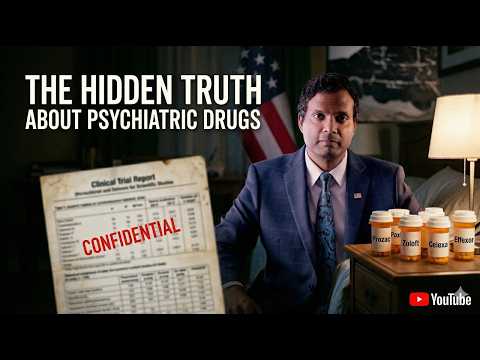
Thank you @OneRhythmOrg Exactly! One segment from the film that it is important to recognize: The FDA often saw the full trial data. Doctors did not. Failed antidepressant trials were frequently unpublished, while positive studies dominated journals, medical education, and treatment guidelines. That’s not a conspiracy theory. That’s the documented history behind Study 329, Paxil, Zoloft, Celexa, and others. The issue is what happens when institutional incentives shape what counts as scientific truth. Full investigation: youtube.com/watch?v=T1x4hr…
YouTube video
YouTube
English
2
0
1
34
OneRhythm
OneRhythm@OneRhythmOrg·
Same type of thing is happening right now with @BSCCardiology's Watchman device. 2 studies published nearly simultaneously. CHAMPION-AF - industry sponsored - they used composite endpoints to bury the fact that the device arm is causing more strokes than the control arms (NOACs) CLOSURE-AF - independent study - shows the device arm clearly not meeting non-inferiority endpoints and the physician who led the study, who previously had been supportive of LAAC procedures, publicly stated he would be changing his practice as a result. What study is getting all of the headlines? The industry sponsored study. Who made SEC filings seeking to expand indications for use to the broader and more high risk populations? Boston Scientific did. Who are they going to be supported by in this pursuit with the FDA? Public has no idea about the deep institutional financial entanglements that craft these kind of narratives to push them through and into the hearts of our people. Public is going to find out. Myself, and many others now, are going to make absolutely certain of that. Preprints incoming.
English
0
0
0
9
OneRhythm
OneRhythm@OneRhythmOrg·
@PatriekKarayil @SecKennedy @LauraDelano Like. Take for example @BSCCardiology making SEC filings to expand billable population 4x on the results of a study - CHAMPION-AF - that showed the device arm causing more strokes than the control arm of oral anti-coagulants. Wonder why that is? I have questions.
English
0
0
1
29
Patriek Karayil
Patriek Karayil@PatriekKarayil·
“What if the treatment is part of the problem?” youtube.com/watch?v=T1x4hr… That is the question we've never asked. To understand today’s mental health crisis, we must examine psychiatric medication, institutional incentives, and why millions are beginning to question the system itself. Stories like @LauraDelano’s matter because transparency matters. Not anti-psychiatry. Pro-patient. Pro-data. Pro-truth. Thank you @SecKennedy and HHS, for the new tapering guidelines
YouTube video
YouTube
English
2
0
2
1.1K
OneRhythm
OneRhythm@OneRhythmOrg·
“People have been taking the drugs for years without evidence of widespread harm.” Or maybe people don't self-report because we just watched an absolutely massive cohort of psychiatrists gaslight not only their peers - but also the patients as well - for simply being asked to provide people with more information before they make the decision to accept what they are prescribing. People say things have gotten better for mental health in America. Sadly, this is far from reality.
English
0
0
1
30
Laura Delano
Laura Delano@LauraDelano·
While I commend The New York Times for providing practical tips for stopping antidepressants, I want to point out a few places where the information misses the mark: “Experts emphasize that antidepressants like S.S.R.I.s are very safe drugs with few serious health risks.” The average antidepressant trials submitted to the FDA typically last 6–8 weeks, yet millions of people are prescribed these drugs for years or decades despite no robust long-term data on safety or effectiveness. “As a general rule, experts said people could consider going off their antidepressants when they felt they were back to their normal selves… That would include feeling their moods are stable, that they’re motivated and engaged in life again, that they are functioning fully compared to how they were when they were depressed.” Many people do not feel benefit from taking antidepressants, so the notion that the right time to stop them is only after one feels “stable” or otherwise “better” may lead to unnecessary long-term use and the varied health risks that come with it. The article does acknowledge adverse effects elsewhere, but suggesting switching to other treatments as a solution. “Experts say that after a first depressive episode, people have a roughly 50-50 chance of becoming depressed again.” These statistics don’t generally account for the fact that withdrawal symptoms are routinely misclassified as relapse, making it hard– if not impossible– to determine who actually has a “chronic” condition warranting indefinite medication use. “They’re not dangerous, but they can be very uncomfortable.” (Regarding antidepressant withdrawal symptoms.) Withdrawal from antidepressants can be life-altering, leading to months or even years of agonizing symptoms caused by drug-induced nervous system injury. In some cases, people lose the ability to work or care for themselves or their families, end up hospitalized, or sometimes even kill themselves out of desperation for relief from the pain. “[A] general guideline is to reduce the dosage by 25 percent each week, stopping over the course of a month.” This is essentially cold turkey, and incredibly dangerous. For many, this kind of rapid taper can be catastrophic. Because the medical profession has not yet had the chance to be meaningfully trained in safe hyperbolic tapering protocols, they generally consider a month to be “slow,” which is part of why so many people are misdiagnosed as “relapsing” when they are actually in withdrawal. Many people are walloped with symptoms of withdrawal after feeling fine for weeks or even months after stopping their meds. “People have been taking the drugs for years without evidence of widespread harm.” Because the adverse effects of long-term medication use are often misinterpreted as people’s “chronic” or “worsening” “conditions,” it’s fair to say that little attention has been paid in clinical or research settings to properly analyze the scale of widespread harm caused by long-term use of these drugs. This doesn’t mean it doesn’t exist. As our country builds momentum towards ensuring that doctors and patients alike are given reliable information about taking and safely tapering off antidepressants and other psych meds, it’s vital that we all come together to ensure everyone is empowered to make meaningful choices. We’re in this together. There is no “us” and “them.”
Laura Delano tweet media
English
8
39
148
5.3K
OneRhythm
OneRhythm@OneRhythmOrg·
I was 18 years old when I was first prescribed SSRIs. It was following the dissolution of my family. It was following a major motor vehicle accident that left me figuring out how to get off opiates after the system said they weren't addictive and could handle all of the pain in my life. The assumption at the time was not that I was a young man who came from a broken home whose academic ambitions were completely derailed from an addiction that had taken root because of what I had experienced in my life - the assumption was that I must have been bipolar. Because my mother was bipolar. So the system put me on the next drug. Zoloft was the first. At no point did a single provider say - Hey the only data we have to base this on is an 8 week study, by the way these are going to be damn near impossible to get away from, also these drugs are going to completely change your brain chemistry to correct a "chemical imbalance", by the way we have no reference data on the chemicals that you need to have balanced. Also when the Zoloft doesn't work - we'll be starting you on the next one. Lexapro. And then Paxil. Then if the SSRIs are affecting your mood - we'll need to add a mood stabilizer. By the way this is also going to be trial and error. Try this Lamictal in addition to the SSRI. Wait that's not working? Try this Abilify. None of it worked. None of it ever brought me peace. Do you know what finally did? It was the first time I met a therapist that said "Hey - tell me about what happened when you were eight years old"
Laura Delano@LauraDelano

“It’s about 17% of the population…on SSRIs.” “When they were tested and they got approval, there was an assumption that you would use them for maybe a couple of months to stabilize your life.” “Once you get on them, it is very difficult to get off.” “The withdrawal in some cases takes not weeks, not months, but years.” “We have directed [the] FDA now to put on the label protocols for withdrawal and warnings.” “I’m not telling people not to use psychiatric drugs.” RFK Jr. makes clear a few things in this clip: 1. He is not taking away anyone’s psychiatric drugs, despite how the media has portrayed him. 2. HHS is finally recognizing the seriousness of psychiatric drug withdrawal and the need for better informed consent around these drugs. @adamcarolla

English
0
0
1
34
OneRhythm
OneRhythm@OneRhythmOrg·
When you tell patients that it's all in their head and you leave them with absolutely no education or support to deal with that - this is how that manifests outside of your clinic . This is not isolated. This is every single day. @American_Heart and @escardio called for the integration of psycho-cardio care. Are you aware of the stats on suicidality amongst our people who suffer from cardiac arrhythmia? I am. Every day is a struggle. I help every single one of these humans that I can. Because I know what it is like to live a life in the absence of hope. Does catastrophizing become problematic? Yes. Does telling a patient that part of the battle is mental and then doing nothing about it become problematic? Also yes. There is more than enough funding to build capacity for peer support. There is a lack of action because there isn't enough financial incentive to do it. Financial incentives do not matter when people are living on the brink like this. Moral imperatives do. We have work to do.
OneRhythm tweet media
English
0
0
0
9
OneRhythm
OneRhythm@OneRhythmOrg·
When you tell patients that it's all in their head and you leave them with absolutely no education or support to deal with that - this is how that manifests outside of your clinic . This is not isolated. This is every single day. @American_Heart and @escardio called for the integration of psycho-cardio care. Are you aware of the stats on suicidality amongst our people who suffer from cardiac arrhythmia? I am. Every day is a struggle. I help every single one of these humans that I can. Because I know what it is like to live a life in the absence of hope. Does catastrophizing become problematic? Yes. Does telling a patient that part of the battle is mental and then doing nothing about it become problematic? Also yes. There is more than enough funding to build capacity for peer support. There is a lack of action because there isn't enough financial incentive to do it. Financial incentives do not matter when people are living on the brink like this. Moral imperatives do. We have work to do.
OneRhythm tweet media
English
0
0
0
6
OneRhythm
OneRhythm@OneRhythmOrg·
@_AndersSorensen It is more like backed by decades of institutional capture. Tremendously appreciate your work @_AndersSorensen Thank you for being vocal. Humanity deserves this kind of advocacy. It certainly isn't easy to speak out - keep going 💜❤️
English
0
0
0
15
Anders Sørensen
Anders Sørensen@_AndersSorensen·
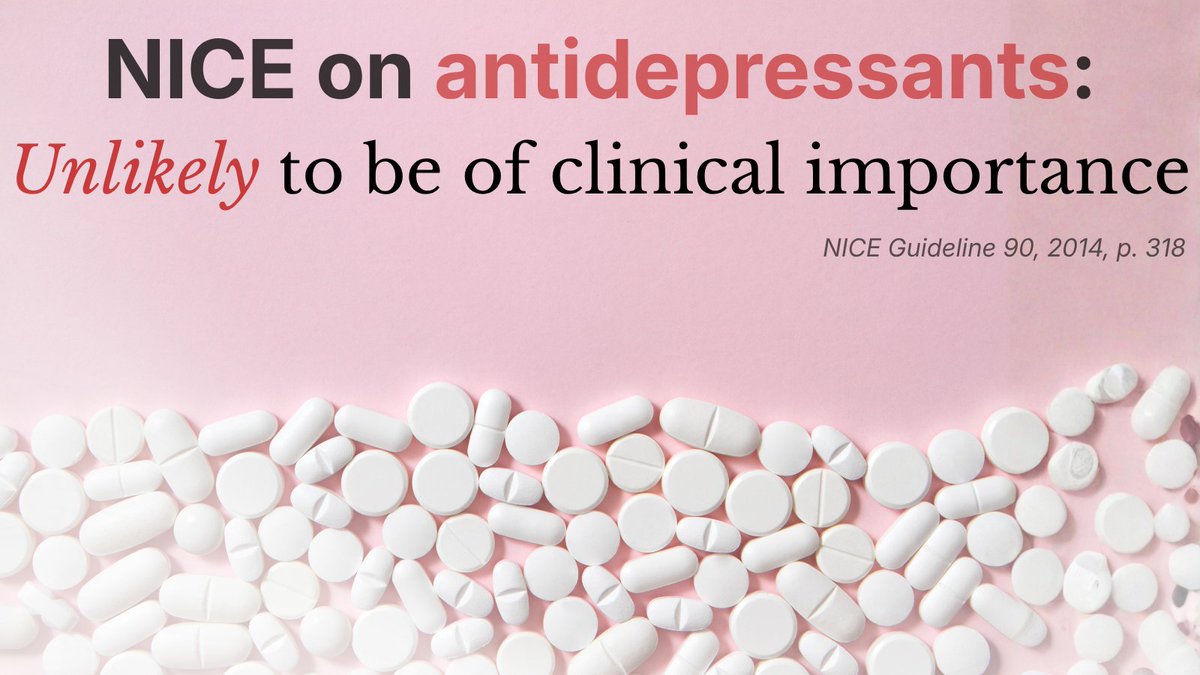
The American Psychiatric Association says antidepressants are backed by “decades of rigorous research.” So I looked at the evidence. - Average benefit over placebo: ~2 points on a 52-point scale. - Long-term studies often find higher relapse rates in people taking antidepressants. - In STAR*D, only about 3% got well and stayed well for one year. - After 40 years on the market, there are still no true relapse-prevention studies. Even NICE concluded that the antidepressant-placebo difference is “unlikely to be of clinical importance.” I’ve unpacked the evidence on Substack (audio version available). Link below.
Anders Sørensen tweet media
English
25
76
264
13.6K
OneRhythm
OneRhythm@OneRhythmOrg·
Just watched the whole episode - love it! So many people that are just sitting back and watching the time pass in anticipation of AGI. Who even knows what the definition of AGI is. I say - we have AI. The user adds the G. For now at least ;) Be the G! Research with GPT 5.5 - omg!
English
0
0
0
15
Alex Lupsasca
Alex Lupsasca@ALupsasca·
I recently joined @latentspacepod to talk about AI for physics. We dug into recent work on scattering amplitudes with GPT, and what it suggests about how AI will accelerate theoretical discovery in a rapidly evolving field.
Latent.Space@latentspacepod

🔬Doing Vibe Physics The full story of how GPT‑5.x derived new results in theoretical physics and quantum gravity, live on our Science pod today! latent.space/p/lupsasca our conversation with @ALupsasca, an award winning theoretical physicist on his AGI-pilling journey applying GPT5 to physics problems (with a nudge from @markchen90)! Timestamps 0:00 Introduction to Al's impact on physics research 0:43 Guest introduction: Alex Luposka 2:49 Alex joining OpenAl and the shift in physics research 4:08 The release of GPT-5 and the shift in capabilities 10:05 Explaining Quantum Field Theory and amplitude calculations 14:20 Overview of gluons and the strong force 14:38 Discussing the first research paper on single-minus gluon tree amplitudes 20:56 How ChatGPT helped solve a year-long physics puzzle 23:02 Complexity of manual calculations in physics 26:12 The history and mechanics of Feynman diagrams 27:44 The Parke-Taylor formula and the quest for simplification 31:26 Using ChatGPT to find the simplification in the special phase space region 38:07 Proving the formula from scratch to ensure validity 41:00 Determining the scientific impact and future research 42:27 Introduction to the second paper on graviton amplitudes 45:41 | Defining particles, irreducible representations, and symmetry 47:46 How GPT Pro generalized the research to gravity 53:57 The epistemological shift: Is this a new way of doing physics? 59:27 The use of Al as a 'scout' for research directions 1:01:44 The role of 'taste' and collaboration with Al 1:10:23 Personal evolution from Al skeptic to resident scientist 1:12:46 Solving a black hole perturbation problem with GPT-5 1:16:34 Discussing whether Al can make original, conceptual leaps 1:20:09 Challenges of 'Al slop' and the future of academic publishing 1:23:13 The bottleneck of writing academic papers 1:30:19 Final takeaways and looking ahead to the next year

English
5
9
44
17.8K
OneRhythm
OneRhythm@OneRhythmOrg·
@olsonplanner @FixnBones Insurance contracts. This is regionally dependent - but in Florida - specialty doesn't matter. The contract rates they offer would have providers living in Section 8 housing and riding an electric scooter to the clinic in order to survive.
English
0
0
0
6
Tyler Olson, EA
Tyler Olson, EA@olsonplanner·
Take: Docs who go into private practice should severely niche down. I'm not talking about speciality. I'm talking about narrowing the scope of who they serve and what problems they solve for them.
English
19
0
77
24.6K
Robert Gergely, MD
Robert Gergely, MD@rgergelymd·
I am excited to announce that my patent has been granted for "Universally Accessible Personal Records," primarily focused on medical records. This patent outlines a decentralized medical records system that utilizes blockchain technology. With this system, every citizen will have ownership, control, and secure storage of their medical records. You can view the full published patent here:patents.justia.com/patent/12266430 @POTUS @SusieWiles47 @Scavino47 @SecKennedy
Robert Gergely, MD tweet media
English
4
4
16
824