

Lefthander
1.2K posts
Lefthander
@PLestander
kvantitativ approach till strategisk livsåskådning i norra hemisfären.
Umeå, Sverige Katılım Mart 2022
293 Takip Edilen108 Takipçiler

Då man ska bli pappa i sommar har jag jobbat dom senaste månaderna med att sätta ihop en portfölj till grabben, vill ge honom en bra start ekonomiskt så detta kapitalet ska jobba i lugn och ro kommande 20 åren till han är redo att ta över.



Svenska
Lefthander retweetledi

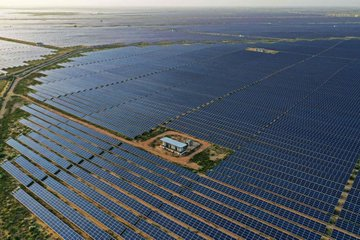
Das Land unter diesen Solarmodulen wird nie wieder landwirtschaftlich genutzt werden.
Kartoffelanbauverbände im ganzen Land werden keine Kartoffeln kaufen, die auf ehemaligen Solaranlagen angebaut wurden.
Warum?
Die Solarmodule geben Schwermetalle ab und lassen Glassplitter und Mikroplastik auf den Boden darunter fallen.
Bei großflächigen kommerziellen Anlagen wird die Vegetation unter den Modulen mit Herbiziden getränkt.
Das fruchtbare Ackerland ist für immer verloren.
Alex Fasulo@alex_fasulo
The land under these panels will never be farmed again. Potato growing associations nationwide will not buy potatoes grown on ex-solar sites. Why? The panels leach heavy metals, as well as drop glass shards and microplastics onto the soil below them. In a mass commercial arrangement, vegetation below the panels is soaked in herbicides. The fertile farmland is gone forever.
Deutsch
@20OSSA1 @sparaklokt I Umeå har 2 olika bolag bostadsrätter till salu med hyresfritt upp till 2 år, Japanifiering har börjat i Västerbotten.
Sweden 🇸🇪 Svenska

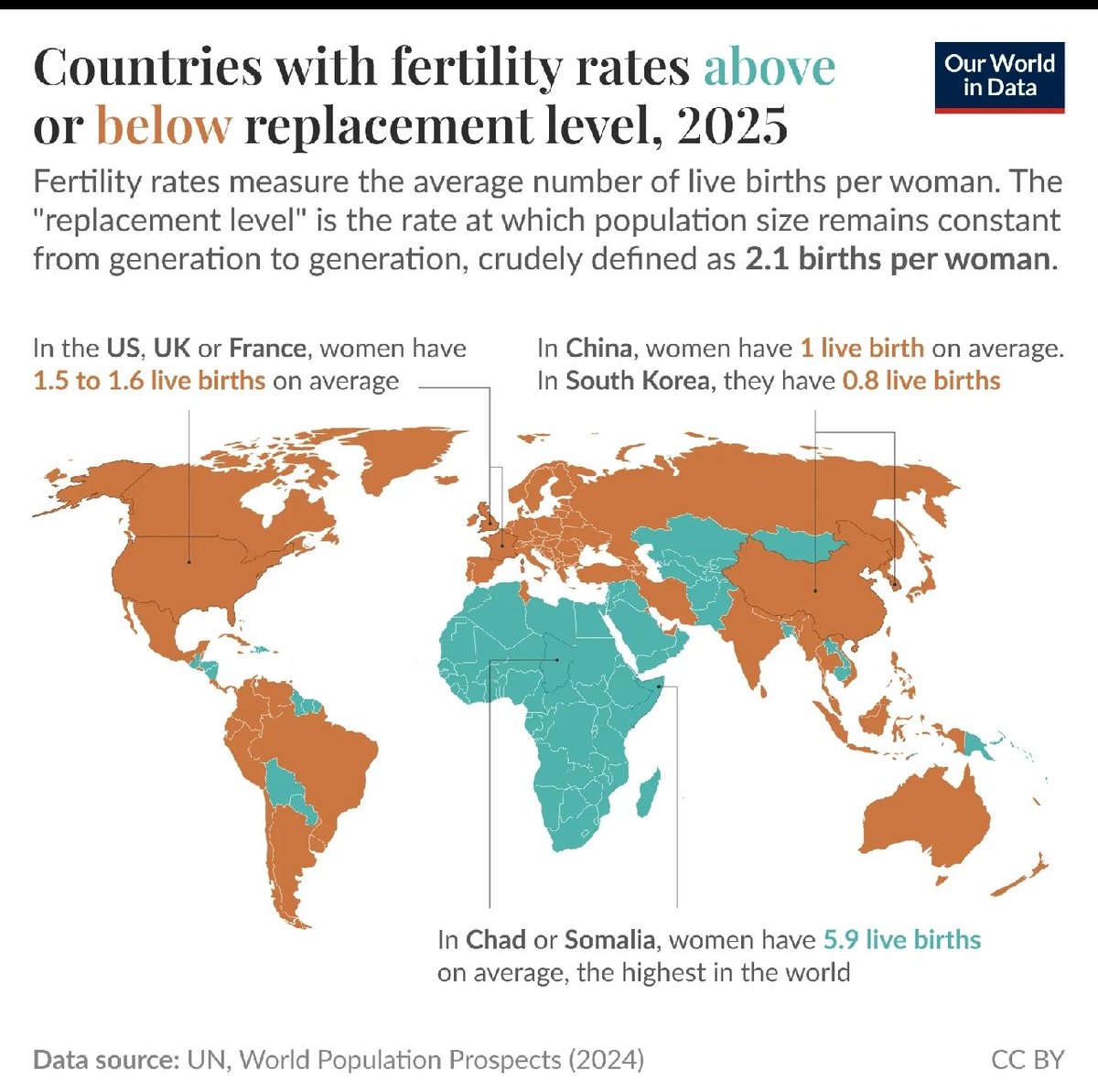
@PLestander @sparaklokt Urbaniseringen fortsätter så det är troligt att det är fler MENA som kommer vara delaktiga i flyttkedjan, dvs det blir fler utanförskapsområden. Fast över tid kommer de klassas om som normala områden...
Svenska

Jag har en del stora innehav som verkligen underpresterat senaste 2-3 åren.
Lundberg, Latour, Svolder, Spiltan och Infracom.
Vad tycker ni jag ska göra?
Sälja o köp Indu C o Inv med Läns Global Index?

Svenska
@20OSSA1 @sparaklokt Är det fler Somalier som skall bo i de nybyggda fastigheterna ?
Sweden 🇸🇪 Svenska
@sparaklokt De du har ringat in kommer säkert gå bra om det blir lite bättre konjunktur. Flera av bolagen har ju en fot inne i fastighet o bygg...
Svenska
Lefthander retweetledi

A solar farm just opened where a beef farm used to be.
This is a real sentence about a real place. In Lincolnshire, near Glentworth, on land that grew British food for six hundred years. 1,214 hectares of grazing pasture and cropland, the size of Heathrow Airport, now under panels for the next forty years.
It is called Tillbridge Solar. It was approved in October 2025. The locals were against it. The local council was overruled by central government. The farmer who used to graze cattle on that land will not be grazing cattle on that land in your lifetime.
Down the road, Springwell Solar got the nod the same month. 1,280 hectares. The largest in the country. Same story. Beef and arable, gone.
This is happening everywhere. CPRE found that 59% of England's biggest solar farms are on productive farmland. In one Lincolnshire district, 7% of the land is now solar panels. Three solar farms, Sutton Bridge, Goosehall, and Black Peak, are built entirely on the highest grade of agricultural land we have.
Now here is the part nobody mentions at the dinner party.
The roofs of the warehouses on the A1 are empty. The supermarket distribution centres are empty. The Amazon sheds, the MoD car parks, the industrial estates outside every town in England, all empty. CPRE's own numbers show that putting panels on the roofs we already have would meet the entire 2035 solar target on its own.
The panels are not going on the roofs.
The panels are going on Lincolnshire because leasing one field from one farmer is easy, and leasing a thousand roofs from a thousand owners is hard. The shortcut is the pasture.
You will not be told to stop eating beef.
You will simply find that the farm that produced it is now a power station, and the beef in the supermarket has come from Kansas, and it costs more, and the cow is no longer in the field, because the field is no longer a field.
Cover the roofs. Leave the pasture.

English


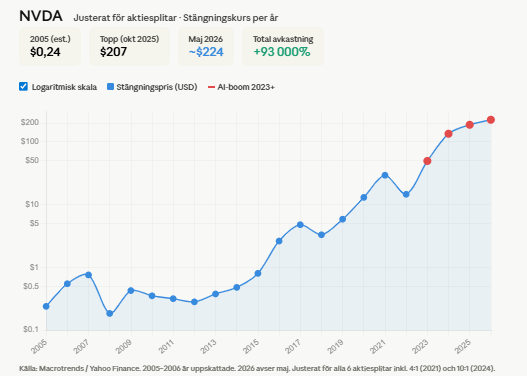
Gjort lite konsultjobb inom globala chipmarknaden 2009/10. Fanns ett trött bolag som hette NVIDIA då. Kunde aldrig tro att det skulle bli såhär ...
Svenska
@Spillepengen @Investeraren @BomanAlexander @Olof__Andersson @Bjorkis_Alex @victorihrman @montrose_io Den suktar man efter, men inte nått Västerbotten ännu som premium kund ;-)
Svenska

Stort tack till Team Montrose 🫶 för kepsen 👌
Det firar vi med en goding från 1974 🍾🥂 @Investeraren @BomanAlexander @Olof__Andersson @Bjorkis_Alex @victorihrman @montrose_io

Svenska
Lefthander retweetledi

In the 1970s, nuclear was cheaper than coal.
It was the cheapest, cleanest energy source on earth.
Why didn't we just keep building more of it? 🧵

English
Lefthander retweetledi

I Finland ser vi vindkraftens store paradoks: Jo mer vindkraft som bygges, desto mer taper utbyggerne. Fortsetter utviklingen, kan finsk vindkraft i praksis bli verdiløs allerede i 2035 – med årlige tap på opptil 50 milliarder.
Ingen av løsningene som skulle redde vindkraften, leverer. Batteriene fylles opp for fort. Hydrogenprosjektene skrinlegges. Forbruket lar seg ikke styre etter vinden.
Les dagens innlegg fra meg i Affärsvärlden. Lenke i kommentarfeltet.

Norsk
Lefthander retweetledi

Conventional thinking treats wind and solar as permanent infrastructure. They aren't.
These are a form of short life-cycle, industrial gadgetry with roughly 15-to-25-year lifespans. They are all in various stages of permanent decay and replacement - hydrocarbon and nuclear plants last generations. We see this in the mounting graveyards of unsalvageable wreckage. Yes, much of it can be recycled in theory. But in reality, the economic and energy costs usually outweigh the benefits.
They are now decomposing faster than we can replace them and this is the Treadmill Effect. If a nation installs 5 GW of wind power every year, by Year 20, they aren't expanding the grid anymore. They are being forced to build 5 GW just to replace the rusted, fatigued and degraded turbines built in Year 1. Growth flatlines, swallowed up in pure maintenance.
Look at the scale of this dilemma: despite millions of massive turbines and solar arrays deployed over 40 years, hydrocarbon fuels still dominate at roughly 81% of global primary energy. Solar and wind deliver only a tiny fraction of total primary energy. We've reached the limit.
Almost every turbine and panel built over the last two decades is now in the late stages of decomposition. We're struggling just to keep up; and soon we will fall behind. The mines will become hollowed-out and these 'green' rust collectors will fall apart where they stand.
To feed this replacement treadmill will need an astronomical volume of minerals: like copper, nickel, cobalt and rare earths. But we have already devoured the high-grade ores. A century ago, copper ore was 5% metal. Today, major mines are crushing ore that is less than 0.5% copper.
To get the same tonne of metal, you must blast, haul and crush ten times more rock. This requires more massive, diesel-guzzling mining fleets and heavy industrial smelting. We are cannibalising dense, reliable fossil energy just to chase low-density, short-lived weather collectors.
Here is the Einsteinian paradox. In physics, the closer an object gets to the speed of light, the more massive it becomes, requiring exponentially more energy to move it a fraction further. The energy transition is its own relativistic wall.
The closer a grid gets to 100% renewable penetration, the greater its structural costs will become. You don't just need more panels; you need a parallel universe of over-building, synchronous condensers, and continent-spanning transmission lines just to handle the asynchronous volatility.
We are hitting that Inversion Point. The fossil fuel energy required to mine the rare earths, manufacture the turbines and endlessly replace the dying infrastructure will eventually outpace the net energy the system delivers. You cannot reach the limit of light.
Albert Einstein - the ultimate observer of universal limits - would smile at the irony. Net Zero is being driven by an ideological bureaucracy that reads financial blueprints but ignores the periodic table and the laws of thermodynamics.
Entropy is universal. Nothing can bypass it.
Imagery of rust, mechanical exhaustion and the accumulation of unmanaged composite materials.

Bega, New South Wales 🇦🇺 English
Lefthander retweetledi

Aluminum smelting is the most electricity-intensive process in manufacturing. Producing one ton requires 14,000 kWh, enough to power an American home for 16 months. The Hall-Héroult process, invented in 1886, dissolves alumina in a bath of molten cryolite at 960°C and passes 350,000 amps through it. The aluminum-oxygen bond is one of the strongest in industrial chemistry. A single smelter runs 24 hours a day for years between shutdowns. There are over 240 aluminum smelters worldwide. Together they consume 3.5% of global electricity each year. A typical electric vehicle contains 200 to 300 kg of aluminum. Aircraft fuselages, transmission lines, and server racks all depend on this process. China produces 60% of global supply. The US made 33% of the world's aluminum in 1980. Today it makes less than 1%.

English
Lefthander retweetledi
If we are going to look at the total life cycle of wind and solar energy, we should also look at the dark side of fossil fuels.
But digging into the data reveals a huge hidden irony that the 'green energy' narrative completely misses. Coal combustion residuals (coal ash) represent one of the largest industrial waste streams on earth, packed with heavy metals like arsenic, lead and mercury.
The United States alone actively recycles over 70% of its coal ash. Out of roughly 64 million tons generated recently, over 45 million tons were kept out of landfills, according to the American Coal Ash Association. This is because over many decades it has become a massive industrial circular economy. Coal waste is highly sought-after in construction. It's chemically built into the fabric of all modern infrastructure.
Fly ash, the fine powder captured from smokestacks, is used to replace traditional Portland cement. It makes concrete stronger, denser and more durable. Even better, it avoids the CO₂ emissions required to bake virgin limestone for standard concrete.
Synthetic gypsum is also scrubbed from coal plant chimneys to prevent acid rain, and it's structurally identical to mined gypsum. Nearly a quarter of all recycled coal waste goes directly into making the drywall in houses. Drywall factories were built right next to coal plants so they could pump the waste straight into the assembly line.
Because coal plants are shutting down across the West, the construction industry now faces a severe shortage of coal ash. Companies are actively mining old landfills to harvest decades-old coal waste for infrastructure. It pays royally to clean it up.
So let’s flip the lens back to solar. Critics are right that coal produces a continuous, high-volume daily stream of waste. Solar, by contrast, sits quietly for 25 to 30 years. But that delay is exactly what makes it a ticking economic time bomb. Solar waste isn’t a predictable, steady daily flow - it's a looming tsunami.
The International Renewable Energy Agency expects up to 78 million metric tons of cumulative solar e-waste by 2050. It's an economic crisis hidden in plain sight, and we recycle less than 10% of old solar panels. Solar panel recycling is an absolute financial loser, while coal ash is highly profitable to recycle.
It costs roughly $20 to $30 to dismantle and recycle a single solar panel. But recovering the silver, copper, and silicon inside yields only a few dollars of raw material value. Dumping that exact same panel in a landfill costs just $1 to $2.
The difference between these two waste streams isn't about inherent toxicity - it's economics. One is a mature, self-sustaining circular economy that cleans up after itself because the free market demands it. The other is a heavily subsidised tech wave with no economic plan in sight, except a graveyard in a landfill.
Every single mass-scale energy system requires tearing materials out of the earth, leaving a massive physical footprint. It's true that fossil fuels have a legacy of waste. But the road train to a green utopia is leaving an unprecedented mountain of tomorrow's electronic waste.
And 'no one' wants to pay to clean it up.

Bega, New South Wales 🇦🇺 English
Lefthander retweetledi
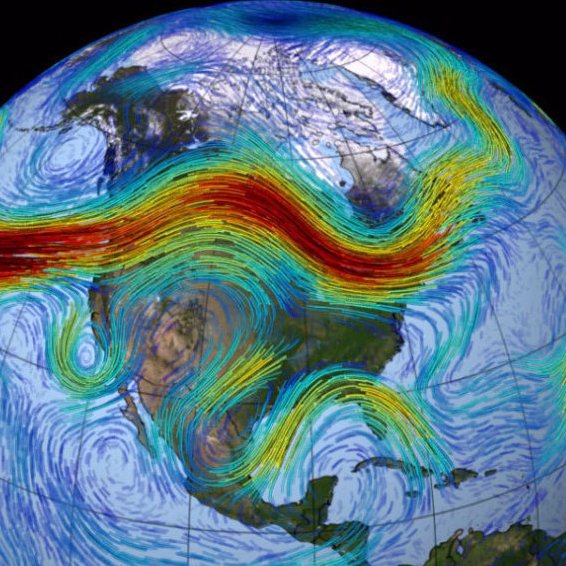
Corn ethanol was sold as green fuel.
It was meant to cut emissions, improve energy security, and support rural America.
Instead, it turns out corn ethanol depends on fossil fuels at every stage: tractors, trucks, fertilizer, pesticides, refineries, chemicals.
Analysis found corn ethanol can actually increase CO2 emissions by 28% compared with gasoline.
It also pushes farmland into fuel production, which raises food prices, increases water use, and worsens pollution.
Big agriculture cashed in.
The rest of us paid for it.
English

BREAKING NEWS‼️🔥 Montrose lanserar Sveriges billigaste globalfond - Montrose Global 🥳🙌
✅ Total avgift 0,09 %
✅ Ger exponering mot MSCI World
✅ Minsta köp 1 kr
✅ Tillgänglig NU!
Ingen plattformsavgift tas ut på denna fond. Du betalar endast 0,09 %. Övriga fonder är i snitt 40 % billigare än hos våra sektorkollegor på stan.
Globalfonder är den i särklass största fondkategorin bland svenska sparare - ca hälften av allt sparkapital som är investerat i aktiefonder. Vi på Montrose vill antingen vara först eller bäst med det vi lanserar. Det finns redan gott om globalfonder på marknaden, så då återstår bara ett alternativ, att vara bäst.
Med Montrose Global har vi nu tre fonder i familjen – alla med MSCI World som grund, men med tre olika egenskaper:
🔷 Montdiv - för den som vill ha löpande utdelning
🔷 Montlev - för den som vill ha långsiktig hävstång
🔷 Montglobe - för den som vill ha exponering mot index till lägsta möjliga kostnad - faktiskt Nordens lägsta kostnad till och med.
#PrataPengar #Finanstwitter montrose.io/montrose-global

Svenska
Lefthander retweetledi
Wind and solar aren't the future - they are a high-maintenance, low-yield, asset-degrading collection of assorted technologies.
Ultimately, the actual physics makes them extremely inefficient and they fail to deliver a true net profit to the citizens forced to subsidise them. We are told wind and solar are the limitless, romantic future of energy. But when you strip away the romance, wind and solar installations are not pristine, eternal monuments to progress.
The reality is, they are complex jumbles of electronics, specialised glass, composite blades and concrete foundations. Like any domestic appliance, they degrade, malfunction, and eventually wear out.
Whether it is a 'minor rural block' or a massive multi-million-dollar commercial farm, the financial equation is plagued by intermittency. Because these technologies only work sometimes, they require trillions in redundant grid infrastructure, backup gas plants, or toxic, short-lived battery arrays just to keep the lights on.
The narrative promises clean, free power from the sky. But physics doesn't care about narratives. Both wind and solar are bound by immutable, proven physical barriers that guarantee they can never deliver the promised utopian returns.
A wind turbine cannot simply absorb all the energy passing through it. In 1919, physicist Albert Betz proved that if a turbine extracted 100% of the wind’s kinetic energy, the air behind the blades would stop moving entirely, blocking any new wind from entering. The absolute mathematical maximum efficiency for any open-airflow turbine is 59.3%.
Because of this physical wall, real-world utility turbines max out at around 45% efficiency in perfect conditions. But because the wind rarely blows at perfect speeds, their actual annual output (capacity factor) sits at a dismal 25% to 35%. They aren't magical power plants; they are mechanical bottlenecks.
Solar panels face an equally rigid thermodynamic wall. Standard silicon panels have a maximum theoretical efficiency of roughly 33% because nearly half of all incoming solar energy is simply too powerful to be captured and is instantly lost as heat, while another chunk of photons passes right through the material like a ghost.
Millions of homeowners who bought into rooftop solar since the late 2000s are discovering the financial math didn't hold up. As early subsidies and high buy-back tariffs evaporated, owners were left with creeping daily grid supply charges and degrading panels. After only 10 to 15 years, the costly inverters fail, leaving properties with expensive, non-functioning roof clutter.
The fuel might seem to be free, but catching it is an incredibly expensive, resource-intensive and physically limited endeavor.
Reality will always win.

Bega, New South Wales 🇦🇺 English
Lefthander retweetledi
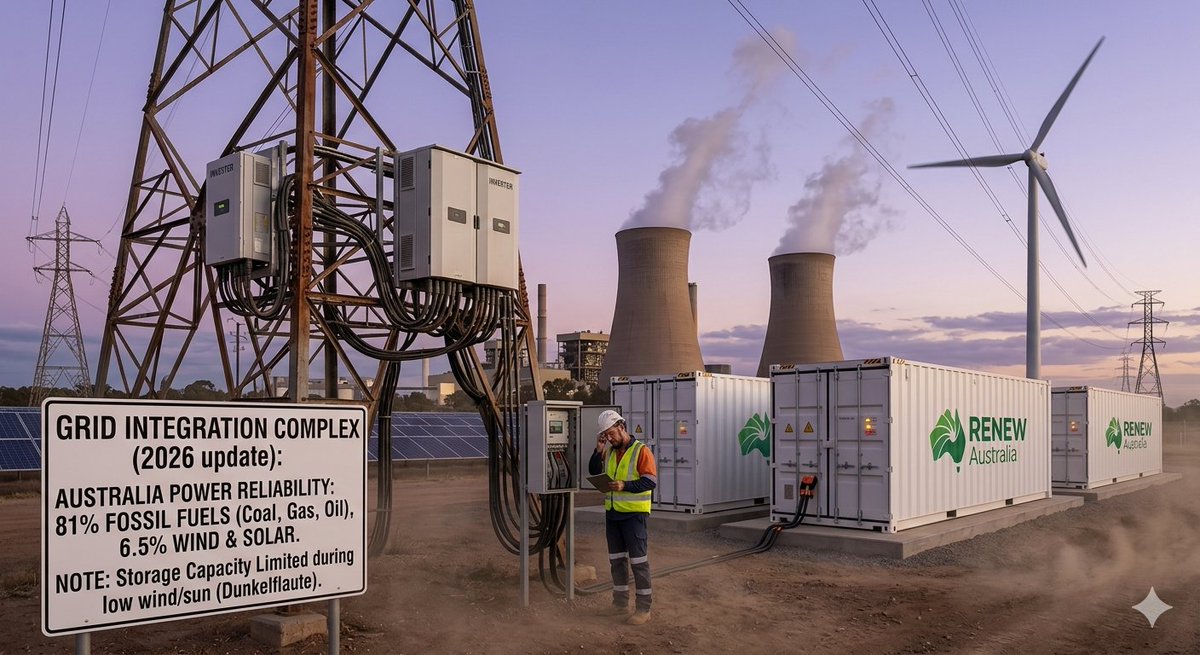
As of 2026, 81% of the world's primary power is still provided by coal, oil and gas.
Wind and solar give just 6.5% across all transport, heating and industry, despite the massive scale-up of renewables since 1988. Global primary energy consumption is still rusted on to fossil fuels, and probably always will.
The story gets worse. Renewables are not a viable energy source without substantial backup from fossil fuels. How did this disastrous mismatch happen?
According to recent data from the Energy Institute Statistical Review and the IEA, decades of government incentives, feed-in tariffs and tax credits have heavily driven the deployment of wind and solar. But get this? The energy is fundamentally incompatible with the existing world power grids.
This wasn't about changing the climate. It was, and is, an economic pivot. Wealthier Western nations have subsidised two generations of wind and solar power, yet they failed utterly to recognise the incompatibility of renewable power with existing grid networks. They have drastically underinvested in the infrastructure for the grid upgrades or the battery storage required to handle the volatile, intermittent nature of renewable energy.
Traditional grids rely on synchronous generation (large spinning turbines in coal, gas or hydro plants). These provide natural inertia and keep the grid frequency stable at 50 or 60 Hz. Wind and solar use inverter-based technology, which cannot provide this essential stability.
It's not that no thought was given to battery storage, but the sheer scale required was vastly underestimated.
Now we're falling behind. Building grid-scale battery systems capable of backing up a nation for days of low wind and sun (known as a Dunkelflaute) faces massive physical constraints - specifically in mineral mining for lithium, cobalt, copper, plus the staggering costs.
You cannot mine the quartz, smelt the silicon, forge the steel or transport the massive blades of a wind turbine without high-density heat and power. This is only provided by coal, oil, and gas. Furthermore, because wind and solar are intermittent, they require rapid-start gas peaker plants or spinning coal reserves to idle in the background, ready to jump in the second the weather shifts.
The grid struggles to handle this thermodynamic mismatch. We are trying to plug intermittent, weather-dependent sources into an industrial grid that demands absolute, second-by-second equilibrium. We have had more than a century to refine grid efficiency.
Rebuilding the world's power grids to handle this incompatible energy isn't just difficult - it is a fresh financial black hole. According to the McKinsey Global Institute, achieving net zero will require a staggering $275 trillion in cumulative capital spending by 2050 - a massive portion of which must be diverted just to overhaul and rebuild these incompatible power grids and storage systems.
The renewable supply chain won't rescue us either. It's firmly anchored in the fossil fuel economy. After 40 years of guilt, heavy subsidies and political momentum, fossil fuels still carry the heavy cross of sustaining human civilisation.
Bega, New South Wales 🇦🇺 English
Lefthander retweetledi
Shell's biofuels flagship just hit reality.
In Rotterdam, Shell was building what was meant to be Europe's largest biofuel plant at a cost of €1.2 billion.
The annual output target was 820,000 tonnes of so-called "sustainable" aviation fuel and "renewable" diesel.
The feedstock was supposed to be used frying oil, vegetable oils and animal waste.
The sales pitch was "clean aviation."
Then the numbers broke.
Construction costs soared and demand stayed weak.
So Shell paused the project.
Then killed it.
Three thousand piles went into the ground.
Millions of work hours spent.
Hundreds of millions of euros already sunk.
Now the unfinished plant is up for sale, set to either be dismantled, shipped abroad or sold for parts.
That is the biofuels fairy tale.
English
@Investeraren Kul de unga har en rik framtid att se framemot :-) Synd att det tar så lång tid att starta dessa nya "gröna" industrier under jord.

Sweden 🇸🇪 Svenska
Sen 2015 har elbilar och batterilagring ersatt hemelektronik som de största konsumenterna av litium. Tillsammans står de för ca 30% av total efterfrågan. År 2040 kan denna efterfrågan vara 51x högre än idag enl. IEA. Efterfrågan på kobolt och grafit spås kunna öka upp till 30x beroende på utvecklingen av batterier - läst i Meet Sandvik #2 #PrataPengar #Finanstwitter
Svenska
@DanielAlling Den här tycker jag beskriver bättre hur Kina har produktions övertaget över väst, var i Thailand alldeles nyss och hälften av de Grab förare vi åkte med hade kinesiska el-bilar.

Sweden 🇸🇪 Svenska

Toppmötet Kina-USA visar att Kina nu nästan vuxit sig till USA:s like. Detta kunde ske under den USA-dominerade globaliseringen, Kina utvecklade sin ekonomi och tog allt mer plats under USA:s skyddande hand. Detta uppstigande har också lett till två smått paradoxala saker: 1/5

Svenska
Lefthander retweetledi
EnBW recently pulled out of two major UK offshore wind projects: Mona and Morgan.
Together they were meant to deliver 3 GW of offshore wind in the Irish Sea. But then the projects failed to secure government financial support (i.e. subsidies), so EnBW walked away with a €1.2 billion write-down.
Offshore wind is sold as cheap, but the projects require large subsidies. And if that taxpayer money fails to come through, suddenly renewables are no longer economically viable.
Net Zero promised cheap energy. Remove the subsidies though, and the fantasy goes up in smoke.
English