BLANCO

1.6K posts

BLANCO banner
BLANCO

BLANCO

@Pabloblancop

Katılım Mayıs 2021
558 Takip Edilen106 Takipçiler
Sabitlenmiş Tweet
BLANCO
BLANCO@Pabloblancop·
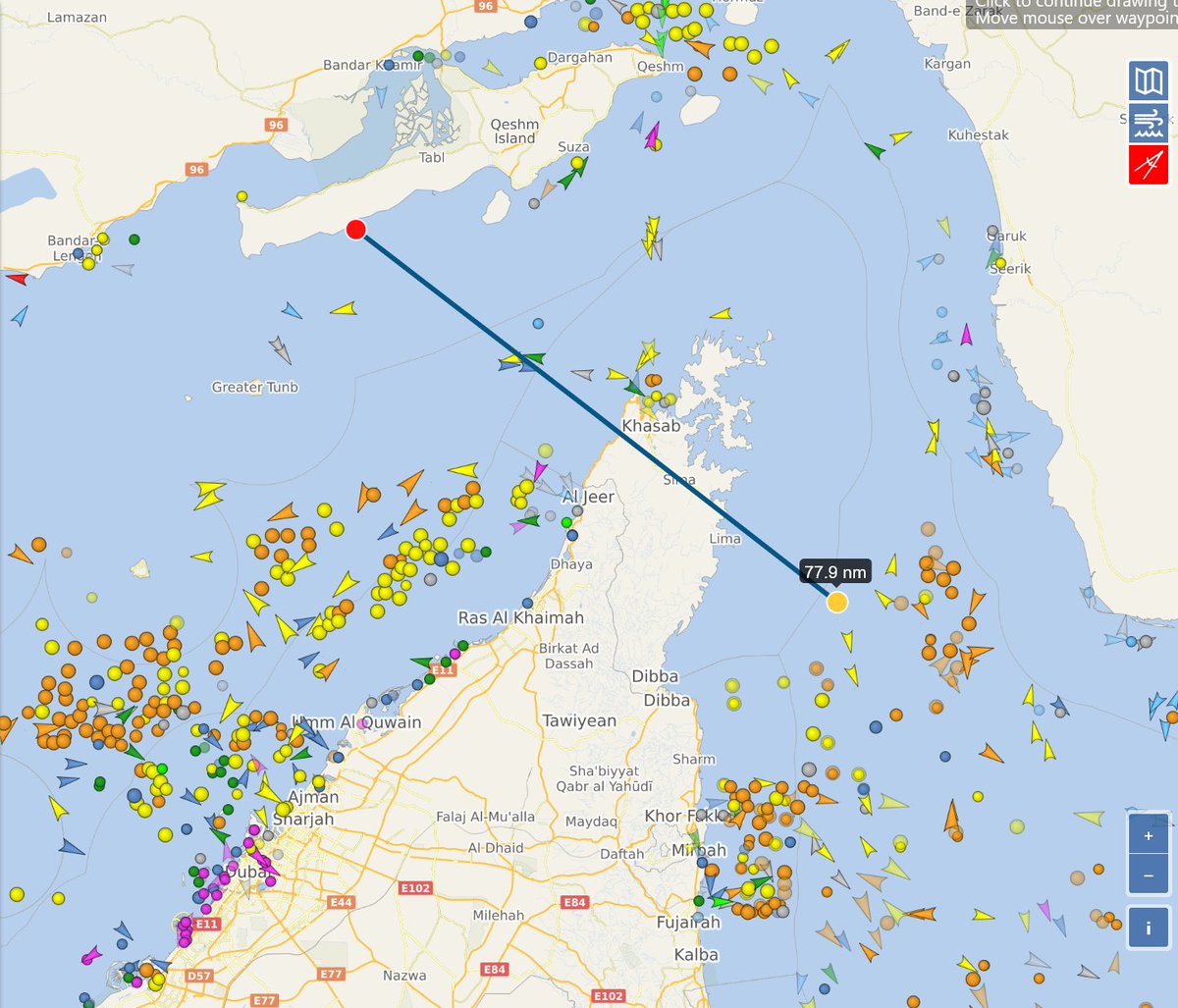
I really like the end estate. It does look like it is turning the world more nationalistic, and that the world’s defense Hegemon might be diluting, for good or bad reasons. We are at two crossroads, the continuation or the END OF AMERICAN EXCEPTIONALISM. I do disagree with the medium and the actors. I don’t think Trump is the one deciding, thinking and planning. Just the face, or the perfect puppet to do it. Conspiratorial? Very. But larger, unstoppable and hidden forces are behind. Think whatever you want, the System is too sophisticated, and strong to let Trump at the helm. Long term effects? I don’t think the usual US, and European financial markets will act as a the typical safe heaven. National reconstruction is never good for stocks. Money is flowing to emerging markets, bond yields are going to get higher than anyone expects, and commodities will be the place to be upon the construction of the new/old World. AI is the disrupting factor in all this, maybe it can delay the change. Combined with the extreme Need for energy independence, solar and uranium are the most logical backbones. Did I hear China? But will it bring deflation on top of historical public leverage? Perhaps, and that is the definitely not in the cards. These are just some emerging and dynamic thoughts. Thanks for reading. Please disagree.
James E. Thorne@DrJStrategy

Food for thought. Trump, Hormuz and the End of the Free Ride For half a century, Western strategists have known that the Strait of Hormuz is the acute point where energy, sea power and political will intersect. That knowledge is not in dispute. What is new in this war with Iran is that the United States, under Donald Trump, has chosen not to rush to “solve” the problem. In Hegelian terms, he is refusing an easy synthesis in order to force the underlying contradiction to the surface. The old thesis was simple: the US guarantees open sea lanes in the Gulf, and everyone else structures their economies and politics around that free insurance. Europe and the UK embraced ambitious green policies, ran down hard‑power capabilities and lectured Washington on multilateral virtue, secure in the assumption that American carriers would always appear off Hormuz. The political class behaved as if the American security guarantee were a law of nature, not a contingent choice. Their conduct today is closer to Chamberlain than Churchill: temporising, issuing statements, hoping the storm will pass without a fundamental reordering of their responsibilities. Trump’s antithesis is to withhold the automatic guarantee at the moment of maximum stress. Militarily, the US can break Iran’s residual ability to contest the Strait; that is not the binding constraint. The point is to delay that act. By allowing a closure or semi‑closure to bite, Trump ensures that the immediate pain is concentrated in exactly the jurisdictions that have most conspicuously free‑ridden on US power: the EU and the UK. Their industries, consumers and energy‑transition assumptions are exposed. In that context, his reported blunt message to European and British leaders, you need the oil out of the Strait more than we do; why don’t you go and take it? Is not a throwaway line. It is the verbalisation of the antithesis. It openly reverses the traditional presumption that America will carry the burden while its allies emote from the sidelines. In this dialectic, the prize is not simply the reopening of a chokepoint. The prize is a reordered system in which the United States effectively arbitrages and controls the global flow of oil. A world in which US‑aligned production in the Americas plus a discretionary capability to secure,or not secure, Hormuz places Washington at the centre of the hydrocarbon chessboard. For that strategic end, a rapid restoration of the old status quo would be counterproductive. A quick, surgical “fix” of Hormuz would short‑circuit the dialectic. If Trump rapidly crushed Iran’s remaining coastal capabilities, swept the mines and escorted tankers back through the Strait, Europe and the UK would heave a sigh of relief and return to business as usual: underfunded militaries, maximalist green posturing and performative disdain for US power, all underwritten by that same power. The contradiction between their dependence and their posture would remain latent. By declining to supply the synthesis on demand, and by explicitly telling London and Brussels to “go and take it” themselves, Trump forces a reckoning. European and British leaders must confront the fact that their energy systems, their industrial bases and their geopolitical sermons all rest on an American hard‑power foundation they neither finance nor politically respect. The longer the contradiction is allowed to unfold, the stronger the eventual synthesis can be: a new order in which access to secure flows, Hormuz, Venezuela and beyond, is explicitly conditional on real contributions, not assumed as a right. In that sense, the delay in “taking” the Strait, and the challenge issued to US allies to do it themselves, is not indecision. It is the negative moment Hegel insisted was necessary for history to move. Only by withholding the old guarantee, and by saying so out loud to those who depended on it, can Trump hope to end the free ride.


English
0
1
1
105
BLANCO retweetledi
First Squawk
First Squawk@FirstSquawk·
MASSIVE EXPLOSION AT THE ENTRANCE TO THE BAB AL-MANDAB STRAIT INTO THE RED SEA LAST NIGHT; THE SILENCE OF MARITIME NEWS ORGANIZATIONS AND WESTERN NEWS NETWORKS REGARDING THIS MAJOR EXPLOSION IN THIS STRATEGIC GLOBAL WATERWAY IS INTOLERABLE - IRIB
English
18
151
848
117.8K
BLANCO
BLANCO@Pabloblancop·
@GrainStats Okay, I’m just seeing all of the AGs dropping, and it looked like there was something else. Even sugar dropping. Do you see any effects to the US supply from the SoH, apart from fuel cost increases?
English
0
0
0
45
GrainStats 🌾
GrainStats 🌾@GrainStats·
Drought (bad) - Wheat Mainly Planting Progress (good) - Not many issues Weather (bad) - Need more moisture in the next 30 days - obviously in drought stricken areas the most basically all tied to weather here as it's the number 1 driver of supply and this is the time of the year it's the most important
English
2
0
5
308
BLANCO
BLANCO@Pabloblancop·
@MoodyWriter13 I know that is not the core of the thesis, and that $MTX is a no brainer. Just letting you know. Also, engine shares move very slowly, so don’t assume that we might actually see no change in the next 5 years.
English
0
0
0
85
Moody
Moody@MoodyWriter13·
@Pabloblancop MTU actually earns money on each sale, unlike Pratt & Whitney, which in some cases sells below production cost. That’s precisely why I framed the estimate in terms of total lifetime value from this deal for MTU, rather than just the upfront revenue from engine sales.
English
3
0
0
753
Moody
Moody@MoodyWriter13·
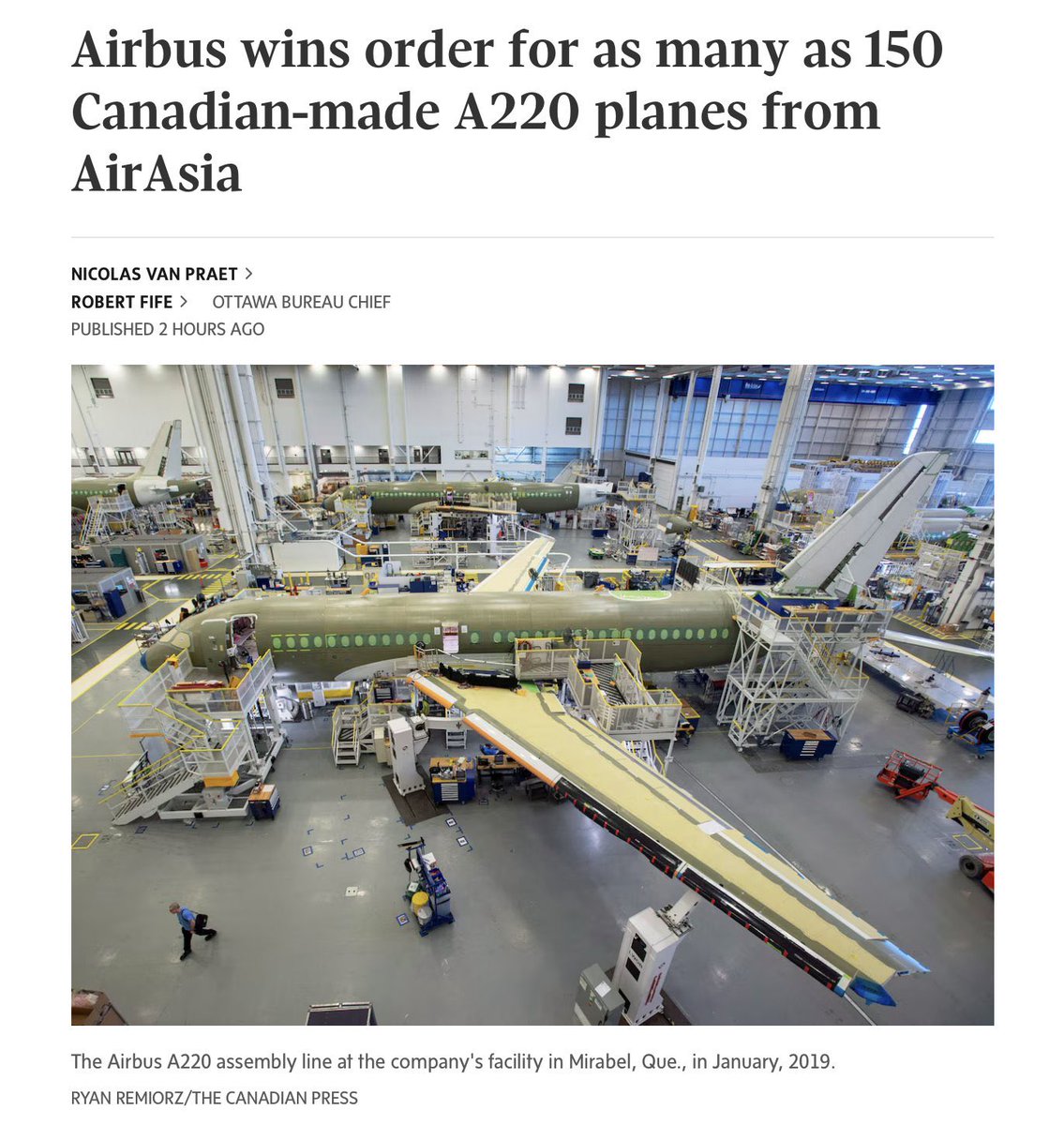
A clearly positive piece of news for $MTX, as the A220 program is powered exclusively by Pratt & Whitney and its PW1500G engine, in which MTU holds a 15% revenue share. I estimate a total lifetime value for MTU of around $1.8 billion from this deal. Discounted to today (8% over 12 years), this results in a present value of approximately €680 million. Against the backdrop of the massive backlog, this may appear small, but it still counts.
Moody tweet media
Moody@MoodyWriter13

This is not another piece chasing a photonics “moonshot.” Markets don’t reward wishful thinking, they dictate where value emerges. A rational investor adapts to opportunity, rather than forcing a narrative onto it. An aviation downturn is not an annual event. Yet history shows that such periods consistently create compelling entry points in engine manufacturers like $MTX , businesses that, at first glance cyclical, reveal on closer inspection an exceptional model: deeply entrenched moats, resilient aftermarket revenues, and long-term visibility. Today, the setup is even more intriguing. Beyond the cyclical dislocation, the sector is supported by three distinct tailwinds, reinforcing what has always been, beneath the surface, a remarkably durable and high-quality franchise. @KerrisdaleCap also recently published an analysis on this that seems a bit more aggressive / more bullish than mine. I hope you enjoy this article as well. @fwriter/note/p-195511309?r=1485tu&utm_medium=ios&utm_source=notes-share-action" target="_blank" rel="nofollow noopener">substack.com/@fwriter/note/…

English
9
0
52
12.9K
BLANCO
BLANCO@Pabloblancop·
@MoodyWriter13 I am long the company just so you know. I just finished the thesis you wrote and it is really good. On the 50% potential market share of GTF over LEAP, I’ve been told by airbus that they are in talks with CFM to try and get PW share down, from 42% to 41-40 over the next 3 years.
English
0
0
0
15
BLANCO retweetledi
BLANCO
BLANCO@Pabloblancop·
@zephyr_z9 reduction in TCO for Mercedes means they spend less on system integrators (the bulk of costs many times 7x what SAP earns from customers) not SAP, SAP earns more while migrating those customers to the cloud. That reference to Mercedes point in case is just narrative engineering
English
0
0
0
15
BLANCO
BLANCO@Pabloblancop·
@zephyr_z9 But the Mercedes point makes no sense, SAP is transitioning its on prem customers (one off perpetual license +20% annual maintenance) to the cloud, as it does that it earns 2-3x what it earned on maintenance as a subscription stream.
English
3
0
3
218
BLANCO retweetledi
Andreas Steno Larsen
Andreas Steno Larsen@AndreasSteno·
Kudos to @Rory_Johnston , @JoshYoung and a few more for keeping us up to date with the oil situation. Thanks lads! I personally think, which has been the case through the month, that it is close to impossible to trade oil directionally. Trump decides whether you win or lose. Not a market anyone without inside can claim to have an edge in.
English
28
0
129
35.9K
BLANCO retweetledi
JH
JH@CRUDEOIL231·
We are witnessing a sharp rebound in the Yen, likely triggered by BOJ intervention, occurring simultaneously with a drop in oil prices—even in the absence of any specific bearish headlines. Of course this is partly linked to several pods initiating their exit strategies ahead of the Brent June contract expiry. However it is more plausible to approach this from the perspective of position unwinding and risk management mechanisms by macro funds and CTAs, rather than a shift in oil fundamentals. In a vacuum, a drop in USD/JPY typically exerts upward pressure on dollar-denominated oil prices. But when a liquidity shock—like the unwinding of the Yen carry trade—hits, this textbook inverse correlation between the dollar and commodities temporarily breaks down. The technical supply factor—forced liquidation by financial institutions—completely overwhelms any supply-demand or geopolitical fundamentals. One might ask, "Doesn't the Yen carry trade usually flow into US assets? The capital flow into oil isn't that significant, is it?" It’s true that pure Yen to Oil carry trades aren't the primary driver, as oil doesn't provide a fixed yield like bonds or dividend stocks. Furthermore it’s impossible to isolate the exact amount of Yen carry capital in the oil market, as COT reports only track position direction, not the funding currency. However once the Yen sees a short squeeze style rally, the real value of Yen-denominated debt spikes, leading to massive mark-to-market losses and margin calls. To meet these margin calls and keep their funds afloat, traders must sell whatever they can liquidate immediately. Selling illiquid OTC assets or assets with thin order books would result in massive slippage—and New York isn't even open yet. Consequently the oil futures market—one of the most liquid markets in the world—is treated like a global ATM, taking the brunt of mechanical sell-offs as funds scramble for cash. The commodity desks within these macro funds may have built large long positions based purely on the attractive roll yields from backwardation. But the backend funding that supports the entire fund's leverage included Yen short positions. When the Yen surged due to BOJ intervention, the VaR limits at the total fund level were breached. Desperate for USD liquidity, fund managers are hitting the bid on their most liquid and (thanks to backwardation) most profitable positions—oil—to crystallize gains and raise cash. Hedge funds typically operate with 4x-10x leverage. Since some of this massive liquidity is tied up as margin for commodity funds, the volume of oil being dumped during forced liquidations is powerful enough to completely bypass physical supply-demand fundamentals. Ultimately this must be viewed through the lens of pooled book management. As a macro Yen carry tantrum erupts, oil is being sacrificed as a victim of mechanical liquidity hunting, regardless of its own merits or market structure. #oott #iran $usdjpy
English
32
82
687
114.8K