Leo | osint · system design · ai research

3.1K posts

Leo | osint · system design · ai research banner
Leo | osint · system design · ai research

Leo | osint · system design · ai research

@Palmsvettet

dry dev humor, open-source drops and random stuff

~/home Katılım Ekim 2023
1.6K Takip Edilen701 Takipçiler
Investacus 🧠 💰
Investacus 🧠 💰@Investacus·
Fyra tillfällen och i samma aktie. Ska bli intressant att se hur detta utvecklas.
Investacus 🧠 💰 tweet media
Svenska
14
1
98
65.6K
Leo | osint · system design · ai research
@JonasLivros @Investeraren Jag minns att han pratade en del om Raysearch i en podd för ett år sedan. Oklart om han satt i styrelsen vid den tidpunkten. Har det skett för nära rappportperiod. Eller om det han berättade i avsnittet kring deras forskning/produkt. Då kanke det kan va relaterat.
Svenska
0
0
0
121
Nicklas Andersson
Nicklas Andersson@Investeraren·
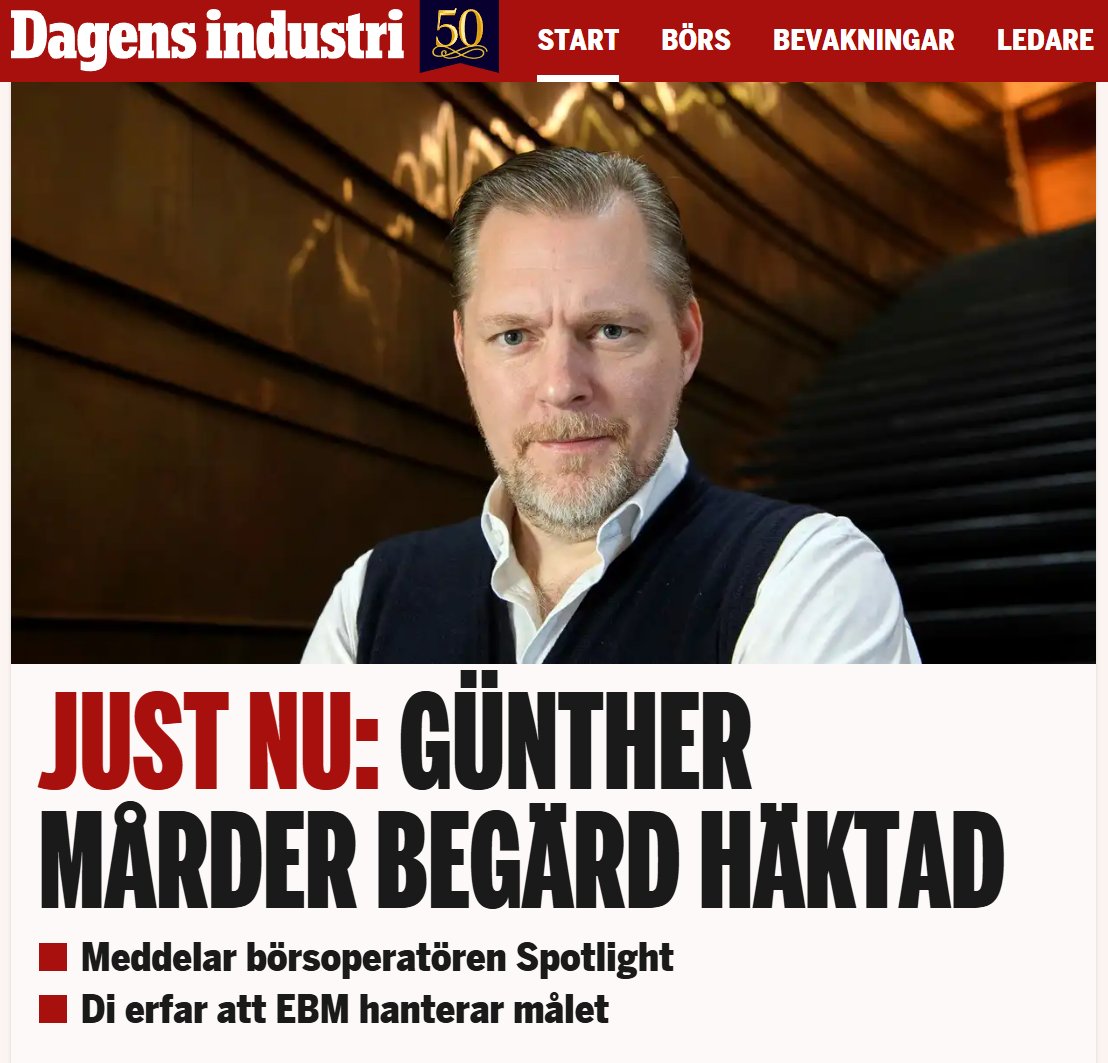
Günther Mårder har begärts häktad enligt ett pressmeddelande från Spotlight Group där han är ordförande. DI skriver samtidigt att det är EBM som har målet. Det här hade jag inte väntat mig, men vi får såklart invänta mer information. Han är och har varit en inspiration för många så hoppas att han inte gjort något fel #PrataPengar #Finanstwitter di.se/live/gunther-m…
Nicklas Andersson tweet media
Svenska
55
2
282
102.9K
profeten
profeten@kamelprofeten·
Kul att det körs!!!!
profeten tweet media
Svenska
21
12
1.2K
148.7K
Leo | osint · system design · ai research
@Tomas_Potatis Problemet är att modellerna har kristalliserat IQ kring 150 (dvs 99,96e percentilen ish, men flytande IQ runt 20. Dom är som en encyklopedi som kan citera allt men inte förstår ett ord den säger. Folk ser det första och antar att det andra följer med.
Svenska
1
0
3
149
Mikael Falk🏴‍☠️
Mikael Falk🏴‍☠️@Tomas_Potatis·
Asså... Folk måste sluta fråga AI och tro att den ger en någon form av objektiv sanning.
Svenska
41
5
89
6.8K
Leo | osint · system design · ai research
Give a 5 year old a game they have never seen before. No rules no instructions. They figure it out in minutes. Give the most advanced AI on earth the same test and it cant. Not struggling. Not slow. Functionally zero. These are the same models writing production code outperforming doctors on diagnostics and scoring 93% on last years reasoning benchmark. They are not stupid. They are something weirder. Incredibly capable at things they have seen before and almost completely unable to learn something genuinely new from scratch. ARC-AGI-3 just launched as the first benchmark that tests exactly this. Put an AI in an unfamiliar environment with no instructions and see if it can figure out the rules by exploring. Humans pass every single test. The best AI model effectively fails every single one. The gap between pattern matching and actual learning turns out to be massive. But heres what the discourse will miss. Every benchmark including this one tests a single model alone. One brain one score. Nobody deploys AI that way anymore. Real systems run agent clusters. Specialized models that explore plan critique coordinate. Grok runs native multi-agent architecture. MiniMax M2.7 spawns sub-agents that check each others reasoning. So we know individual models cant learn from scratch. What we dont know is whether a group of them can. Whether collective AI systems show emergent generalization that no single model has. The way no individual neuron in your brain can generalize but the system does. If thats possible it changes the entire AGI timeline. Not bigger models. Better orchestration. And right now nobody is measuring it. Someone needs to build ARC for collectives. We are benchmarking engines when we should be benchmarking cars. arcprize.org/arc-agi/3
English
1
0
1
57
Leo | osint · system design · ai research
Why is the curve accelerating. Because the entire approach changed. Until 2024 the playbook was simple. Bigger model = smarter model. More parameters more data more compute. Linear scaling. Predictable gains. Three things broke that pattern in the last six months. First: hybrid attention with extreme MoE. Instead of running every input through all parameters (expensive, slow) models now route each token to a handful of specialized experts out of hundreds. Qwen 3.5 has 397 billion parameters but only activates 17 billion per token. Same intelligence. Fraction of the cost. 90% less memory. Second: test-time compute as a native capability. Older models think for a fixed amount of time regardless of difficulty. New architectures let the model decide how long to reason based on the problem. Simple question gets a fast answer. Hard problem triggers recursive internal loops that branch, evaluate, backtrack and retry. Intelligence became variable, not fixed. Third: self-improving training loops. MiniMax M2.7 (released March 2026) is the first public model that participated in its own training. Built its own evaluation harnesses. Iterated its own RL experiments. Updated its own memory structures. Not autonomous AGI. But the first time a model optimized the process that makes it smarter. Each of these alone is a step forward. Combined they changed what “scaling” means. The old curve was about size. The new curve is about efficiency and recursion. That is why the doubling time is shrinking. We did not just make the engine bigger. We built a different engine.
Leo | osint · system design · ai research tweet media
English
0
0
0
27
Leo | osint · system design · ai research
Every time someone measures the doubling time it has gotten shorter since the last measurement. At some point you stop asking when AI will do X and start asking what it wont do. Most people think that point is years away. The data says its not.
English
1
0
0
17
Leo | osint · system design · ai research
🧵🕝 Everyone keeps quoting “AI capabilities double every 7 months.” That number is already wrong. The doubling time itself is shrinking. It went from roughly 2 years to 7 months to 4 months. The thing thats accelerating is the acceleration. Nobody updated their forecasts.
Leo | osint · system design · ai research tweet media
English
1
0
0
32
Leo | osint · system design · ai research
@shiri_shh or they just shipped too late, charged too much, and nobody cared enough to stick around. you dont need a grand strategy narrative for a product that lost to free alternatives. sometimes things just fail.
English
0
0
0
142
shirish
shirish@shiri_shh·
OpenAl didn’t kill SORA.. they cut it to survive what’s coming next. Sora videos looked magical, but behind every clip was massive compute burn, legal risk, and almost zero real revenue. so they made a shift. compute is being pulled out of experiments and pushed into chatgpt, codex, and tools that people use daily. they need hundreds of billions. compute, infrastructure, talent, all of it at insane scale. so something had to go.
Sora@soraofficialapp

We’re saying goodbye to the Sora app. To everyone who created with Sora, shared it, and built community around it: thank you. What you made with Sora mattered, and we know this news is disappointing. We’ll share more soon, including timelines for the app and API and details on preserving your work. – The Sora Team

English
90
50
670
219.3K