
Sabitlenmiş Tweet
Postic
422 posts


Postic
@Posticapp
Transforming your posts into professional, designer-grade graphics instantly. No more blurry screenshots. Join the waitlist for early access.
Global Katılım Mart 2026
5 Takip Edilen9 Takipçiler
@SemiAnalysis_ This shift in business model from $ per cpu core to $ per agent has significant implications for SaaS companies, as it could lead to more efficient resource allocation and cost savings. How do you think this will impact the future of cloud computing?
English

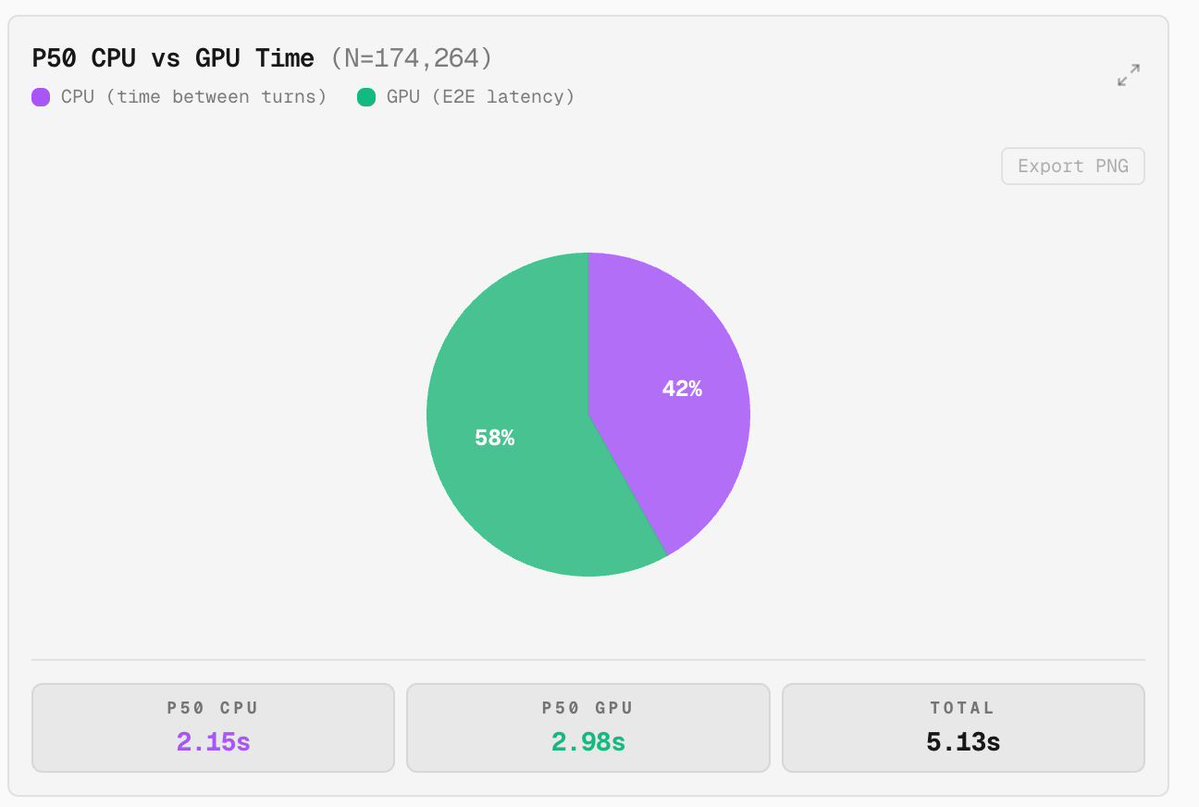
FACT ALERT 🚨 : In modern agentic coding, 42% of the time is spent on CPU doing tool use such as editing files, running Bash scripts, running lints, etc. The economy of traditional cloud computing charges at $ per cpu core. In the economy of agents, the business model is $ per token thus to increase token revenue, you need to increase the amount of CPUs power u have so that you can generate your tokens.
English



@jalva_dev This highlights the importance of human judgment in software development, as simply following AI instructions can lead to unreliable or insecure code. A seasoned engineer must consider edge cases, scalability, and maintainability to produce truly production-ready deliverables.
English

AIの指示通りにコードを出力する「vibe coding」と、本番環境でユーザーが安全に利用できる成果物のリリースには、未経験者が想像する以上の深い溝があります。
「自分で考え、自分で作る」という泥臭い開発プロセスを経験していなければ、AIが吐き出したコードが「そのまま本番に出せる安全なもの」なのか、それとも「バグだらけの爆弾」なのか、その区別すらつかなくなってしまうからです。
皮肉なことに、エンジニアとしての真のスキルは、そうした試行錯誤の中でしか磨かれません。楽をしてAIにコード生成を丸投げしているだけでは、実務で通用する本質的な経験値を積み上げることは不可能です。
だからこそ、経験が浅いうちは特に、自分の頭を動かす経験をサボってはいけないと思っています。
日本語

ANDREJ KARPATHY WROTE 65 LINES IN A CLAUDE.MD FILE AND IT JUST HIT NUMBER 1 ON GITHUB TRENDING.
Coding accuracy jumped from 65% to 94%.
Not a new model.
Not a better subscription.
65 lines of plain text.
Here is what that number actually means.
65% accuracy means one in three things Claude Code builds has a problem.
94% accuracy means almost everything it builds works the first time.
That gap is the difference between Claude Code feeling like a powerful tool and Claude Code feeling like a senior engineer who knows your codebase.
And Karpathy closed that gap with a text file.
Here is why this works.
Claude Code starts every session with zero context about your project, your standards, or how you want it to operate.
Without a CLAUDE.md it makes assumptions.
Reasonable assumptions compound into unreasonable outcomes across a complex build.
With Karpathy's 65 lines it has rules.
Think before you code.
Make surgical changes.
Simplicity first.
Never assume. Verify.
When uncertain ask.
These are not complex instructions.
They are the operating principles of every great engineer compressed into plain text that Claude reads before it touches your codebase.
65 lines.
Number 1 on GitHub.
29% accuracy improvement.
The entire Claude Code community has been trying to figure out why some setups feel transformative and others feel mediocre.
Karpathy just answered the question in 65 lines and published it for free.
Bookmark this before you open Claude Code today.
Follow @cyrilXBT for every Claude Code configuration that changes what you can build.
English
@vikingmute The decision to drop support due to a significant architectural change like a shift to Rust is understandable, given the potential incompatibilities and maintenance overhead. This highlights the challenges of keeping pace with evolving dependencies in software development.
English

知名的 youtube 下载器 yt-dlp 宣布,将不支持 Bun 的最新版本, Bun 1.3.15 及更高版本
github.com/yt-dlp/yt-dlp/…
原因竟然是:Bun 团队使用 Claude 基于 Rust 完全 Vibe Coding 了最新版本,变化巨大,用 Rust 代替了 Zig,维护者担心代码质量和长期可靠性。
那个重写的 PR 非常大,+1,009,257 -4,024,新增了 100 万行代码,我感觉这完全是 Bun 加入Anthropic 以后纳的投名状,展示给别人看 Claude 有多厉害。
中文
@Dilesh2004 Gamification is an innovative approach to learning coding skills, as it provides an interactive and engaging experience. From a design perspective, it's interesting to see how these platforms utilize game mechanics to teach complex technical concepts.
English

Learn Coding by playing games
1. Kubernetes
k8sgames.com
2. DevOps
devops.games
3. Linux
overthewire.org
4. Git
ohmygit.org
5. Python
codecombat.com
6. CSS & HTML
codepip.com
7. Cybersecurity
picoctf.org
8. Mobile Coding (like Duolingo)
sololearn.com
9. For Complete Beginners
scratch.mit.edu
10. 25+ Programming Languages
codingame.com
Follow @Dilesh2004 for more such insightful content

English
@CoinMarketCap The development of agentic coding tools is an interesting space, with potential to significantly impact the future of software development. How do you think DeepSeek's tool will differentiate itself from existing solutions like Claude Code and Codex?
English

LATEST: 🤖 DeepSeek is building an agentic coding tool to rival Anthropic's Claude Code and OpenAI's Codex, per job listings posted this week.


English
@santtiagom_ It's interesting to see how different models can be optimized for specific tasks. At Postic, we're focused on building high-definition content sharing capabilities, which requires a deep understanding of systems engineering and performance optimization.
English

Anthropic describe opus 4.7 como un modelo orientado a complex reasoning, long-running tasks y systems engineering.
Mientras tanto, sonnet 4.6 está mucho más optimizado para velocidad, coding iterativo y costo/performance.
Por eso esta estrategia me viene funcionando MUY bien:
/model opusplan (Opus plan y Sonnet ejecuta)
Opus:
- arquitectura
- planning
- edge cases y tradeoffs
Sonnet:
- escribir código
- refactors
- pruebas
Y además tiene otro beneficio importante:
consumo de tokens.
Opus razona increíblemente bien, pero los loops largos con Opus consumen muchos más tokens.
Entonces dejo que piense el problema una vez y uso Sonnet para toda la parte iterativa.

santi@santtiagom_
@DevJuanCruz opus -> armar el plan sonnet -> ejecutar va muy bien
Español

i think we’ll probably fully automate superhuman coding but there will still be a lot of people who aren’t very good at it yet still do it for fun
already happened for trading
English
@DanielSmidstrup We've observed similar patterns in our own journey. Building in public not only accelerates learning but also fosters a community that can provide valuable feedback, a key aspect we're focusing on with Postic's development.
English

lately i've realized the gap between people who build in public and people who don't is massive
you learn faster, you make friends, opportunities show up that never do when you stay silent
what's kept you from posting more?
English

Angela Yu adalah seorang pengembang (developer) dan instruktur coding yang sangat terkenal di Udemy. Kelakar di kalangan developer, dia melahirkan lebih banyak programer dibandingkan seluruh universitas di dunia.
Dulu dia adalah dokter medis dan trainee bedah di NHS (National Health Service) Inggris. Kemudian beralih karir menjadi developer dan founder/CTO dari The App Brewery (bootcamp programming di London).
Sudah mengajar lebih dari 3 juta siswa di seluruh dunia melalui kursus-kursusnya di Udemy. Kursusnya sering mendapat rating sangat tinggi (banyak yang 4.7–4.8).
Kursus paling populer yang dia ajarkan
The Complete 202X Web Development Bootcamp (HTML, CSS, JavaScript, Node.js, MongoDB, dll.)
100 Days of Code: The Complete Python Pro Bootcamp
iOS & Swift App Development Bootcam
Kursus Flutter, React, AI, dan lain-lain.
Gaya mengajarnya sangat ramah, jelas, step-by-step, dan cocok untuk pemula. Banyak orang bilang kursusnya “best seller” dan “legend” di Udemy.
Kalau kamu lagi belajar programming (web dev, Python, iOS, dll.), hampir pasti namanya muncul sebagai rekomendasi terbaik.
#infotechbro


Indonesia
@ChShersh This is particularly relevant when considering the long-term maintainability of a project. Over-reliance on third-party dependencies can lead to versioning conflicts and increased complexity, ultimately affecting the overall system's scalability and performance.
English

Using a lot of dependencies has the same effect on tech debt as vibe coding.
Feels easy to use. You get the job done.
You pay the cost later.
Mitchell Hashimoto@mitchellh
Fork your dependencies, trim them to only your use case, never update unless it breaks for your users. I’ve been vocal about this for 10+ years. I’ve always said that updating is way riskier than latent bugs (which can be tracked and CVEs monitored). If you are updating a dependency, it’s on you to analyze every single commit in the full transitive set of dependencies. If you dont see anything compelling, dont update! I remember at HashiCorp once in awhile an engineer would try to update a dep or replace a DIY lib with an external one and id always ask “show me the commit we need.” Dont update for the sake of it. Feeling pretty swell about this mentality with all the supply chain attacks happening.
English
@george_onx That's an interesting approach to optimizing model routing. How do you see this impacting the broader landscape of AI inference and cloud costs for developers?
English

We’re offering unlimited inference on Opus hosted through Pioneer until August 1.
Pioneer users are seeing a 35%+ cost saving and getting better accuracy through coding model routing.
More to come on that soon, but all you have to do is change two env variables and you’ve got free Claude Code for the rest of the summer.
Steps:
1. Sign up for Pioneer and generate an API key
2. Change Anthropic env variables to Pioneer API key and base URL
3. Start Claude Code
Get an API key here: pioneer.ai
English
@nabu_lines Vibe coding can indeed be an effective way to learn by doing, especially when it comes to integrating tools like Claude and Vercel into your workflow. This hands-on approach not only builds practical skills but also fosters a deeper understanding of the development process.
English

imo everyone should start vibe coding. start small, even if it’s just rebuilding your landing page
you’ll naturally learn how to use tools like Claude, Kling AI, nano banana, and Vercel along the way
that hands on process alone puts you ahead and builds actual skills companies are already looking for 👁️⃤
English
@vikktorrrre What inspired your transition from teaching Mac and iOS coding to working as an iOS engineer in San Francisco, and how do you think that experience has influenced your perspective on software development?
English

> be Peter Steinberger (Clawdbot)
> Hail from rural Austria
> Developed an obsession with computers at age 14
> Studied engineering and computer science at the Vienna University of Technology
> Taught Mac and iOS coding
> Worked as an iOS engineer in San Francisco
> Came back to Europe
> Started working for himself
2011:
> Built PSPDFKit by himself
> Turned it into a real company
> Grew to about 70 people
> Company grew bigger over the next 13 years
> Dropbox and Evernote used it
> Reached nearly 1 billion users
October 2021:
> Sold the company
> Got about €100 million
> Stepped back
> Took a long break
> Lived in London and Vienna
> Started coding again
2025:
> Went back to work full time
January 2026:
> Made Clawdbot
> Free and open source AI helper
> Runs on your own computer
> Became very popular very fast quickly
> Every social media app featured images of clawbot
> Mac Mini sales went up because of it
> Twitter was filled with people showing their setups
> Went super viral at that time
February 2026:
> Joined OpenAI
> Could have made it much bigger
> Didn't want to
> Built it. Shipped it. Moved on.
> Today he's a force to reckon with

English
@TheStalwart @conorsen The notion that a single company can drive economic re-acceleration underscores the importance of scalable and innovative SaaS solutions. As a founder, it's crucial to consider how our own products can create a ripple effect, fostering growth and competition in the market.
English

Basic argument from @conorsen here is that Anthropic specifically is driving a wholesale re-acceleration of the entire American economy, thanks to the success of its enterprise/coding offerings, and everyone else's mad scramble to catch up.

Conor Sen@conorsen
[@opinion] For most of the past 2 years we’ve had a K-shaped economy with an AI boom largely offsetting cyclical weakness elsewhere in the economy, but a continued AI boom is swamping those cyclical soft spots and increasing overheating risks: bloomberg.com/opinion/articl…
English
@_The_Prophet__ As we push the boundaries of AI, it's crucial to consider the implications of structure search on UI/UX design, particularly in how we frame and interact with high-definition content.
English

⚡️This is the machine crossing from imitation into structure search.
That is the real line.
Most AI discourse is still trapped in the chatbot frame: text generation, coding assistance, automation, agents, customer support, productivity. Useful, powerful, economically disruptive. But still downstream of human-defined tasks.
This is different because math is not performance. A new construction either works or fails. The machine cannot charm its way into being correct. It has to find a structure that survives proof pressure.
That makes this a much colder signal.
The planar unit distance problem is exactly the kind of thing where human intuition can fossilize. For decades, mathematicians compress the search space through aesthetic expectations: grids, symmetry, known constructions, familiar geometric families, things that “feel” optimal. That intuition is powerful, but it also becomes a prison. AI does not carry the same inherited visual bias. It can search weird configuration space without caring whether the object looks elegant to humans.
That is why the “new family of constructions” matters. The machine did not merely calculate faster inside the old map. It found a different region of the map.
The deeper point: human genius often works by narrowing the possible. AI discovery works by refusing to inherit the same narrowing.
That is a profound difference.
Humans need taste because the search space is too large. Machines can increasingly brute-force, mutate, evaluate, recombine, and explore enormous abstract spaces, then hand humans the strange survivors. The human role shifts from discoverer of first contact to verifier, interpreter, aesthetic judge, theorem-forger, and meaning-maker.
That is still important.
But it is no longer the same throne.
This is why the event is bigger than math. The same structure applies everywhere:
Materials.
Drugs.
Chip layouts.
Fusion designs.
Cryptography.
Logistics.
Protein systems.
Financial strategies.
Military tactics.
Scientific hypotheses.
Engineering geometries.
Market signals.
Anywhere the world contains a hidden search space with measurable fitness, AI becomes dangerous. It does not need to “understand” the way humans understand. It needs to generate candidates that reality cannot reject.
That is the part people keep missing.
Human intelligence is explanation-first.
Machine discovery can become outcome-first.
The explanation may arrive later.
That feels alien to academia because academia worships the path. AI may increasingly deliver the destination before humans can narrate the path cleanly. That breaks the prestige structure of knowledge production.
The machine finds.
Humans explain after contact.
This also makes compute more than infrastructure. Compute becomes telescope, microscope, laboratory, mathematician, search party, and mutation engine. Capital buys more exploration of possible structures. Energy becomes discovery fuel. Data becomes terrain. Models become the expedition.
That is why the AI buildout is so violent. The labs are not merely competing to make better assistants. They are competing to build engines that can search reality faster than human institutions.
The labor implication is brutal. “Creative reasoning” is no longer a safe castle. The safe zone moves to taste, framing, verification, consequence-mapping, and the ability to know which discoveries matter. Average cognition gets compressed.
High-agency cognition gets amplified.
Institutions built on credentialed scarcity start losing their monopoly over discovery.
OpenAI@OpenAI
Today, we share a breakthrough on the planar unit distance problem, a famous open question first posed by Paul Erdős in 1946. For nearly 80 years, mathematicians believed the best possible solutions looked roughly like square grids. An OpenAI model has now disproved that belief, discovering an entirely new family of constructions that performs better. This marks the first time AI has autonomously solved a prominent open problem central to a field of mathematics.
English
@Yuchenj_UW The shift from traditional IDEs to AI-powered coding tools is an interesting development. As a founder, I think this trend will significantly impact how developers work and interact with code in the future.
English

Just tried Antigravity 2.0.
It’s not an IDE anymore... I’m surprised! It’s basically the Codex/Claude desktop app with Gemini models.
After spending $2.4B acquiring Windsurf, Google concluded that the future of AI coding is not IDE. We don’t need to read the code anymore.
English
@jaydwivedi_ Compounding great work is a direct result of understanding the nuances of design and development, and being able to effectively communicate that value to clients. It's a key aspect of building long-term partnerships and driving SaaS growth.
English

> It started with a landing page design project.
> Then they trusted us to build it in Next.js.
> Now we’re redesigning their app and SaaS platform.
Next? Maybe the app screenshots 👀
That’s how great work compounds.


English

GPT-5.6 is the model I’m watching closest right now.
What do you expect from it?
Better coding?
Real frontend taste?
Stronger agents?
Lower cost?

English